
Guide to the Tobia Kebir dive site · Soma Bay, Safaga
Tobia Kebir Dive Site The biggest of the Tobia reefs, with coral towers and glassfish caves
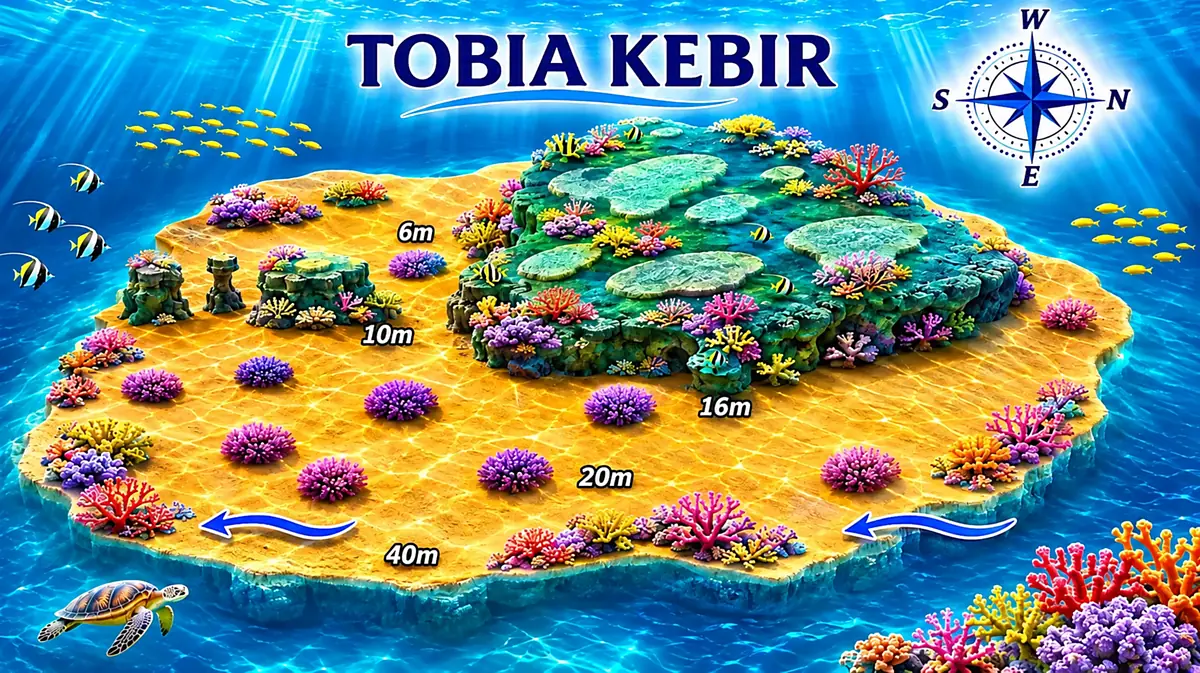
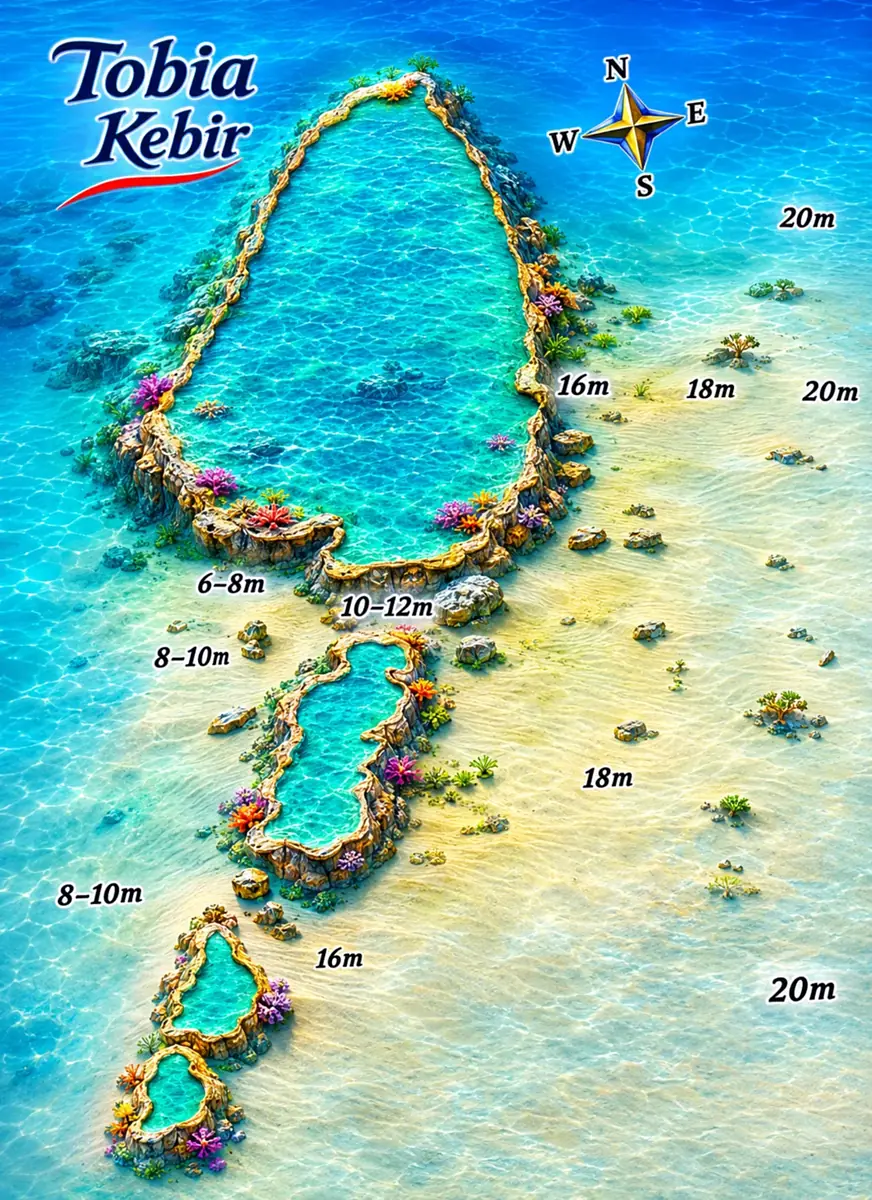
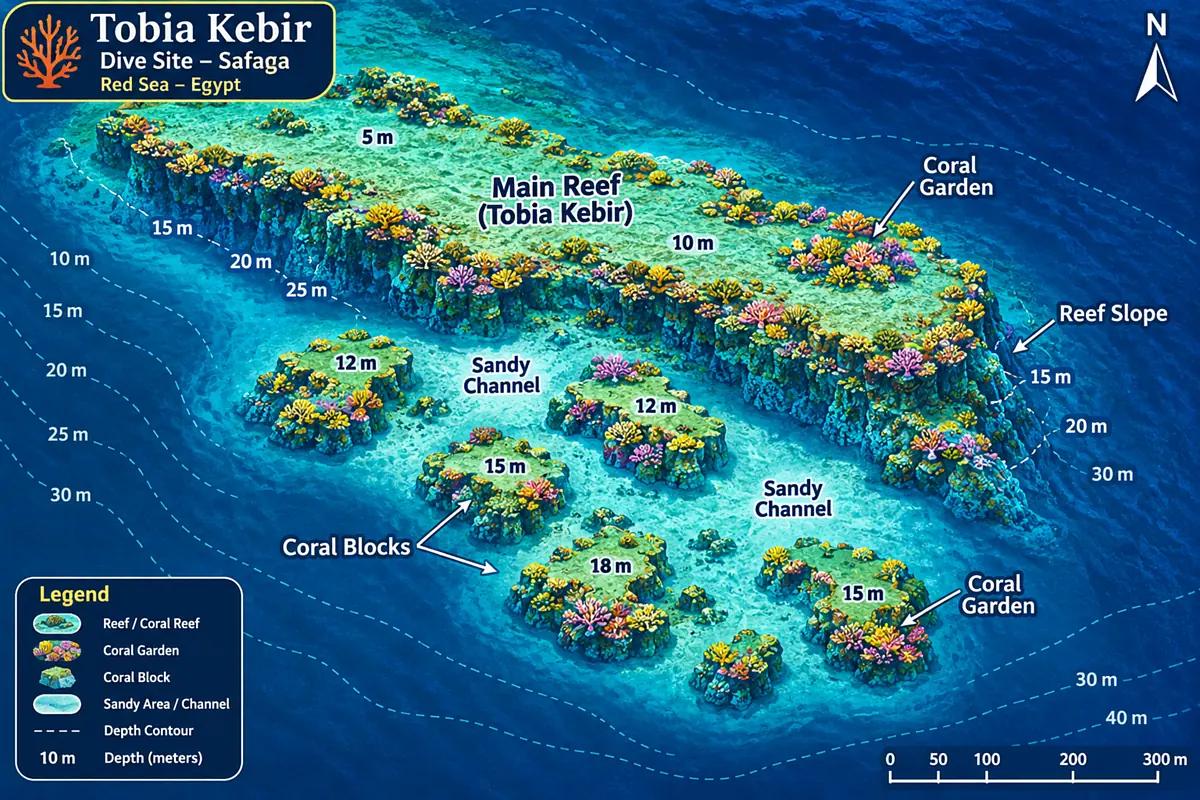
Tobia Kebir, “Big Tobia”, is the largest of the Tobia reefs near Soma Bay. A long reef runs north to south on a flat sandy seabed, with coral towers standing to its south. Because the Abu Soma headland shelters it from wind and waves, it suits every level, and it is excellent for snorkeling.
Tobia Kebir in short
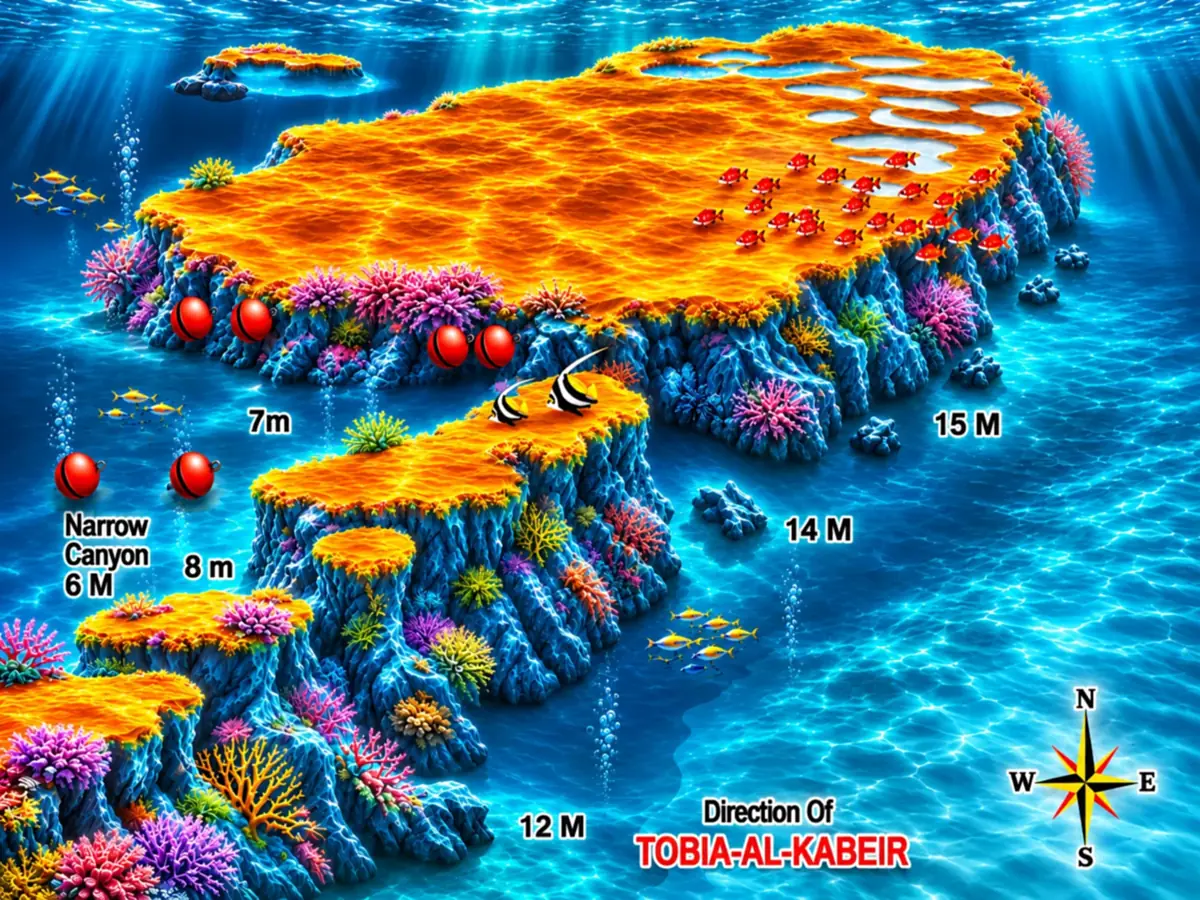
In short, Tobia Kebir is a large reef on a flat sandy seabed near Soma Bay, at about 26°48′30″N, 33°59′44″E (CDWS). Above all, its east wall is broken by small canyons and full of fish, while coral towers stand to the south. In addition, the sand lies at about 15–18 m, and the reef top comes up to about 5 m. Overall, the site is sheltered, with gentle current, so it suits every level and snorkelers.
What is Tobia Kebir like?
Above all, “kebir” means big in Arabic, and this is the biggest of the four Tobia sites. Because of its size, it offers several different dives.
Meanwhile, the east side is the liveliest, because it faces the current. Small canyons cut into the top of the wall and give it a far more interesting profile.
Also, the Abu Soma headland protects the reef from wind and waves. For this reason, the current is usually gentle or absent.
The reef at a glance
The east wall
Firstly, the liveliest side of the reef.
The towers
Also, coral towers to the south.
The sand
Finally, sandy areas for training.
What is under the water here?
Generally, the site has three parts. Firstly, the east wall with its small canyons. Then, the coral towers south of the reef. Finally, the flat sand around it, where courses and snorkelers stay.
The east wall
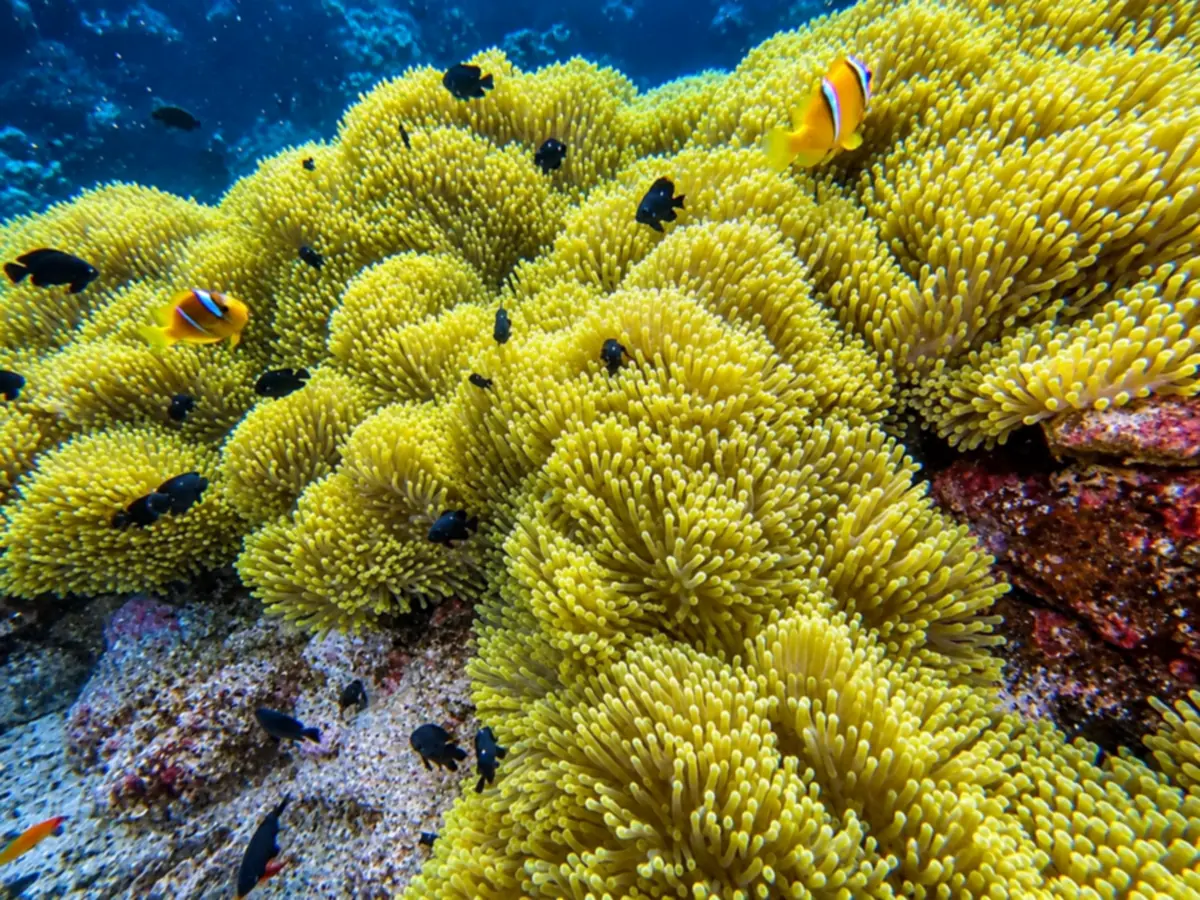
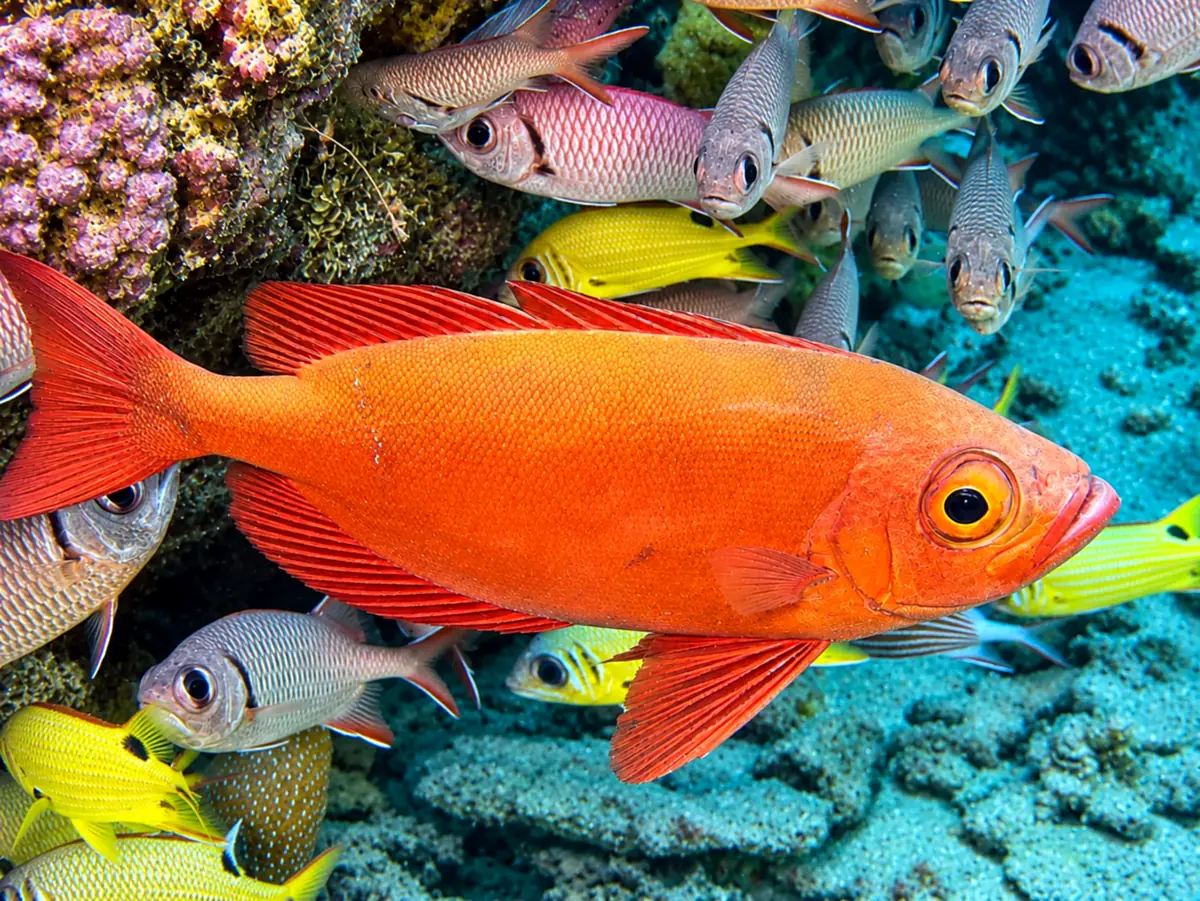
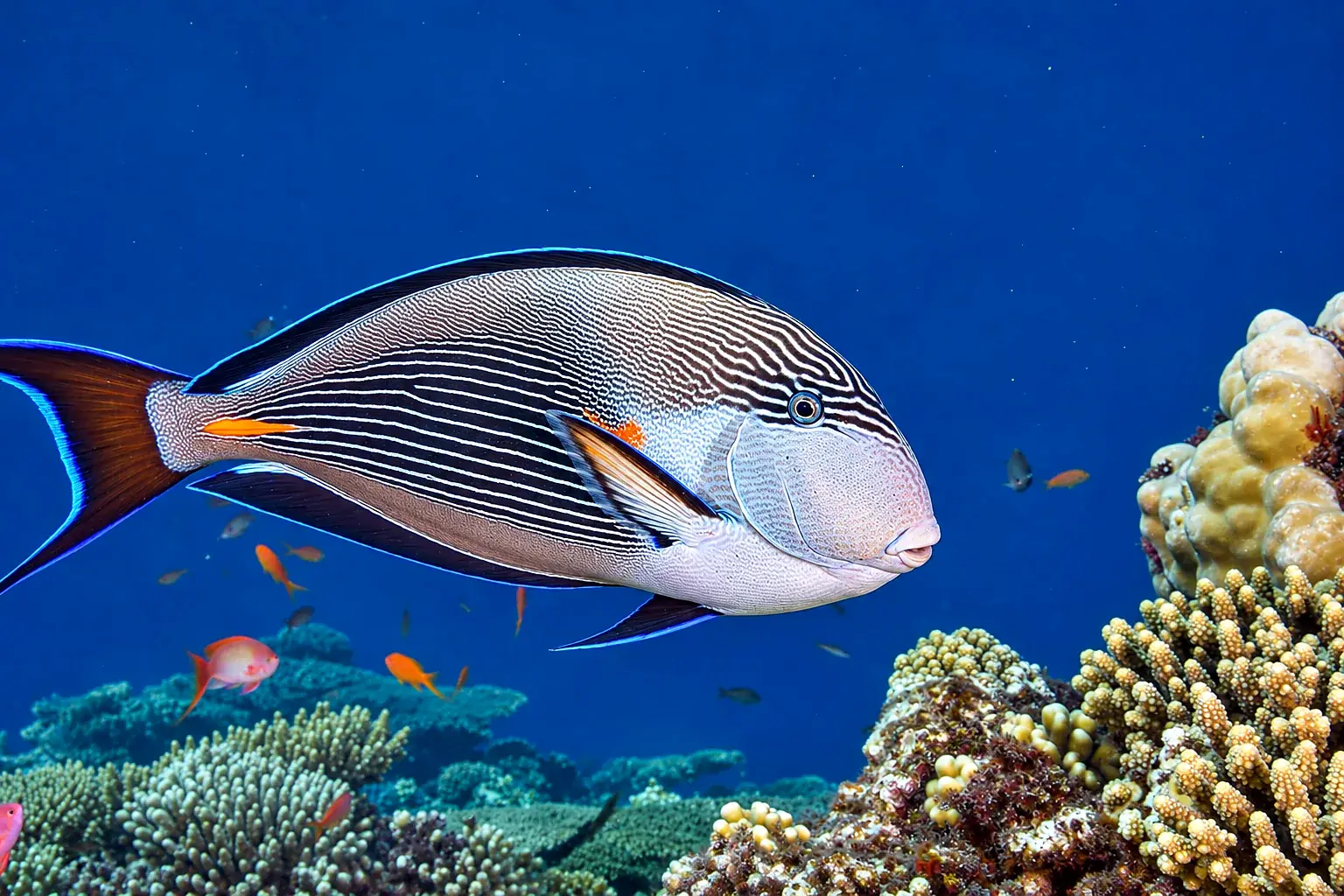
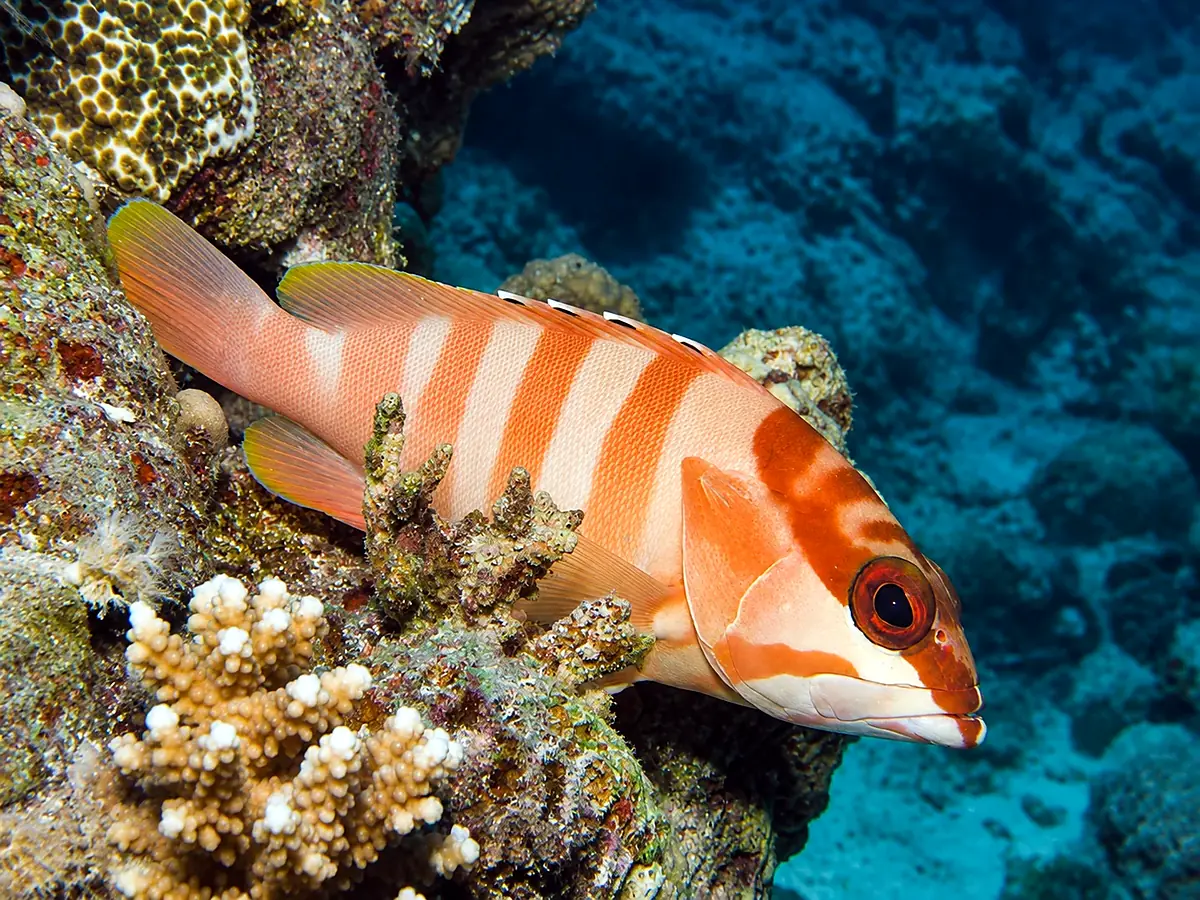
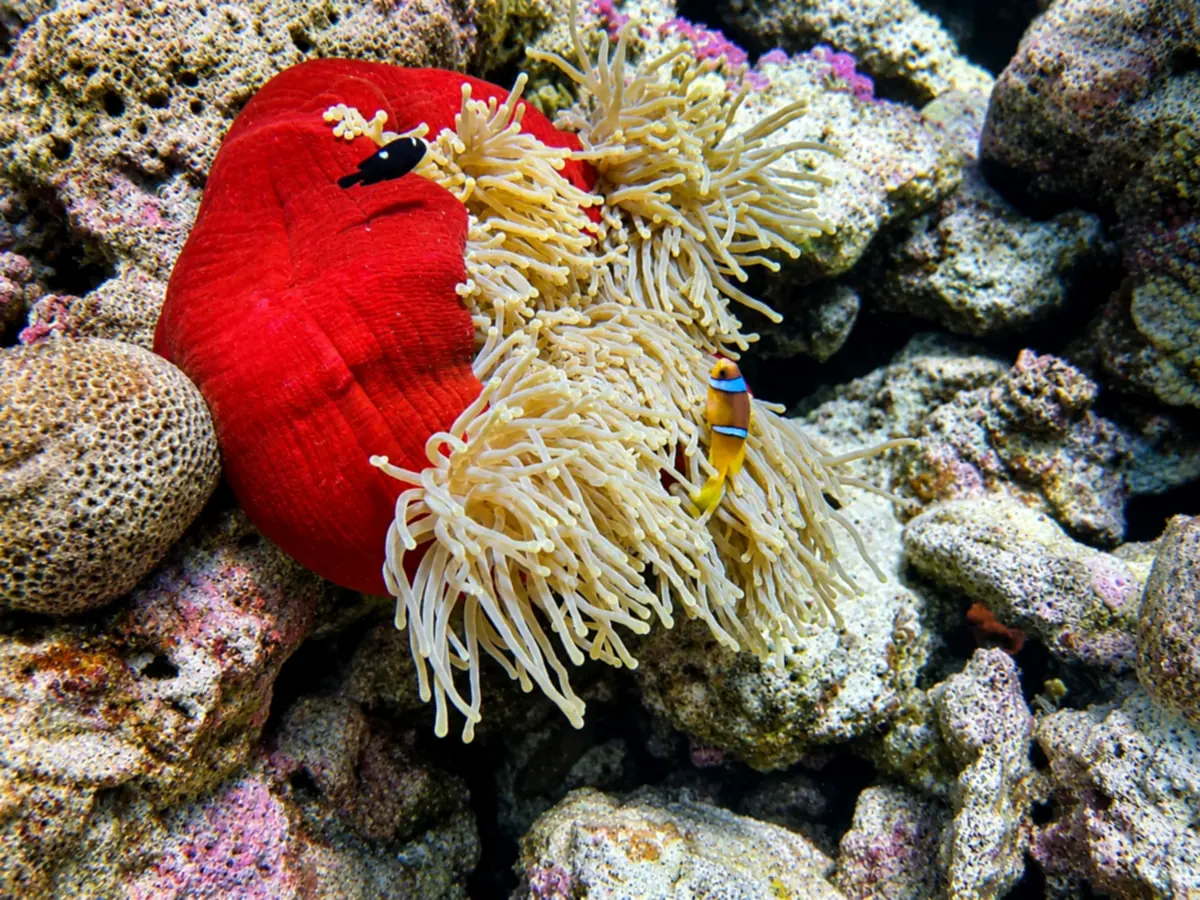
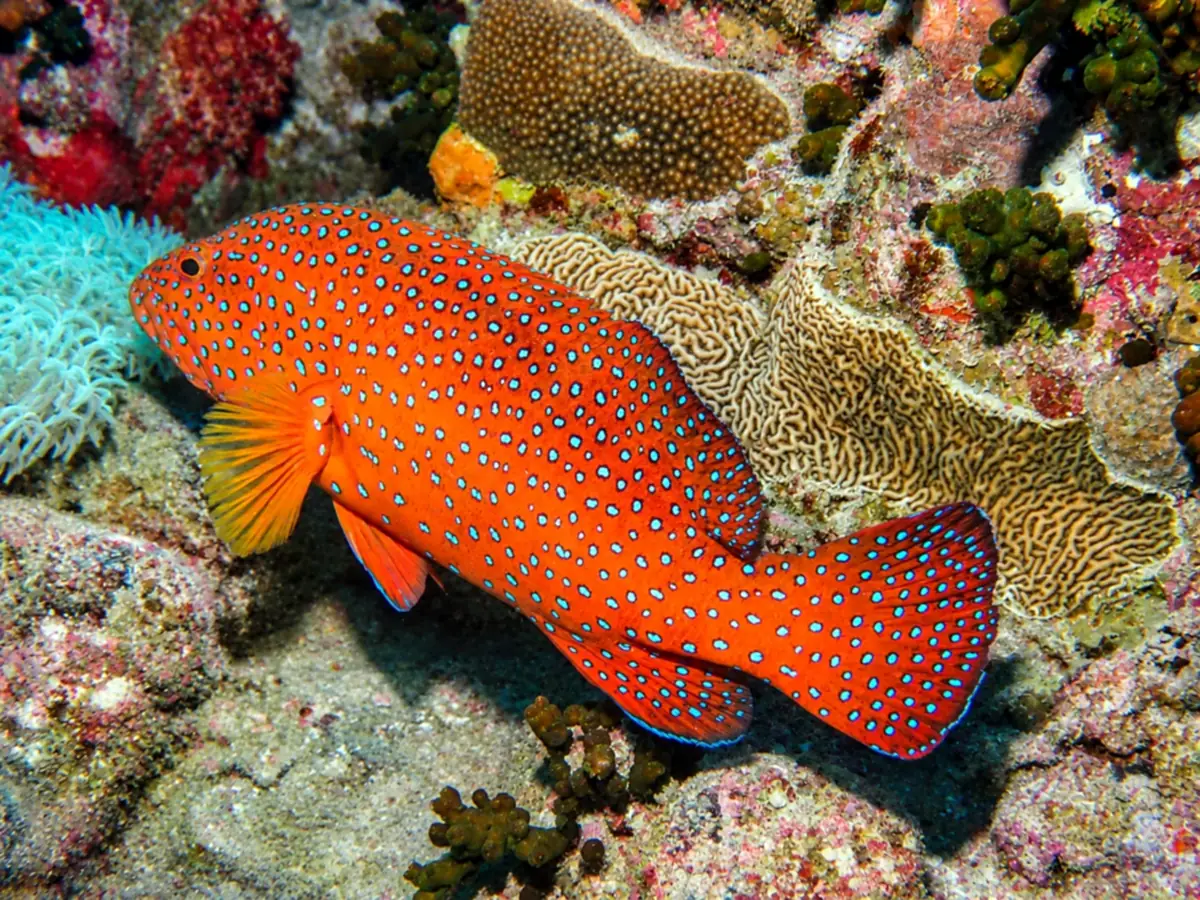
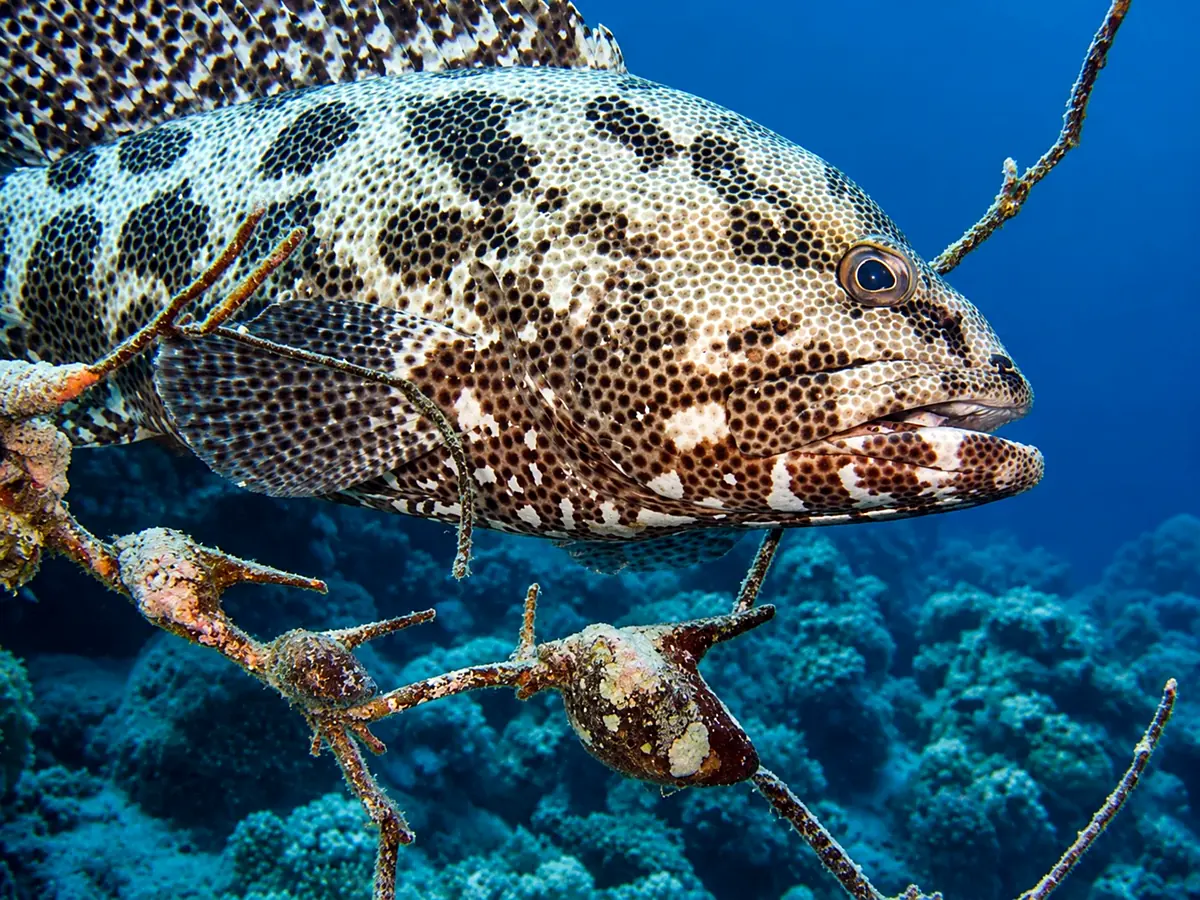
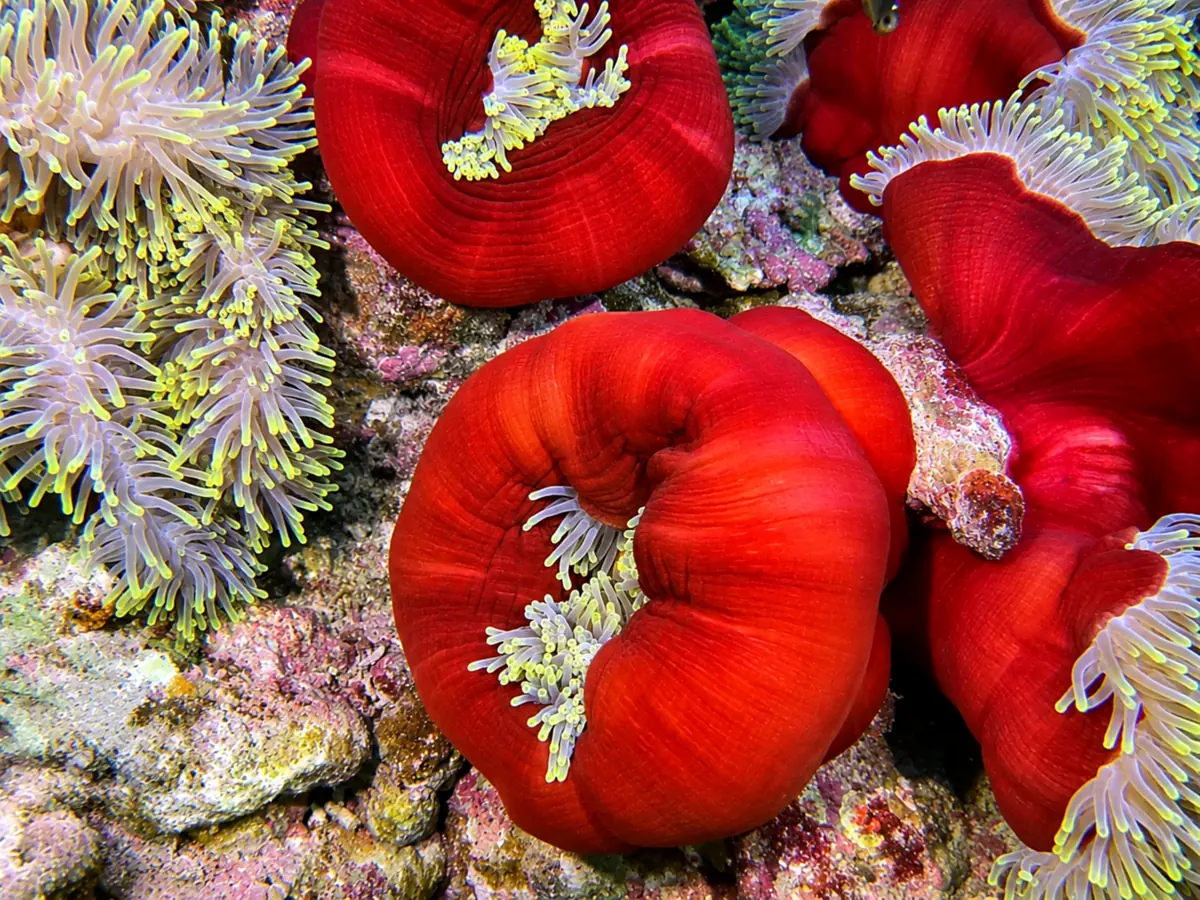
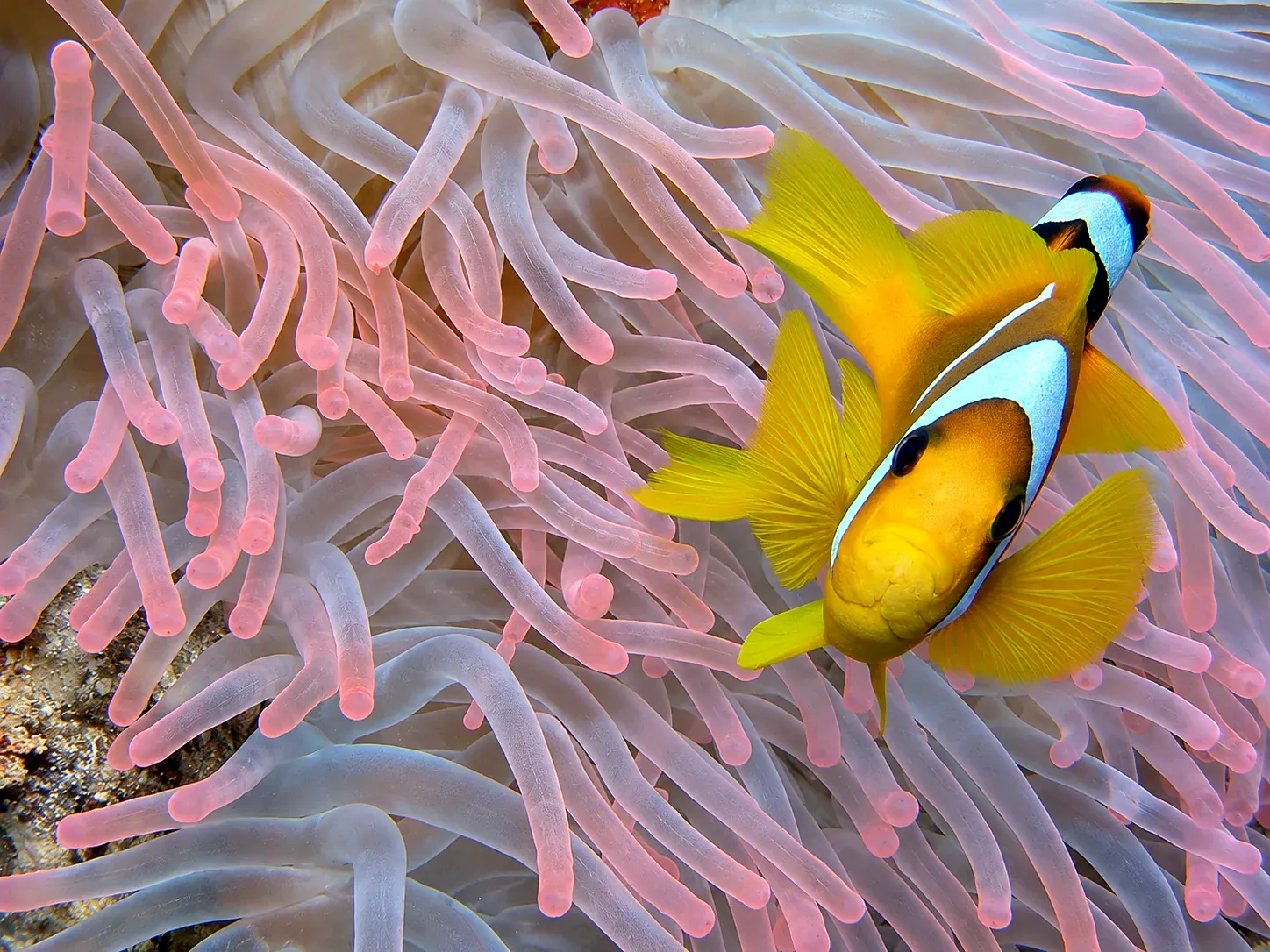
The highlight. Here, for example, groupers, tangs and unicornfish crowd the wall, with anemones full of clownfish.
The towers
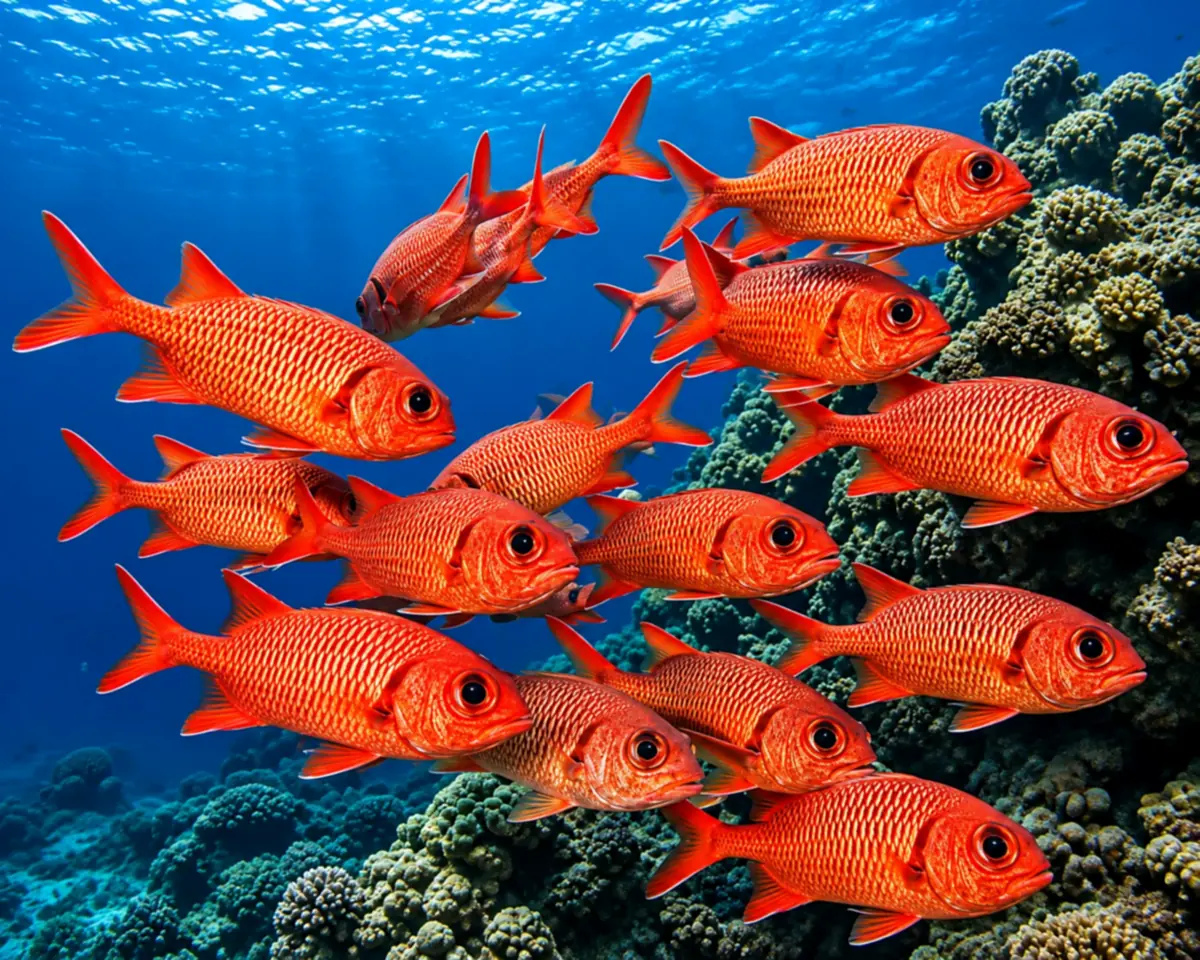
The south. In contrast, the towers hold cracks and small caves where glassfish hide.
The reef top
The shallows. Meanwhile, the south end rises to about 5 m and makes a perfect safety stop.
Where is Tobia Kebir?
Specifically, the reef lies near Soma Bay, south-east of Tobia Island, at about 26°48′30″N, 33°59′44″E. It takes about 25 minutes by boat from Soma Bay, or 30 minutes from Safaga.
In addition, more Tobia reefs lie close by. For example, Tobia Arbaa lies to the north, while Tobia Soraya, Gamul Soraya and Gamul Kebir lie to the south. For the whole area, see the Safaga dive sites guide.
How do you dive Tobia Kebir?
Usually, the dive follows the east wall and then reaches the towers in the south. Before you go in, check the current, which often comes from the north.
Route A: the east wall
The start
The start. Firstly, you leave the mooring on the south side and follow the pathway between the reef and the towers.
The wall
The main dive. Then, you swim along the east wall and look into its small canyons.
The towers
The finish. Afterward, you visit the towers if time allows, then make your safety stop on the reef top.
Route B: the sandy inner areas
The plan
The start. Instead, beginners and courses stay on the sand inside the reef.
The sand
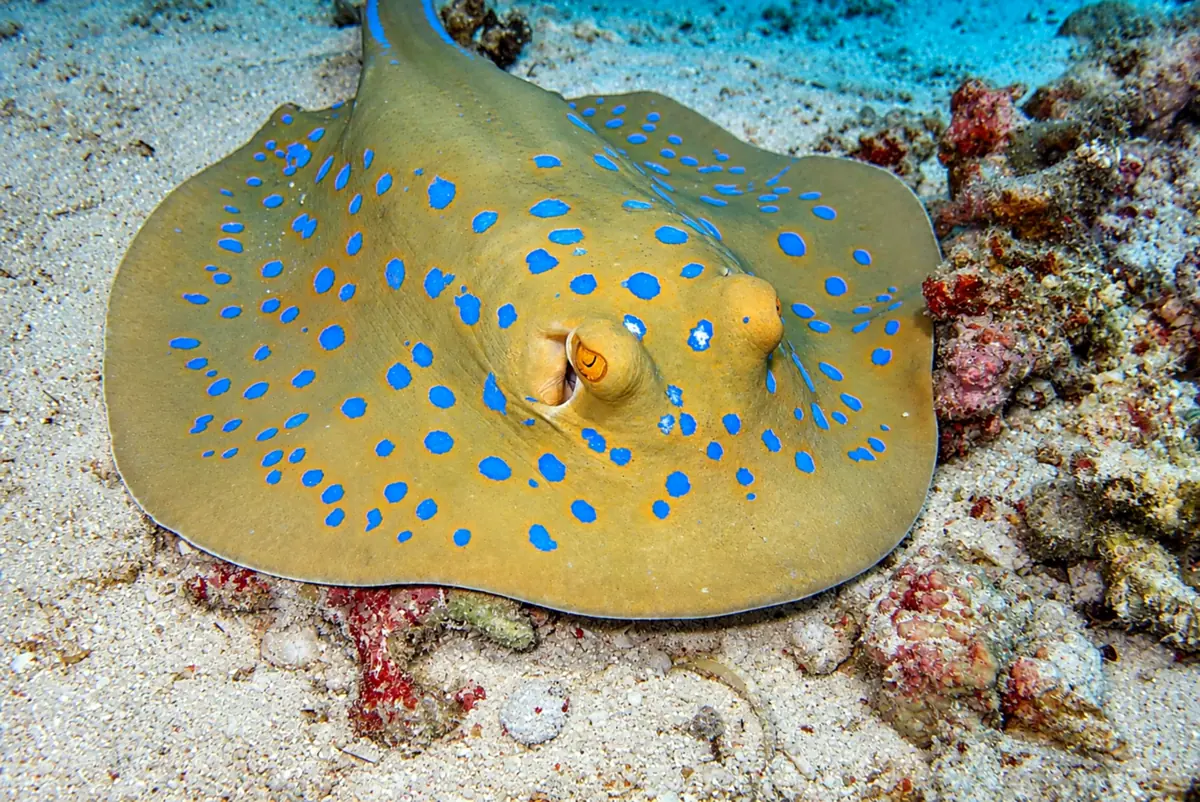
The main dive. Also, you look for blue-spotted rays and flatfish on the sand.
The return
The finish. Finally, return along the reef and end the dive at about 5 m.
What marine life lives around the reef?
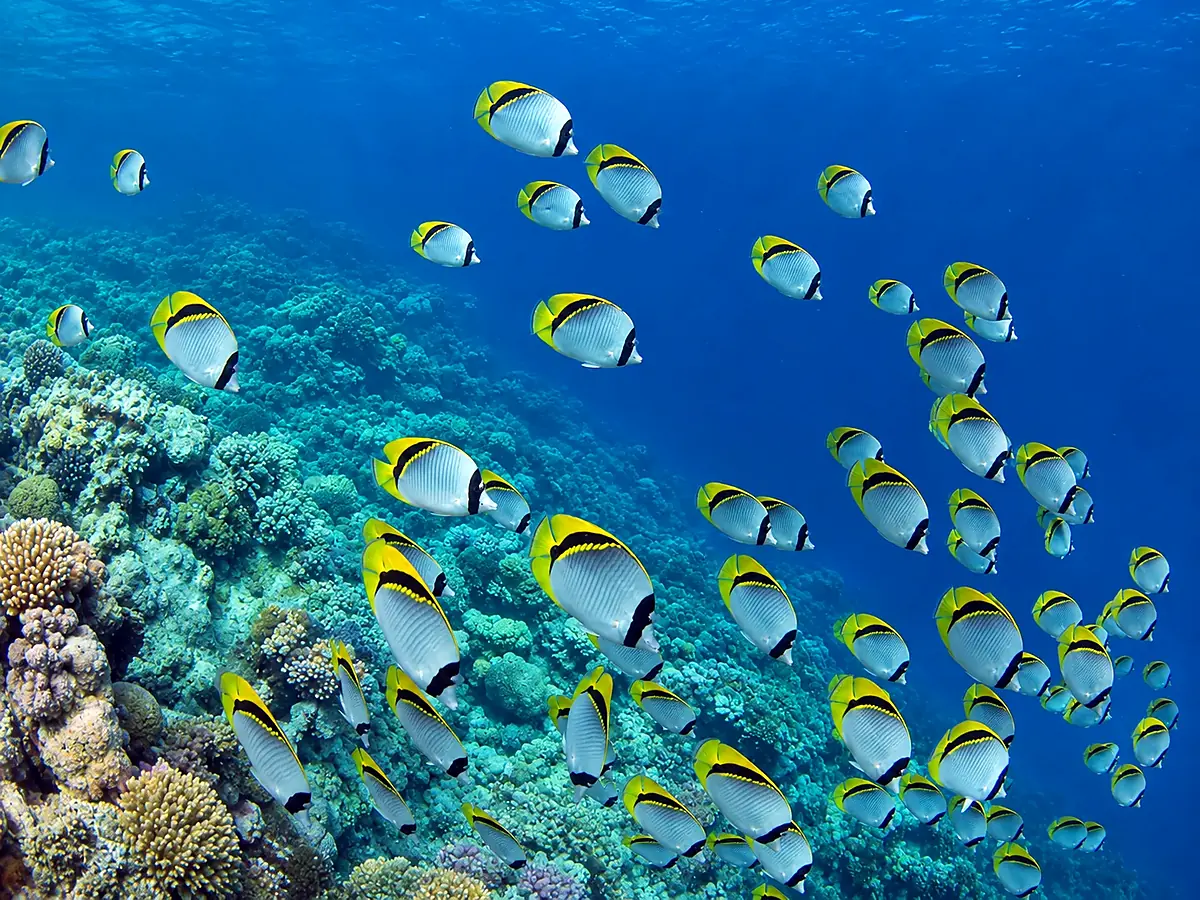
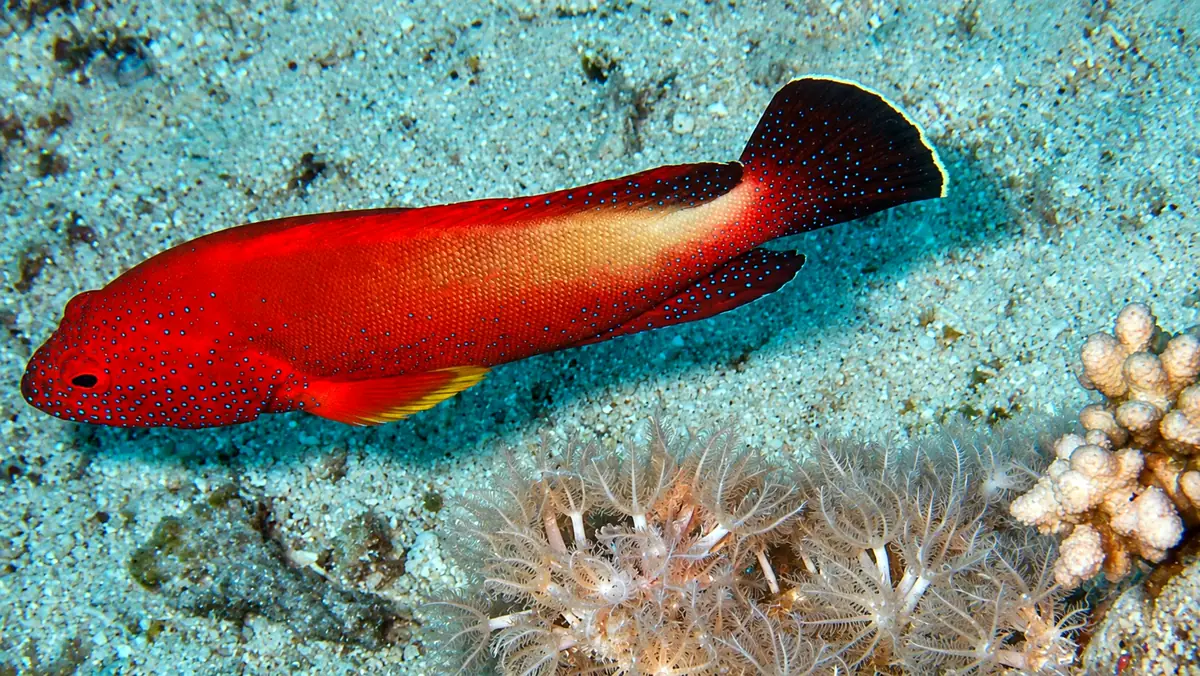
Overall, the east wall is one of the liveliest in the area. Groupers, tangs, surgeonfish, unicornfish, moray eels, triggerfish and a large group of black-backed butterflyfish live here, although no sighting is ever certain.
On the wall
Generally, groupers rest on the wall, while butterflyfish gather in an unusually large group.
Around the towers
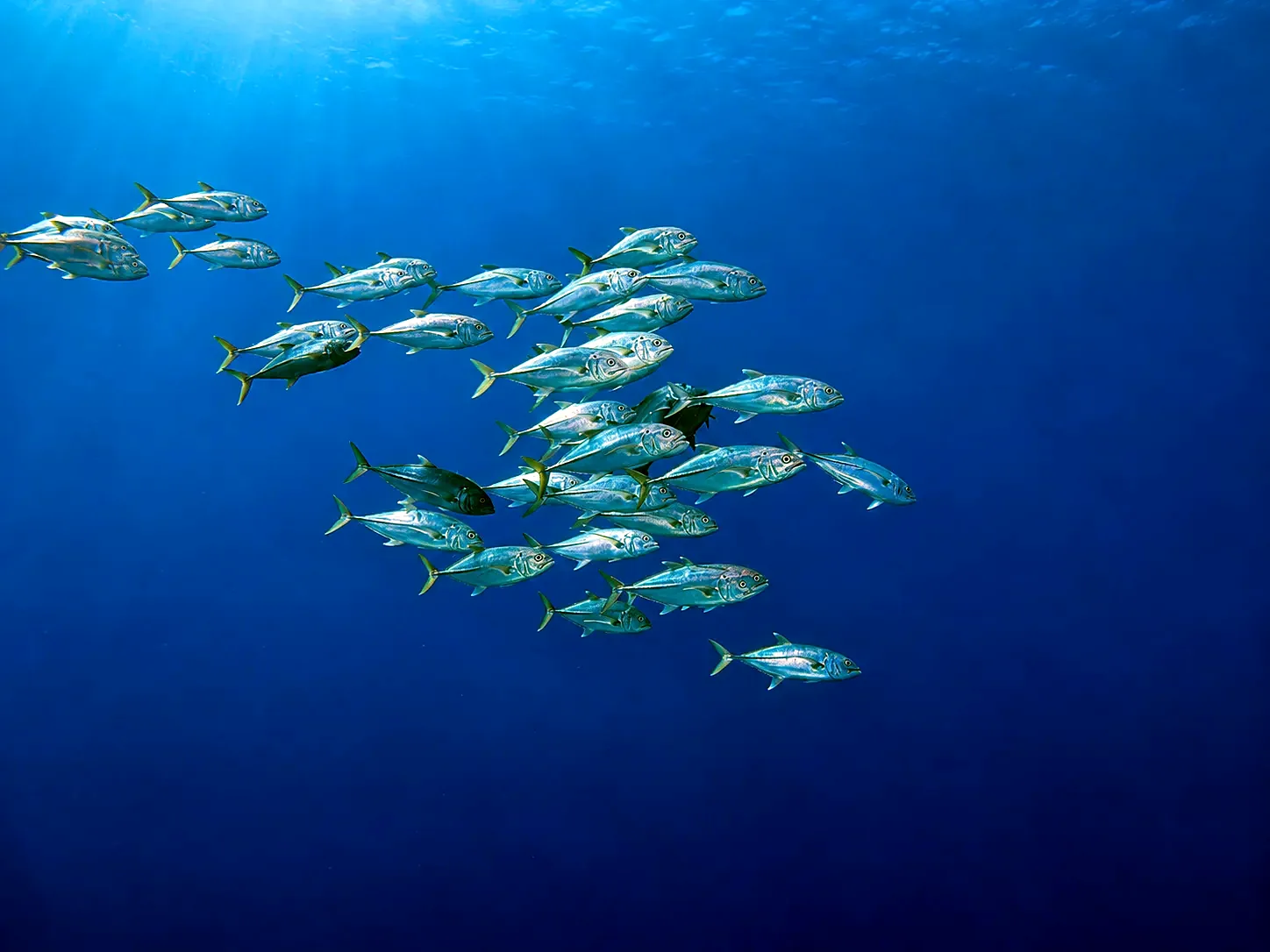
Likewise, glassfish hide in the cracks from hunting lionfish and jacks.
On the sand
Meanwhile, blue-spotted rays rest on the sand, and triggerfish patrol the bottom.
Is Tobia Kebir suitable for beginners?
Yes. The sandy inner areas are ideal for Discover Scuba and Open Water training, and the shallow reef is excellent for snorkelers.
In addition, experienced divers enjoy the east wall and its canyons. For better control near the coral, the Peak Performance Buoyancy course helps.
Before you dive here
Firstly, end the dive at the towers, not beyond them, where the boats moor. Secondly, check the current direction before you go in.
Above all, follow our diving safety standards and the rules of HEPCA. We strongly recommend dive insurance such as DAN Europe.
How do you get there?
In practice, divers reach the reef by boat in about 25 minutes from Soma Bay or 30 minutes from Safaga. Since the headland shelters it, boats can moor there in most weather.
Generally, you can combine it with Tobia Arbaa on the same day. Consequently, you can also pair it with Ras Abu Soma and the rest of the Safaga dive sites.
Plan your dive trip
- Diving in Hurghada — daily diving from Hurghada.
- PADI courses — from first dives to professional levels.
- What divers need on board — the packing checklist for a Red Sea safari.
- redsealiveaboard.net — Red Sea safari schedules and availability.
- Our eight liveaboards: Sea Fox, Simba, Sea Treasure, Star Jet, Bismarck, C Echo II, C U and Ramadan 3.
Photo gallery from the reef
Other routes from Red Sea Diving
Generally, for a first liveaboard, the North Red Sea liveaboard keeps to the classic wrecks. On the other hand, the BDE liveaboard heads south to the Brothers, while the Deep South St. John’s liveaboard goes further still. Meanwhile, the Red Sea liveaboard guide compares all eight routes.
Tobia Kebir: frequently asked questions
Where is Tobia Kebir?
In fact, it is a sheltered reef near Soma Bay, about 25 minutes by boat from Soma Bay.
How deep is Tobia Kebir?
Usually, the sand lies at about 15–18 m, and the reef top comes up to about 5 m.
Is Tobia Kebir good for beginners?
Yes. The sandy inner areas suit beginners and training, and the shallow reef is excellent for snorkeling.
What can you see at Tobia Kebir?
Above all, coral towers, glassfish, groupers, moray eels, clownfish and a large group of black-backed butterflyfish.
What does Tobia Kebir mean?
Indeed, it means “Big Tobia”, the largest of the four Tobia reefs.
Safaga · Soma Bay · Reef and towers
Dive Tobia Kebir with us
Simply tell us your dates, the number of divers, your certification level and your number of logged dives. Afterward, our team checks which departure fits your group before you commit to anything.


