
Safety
Firstly, diving safety is the part of the sport that never appears in the photographs. Nevertheless it decides how every week at sea ends. Therefore this page covers both sides of it: the crew, the vessel and the emergency equipment on one hand, and the prevention rules, depth limits and procedures every diver carries into the water on the other.
Emergency ContactsDiving Safety Starts Before You Enter the Water
Above all, most incidents are shaped on deck rather than underwater. Consequently the checks below matter more than any skill performed at depth.
Training and Long Breaks
With time, knowledge from a course fades. Moreover a long break away from the water erodes routines that used to be automatic.
Therefore reading the course material again before a trip costs nothing, whereas the alternative can cost a great deal.
Certification and Insurance
Initially the crew records your certification card and your diving insurance at check-in.
Consequently both documents travel with you, rather than as a photograph on a phone.
Honest Self-Assessment
Generally the common causes of incidents are the wrong use of equipment, insufficient knowledge and an overestimation of one’s own ability.
Accordingly the most useful skill on the dive deck is saying no to a dive.
Fitness on the Day
Fatigue, stress and feeling unwell all belong on the surface. Similarly, a heavy cold ends a diving day before it starts.
In practice, sitting out one dive protects the other seventeen.
Decompression Illness: Rare, Yet Rarely Bad Luck
Fortunately, decompression illness is uncommon. According to figures published by DAN for 2007, an average of only 4.7 dives out of every 10,000 led to the onset of decompression illness. However, the vast majority of those cases followed a mistake made by the diver rather than an accident of the sea. Consequently diving safety is largely a question of discipline, not luck.
Specifically, the recurring causes are the wrong use of diving equipment, insufficient knowledge and an overestimation of the diver’s own capabilities. Meanwhile the sea itself is seldom the problem.
Conversely, the preventive measures are simple and already familiar from training. Nevertheless they are the first things forgotten once a holiday rhythm takes over.
The Core Diving Safety Rules
Naturally, every diver learns these during training. Nevertheless they are worth repeating, because they are ignored far more often than they are forgotten.
Safety Stop 5 / 3
- Always performed before the end of a dive
- Depth: 5 metres
- Duration: at least 3 minutes
- Helps the body release excess nitrogen
- Complete it close to the reef, not in open water
Depth Discipline
- Long and deep dives require matching training
- They also require matching equipment
- Certification sets your depth, not curiosity
- The guide sets the limit in the briefing
Hydration
- Drink 2–3 litres above your normal intake
- Take small sips across the whole day
- Well-hydrated blood clears nitrogen faster
- Avoid a large volume just before a dive
Alcohol and Condition
- Alcohol dehydrates and has no place in a diving day
- Once you drink, diving stops for the rest of that day
- Adipose tissue absorbs nitrogen readily
- Refrain from diving whenever you feel unwell
Depth Limits by Training Level
In Egypt, depth limits follow the global standards of the WRSTC, the World Recreational Scuba Training Council. Therefore they apply to every diver on board, regardless of experience elsewhere.
On Air
- Your current training level sets the limit: 18 m, 30 m or 40 m.
- Furthermore, 40 m is the absolute maximum for recreational diving.
- Consequently a deeper reef does not extend a shallower certification.
Meanwhile the dive guides on board enforce these limits, and every diver should follow them for their own safety.
On Enriched Air Nitrox
- Maximum oxygen partial pressure: 1.4 bar pO₂.
- Maximum depth: 40 m, as on air.
- Naturally, you need a valid nitrox certification before the crew issues any nitrox cylinder.
In other words, nitrox extends bottom time rather than depth. Therefore treat it as a comfort margin, not as permission to go deeper.
Diving Insurance and the Cost of Treatment
However, standard health and travel insurance does not cover those costs, and they routinely reach the five-figure range in euros.
Therefore dedicated diving insurance, such as the cover offered by Divers Alert Network (DAN), is strongly recommended for every diver. Moreover the crew checks it on board before the first dive, so you need to arrange it before you travel rather than after you arrive.
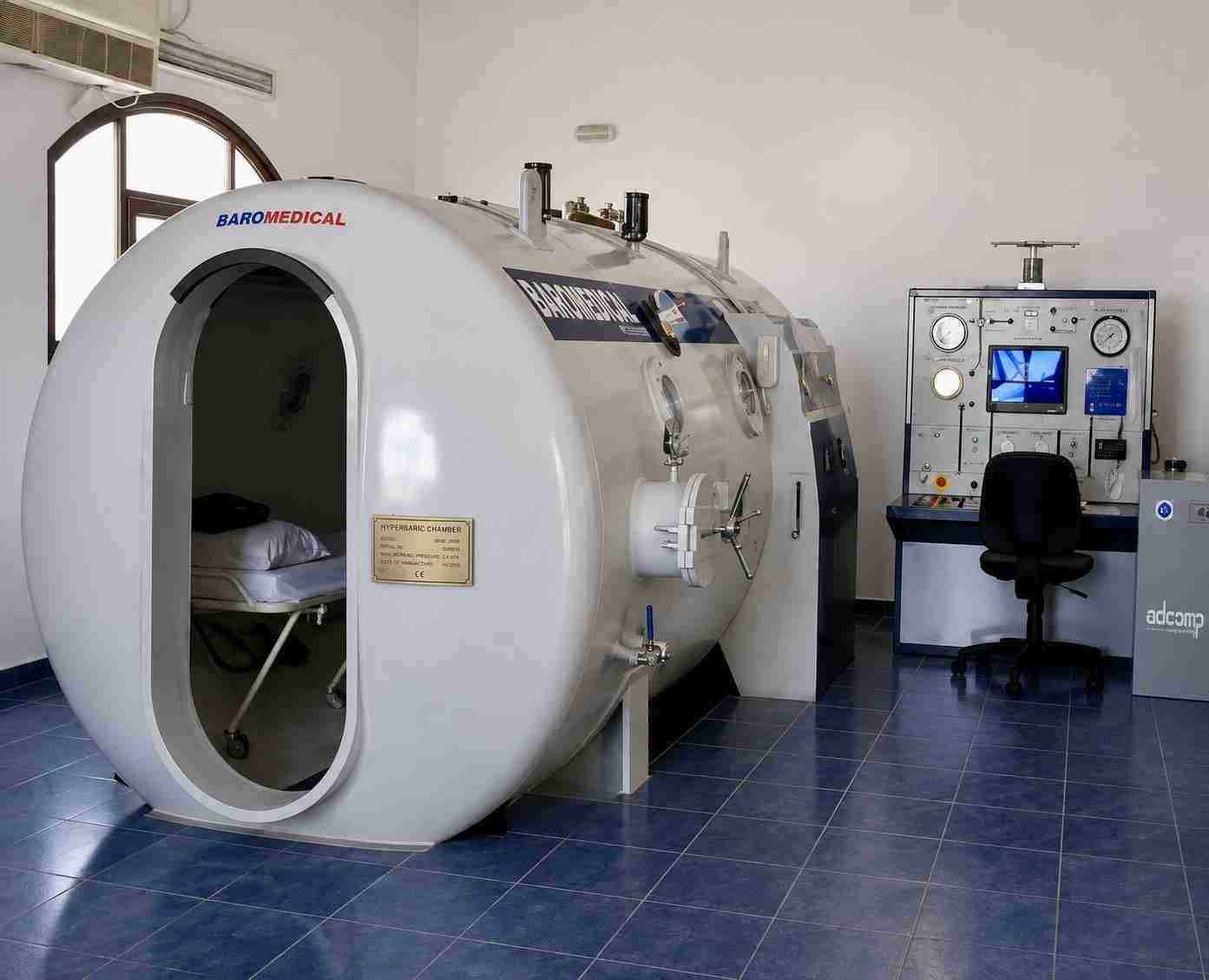
Hyperbaric recompression chamber used for the treatment of diving-related emergencies, including decompression sickness.
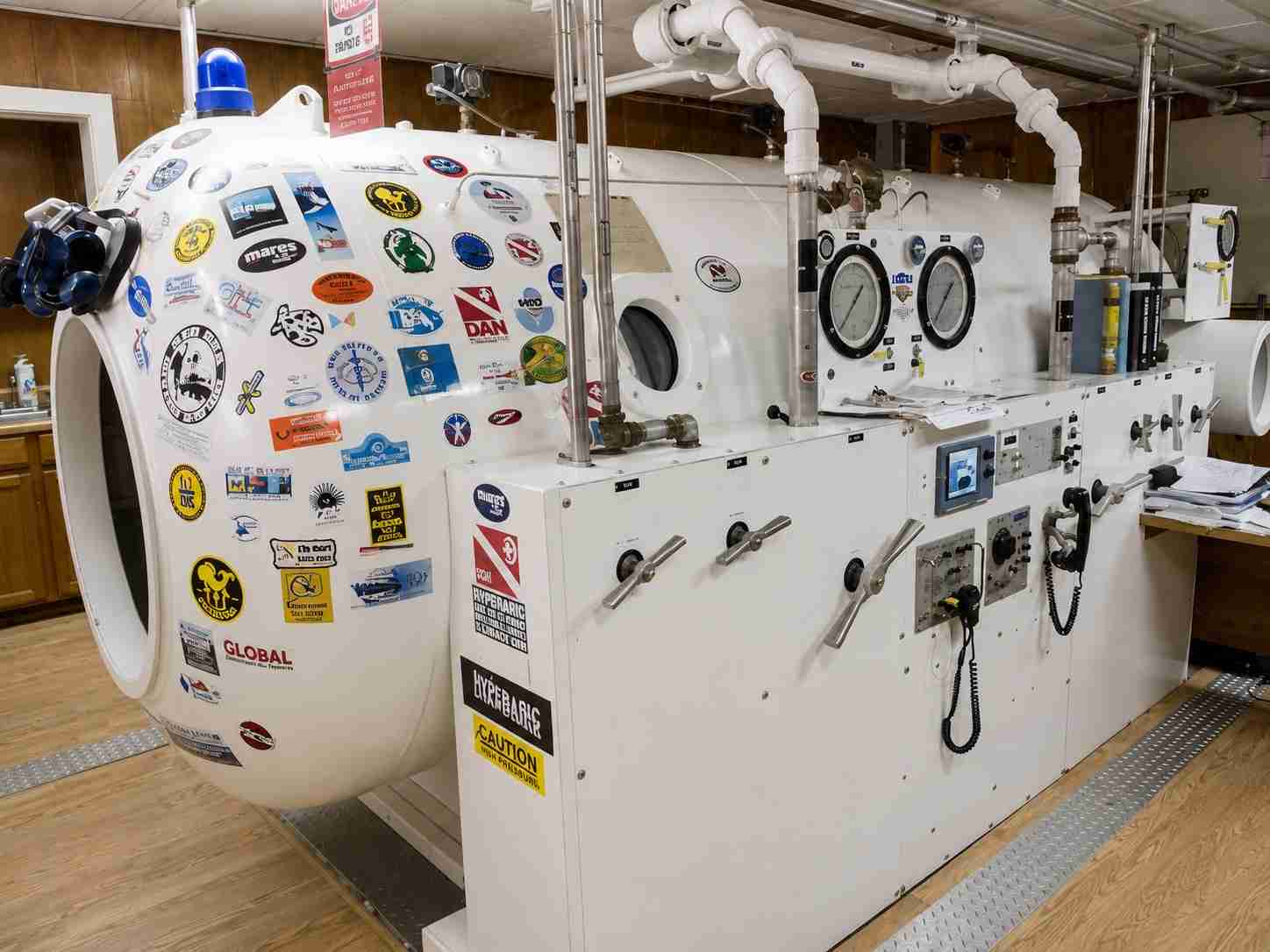
Professional hyperbaric recompression chamber used for emergency treatment of decompression sickness and other diving-related pressure injuries.
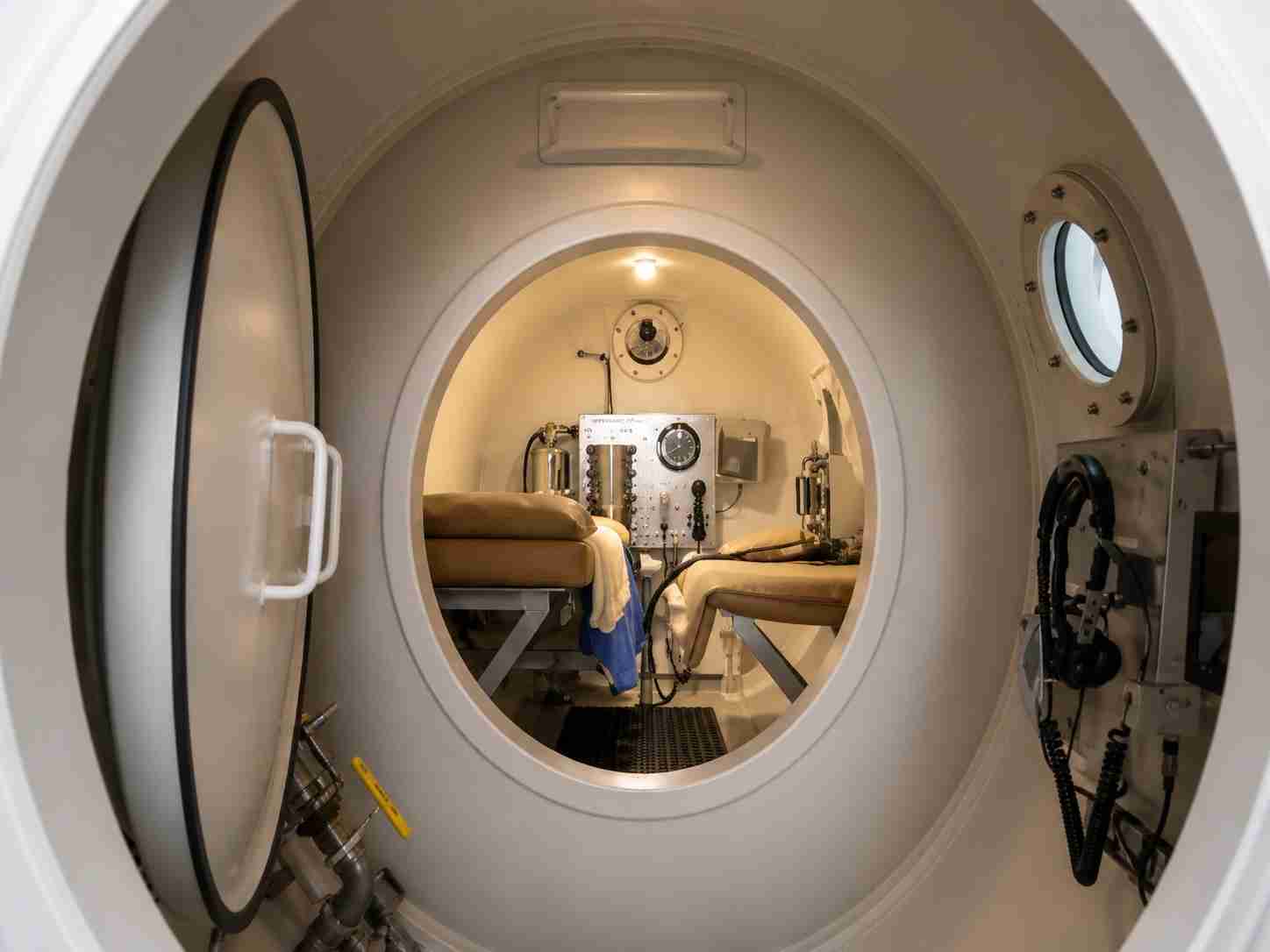
Interior of a multi-place hyperbaric recompression chamber equipped for the treatment and monitoring of diving-related decompression illness.
Why Diving Safety Matters More on Remote Reefs
The isolation of the southern reefs, particularly inside the Marine Park and around St. John’s, complicates both immediate first aid and the transport of an injured diver. Notably, airborne rescue by helicopter or aircraft is not available across those distances. Consequently the crew gives primary care on board, and the vessel itself carries the casualty to shore.
Specifically, sailing from St. John’s to the nearest decompression chamber at Hamata takes a minimum of eight hours. Therefore proper treatment is delayed by most of a day.
Accordingly, prevention carries far more weight in the Deep South than anywhere else. In practice this is why guides tighten depth and ascent discipline on the remote routes.
Above all, the exposure of each itinerary differs considerably. Therefore the distances involved are worth reading before you book, and they are set out route by route in our Red Sea liveaboard guide.
Professional Crew and Diving Safety Training
Naturally, procedures only work when the people running them are trained. Accordingly every captain, dive guide, instructor and crew member on board is an experienced professional with detailed regional knowledge and emergency response training.
What the Crew Is Trained In
- Emergency First Response (EFR)
- Oxygen administration
- Fire emergency procedures
- Rescue operations
- Marine emergency communication
- Passenger safety management
Meanwhile the dive guides are the second authority on board after the captain, and they decide whether, when, where and how each dive takes place.
The Welcome Safety Briefing
- Boat safety procedures
- Emergency exits and assembly points
- Fire and evacuation procedures
- Life jacket locations
- Diving safety rules
- Zodiac and water entry procedures
- Night diving procedures
Furthermore the briefing is repeated whenever conditions, the route or the group change during the week.
Diving Safety Procedures on Board
In practice, prevention is shared. Accordingly the crew carries the equipment and the procedures, whereas the diver carries the discipline.
Before Diving
- Dive briefing before every dive
- Site condition checks
- Current and weather evaluation
- Buddy checks and equipment inspection
During Diving
- Professional guide supervision
- Maximum depth monitoring
- Controlled group diving
- Surface support available at all times
After Diving
- Diver check-in system
- Dive roster recording who is in the water
- Surface interval monitoring
- Emergency support readiness
Your Own Kit
- Surface marker buoy and signalling device
- Torch for swim-throughs
- Spare mask, straps and o-rings
- A dive computer you know how to read
Furthermore, the packing list is covered in full in what divers need on board, whereas entries, exits and in-water technique are explained in our liveaboard dive techniques guide.
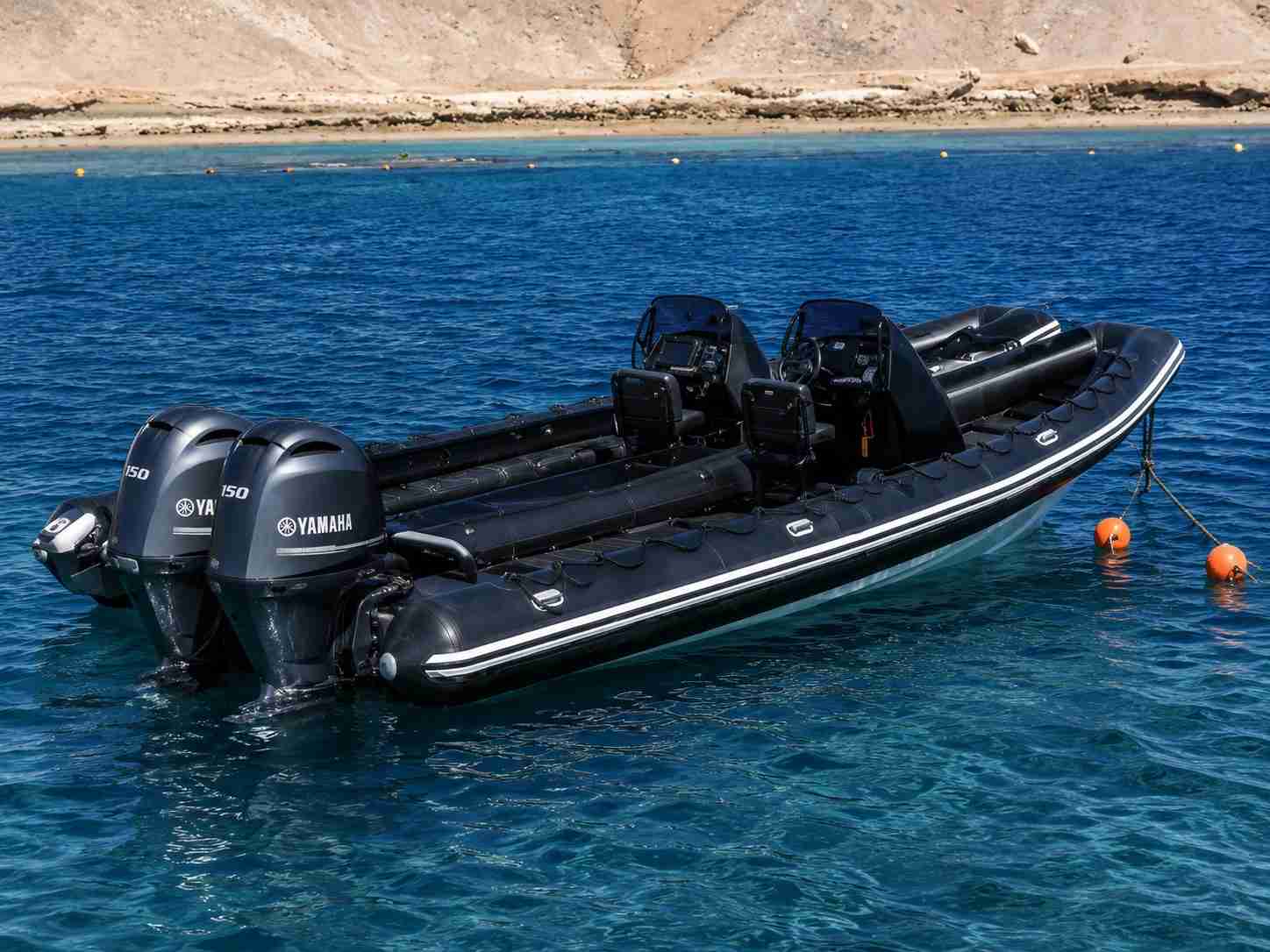
High-performance RIB used for diver transport, dive-site access, pickups, and emergency support during Red Sea liveaboard operations.
Diving Safety Equipment on Board
Similarly, every vessel carries professional emergency and rescue equipment, and the crew checks it before each departure.
Oxygen Systems
- Emergency oxygen units
- Portable oxygen cylinders
- First aid oxygen kits on the dive deck
Life Saving Equipment
- Life jackets for all guests and crew
- Life rafts
- Life rings and floating devices
- Emergency signalling equipment
Fire Safety Systems
- Fire extinguishers throughout the vessel
- Engine room fire suppression
- Smoke detectors and alarms
- Written fire emergency plans
Navigation & Communication
- GPS navigation systems
- Marine radio communication
- Satellite communication
- Radar and sonar
- EPIRB emergency beacon
Equipment carried on every vessel
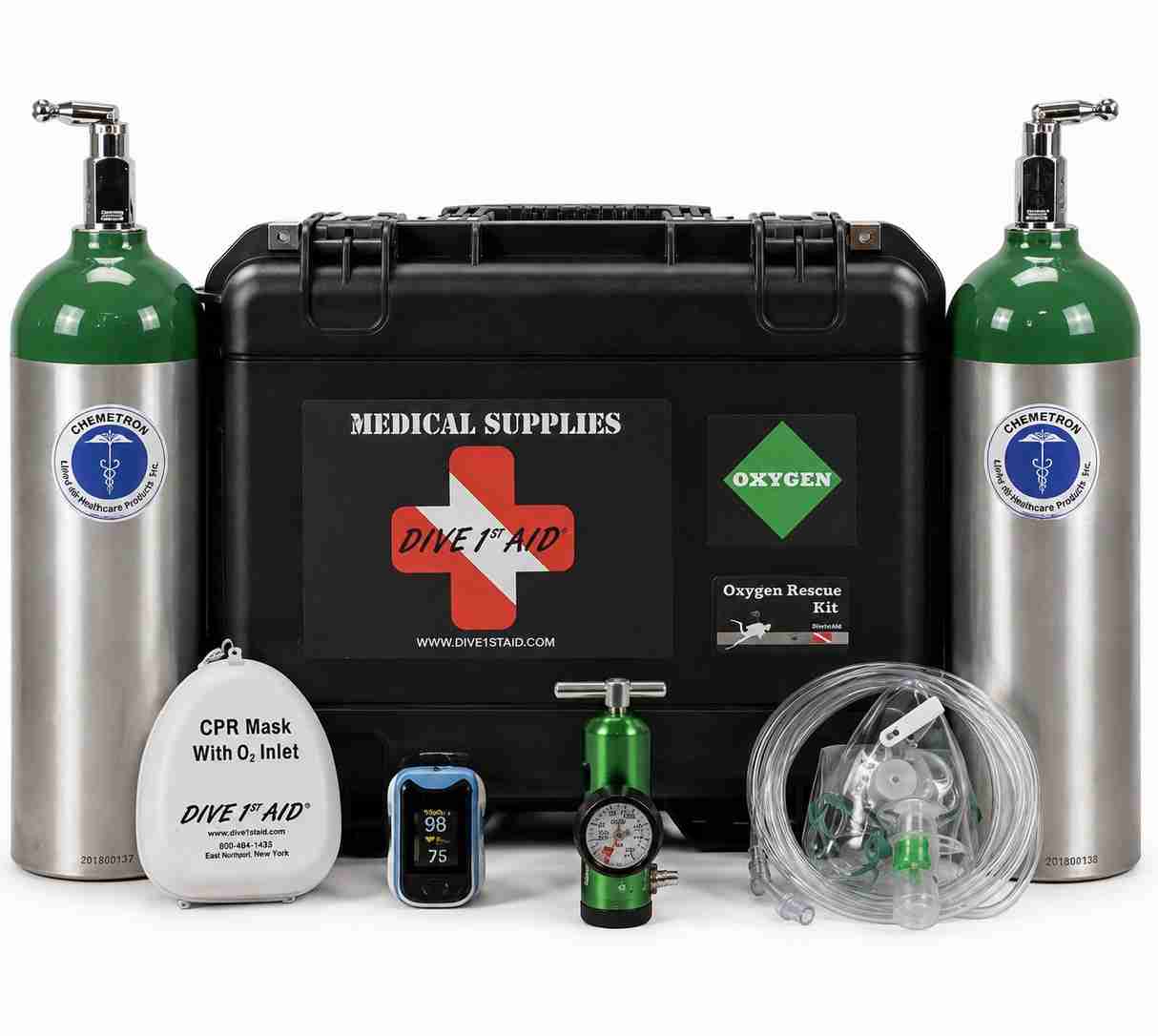
Professional emergency oxygen system for diving operations, equipped with oxygen cylinders, regulator, masks and essential first-aid supplies.
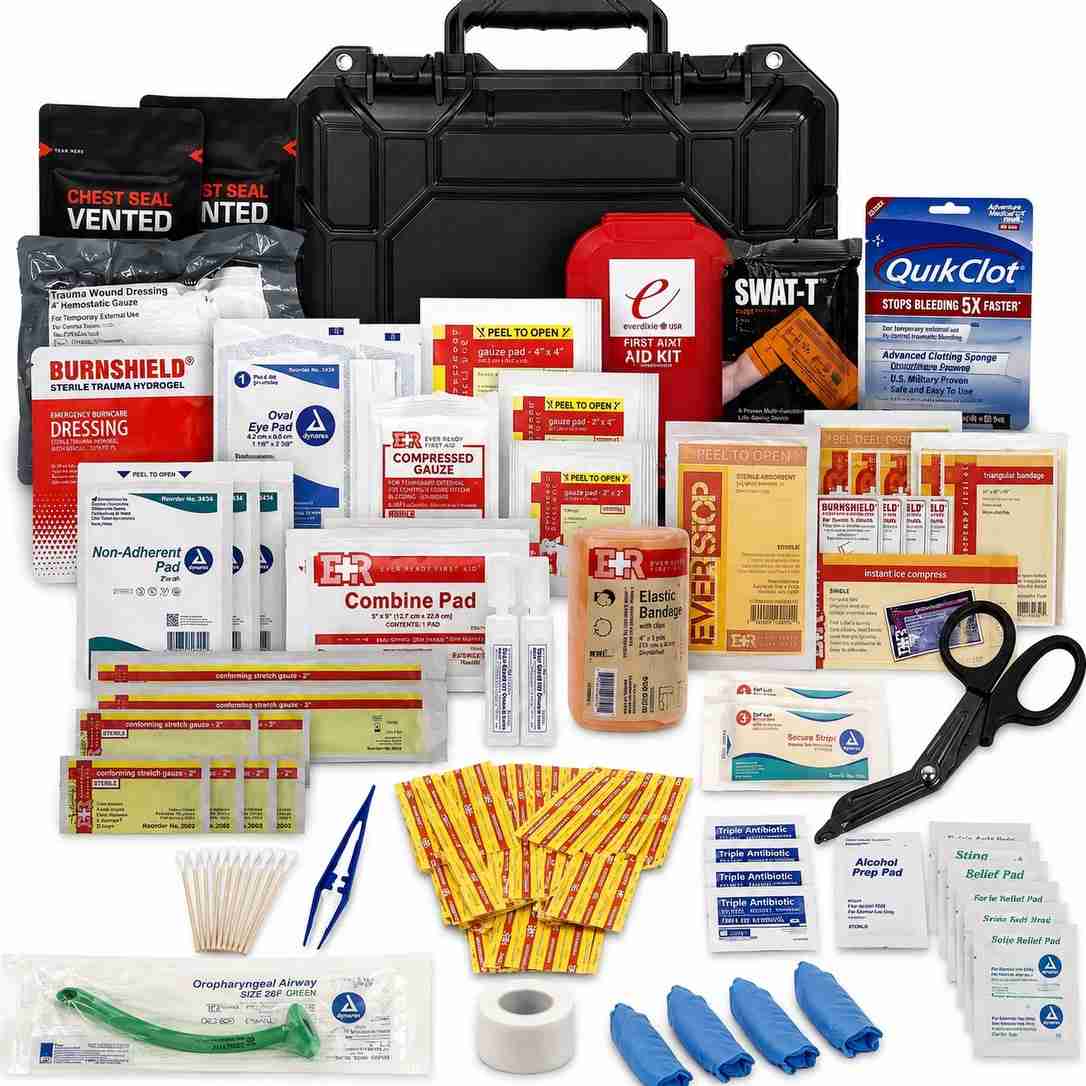
Comprehensive emergency first aid kit with medical dressings, bandages, bleeding-control supplies, gloves and essential equipment for onboard diving safety.
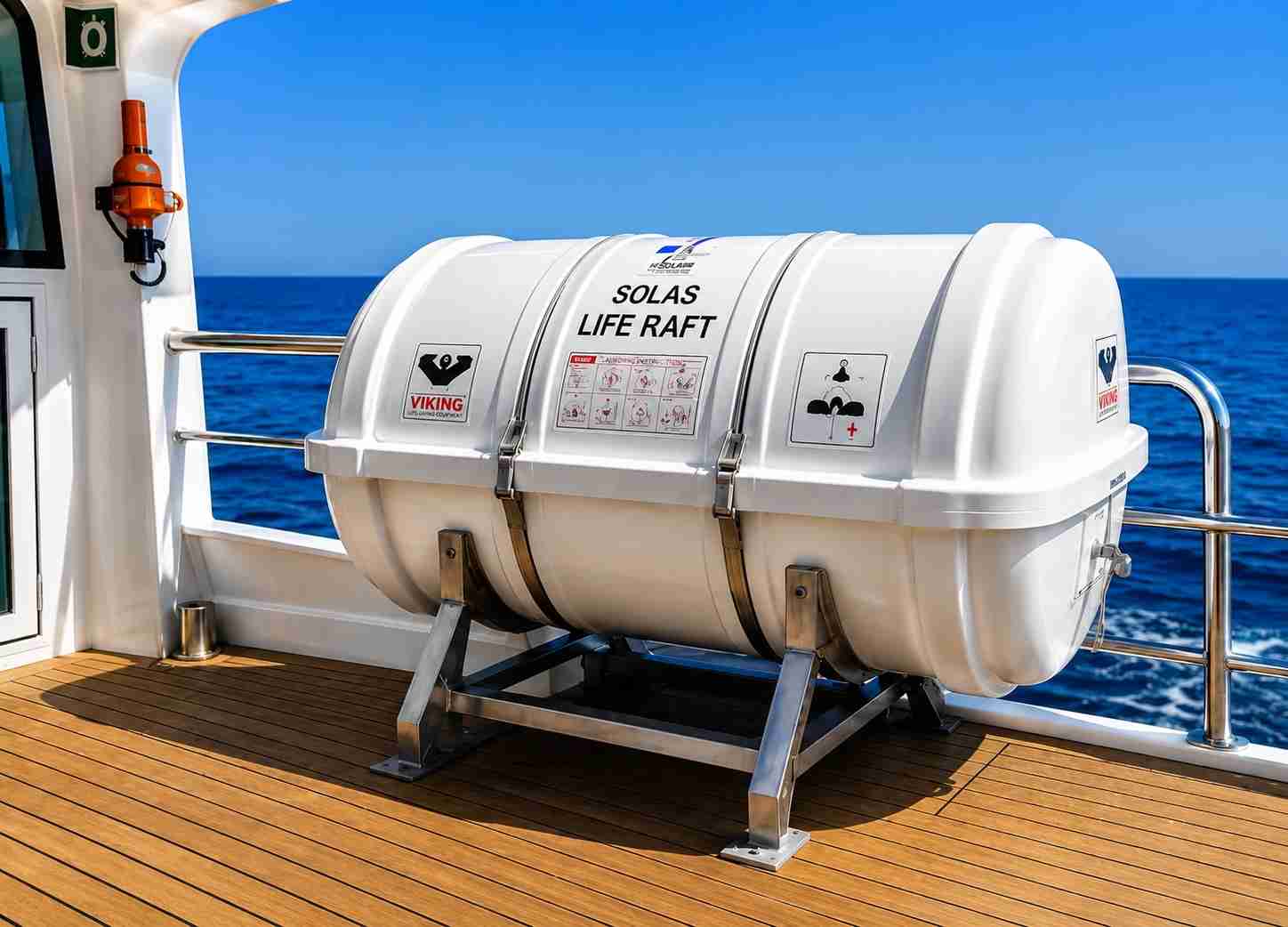
SOLAS-approved inflatable life raft installed on a liveaboard vessel for emergency evacuation and maritime safety.
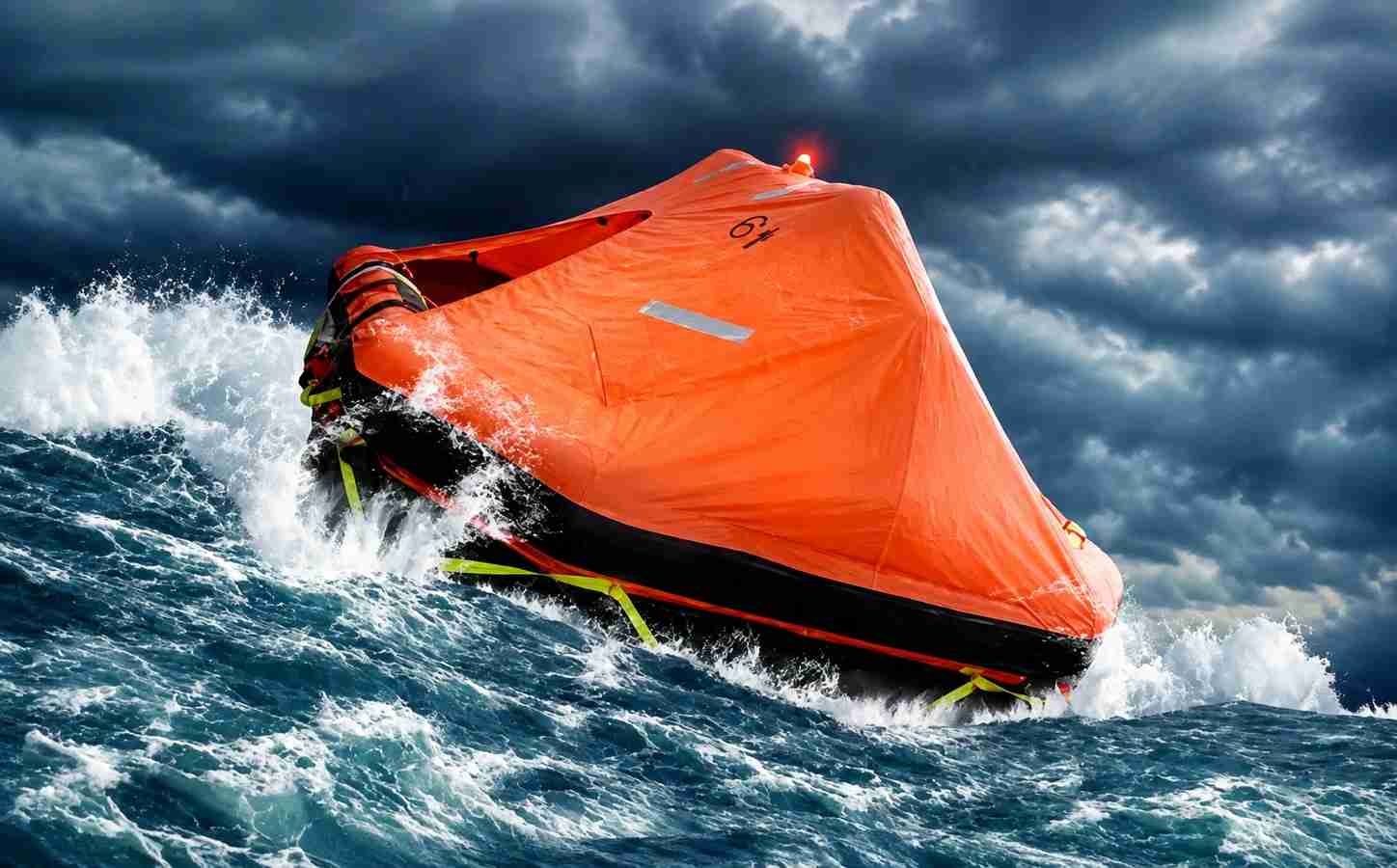
Fully deployed inflatable life raft designed to protect passengers and crew during an emergency evacuation at sea.

Essential marine safety equipment including life jackets, lifebuoy and emergency flotation devices for passenger and crew safety on board.
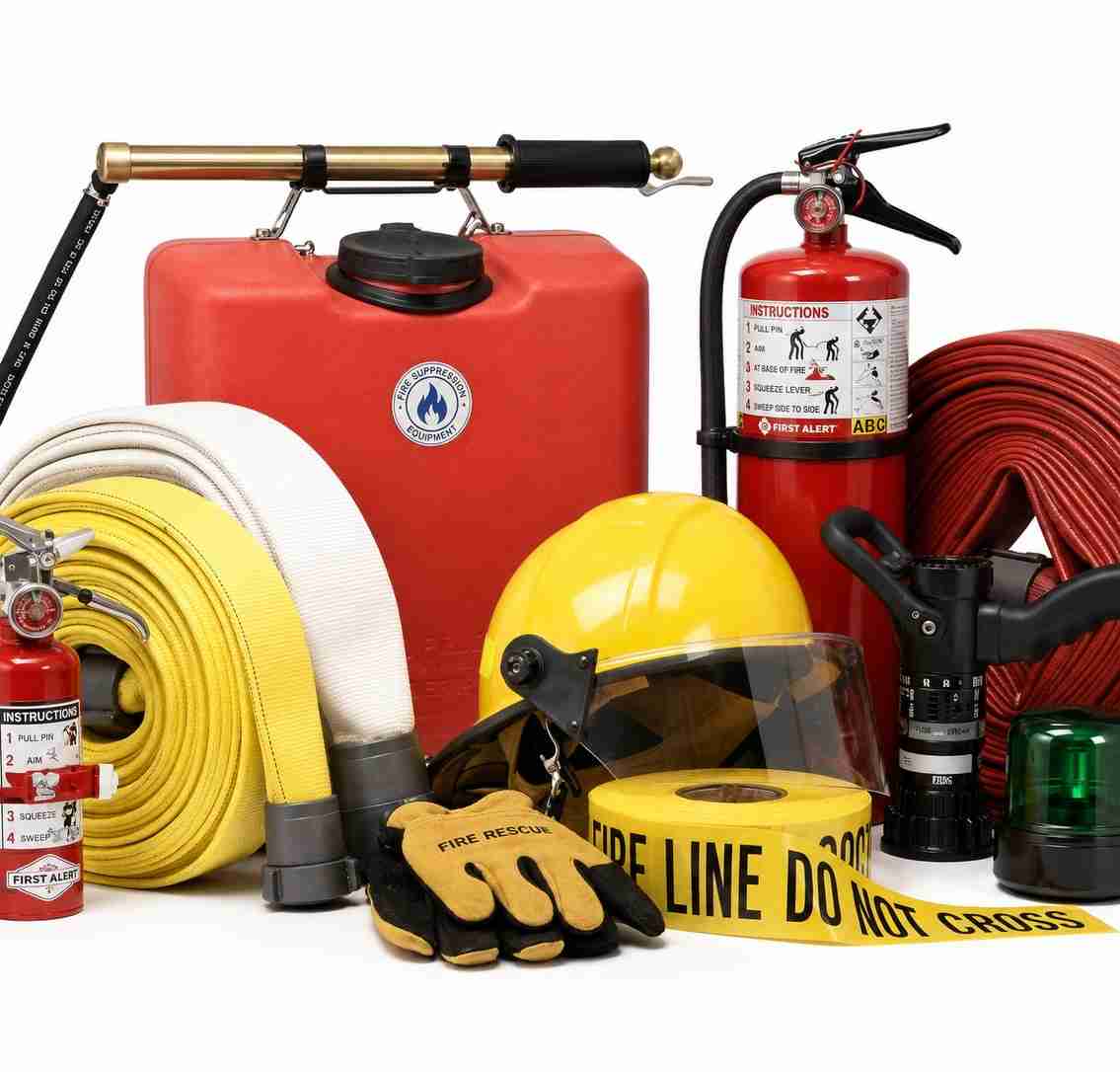
Essential onboard firefighting equipment including fire extinguishers, fire hoses, nozzle, protective helmet and emergency fire-response gear.
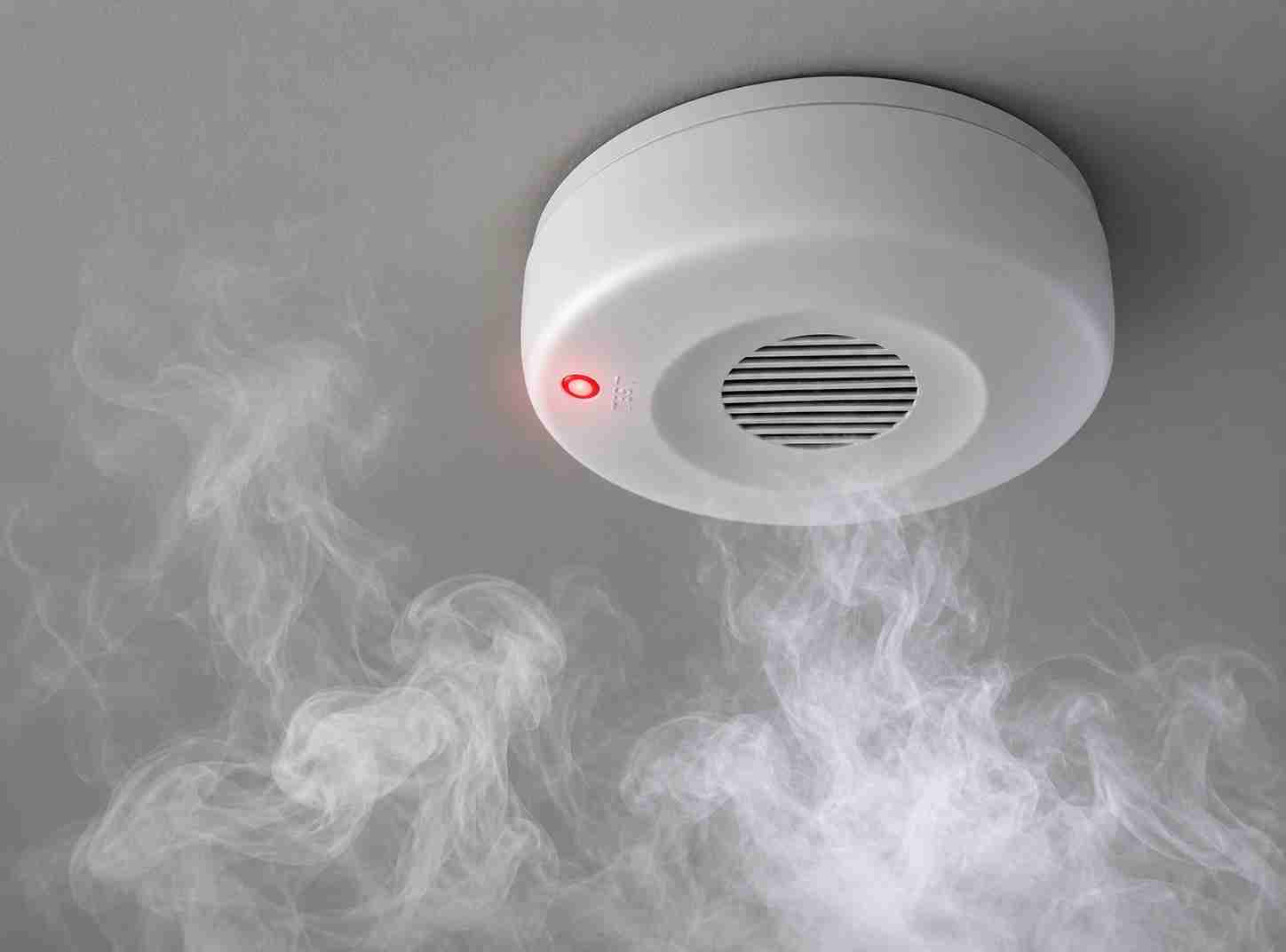
Automatic smoke detector providing early fire warning and helping protect guests, crew and vessel areas in an emergency.
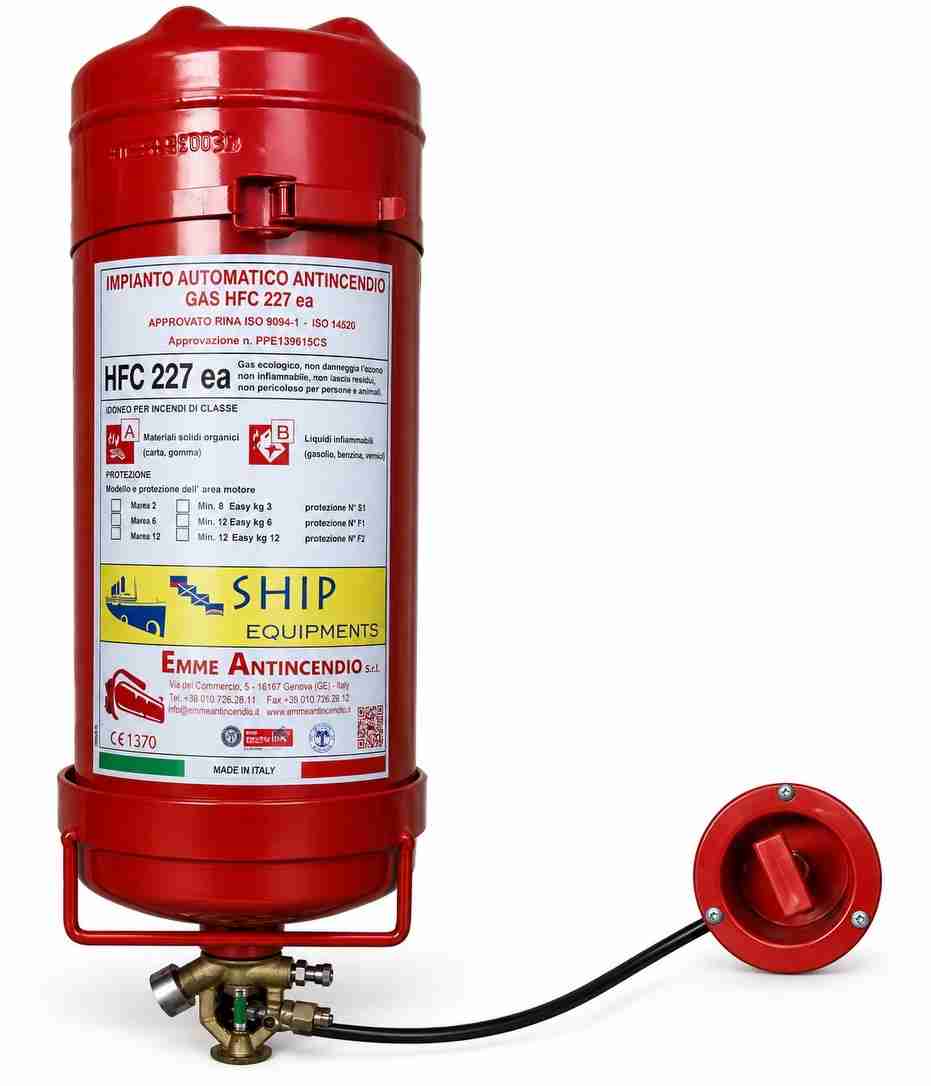
Automatic fixed fire suppression system designed to protect marine engine rooms and machinery spaces by rapidly controlling and extinguishing fires.
Medical Support, Maintenance and Conditions
Medical & First Aid
- Full marine first aid kits
- Emergency medical supplies
- Oxygen administration equipment
- Written emergency contact procedures
Direct Contact With
- Hyperbaric chambers
- Coastguard services
- Emergency medical centres
Vessel Maintenance
- Engine maintenance
- Electrical system inspection
- Fire safety inspection
- Dive compressor servicing
- Safety equipment checks
Conditions Monitoring
- Wind conditions
- Sea state
- Weather forecasts
- Currents and visibility
Consequently dive plans and routes are adjusted whenever conditions require it.
Emergency Call Procedure: VHF Channel 16
At sea, the international distress and calling frequency is VHF channel 16 (156.8 MHz). Therefore every guest should know the sequence below, even though the crew normally makes the call.
How to Make the Call
- Press the talk button.
- Communicate the name of your boat.
- Ask for the desired contact person, if known.
- Announce the emergency.
- Release the talk button.
- Wait briefly for confirmation.
Subsequently, repeat the sequence until contact is made. Afterwards follow the instructions you are given.
Before You Transmit
- Firstly, state the vessel name clearly and slowly.
- Secondly, give the nature of the emergency in plain words.
- Thirdly, give your position if it is known.
- Finally, keep the channel free between transmissions.
Meanwhile a second crew member stays with the casualty and begins oxygen administration, because treatment starts long before the boat reaches port.

Marine VHF radio set to Channel 16, the international distress, safety and calling channel used for emergency communication at sea.
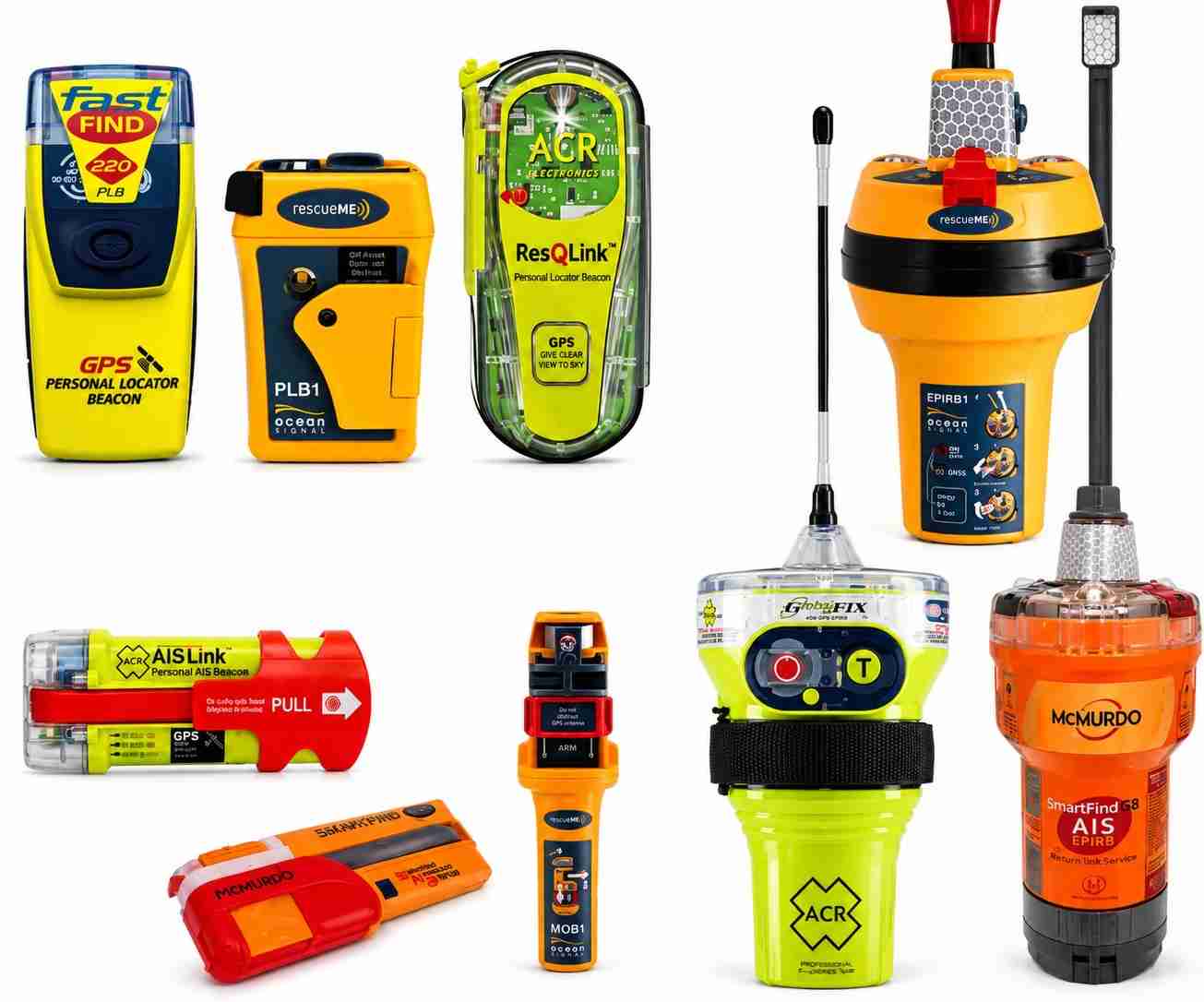
Marine emergency positioning and distress beacons used to transmit a vessel or person’s location to search-and-rescue services during an emergency at sea.
If a Diving Accident Is Suspected
Firstly, act on suspicion rather than on certainty. Consequently the sequence below starts before any diagnosis is made, because early oxygen and early contact change the outcome more than anything else that happens on board.
Immediate Steps
- Stop diving immediately.
- Administer 100% oxygen.
- Call the nearest hyperbaric or decompression chamber.
- Contact emergency medical services if required.
- Keep the diver resting and under continuous observation.
- Record the dive profile: maximum depth, dive time, ascent information and symptoms.
- Follow the instructions of the diving or hyperbaric physician.
While You Wait
- Firstly, keep the oxygen flowing continuously rather than intermittently.
- Secondly, keep the diver still, warm and horizontal.
- Thirdly, give fluids only if the diver is fully conscious and able to swallow.
- Finally, write everything down as it happens, because the physician will ask for the timeline.
Meanwhile the captain begins the run towards the nearest port, since the vessel itself is the ambulance on the offshore routes.
Red Sea Emergency Contacts
Naturally, these numbers belong in your phone before departure rather than during an incident. However, always confirm them locally, because contact details change.
Sinai and Northern Red Sea
Southern Red Sea and Deep South
Port Ghalib
Deco International
Inside Port Ghalib Hospital, serving Port Ghalib and the Marsa Alam departures.
+20 122 190 383
Marsa Shagra
Baromedical
In Marsa Shagra village, roughly 22 km north of Marsa Alam.
+20 122 433 116
Alternative line
+20 122 436 2222
Hamata
Deco International
At Hamata Port marina, roughly 135 km south of Marsa Alam. Consequently it is the nearest chamber to the Deep South reefs.
+20 122 190 383
Notably, Safaga, Port Ghalib and Hamata are all served by the same Deco International emergency line. Therefore one number covers the whole stretch of coast, whereas Baromedical at Marsa Shagra runs its own.
National and international
Diving Safety: Frequently Asked Questions
How common are diving accidents?
Fortunately they are rare. According to figures published by DAN for 2007, an average of 4.7 dives out of every 10,000 led to the onset of decompression illness. However, the vast majority of those cases followed a mistake by the diver rather than bad luck.
Why is the safety stop done at five metres for three minutes?
Because that stop gives the body time to release excess nitrogen before surfacing. Specifically it is carried out at a depth of five metres and lasts at least three minutes. Moreover it should be completed close to the reef, so that a current cannot carry you into open water.
What are the depth limits for recreational diving in Egypt?
Depth limits follow the global standards of the WRSTC. Consequently the limit is set by your current training level at 18, 30 or 40 metres, with an absolute maximum of 40 metres. On enriched air nitrox the same 40 metre ceiling applies, together with a maximum oxygen partial pressure of 1.4 bar.
Insurance, hydration and the diving day
Does normal travel insurance cover a decompression chamber?
No. Standard health and travel policies do not cover hyperbaric treatment, and the costs routinely reach the five-figure range in euros. Therefore dedicated diving insurance, such as the cover offered by DAN, is strongly recommended and is checked on board before the first dive.
How much should I drink between dives?
Two to three litres of water above your normal intake supplies the blood with enough fluid to clear absorbed nitrogen efficiently. Meanwhile small sips across the whole day work far better than a large volume at once. Otherwise you will regret it during the next dive.
Can I drink alcohol during a diving day?
Not before diving. Alcohol dehydrates the body, and once you have had a drink, no further dives are permitted for the rest of that day. Naturally you are welcome to enjoy a drink on board afterwards, and the guides enforce this rule for everyone equally.
Diving safety in an emergency
Which radio channel is used for emergencies at sea?
VHF channel 16, on 156.8 MHz, is the international emergency frequency. Specifically the caller presses the talk button, states the name of the boat, asks for the contact person if known, announces the emergency, releases the button and waits briefly for confirmation. Afterwards the sequence is repeated until contact is made.
How far is the nearest chamber from the southern reefs?
Sailing from St. John’s to the nearest decompression chamber at Hamata takes a minimum of eight hours. Furthermore, airborne rescue is not available across those distances, so primary care is given on board and the casualty is carried to shore by the vessel. Consequently prevention carries far more weight on the remote southern routes.
What should be done if a diving accident is suspected?
Firstly, diving stops immediately and 100% oxygen is administered. Afterwards the nearest hyperbaric chamber is called, emergency medical services are contacted if required, and the diver is kept resting under continuous observation while the dive profile, maximum depth, dive time, ascent information and symptoms are recorded. Above all, contact with a hyperbaric physician is never delayed when decompression illness or arterial gas embolism is suspected.
Equipment and crew training
What emergency equipment do the boats carry?
Every vessel carries emergency oxygen units and first aid oxygen kits on the dive deck, marine first aid kits, life jackets for all guests and crew, life rafts, life rings and signalling equipment. In addition there are fire extinguishers throughout the boat, engine room fire suppression, smoke detectors, GPS, marine radio, satellite communication, radar and an EPIRB emergency beacon.
Is the crew trained to handle an emergency?
Yes. Captains, dive guides, instructors and crew are trained in Emergency First Response, oxygen administration, fire emergency procedures, rescue operations, marine emergency communication and passenger safety management. Moreover the boats maintain direct contact with hyperbaric chambers, Coastguard services and emergency medical centres.
Important Note
Meanwhile the guides and captains on board are trained in first aid and can deliver primary care. Nevertheless the decision to dive, to turn a dive around or to sit one out always rests with the diver.
Ultimately, diving safety works because the same small rules are followed on the easy days as well as the difficult ones.
Diving with us?
Book Your Adventure
Tell us your certification level, your recent logbook and the dates you have in mind. Afterwards our team will match you to a route that fits your experience, and will talk the conditions through with you before you commit to anything. You can read more about Red Sea diving with us, or browse the answers on our Red Sea diving trip page.
Inquiry