
Thistlegorm · Strait of Gubal, Sha’ab Ali
The Thistlegorm She sank with the war still aboard
27°49′03″ N · 33°55′14″ E · 16–32 m · advanced
Most famous wrecks are famous for the ship. This one is famous for what is still inside her. Trucks with motorcycles stacked in their beds, crates of rifles, aircraft parts, boots, medicine, and two steam locomotives thrown clear of the deck by the explosion that killed her. Consequently the Thistlegorm is less a shipwreck than a stopped clock from October 1941.
The Thistlegorm and what she carried
Firstly, her name is Gaelic for blue thistle, and she belonged to the Albyn Line. Specifically, built in 1940 as a steam freighter, she ran 126.5 metres long and 17.5 wide, with a three-cylinder steam engine of 1,860 HP that pushed her to roughly ten knots. Meanwhile, officially she is listed at 4,898 tons capacity and 9,009 tons displacement, which are two different measurements of the same hull.
Then, in May 1941 she left Glasgow with thirty-nine men aboard and a hold list that reads like an inventory of the desert war. Because the Germans held the Mediterranean, she went the long way, round Africa and up through the canal towards Alexandria, where the British Eighth Army in Egypt and Libya was waiting for what she carried.
The manifest
- Firstly, ammunition, bombs of several kinds and anti-tank mines
- Also Lee Enfield MK III rifles, and around a hundred BSA motorcycles
- Then Norton 16H and Matchless G3L machines, many with sidecars
- Bedford, Morris and Ford trucks, plus two Bren Carrier MK II tanks
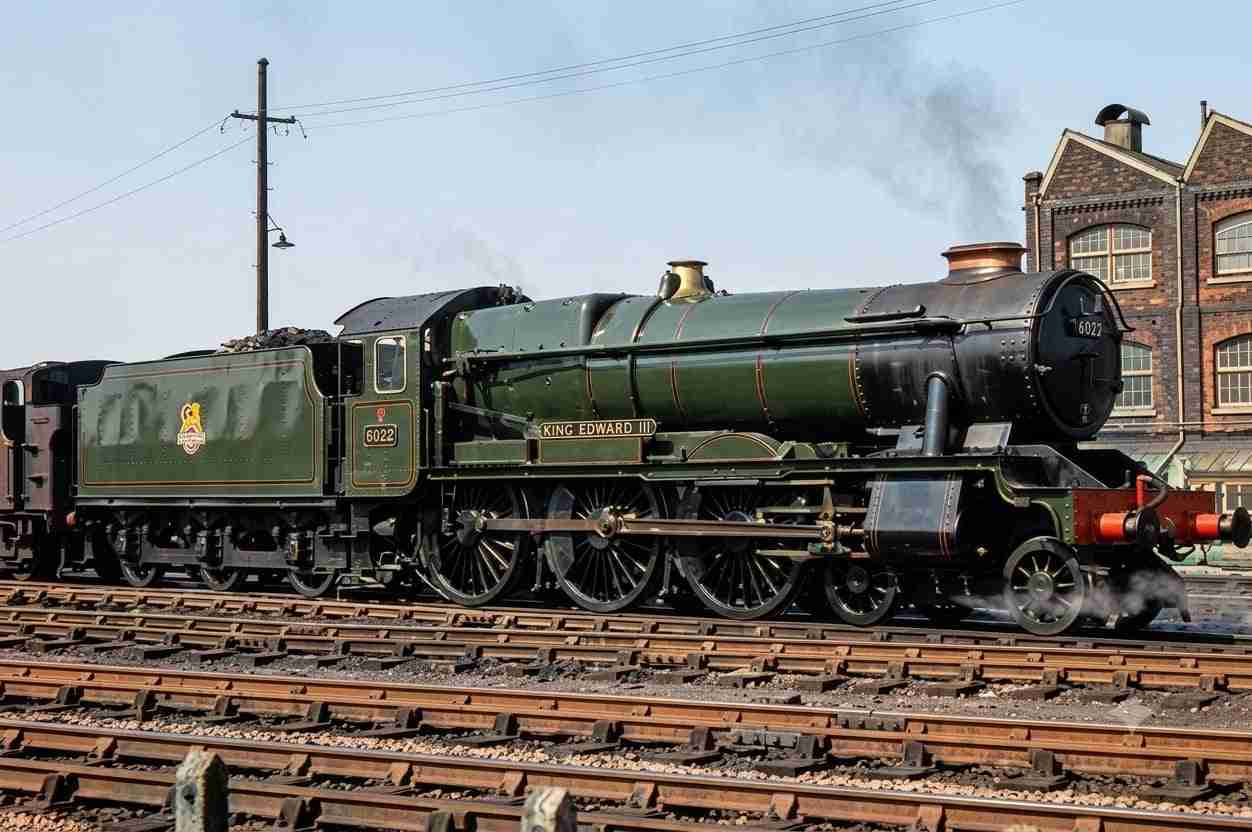
- Meanwhile two Stanier 8F locomotives rode as deck cargo
- Besides those, coal tenders and water tankers for desert running
- Finally generators, aircraft and vehicle spares, medicine, tyres and boots
| Type | Steam freighter, British, Albyn Line |
| Built | 1940 |
| Dimensions | 126.5 m × 17.5 m |
| Tonnage | 4,898 t capacity; 9,009 t displacement |
| Engine | Three-cylinder steam, 1,860 HP, about 10 knots |
| Lost | 0130 hrs, 6 October 1941, at anchor |
| Depth | 16 m at the bow, 30–32 m at the seabed |

How the Thistlegorm was lost
The Thistlegorm was already well up the Red Sea when the order came to anchor in the Strait of Gubal and wait, because a ship that had struck a German mine was blocking the canal. Consequently she sat still at Safe Anchorage F, loaded, for far longer than anybody intended.
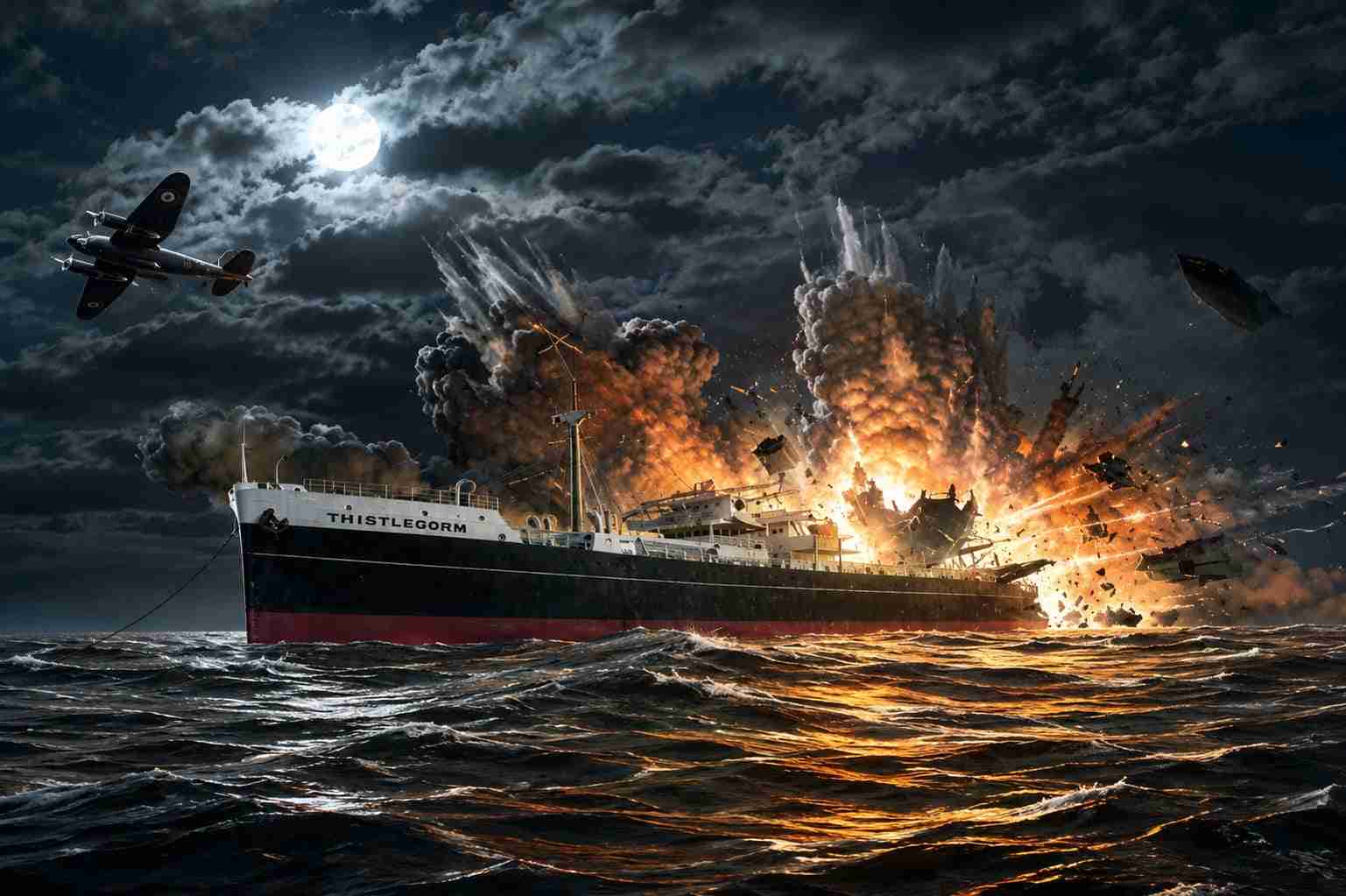
Meanwhile, German intelligence had reported a large troopship bound through Suez, and two Heinkel He 111 bombers flew from Crete to find it. Instead they found her. Specifically, late on the night of 5 October they attacked, and two bombs went into hold number four, where the ammunition was stowed.
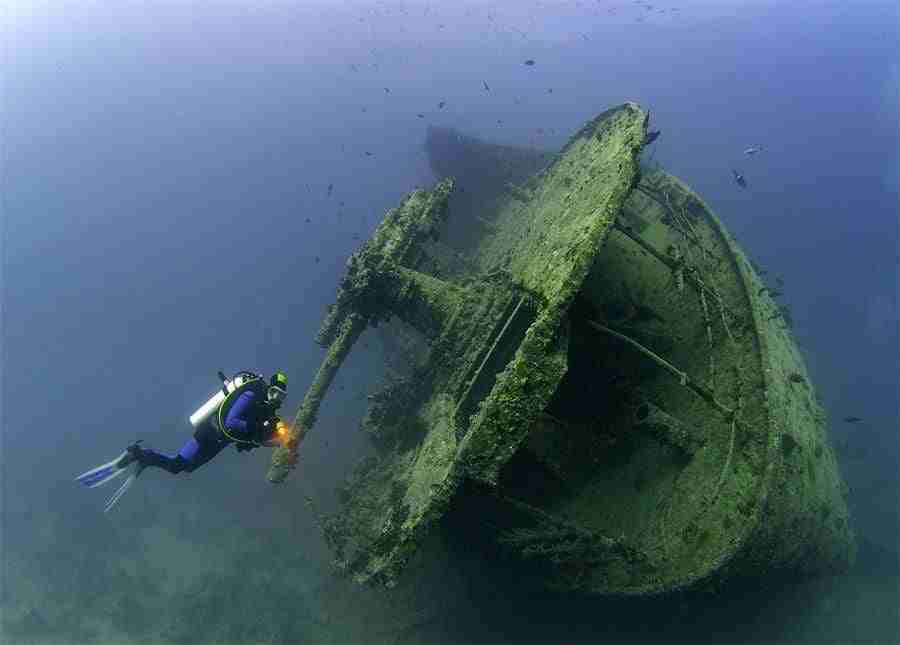
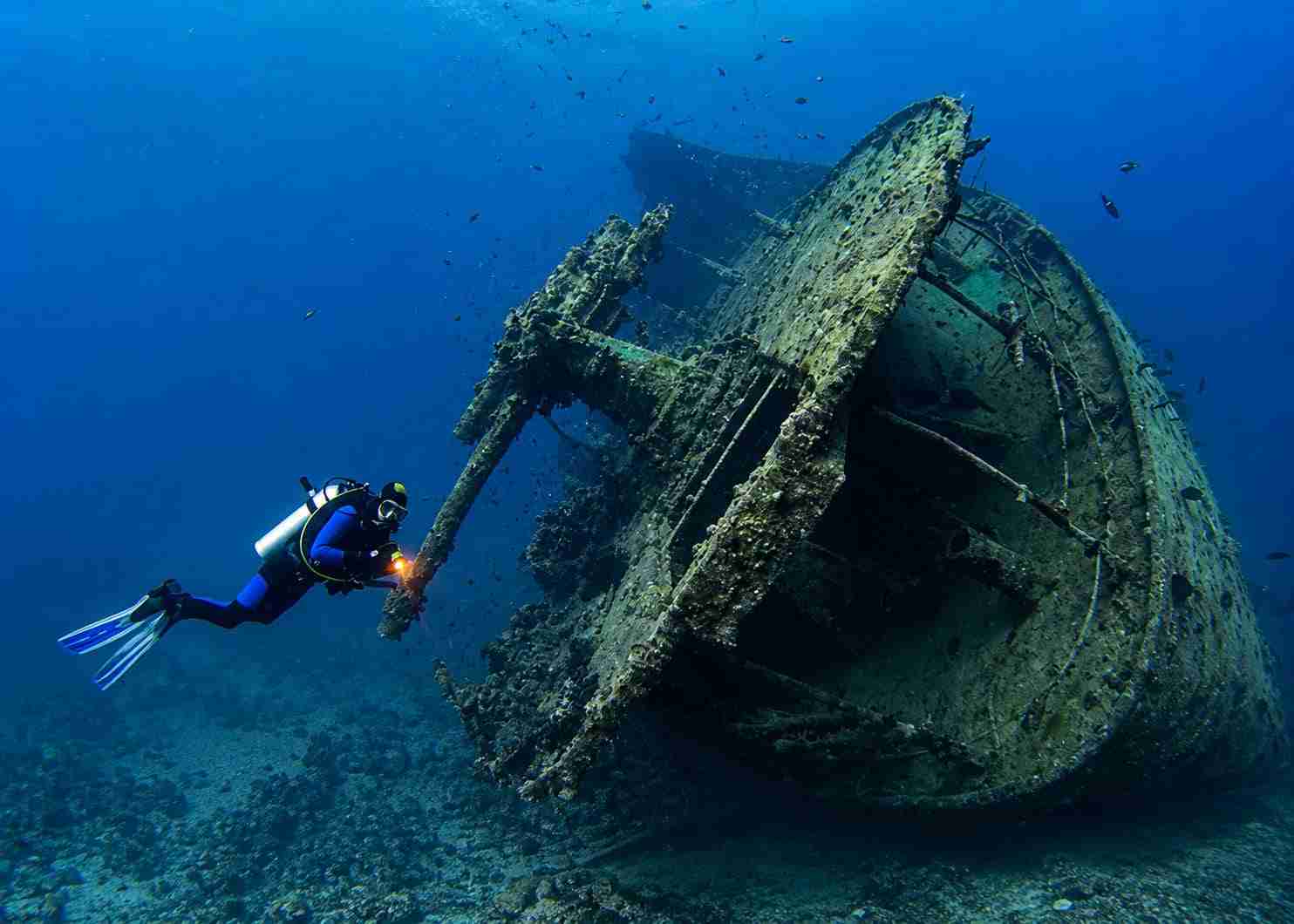
Consequently, the explosion tore the ship in half. Notably, both locomotives, each weighing over a hundred tons and lashed to the deck, were thrown clear and landed on the sand roughly thirty metres away. Then, she went down fast, upright, onto a flat sandy bottom at half past one in the morning on the 6th. Fortunately, HMS Carlisle took off the captain and most of the crew. Nine men did not come home.


Two ships, two nights. The same squadron came back and sank the Rosalie Moller forty-eight hours later, a few miles away. She lay undisturbed for another fifty-seven years because a clerk recorded her as scrapped.
Cousteau, and forty years without the Thistlegorm
Originally, Jacques-Yves Cousteau found her in 1955 with the Calypso and wrote about her in National Geographic the following February. Notably, he never published the position. Consequently the wreck slipped out of the record almost immediately and stayed there for close to four decades, until an Israeli skipper relocated her in 1992.
Afterwards the change was abrupt. Within a few years she had become the most visited wreck in the Red Sea, and by some accounting she now earns Egypt more than one of the pyramids at Giza. That popularity is the single biggest threat to her survival, which is a problem the last section of this page returns to.
Finding the Thistlegorm and getting on her
The Thistlegorm lies 19.2 miles from Ras Mohammed and 31 from Sharm el-Sheikh, and nothing of her breaks the surface. Therefore GPS is the sensible way to find her; compass work off visible landmarks is possible but far less reliable.
Unfortunately, two positions circulate for the wreck, roughly four hundred metres apart. The guidebook figure is 27°49′03″ N, 33°55′14″ E, while a more recent source gives 27°48′51.0″ N, 33°55′17.9″ E. Check which one your skipper works from before you leave the marina.
Next, once she is found, the boat is moored to the wreck itself with two lines, bow and stern, running parallel to the hull. Usually, that job belongs to the guides and normally takes a quarter of an hour. Ascents and descents are done on those lines, without exception, because the current here runs bow to stern and can be severe.
Where the lines go matters. Over the years, boats have been tied to handrails, small staircases and winch arms. Those fittings were never built to take the load, and the damage they have suffered is permanent. Lines belong on bollards, winches or the propeller shaft.
Conditions in short
- Visibility 15 to 35 m, and rarely better than 30
- Also silt, which the current and finning both stir up
- Water 22 to 24°C in winter, 26 to 28°C in summer
- Then the current, bow to stern, sometimes very strong
- Meanwhile the surface can be busy with boats and lines
- Finally, expect a three to four hour crossing from either port
Four ways to dive the Thistlegorm
Most operators split the Thistlegorm into an external tour and a hold penetration, and that is the sensible order. Above all, none of these routes is a first wreck dive; the depth, the current and the overhead environment all argue against it.
1. Orientation and the external tour
About 45 minutes · max 32 m · moderate
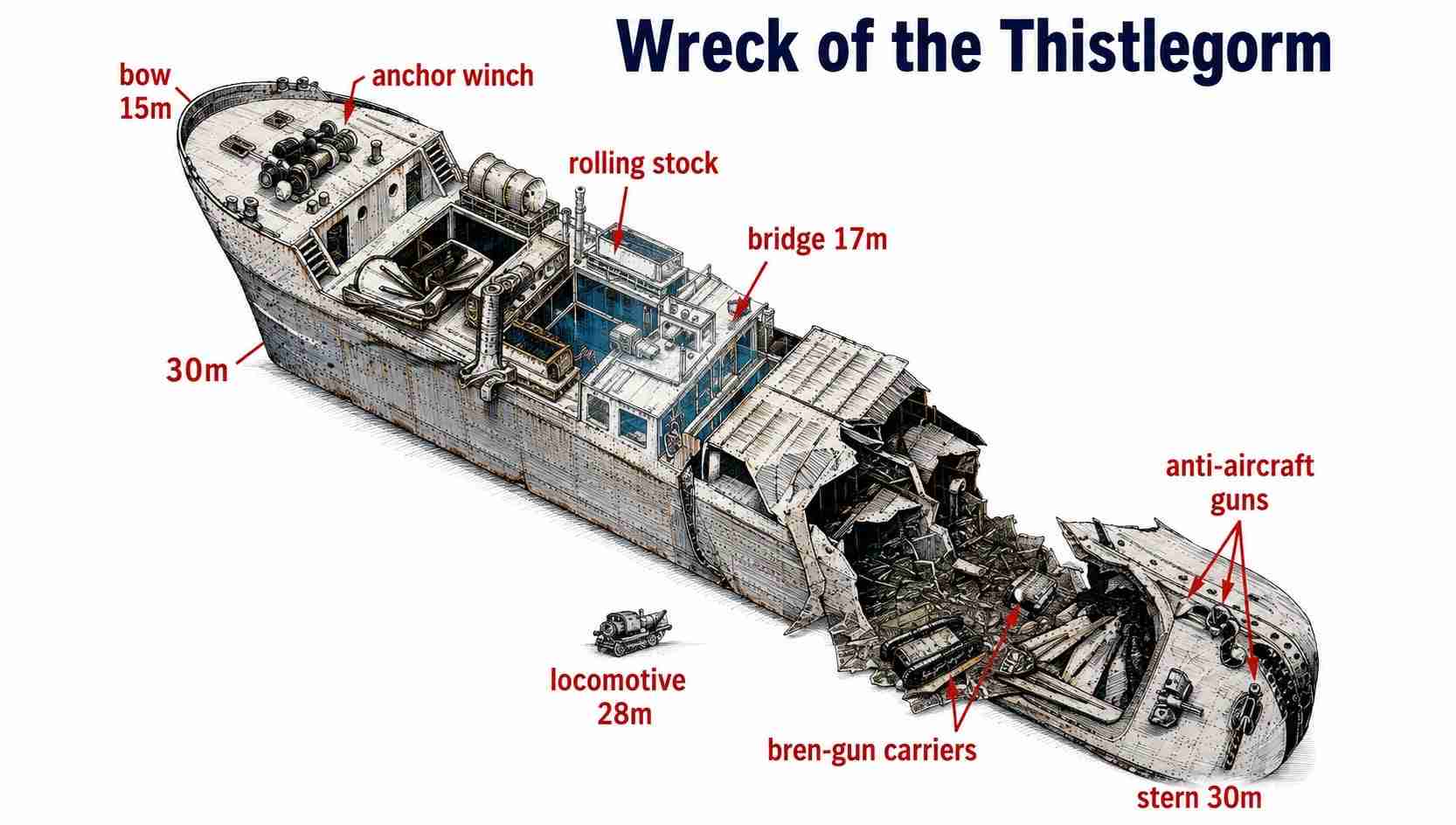
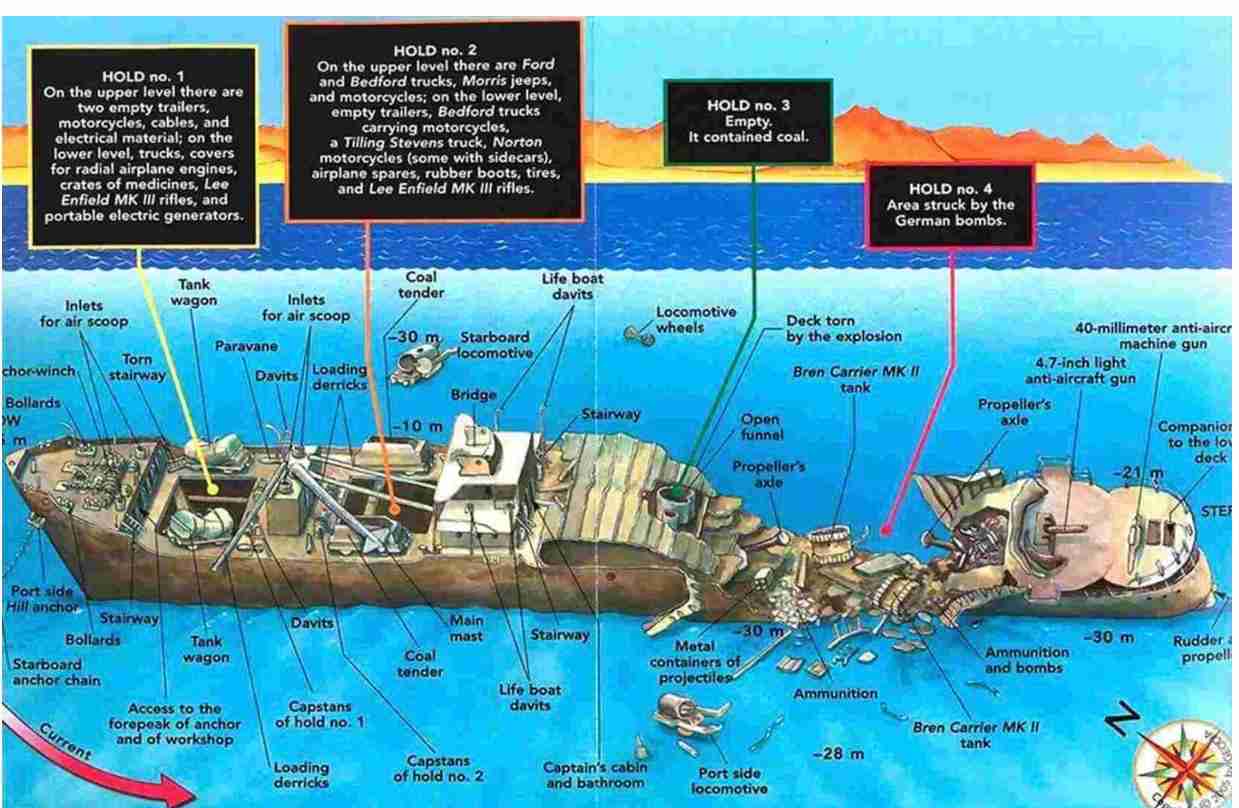
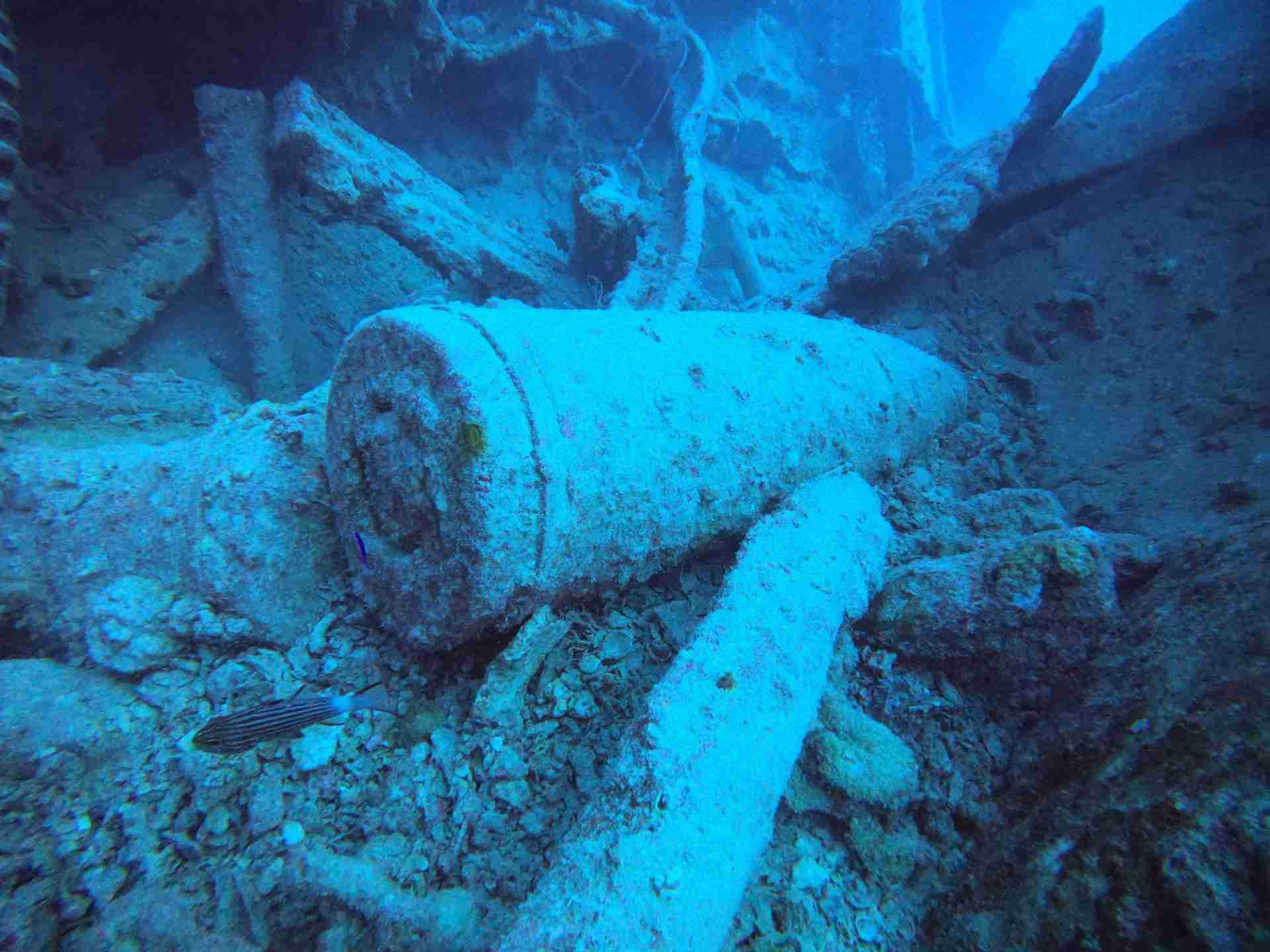
First, descend the main line to the midships deck and work aft along the starboard side to the blast damage at hold number four. That gash is enormous, and much of the ammunition survived it intact and is still lying where it fell, along with two overturned Bren Carriers on the sand nearby and the stumps of the propeller shaft.
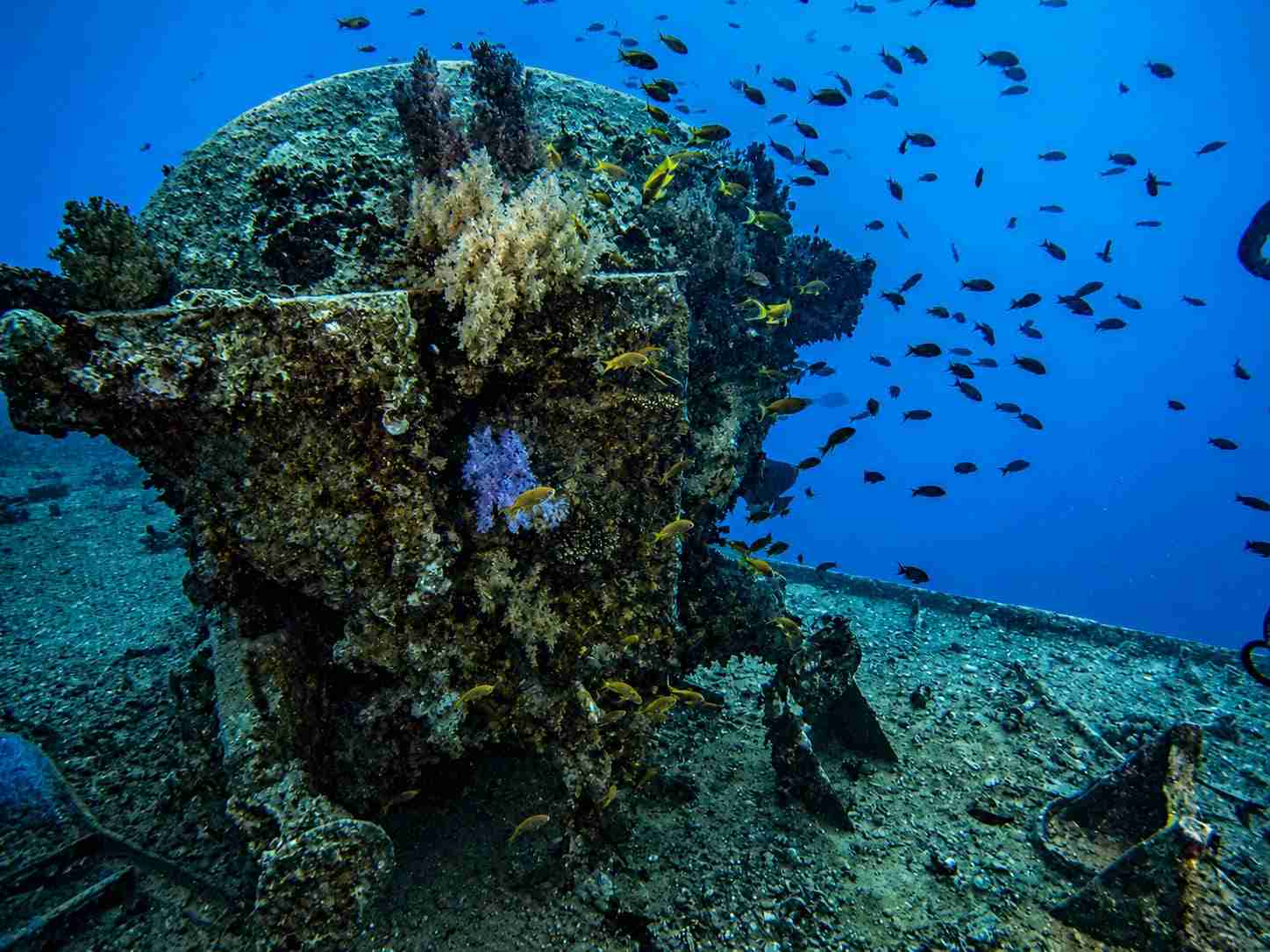
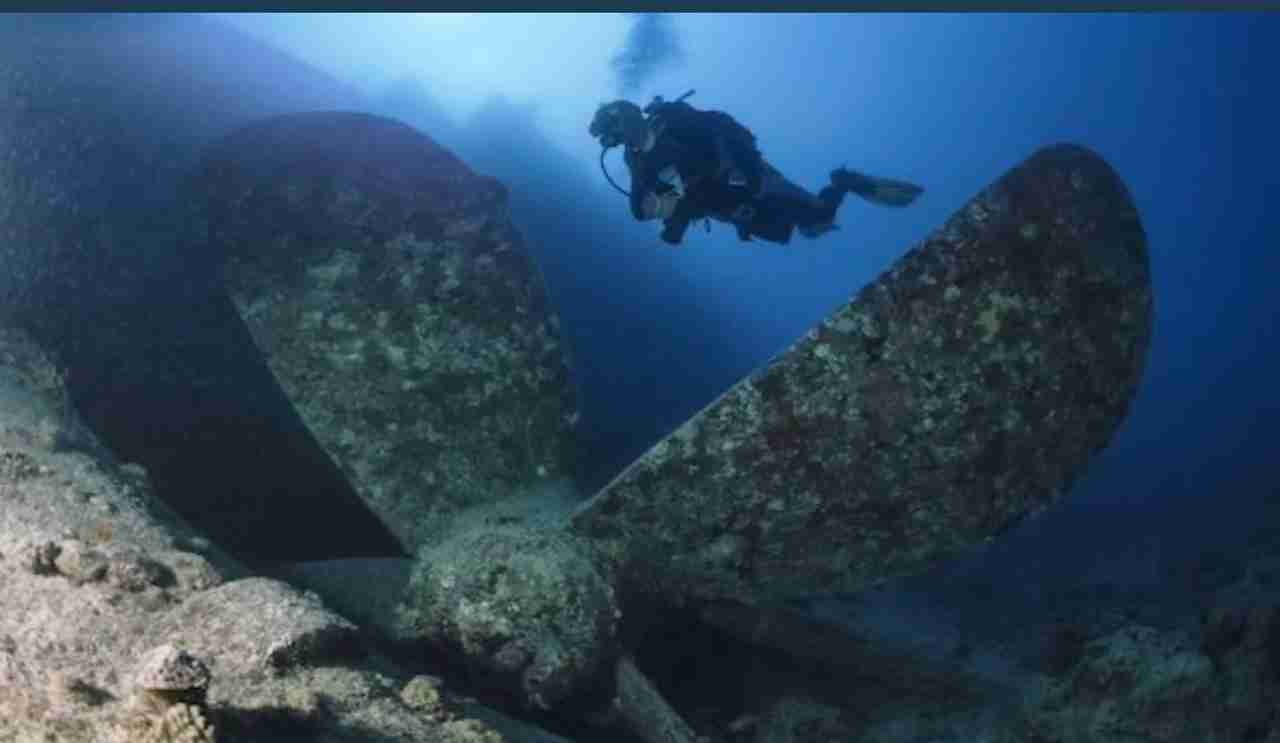
Then, drop to the seabed at thirty-odd metres for the four-bladed propeller and the rudder. Notably, the stern lies over to port at about forty-five degrees, which makes the whole section unexpectedly dramatic. Then rise onto the after deck for the guns: a 4-inch low-angle gun and a 3-inch anti-aircraft gun, both still bolted down and usually wrapped in glassfish.
Watch for
- Firstly, this is the deep route, so plan the gas and the nitrogen around it
- Also the locomotive lying southwest of hold four, out on the sand
- Then the return along the main deck to your line, which is not optional
2. The holds, upper and lower
About 50 minutes · 22–25 m · demanding
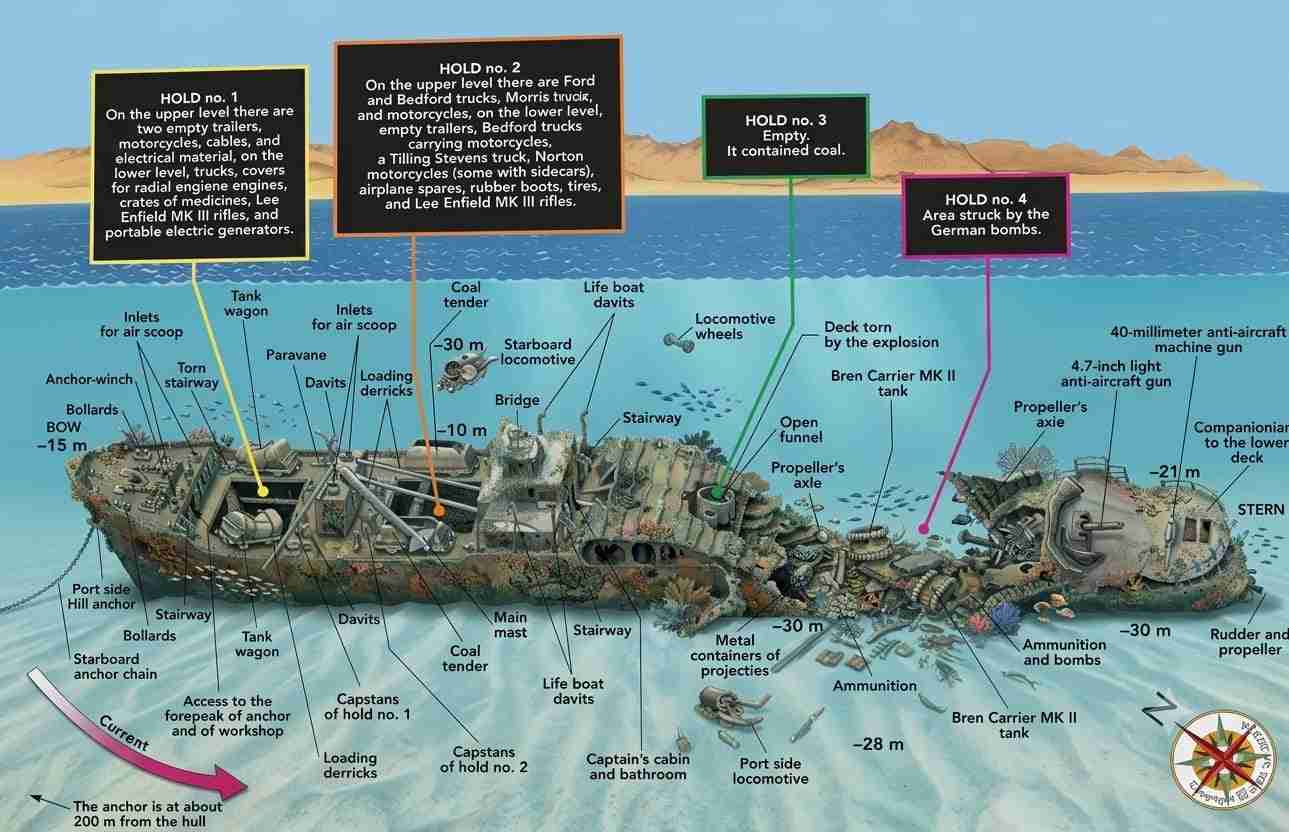
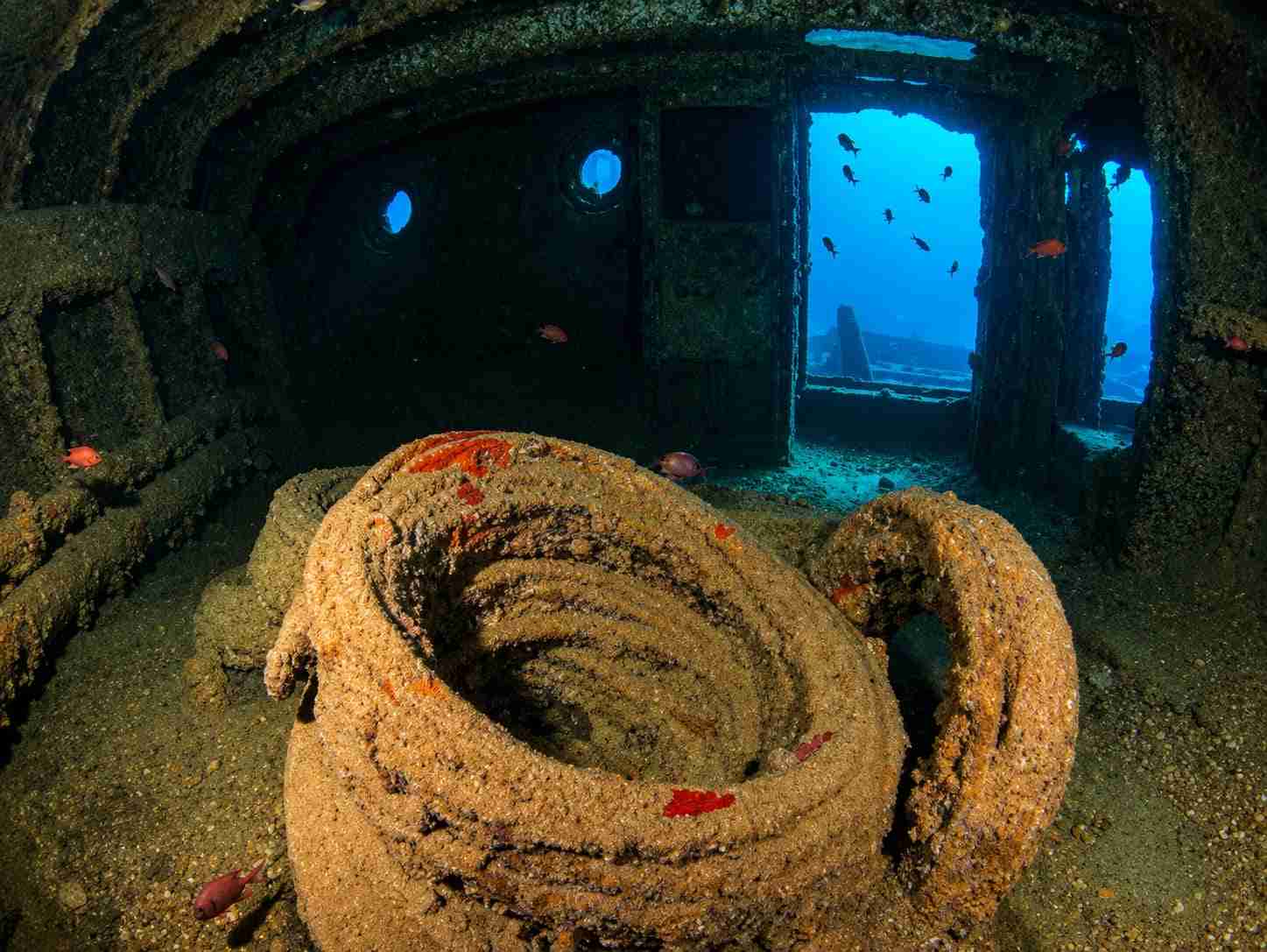
The holds of the Thistlegorm are what people come for. First, enter through the hatchway of hold one or through the blown-open midships, and work the interconnecting doorways between holds at a steady twenty-two to twenty-five metres. Because the explosion opened the deck, much of the interior is lit by daylight, which is rare in a wreck this size.
Hold no. 2
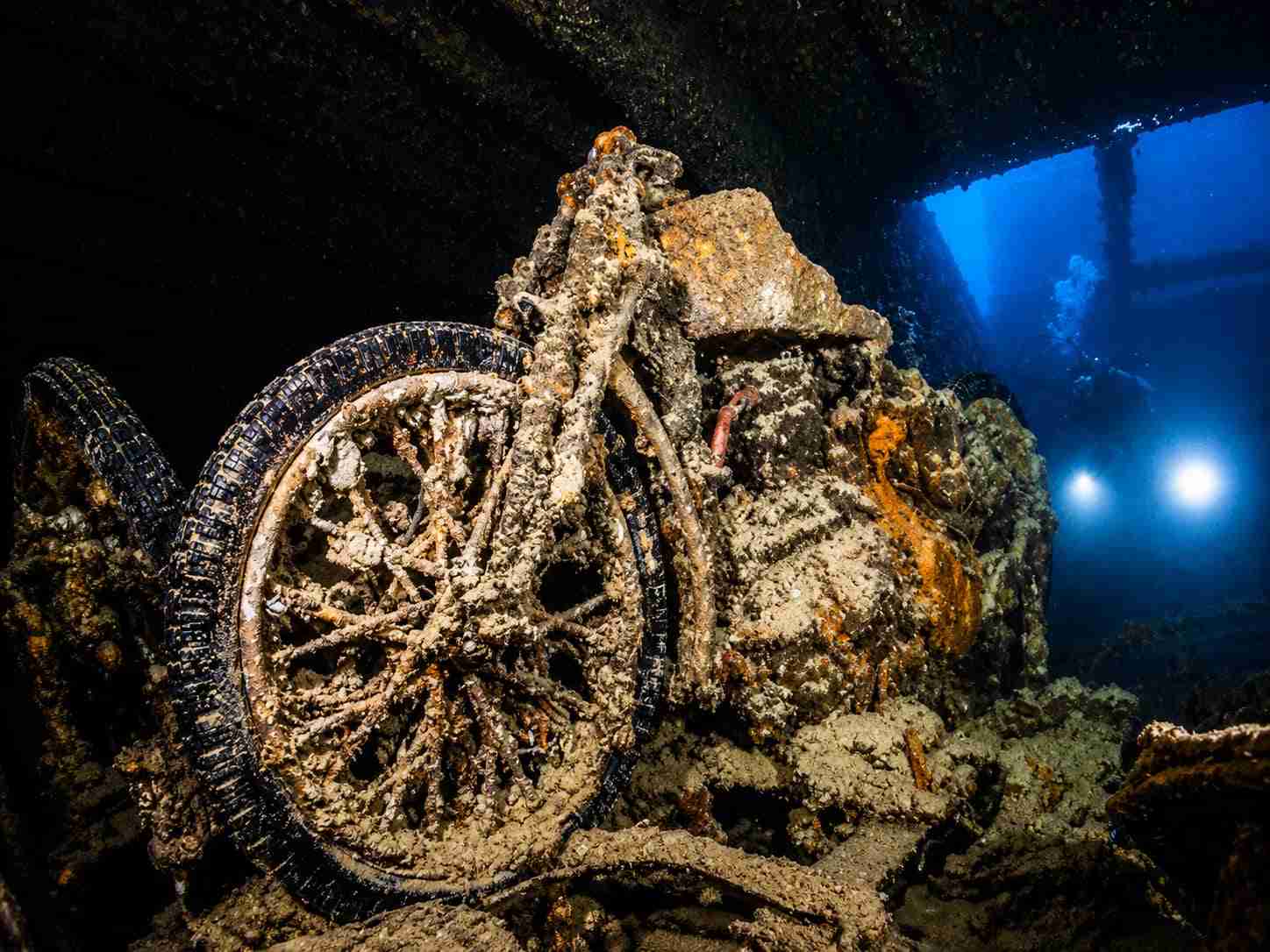
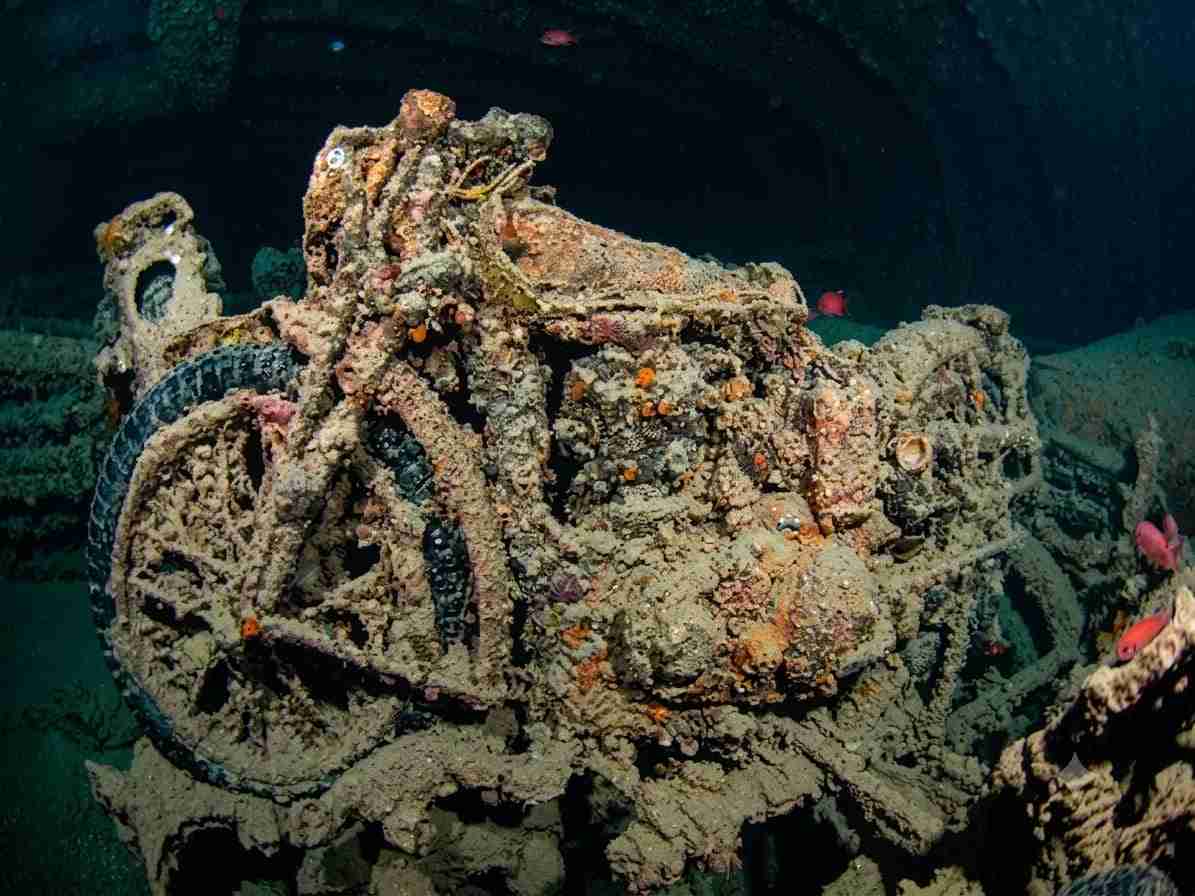
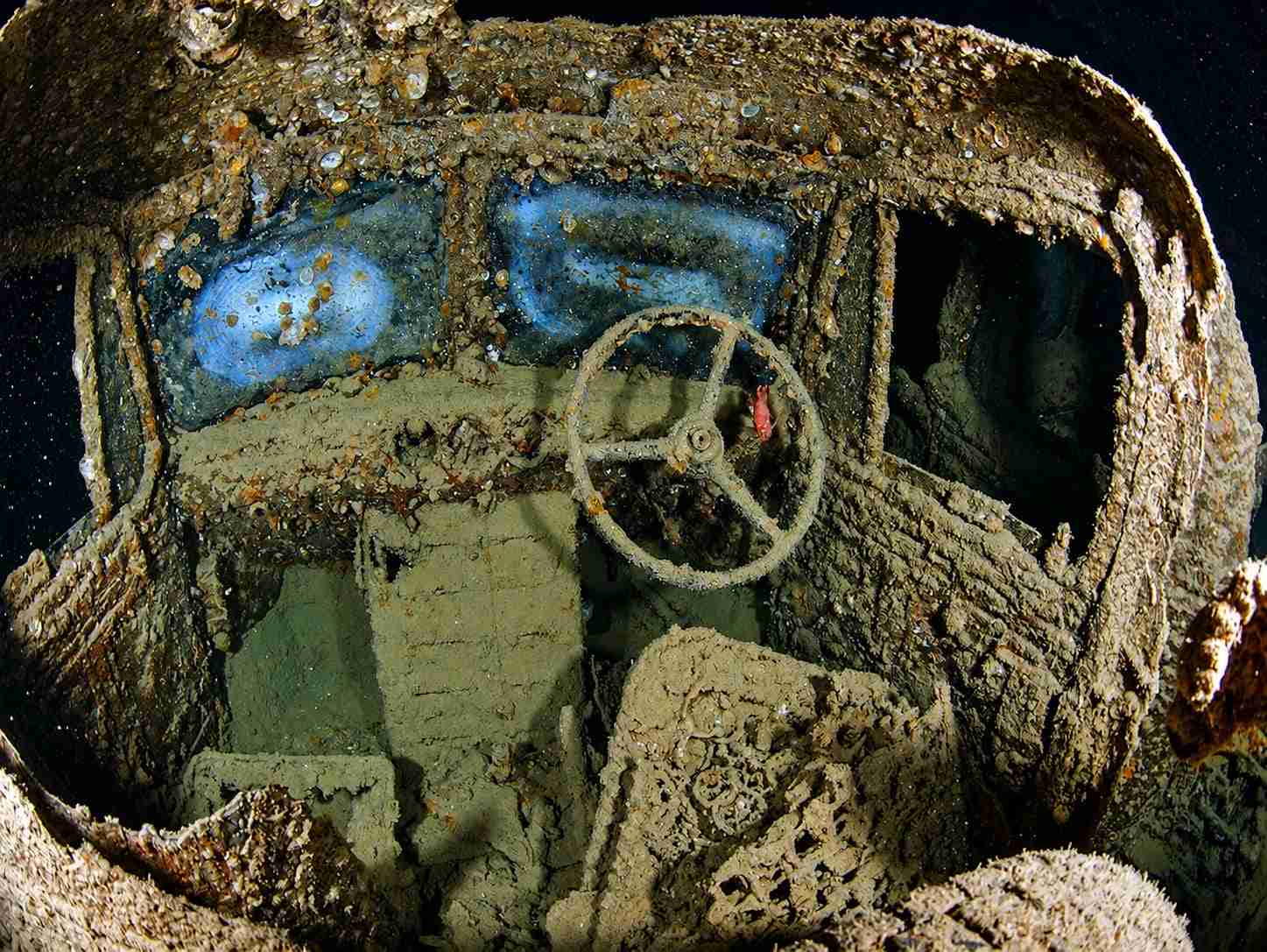
Namely, split over two levels. Specifically, upstairs, WOT 2 Ford trucks, Bedford OY and MW trucks and Morris Commercial CS8 vehicles stand on both sides, with BSA W-M20 and Norton 16H motorcycles among them, several with sidecars still attached. Meanwhile, downstairs, the port side holds trailers, almost all empty, and spare aircraft wings; to starboard, Bedford trucks with more Nortons and a supply of rubber boots.
Hold no. 1
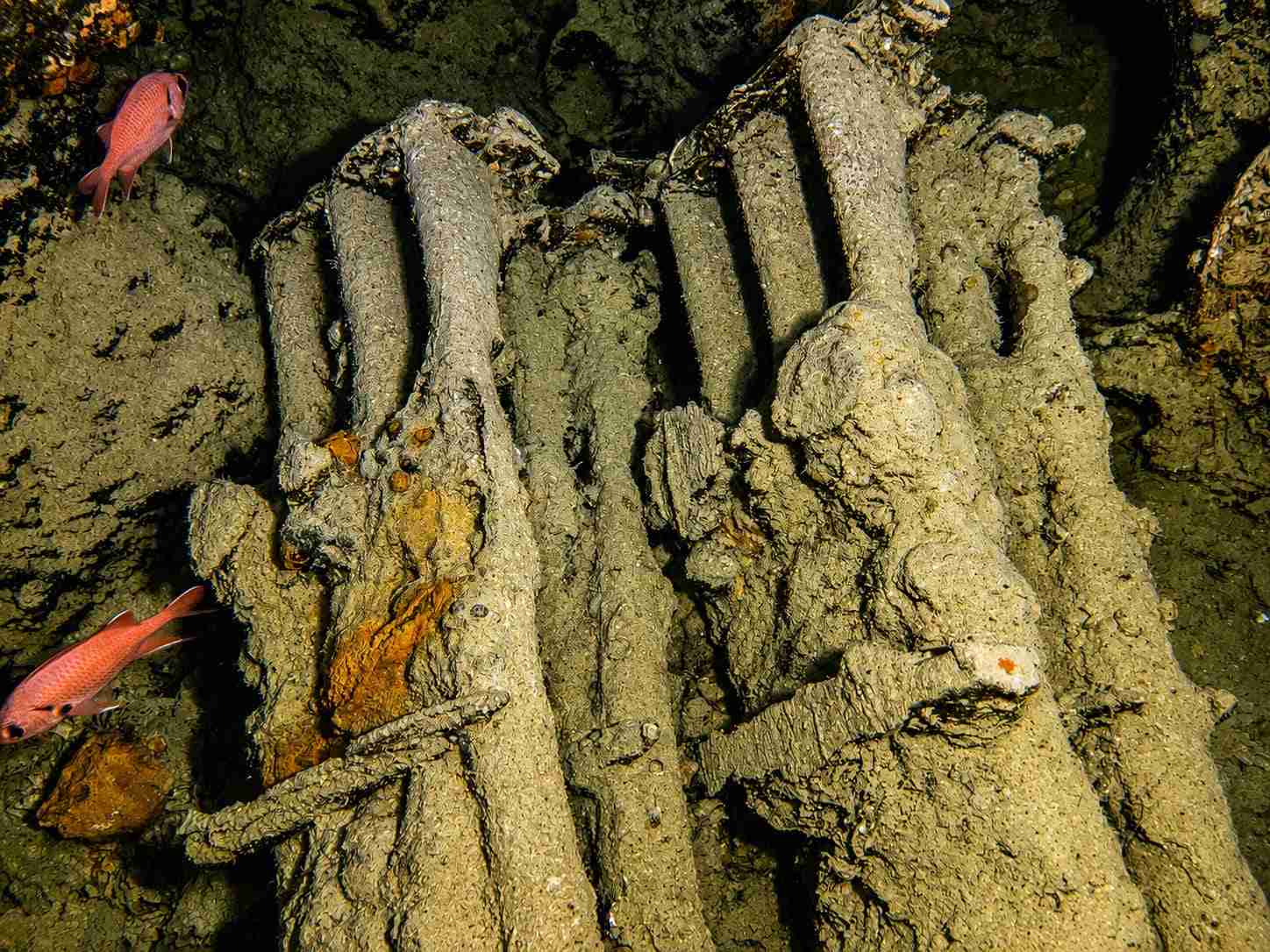
Then, further forward, connected to hold two by two internal side passages. Unfortunately, its port side has collapsed completely. Nevertheless the starboard side is intact and holds two empty trailers side by side on the upper level with Matchless G3L and Norton 16H machines, and below them aeroplane engine covers, crates of medicine, Lee Enfield rifles and portable generators.
Hold no. 3
Frankly, mostly coal for her own boilers, so of limited interest in itself. However, when the current is running hard it makes the easiest sheltered route through to hold two.
Watch for
- Firstly, buoyancy: the silt in these compartments will black them out instantly
- Also your headroom, because the frames are sharp and the wires still hang
- Then the crowd, since dozens of divers can be inside at the same time
- Turn the dive on pressure, not on what is around the next corner
3. The bow and the upper decks
About 50 minutes · max 18 m · moderate
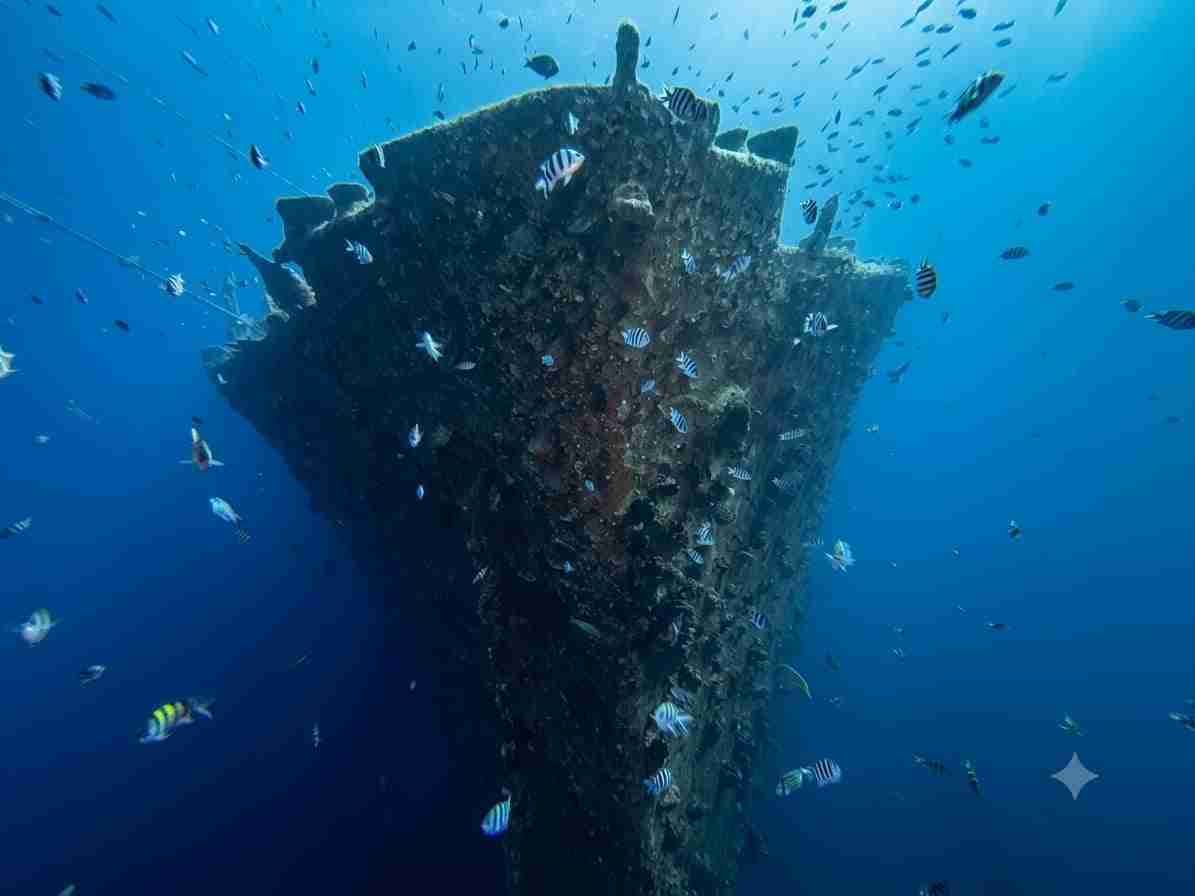
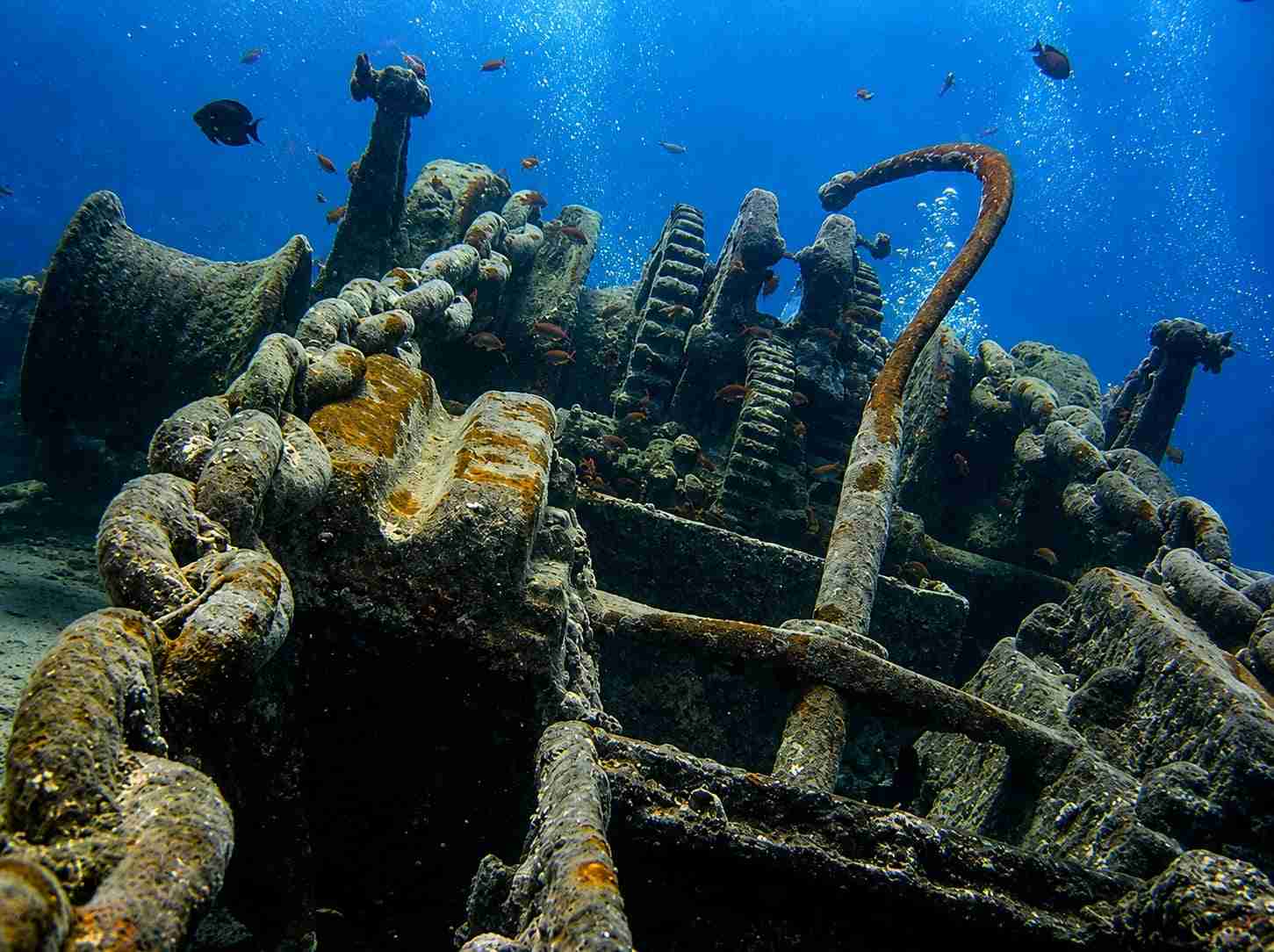
Overall, the gentlest of the routes, and the brightest. Her bow section is entirely intact from about sixteen metres, and the anchor winch on the forecastle is perfectly preserved under a permanent cloud of anthias. The port anchor is still in place; its opposite number lies on the sand more than a hundred metres from the hull.
Next, working aft, you pass the two capstans serving hold two, the leaning main mast propped against the port tender, and the ventilation openings on the quarterdeck. Notably, a torpedo-shaped paravane still sits on deck beside its davit. Those devices were streamed astern to cut the mooring cables of deep-sea mines, and few survive anywhere.
Watch for
- The two coal tenders flanking hold two, and the second locomotive to starboard
- Also the starboard forecastle stairway, torn away in 2001 and lying on the bridge
- Then the resident turtle, often asleep near the superstructure
4. The night dive
About 40 minutes · max 22 m · liveaboard only
Usually, offered mainly to liveaboard guests, and only when the sea allows it. Then, descend the mooring lines in complete darkness onto a hull that turns into a hunting ground after sunset: big morays out in the open, lionfish working methodically, and jacks scattering the glassfish clouds. Penetration at night is forbidden, and rightly so.

Marine life on the Thistlegorm
Eighty years of growth have turned the Thistlegorm into an iron reef, and the current that makes the diving difficult is exactly what feeds it. Consequently the wreck works as a feeding station rather than merely a curiosity.
Pelagics
Notably, giant trevally, tuna and schooling barracuda hold station in the channel current, usually off the stern.
Larger visitors
Also, spotted eagle rays cross the sand, and grey reef sharks turn up occasionally out in the blue.
Resident turtle
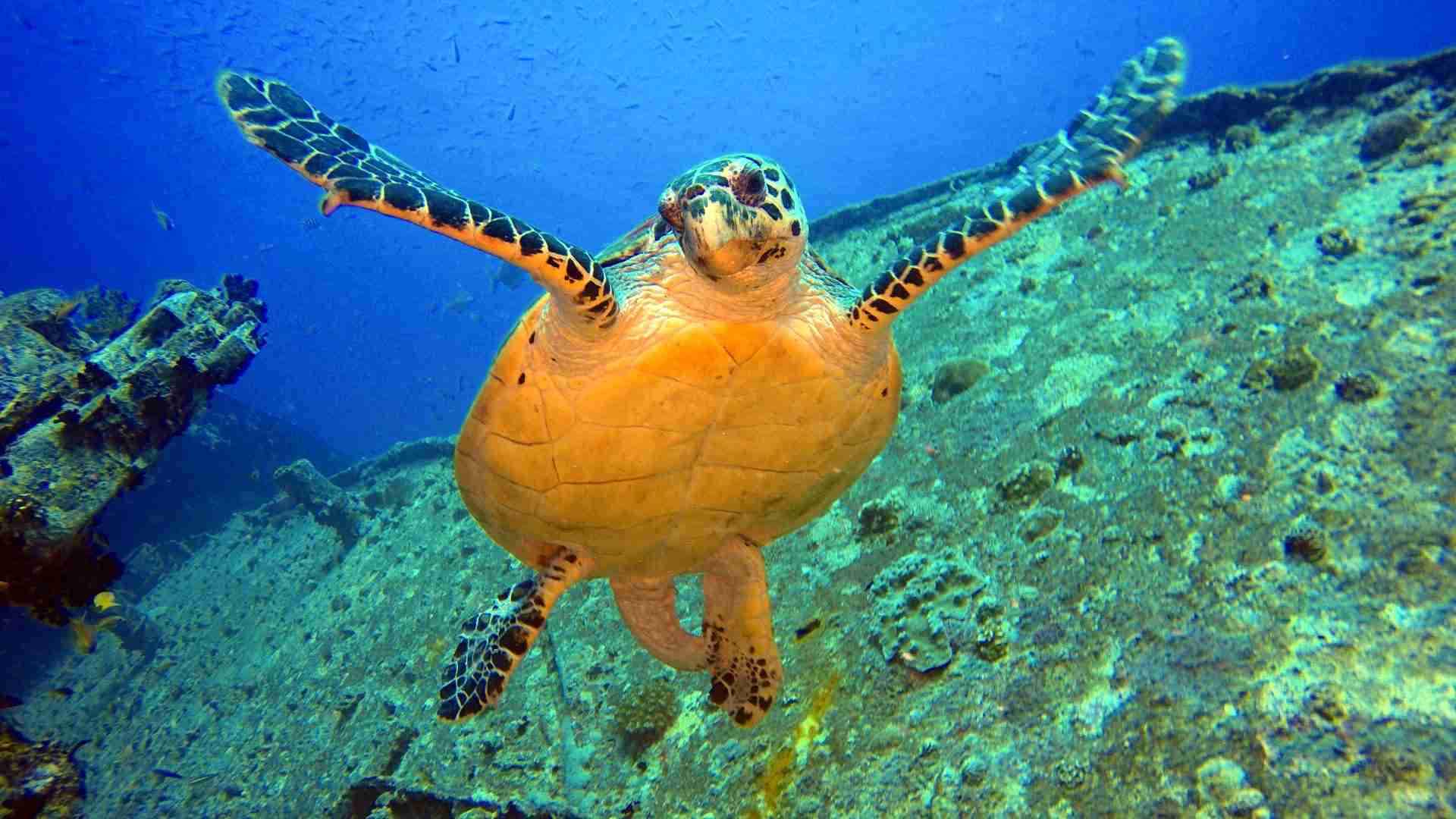
Reliably, a green turtle lives on her and is often found asleep near the superstructure, particularly early.
On the metal
Meanwhile, crocodilefish, stonefish and swarms of lionfish, so watch where you put a hand before you steady yourself.
Clouds
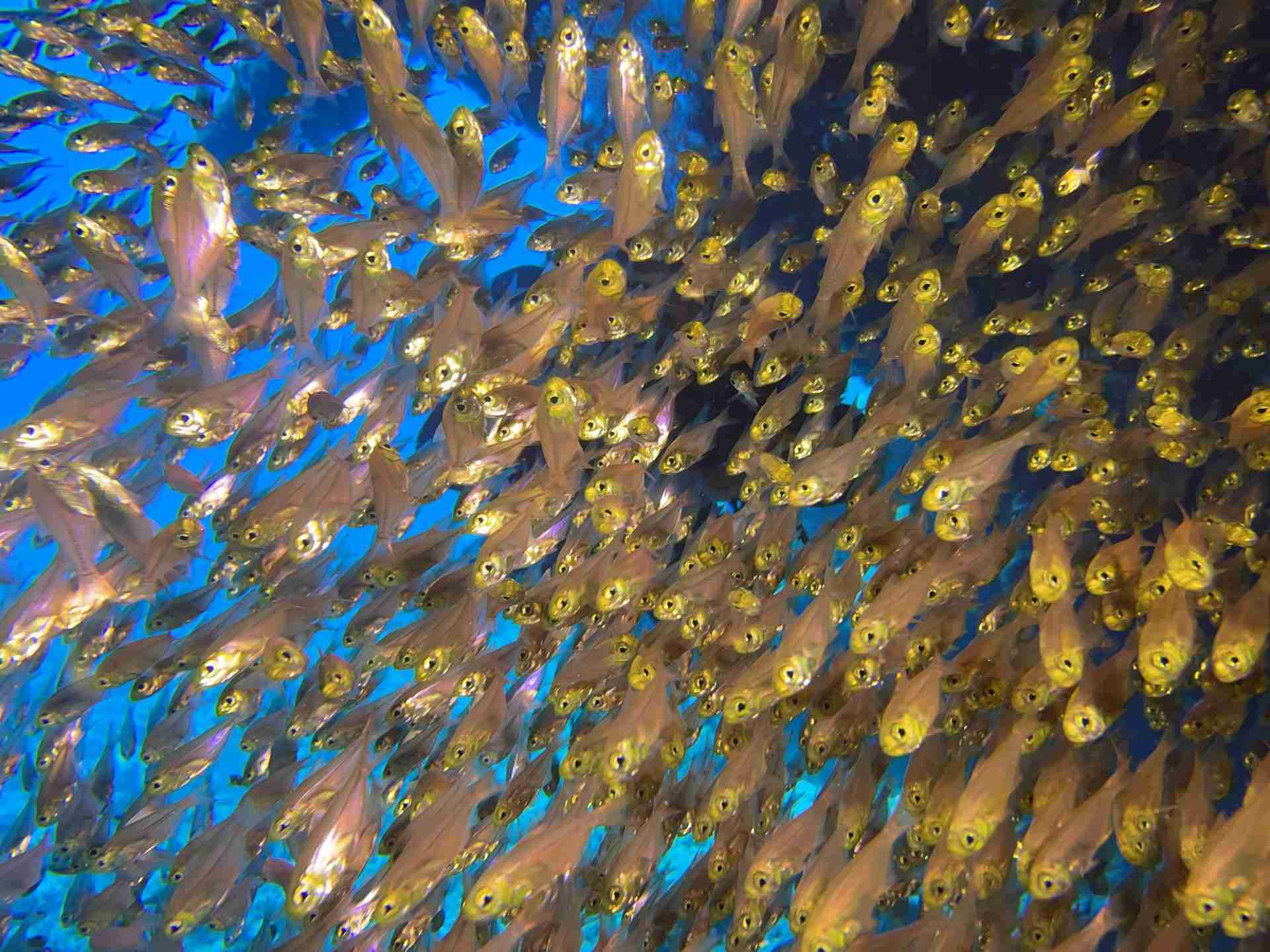
Besides, glassfish (Parapriacanthus ransonneti), fusiliers and anthias fill the guns and the open holds.
Small things
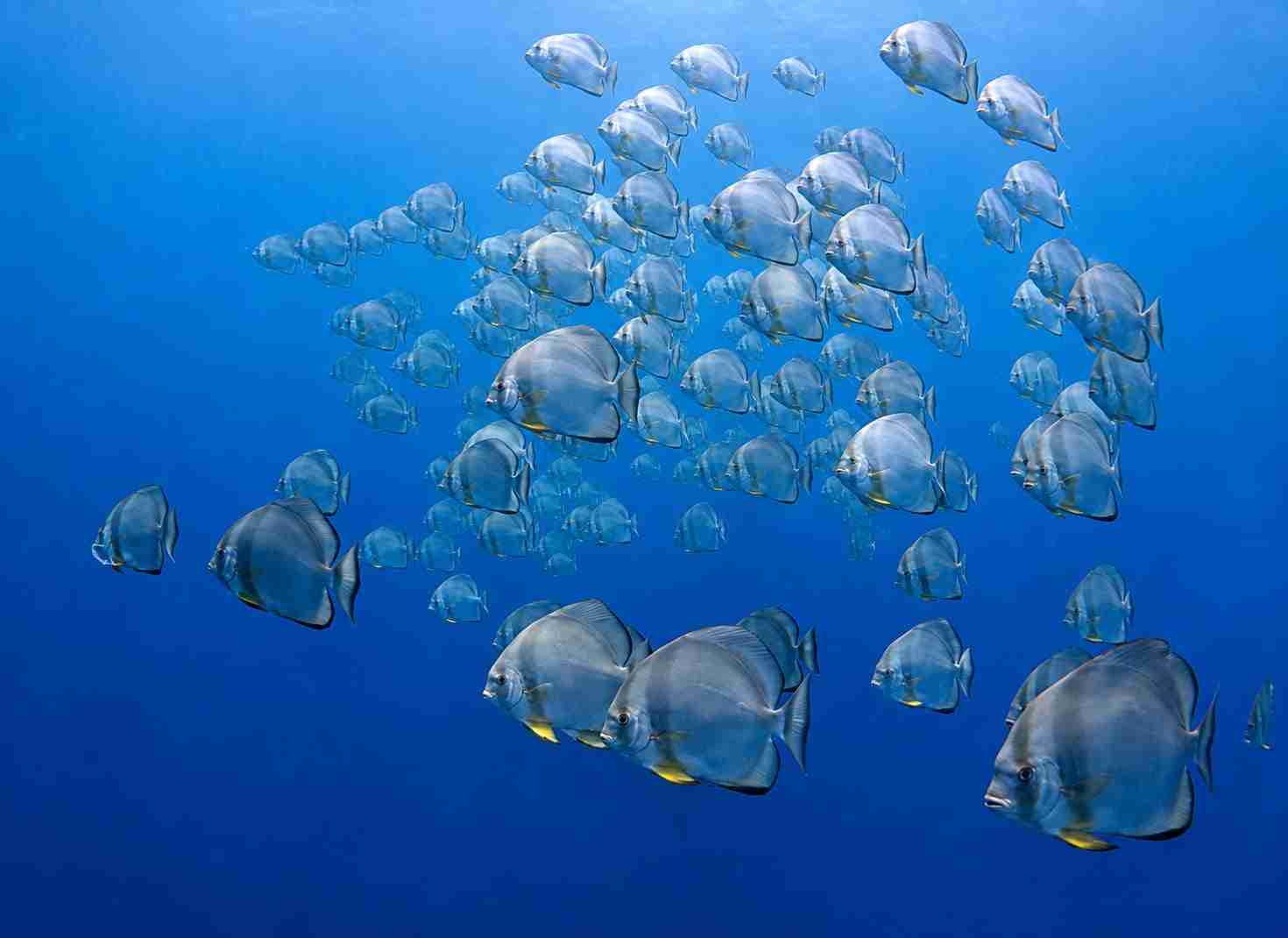
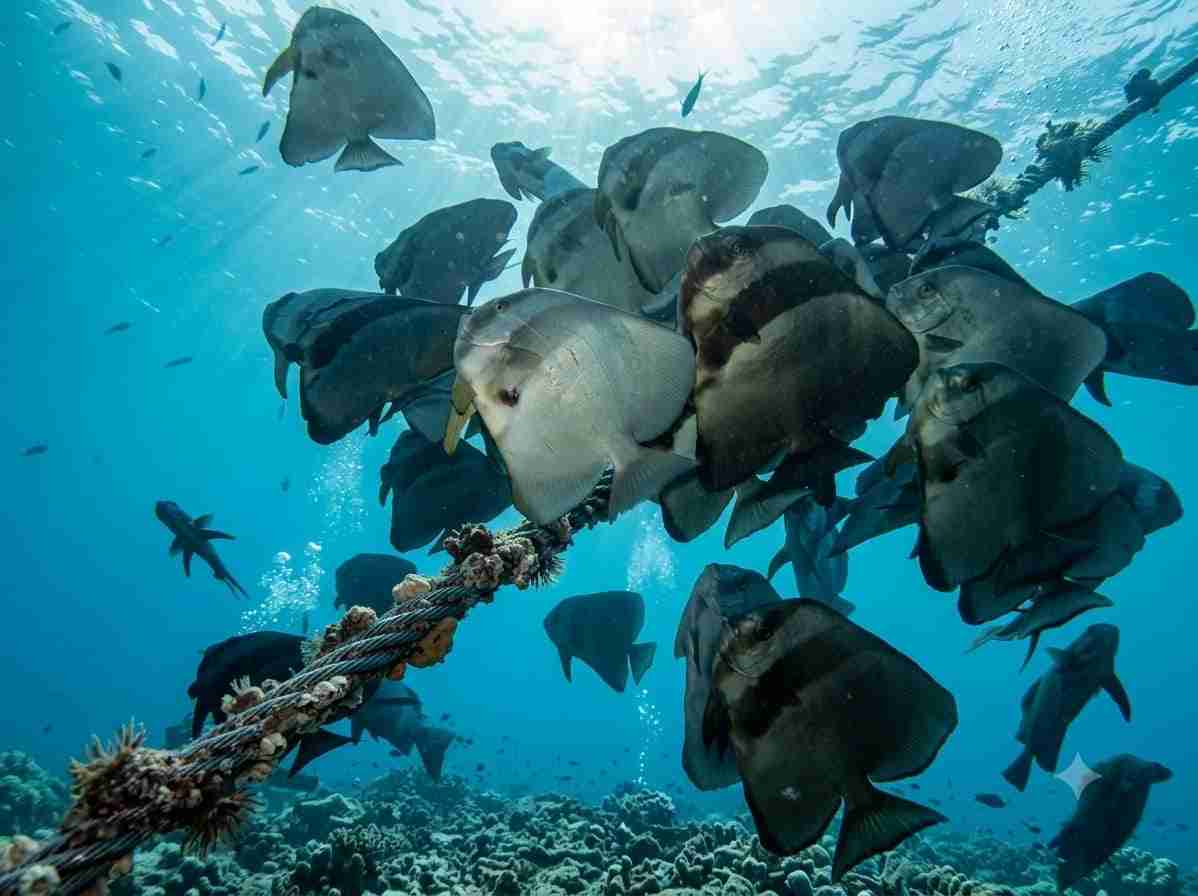
Finally, nudibranchs, moray eels and batfish schools, with soft coral encrusting most of the exposed structure.

Diving the Thistlegorm safely
Five things that catch people out
- Firstly, air and no-decompression time: the holds and the sand sit between twenty-two and thirty-two metres, so both go faster than you expect
- Also buoyancy, because a careless fin stroke silts a compartment out completely and traps the group behind you in the dark
- Then overhead clearance, since the frames are sharp, the bulkheads jagged and the wiring still hanging
- Meanwhile the crowds, which are genuinely a hazard; keep your guide in sight or you will surface behind a different boat
- Finally the lines: never let go on the ascent, because the current here can take you straight into the shipping lane
The minimum, honestly stated. Advanced Open Water at least, wreck experience for the holds, and around twenty logged dives before anyone should be considering the internal route. Start the ascent at eighty bar, carry a torch, and treat the penetration as optional rather than obligatory.
Getting there
Typically, day boats run from Sharm el-Sheikh and from Hurghada, three to four hours each way, which makes for a long day. Alternatively, northern liveaboard itineraries overnight in the lagoon at Sha’ab Ali and dive her at dawn, before the day boats arrive. That second option is a completely different experience of the same wreck.
Conserving the Thistlegorm, and why it is urgent
The number of divers on the Thistlegorm each day has passed what she can absorb. Specifically, exhaled air collects against the steel overheads inside the holds, and that trapped air corrodes the plating far faster than seawater alone would. In other words, the thing that makes the interior so extraordinary is also what is dissolving it.
Sadly, meanwhile theft continues. Namely, parts come off the motorcycles, items leave the holds, and ammunition has been taken. Every piece removed is gone from a war grave and from a historical record that cannot be replaced.
She is one of the most famous wrecks in the world and one of Egypt’s genuine attractions. Nevertheless, without limits on numbers and real enforcement against souvenir-taking, the argument for restricting access, or closing the interior altogether, gets stronger every season.
Useful links
- The Rosalie Moller — sunk by the same squadron forty-eight hours later.
- The Strait of Gubal — Dunraven, Kingston, Ulysses and the Barge.
- Ras Mohammed National Park — nineteen miles away, and a different kind of diving.
- Local reefs around Naama Bay — where the day boats come from.
- Safety standards and emergency care — briefings, oxygen and chamber contacts.
- Red Sea Liveaboard — safari routes and boats across the Egyptian Red Sea.
- Divers Alert Network (DAN) — insurance and emergency guidance.
Take nothing. Not a shell, not a bolt, not a badge off a motorcycle tank. Nine men died on this ship, and what is left belongs where it is.
Frequently asked questions
How deep is the Thistlegorm?
The Thistlegorm has her bow at about sixteen metres and the sand at thirty to thirty-two. Most of the hold work happens between twenty-two and twenty-five.
What level do I need?
Realistically, Advanced Open Water is the minimum, with wreck experience for the interior and roughly twenty logged dives before the holds are a sensible idea.
How long is the trip?
Typically, three to four hours each way from Sharm el-Sheikh or Hurghada. Liveaboards moor overnight nearby and dive her at dawn instead.
Why are there two sets of coordinates?
Unfortunately, different sources publish positions about four hundred metres apart. Ask your skipper which one the boat works from before you leave.
Can I take a souvenir?
Certainly, no. She is a war grave as well as a wreck, and the removals of the past forty years have already cost her a great deal.
Is one dive enough?
Frankly, not really. Most people do two: an external tour first, then the holds, with the bow route as an excellent third.
What are you waiting for?
Book your adventure
Tell us which experience you want to enjoy and leave the rest to us. If you have questions, or you are still choosing between routes, our team will talk it through with you before you commit to anything.
Inquiry