
South Sinai · Dahab dive sites
Dahab Fifteen shore dives, a Bedouin town and the most famous hole in Egypt
South Sinai · 15+ dive sites · Shore entries · 80 km from Sharm
The Dahab dive sites sit eighty kilometres north of Sharm el-Sheikh, and they work differently from anywhere else in Egypt. Almost everything is reached from the shore, boats are rare, and the pace is slow. Because of that, divers from Sharm come up here for the day simply to dive without a schedule.
What makes the Dahab dive sites different
Firstly, in Sharm el-Sheikh diving means boats. Here it means a jeep, a short walk and a step into the water. Consequently the day belongs to you rather than to a departure time, and a site can be repeated twice without anyone minding.
Then there is the shape of the coast. Namely the sites line up north and south of the two bays, so a week divides itself neatly into two halves without anyone having to plan it.
Meanwhile the range is unusually wide for one town. Specifically, shallow coral gardens sit a few kilometres from serious technical diving, which is why beginners and veterans end up sharing the same coastline.
What you are diving
- Firstly the northern group, from Assalah bay up towards Ras Abu Galum
- Then the southern group, from El-Qura bay down towards Gabr el-Bint
- Also the town sites, Lighthouse and Eel Gardens, which sit in the middle
- Meanwhile the two remote ends, reached by camel, jeep or boat
- Besides those, more than thirty dive centres to run any of it
- Finally the bays themselves, which is where the surface intervals happen
Mornings are calmer, and that decides the plan. Wind blows almost constantly from the north and builds through the afternoon. Therefore take the deeper northern sites early and leave the shallow southern ones for later, rather than the other way round.
No boat means no excuse to be casual. Namely, a shore entry feels informal, so people skip the briefing and the buddy check they would never skip on a deck. Consequently agree depth, turn point and exit before anyone touches the water.
The Dahab dive sites at a glance
Sites are grouped by where they sit along the coast. Naturally, the northern group runs from Assalah bay up towards the Blue Hole and Ras Abu Galum, while the southern group runs from El-Qura bay down towards Gabr el-Bint.
| Site | Area | Access |
|---|---|---|
| Ras Abu Galum — 28°36.714′ N, 34°33.204′ E | Far north | Camel or boat |
| Blue Hole — 28°34.364′ N, 34°32.211′ E | North | Shore |
| Canyon — 28°33.290′ N, 34°31.260′ E | North | Shore |
| Ras Abu Helal — 28°32.535′ N, 34°30.977′ E | North | Shore |
| Eel Gardens — 28°30.309′ N, 34°31.199′ E | North of Assalah | Shore, one of the easiest |
| Lighthouse — 28°29.941′ N, 34°31.193′ E | Assalah | Shore |
| Islands — 28°28.668′ N, 34°30.706′ E | South | Shore |
| Napoleon Reef — 28°28.250′ N, 34°30.456′ E | South | Shore |
| Golden Blocks and Moray Garden | South | Shore |
| Three Pools, 300 m south of Moray Garden | South | Shore |
| Caves — 28°25.000′ N, 34°27.364′ E | Far south | Shore |
| Gabr el-Bint — 28°21.190′ N, 34°26.013′ E | Far south | Camel, jeep or boat |
Apart from the two remote ends of the coast, all of these Dahab dive sites are reached by road. Consequently a dive centre can move the plan at short notice if the wind turns.
Every site has its own page
This page is the overview. Each of the sites below is covered properly on a page of its own, with depths, routes and what to expect in the water.
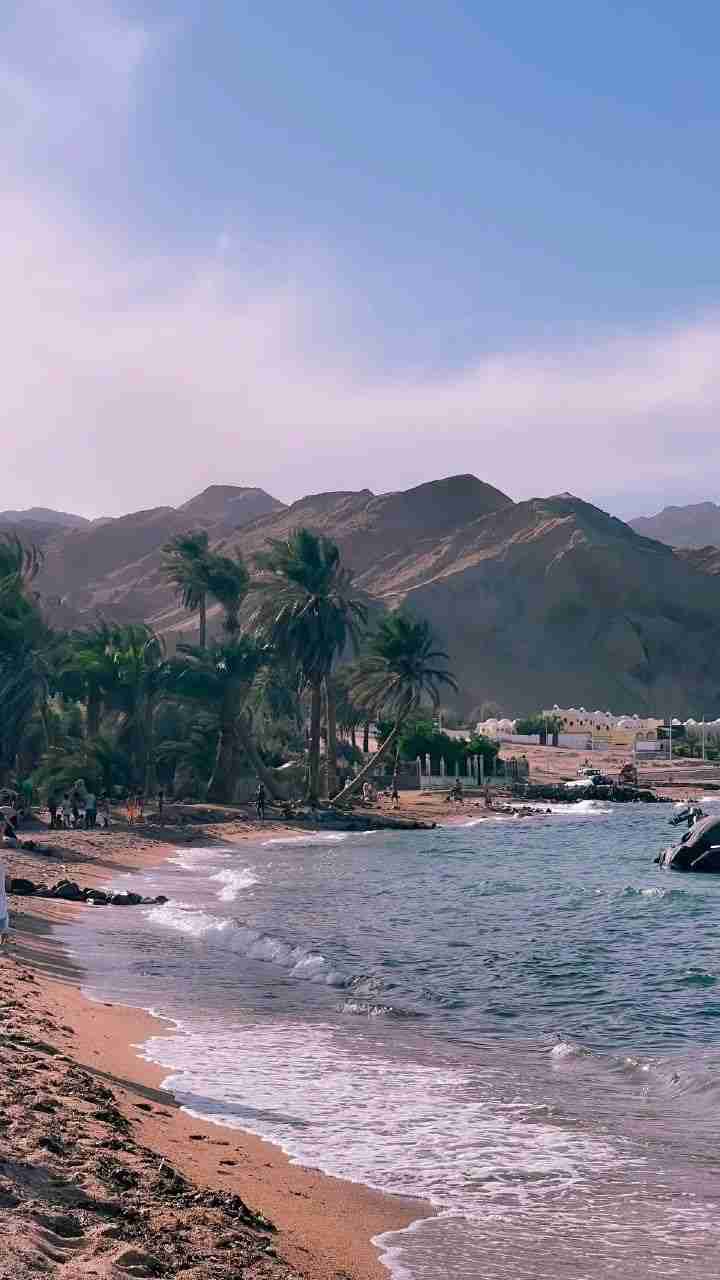
The two halves of the coast
Generally a week splits itself: a few days working north from town, a few working south. Above all, decide which half you are doing before you get in the jeep, since the two ends are an hour apart.

North — towards the Blue Hole
Firstly, the northern stretch runs from Assalah bay up the coast, and it holds the names everyone recognises. The Blue Hole is the most famous dive site in Dahab, and the Canyon is not far behind it.
Then, between them, sit the gentlest sites of the northern group. Eel Gardens takes its name from a colony of garden eels, Gorgasia sillneri, standing out of the sand like grass. Meanwhile Lighthouse sits right in town, which makes it the default site for courses and check-out dives.
Further north again, Ras Abu Galum marks the edge of the protected area. Since there is no road, you arrive by camel or by boat, and that journey is half the experience.
Watch for
- Firstly the wind, which sets in from the north and builds through the day
- Then the depth at the famous sites, which is where people get into trouble
- Also Eel Gardens, which is shallow and forgiving and often overlooked
- Finally Ras Abu Galum, which needs a camel or a boat and a whole morning
South — El-Qura to Gabr el-Bint
Meanwhile, beyond El-Qura, the coastline quietens down. Islands and Napoleon Reef offer coral blocks split by sandy channels, which makes navigation easy and photography rewarding.
Then come the shallow ones. Namely Golden Blocks and Moray Garden lie a few hundred metres apart, and Three Pools sits three hundred metres further south again. Because all three are shallow, they suit long, slow dives rather than deep ones.
Finally, at the far end, the Caves and Gabr el-Bint are the wildest of the southern sites. Gabr el-Bint in particular is remote and exposed, so it is reached by camel, jeep or boat rather than by a short walk.
Watch for
- Firstly the sandy channels, which make navigation unusually simple
- Then the shallow profile, which lets you stay down far longer
- Also the light, since this is the better half of the coast for a camera
- Finally the exposure at Gabr el-Bint, which is not a casual afternoon
Getting to the Dahab dive sites
Usually a site means a jeep ride and a short walk from the road. Tanks travel by vehicle, you kit up beside the water, and the entry is a step or a short wade. Consequently surface intervals happen in a Bedouin cafe rather than on a boat deck.
However, two sites break the pattern. Ras Abu Galum in the north and Gabr el-Bint in the south have no road, so you either ride a camel along the coast or take a boat. Both trips are worth doing at least once, and they are the only Dahab dive sites that ask for any real logistics.
Practical notes
- Firstly book sites in advance in high season, since parking is limited
- Then bring booties, because entries cross rock and coral rubble
- Also dive early, since the wind blows almost constantly from the north
- Meanwhile plan the deeper northern sites first, while the water is flat
- Carry cash, since several of these sites sit inside protected areas
- Consequently allow a full morning for either of the two remote ends
- Also agree depth, turn point and exit before the entry, not after it
- Finally leave a day spare, because the wind will take one from you
Dahab city: two towns in one
El-Qura, the southern half
The southern part surrounds the wide, shallow bay of El-Qura, closed off by a sandy spit shaped like a hook. Because the spit blocks the northerly wind and the waves, the water stays flat.
This is the modern side: four and five-star hotels, and a windsurfing scene that thrives on the combination of fresh wind and almost no swell. Meanwhile the southern dive sites begin just beyond the bay.
Assalah, the older half
Less than three kilometres north lies Assalah, the original Bedouin village that everything else grew out of. It wraps around a second, wider bay, and splits again into Mashraba in the south and Masbat in the north.
A palm grove and fine golden sand line the bay. In fact, that sand is probably where the name comes from: Dahab means gold. Camps, bungalows, small restaurants and most of the operators are concentrated here.
A history older than the tourism
Tourism arrived recently, yet the place itself is ancient. The Nabateans, the traders whose capital was Petra, worked this coast long before anyone dived here. Petra lies less than a hundred and fifty kilometres away as the crow flies.
Moreover, excavations in the centre of Assalah have uncovered traces of a port and a Nabatean trading post dating to the first and second centuries AD. In other words, boats have been landing beside today’s Dahab dive sites for roughly two thousand years.
Planning a week at the Dahab dive sites
Suggested split
- Firstly day one: Lighthouse, then Eel Gardens, to settle in
- Then day two: the Canyon in the morning while the water is flat
- Also day three: the Blue Hole, ideally early and shallow
- Meanwhile a southern day at Islands and Napoleon Reef
- Besides those, the shallow ones: Moray Garden and Three Pools
- Finally a camel trip to Ras Abu Galum or Gabr el-Bint
The Blue Hole deserves its own plan, not a slot in a list. It is the most famous site here and the one with the worst safety record in Egypt, almost entirely because people dive it deeper than they are trained to. Therefore read the Blue Hole page before you book it, and treat the arch as something to look at rather than something to do.
Useful links
- All Dahab local dive sites — every site on this coast, in detail.
- Dahab shore diving — entries, kit and how a shore day actually runs.
- Nuweiba dive sites — the next stretch of coast, an hour north.
- Taba dive sites — the far north of the Gulf of Aqaba.
- Red Sea conditions and planning guide — visibility, weighting, currents and seasons.
- Safety standards and emergency care — briefings, oxygen and chamber contacts.
- Chamber of Diving and Watersports (CDWS) — the Egyptian regulator for dive centres.
- Divers Alert Network (DAN) — insurance and emergency guidance.
Frequently asked questions
How many Dahab dive sites are there?
At least fifteen along the coast. Furthermore, they split into a northern group towards the Blue Hole and a southern group towards Gabr el-Bint.
Do I need a boat?
Rarely, because nearly every site is entered from the shore. Only Ras Abu Galum and Gabr el-Bint usually involve a camel ride or a boat.
Is Dahab suitable for beginners?
Yes. Lighthouse, Eel Gardens and the southern coral gardens are shallow and sheltered, so they are ideal for training. In addition, the entries are gentle.
How far is Dahab from Sharm el-Sheikh?
Eighty kilometres north, so it works comfortably as a day trip. Many divers based in Sharm come up purely because the Dahab dive sites feel calmer.
What does the name mean?
Gold, in the local language. Because tradition links it to the fine golden sand along Assalah bay, the name stuck with the Bedouin who settled here.
When is the water calmest?
Early morning, generally. Since wind blows almost constantly from the north, it builds through the afternoon, so the Dahab dive sites are calmest at first light.
What are you waiting for?
Book your adventure
Tell us which experience you want to enjoy and leave the rest to us. If you have questions, or you are still choosing between routes, our team will talk it through with you before you commit to anything.
Inquiry