
The course
2 days · 4 supervised dives · reels and lines

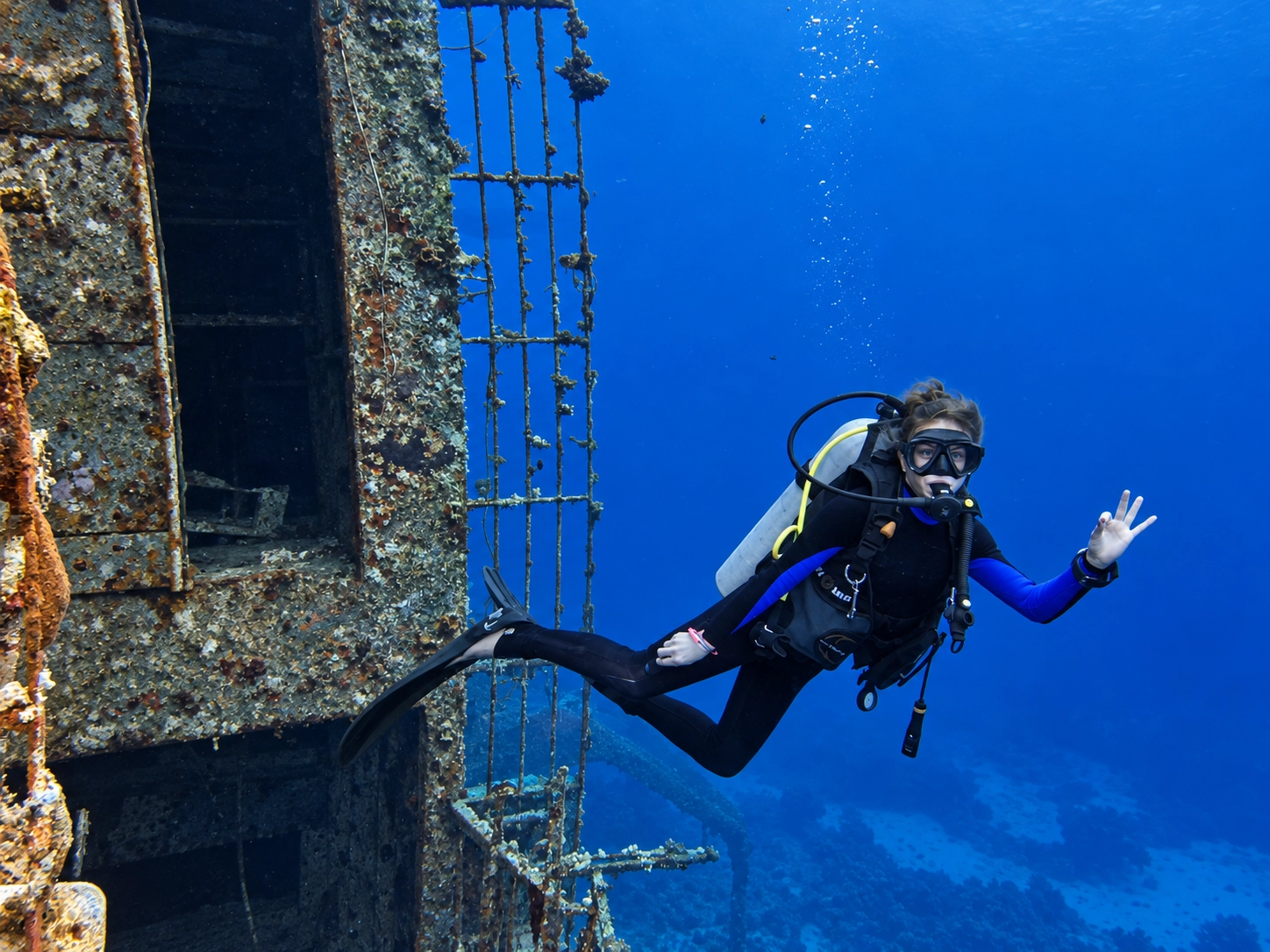
PADI Wreck Diver in Hurghada · Two days · Ages 15 and up
Every wreck has a history, a layout and its own set of hazards. Consequently, over two days and four training dives you learn to survey one properly, hold buoyancy above fragile steel, navigate the structure and run a guideline on a controlled penetration where conditions allow.
2 days · 4 supervised dives · reels and lines
€250 per person · dives, gear and certification included
Adventure Divers · ages 15 and up
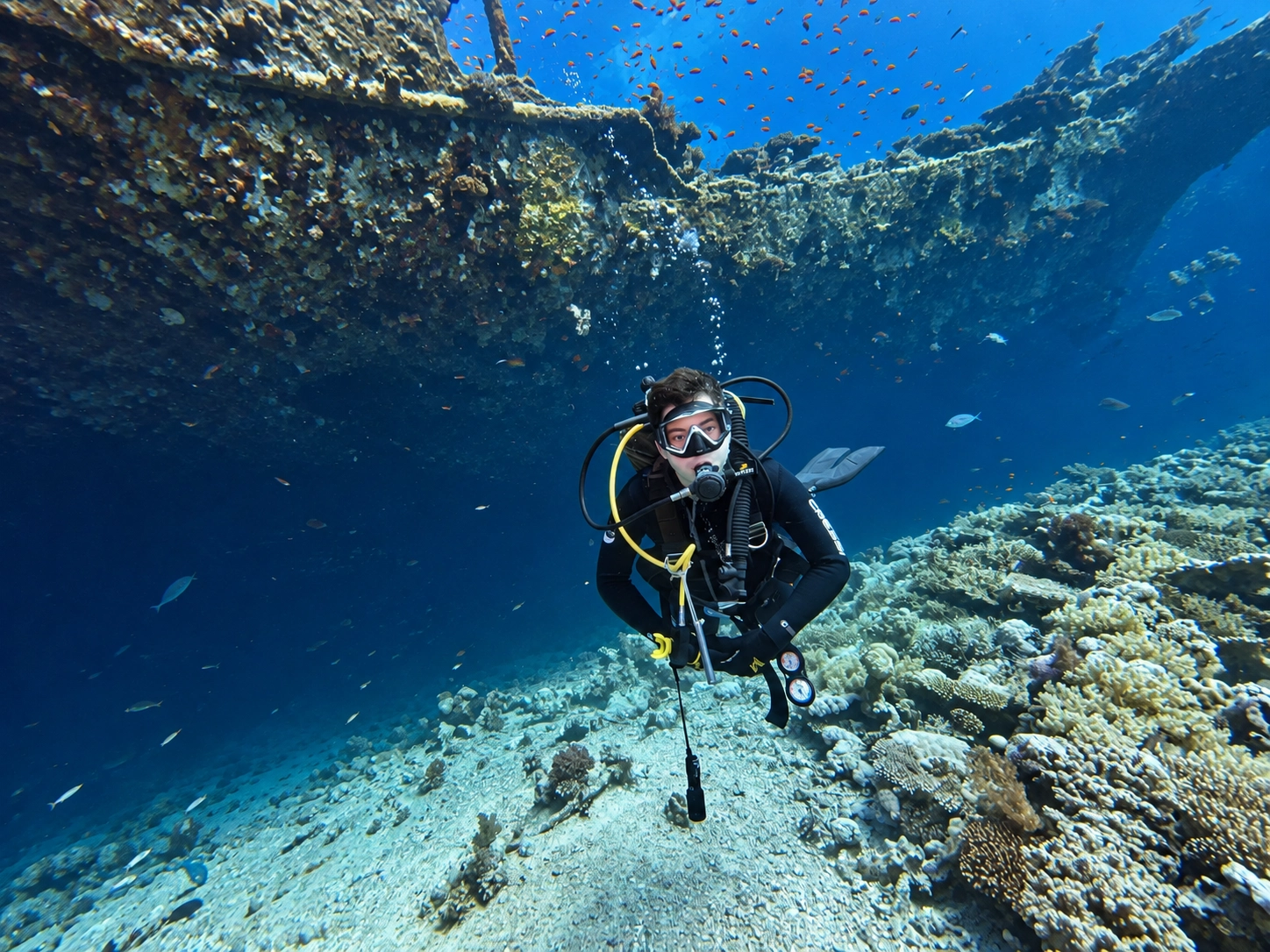
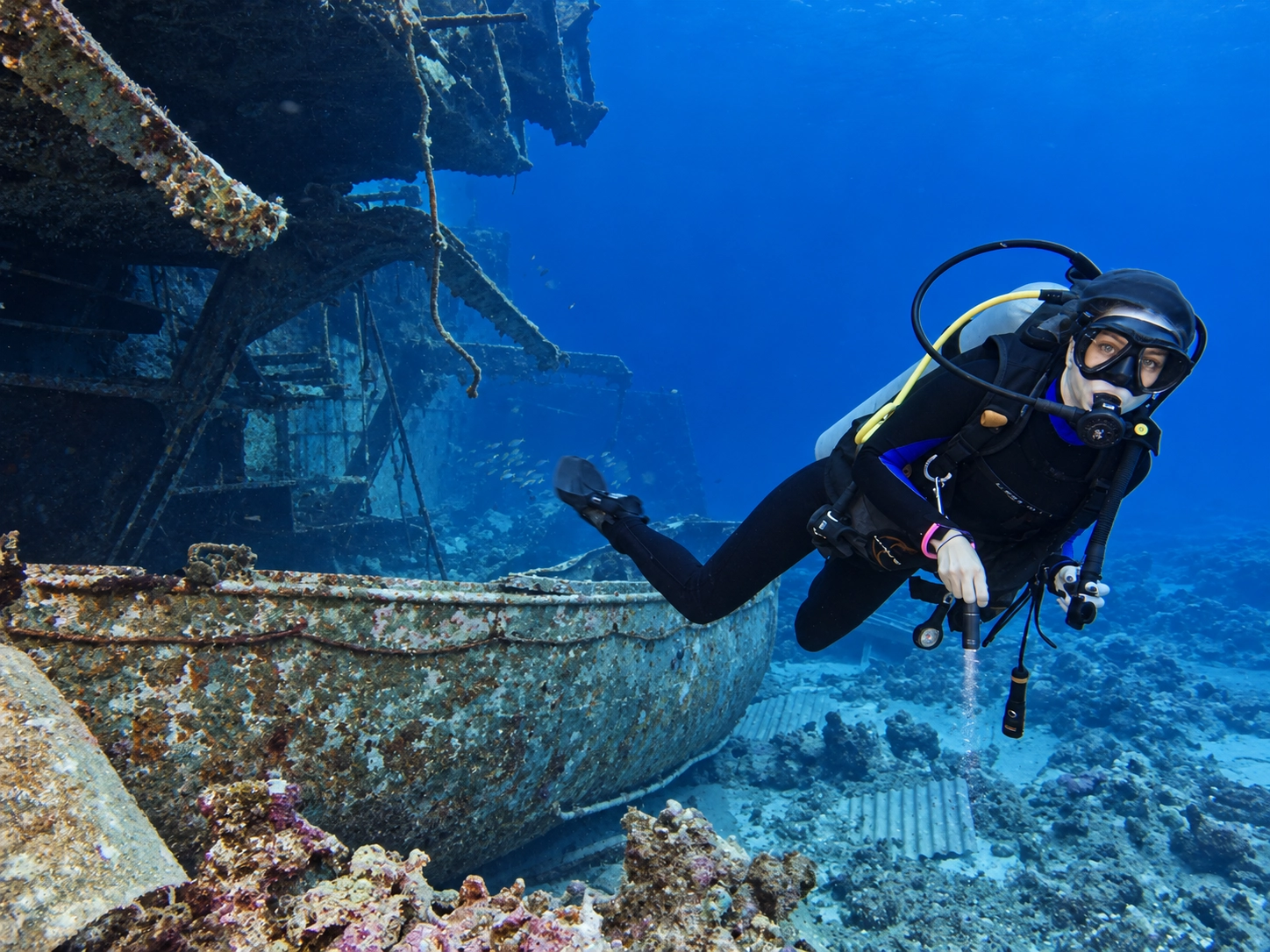
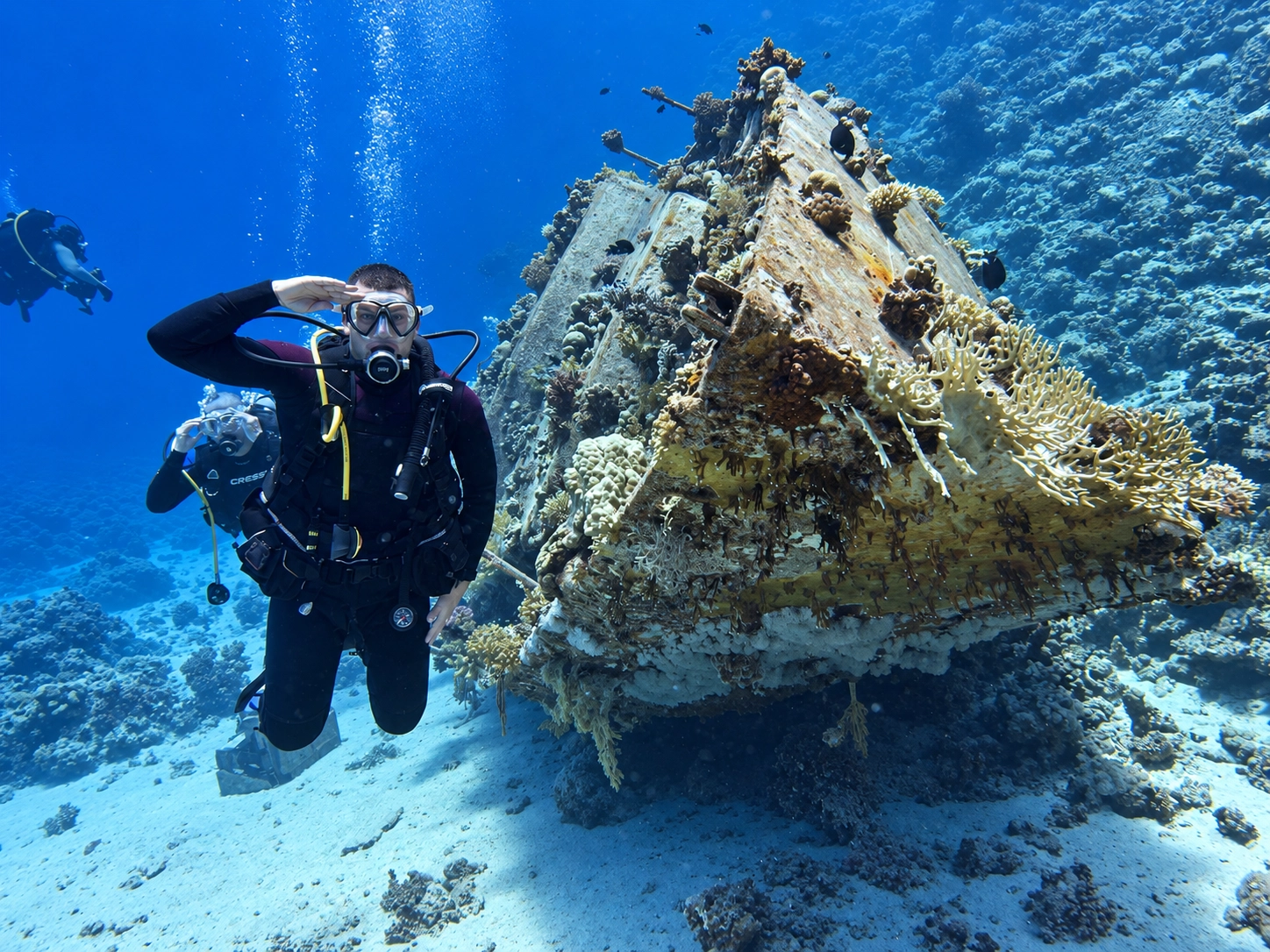
The PADI Wreck Diver course in Hurghada costs €250 per person and normally takes two days. It includes four supervised dives on suitable Red Sea wrecks, PADI materials and certification, standard scuba equipment, wreck reels and training lines, cylinders and weights, lunch and drinks on scheduled boat days, marine park fees and hotel transfer within central Hurghada. You must be at least fifteen and hold PADI Adventure Diver or an accepted equivalent.
Meanwhile you learn wreck research and survey technique, specialized navigation, hazard recognition, responsible wreck practice and the correct use of reels and guidelines. Furthermore, full standards come from PADI. Red Sea Diving is a PADI dive operator based in Hurghada, Egypt, and has run diving and liveaboard trips on the Red Sea since 2000.
| Course | PADI Wreck Diver, a specialty course rather than a certification level |
|---|---|
| Price | €250 per person, with the dives, equipment, materials and certification all inside the price |
| Duration | 2 days |
| Dives | 4 supervised dives on suitable Red Sea wrecks |
| Penetration | Limited and controlled, on a continuous guideline, only where the wreck and the conditions allow. Unrestricted and technical penetration are not part of this course |
| Covers | Wreck research and survey, dive planning, hazard recognition, navigating the structure, precise buoyancy, reels and guidelines, lights and equipment management |
| Minimum age | 15 years. Deeper hulls may also call for the Deep Diver specialty first |
| Prerequisite | PADI Adventure Diver or an accepted equivalent, comfortable buoyancy control and a signed PADI medical form |
| Training wrecks | Typically the El Mina, the Excalibur, the Suzanna and other suitable local wrecks, chosen on the day |
| Not part of the course | The SS Thistlegorm, Abu Nuhas and the Salem Express. These are separate long-distance excursions with their own planning and costs |
| Location | Wreck sites reached by day boat from the Hurghada marina, Egypt |
| Availability | Year-round, on request, subject to boat, weather and instructor availability |
| Included | A qualified PADI Instructor, PADI learning materials and certification processing, standard scuba equipment, wreck reels and training lines, 12-liter cylinders and weights, lunch and drinks on scheduled boat days, marine park fees, hotel transfer within central Hurghada |
| Not included | Long-distance wreck excursions, Nitrox or 15-liter cylinders, torch or dive computer rental, private instructor, transfers from El Gouna, Makadi Bay, Sahl Hasheesh, Soma Bay or Safaga, accommodation and flights |
| Operator | Red Sea Diving, a PADI dive operator based in Hurghada, Egypt, since 2000 |
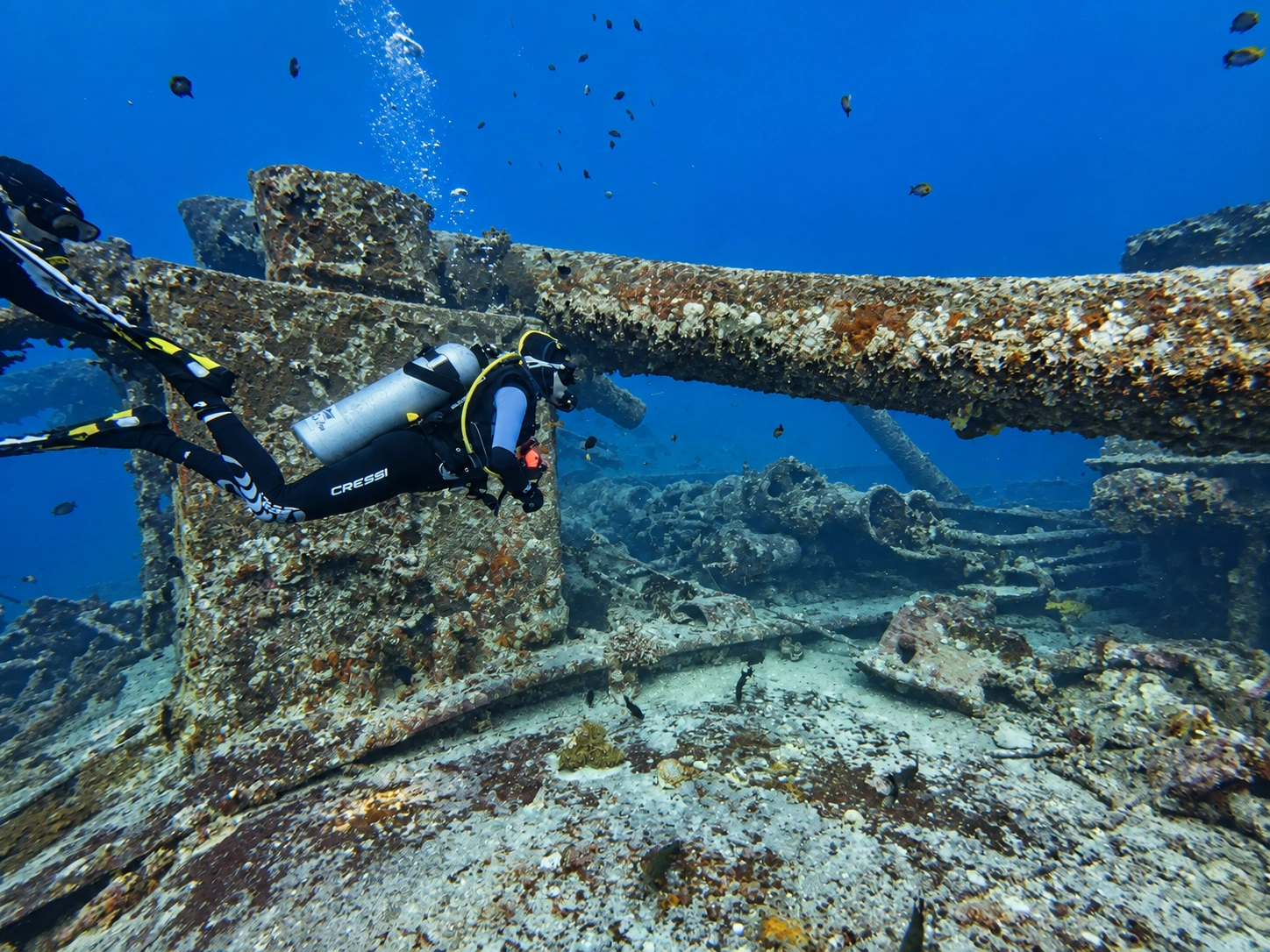
PADI Wreck Diver is the specialty that teaches a certified diver to research, survey and navigate a sunken structure safely, including limited penetration on a continuous guideline where conditions allow. Wreck diving looks simple from the outside and is anything but. Above all, the specialty teaches you to explore responsibly while protecting yourself, your buddy and the wreck itself.
Consequently the course works through researching a wreck before you dive it, planning and organizing the dive, recognizing possible hazards, surveying the structure, navigating around it, holding precise buoyancy, avoiding sharp metal and entanglement, using reels and guidelines, managing lights and equipment, and safe penetration procedures.
Underneath all of it sits one idea: a wreck is a historical site and a habitat before it is a playground. Therefore the training treats it that way from the first briefing.
The two days of the PADI Wreck Diver course move from surveying the outside to running a guideline inside. Meanwhile the knowledge sections are finished before you arrive.
We send the PADI materials as soon as you book. Consequently the theory is finished at home and both days here stay in the water.
First you identify hazards, survey the condition and layout, locate safe entry and exit areas, hold neutral buoyancy above the structure and record the features that matter.
Next comes the reel work: laying and retrieving a guideline, following it with buddy contact, emergency communication, lost-line and lost-buddy procedures and gas planning for an overhead.
Finally you review the survey against what you actually saw. Therefore the next dive starts from a real plan rather than a general intention.
Actual skills and sites depend on safety, visibility, weather and the condition of the wreck on the day. Your instructor adjusts the order rather than forcing a fixed script.
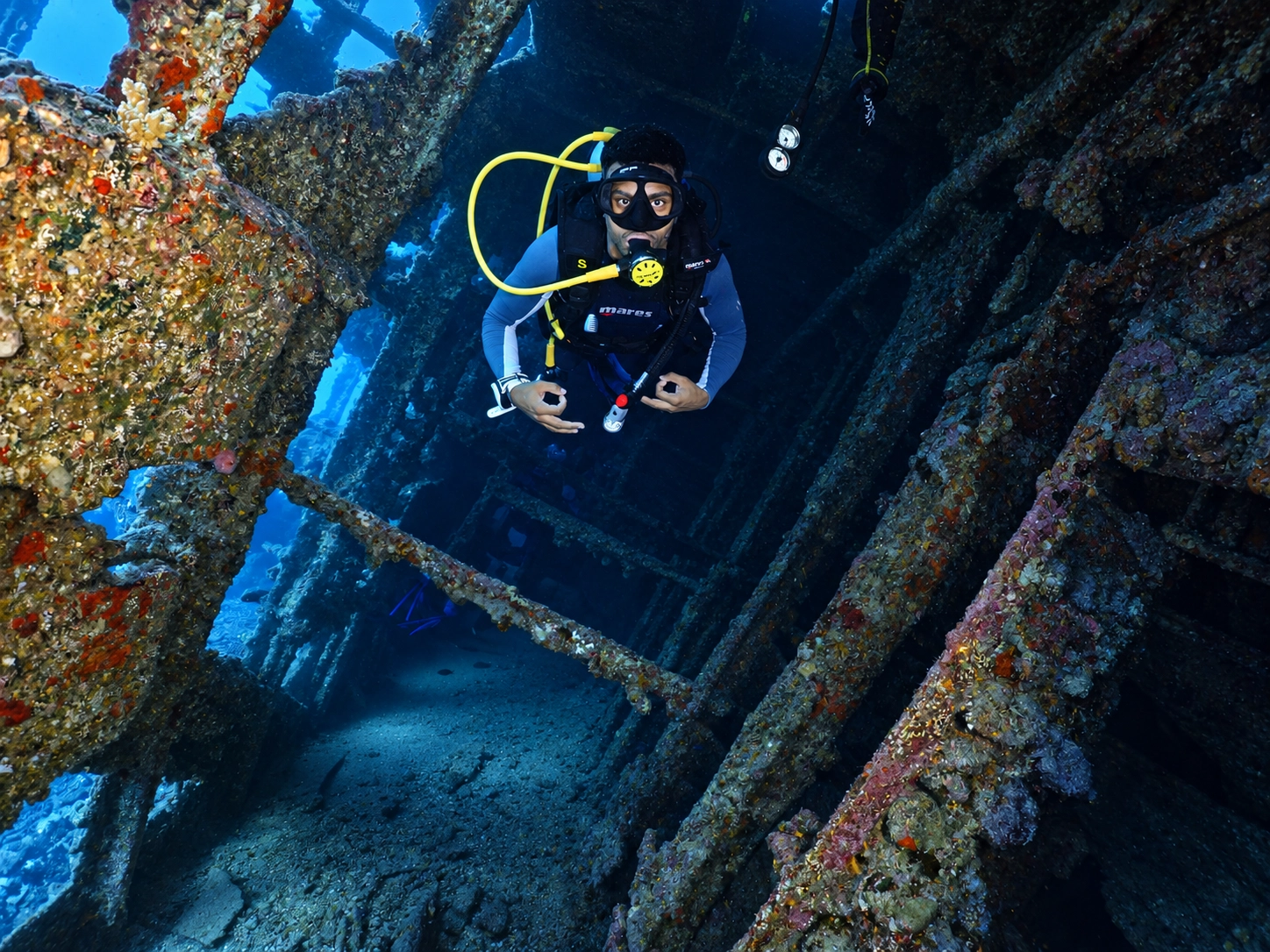
The PADI Wreck Diver course may include a limited, controlled penetration when the selected wreck and the conditions are suitable. Any penetration stays within the recreational training limits of the course, uses a continuous guideline and remains inside a zone with an accessible exit. Indeed, that is a genuine skill and a genuinely enjoyable dive.
What it is not is a license for overhead environments. Completing this course does not qualify you for unrestricted penetration or technical wreck diving, and some wrecks are dived from the outside only because of their structure, depth, historical importance or condition. Nevertheless we tell you which before you book rather than on the boat.
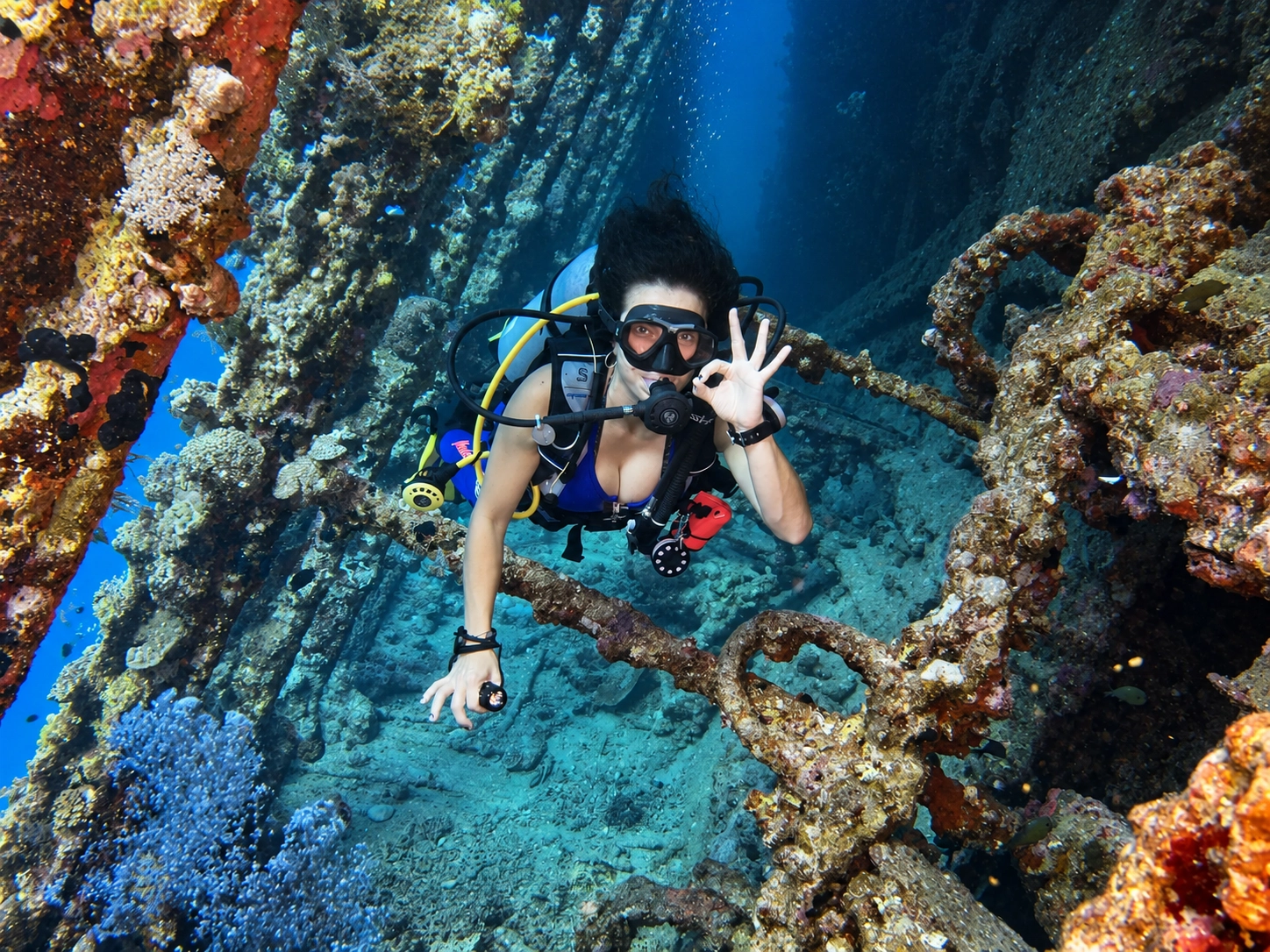
Buoyancy is the whole game on a wreck. Poor control damages the marine life that has colonized the structure, stirs up sediment and drops visibility for everyone behind you, and puts you within reach of sharp metal, old fishing line and unstable sections.
Consequently the course drills neutral buoyancy, careful finning, avoiding contact entirely, keeping gauges and equipment tucked in, preventing entanglement and moving without disturbing silt. If depth control is currently the thing you fight, take Peak Performance Buoyancy first.
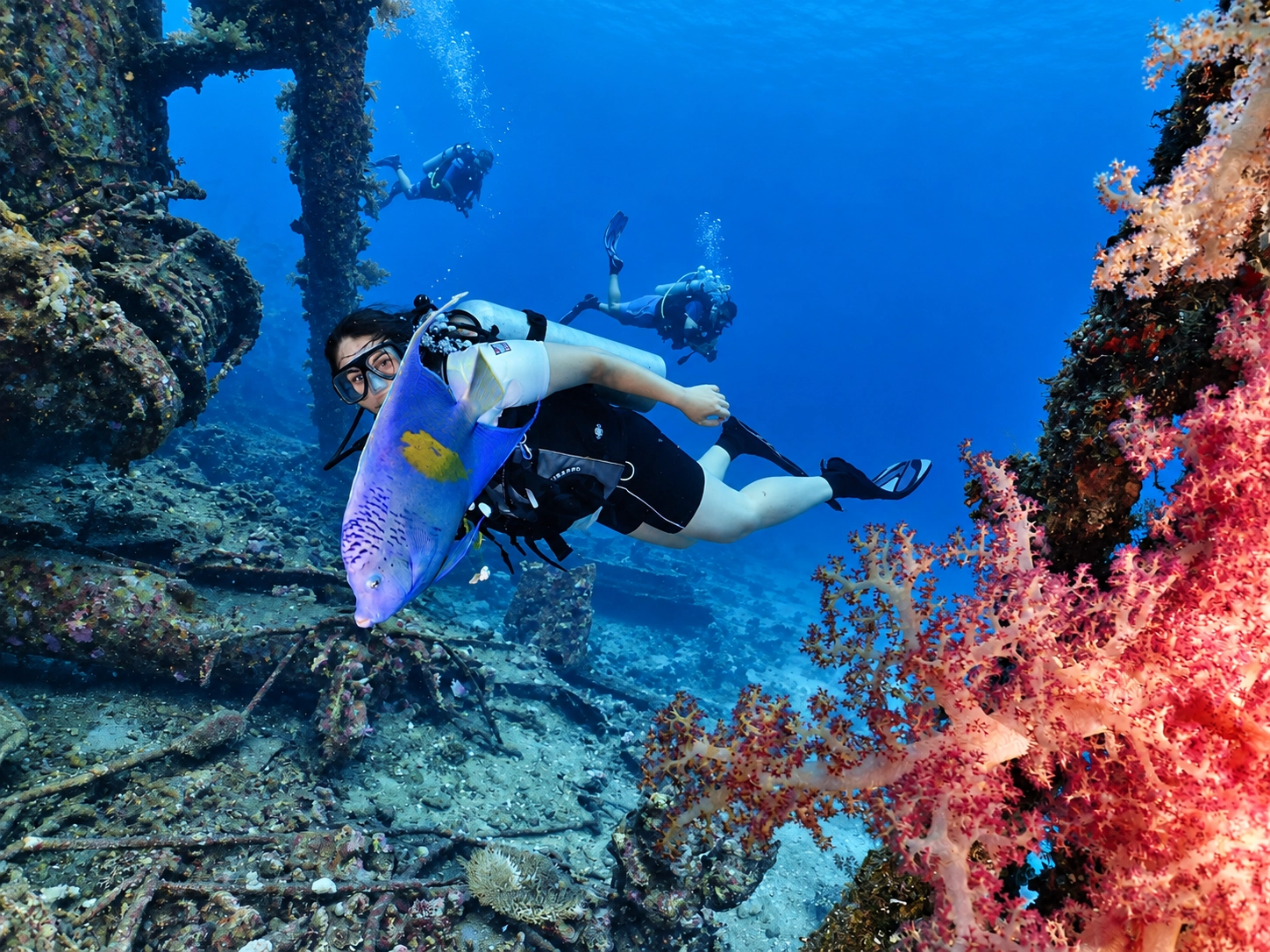
One rule has no exceptions: never remove anything. These are historical sites, in several cases war graves, and they are habitats. Take the photograph and leave the porcelain where it is.
Naturally, training sites are chosen for weather, visibility, depth, your experience and what the course requires that day. Around Hurghada we typically use the El Mina, the Excalibur, the Suzanna and other suitable local wrecks.
The famous long-distance wrecks are a separate matter. Trips to Abu Nuhas, the SS Thistlegorm or the Salem Express are not automatically included in the course price, since they need separate planning and can carry extra transport, permit or boat costs.
Many divers do the course locally first and then dive those properly afterwards, which is the right order anyway. Our Hurghada dive sites page shows what we normally run.
The €250 price of the PADI Wreck Diver course in Hurghada covers all four training dives and both diving days rather than the training alone.
Possible extras: special long-distance wreck trips, Thistlegorm, Abu Nuhas or Salem Express excursions, Nitrox cylinders, 15-liter cylinders, torch or dive computer rental, a private instructor, transfers from El Gouna, Makadi Bay, Sahl Hasheesh, Soma Bay or Safaga, and accommodation and flights. The exact sites and any additional cost are confirmed in writing before you book.
The PADI Wreck Diver course asks for PADI Adventure Diver, a minimum age of fifteen and steady buoyancy control. Importantly, the equipment list here is longer than on most specialties.
First of all, you need PADI Adventure Diver or an accepted equivalent. An Open Water Diver completes that training first, and Advanced Open Water is excellent preparation.
Fifteen is the minimum. Moreover, deeper hulls may also call for the Deep Diver specialty before you dive them properly.
Above all, you need steady control before starting rather than after. Where it needs work, we recommend buoyancy training first instead of pressing on.
Alongside standard kit: a dive computer, a compass, a primary light, a backup light, a reel or spool, a cutting device, a slate, a surface marker buoy and suitable exposure protection. Therefore your instructor confirms what each dive needs.
Send us your certification level, logged dives and the date of your last dive, and we confirm eligibility honestly before you travel. Our procedures are set out on the diving safety page.
Wreck Diver at €250 handles the structure, Deep Diver handles the depth and Enriched Air Nitrox handles the bottom time. As a result, many Red Sea wrecks make most sense once you hold at least two of the three.
Research, survey, navigation, hazards and guideline procedures. In short, this course, €250 over two days and four dives.
Diving between eighteen and forty meters: gas management, narcosis and deep dive safety. Many Red Sea wrecks sit below eighteen meters, so the two together make a far stronger foundation.
Longer no-decompression limits on suitable dives. However, the mixture has to suit the planned depth, and you analyze the cylinder and set your computer yourself every time.
Navigation helps here too: a structure looks identical from three meters away in every direction, which is exactly what Underwater Navigator trains you to handle.
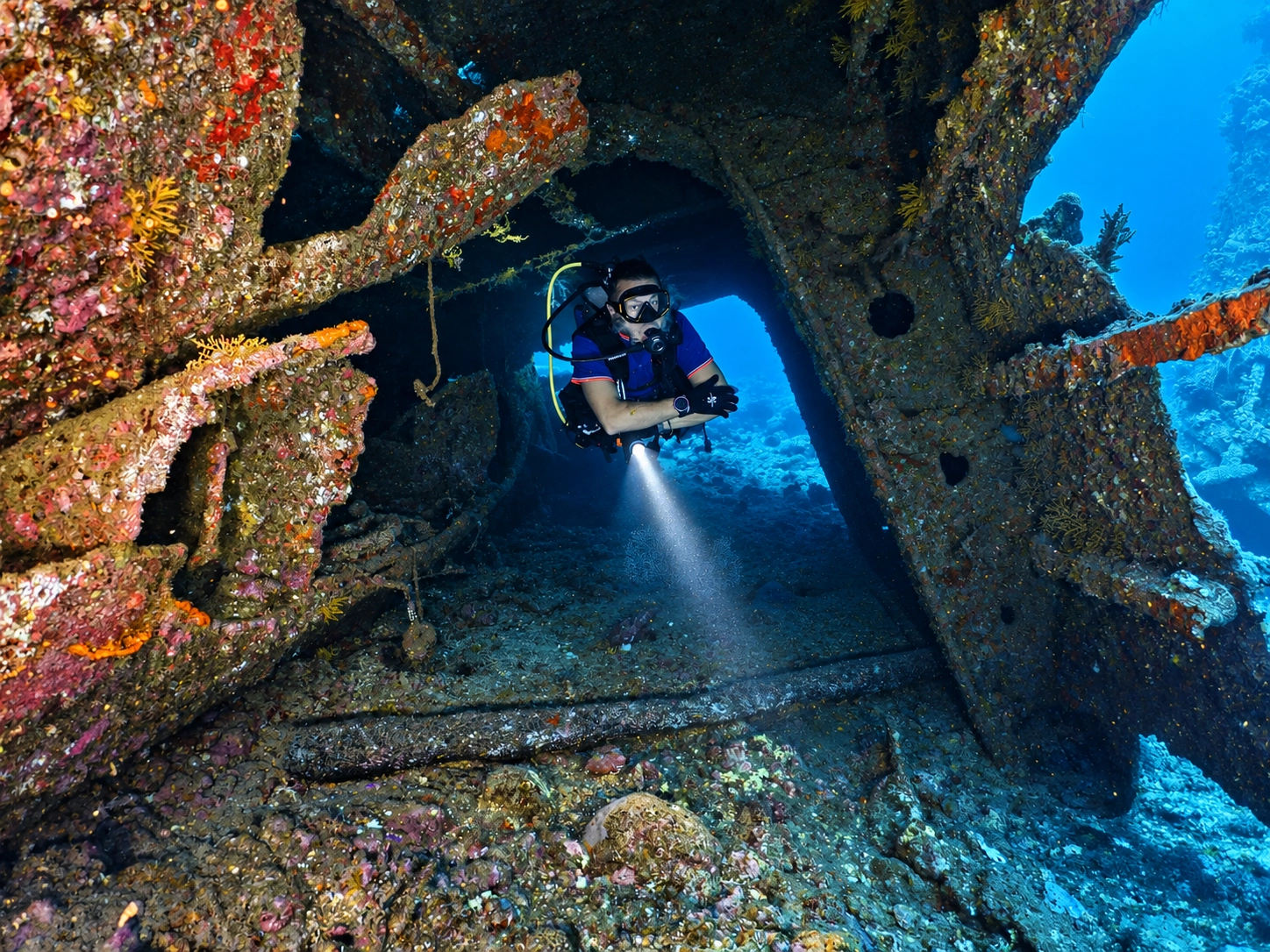
All four dives of the PADI Wreck Diver course run from a day boat leaving the Hurghada marina, on the Egyptian Red Sea coast. Hurghada sits within reach of wrecks at genuinely different depths, structures and eras, from small local hulls to the famous northern ships.
Moreover, Red Sea visibility makes studying a layout and practicing navigation far easier than it would be elsewhere, and there is plenty of life settled on every one of them. Consequently we keep groups small, because supervising divers around a complex structure needs the instructor close.
Hotel transfer inside central Hurghada comes with the course. Non-diving family can join the Giftun island and snorkeling trip, and further practical answers sit on our diving FAQ.
Gallery
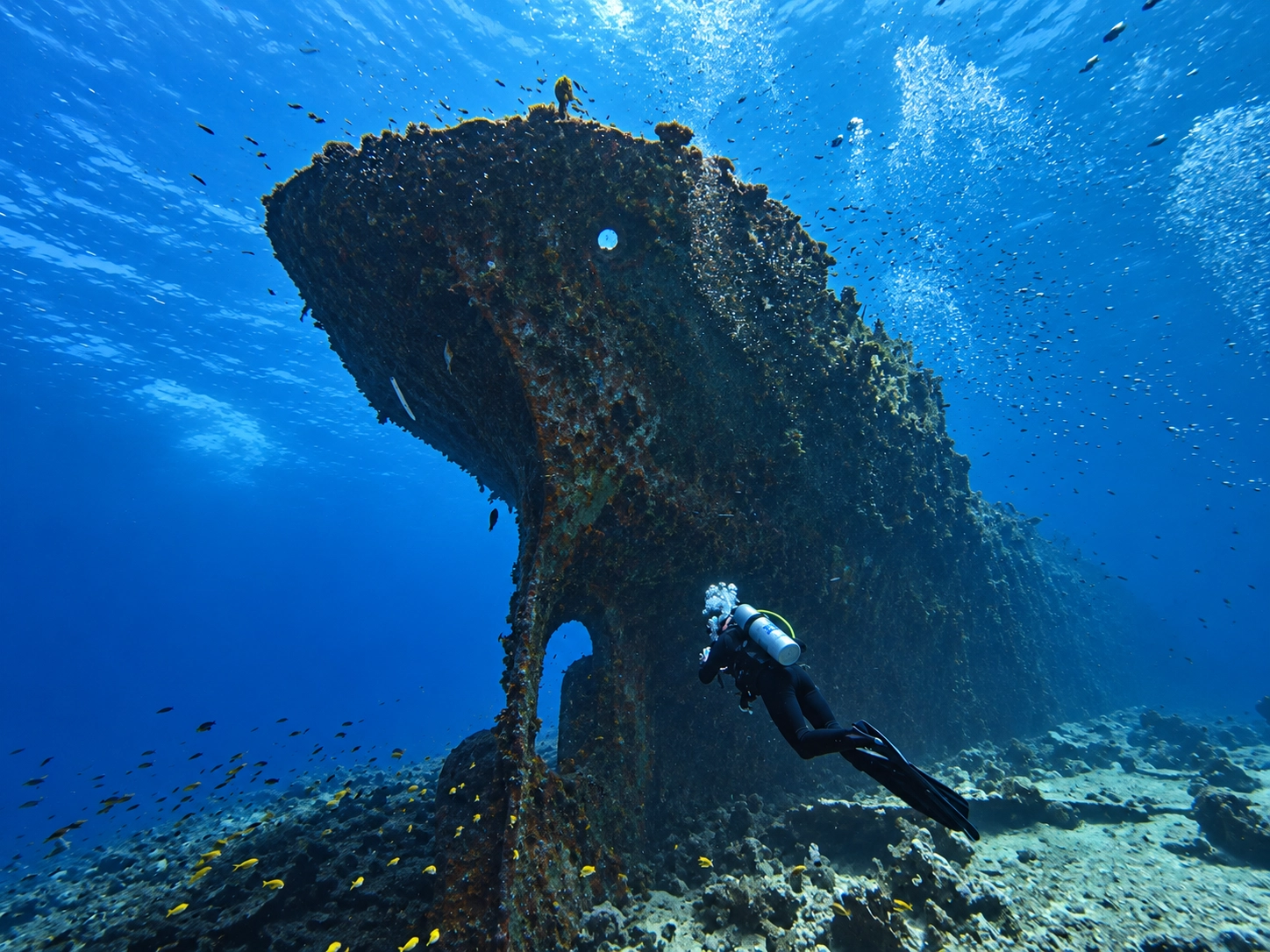
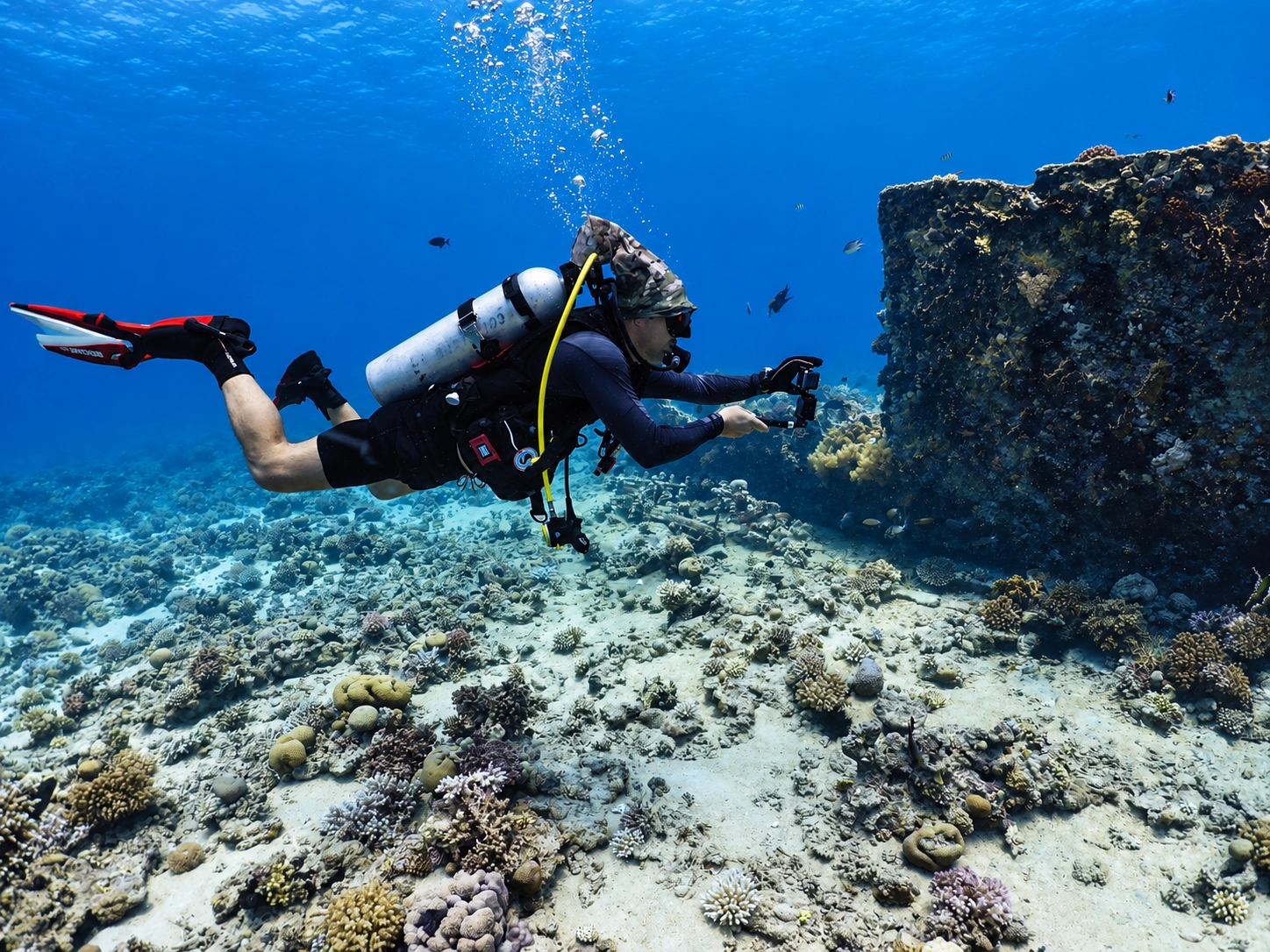
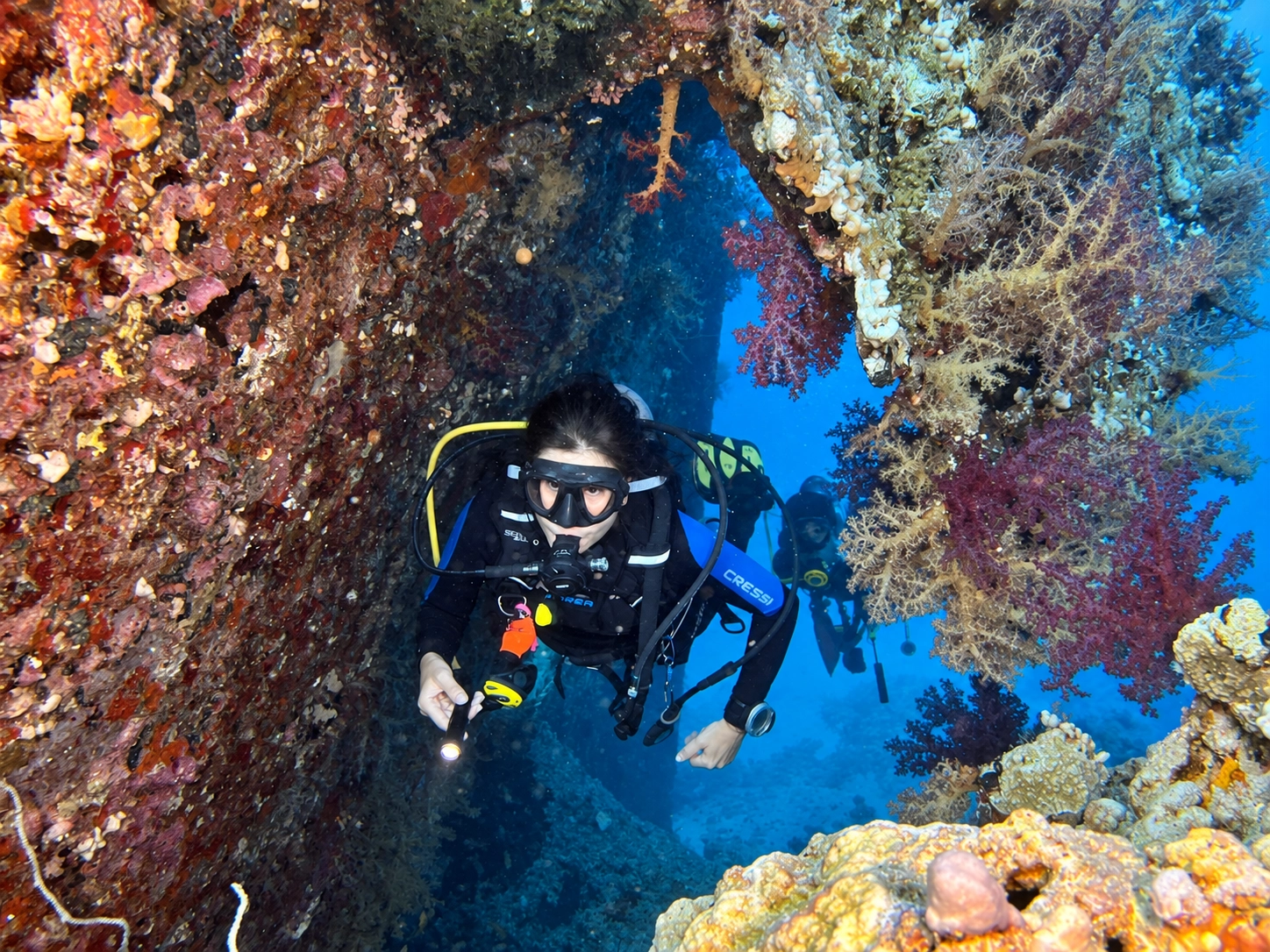
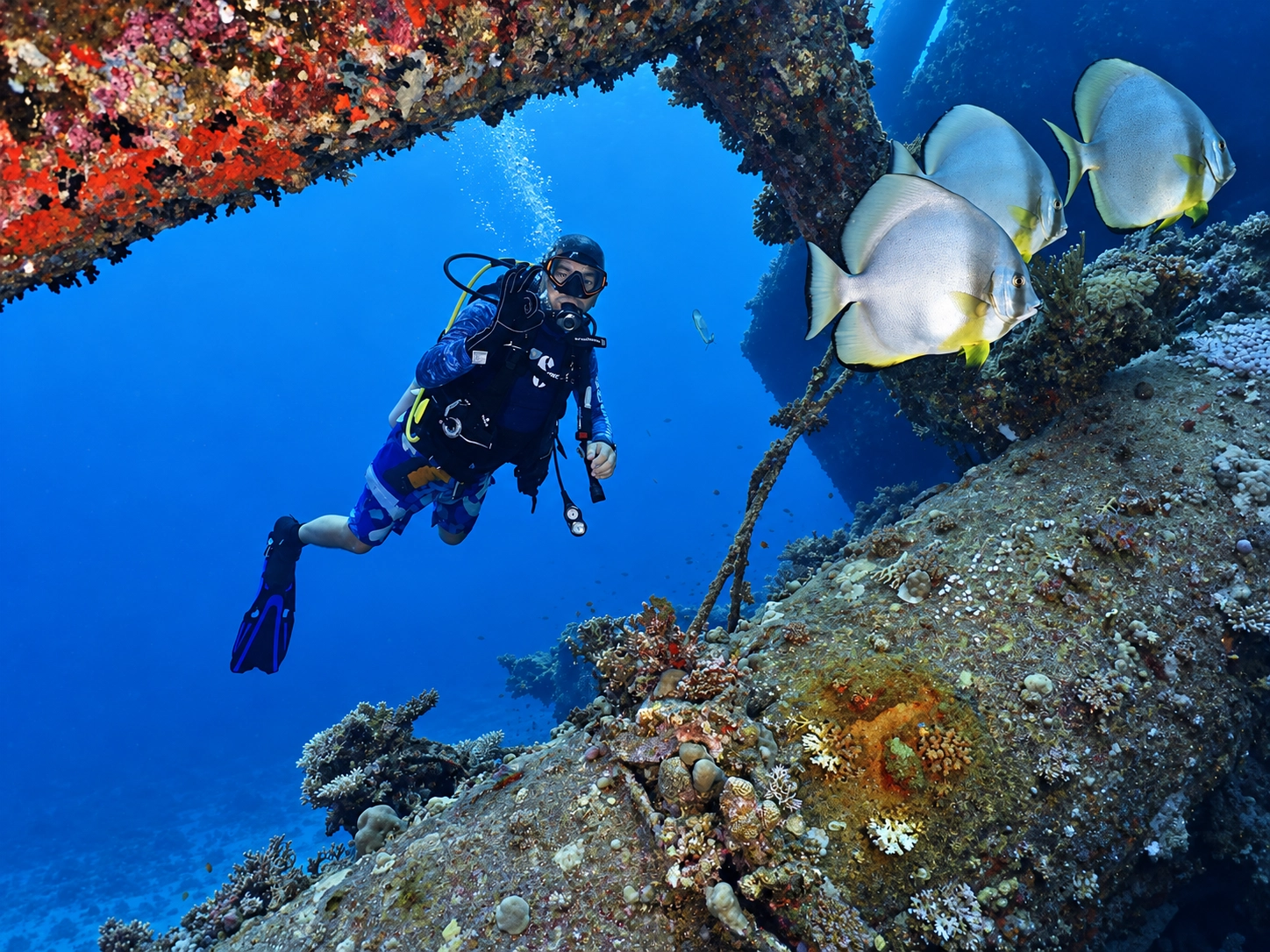
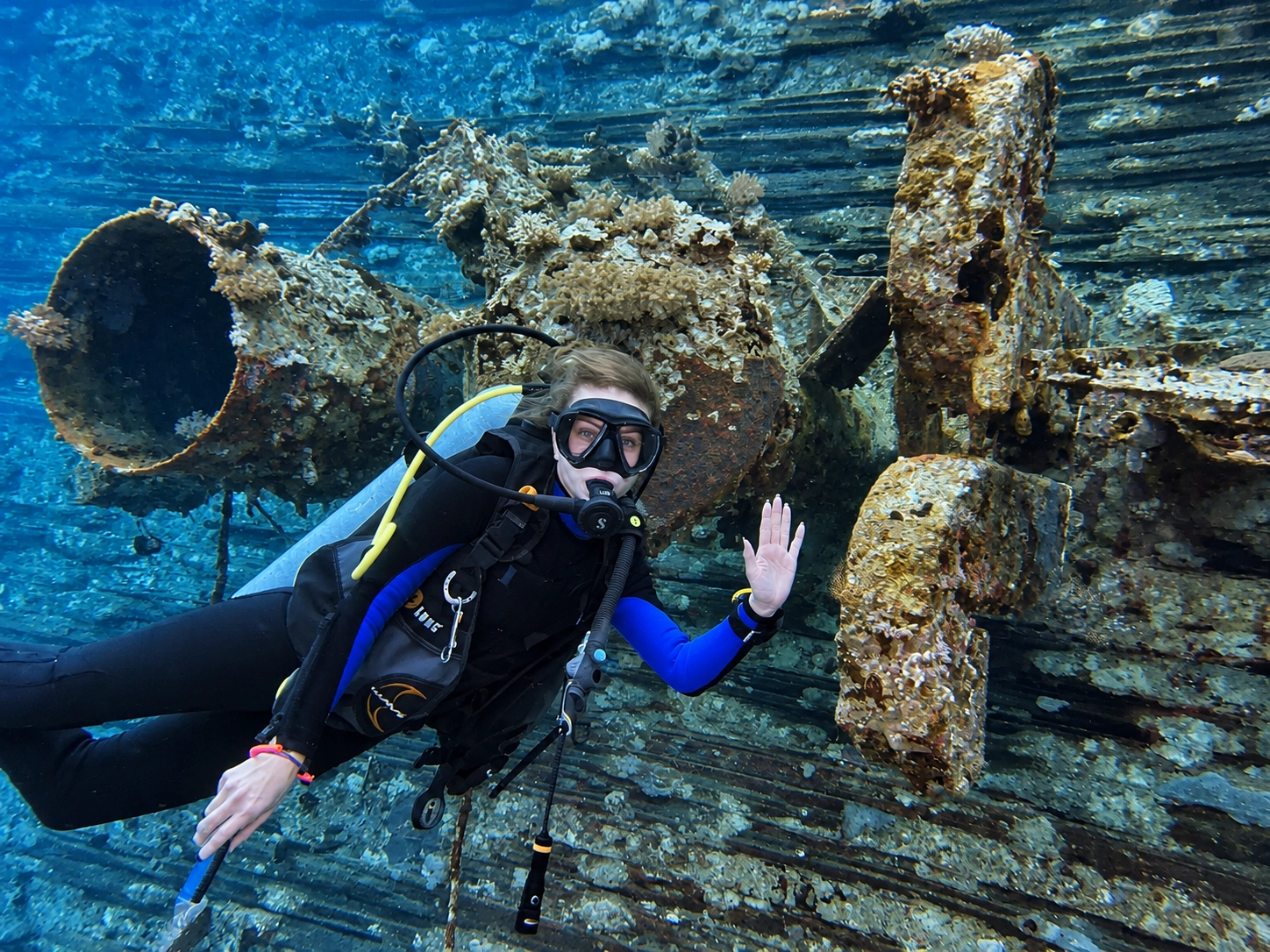
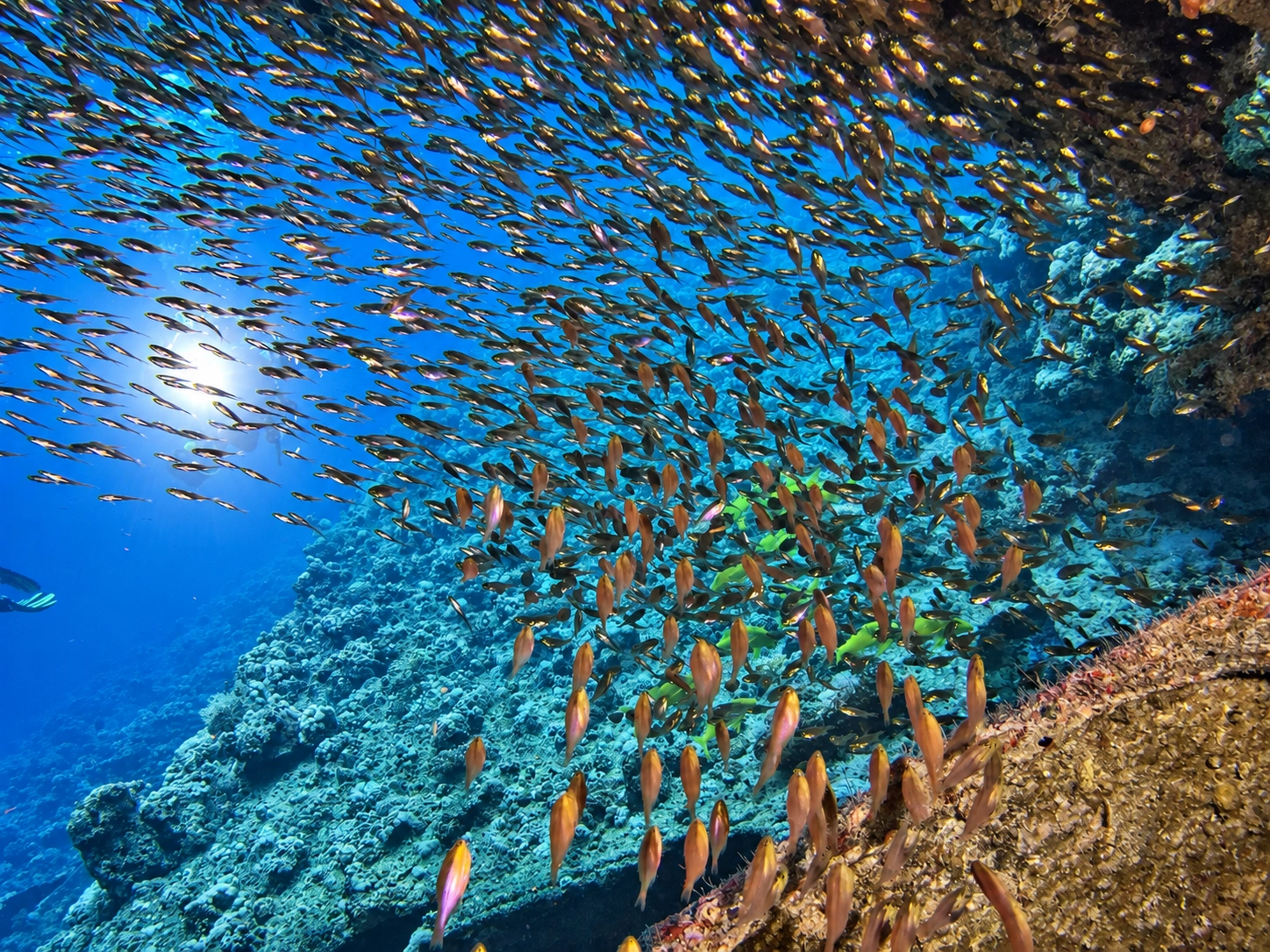
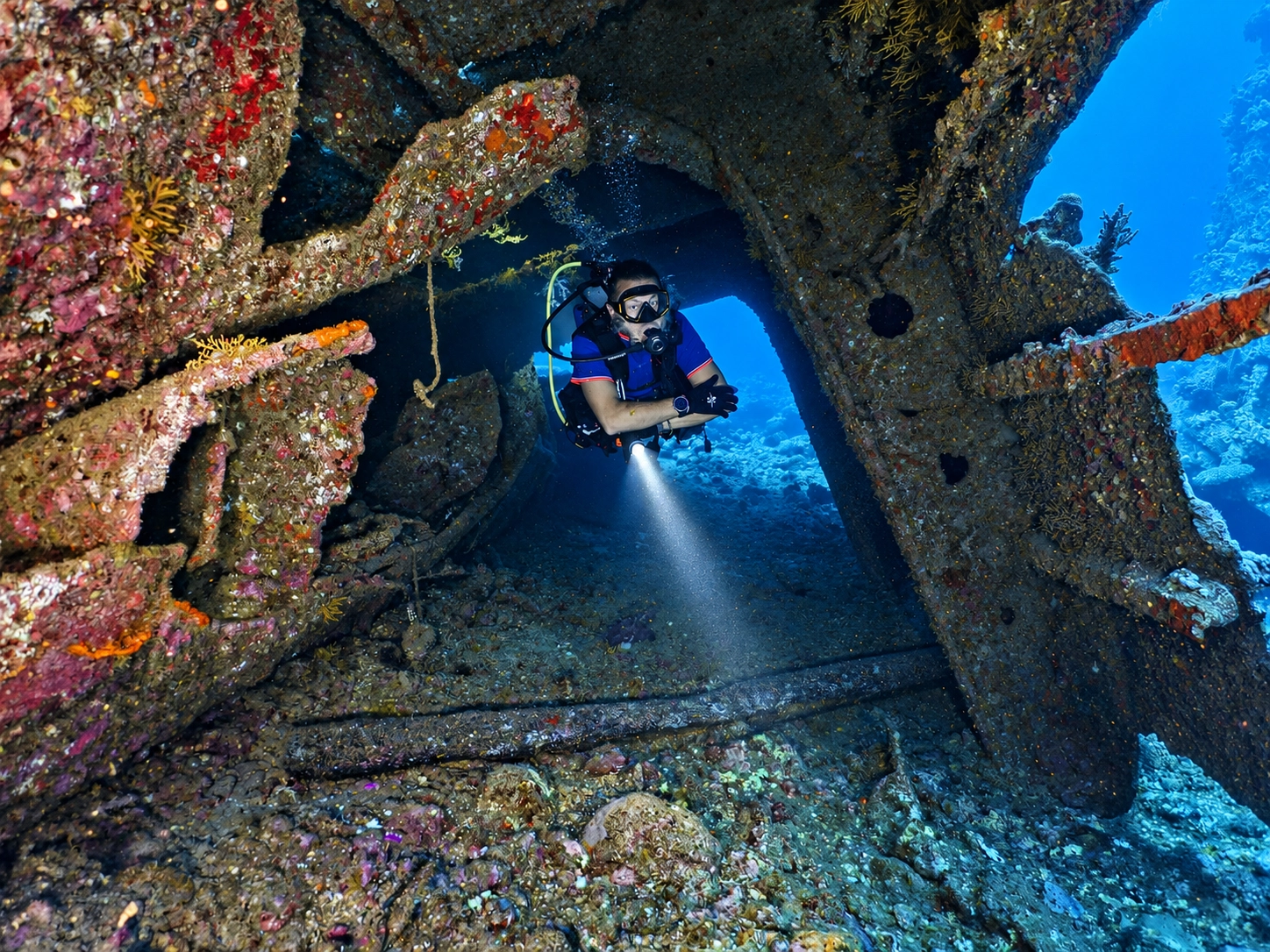
Furthermore, wreck work sits neatly beside Deep Diver for the hulls below eighteen meters, Enriched Air Nitrox for longer no-stop times, Underwater Navigator for relocating the ascent line, and Underwater Photography if you want to bring something back.
If you have not done it yet, Rescue Diver remains the most useful course most divers ever take. Meanwhile the experience is the point: build it on our daily diving trips, or on a liveaboard week where the northern routes put you on the famous ships. The full ladder sits on our PADI courses page.
Why us
Above all, oxygen and full emergency equipment on board, plus a documented action plan and a briefing before every dive.
Indeed, more than two decades of diving and liveaboard operations out of Hurghada, on every Egyptian route.
Furthermore, our instructors know the local sites, their condition and which sections are sensible to survey and which are not.
As a result, you complete the course through practical Red Sea experience on our own boats rather than through theory alone.
Moreover, the €250 covers training, standard equipment, reels and lines, materials and certification, with extras confirmed in writing.
In addition, we treat every site as a historical location and a habitat, which is why nothing ever leaves one with us.
Questions
The PADI Wreck Diver course in Hurghada costs €250 per person. In other words, that covers four training dives, boat services, standard equipment, reels and lines, PADI materials and certification.
Yes. The two diving days and all four training dives sit inside the €250 rather than beside it.
Yes. Furthermore, standard scuba equipment, cylinders, weights and the training reels and lines all come with the course.
Yes. The learning materials and the certification processing sit inside the price, so nothing arrives afterwards as an extra.
Two days, including four supervised training dives. Therefore it fits comfortably inside a normal diving week.
A controlled, limited penetration exercise may be conducted where the wreck and the conditions are suitable. Unrestricted or technical penetration is not part of this course.
Usually yes. Even so, tell us as early as you can, because we send the knowledge sections before the first day.
All four dives run from a day boat leaving the Hurghada marina, on suitable local wreck sites. Meanwhile the exact wreck is chosen on the day for safety, weather, visibility and depth.
Around Hurghada we typically use the El Mina, the Excalibur, the Suzanna and other suitable local wrecks, chosen on the day for weather, visibility and depth.
Not automatically. The Thistlegorm requires a separate long-distance trip, suitable certification and appropriate experience.
No. Abu Nuhas is normally arranged as a special wreck diving excursion and may carry additional costs.
No. Wrecks are historical sites, memorials and marine habitats. Divers must not remove objects or damage the structure.
PADI Adventure Diver or an accepted equivalent certification from another recognized agency.
Fifteen years. However, deeper sites may also call for the Deep Diver specialty before you dive them.
You should have comfortable buoyancy control before starting. Where it needs work, we recommend additional buoyancy training first rather than pressing on.
Standard air cylinders are included. Nitrox may be available for an additional charge, provided the mixture suits the planned depth.
Yes. The courses complement each other, although you must complete the required knowledge and training dives for both specialties.
No, the card is for life. Nevertheless, divers who have been inactive should complete a refresher before returning to wreck diving.
First, send us your certification level, your number of logged dives, your preferred dates and your hotel. Subsequently, we reply within twenty-four hours with eligibility, the available sites and the pickup time. For independent guidance on dive planning read Divers Alert Network, and for liveaboard diving in Egypt see also redsealiveaboard.net.
Prefer to talk? Message us on WhatsApp or write to info@redsea-diving.com.
This page was last reviewed by the Red Sea Diving instructor team in September 2026.
Premium Red Sea diving in Egypt. Liveaboard trips with experienced crews, comfortable vessels and 20+ years of experience.