The course
2 days · 4 supervised dives · to 40 m

PADI Deep Diver Course in Hurghada · Two days · Ages 15 and up
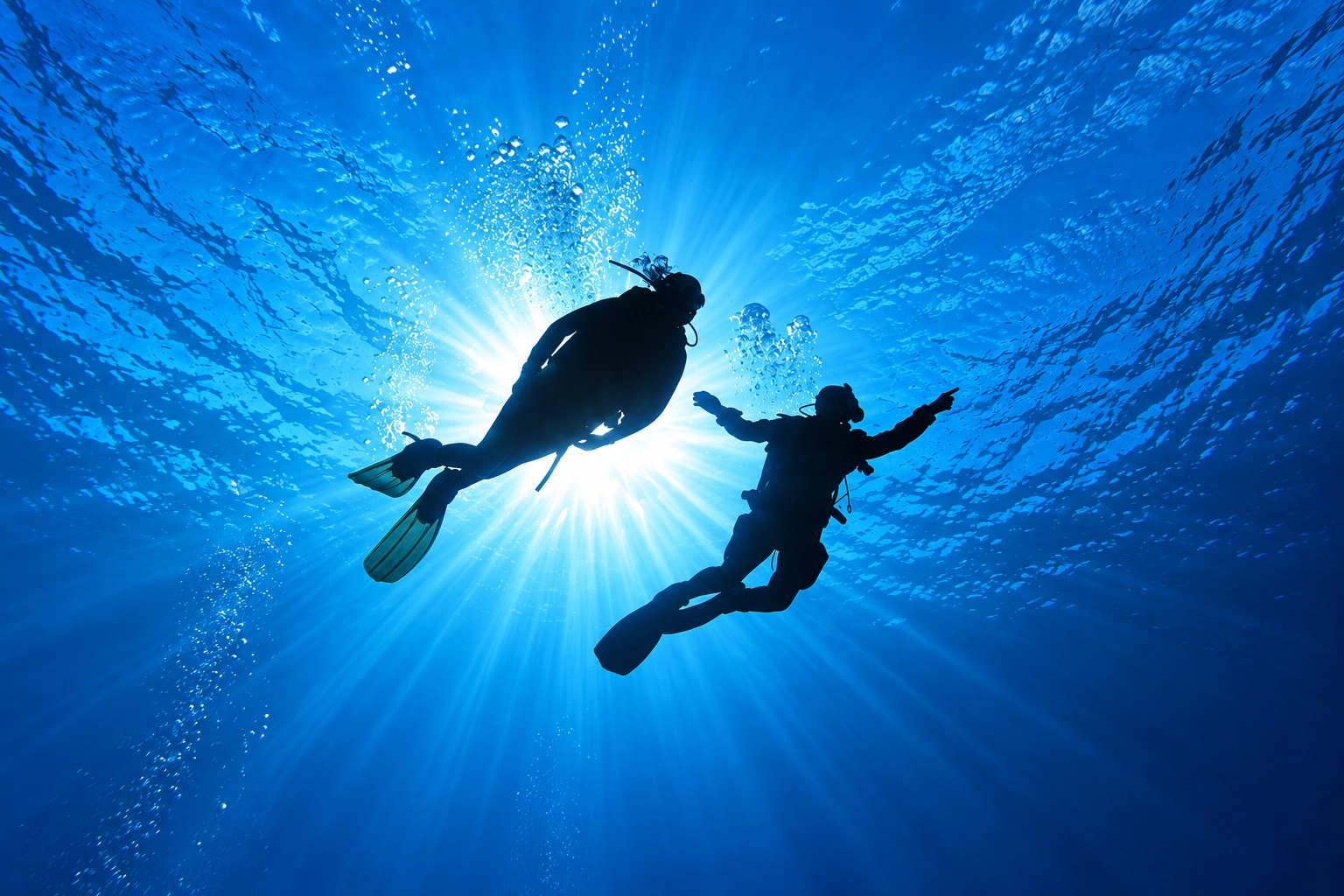
The best of the Red Sea often sits below eighteen meters: the deep walls, the drop-offs, the part of the wreck nobody photographs. Consequently, four supervised dives over two days teach you to plan for that depth properly and extend your recreational limit to forty meters.
2 days · 4 supervised dives · to 40 m
€260 per person · dives, gear and certification included
Adventure Divers · ages 15 and up
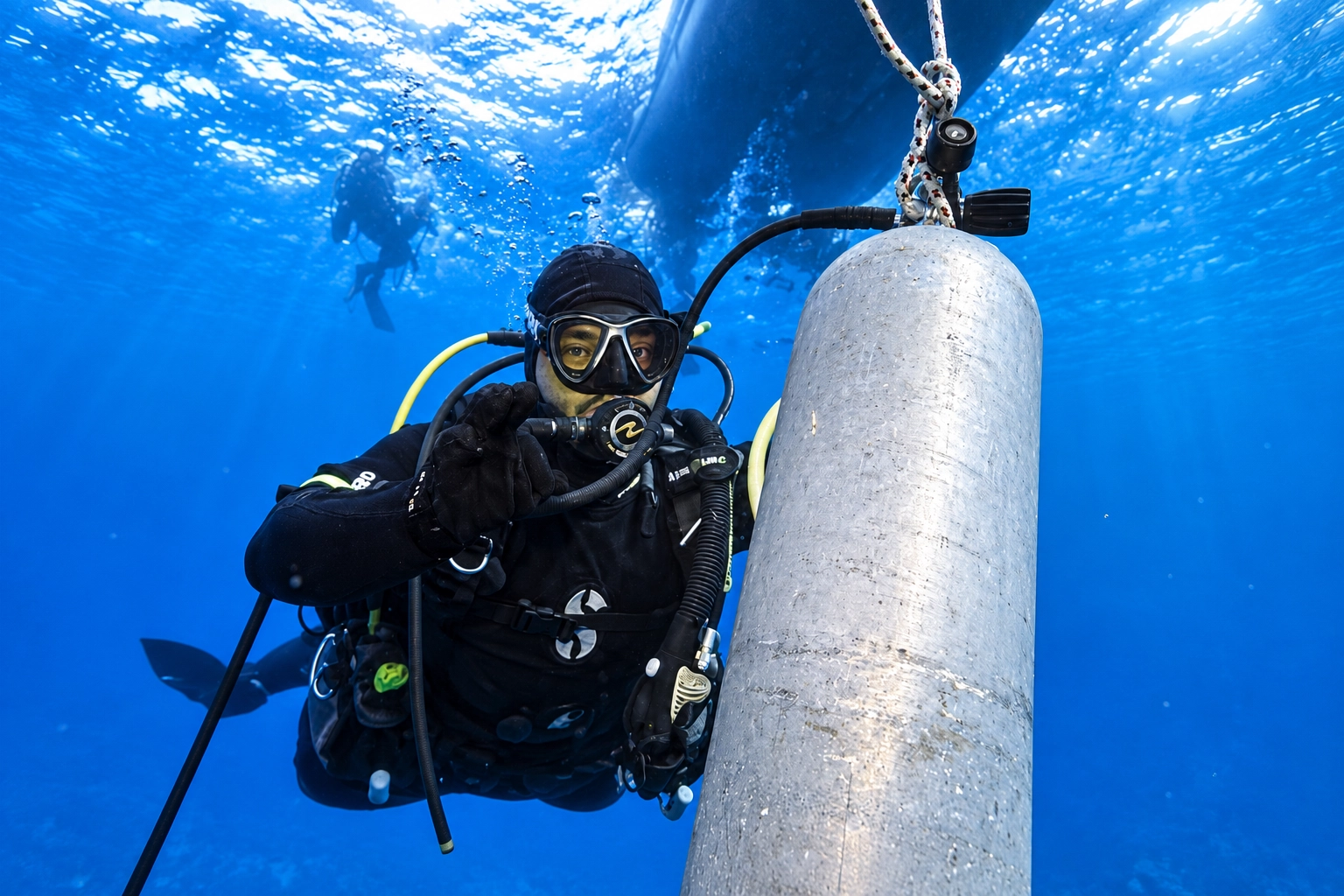
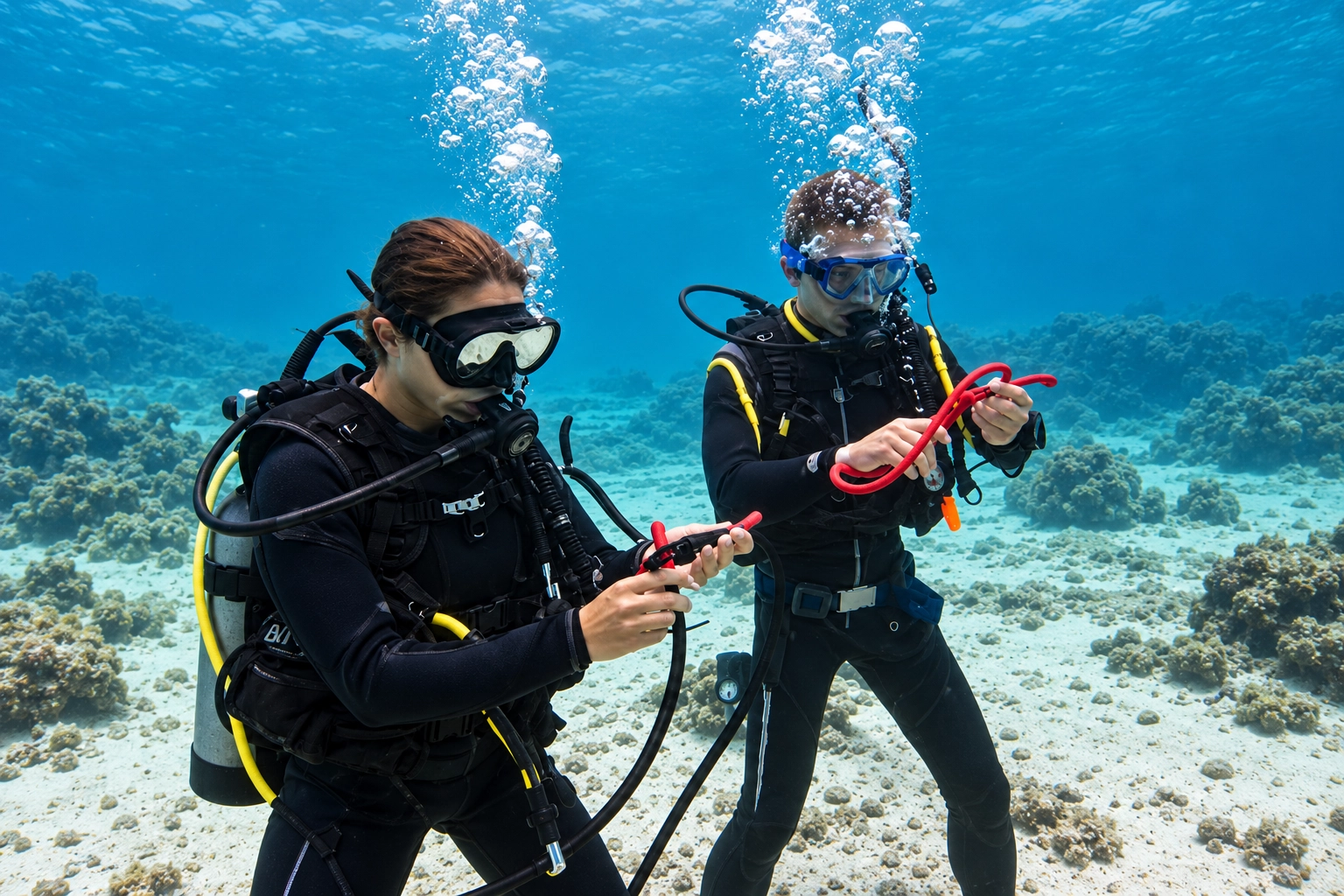
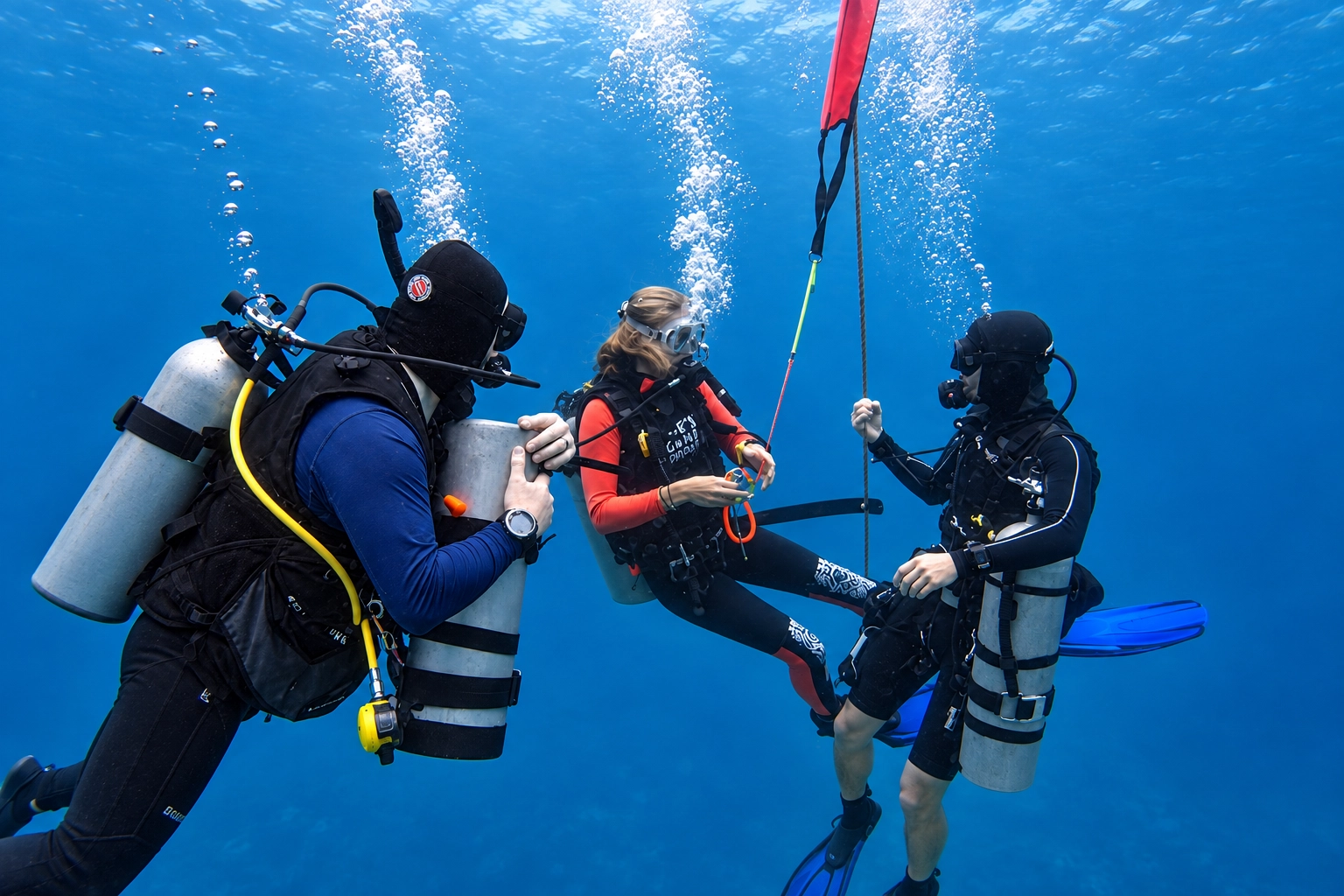
The PADI Deep Diver Course in Hurghada costs €260 per person and takes two days. It includes four supervised training dives, two days of boat diving, PADI materials and certification, full standard equipment, cylinders and weights, lunch and drinks, marine park fees and hotel transfer within central Hurghada. You must be at least fifteen and hold PADI Adventure Diver or an accepted equivalent. Qualified adults finish trained to a maximum recreational depth of forty meters.
Meanwhile, completing Advanced Open Water first is strongly recommended, because its Deep Adventure Dive is the natural preparation for this specialty. Furthermore, full standards come from PADI. Red Sea Diving is a PADI dive operator based in Hurghada, Egypt, and has run diving and liveaboard trips on the Red Sea since 2000.
| Course | PADI Deep Diver, a specialty course rather than a certification level |
|---|---|
| Price | €260 per person, with the dives, equipment, materials and certification all inside the price |
| Duration | 2 days |
| Dives | 4 supervised training dives |
| Certified depth | 40 meters maximum recreational depth for qualified adults. It is a ceiling rather than a target |
| Decompression | None. Every training dive stays within recreational no-decompression limits |
| Covers | Deep dive planning, gas supply management, no-decompression limits, nitrogen narcosis recognition, pressure and color at depth, buoyancy control, controlled ascents and safety stops, emergency procedures |
| Minimum age | 15 years. Junior depth restrictions may still apply under current PADI standards |
| Prerequisite | PADI Adventure Diver or an accepted equivalent, with Advanced Open Water strongly recommended. A suitable dive computer and a signed PADI medical form |
| Location | Deep walls, drop-offs and suitable wreck sites reached by day boat from the Hurghada marina, Egypt |
| Availability | Year-round, on request, subject to boat, weather and instructor availability |
| Included | A qualified PADI Instructor, PADI learning materials and certification processing, full standard scuba equipment, 12-liter cylinders and weights, a dive computer where required, two full boat days, lunch and drinks, marine park fees, hotel transfer within central Hurghada |
| Not included | Nitrox or 15-liter cylinders, private instructor, personal diving insurance, transfers from El Gouna, Makadi Bay, Sahl Hasheesh, Soma Bay or Safaga, accommodation and flights |
| Operator | Red Sea Diving, a PADI dive operator based in Hurghada, Egypt, since 2000 |
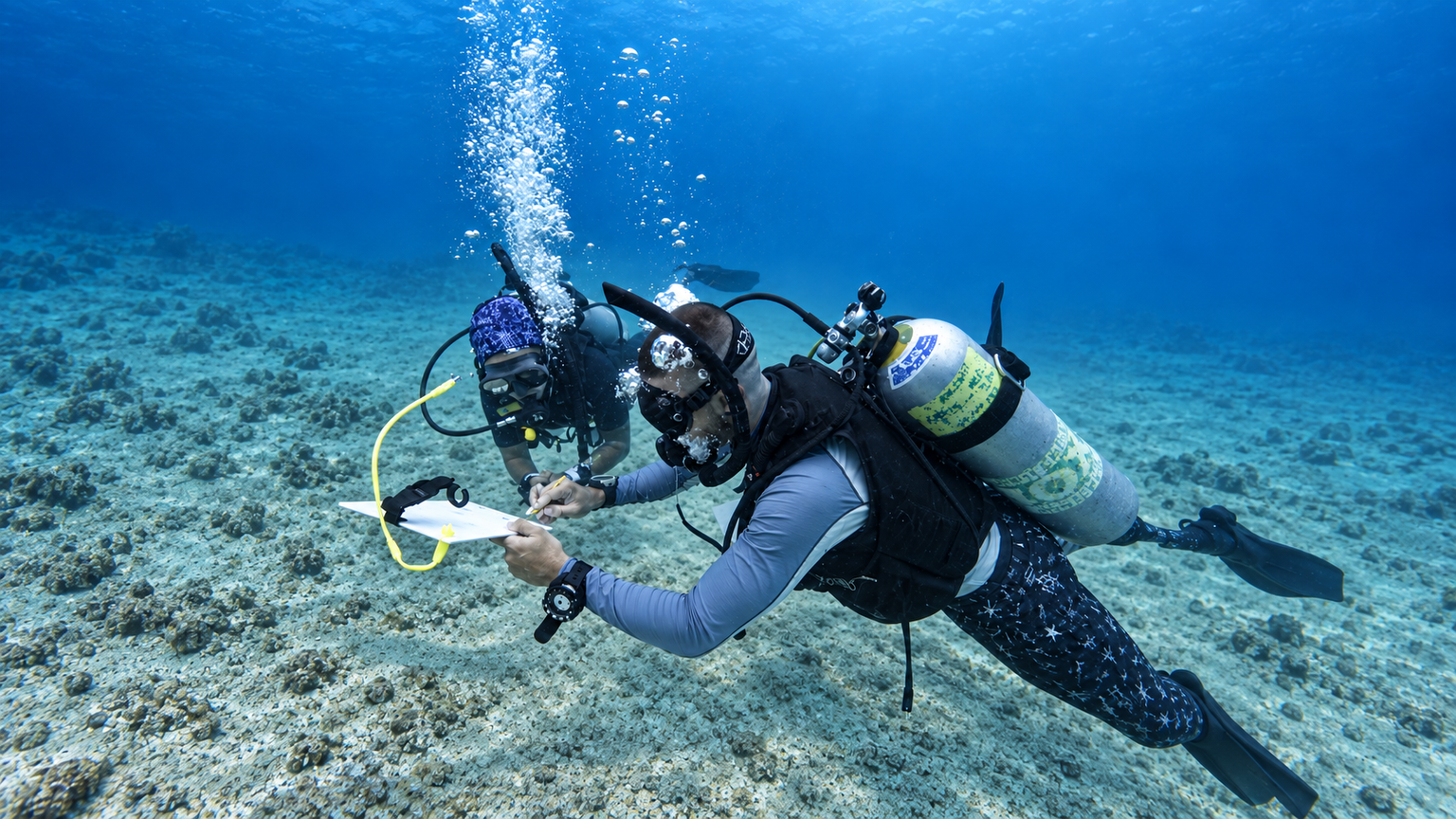
The PADI Deep Diver Course is the specialty that trains a certified diver to plan and make recreational dives between eighteen and forty meters. Depth changes the arithmetic. Above all, your gas lasts a fraction of the time, no-decompression limits shrink fast, and nitrogen narcosis arrives quietly enough that most divers never notice it in themselves.
None of that is dangerous when you plan for it. Consequently the problem is not depth itself but divers who simply follow the reef down without changing anything about how they dive.
Therefore the course covers deep dive planning and organization, gas supply management, higher air consumption at depth, no-decompression limits, narcosis, buddy communication and contact, buoyancy control at depth, deep diving equipment, safety stops and emergency procedures, plus the way pressure and color behave down there.
The four training dives of the PADI Deep Diver Course work through planning, narcosis, physics and emergencies in that order. Importantly, each one is rehearsed in the water rather than discussed on the boat.
First you build a real dive plan: usable gas, reserve pressure, turn pressure and no-stop time. As a result you go down with numbers rather than intentions.
You compare a simple task at the surface with the same task at depth. Consequently you learn what your own narcosis feels like before it matters.
Pressure-sensitive objects and a color card show what the water actually does to volume and light. Small demonstrations, although they stay with people for years.
Controlled ascent rates, safety stops, buddy contact and simulated problems solved at depth. Therefore the emergency plan is rehearsed rather than discussed.
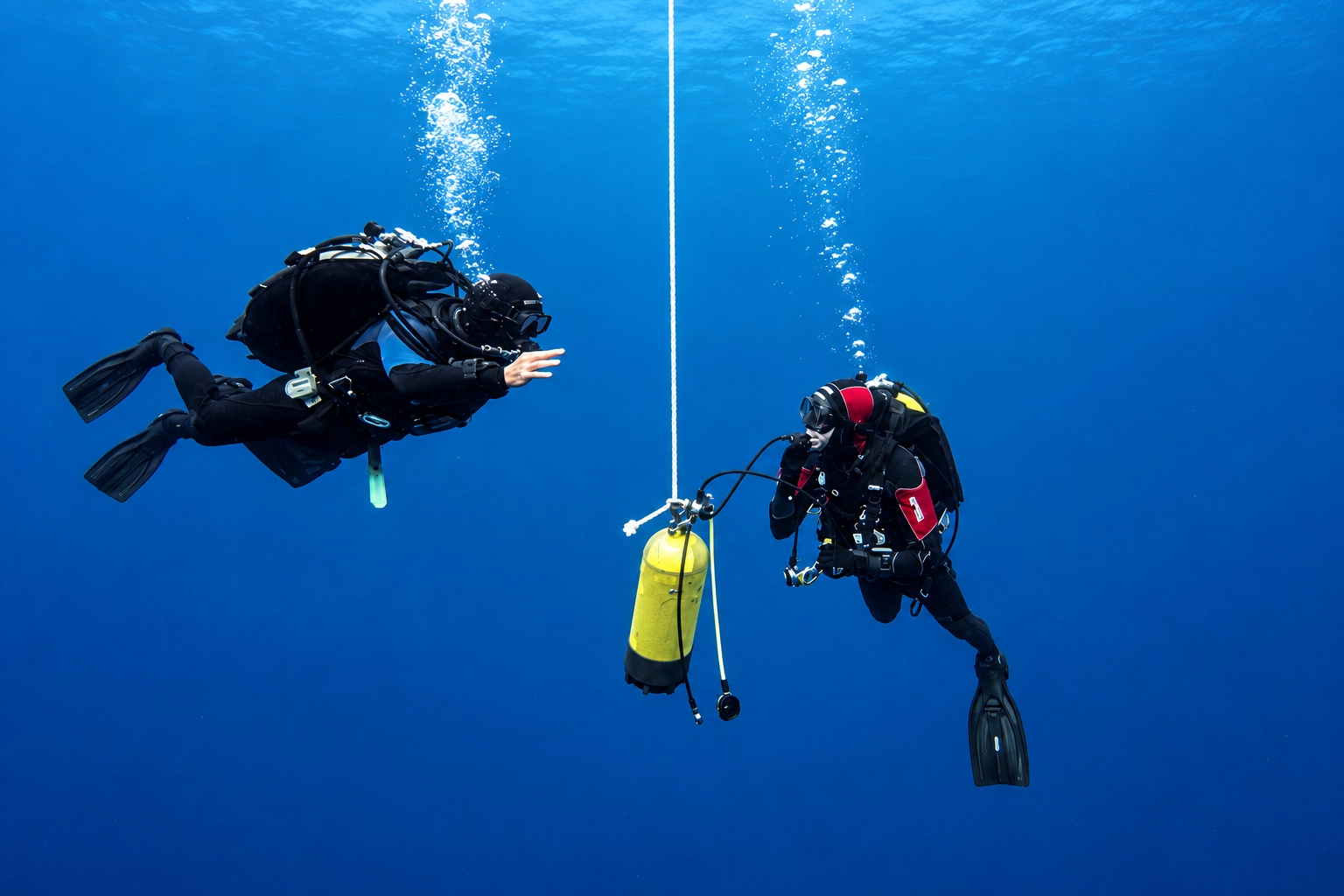
The two days of the PADI Deep Diver Course build from two dives past eighteen meters to two deeper ones. Meanwhile the knowledge sections are finished before you arrive.
We send the PADI materials as soon as you book. Consequently the theory is finished at home and both days here stay in the water.
First your instructor covers planning, gas management, equipment and emergency procedures. Then you make two supervised dives, with the first staying inside thirty meters.
Next come two further training dives toward the course maximum of forty meters, with narcosis recognition, problem solving and controlled ascents.
Finally you review the plan against what actually happened: gas used, depth, ascent rate and time. Therefore the next dive starts from real numbers.
Naturally, actual depths depend on sea conditions, your performance and the instructor’s judgement. Forty meters is a ceiling, not a target, and plenty of good training dives finish well above it.
Qualified adult PADI Deep Divers may plan recreational dives to a maximum of forty meters, or 130 feet. Nevertheless your actual depth on any given day still depends on conditions, experience, available gas, local regulations and your own comfort, and there is no prize for reaching the limit.
Equally, the certification does not qualify you to exceed forty meters, make planned decompression dives, enter technical diving environments, or penetrate a wreck without proper wreck training. In other words, those are separate skills with separate courses.
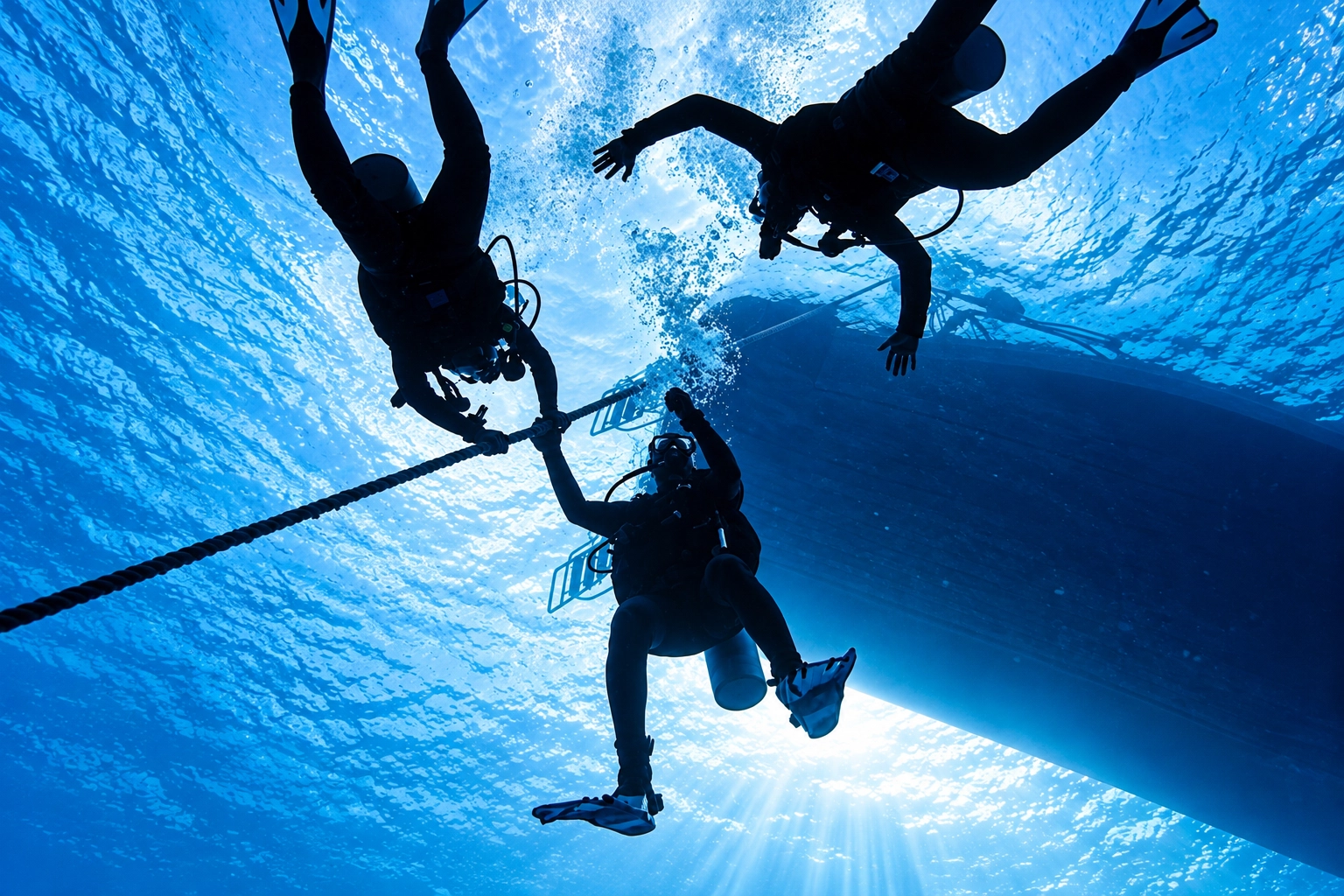
The €260 price of the PADI Deep Diver Course in Hurghada covers all four training dives and both boat days rather than the training alone.
Possible extras: Nitrox cylinders, 15-liter cylinders, a private instructor, personal diving insurance, transfers from El Gouna, Makadi Bay, Sahl Hasheesh, Soma Bay or Safaga, and accommodation and flights. Moreover, we confirm every additional cost in writing before you book, so nothing appears at the marina. You are welcome to use your own properly maintained equipment instead of ours.
The PADI Deep Diver Course asks for PADI Adventure Diver, a minimum age of fifteen and a suitable dive computer. Naturally, steady buoyancy matters more here than on any shallower course.
First of all, you need PADI Adventure Diver or an accepted equivalent. An Open Water Diver completes that training first, and Advanced Open Water is the usual route.
Fifteen is the minimum. Moreover, junior depth restrictions may still apply according to current PADI standards.
Above all, steady buoyancy and honest gas management matter more here than anywhere. Therefore, if depth control is the thing you fight, take Peak Performance Buoyancy first.
Every candidate uses a suitable dive computer. In addition, everyone completes the standard PADI medical form, and any flagged answer needs a doctor’s written approval before the first dive.
Send us your certification level, logged dives and the date of your last dive, and we confirm eligibility honestly before you travel rather than after you arrive. Our procedures are set out on the diving safety page.
Advanced Open Water includes one Deep Adventure Dive to thirty meters, while the Deep Diver specialty adds four dives and extends the limit to forty. By contrast with Advanced, this course does one thing thoroughly rather than five things briefly.
One introductory Deep Adventure Dive, normally to a maximum of thirty meters, alongside four other Adventure Dives. Choose it when you want to develop several different skills at once.
Four deep dives and far more complete training, extending the recreational limit to forty meters. In short, choose it when you specifically want experience and confidence below eighteen meters.
Deep Diver stays inside recreational no-decompression limits throughout. Technical diving is a different world again: planned decompression, multiple gas mixtures, redundant equipment and depths past recreational limits. Build the recreational experience first.
Nitrox gives you longer no-decompression limits at some depths, which is useful on a week of deeper dives. However, it carries a strict maximum operating depth set by its oxygen percentage, and that depth is shallower than air allows.
In other words, Nitrox never lets you go deeper. You still analyze your cylinder, set the correct percentage on your computer and stay above the maximum operating depth. The Enriched Air Nitrox course teaches exactly that, and it pairs well with this one.
For independent reading on gas planning, ascent rates and decompression illness, Divers Alert Network publishes clear material worth your time.
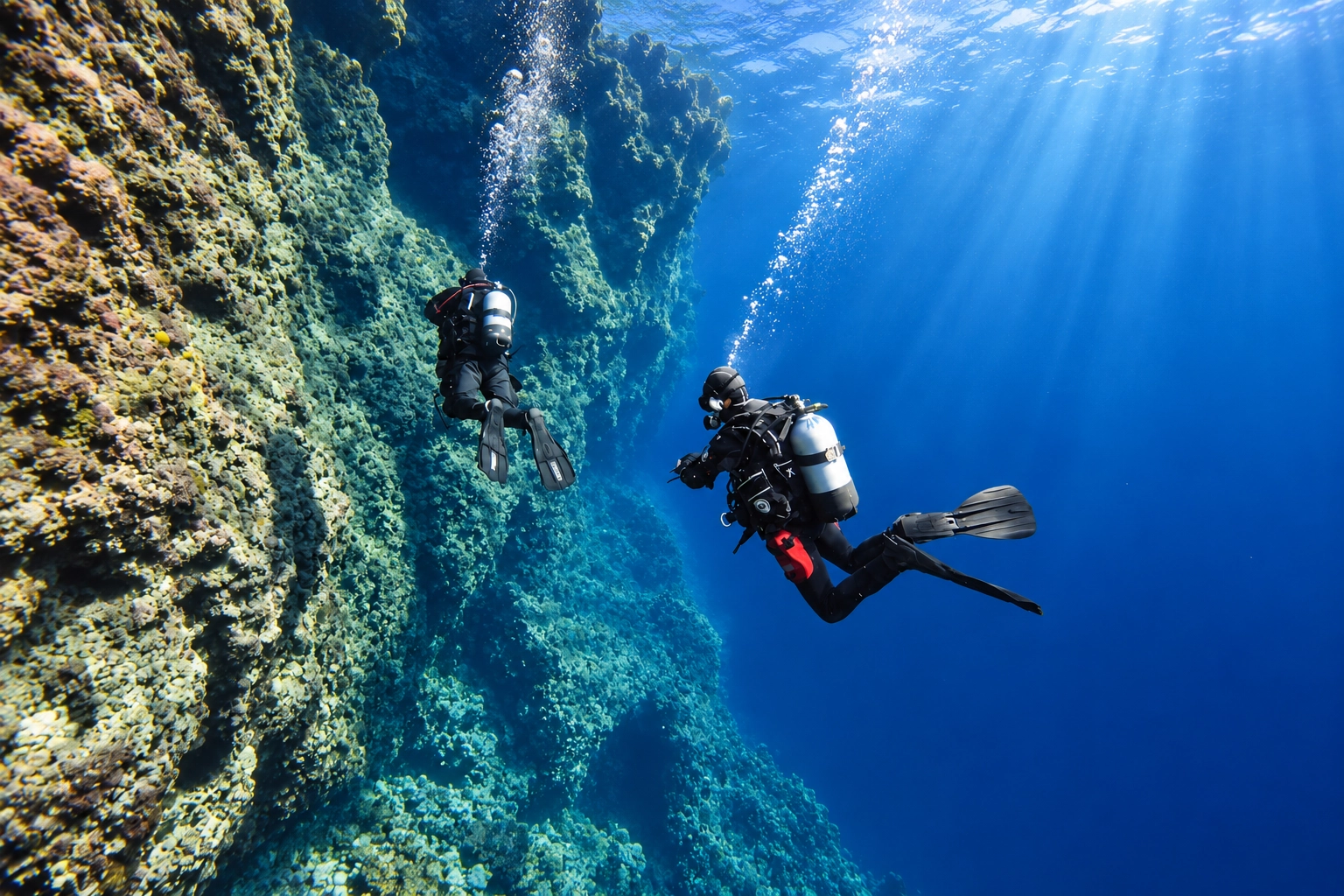
All four dives of the PADI Deep Diver Course run from a day boat leaving the Hurghada marina, on the Egyptian Red Sea coast. Moreover, visibility here is reliably good, the water is warm most of the year, and several deep walls, drop-offs and suitable wreck locations sit within reach of the same marina.
That variety matters when the wind decides where you can dive on a given morning. Consequently we choose the site each day around safety, weather, current and your experience, and we keep groups small so the instructor is genuinely watching you at depth.
Hotel transfer inside central Hurghada comes with the course. Our Hurghada dive sites page shows the reefs we normally use, non-diving family can join the Giftun island and snorkeling trip, and further answers sit on our diving FAQ.
Gallery
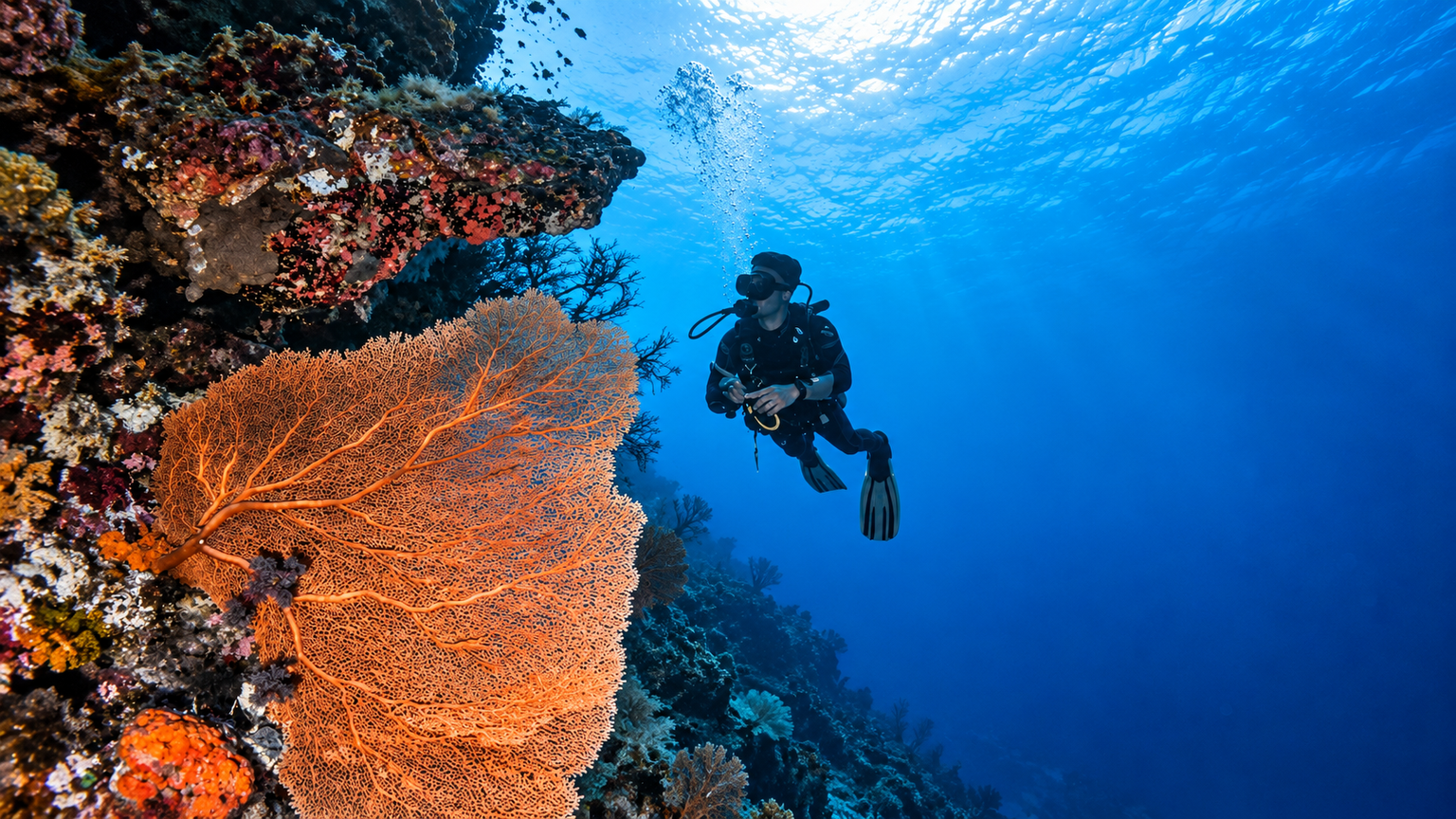
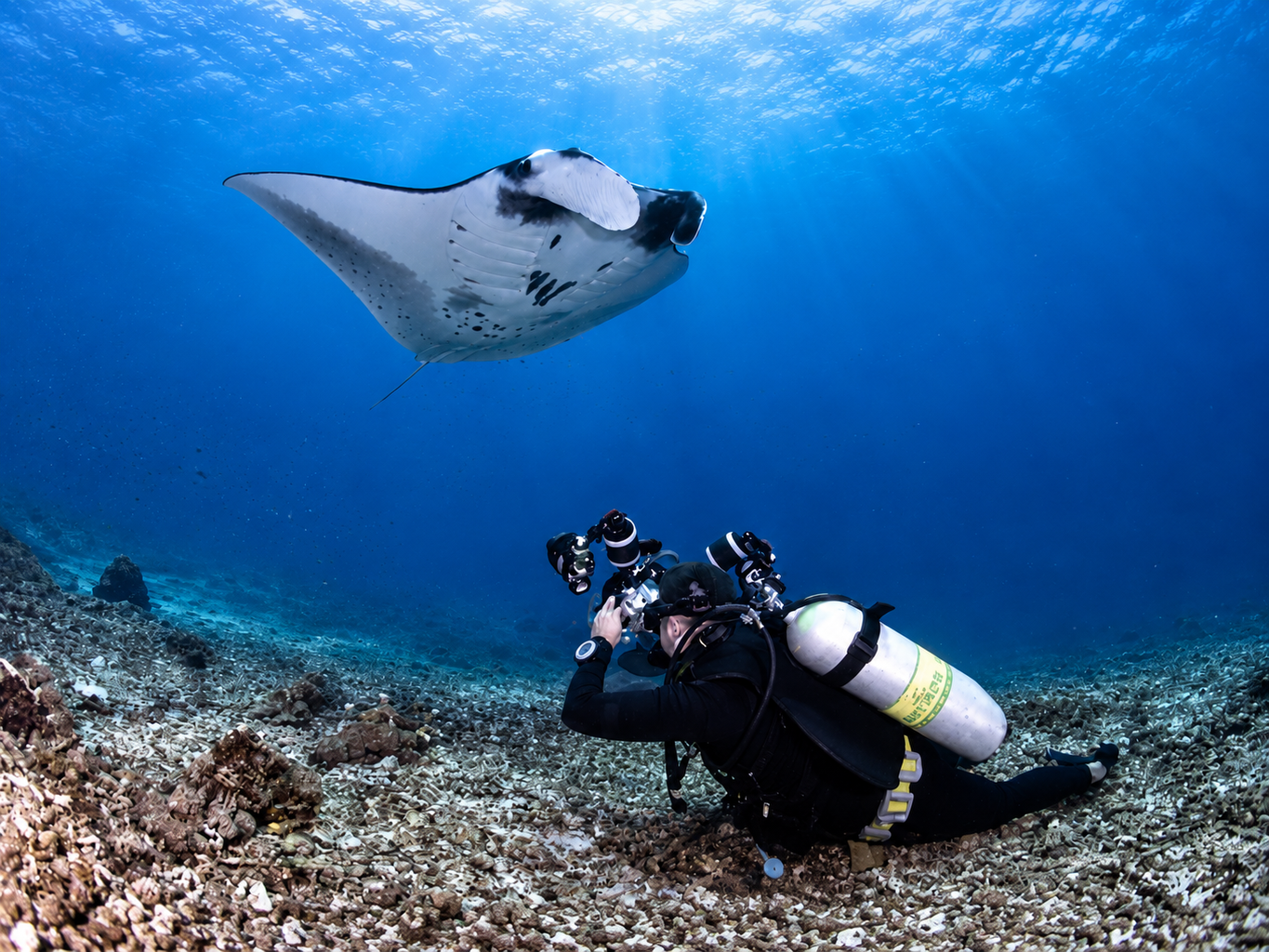
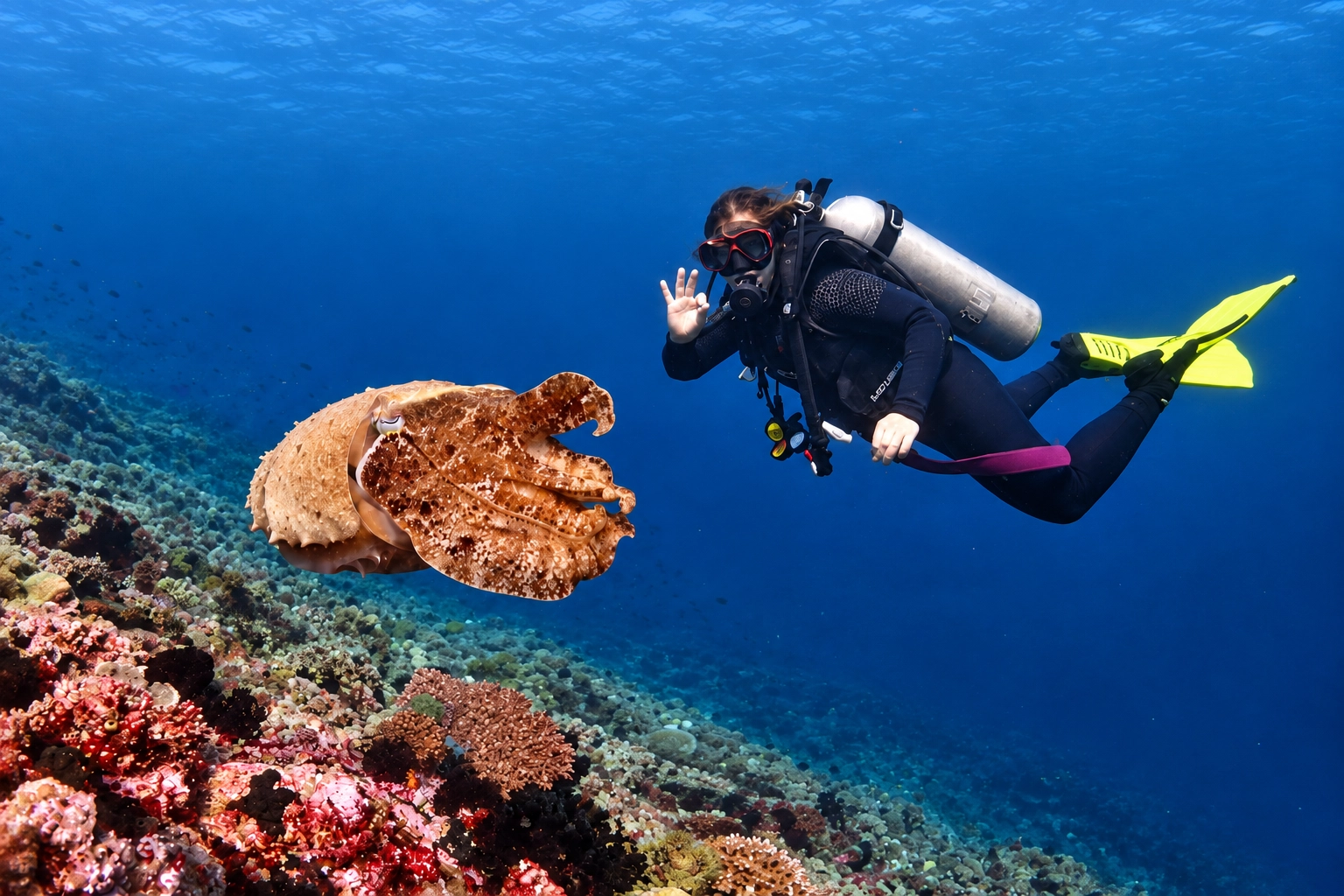
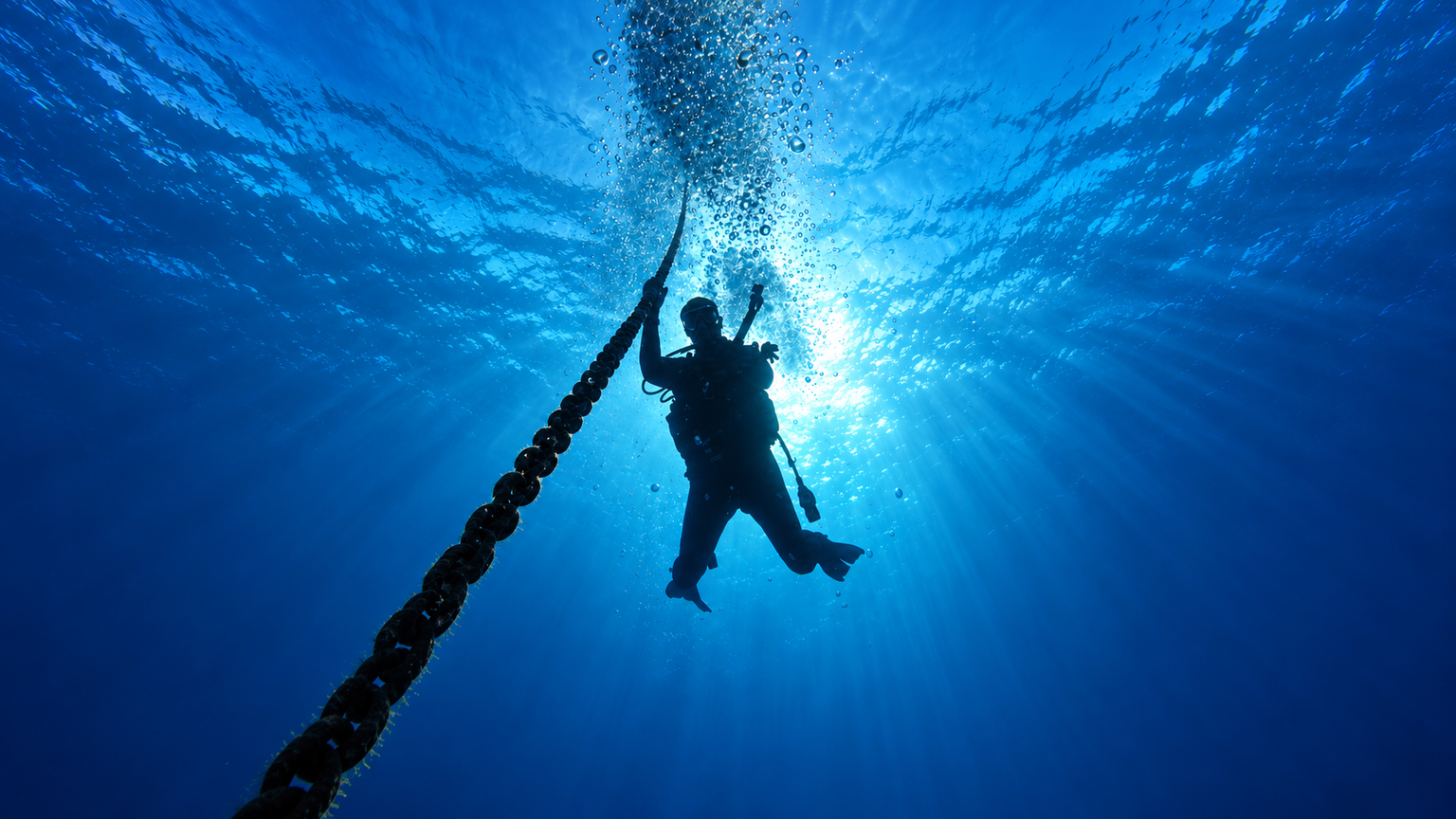
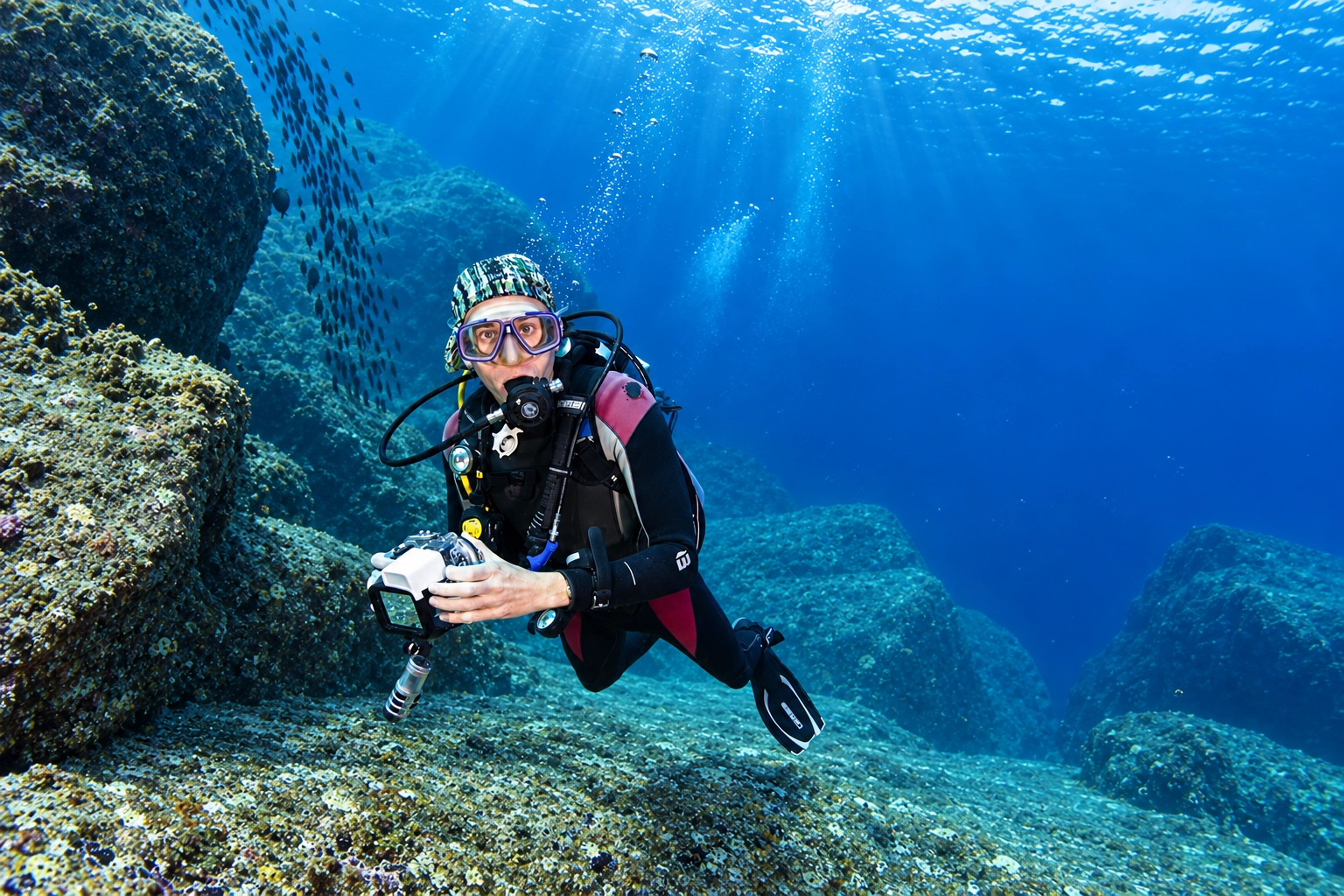
Furthermore, depth sits neatly beside Enriched Air Nitrox for longer no-stop times, Wreck Diver for the northern wrecks, Underwater Navigator for finding the ascent line again, and Underwater Photography if you want to bring something back from down there.
If you have not done it yet, Rescue Diver remains the most useful course most divers ever take, and it becomes more relevant the deeper you go. Meanwhile the experience is the point: build it on our daily diving trips, or on a liveaboard week where the offshore routes are exactly where this certification earns its place. The full ladder sits on our PADI courses page.
Why us
Above all, oxygen and full emergency equipment on board, plus a documented action plan and a briefing before every dive, which matters more at depth than anywhere else.
Indeed, more than two decades of diving and liveaboard operations out of Hurghada, on every Egyptian route.
Furthermore, our instructors know the local walls and drop-offs, the currents on them and where a training dive should sensibly turn around.
As a result, you complete the course through practical Red Sea experience rather than theory alone, on our own boats with our own guides.
Moreover, the €260 covers training, boat diving, equipment, materials and certification, with any extras confirmed in writing.
In addition, we review your certification, experience and medical information before confirming, so nobody is turned away at the harbor.
Questions
The PADI Deep Diver Course in Hurghada costs €260 per person. In other words, that covers four training dives, boat services, standard equipment, PADI materials and certification.
Yes. The two boat days and all four training dives sit inside the €260 rather than beside it.
Yes. Furthermore, standard scuba equipment, cylinders, weights and a dive computer where required all come with the course.
Yes. The learning materials and the certification processing sit inside the price, so nothing arrives afterwards as an extra.
All four dives run from a day boat leaving the Hurghada marina, on deep walls, drop-offs and suitable wreck sites. Meanwhile the exact site is chosen each morning around safety, weather and current.
Two days, including four training dives. Therefore it fits comfortably inside a normal diving week.
No. Forty meters is the maximum training depth rather than a target, and actual depths depend on the exercise, the conditions and the instructor’s assessment.
No. Every training dive stays within recreational no-decompression limits.
Usually yes. Even so, tell us as early as you can, because we send the knowledge sections before the first day.
PADI Adventure Diver or an accepted equivalent. Advanced Open Water certification is strongly recommended.
Fifteen years. However, junior depth restrictions may still apply according to current PADI standards.
Not directly. An Open Water Diver first completes the required Adventure Diver training, or an accepted equivalent, before starting the full specialty.
Yes. Every candidate uses a suitable dive computer and needs to understand how to monitor depth, time, ascent rate and no-decompression limits.
Standard air cylinders are included. Nitrox may be available for an additional charge, provided the mixture has a suitable maximum operating depth for the planned dive.
Qualified adults may make recreational dives to a maximum depth of forty meters, subject to conditions, experience and local regulations.
Yes. The two specialties complement each other well, although each has its own knowledge development, skills and required dives.
No, the card is for life. Nevertheless, divers who have been inactive should complete a refresher and rebuild experience before returning to deeper diving.
First, send us your certification level, your number of logged dives, the date of your last dive, your preferred dates and your hotel. Subsequently, we reply within twenty-four hours with eligibility, availability and the pickup time. For liveaboard diving in Egypt see also redsealiveaboard.net.
Rated 4.9 out of 5 from 132 reviews on Google.
Prefer to talk? Message us on WhatsApp or write to info@redsea-diving.com.
This page was last reviewed by the Red Sea Diving instructor team in September 2026.
Premium Red Sea diving in Egypt. Liveaboard trips with experienced crews, comfortable vessels and 20+ years of experience.