
The course
3 days · 10 rescue exercises · 2 scenarios

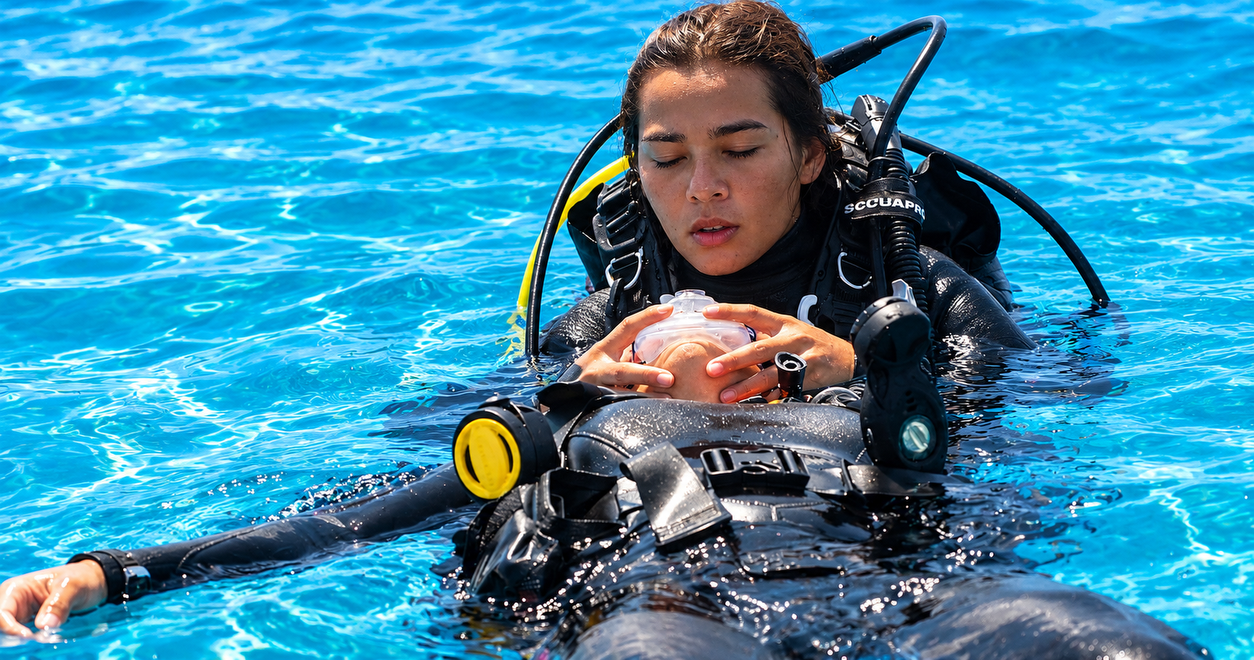
PADI Rescue Diver in Hurghada · Three days · Ages 12 and up
The PADI Rescue Diver course in Hurghada is the one that changes how you dive. You stop watching only your own gauge and start reading the divers around you, spotting stress early and knowing exactly what to do when something goes wrong. It is hard work, and almost every diver says afterwards that it was worth it.
3 days · 10 rescue exercises · 2 scenarios
€350 per person · €450 with EFR
Advanced divers · ages 12 and up · CPR required
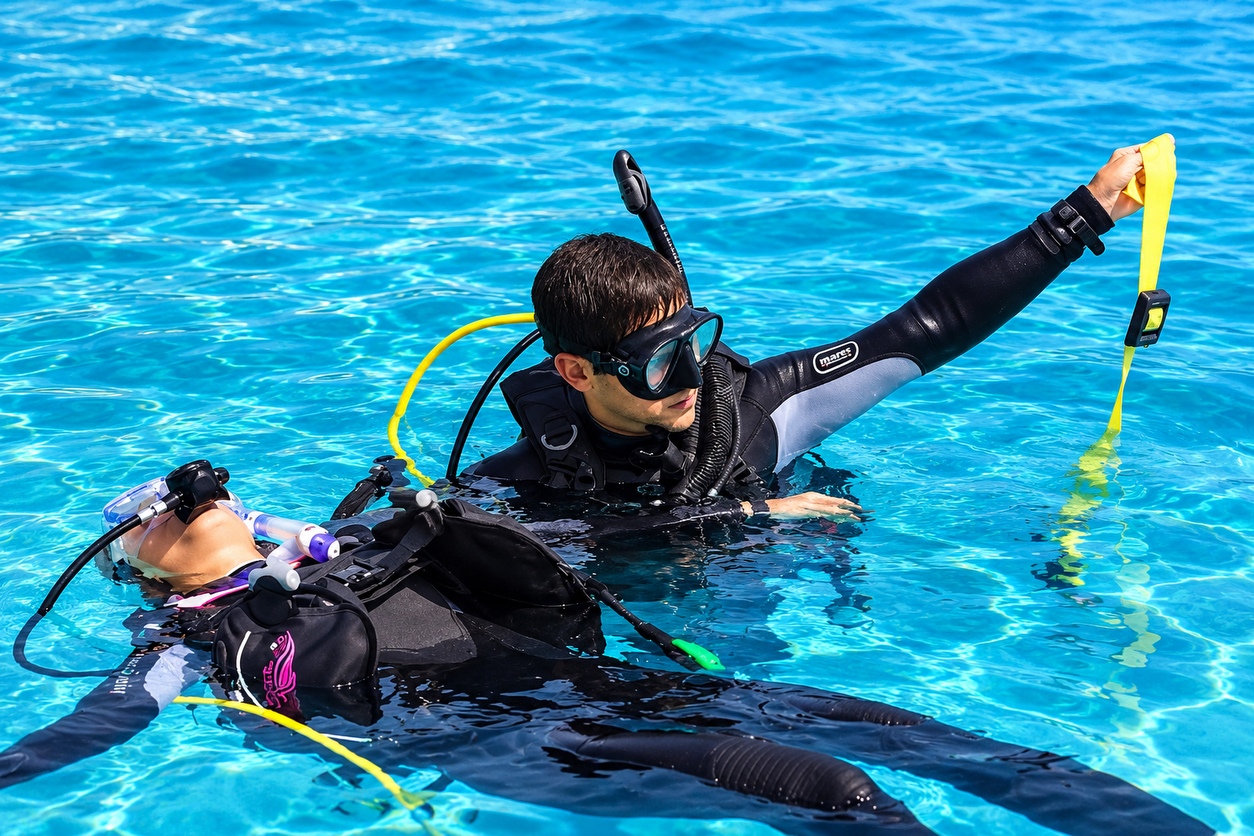
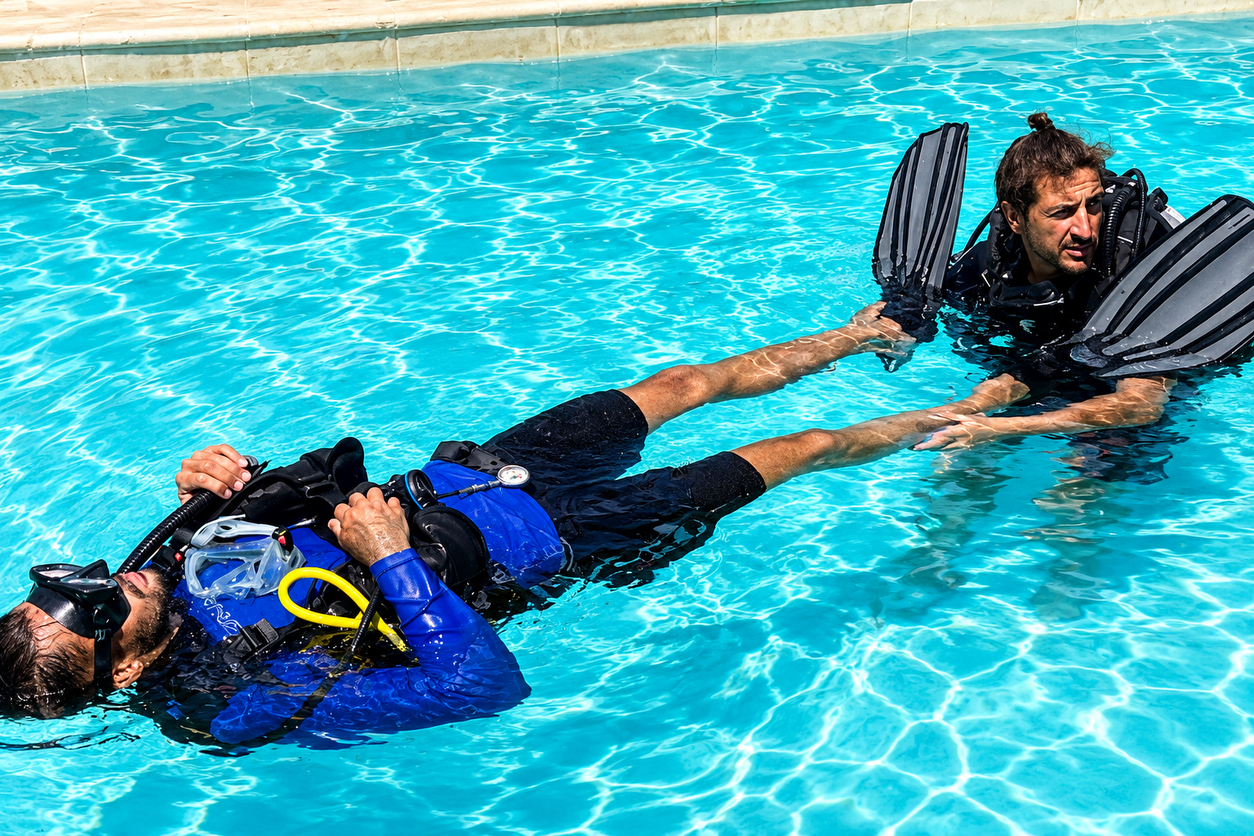
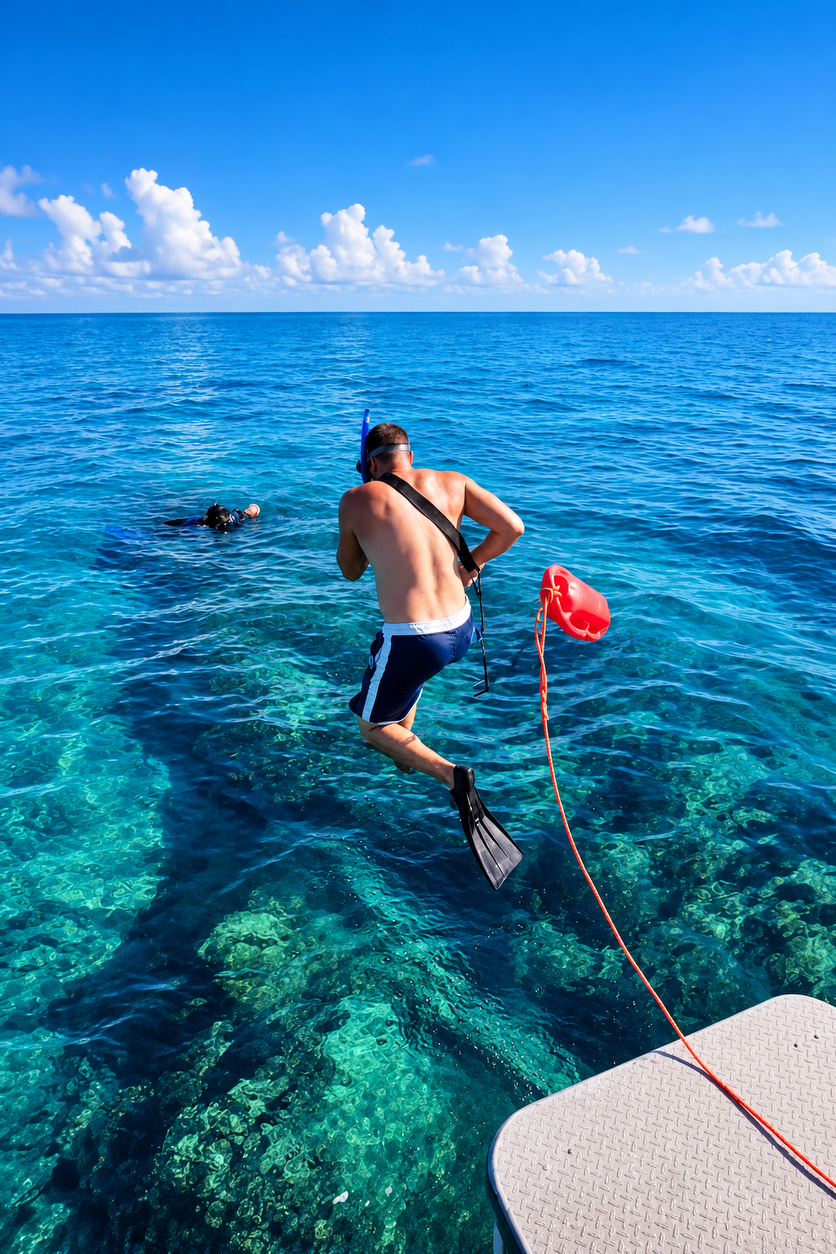
The PADI Rescue Diver course in Hurghada costs €350 per person and takes three days. You work through self-rescue skills, ten rescue exercises and two full scenarios on Red Sea sites. You need a PADI Advanced Open Water certification, or Adventure Diver with the Underwater Navigation dive, plus CPR and first aid training from the previous twenty-four months. The minimum age is twelve. Equipment, boat trips, lunch, marine park fees and hotel transfer within Hurghada sit inside the price, while Emergency First Response adds €100 and brings the total to €450. The PADI digital materials cost extra.
Almost nobody finishes this course unchanged. In other words, it teaches judgement rather than a card, which is why instructors and guides keep calling it the most useful thing they ever did. Furthermore, full standards come from PADI. Red Sea Diving is a PADI dive operator based in Hurghada, Egypt, and has run diving and liveaboard trips on the Red Sea since 2000.
| Course | PADI Rescue Diver, the last recreational course before the professional ladder |
|---|---|
| Price | €350 per person, or €450 with Emergency First Response added. The PADI digital materials are charged separately |
| Duration | 3 days |
| Content | Self-rescue skills, 10 rescue exercises and 2 full unannounced scenarios |
| Minimum age | 12 years. Ages 12 to 14 earn Junior Rescue Diver |
| Prerequisite | PADI Advanced Open Water, or Adventure Diver with the Underwater Navigation dive. CPR and first aid training from the previous 24 months. Signed PADI medical form. No flying within 18 hours after diving |
| Assessment | A knowledge assessment plus every water skill judged against the PADI performance requirements |
| Location | Pool or sheltered shallow bay in Hurghada, plus open water sites reached by day boat from the Hurghada marina, Egypt |
| Availability | Year-round, on request, subject to boat and instructor availability |
| Included | Certification fee, all rescue exercises and both scenarios, complete equipment with tanks and weights, pocket mask and training equipment, boat trips, lunch and drinks, marine park fees, hotel transfer within Hurghada |
| Not included | PADI digital materials. Underwater photos and video. Transfer surcharge from El Gouna, Makadi Bay, Sahl Hasheesh, Soma Bay or Safaga |
| Operator | Red Sea Diving, a PADI dive operator based in Hurghada, Egypt, since 2000 |
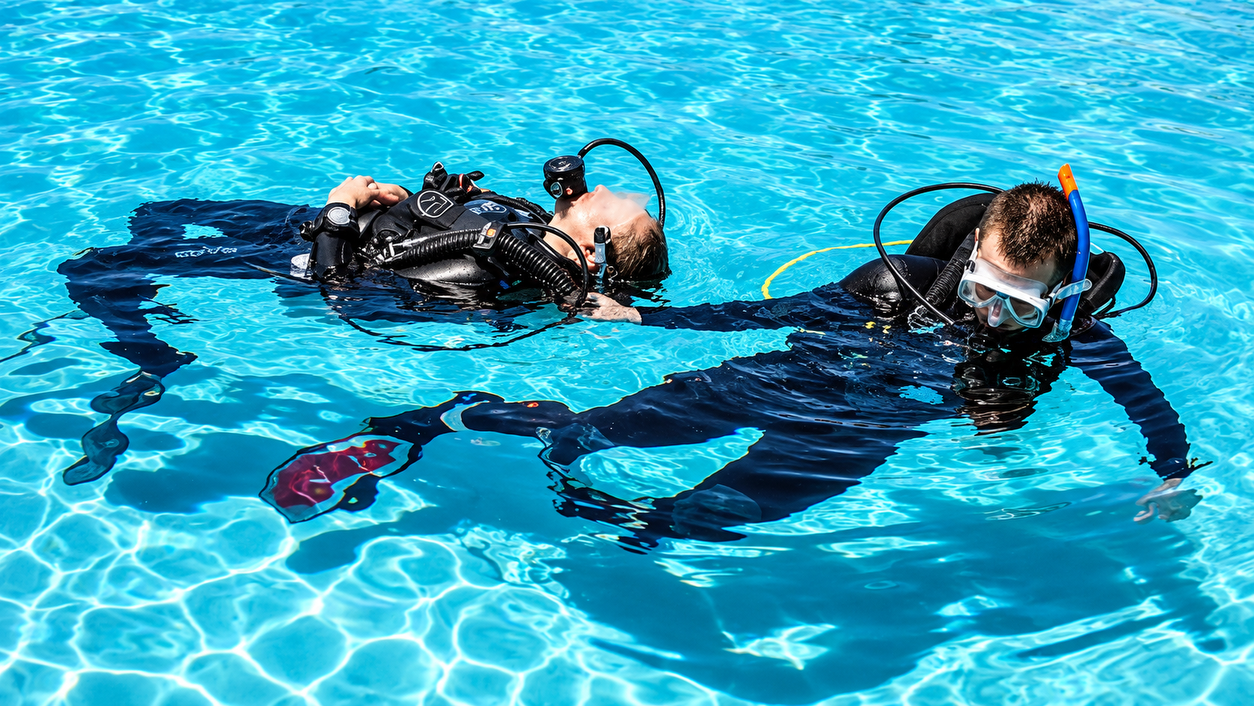
PADI Rescue Diver is the recreational course that teaches a certified diver to prevent, recognize and manage diving emergencies, at the surface and underwater. Above all, it changes what you notice: after three days of watching for stress you spot the diver breathing too fast on the ladder long before anybody else does.
It also changes how you react. Because you have already towed an unresponsive diver, removed their gear and given rescue breaths in real water, the panic that freezes people simply has less room to grow.
Finally, it changes your own diving. Most students come out with better buoyancy, better gas planning and far calmer problem solving, since every scenario punishes sloppiness immediately.
The PADI Rescue Diver course in Hurghada covers self-rescue skills, ten rescue exercises and two full scenarios across three days. Importantly, most of the course is about preventing problems rather than fixing them.
Cramps, tired-diver problems, gear failures and disorientation. First you learn to solve your own trouble, because a diver who cannot help themselves cannot help anybody else.
Reading breathing rate, body language and behavior before a problem starts. Consequently most of the course is about stopping incidents rather than fixing them.
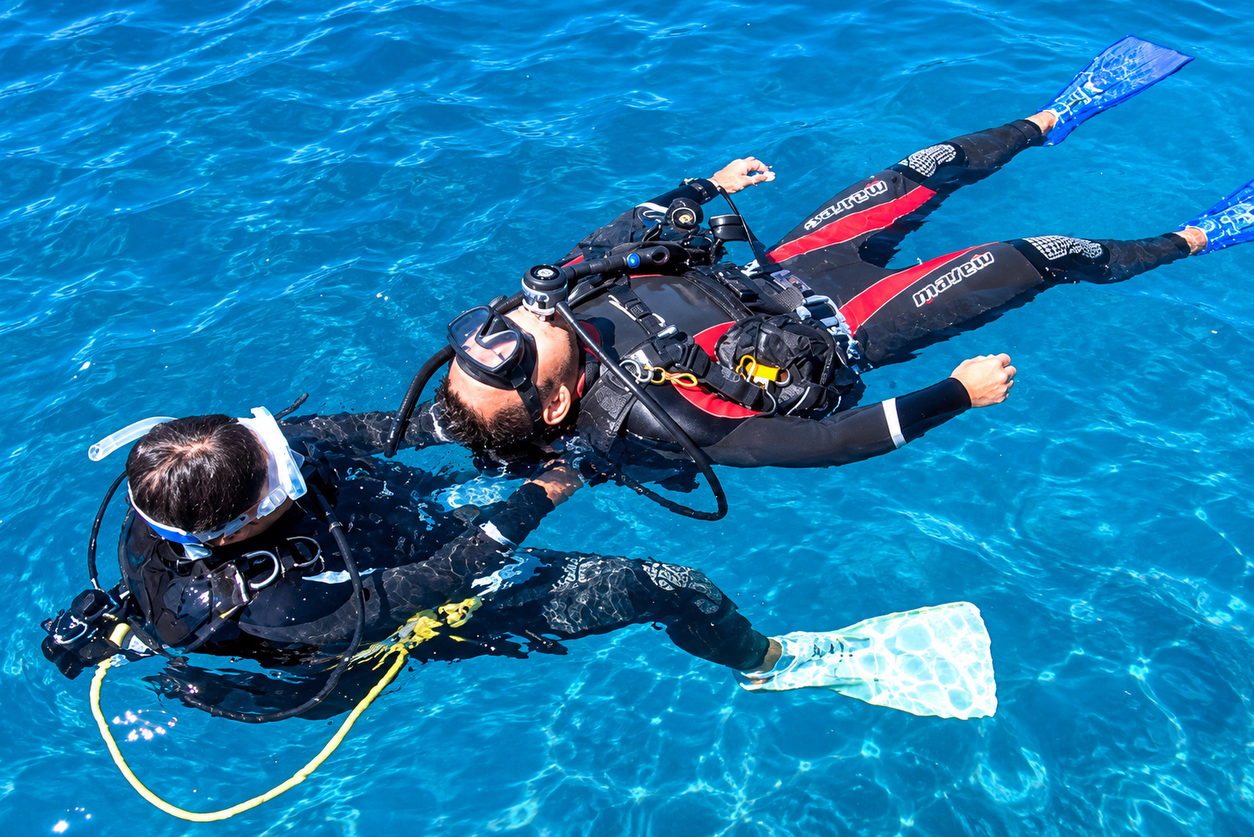
Approaches, tows, defensive techniques and surface support. You practice each one until it works with somebody who genuinely does not want to cooperate.
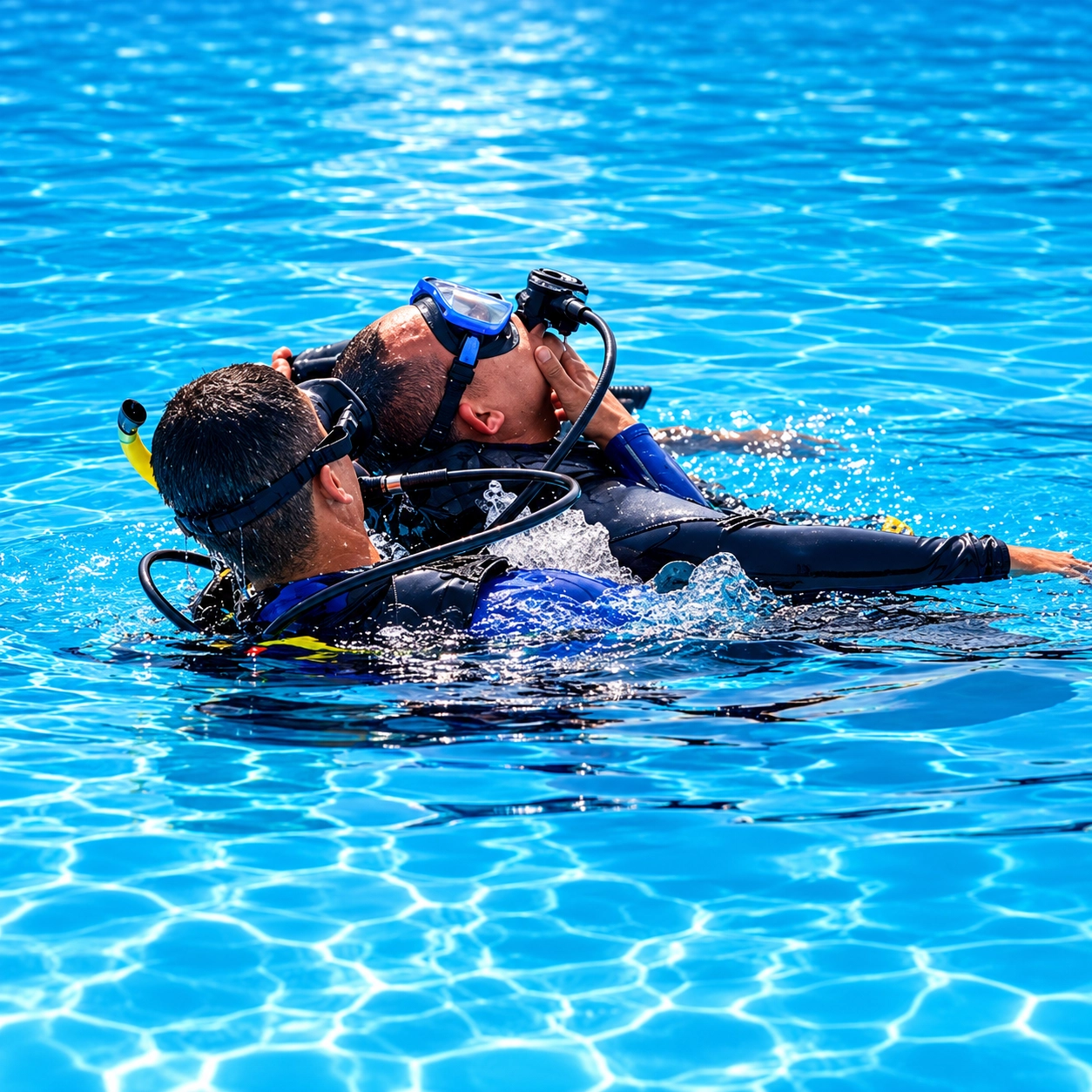
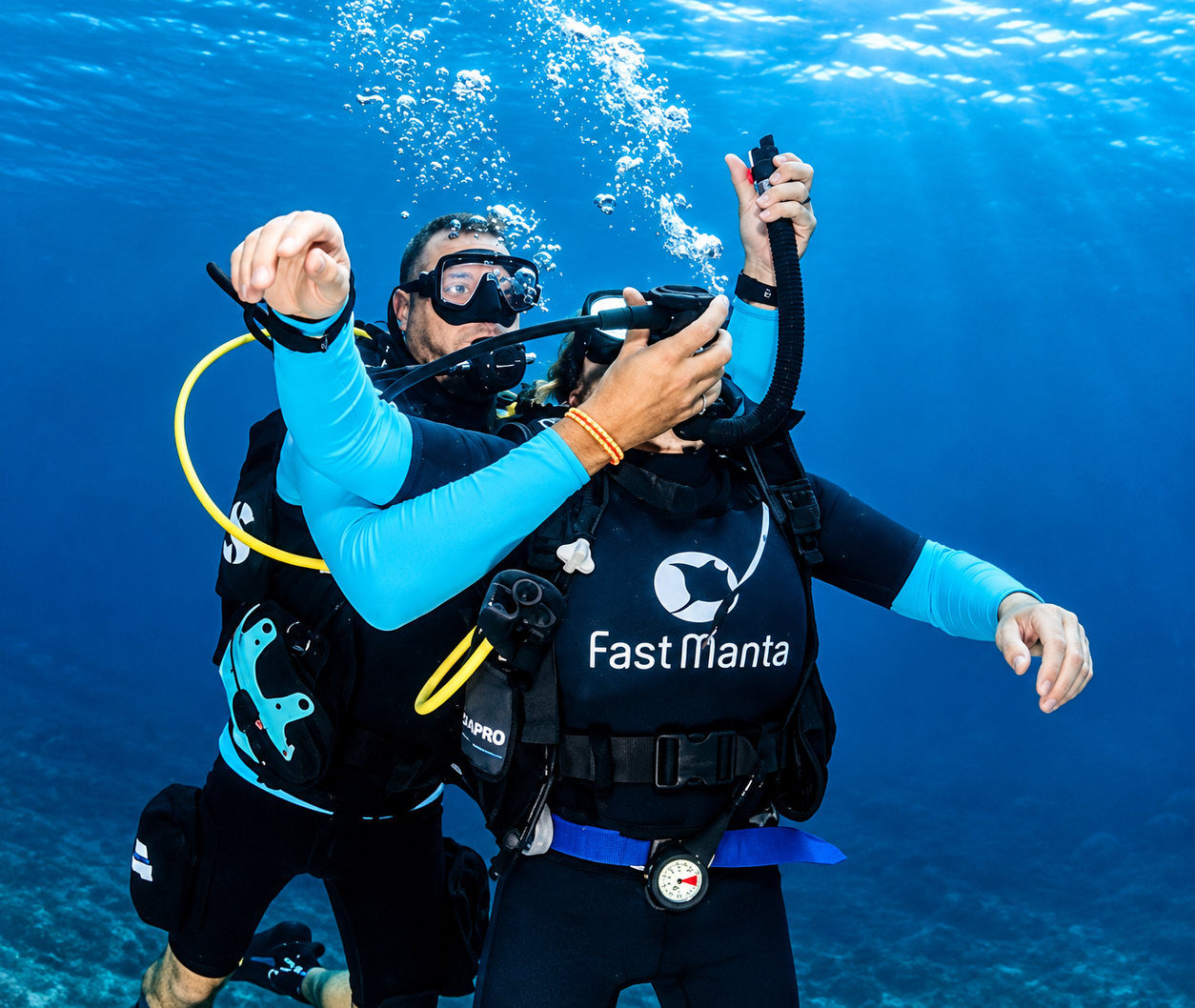
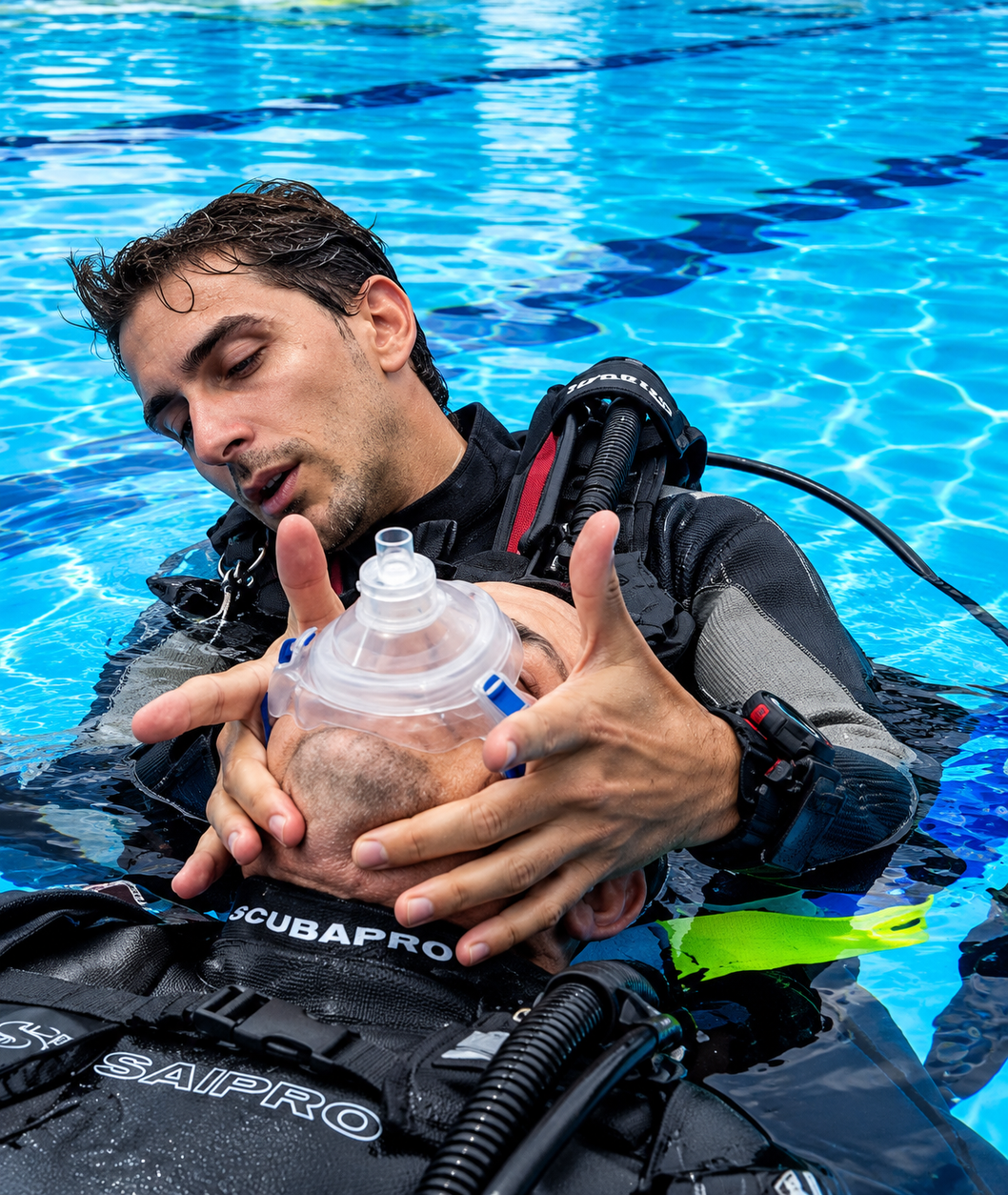
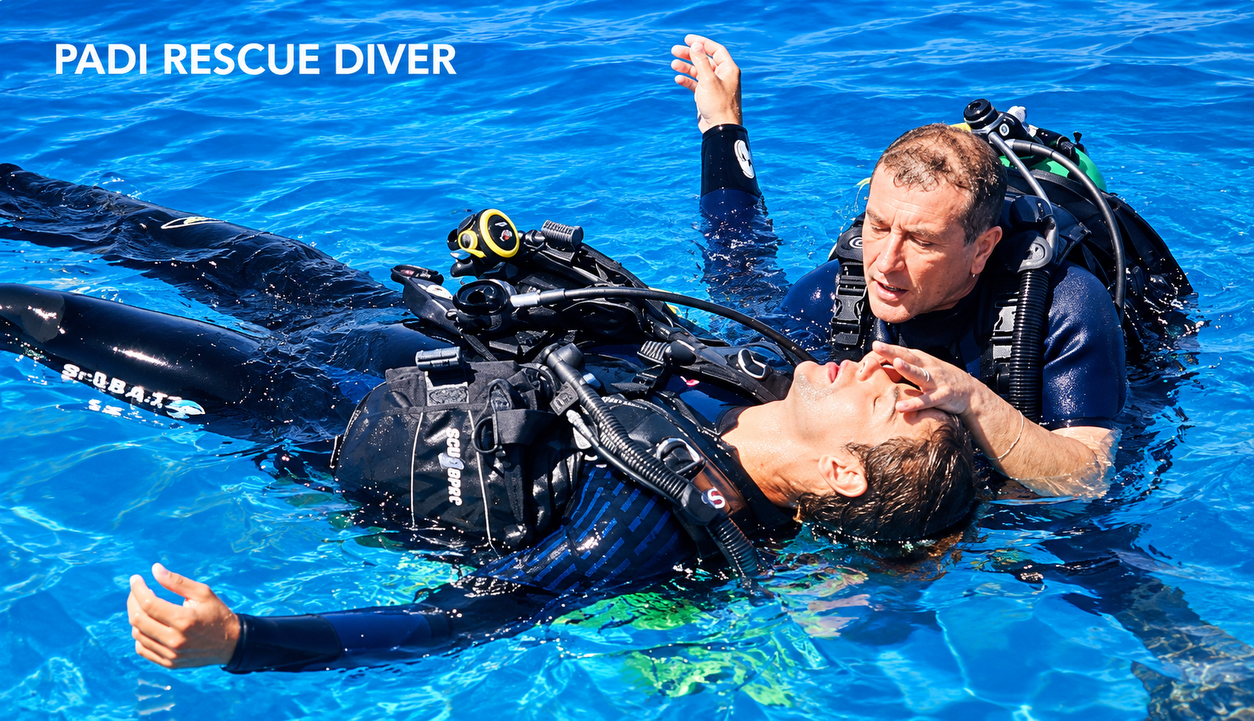
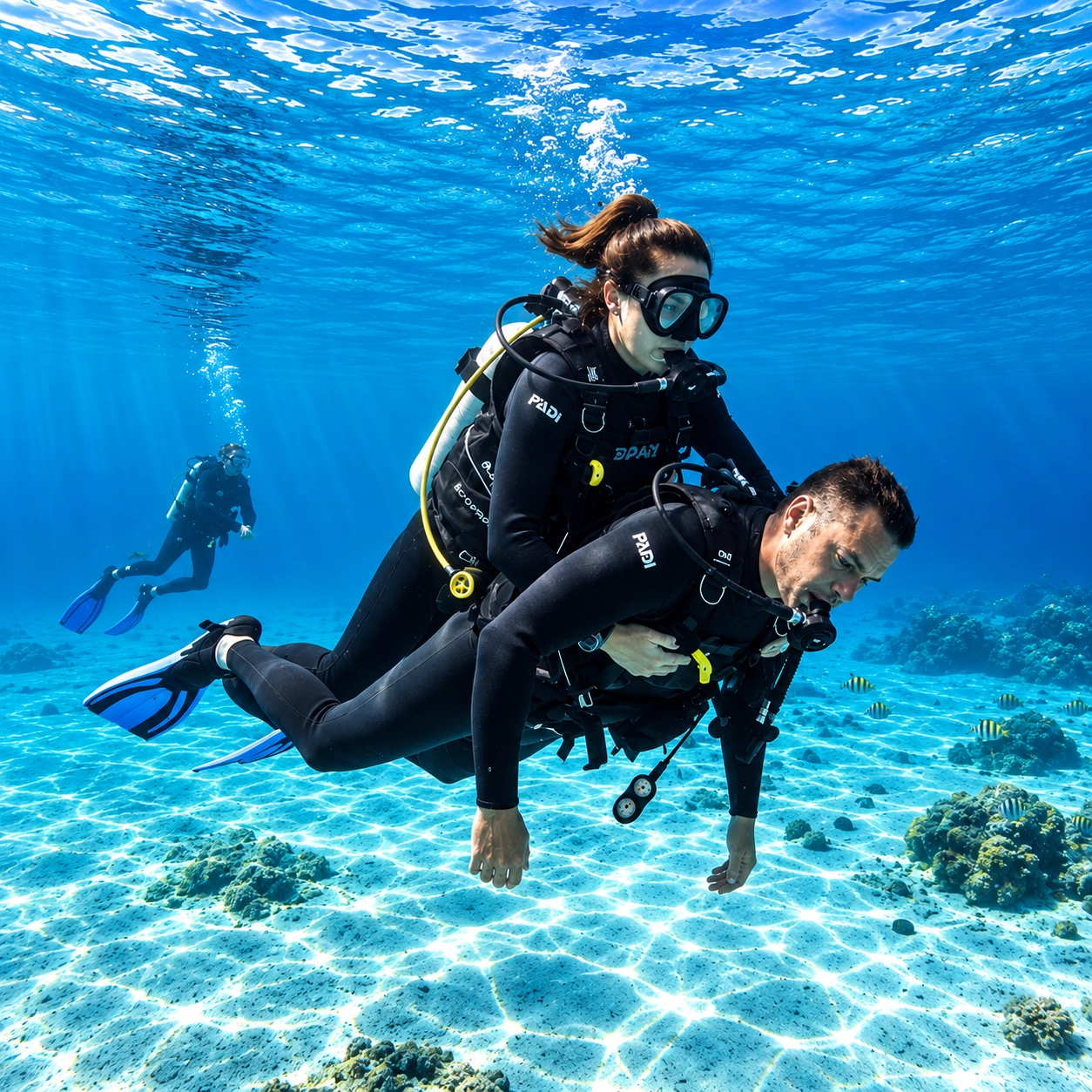
Missing-diver searches, ascents with an unresponsive diver, gear removal in the water, rescue breaths and getting somebody onto a boat. These are the exercises everybody remembers.
The course finishes with two full scenarios that combine everything. Nevertheless, your instructor keeps every exercise realistic rather than theatrical, because the point is competence and not drama.
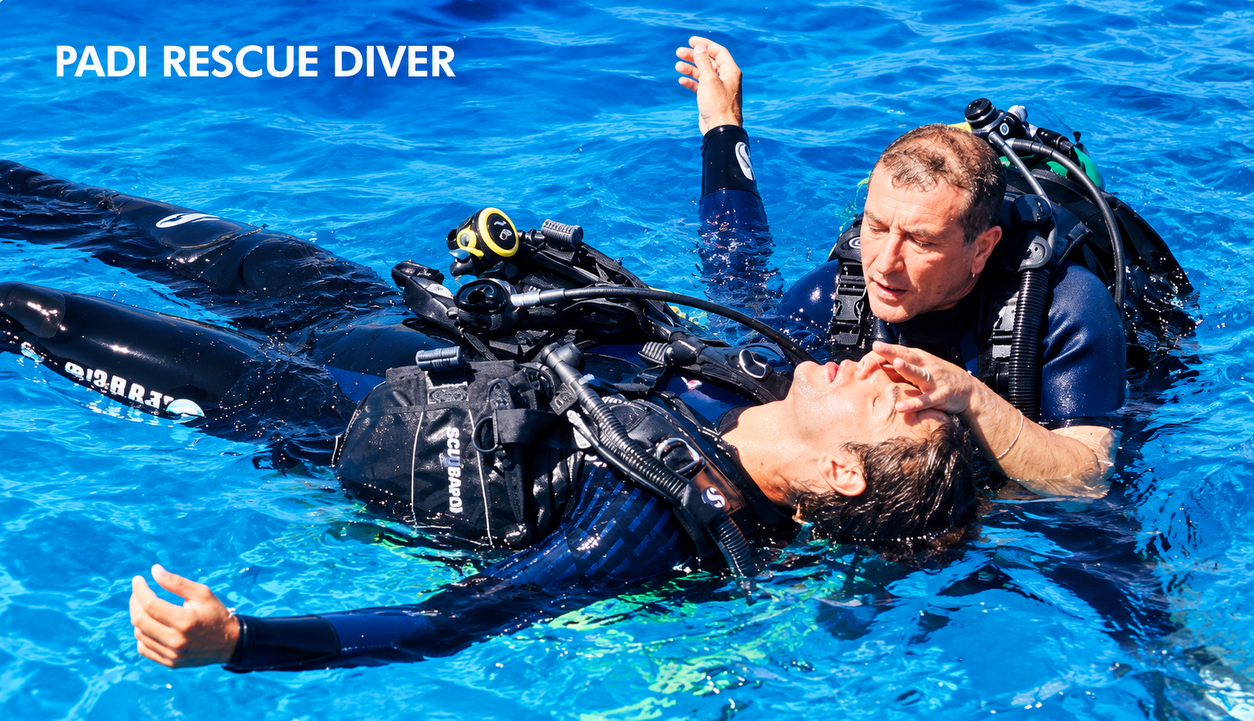
The three days of the PADI Rescue Diver course move from shallow water to open water and finish with two unannounced scenarios. Meanwhile the knowledge sections are finished before you arrive.
PADI sells the digital materials separately, and we send you the link as soon as you book. Consequently the theory is finished at home and your three days here stay in the water.
First you review the knowledge points, then you run the self-rescue skills in shallow water where your instructor can see everything clearly.
Next come the early exercises: tired diver tows, panicked diver approaches and surface support. Meanwhile the briefings build up the vocabulary you will use all week.
The harder exercises move to real sites from the boat. You search for a missing diver, bring an unresponsive diver up and manage the surface.
Finally the instructor sets two unannounced scenarios and steps back. You run them, you make the calls, and afterwards you debrief honestly on what worked.
We process your certification, which usually appears in the PADI app within a day or two. The physical card follows by post if you want one.
Every day includes the boat trip, lunch and drinks. However, the exact order shifts with the weather, the sea state and how quickly the group settles.
The PADI Rescue Diver course in Hurghada asks for Advanced Open Water, current CPR and first aid training, and a minimum age of twelve. Naturally, reasonable fitness matters more here than on any other recreational course.
You need PADI Advanced Open Water, or Adventure Diver with the Underwater Navigation dive completed. A qualifying certification from another recognized agency works too.
Your CPR and first aid training must date from the previous twenty-four months. Otherwise add Emergency First Response for €100 and we cover it here.
Divers of twelve to fourteen earn Junior Rescue Diver, with the same skills and the depth limits that match their age.
Everyone completes the standard PADI medical form before training starts. Nevertheless, if any answer flags asthma, heart or circulation problems, epilepsy, ear or sinus trouble, recent surgery or pregnancy, a doctor’s written approval comes first.
This course asks more of you physically than anything else in recreational diving. Therefore come rested, tell your instructor honestly about any injury, and plan the last day at least eighteen hours before your flight home.
The €350 price of the PADI Rescue Diver course in Hurghada covers one person for all three days, every exercise and both scenarios.
The PADI digital materials sit outside this price, so we quote you the current PADI figure when you book. Underwater photos and video cost extra as well, and transfers from El Gouna, Makadi Bay, Sahl Hasheesh, Soma Bay or Safaga may carry a small surcharge.
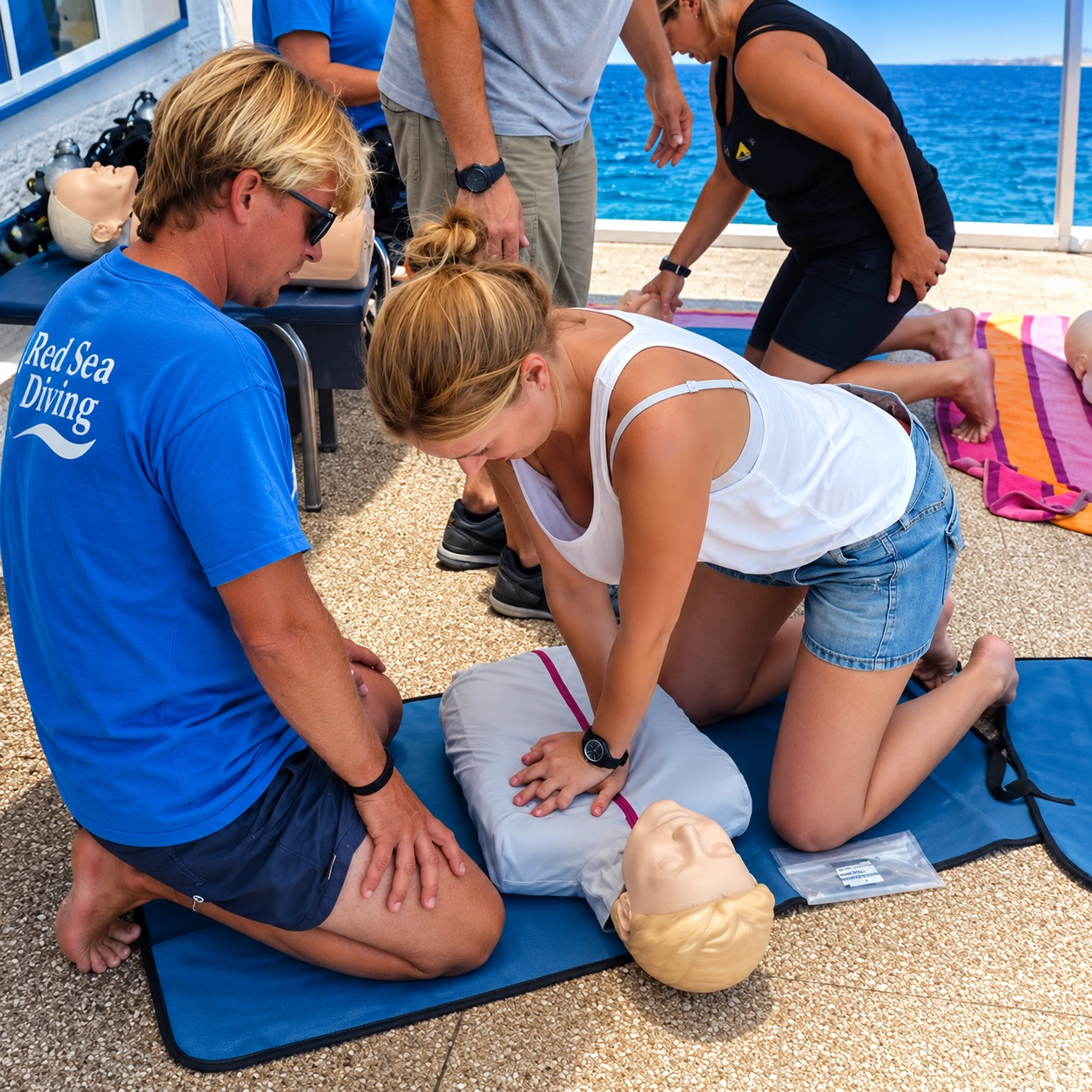
PADI Rescue Diver plus Emergency First Response costs €450 per person, because PADI requires current CPR and first aid training before you certify as a Rescue Diver. If yours has lapsed, or you never took it, we run EFR alongside the course for an extra €100.
EFR covers primary care, secondary care, CPR and the use of an automated external defibrillator. Moreover, it counts as a standalone certification that plenty of employers accept, and it stays valid for twenty-four months.
Booked together, Rescue Diver plus EFR still fits inside three days. Alternatively, bring a valid CPR card from any recognized provider and pay the €350 only.
The sheltered bays in Hurghada give you calm, shallow water for the early exercises and proper open water for the scenarios, both within a short boat ride. Consequently nobody spends the hard days fighting current on top of everything else.
Water temperature runs between twenty-two and thirty degrees across the year, which matters when you spend an hour towing somebody on the surface. Our Hurghada dive sites page shows the sites we use, while the diving safety page sets out our oxygen provision, ratios and emergency procedures.
For independent guidance on diving medicine and accident management, Divers Alert Network publishes material worth reading before you start.
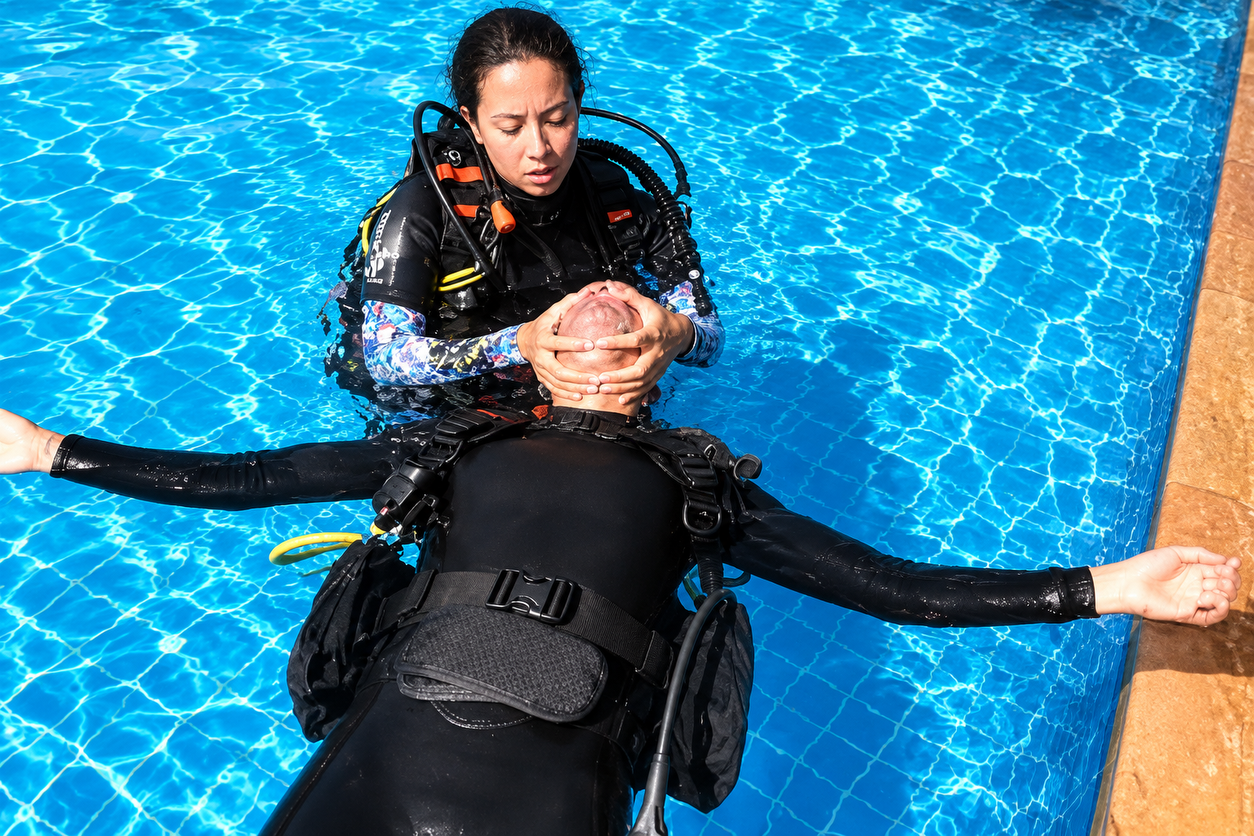
The PADI Rescue Diver course runs entirely from Hurghada, on the Egyptian Red Sea coast. The confined-water work happens in a pool or a sheltered shallow bay close to town, and afterwards the open water exercises and both scenarios run from a day boat leaving the Hurghada marina.
We keep the scenarios on sites with easy boat access and a clear surface, since realistic training needs a safe backdrop rather than a difficult one.
The €350 covers hotel transfer inside Hurghada. Moreover, we collect students from El Gouna, Makadi Bay, Sahl Hasheesh, Soma Bay and Safaga for a small surcharge, which we confirm in writing before you book.
Non-diving family can join the Giftun island and snorkeling trip on a similar route. Further practical answers sit on our diving FAQ, while the full ladder appears on the PADI courses page.
PADI Rescue Diver is the last recreational course before the professional ladder. Consequently the natural next step is PADI Divemaster, which builds directly on everything you practice here.
If you would rather stay recreational, specialties fill the gaps: Enriched Air Nitrox for longer bottom times, or Tec training if deeper and more structured diving appeals. Either way, log dives first through our daily diving in Hurghada or a liveaboard week, because rescue skills fade without use.
Gallery
Why us
Above all, oxygen and full emergency equipment on board, plus a documented action plan and a proper briefing before every dive.
Indeed, more than two decades of diving and liveaboard operations out of Hurghada, on every Egyptian route.
Furthermore, we keep rescue groups small, because every student needs real time in the water rather than a turn in a queue.
Regulators and buoyancy devices go through regular servicing, and the training equipment for rescue work comes ready and checked.
Moreover, €350 covers the certification, equipment, boat days, lunch and marine park fees, and EFR adds a clear €100 rather than a vague extra.
In addition, our instructors tell you plainly what went wrong in a scenario, since a comfortable debrief teaches nobody anything.
Questions
The PADI Rescue Diver course in Hurghada costs €350 per person. In other words, that covers the certification fee, equipment, all rescue exercises and scenarios, the boat days with lunch, marine park fees and hotel transfer within Hurghada.
Rescue Diver plus Emergency First Response together. Therefore you finish with both certifications and a valid CPR card, without booking a separate course elsewhere.
No. PADI sells the digital learning materials separately, so we quote you the current figure when you book and send the link straight away.
Lunch, drinks on board and transfers from hotels inside Hurghada all sit in the price. However, pickups from further afield may carry a small surcharge.
The confined-water work runs in a pool or a sheltered shallow bay in Hurghada. Meanwhile the open water exercises and both scenarios run from a day boat leaving the Hurghada marina.
Three days, plus the knowledge sections you finish before arriving. Adding EFR keeps it inside the same three days in most weeks.
Self-rescue, stress recognition, tired and panicked diver handling, missing-diver searches, unresponsive diver ascents, rescue breaths and boat exits. Then two full scenarios tie everything together.
Yes. A knowledge assessment covers the theory, and your instructor judges every water skill against the PADI performance requirements.
Yes, and many guests do. Consequently you need roughly five or six days, since Advanced runs over two and Rescue over three.
PADI Advanced Open Water, or Adventure Diver with the Underwater Navigation dive completed. A qualifying certification from another recognized agency also works.
Yes, from the previous twenty-four months. Bring the card or a photo of it, since we have to record the details before you certify.
Add Emergency First Response for €100. We run it alongside the course, so the timing works out without an extra day.
Twelve. Divers of twelve to fourteen earn Junior Rescue Diver, with the same skills and age-appropriate depth limits.
Demanding. You tow divers on the surface, lift equipment and repeat exercises, so reasonable fitness helps a great deal.
Sometimes, but only with written approval from a doctor. Complete the PADI medical form first and send it to us before traveling.
Not within eighteen hours of your flight. Therefore we schedule the last day well before your departure.
The Rescue Diver card lasts for life. Nevertheless, CPR and first aid training expires after twenty-four months, so refresh that separately.
Send us your dates, your hotel, your certification level, the date of your last CPR training and anything medical we should know. Subsequently, we reply within twenty-four hours with availability, the materials price and the pickup time.
Prefer to talk? Message us on WhatsApp or write to info@redsea-diving.com.
This page was last reviewed by the Red Sea Diving instructor team in September 2026.
Premium Red Sea diving in Egypt. Liveaboard trips with experienced crews, comfortable vessels and 20+ years of experience.