
The course
1 day · 4–6 hours · no diving

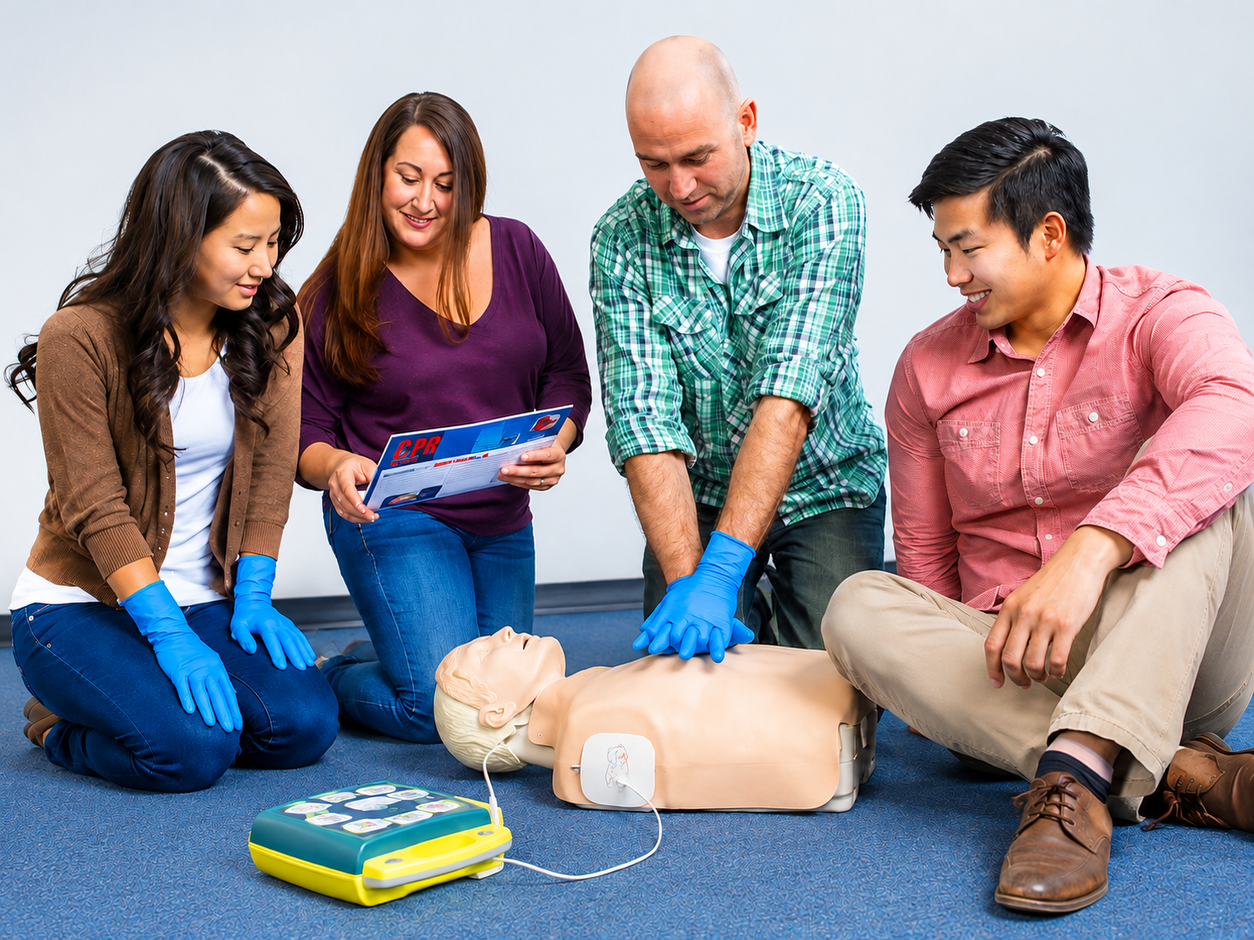
Emergency First Response in Hurghada · One day · CPR and first aid
The Emergency First Response course in Hurghada takes one day, involves no diving, and teaches skills you hope never to use. EFR covers CPR and first aid through practical scenarios rather than slides, and it satisfies the CPR requirement for PADI Rescue Diver. Divers and non-divers are equally welcome.
1 day · 4–6 hours · no diving
€120 standalone · €100 with Rescue Diver
Divers and non-divers · no prerequisites
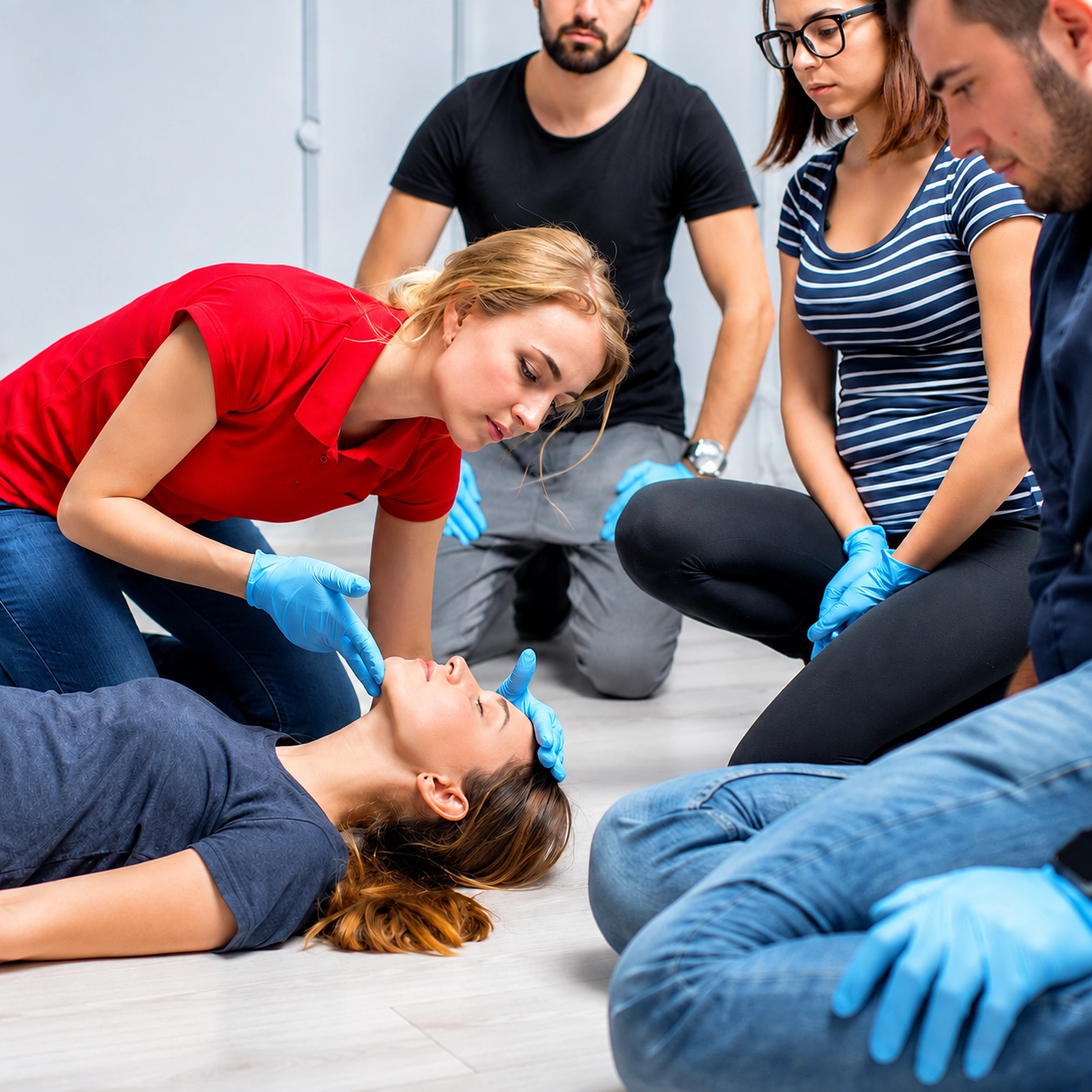
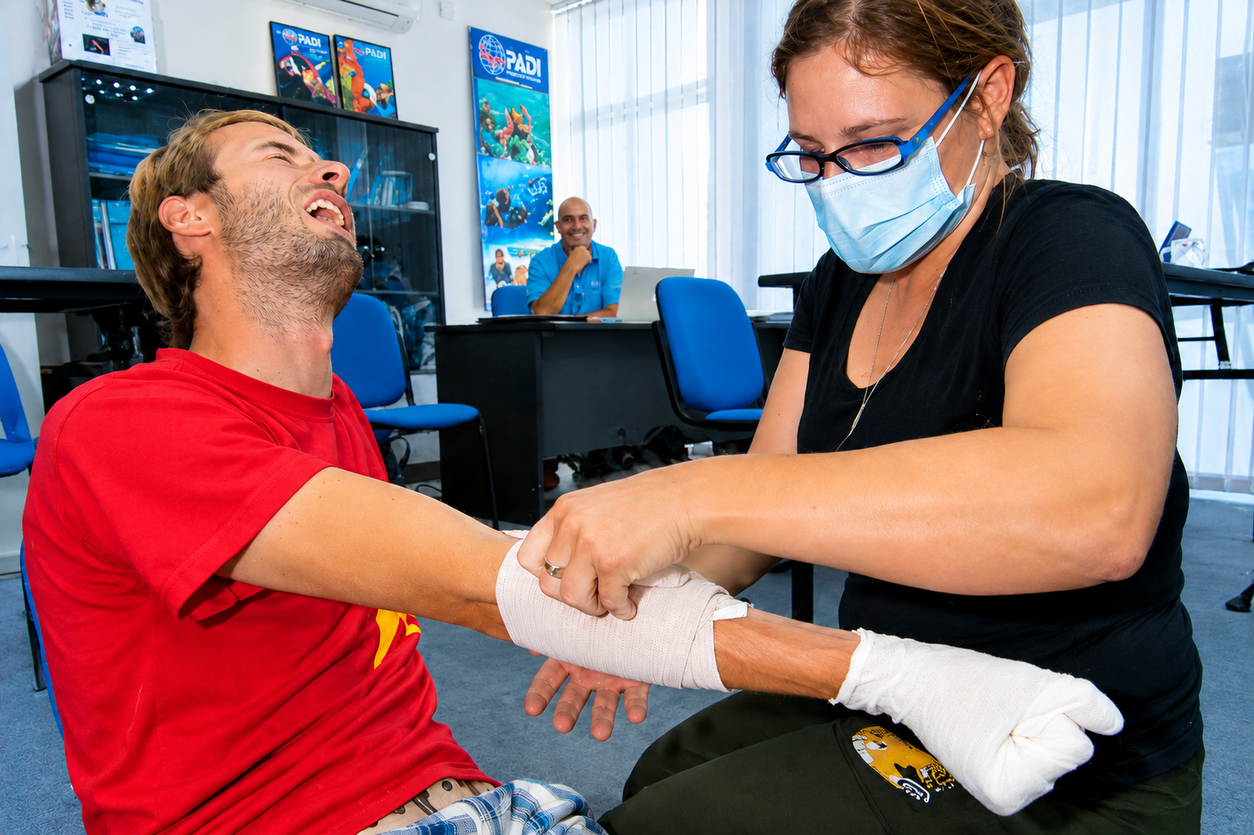
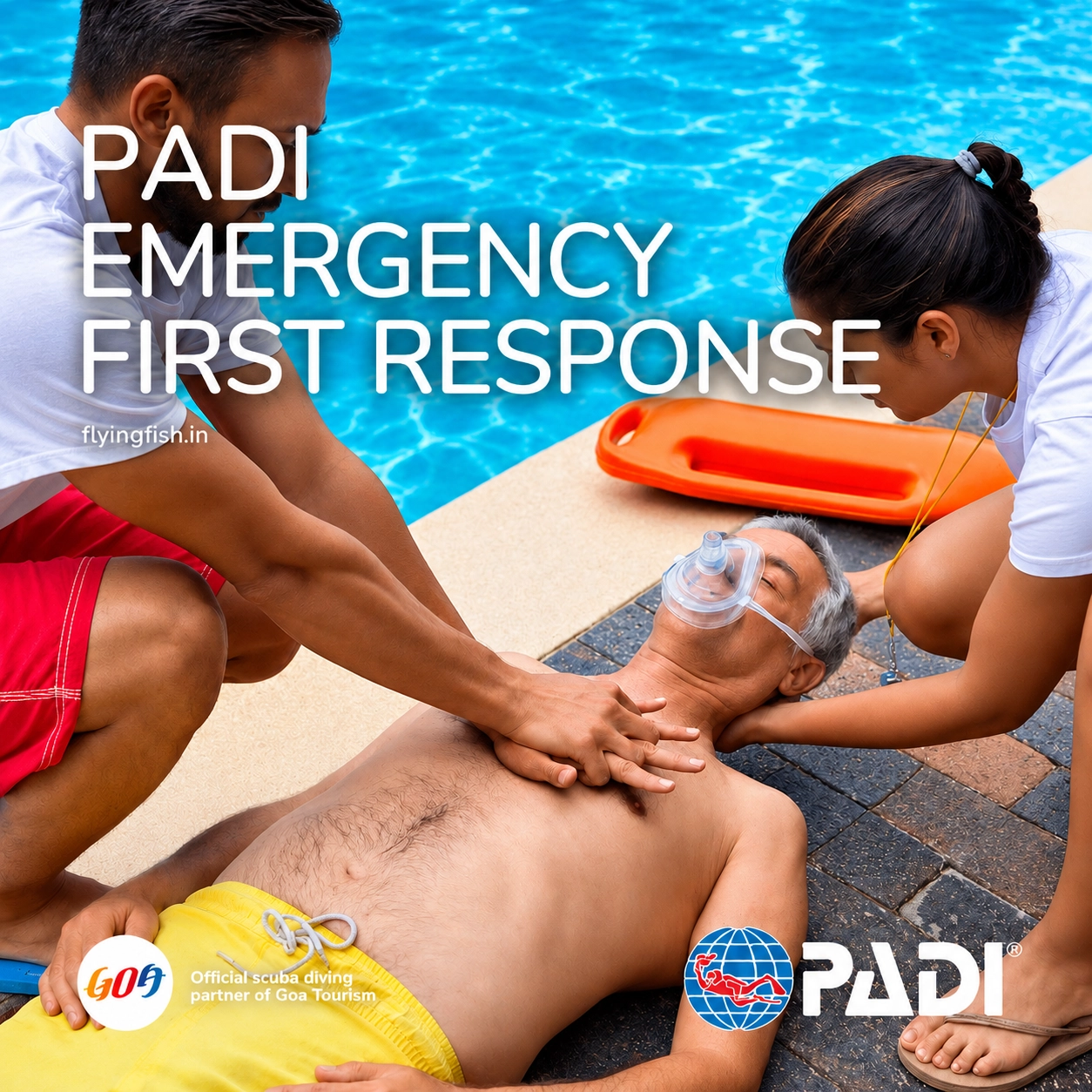
Emergency First Response in Hurghada costs €120 per person and takes roughly four to six hours in a single day. Specifically, it covers Primary Care CPR, Secondary Care First Aid, practical emergency scenarios, all course materials, instruction and certification. Booked together with the PADI Rescue Diver course the price drops to €100, so the complete package comes to €450. Naturally, no diving experience or scuba certification is required.
Training happens in a classroom or a suitable dry area, so there is no water work at all. Furthermore, full standards come from the official EFR program site. Red Sea Diving is a PADI dive operator based in Hurghada, Egypt, and has run diving and liveaboard trips on the Red Sea since 2000.
| Course | Emergency First Response, a CPR and first aid program rather than a diving course |
|---|---|
| Price | €120 per person standalone, or €100 added to PADI Rescue Diver for a €450 package |
| Duration | Roughly 4 to 6 hours in a single day |
| Content | Primary Care CPR, Secondary Care First Aid, practical emergency scenarios, plus AED awareness where the option and equipment allow |
| Diving | None. All training happens in a classroom or a suitable dry area |
| Prerequisite | None. No diving certification and no previous first aid training. Participants under 18 should contact us before booking |
| Validity | Refresh every 24 months to stay valid for PADI Rescue Diver and professional-level requirements |
| Location | Classroom or a suitable quiet dry space in Hurghada, Egypt |
| Availability | Year-round, on request, subject to instructor availability |
| Included | Qualified EFR Instructor, all learning materials, CPR manikin practice, first aid equipment, bandaging and splinting practice, scenarios, knowledge review, certification processing, transfer within Hurghada where arranged |
| Not included | Transfers from outside Hurghada, personal first aid kit or CPR barrier, accommodation, Emergency Oxygen Provider, Care for Children, the PADI Rescue Diver course itself |
| Operator | Red Sea Diving, a PADI dive operator based in Hurghada, Egypt, since 2000 |
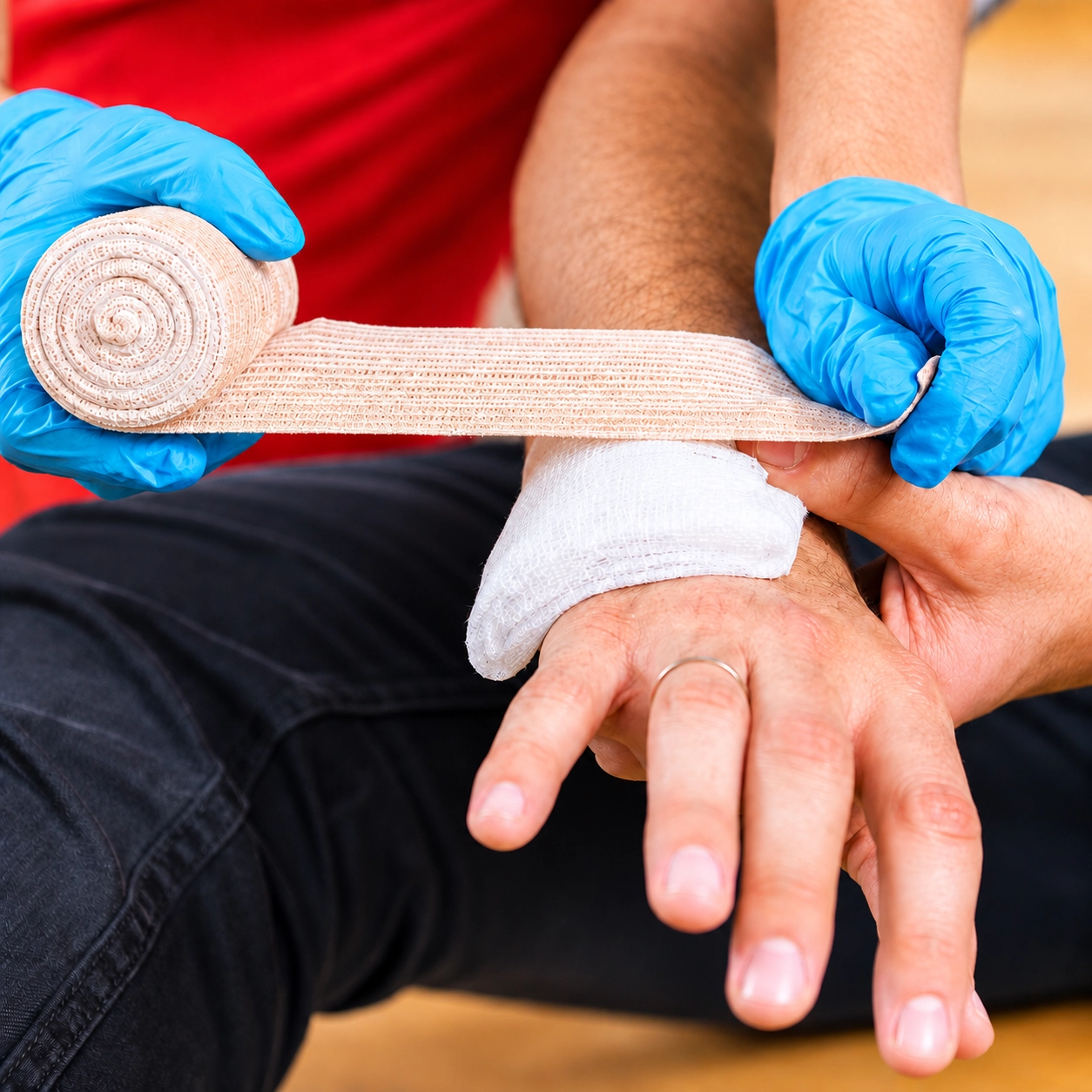
Emergency First Response, usually shortened to EFR, is a CPR and first aid program built for ordinary people rather than medical professionals. Above all, you learn to recognize an emergency, protect yourself first, call for help, assess an ill or injured person, perform CPR and give basic first aid until the professionals arrive.
Meanwhile, the atmosphere stays deliberately relaxed. In fact, nobody faces a test under pressure, and your instructor demonstrates every skill before you practice it. Consequently most students arrive nervous about the CPR section and leave surprised at how manageable it felt.
Crucially for divers, current EFR Primary and Secondary Care training satisfies the CPR and first aid prerequisite for PADI Rescue Diver and for professional-level PADI training, provided you completed it within the required period.
The Emergency First Response day in Hurghada covers Primary Care CPR, Secondary Care First Aid and practical scenarios in roughly four to six hours. Importantly, none of it happens in the water.
Above all, the immediately life-threatening situations. First you assess the scene and protect yourself, then you work through barriers, responsiveness, the airway, normal breathing, calling emergency services, chest compressions, rescue breaths, serious bleeding, shock and possible spinal injury.
By contrast, the situations that are not immediately life-threatening, or where help arrives late. Next come injury and illness assessment, bandaging, splinting, wound management, burns, possible fractures, monitoring and a useful handover for responders.
Finally everything combines: an unresponsive person, somebody not breathing normally, serious bleeding, shock, a suspected spinal injury, a fall, burns or sudden illness. These build communication and the ability to set priorities quickly.
Your instructor keeps the pace to the group rather than to the clock. Therefore a small, confident group sometimes finishes closer to four hours, while a larger one runs nearer six.
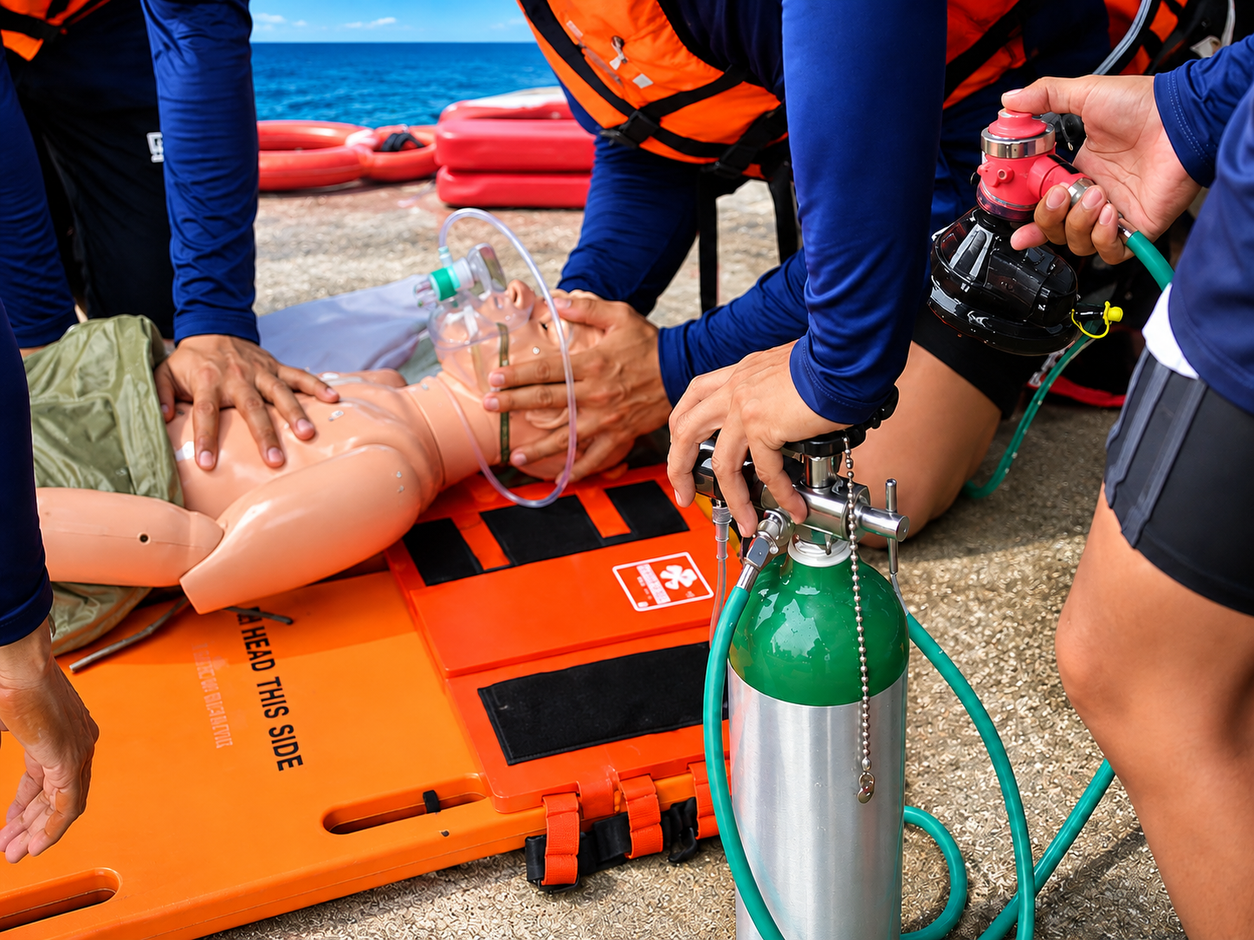
Emergency First Response in Hurghada puts every student on a manikin rather than in a seat. Consequently the practical time matters more than the theory time.
Positioning the patient, finding the compression area, delivering effective chest compressions, holding the correct sequence, giving rescue breaths where trained and able, keeping interruptions short, continuing until help arrives and working alongside a second responder.
Where the course option and equipment allow: recognizing an AED, preparing the patient, following the device prompts, placing pads correctly, clearing during analysis, delivering a shock when advised and resuming CPR. However, confirm AED availability with us before booking.
The Emergency First Response course in Hurghada is open to anybody, with no diving certification and no previous first aid training required. First, divers preparing for Rescue Diver make up much of each group, alongside divemasters, boat crew, dive guides and water-sports staff.
Equally, hotel and tourism employees, parents, teachers, office workers and travelers take it purely for life outside diving.
Of course, you need to follow the instruction, take part in the practical sessions, complete the scenarios and meet the performance requirements. Participants under eighteen should contact us before booking, since the instructor confirms suitable arrangements first.
The €120 price of Emergency First Response in Hurghada covers the instruction, every learning material and the certification. Unlike our PADI courses, nothing arrives as a separate charge afterwards.
Emergency First Response plus PADI Rescue Diver costs €450 together, because current CPR and first aid training is a hard requirement for the Rescue Diver certification. Indeed, if yours has lapsed, or you have never held one, add EFR to your Rescue Diver booking.
EFR runs either before the Rescue Diver course or alongside it, depending on that week’s schedule. Therefore tell us which suits you and we arrange it around your dates.
Emergency First Response training needs refreshing every twenty-four months to stay valid for PADI Rescue Diver and for professional-level requirements. Moreover, some employers, local authorities and training organizations ask for more frequent updates, so check what applies to you.
Moreover, there is a practical reason beyond the paperwork. CPR and first aid are perishable skills, and repeating the course keeps both the sequence and the confidence fresh. Indeed, divers who refreshed recently act noticeably faster in a real incident.
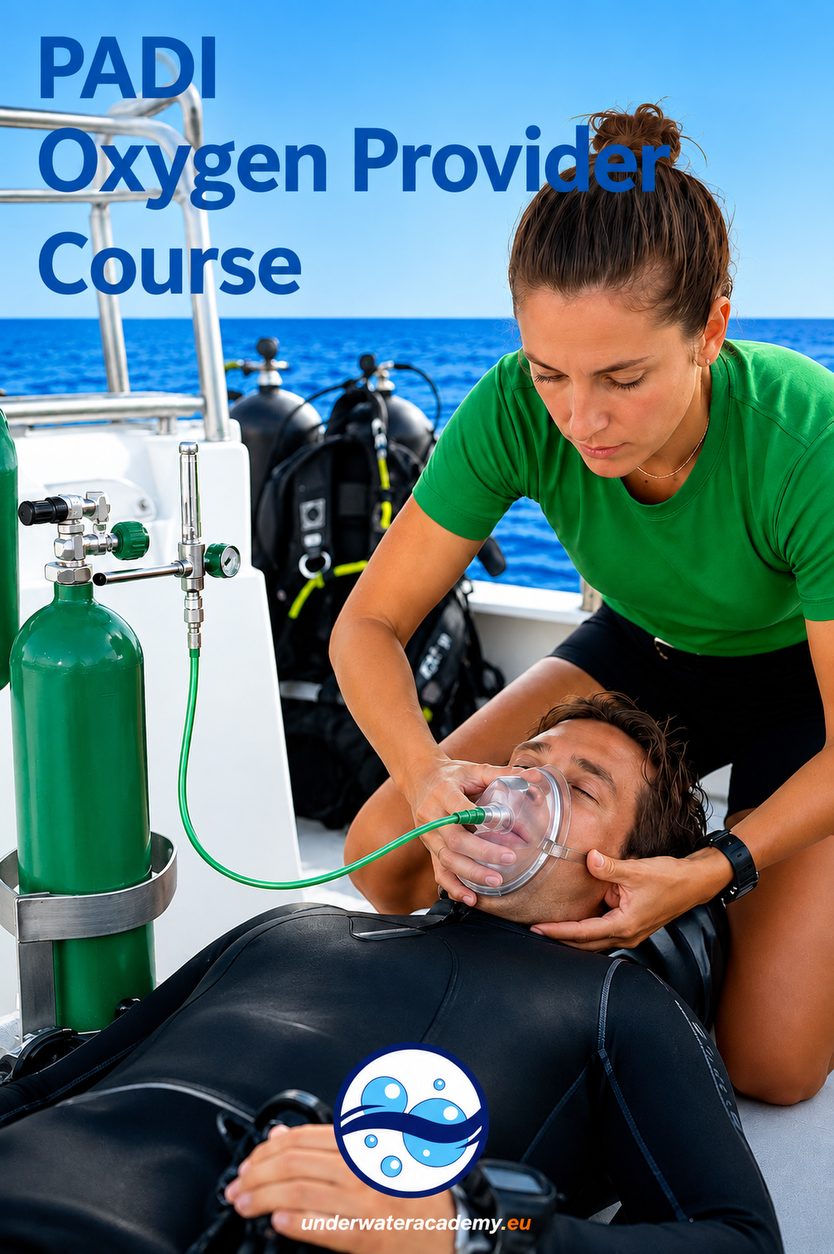
One clarification worth making: EFR teaches general CPR and first aid, while Emergency Oxygen Provider deals specifically with recognizing diving illnesses and delivering emergency oxygen within your training and local rules. They are different courses, although they complement each other well.
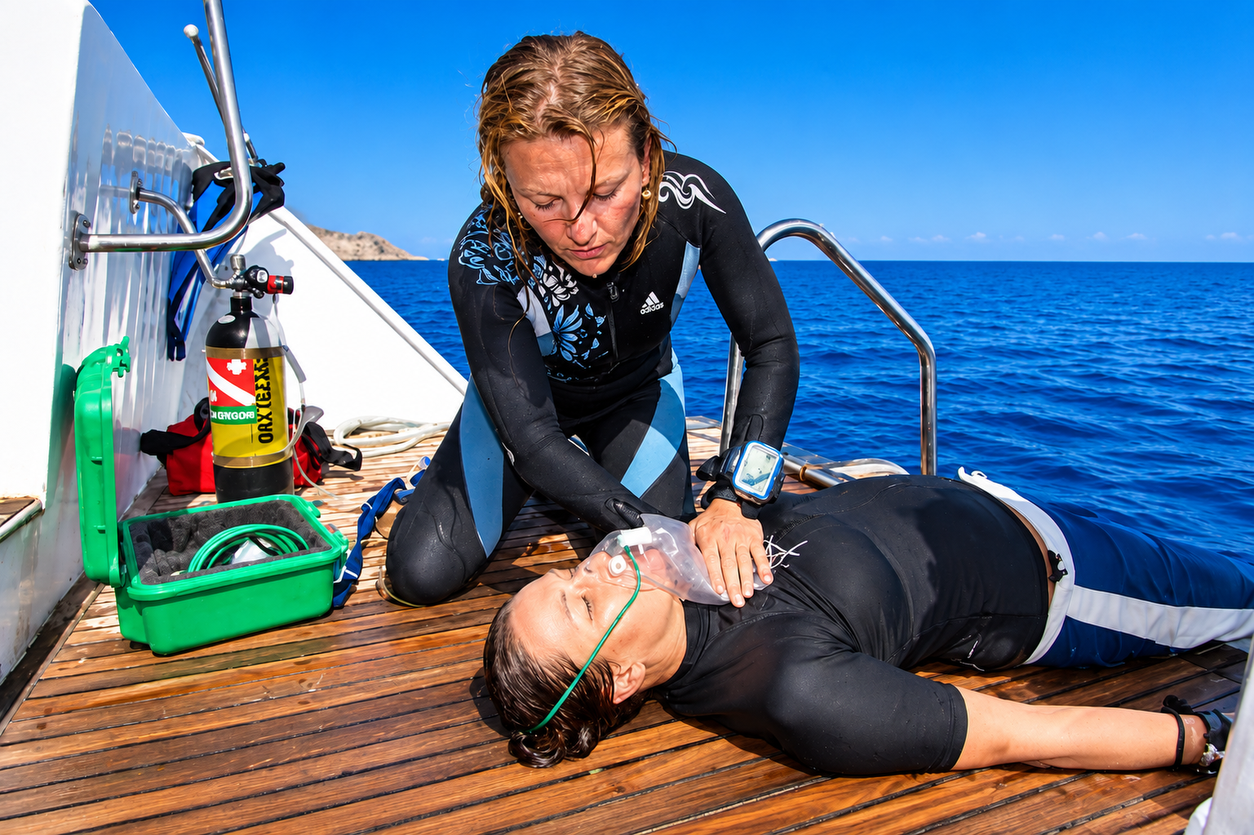
The Emergency First Response course runs entirely on dry land in Hurghada, on the Egyptian Red Sea coast. We use a classroom or a suitable quiet space near the marina, since the course needs room for manikins and bandaging rather than a boat.
In addition, transfer inside Hurghada comes with the course where we arrange it. Meanwhile guests staying in El Gouna, Makadi Bay, Sahl Hasheesh, Soma Bay or Safaga can still join, although a small transfer surcharge may apply and we confirm it in writing first.
Because the course takes only part of a day, plenty of guests pair it with a boat day. Non-divers can join the Giftun island and snorkeling trip, while certified friends join our daily diving in Hurghada.
Hurghada runs on diving, boats and tourism, so these skills get used. For example, EFR training pays off at dive centers, on diving boats, in hotels, on beaches, around swimming pools, at water-sports centers, in workplaces and at home. In short, none of it is limited to diving accidents.
Furthermore, we keep groups small so everybody gets real hands-on time with the manikin and the bandages rather than watching somebody else practice. Our wider procedures sit on the diving safety page, and further practical answers on our diving FAQ.
For independent guidance on diving emergencies and accident management, Divers Alert Network publishes material worth reading alongside the course.
In most cases, students take Emergency First Response as the missing piece before PADI Rescue Diver, which is the natural next step. Subsequently the ladder continues to PADI Divemaster for anybody thinking about working in diving.
If you hold no diving certification yet, start instead with Discover Scuba Diving or the full Open Water certification. Meanwhile, the complete ladder sits on our PADI courses page.
Gallery
Why us
Above all, full emergency equipment, a documented action plan and briefings before every activity we run.
Indeed, more than two decades of diving and liveaboard operations out of Hurghada, on every Egyptian route.
Furthermore, multilingual instructors qualified to teach Emergency First Response, working with small groups.
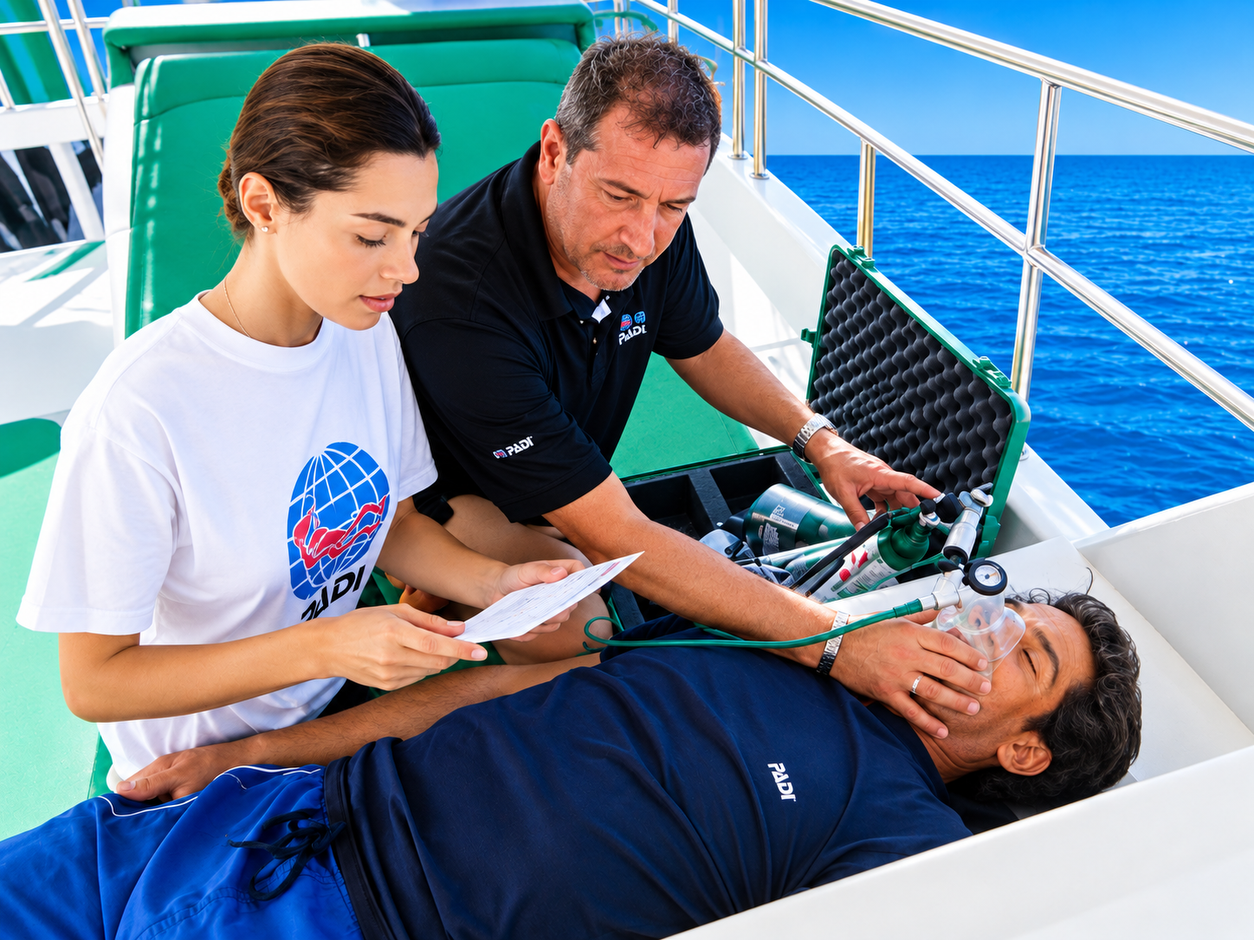
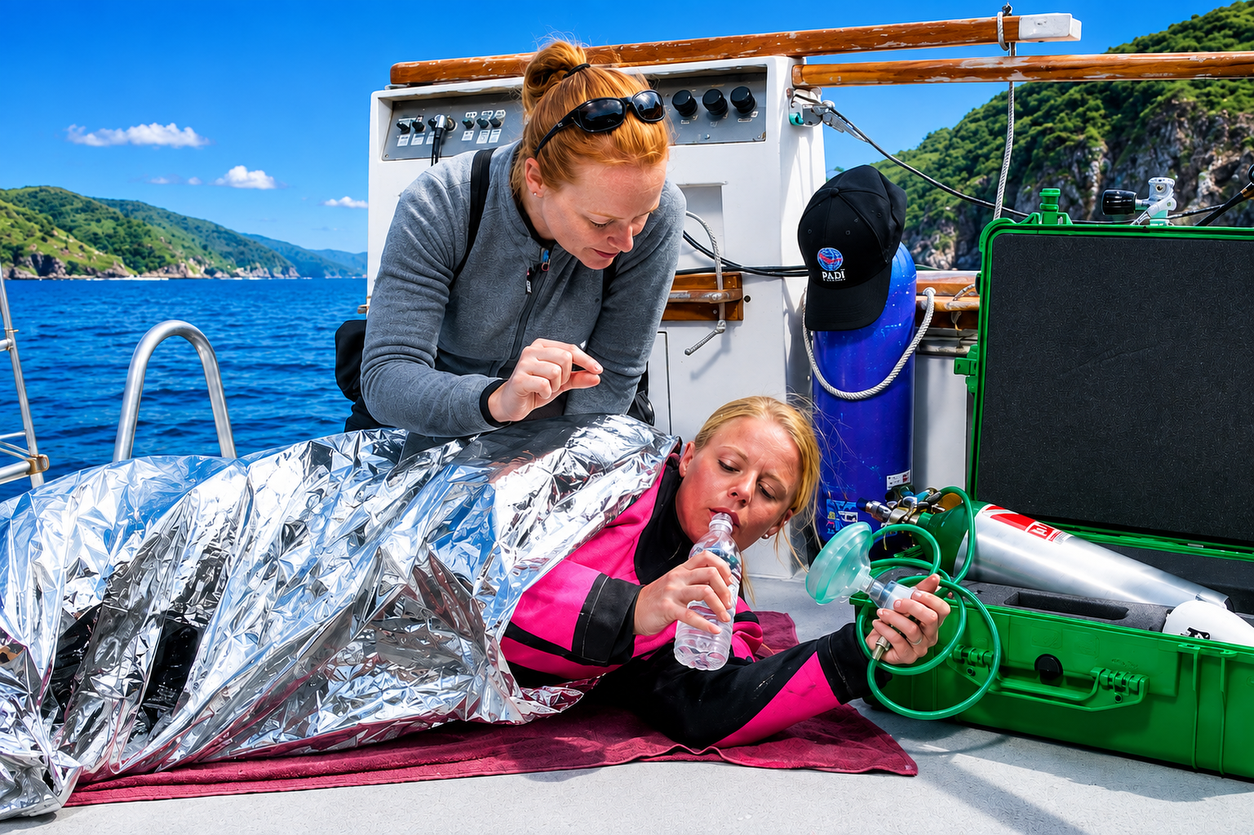
You practice CPR on a manikin, bandage, splint, assess and run full scenarios rather than only watching demonstrations.
Moreover, dates, prices, inclusions and any add-ons come confirmed in writing before you pay anything.
In addition, no scuba certification is needed, so families, hotel staff and boat crew train alongside divers.
Questions
The Emergency First Response course takes roughly four to six hours, completed in a single day. The exact length depends on group size, the options chosen and how quickly the group progresses.
No. The course is open to divers and non-divers alike, and no certification of any kind is required.
No. Instead, all training takes place in a classroom or a suitable dry training area.
Primary Care CPR, Secondary Care First Aid, emergency assessment, serious bleeding control, shock management, injury assessment, bandaging, splinting and practical response scenarios.
AED awareness or training may be included where it is selected and where suitable equipment is available. Please confirm with us before booking.
In fact, our instructors teach in several languages. Tell us your preference when you book and we confirm what is available on your dates.
The Emergency First Response course takes place in a classroom or a suitable quiet dry space in Hurghada. In other words, no boat and no water are involved at any point.
Emergency First Response in Hurghada costs €120 per person as a standalone course. Added to the PADI Rescue Diver course, EFR is €100.
The complete package is €450: €350 for Rescue Diver and €100 for EFR.
Yes. All required course materials sit inside the price, unlike our PADI courses where the digital materials cost extra.
Yes. Indeed, certification processing is included after successful completion.
Yes. Current EFR Primary and Secondary Care training meets the CPR and first aid prerequisite for PADI Rescue Diver.
In short, the training must normally date from the previous twenty-four months.
Yes. EFR runs before the Rescue Diver course or alongside it, depending on that week’s schedule.
Naturally, no diving certification is required for this course.
None at all. The program is built for ordinary people rather than medical professionals, and it starts from zero.
No. You must complete the knowledge development, the practical skills and the required scenarios.
Send us your name, your preferred date, how many people are joining, any previous first aid training, whether you need the course for Rescue Diver, your preferred language and your hotel. Subsequently, we confirm availability within twenty-four hours.
Prefer to talk? Message us on WhatsApp or write to info@redsea-diving.com.
This page was last reviewed by the Red Sea Diving instructor team in September 2026.
Premium Red Sea diving in Egypt. Liveaboard trips with experienced crews, comfortable vessels and 20+ years of experience.