
Safaga, Egypt · Salem Express
Salem Express A ferry, a reef, twenty minutes, and more than four hundred lives
GPS 26° 38.38′ N · 34° 03.67′ E
Just before midnight on 15 December 1991, the Salem Express struck the southern end of Hyndman Reef while approaching Safaga in heavy weather. She sank in twenty minutes. Most of those on board were pilgrims returning from Mecca, and many of them are still inside her.
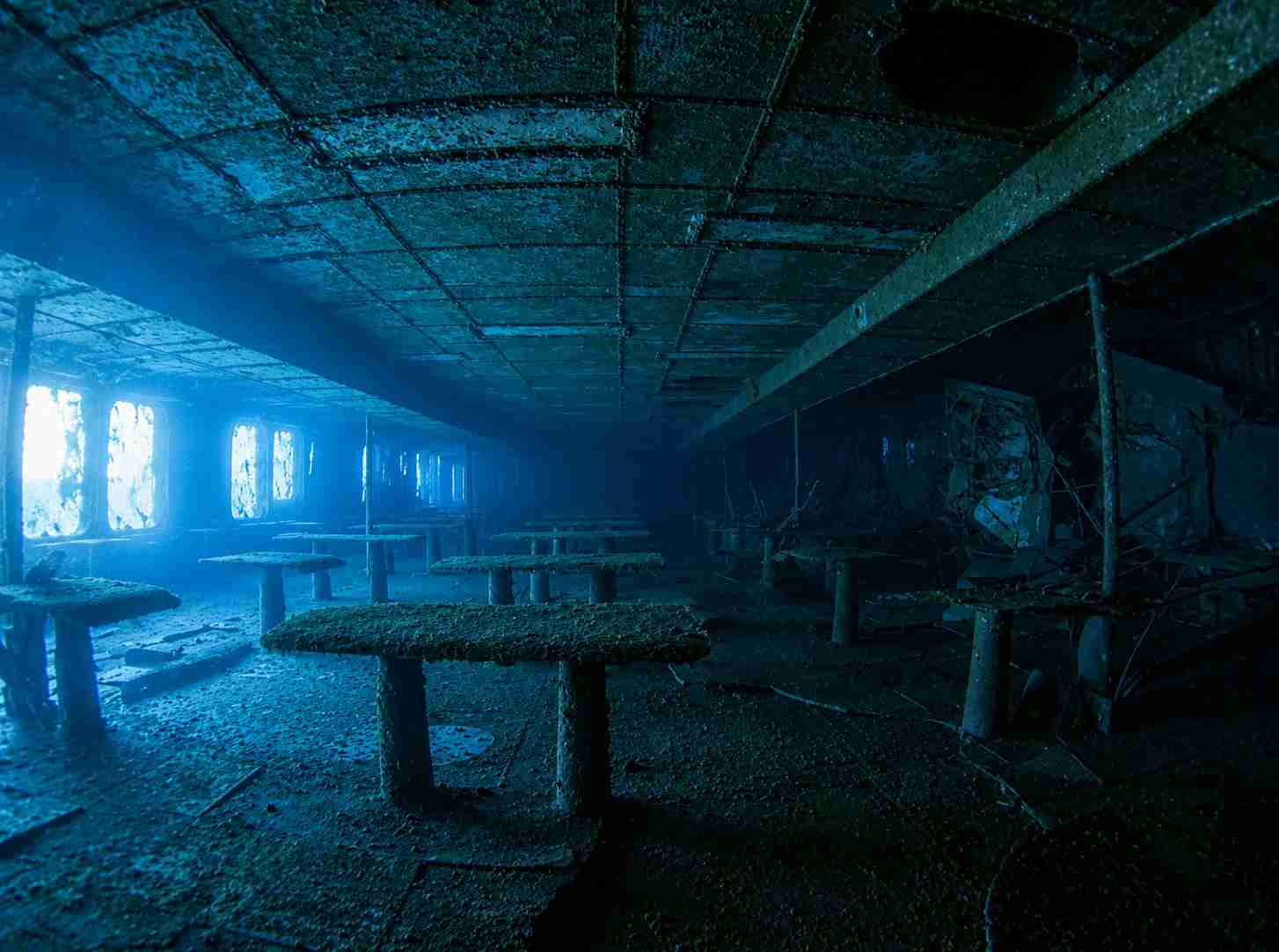
This is a grave, and it is dived as one. Nothing is ever taken from her. Nobody enters her. Human remains are never photographed. If any of that sits uncomfortably with you, dive somewhere else instead, and nobody on the boat will think less of you for saying so.
Where the Salem Express lies
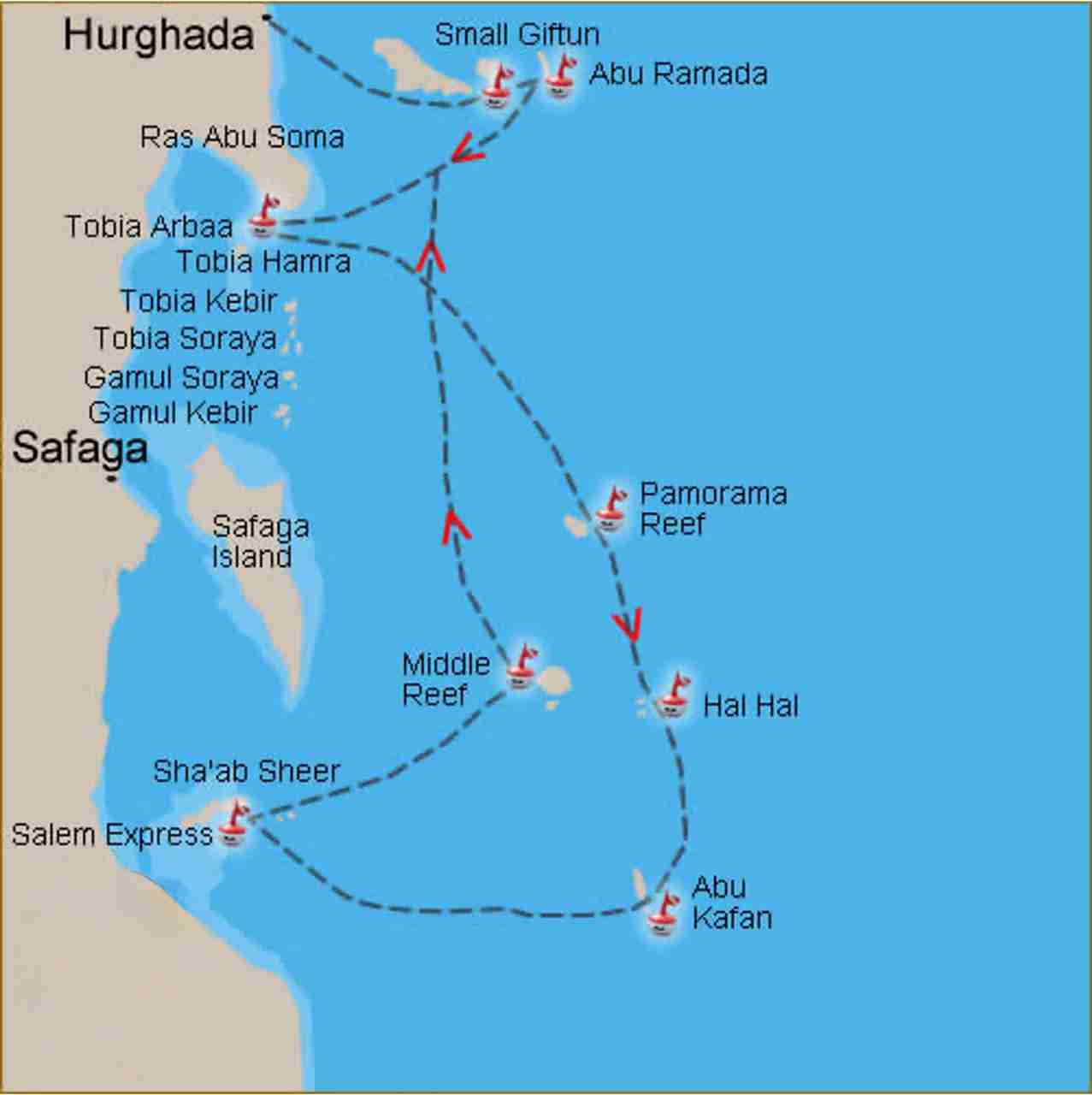
She sits at the southern end of Hyndman Reef, the long boomerang-shaped reef also known as Shaab Shehr, roughly seventy minutes out from Safaga harbour.
The ship before she was the Salem Express
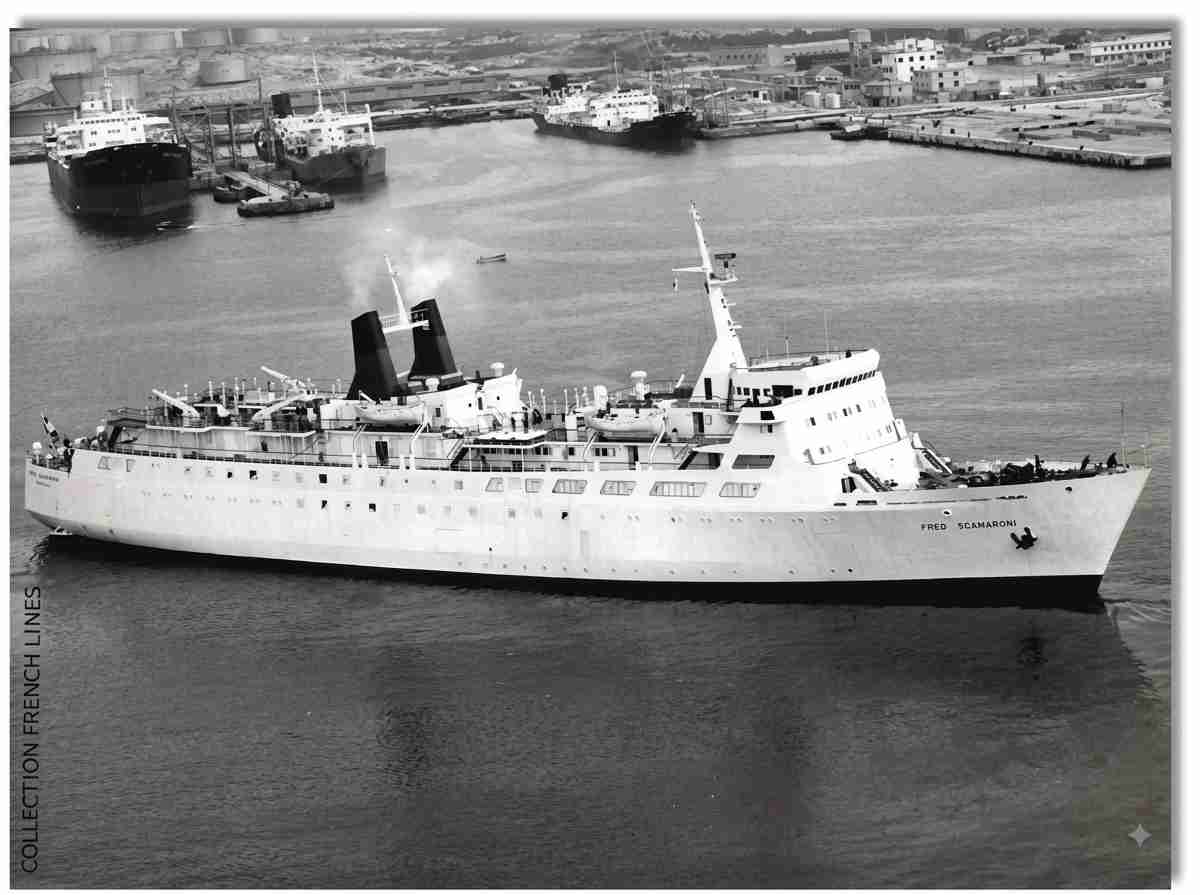
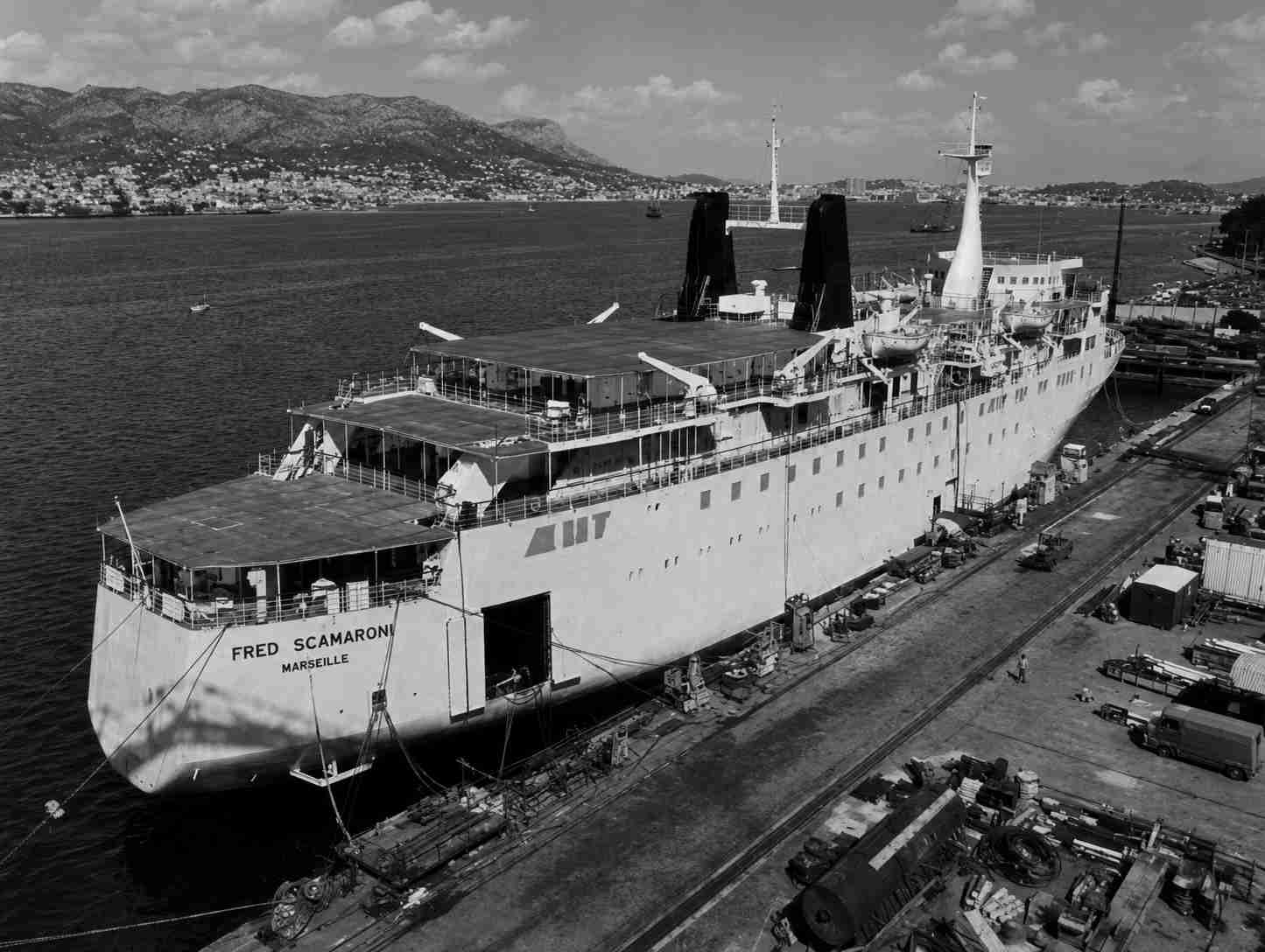
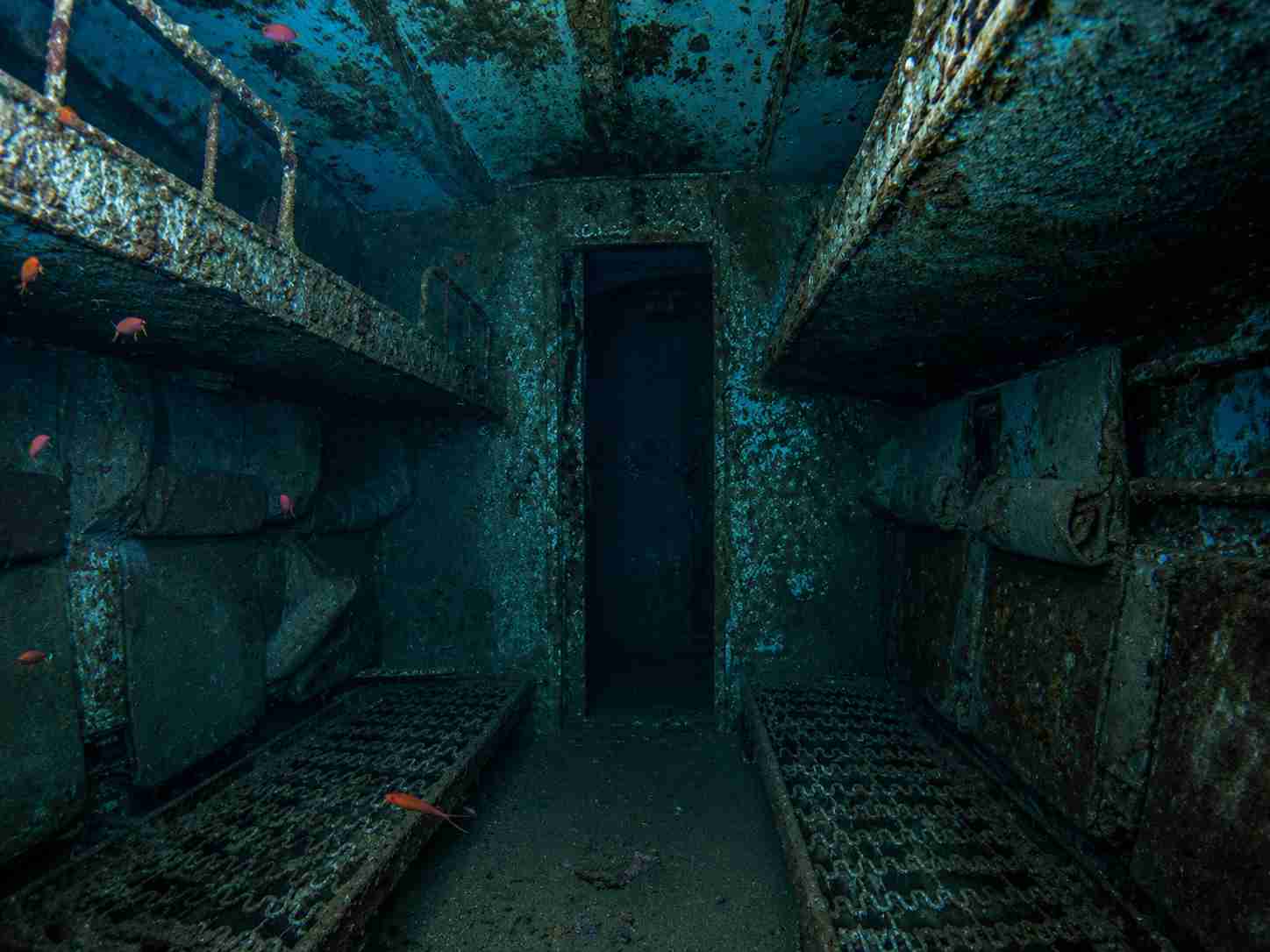
She began life as the Fred Scamaroni, a 4,471 GRT roll-on roll-off passenger ferry built at Forges et Ateliers et Chantiers de la Méditerranée in La Seyne, France, as yard number 1367. Her owner was the Compagnie Générale Transatlantique of Marseille.
Towed to Port-de-Bouc on 30 November 1964 for completion, she then caught fire on board on 26 June. The damage was extensive, and consequently she did not enter service until April 1966, ten months later than planned.
She measured 114.99 metres in length and 17.84 metres in beam, drawing 4.92 metres. Furthermore she could carry twelve hundred passengers and a hundred and forty-two vehicles, with four hundred and twenty-eight cabins on board.
From 17 May 1966 she worked the Marseille to Ajaccio route in Corsica. On 20 January 1967 she struck the quay wall at Ajaccio, though the damage to ship and quay alike was minor. Later, as the Salem Express, she sailed between Jeddah and Suez from 1988 until the night she was lost.
The ship in short
Built: La Seyne, France, completed 1966 as the Fred Scamaroni.
Type: roll-on roll-off passenger ferry.
Length: 114.99 m · Beam: 17.84 m · Draught: 4.92 m
Capacity: 1,200 passengers, 142 vehicles, 428 cabins.
Last route: Jeddah to Suez, from 1988.
The loss of the Salem Express
On 15 December 1991 she departed Jeddah bound for Safaga. Most of those on board were pilgrims coming home from Mecca, many carrying gifts and clothes for relatives waiting in Egypt. How many people were actually aboard has never been settled: the official figure is 578 passengers and 71 crew, while other reports put the number as high as sixteen hundred.
Captain Hassan Moro had commanded her since 1988 and knew the water off Safaga as well as anyone. The four-hundred-and-fifty-mile passage from Jeddah passed without difficulty. Towards the end of it, however, the weather rose, and high winds and heavy seas began to work on the ship.
Steaming for Safaga on the southerly route around Hyndman Reef, she was a little over a kilometre east of where she was meant to be. That put her on a collision course with the reef. Just before midnight she struck its southernmost section, tearing a gaping hole in the forward starboard bow.
The impact also forced her bow door open. Consequently the sea reached the car deck immediately, and within minutes she had a severe starboard list. Panic broke out among the passengers. Twenty minutes after striking the reef she sank in thirty metres of water, taking with her the many who were trapped below decks. Anyone who did get off her then had to survive a storm.
The count. The official death toll is 470, including the captain, with 180 survivors. Lloyd’s Casualty Reports, working from a slightly different set of figures, gave the tonnage as 4,770 GRT and put the dead at around 464, with 117 bodies recovered. Lloyd’s also recorded that the master had taken a short cut which was not authorised for a night passage.
The aftermath
Two days after she went down, the Egyptian Navy began the recovery, helped by dive instructors and divers from Hurghada and Safaga. Their task was to bring out the bodies still trapped inside the hull. Many of the people who did that work are still diving this coast.
Diving the Salem Express
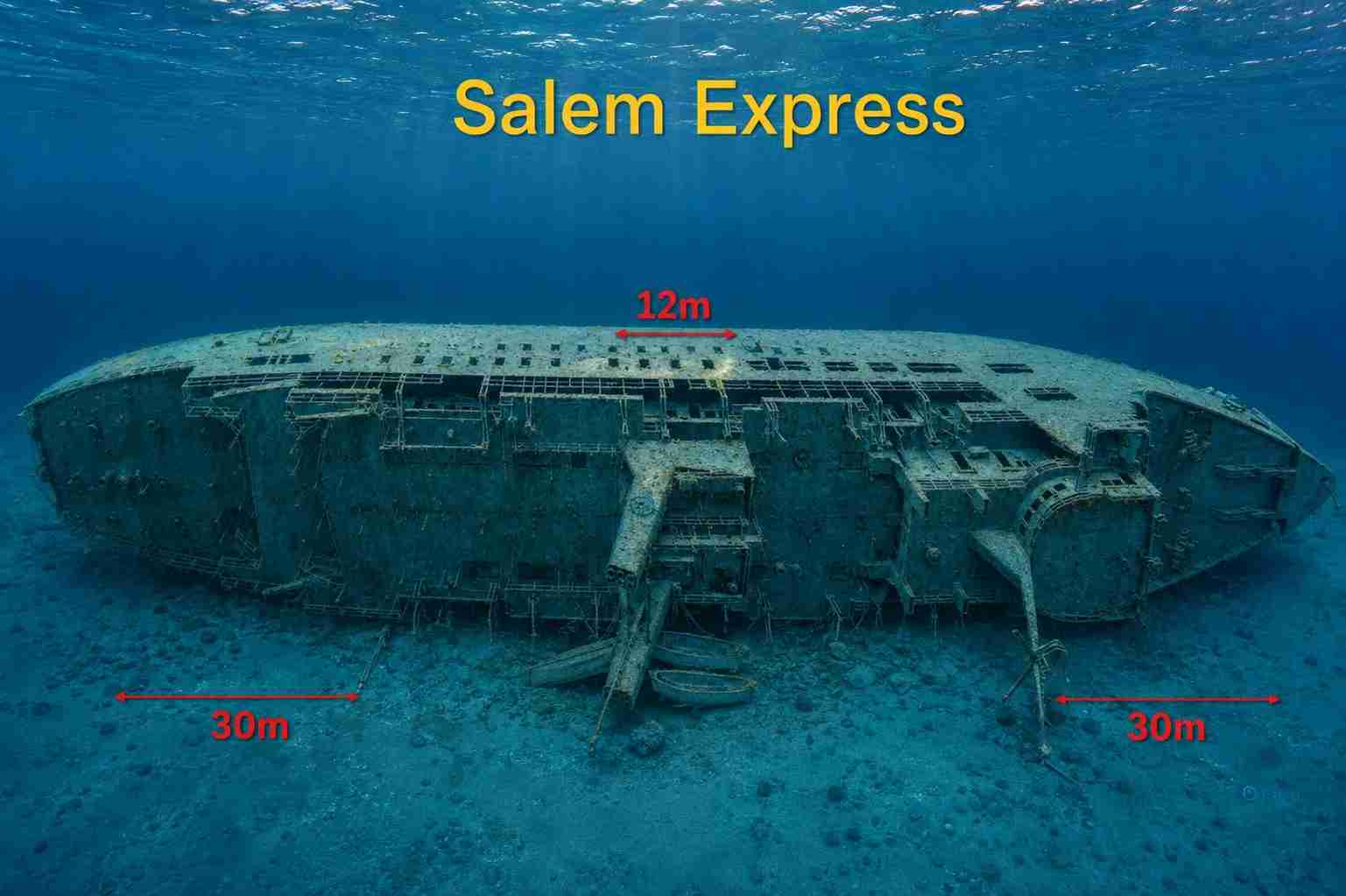
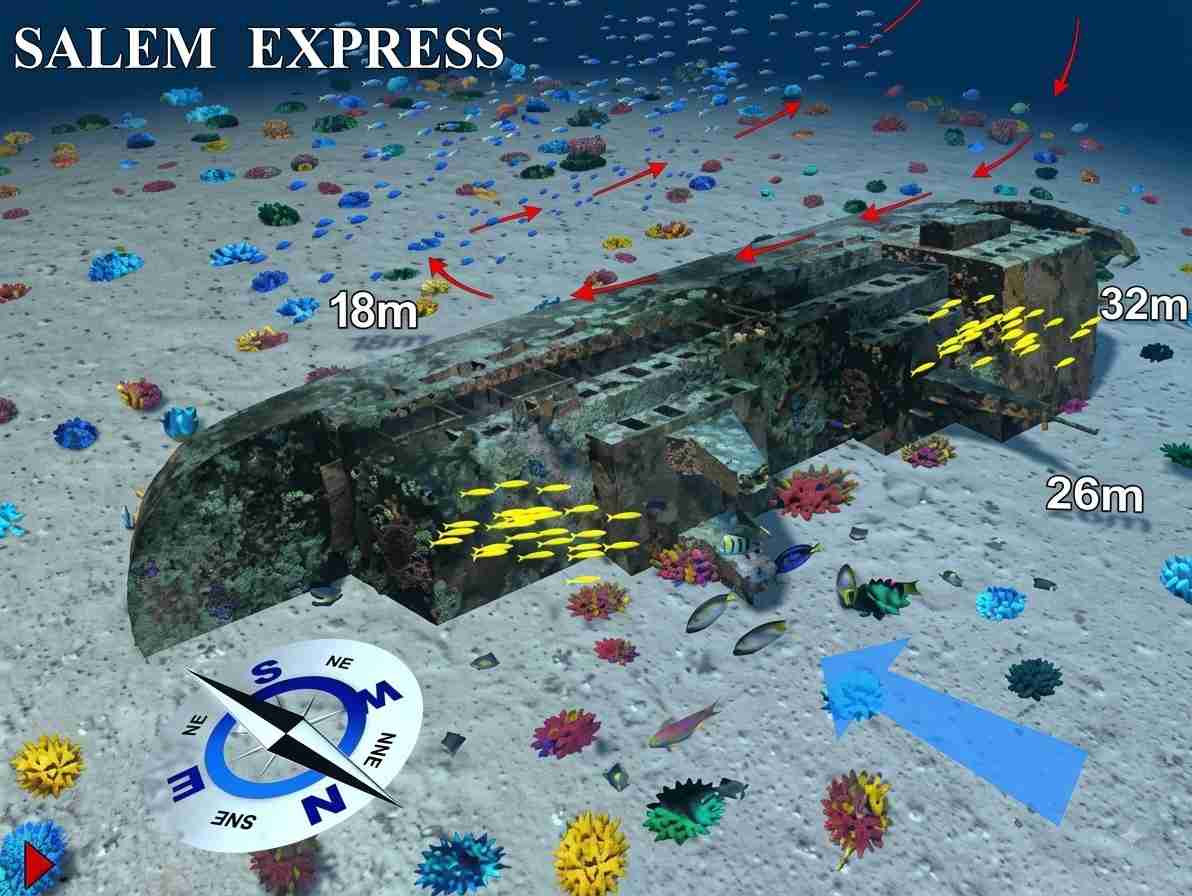
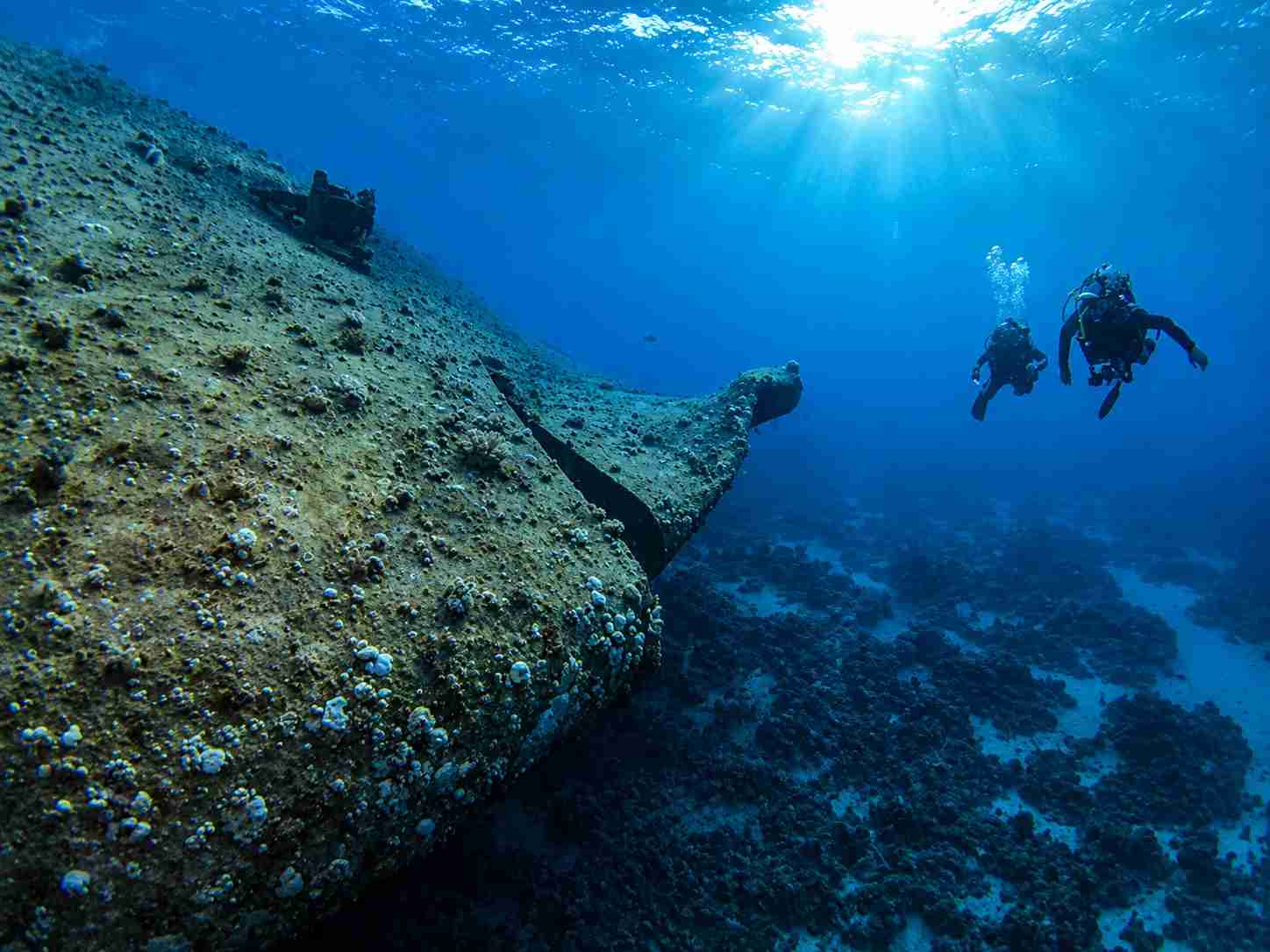
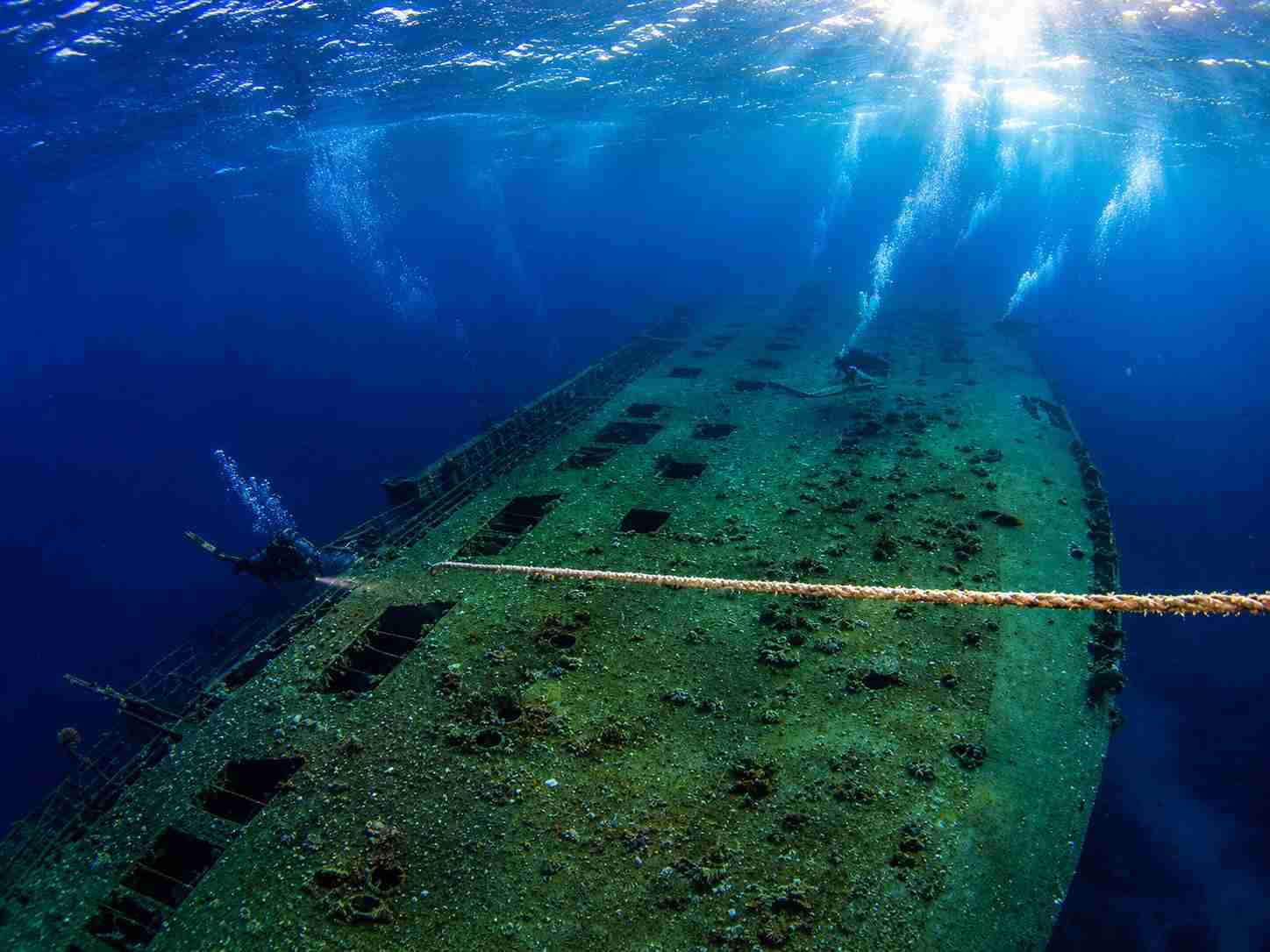
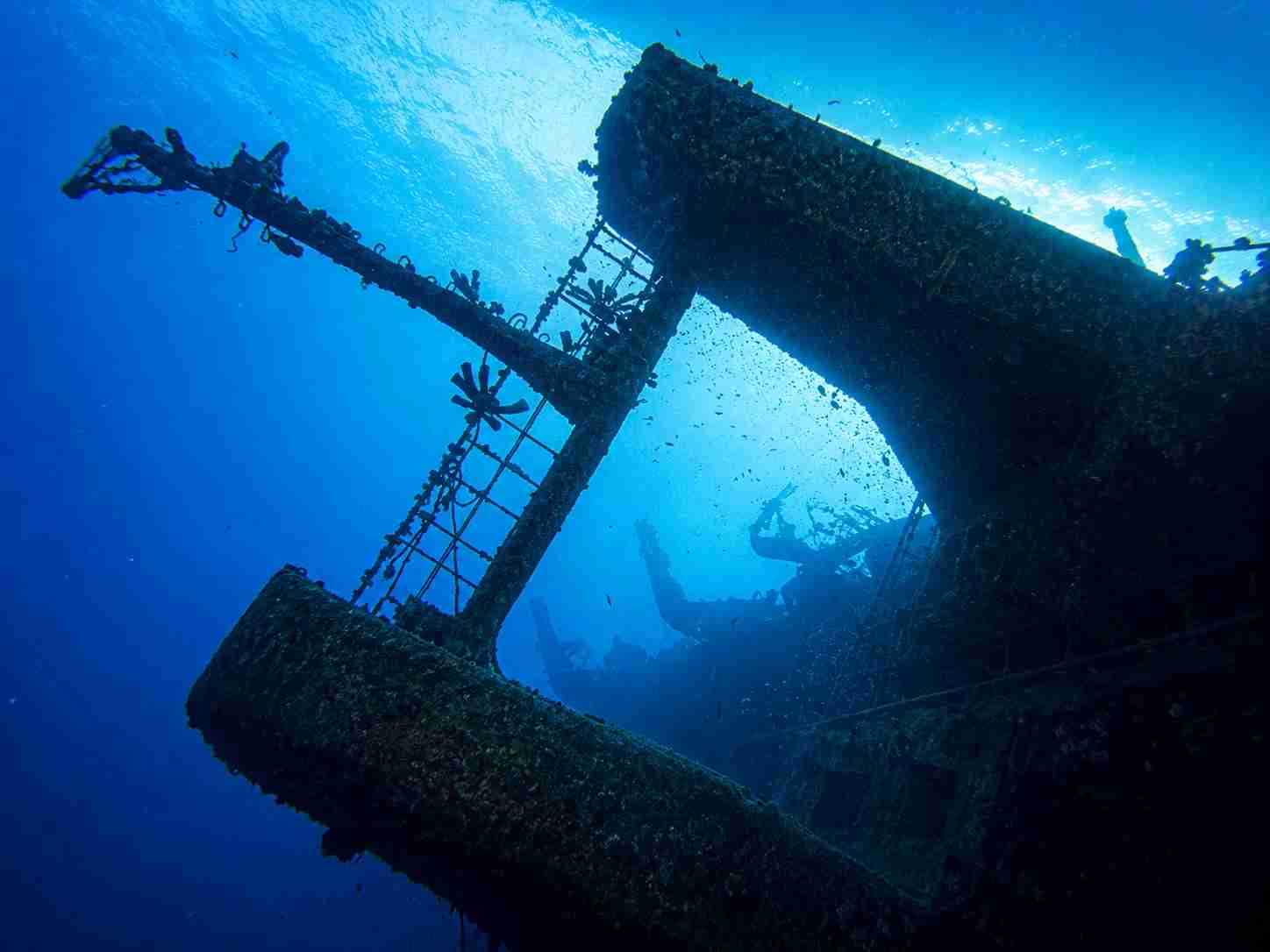
She lies on her starboard side in thirty metres of water, with the top of her hull around ten metres down. Consequently the whole ship sits inside recreational limits, and the dive itself is technically undemanding. What makes it hard is everything else about it.
Stern to bow, along the outside
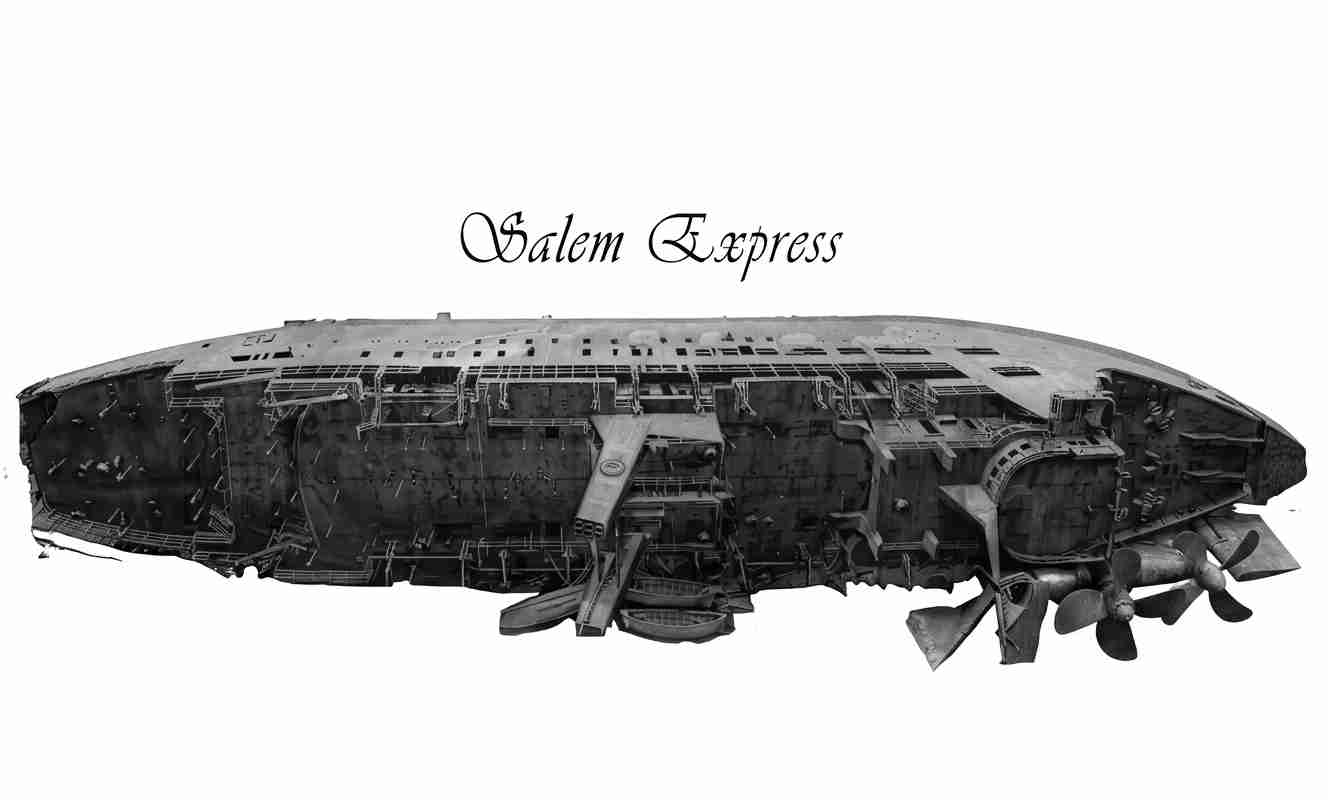
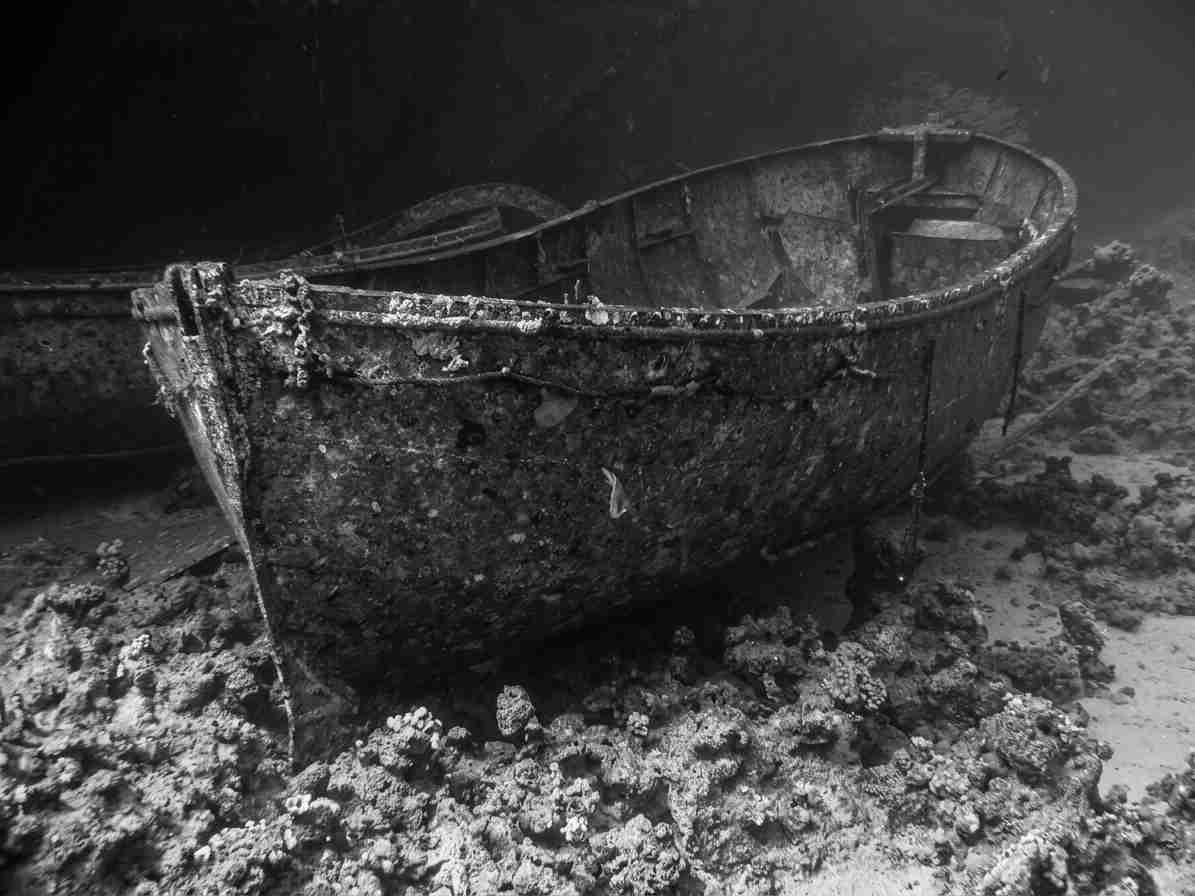
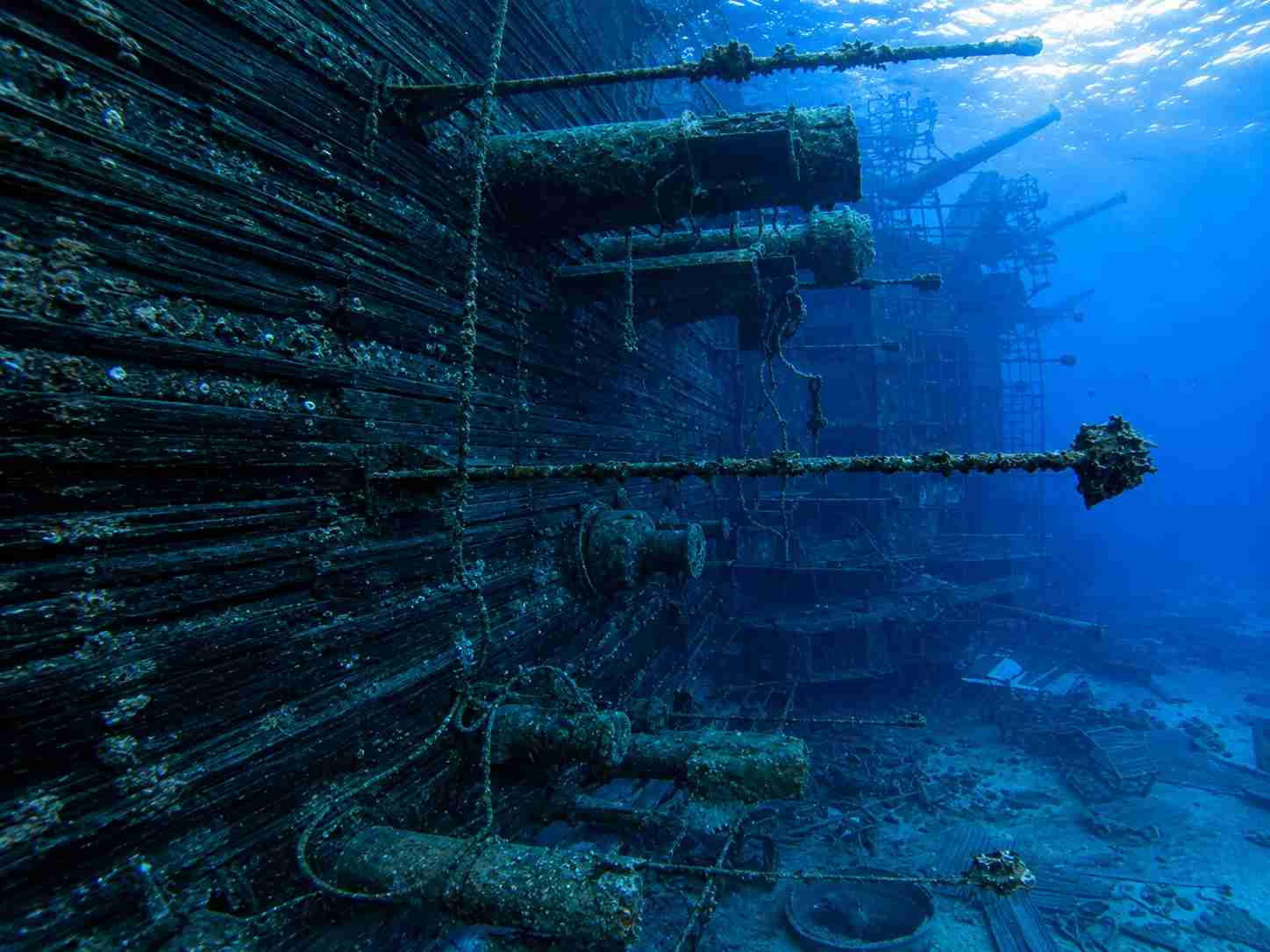
Start at the deepest point, the stern, where both screws are still intact along with the rudders. Then work forward along the bottom. On the way you pass lifeboats still hanging in their davits, and after those the two great funnels carrying the letter S.
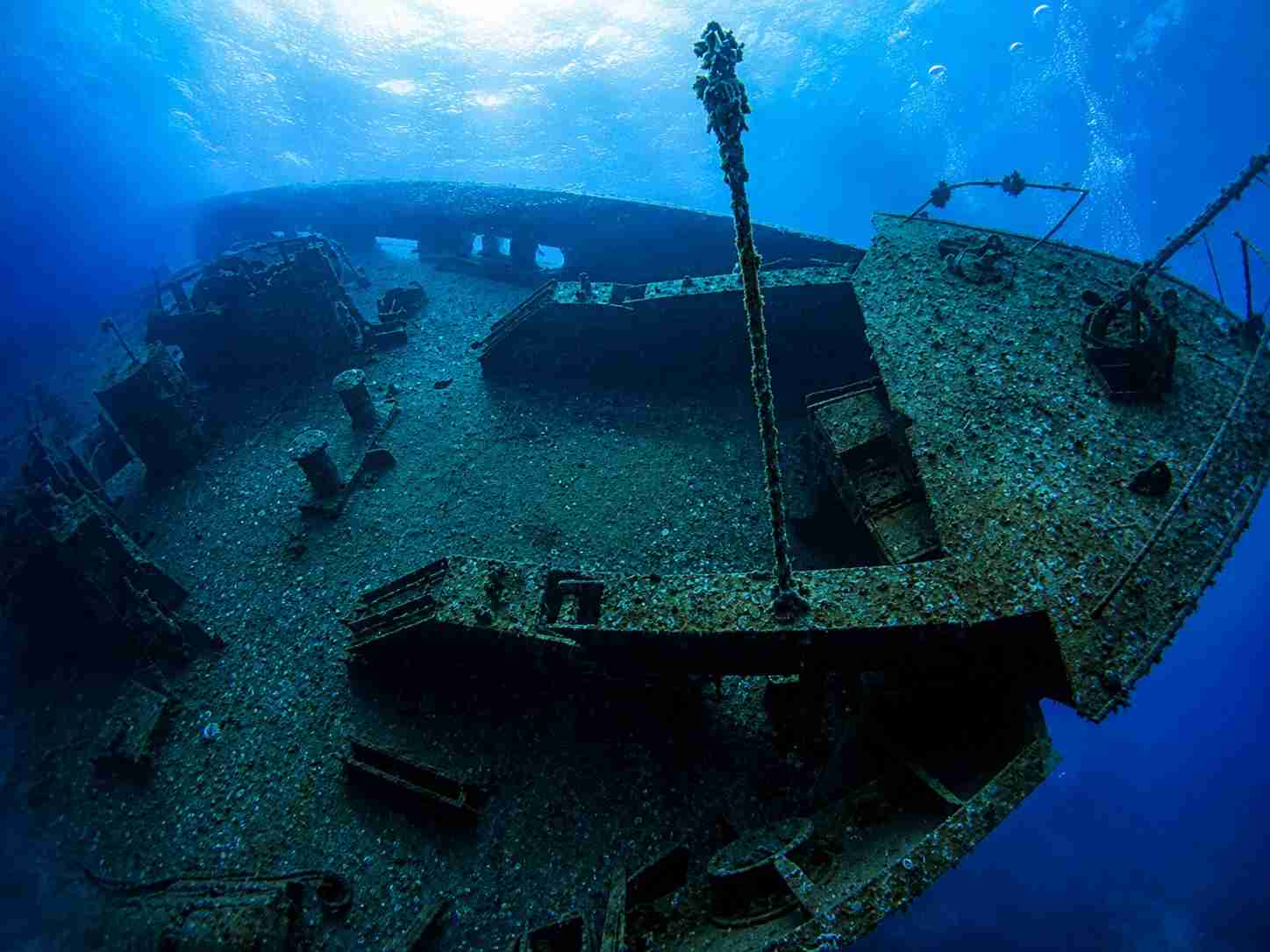
Coming up towards the bow, you reach the bow door standing wide open and the damage from the reef, which is daunting at close range. Finally, work shallower along the hull and finish your stop over the highest part of her.
Watch for
- Firstly your depth at the stern, since thirty metres arrives quickly
- Then the davits and rigging, which snag anything hanging loose
- Also the open bow door, which is not an invitation
- Finally other divers, because this site draws crowds in season
Many guides will not dive her at all. That is a personal decision and it deserves respect rather than argument. If your guide declines, take the answer and choose another site.
Marine life on the Salem Express
Even the marine life seems to have left her alone. Elsewhere on this coast a hull of this size would be smothered in coral within a decade. Here, after more than thirty years, only a small amount of hard coral has begun to take hold.
Groupers
Namely a few, holding station in the shadow of the hull rather than out in the open.
Lionfish
Also present, hanging in the usual places wherever the structure gives them something to hunt against.
Crocodilefish
Meanwhile flat on the sand around her, almost invisible until something moves.
Surgeonfish
Certainly around the shallower plating, though never in the numbers you would see on a reef.
Hard coral
Notably sparse. A small amount has begun to grow, which after thirty years is remarkably little.
Why so bare
Probably the sand, the depth and the silt rather than anything else. Divers reading meaning into it is a human habit, not a biological fact.
Planning a dive on the Salem Express
Who this site suits
Advanced divers comfortable at thirty metres, and only those who want to be here. Although the diving is straightforward, the experience is not, so nobody should arrive on this mooring by accident.
Newer divers are better served by the sheltered reefs behind Abu Soma. Since this dive asks something of you emotionally rather than technically, there is no shame at all in choosing differently.
When to go
Diving runs all year, however the sea decides. Hyndman Reef gives the mooring some shelter, so she can often be dived when the fully exposed offshore reefs are shut by wind.
Depth at a glance
More Safaga diving
- Safaga local dive sites — the fourteen local reefs, including Shaab Shehr, the reef she struck.
- Panorama — the offshore wall north of here.
- Abu Kifan — a small Elphinstone, two plateaus and a wall into the abyss.
- What divers need on board — the packing checklist for a Red Sea safari.
- The boats that run these routes: Sea Fox, Sea Treasure, My Simba and Bismarck.
- redsealiveaboard.net — Red Sea safari schedules and availability.
Salem Express: frequently asked questions
How deep is the Salem Express?
She lies on her starboard side with the seabed at thirty metres, while the highest part of her hull sits around ten metres below the surface.
When did the Salem Express sink?
Just before midnight on 15 December 1991, after striking the southern end of Hyndman Reef. She went down twenty minutes later.
How many people died?
The official toll is 470, including the captain, with 180 survivors. Because the passenger count itself was disputed, other reports give slightly different figures.
Can you go inside the wreck?
No. People are still inside her, so nobody penetrates this hull. The dive is worked entirely from the outside.
Is it right to dive her at all?
Divers disagree, and both positions are reasonable. Many guides decline, while others treat the dive as a way of remembering rather than sightseeing.
What level do you need?
Advanced open water, since the stern sits at thirty metres. Technically the dive is undemanding, though the setting is anything but.
Why is there so little coral on her?
After more than thirty years only a small amount of hard coral has taken hold. Probably the sand, silt and depth explain it rather than anything else.
Diving Safaga
Plan your week
Tell us what you want from a week on this coast and we will build it around you. If you would rather leave the Salem Express off the schedule, say so when you book and nothing more will be said about it.
Inquiry