
The course
2 days · 3 supervised dives · compass and natural

PADI Underwater Navigator in Hurghada · Two days · Ages 10 and up
The PADI Underwater Navigator course in Hurghada stops you surfacing three hundred meters from the boat. Three supervised dives over two days teach you to hold a compass heading, judge distance underwater, read the reef itself and bring your buddy back to the exit you planned.
2 days · 3 supervised dives · compass and natural
€240 per person · dives, gear and certification included
Open Water Divers · ages 10 and up
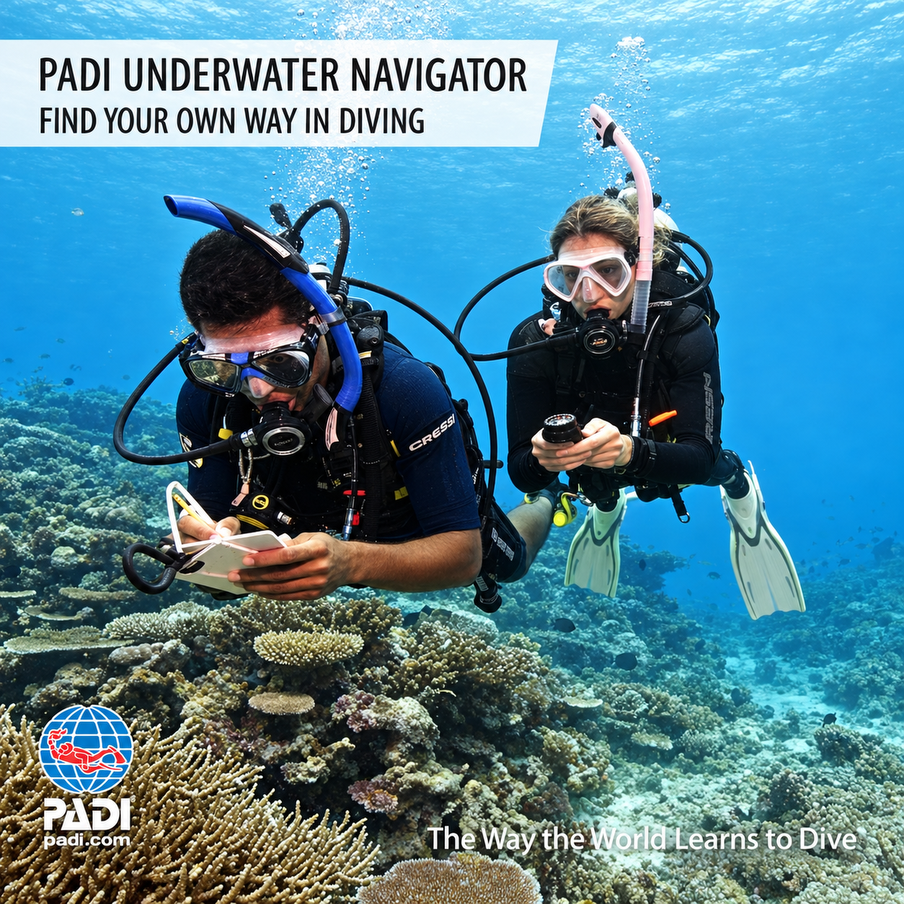
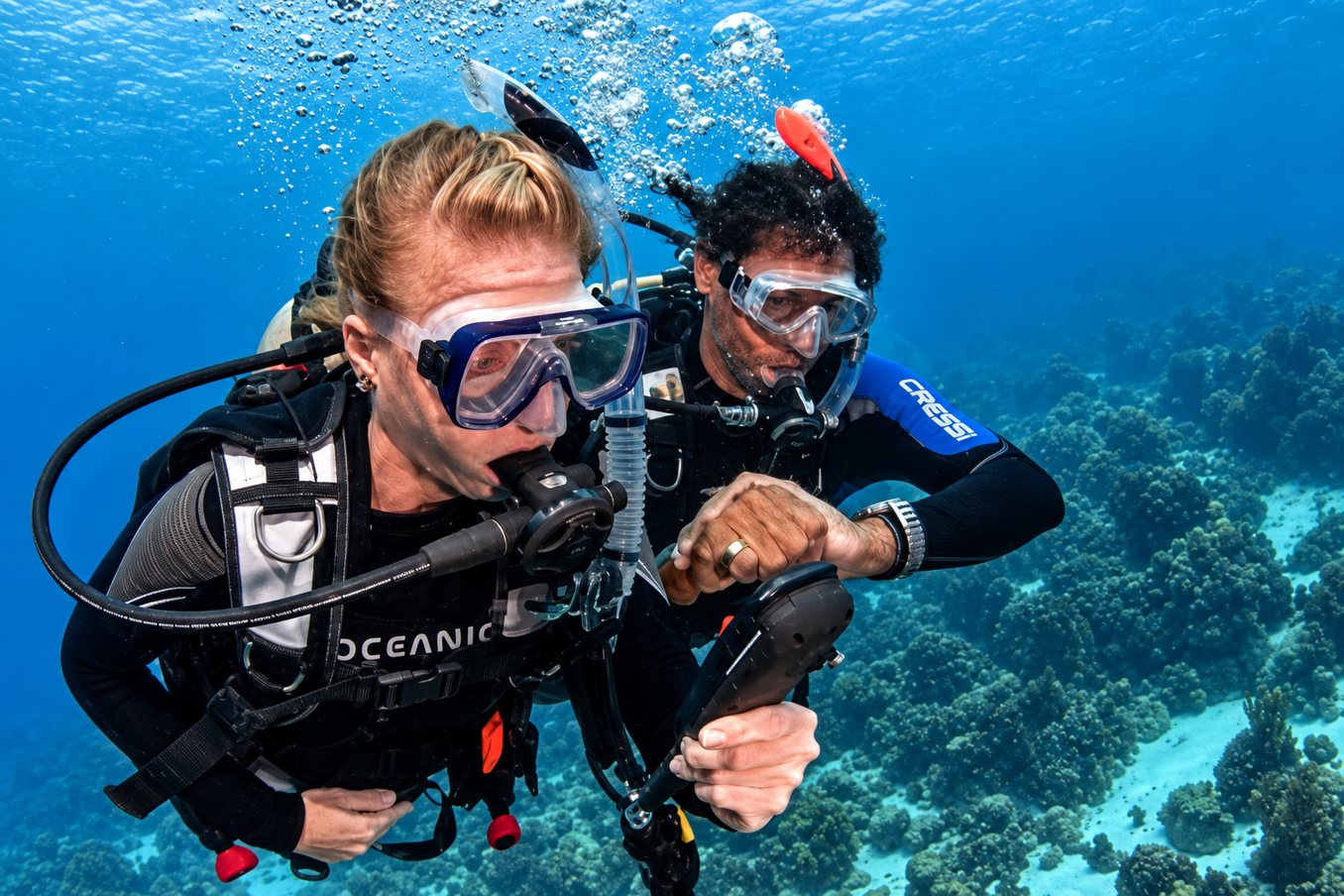
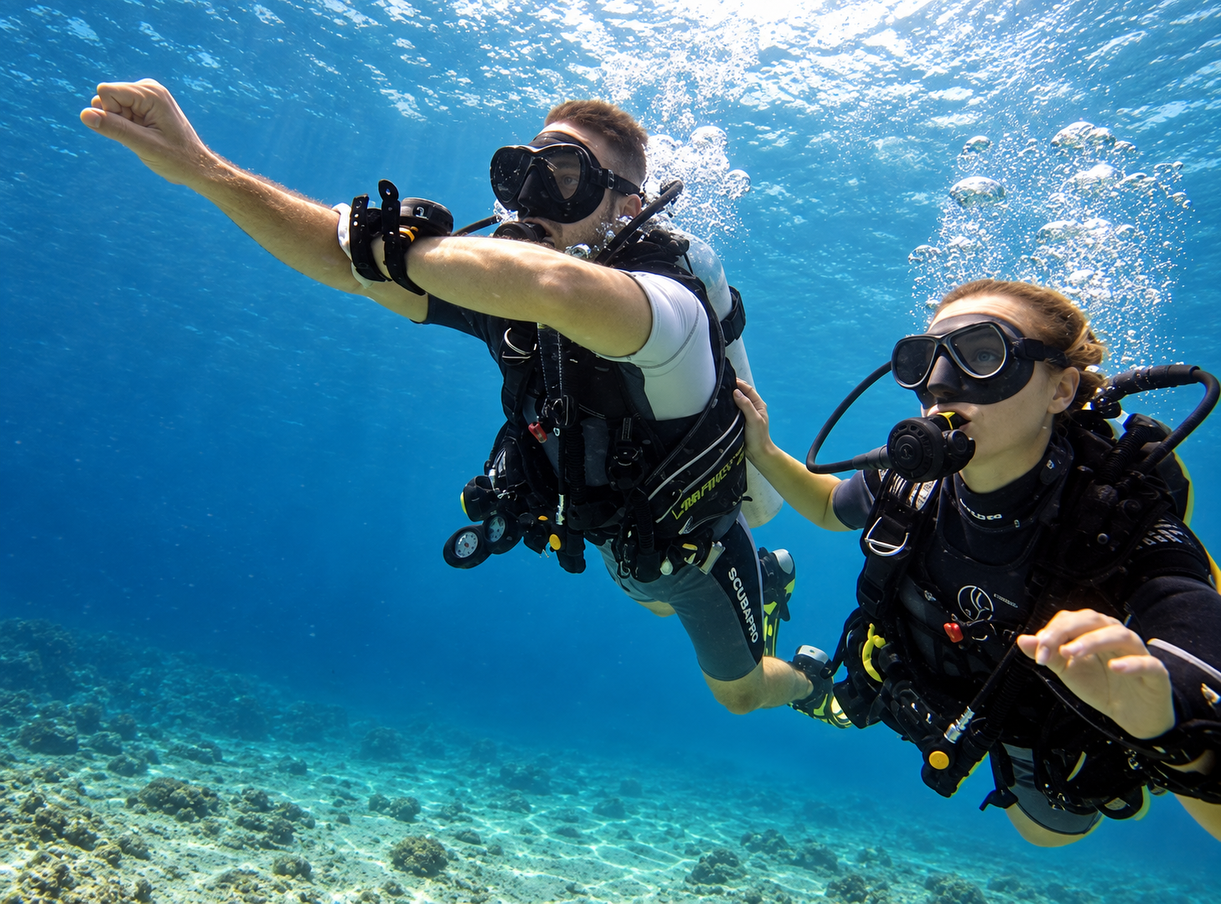
The PADI Underwater Navigator course in Hurghada costs €240 per person and includes three supervised navigation dives across two days. The price covers instruction, PADI materials and certification, use of an underwater compass, standard scuba equipment, cylinders and weights, boat services, lunch and drinks, marine park fees and hotel transfer within central Hurghada. You need to be at least ten and hold Junior Open Water Diver, Open Water Diver or an accepted equivalent.
The program combines compass work, natural navigation, distance estimation, underwater mapping and route planning. Furthermore, full standards come from PADI. Red Sea Diving is a PADI dive operator based in Hurghada, Egypt, and has run diving and liveaboard trips on the Red Sea since 2000.
| Course | PADI Underwater Navigator, a specialty course rather than a certification level |
|---|---|
| Price | €240 per person, with the dives, equipment, materials and certification all inside the price |
| Duration | 2 days |
| Dives | 3 supervised navigation dives |
| Covers | Compass headings and reciprocal courses, square and triangular patterns, distance estimation by kick cycles and elapsed time, natural navigation, marking and relocating a submerged position, route planning |
| Minimum age | 10 years. Junior divers keep the depth and supervision limits of their current certification |
| Prerequisite | PADI Open Water Diver, Junior Open Water Diver or an accepted equivalent. Medically fit for scuba diving, with comfortable basic buoyancy |
| Location | Sites with a mix of open sand and clear reef features, reached by day boat from the Hurghada marina, Egypt |
| Availability | Year-round, on request, subject to boat and instructor availability |
| Included | A qualified PADI Instructor, PADI learning materials and certification processing, underwater compass use, standard scuba equipment, 12-liter cylinders and weights, two full boat days, lunch and drinks, marine park fees, hotel transfer within central Hurghada |
| Not included | Buying your own compass, private instructor, nitrox or 15-liter cylinders, dive computer rental, extra training dives, transfers from El Gouna, Makadi Bay, Sahl Hasheesh, Soma Bay or Safaga, accommodation and flights |
| Operator | Red Sea Diving, a PADI dive operator based in Hurghada, Egypt, since 2000 |
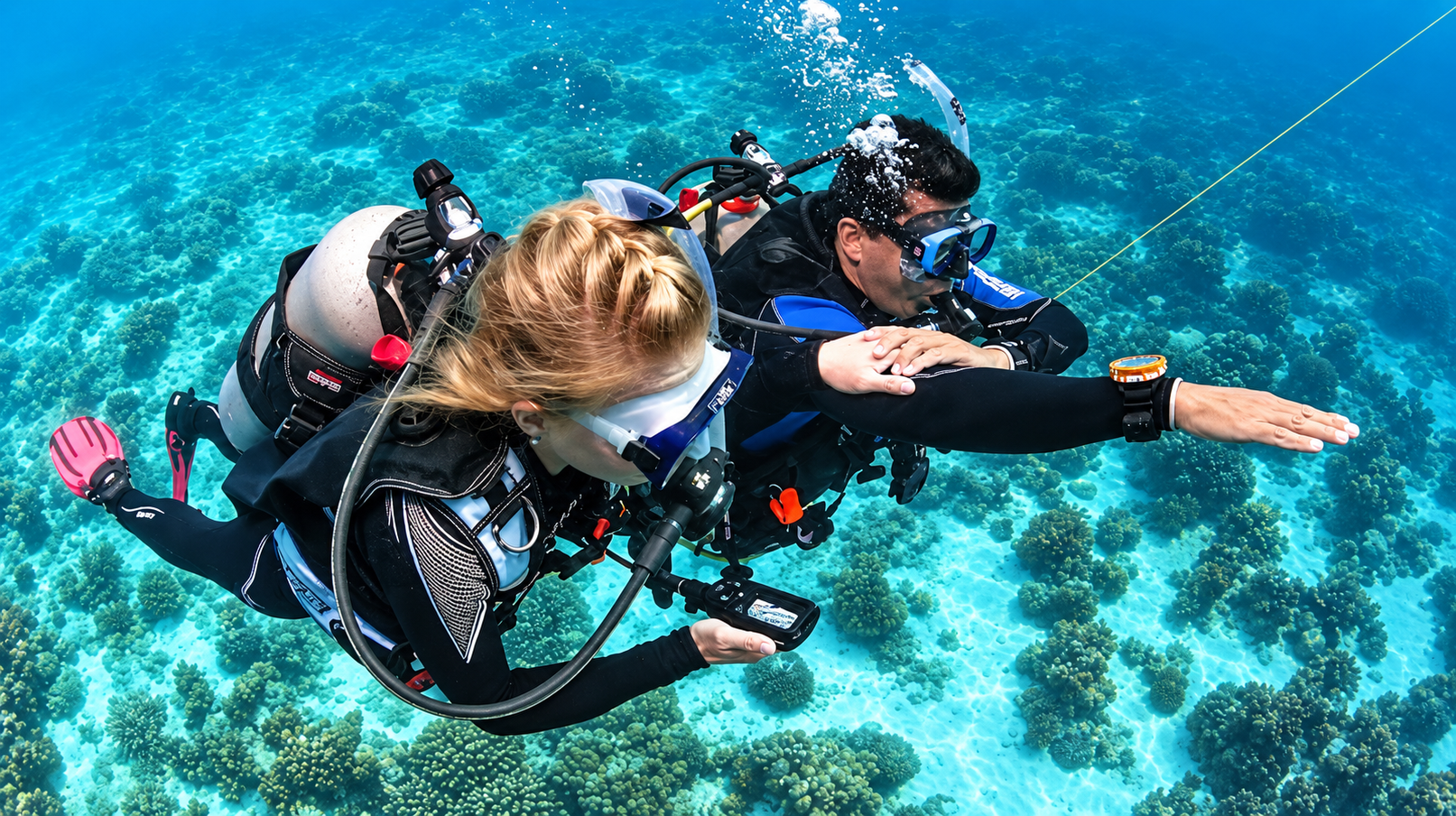
PADI Underwater Navigator is the specialty that teaches a diver to find their way underwater with a compass and with natural references, across three supervised dives. Following a needle is the easy half. Above all, a good navigator reads the reef at the same time: its slope and shape, the depth, the direction of the sunlight and the current, the ripples in the sand and the coral heads that look like nothing else on the site.
Consequently the course teaches you to use a compass accurately, hold a planned heading, estimate distance, run reciprocal courses, swim square and triangular patterns, recognize natural references, mark and relocate a position, plan a route, lead a buddy team with confidence and get back to the exit you actually intended.
The payoff is practical. You swim less, use less gas, stay on the planned route, find the features worth seeing and stop losing the group. Nevertheless it does not replace good dive planning, awareness or a guide at an unfamiliar site. What it does do is make you the person in the pair who knows where the boat is.
The two days of the PADI Underwater Navigator course cover three supervised dives, from basic compass work to full route planning. Meanwhile the knowledge sections are finished before you arrive.
We send the PADI materials as soon as you book. Consequently the theory is finished at home and both days here stay in the water.
First your instructor covers the parts of the compass, the lubber line, setting and following headings, and natural navigation. Then you swim a straight compass course, return on a reciprocal heading and estimate distance by kick cycles and by time.
Next come square and triangular patterns, combining compass with natural references, marking an underwater location and relocating a submerged object. Finally you plan a full route and lead part of the dive while your buddy follows.
Exercises depend on conditions, visibility, depth and how the group is progressing. Therefore your instructor adjusts the order rather than forcing a fixed script.
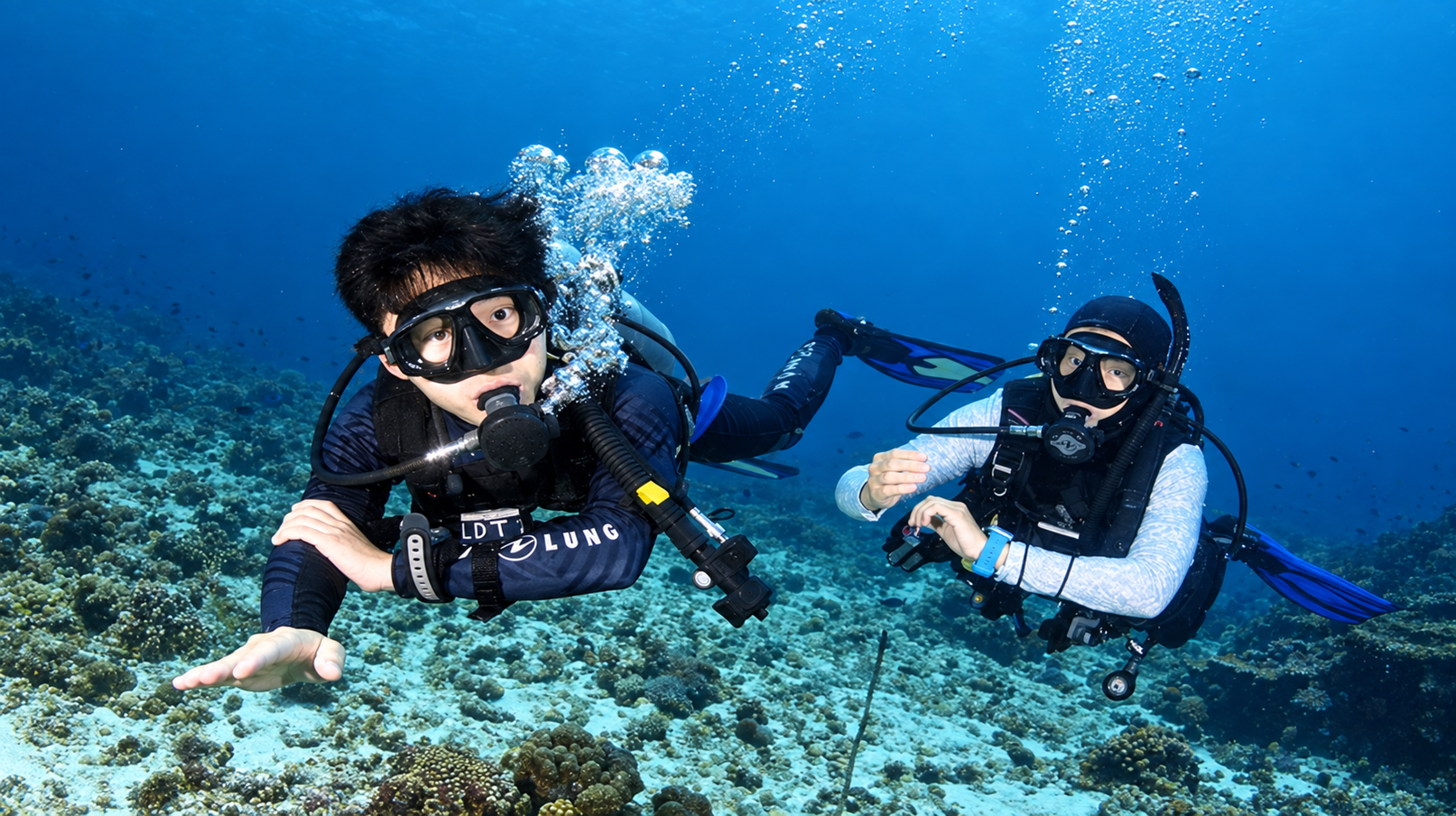
The PADI Underwater Navigator course teaches four ways of judging distance underwater, and you learn all of them rather than one. Importantly, none of them works on its own in every condition.
First you count complete fin cycles while swimming at a normal, consistent speed. As a result, once you know your own count over a known distance, it becomes surprisingly reliable.
You time yourself over a known distance under similar conditions, and then use that as your yardstick for the rest of the dive.
Gas used gives general supporting information about how far you have traveled. However, on its own it is not an accurate distance measurement and nobody should treat it as one.
In addition, reef formations, sand channels, mooring lines, depth contours and the direction of the sunlight all help confirm where you are.
Current, visibility, swimming speed and your equipment all affect every one of these estimates, which is exactly why you learn several rather than one.
The PADI Underwater Navigator course works on both at once, because neither one is reliable alone. Therefore every dive combines the instrument with the reef.
Natural features shift over time and look completely different from the other direction. Therefore you always combine them with the compass rather than trusting them alone.
The €240 price of the PADI Underwater Navigator course covers the three dives, both boat days, the equipment and the certification. In other words, this specialty is all-inclusive rather than course-only.
We confirm every additional cost in writing before you book, so nothing appears at the marina.
Above all, accurate navigation needs stable buoyancy, and this catches most people out. Consequently a diver who is constantly rising, sinking or touching the bottom loses the heading, breaks the rhythm of their kick count and misses the very references they were supposed to be reading.
With good control you hold the compass properly, keep a consistent speed, count kick cycles that mean something, stay at the planned depth and have enough attention left over to think about the route. Therefore, if depth control is currently the thing you fight, take Peak Performance Buoyancy first and this course becomes twice as effective.
PADI Underwater Navigator pays off hardest in three places: wreck diving, the Advanced Open Water course and professional training. Naturally, it helps on every ordinary reef dive too.
Indeed, wrecks are full of structures that look identical from three meters away, and visibility drops the moment somebody stirs silt. Consequently navigation helps you identify reference points, follow a planned route and relocate the ascent line.
For example, Advanced includes one required Underwater Navigation Adventure Dive. This specialty adds three dives and far more depth on patterns, distance and relocation. Moreover, an eligible Adventure Dive may count as the first specialty dive.
Certainly, navigation is a core professional skill, and Divemaster candidates are expected to have it. Indeed, learning it properly now saves considerable embarrassment later.
Hurghada gives you the terrain variety navigation training needs: coral gardens, sand channels, reef slopes, pinnacles, mooring areas, drop-offs and wreck structures, often within the same dive. As a result you practice compass work where there is nothing to look at, and natural navigation where there is plenty.
Moreover, visibility here frequently passes twenty meters and the training reefs sit in sheltered bays with almost no current, which matters when you are trying to hold a heading. Our Hurghada dive sites page shows the reefs we normally use, while the diving safety page sets out our procedures and equipment in full.
For independent guidance on dive planning and gas management, Divers Alert Network publishes clear material worth reading.
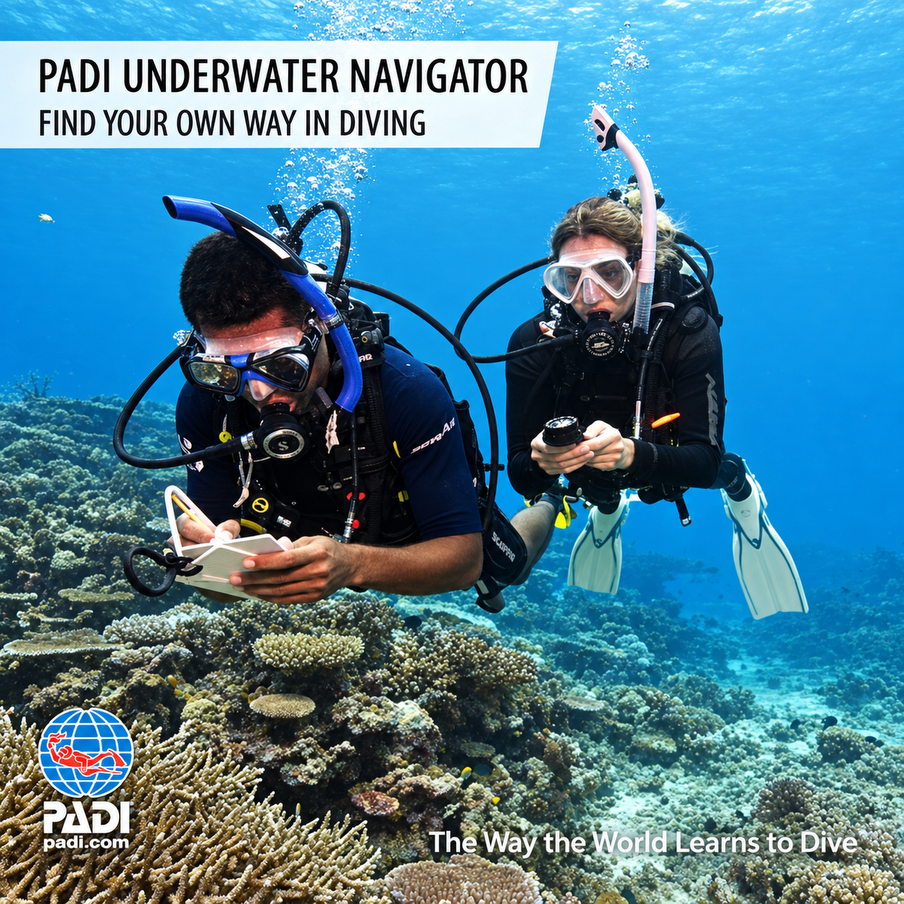
All three dives of the PADI Underwater Navigator course run from a day boat leaving the Hurghada marina, on the Egyptian Red Sea coast. Specifically, we pick sites with a mix of open sand and clear features, because a bare bottom teaches compass work while a structured reef teaches natural navigation.
Hotel transfer inside central Hurghada comes with the course. Moreover, we collect students from El Gouna, Makadi Bay, Sahl Hasheesh, Soma Bay and Safaga for a small surcharge, which we confirm in writing before you book.
Non-diving family can join the Giftun island and snorkeling trip on a similar route that day, while further practical answers sit on our diving FAQ.
The PADI Underwater Navigator course asks for an entry-level certification and a minimum age of ten. Naturally, comfortable basic buoyancy matters more here than extra logged dives.
Meanwhile junior divers keep the depth and supervision restrictions of their current certification. Therefore a ten-year-old navigates within twelve meters rather than eighteen.
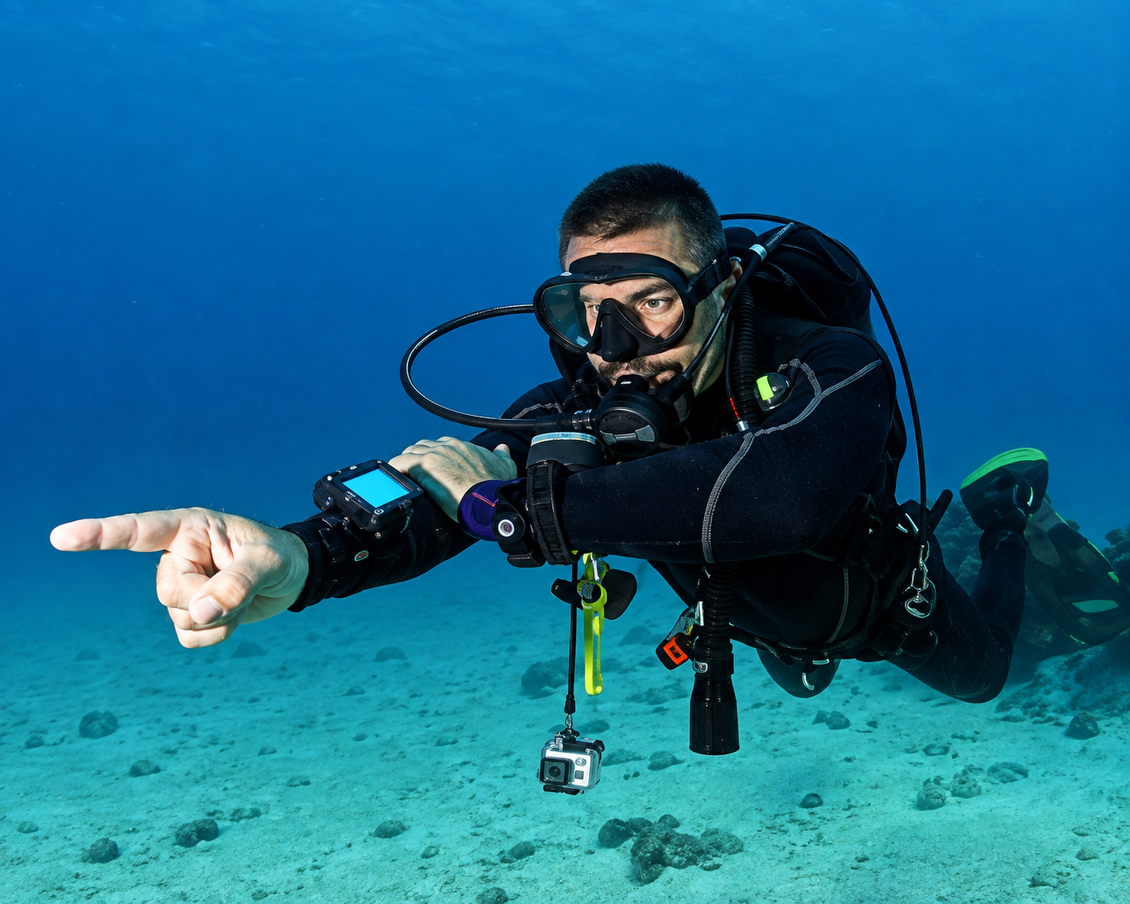
Furthermore, navigation sits neatly beside Peak Performance Buoyancy, Wreck Diver and Enriched Air Nitrox. Together they turn a certified diver into a genuinely capable one, and further along Rescue Diver is the course most divers later call the most useful they took.
Meanwhile the practice is free: every dive is a navigation dive if you decide to treat it as one. Keep the skill sharp on our daily diving trips, or on a liveaboard week where you dive new sites every day. The full ladder sits on our PADI courses page.
Why us
Above all, oxygen and full emergency equipment on board, plus a documented action plan and a briefing before every dive.
Indeed, more than two decades of diving and liveaboard operations out of Hurghada, on every Egyptian route.
Furthermore, you learn to combine the instrument with the reef rather than relying on either one alone.
Moreover, you develop the skill through real underwater exercises on our own boats, not by drawing patterns on a slate ashore.
In addition, the €240 covers training, boat diving, standard equipment, materials and certification, with extras confirmed in writing.
Naturally, we run every exercise with controlled buoyancy and respect for marine life, because a navigator kneeling on coral has missed the point.
Questions
The PADI Underwater Navigator course in Hurghada costs €240 per person. In other words, that covers three dives, boat services, standard equipment, PADI materials and certification.
Yes. Unlike some specialties, the boat days and the three navigation dives sit inside the €240 rather than beside it.
Yes. Furthermore, standard scuba equipment, cylinders, weights and a training compass all come with the course.
Yes. The learning materials and the certification processing sit inside the price, so nothing arrives afterwards as an extra.
All three dives run from a day boat leaving the Hurghada marina, on sites with a mix of open sand and clear reef features. In other words, one bottom type teaches the compass while the other teaches natural navigation.
Two days, including three navigation dives. Therefore it fits comfortably inside a normal diving week.
First come straight courses and reciprocal headings. Then square and triangular patterns follow, alongside relocation exercises.
Yes. Natural navigation using reef shape, depth, light and other reference points is a core part of the program.
Usually yes. Even so, tell us as early as you can, because we send the knowledge sections before the first day.
PADI Open Water Diver, Junior Open Water Diver or, alternatively, an accepted equivalent from another recognized agency.
Ten years. However, junior diver depth and supervision limits still apply throughout the course.
A training compass is included. However, divers who intend to keep practicing usually prefer to buy their own.
You need comfortable basic buoyancy. Where depth control interferes with the navigation exercises, we recommend buoyancy training first.
Efficient navigation means less unnecessary swimming, which usually helps. Even so, gas consumption still depends on depth, current, fitness, breathing and experience.
It improves your skills, although it does not override local regulations, site restrictions or the limits of your own experience.
It may count as the first specialty dive when completed according to current PADI standards and documented correctly.
No, the card is for life. Nevertheless, regular practice is what keeps your accuracy and your confidence.
First, send us your certification level, your number of logged dives, your preferred dates and your hotel. Subsequently, we reply within twenty-four hours with availability and the pickup time. For liveaboard diving in Egypt see also redsealiveaboard.net.
Prefer to talk? Message us on WhatsApp or write to info@redsea-diving.com.
This page was last reviewed by the Red Sea Diving instructor team in September 2026.
Premium Red Sea diving in Egypt. Liveaboard trips with experienced crews, comfortable vessels and 20+ years of experience.