

Guide to the Shaab Hamdallah dive site · Southern Safaga
Shaab Hamdallah Dive Site Coral pillars and a cone-shaped block at the southern edge of Safaga
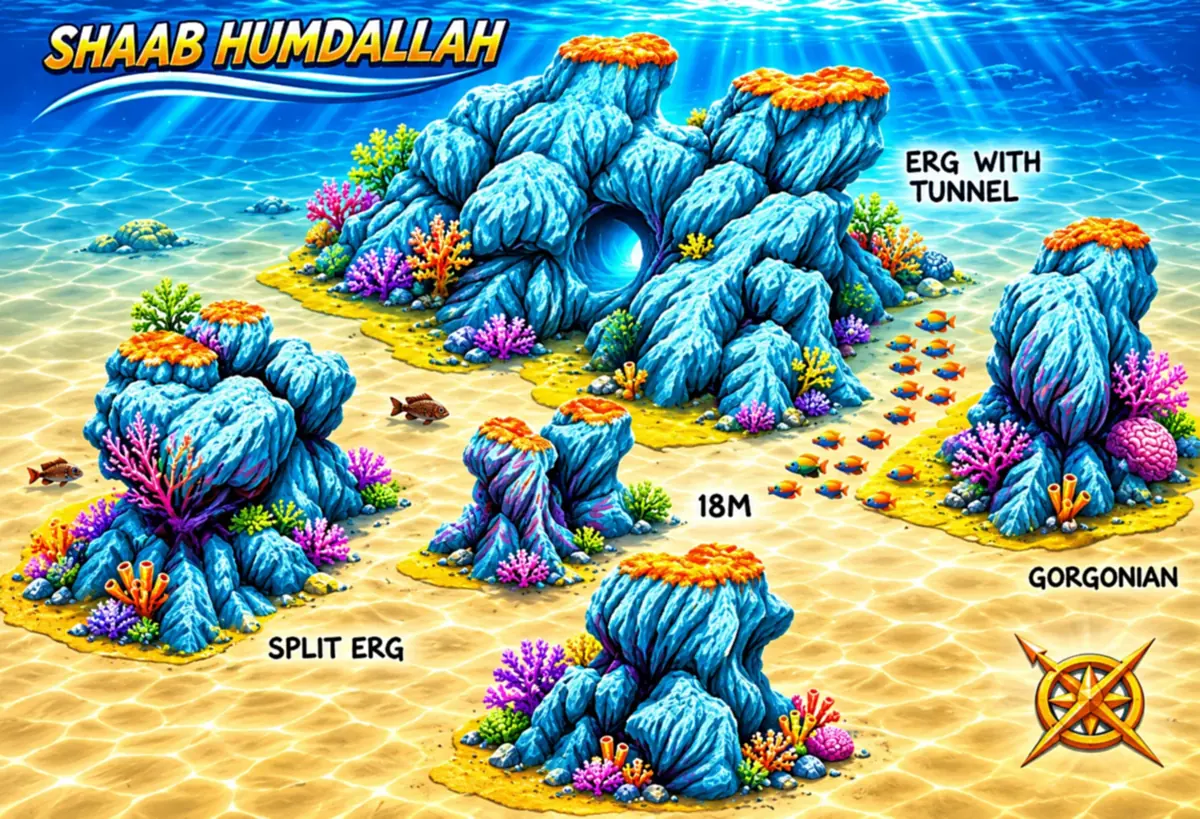
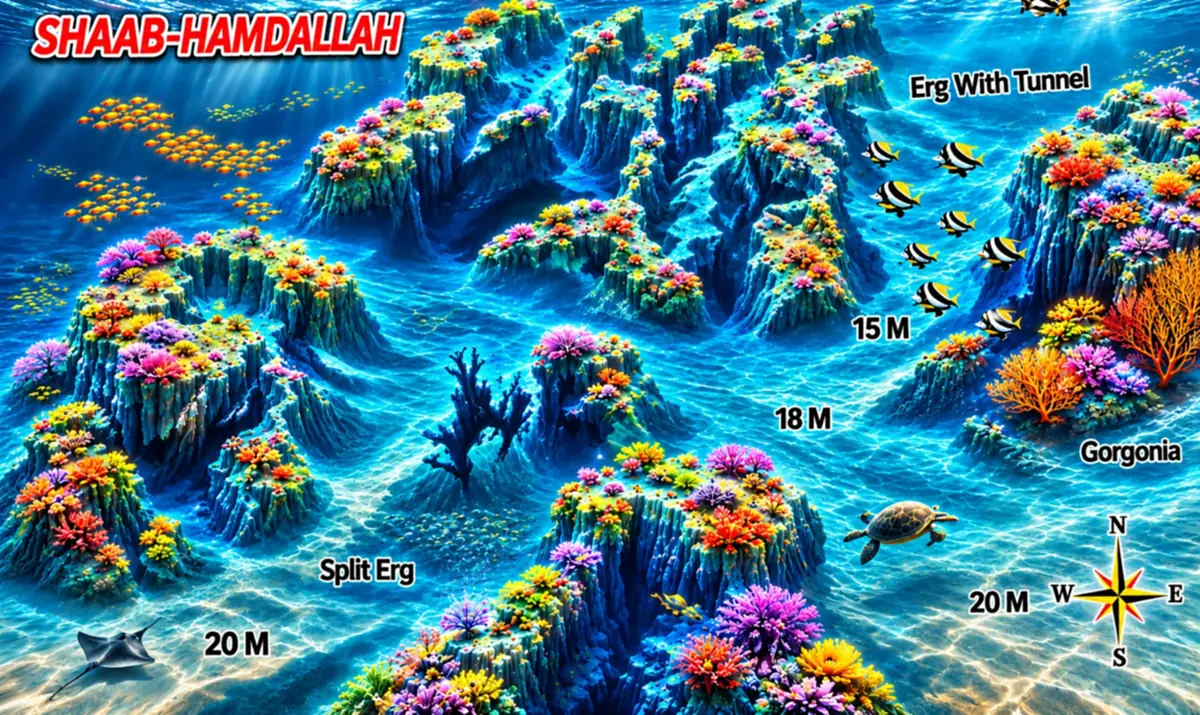
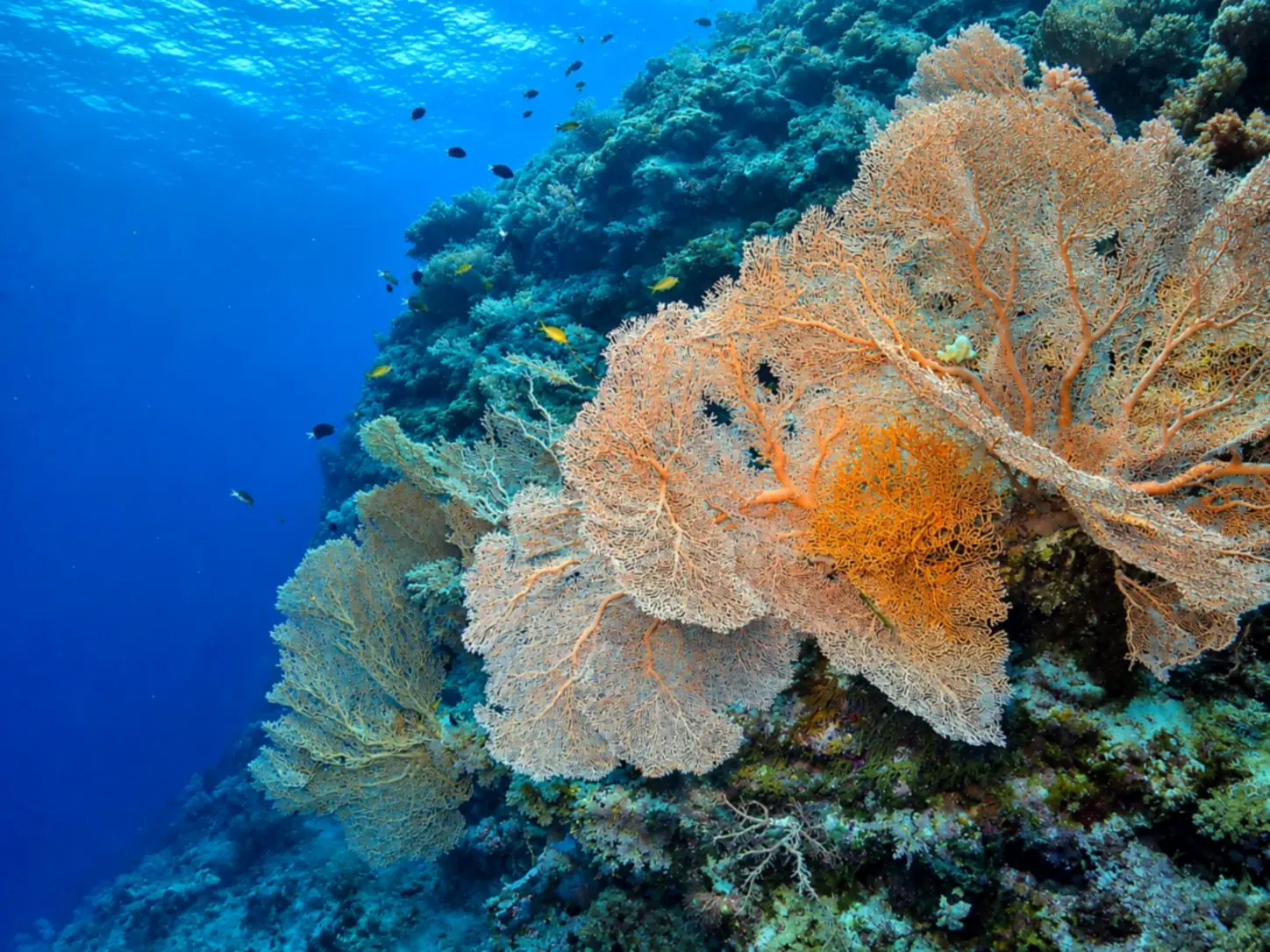
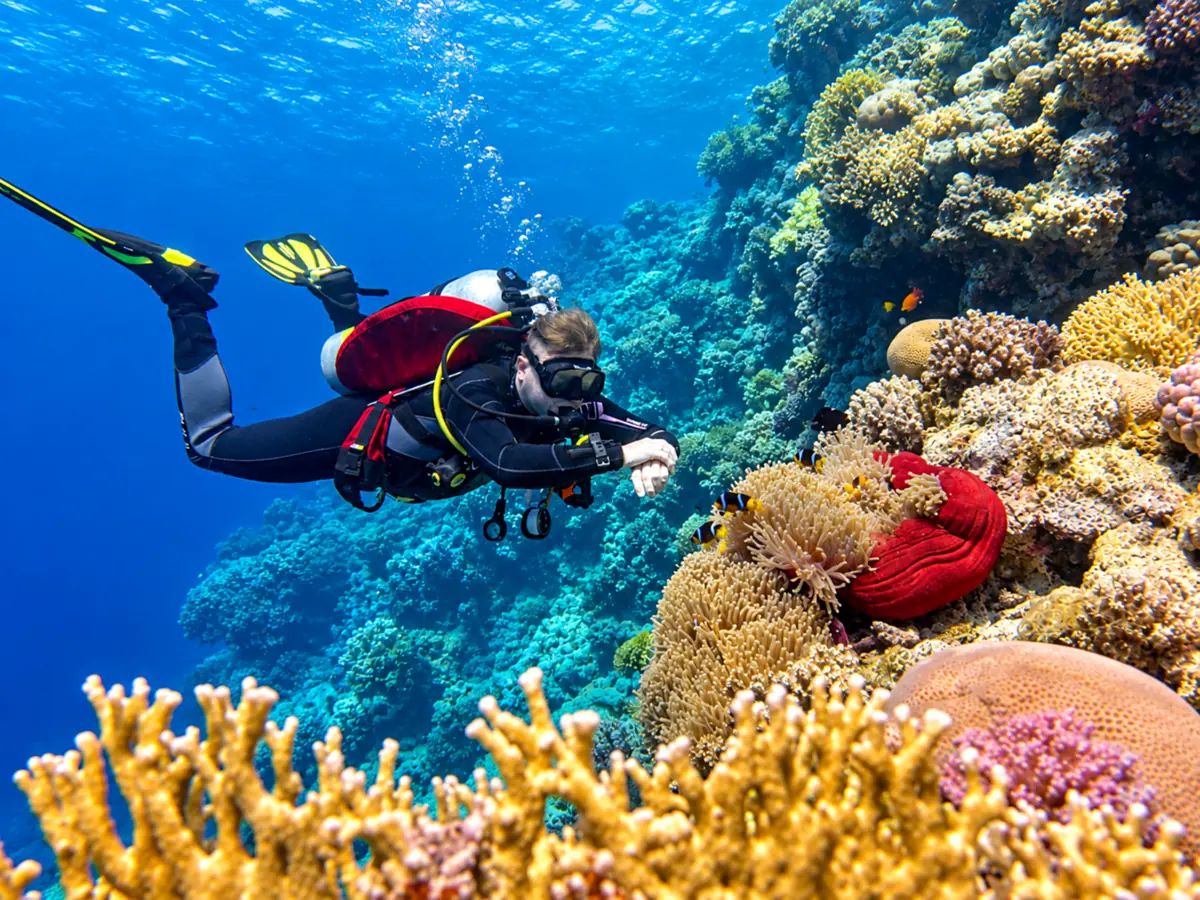
Shaab Hamdallah is the southernmost reef of Safaga and one of its most beautiful. A cone-shaped main block and a smaller block beside it reach the surface, joined by several more blocks that start at about 16–17 m. Because the pillars stand free in open water, boats come only in calm weather, so the reef stays pristine, and with a current it is a favourite of experienced divers.
Shaab Hamdallah in short
In short, Shaab Hamdallah is the southernmost reef of Safaga, at about 26.63954, 34.06181 (PADI), some 80–90 minutes by boat from Safaga. Above all, a cone-shaped main block and a smaller block reach the surface, and several more blocks start at about 16–17 m. In addition, the pillars are covered in soft corals and full of fish. However, there is no sheltering reef, so boats visit only in calm weather, and with a current the site is best for experienced divers.
What is Shaab Hamdallah like?
Firstly, “shaab” means reef in Arabic. Shaab Hamdallah, also written Shaab Hamdalla, lies at the southern edge of the Safaga dive area.
Meanwhile, its main block rises like a cone to the surface, with a smaller block beside it. Deeper down, a group of further blocks starts at about 16–17 m.
As a result of its open position, the site is dived less often than most. That is why its coral stays pristine and beautiful.
The reef at a glance
The cone
Firstly, a cone-shaped pillar.
The small block
Also, a smaller sister block.
The deep blocks
Finally, a group of deeper blocks.
What is under the water here?
Generally, the reef has three parts. Firstly, the cone-shaped main block. Then, the smaller block beside it. Finally, the deeper blocks that start at about 16–17 m.
The cone
The centre. Here, for example, the main block rises from the deep to the surface, covered in soft and hard corals.
The small block
The second pillar. In contrast, the smaller block gives shelter from the current.
The deep blocks
The deeper part. Meanwhile, the deeper blocks draw the fish that the current brings.
Where is Shaab Hamdallah?
Specifically, the reef is the southernmost of the Safaga area, at about 26.63954, 34.06181. It takes about 80–90 minutes by boat from Safaga.
In addition, more sites lie close by. For example, Shaab Sheer lies to the north, while the Salem Express wreck and Abu Kifan are not far away. For the whole area, see the Safaga dive sites guide.
How do you dive Shaab Hamdallah?
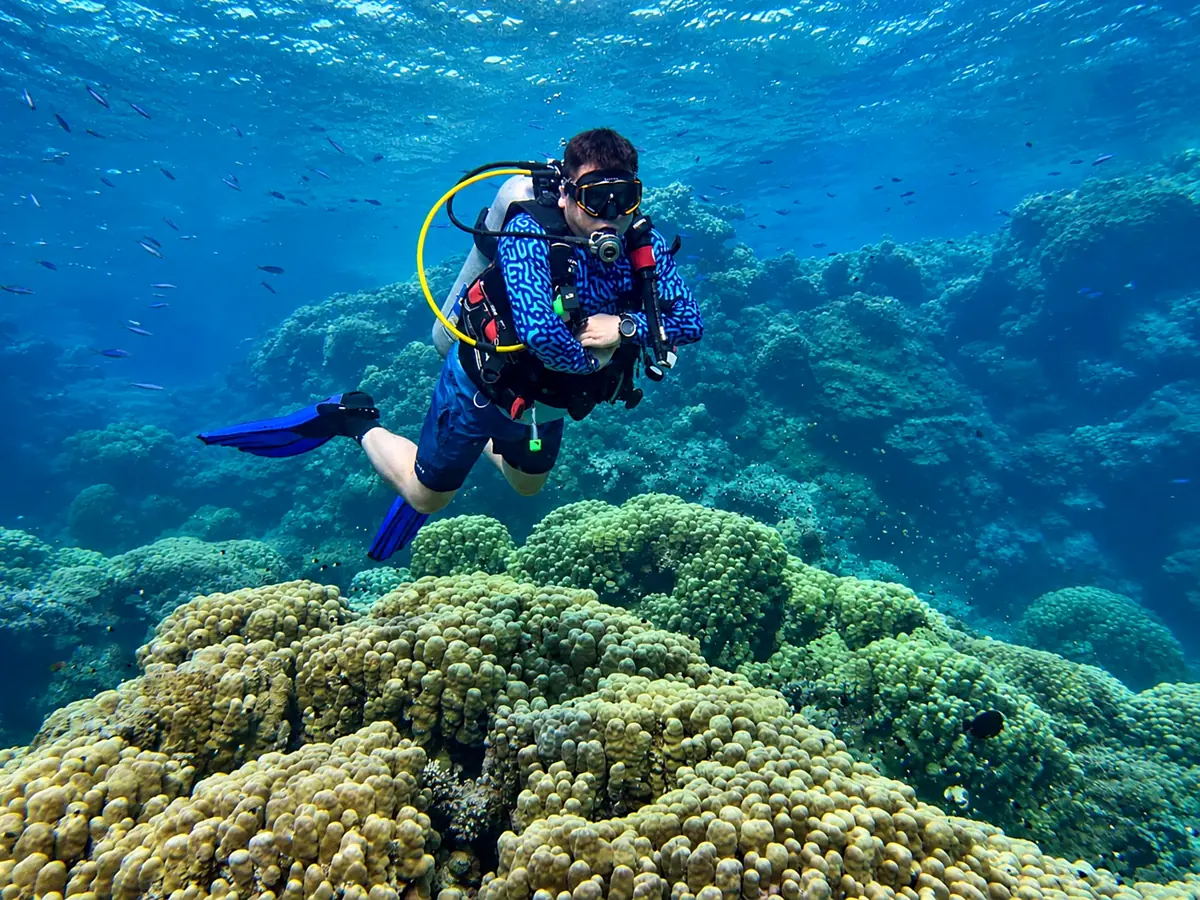
Usually, the dive circles the cone-shaped main block and visits the deeper blocks. With a current running, divers use the blocks for shelter.
Route A: around the cone
The entry
The start. Firstly, you enter from the boat on a calm day and descend beside the main block.
The cone
The main dive. Then, you circle the cone and the smaller block beside it.
The return
The finish. Finally, you make your safety stop on the top of the cone.
Route B: the deep blocks
The plan
The start. Instead, experienced divers drop to the blocks that start at about 16–17 m.
The blocks
The main dive. Also, you move from block to block and shelter from the current behind them.
The climb
The finish. Afterward, you return to the cone and rise slowly to the shallows.
What marine life lives on the reef?
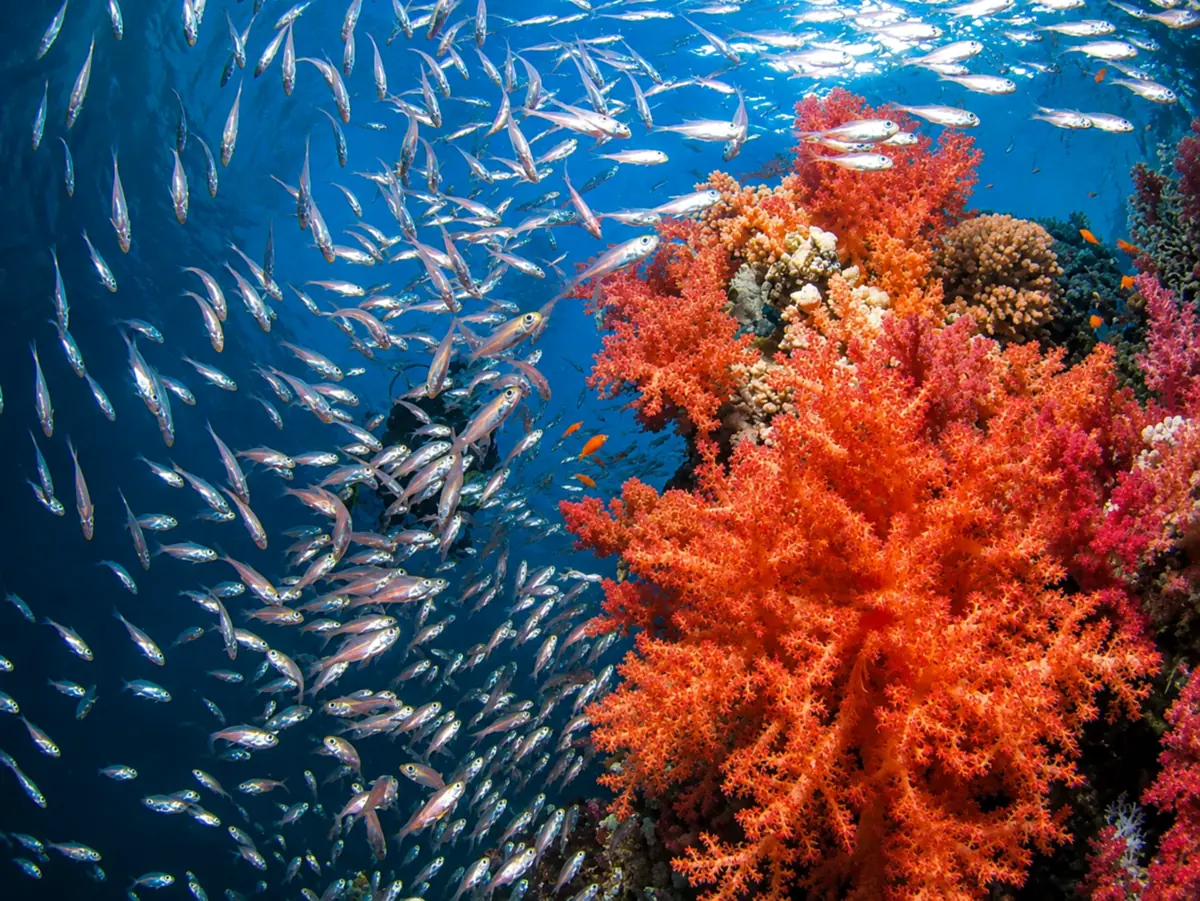
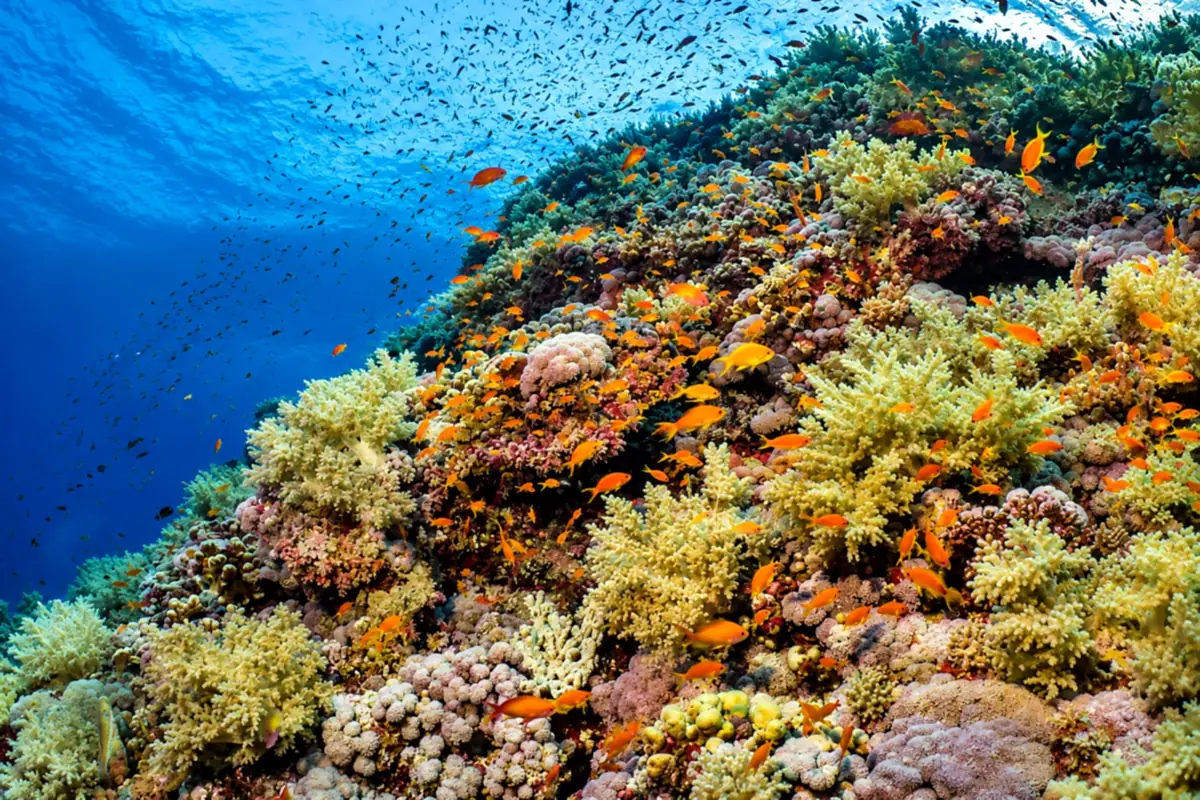
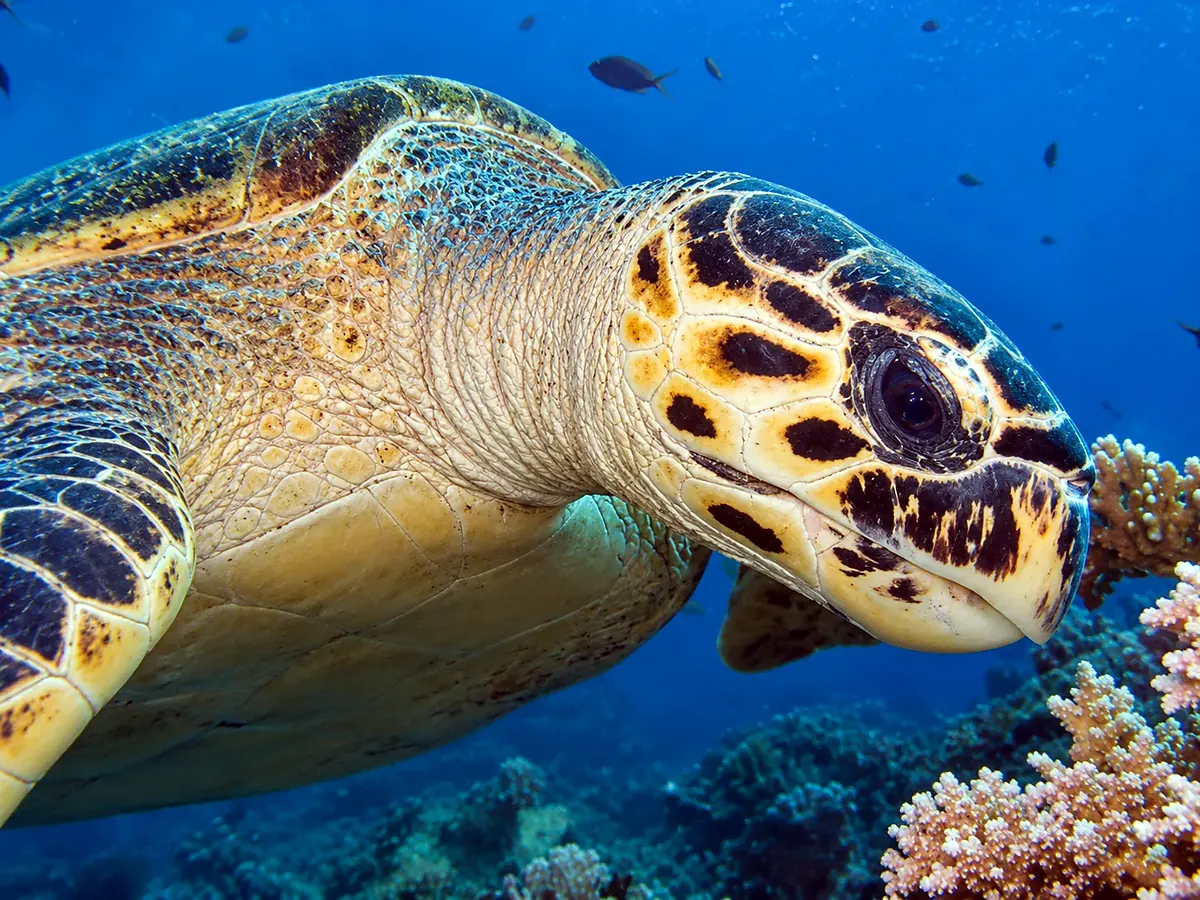
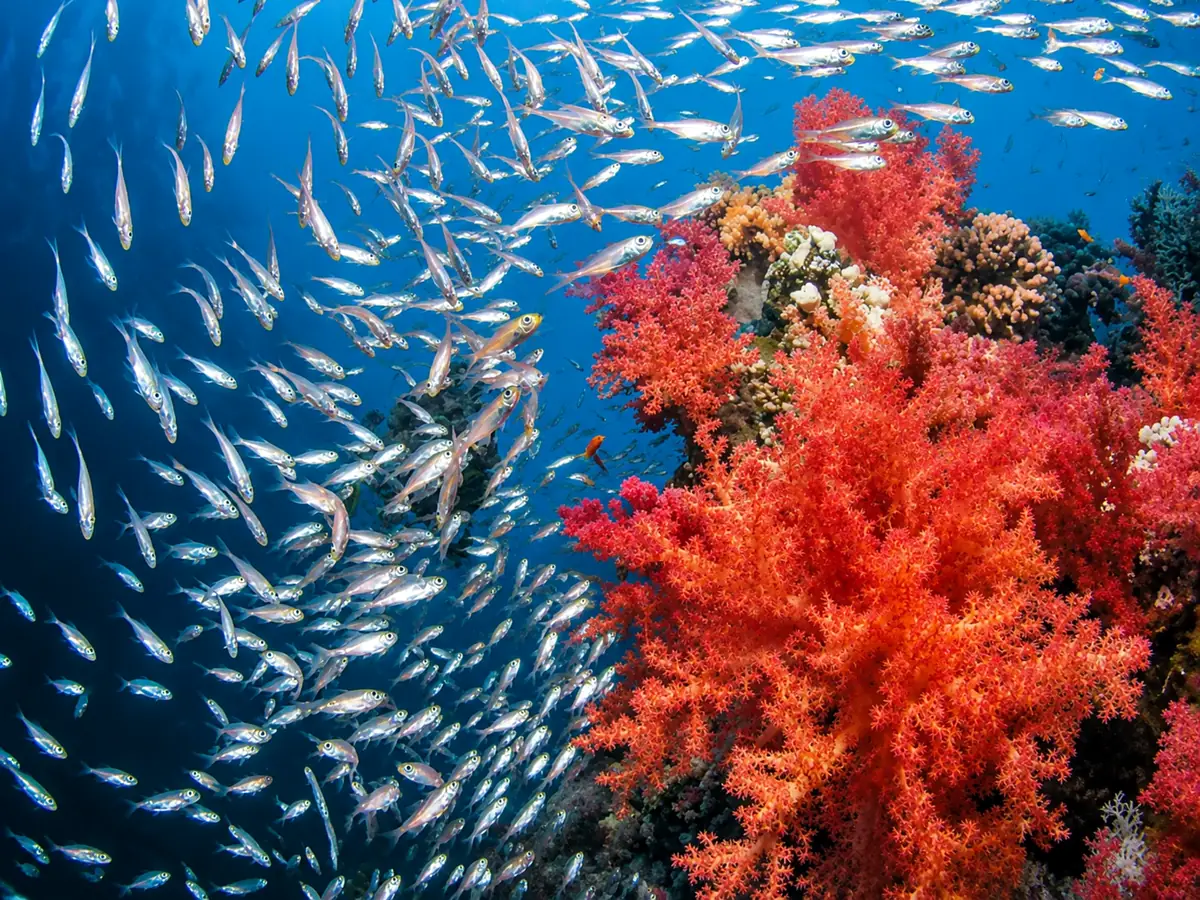
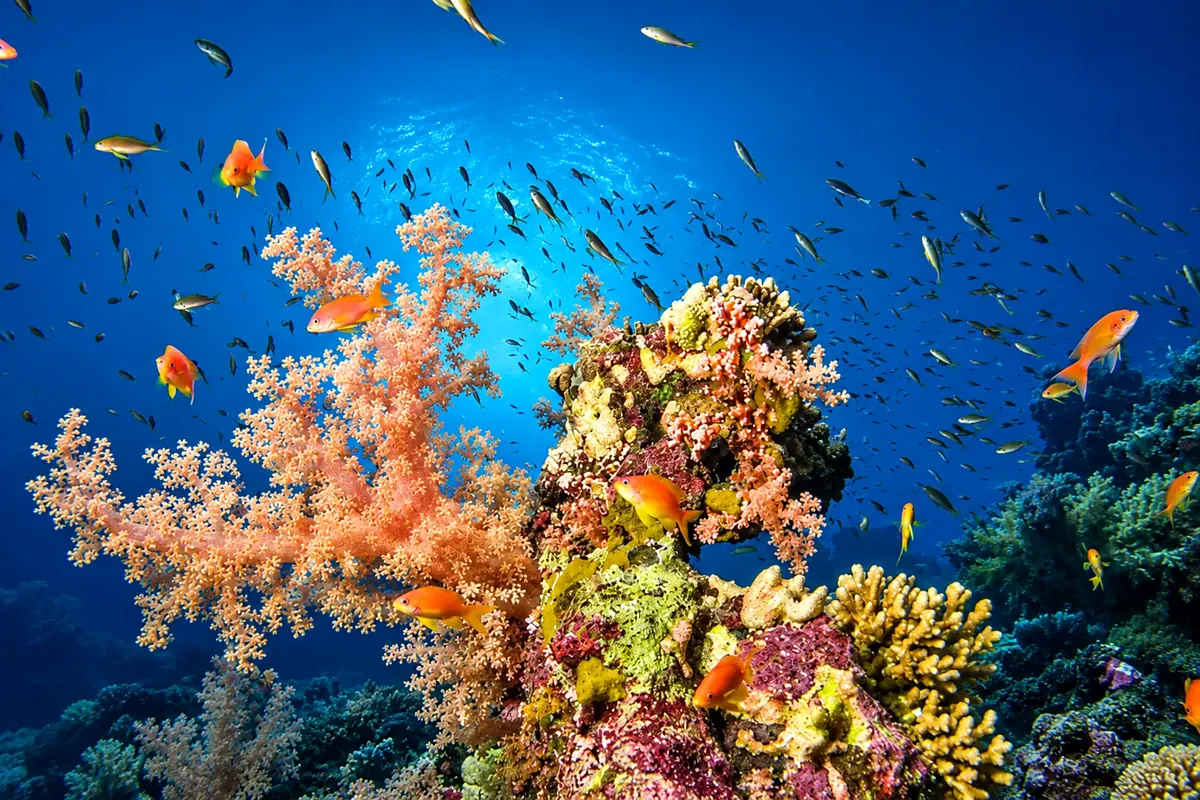
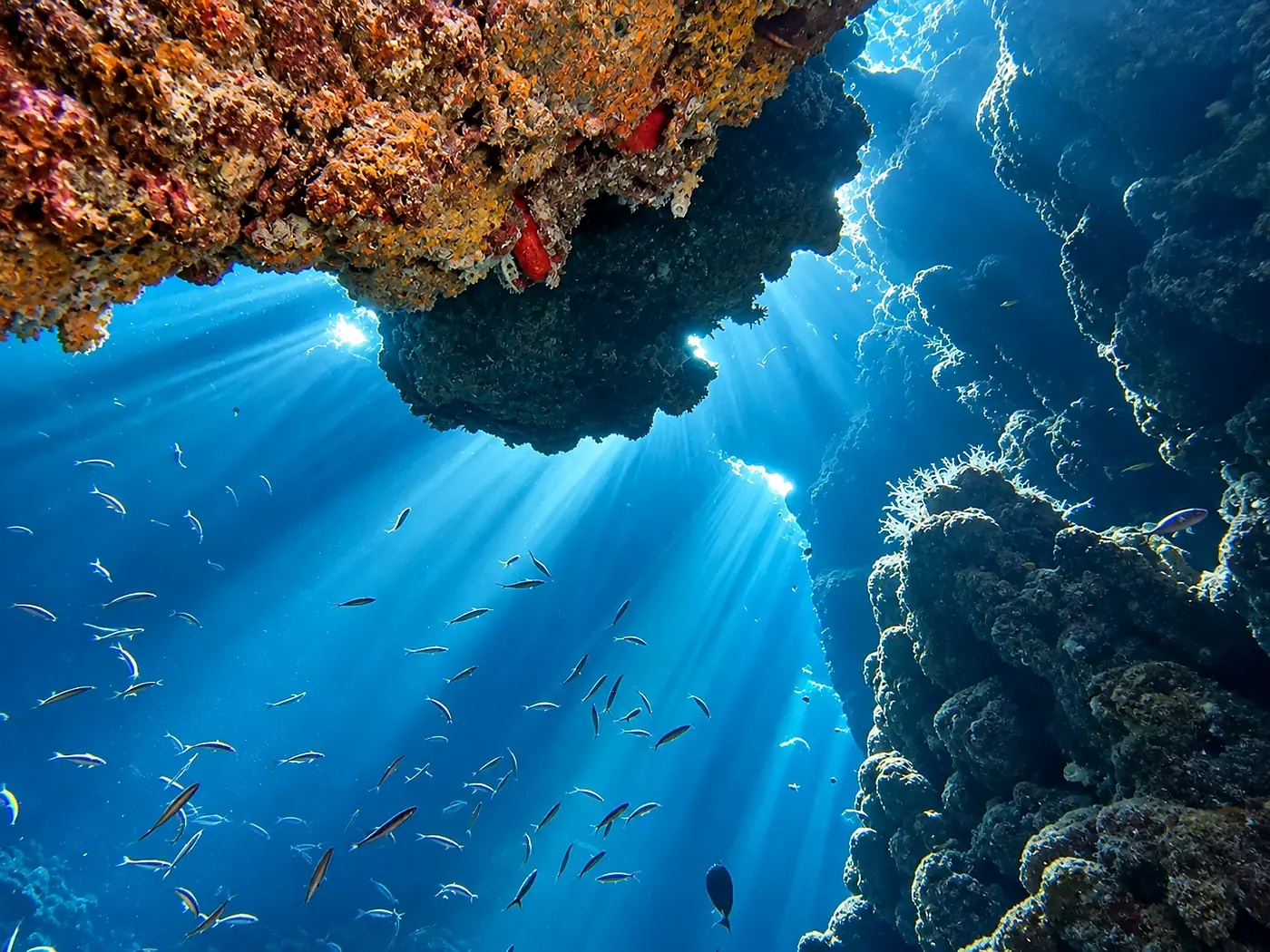
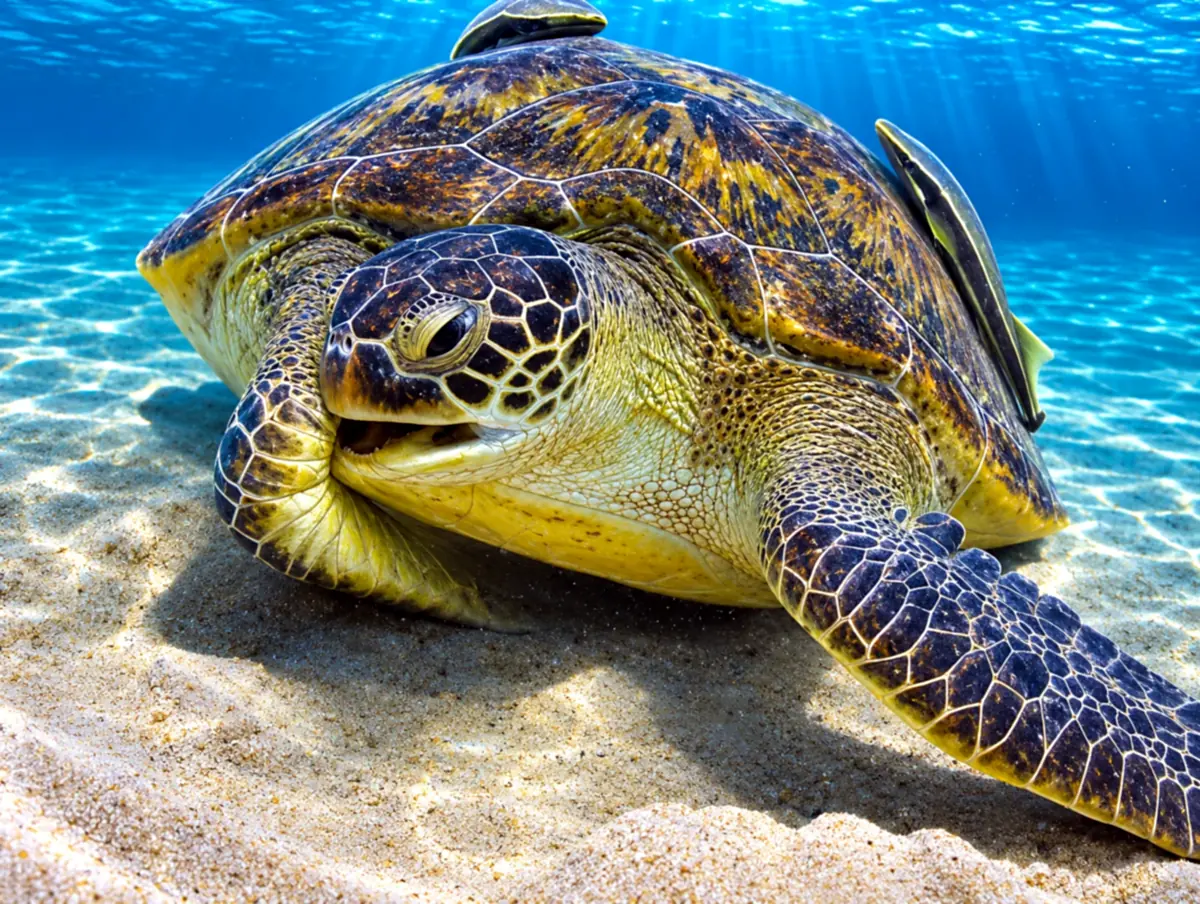
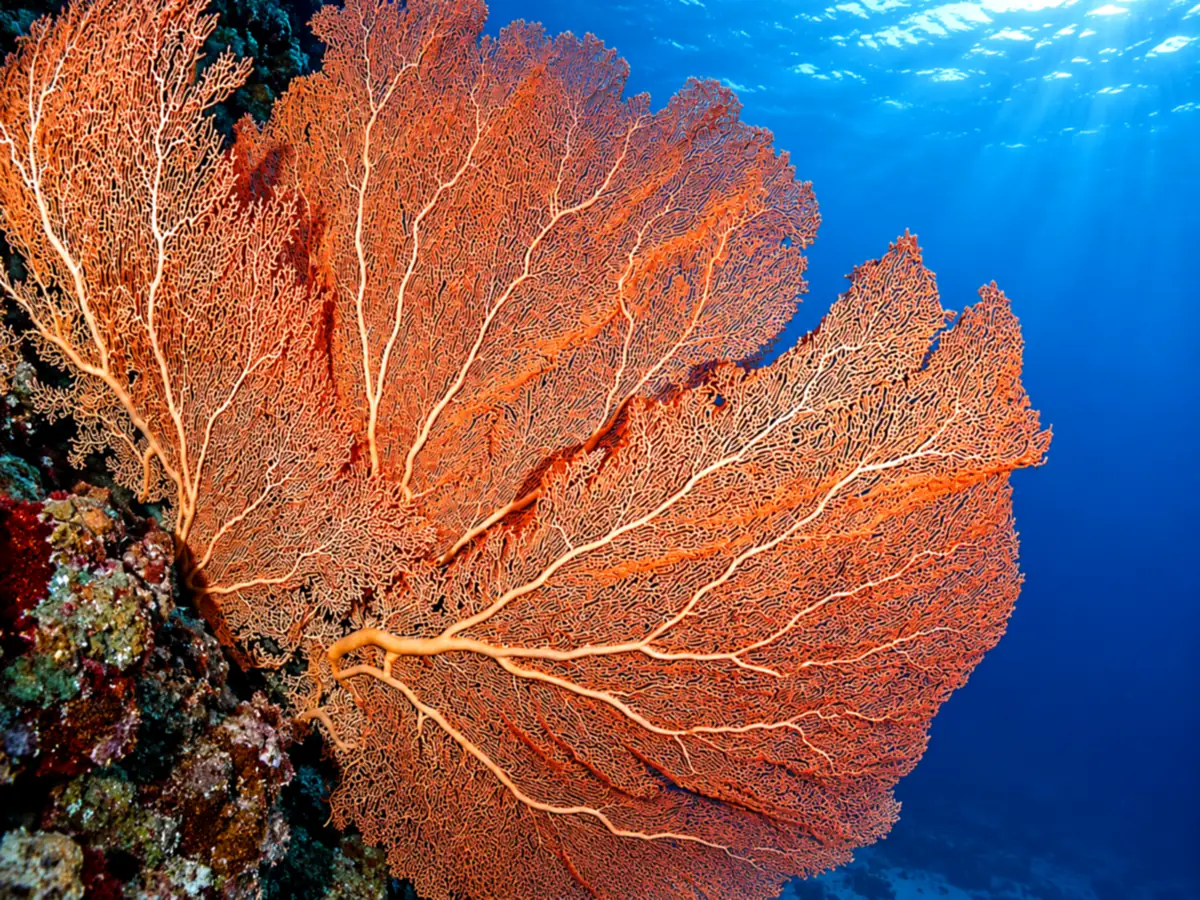
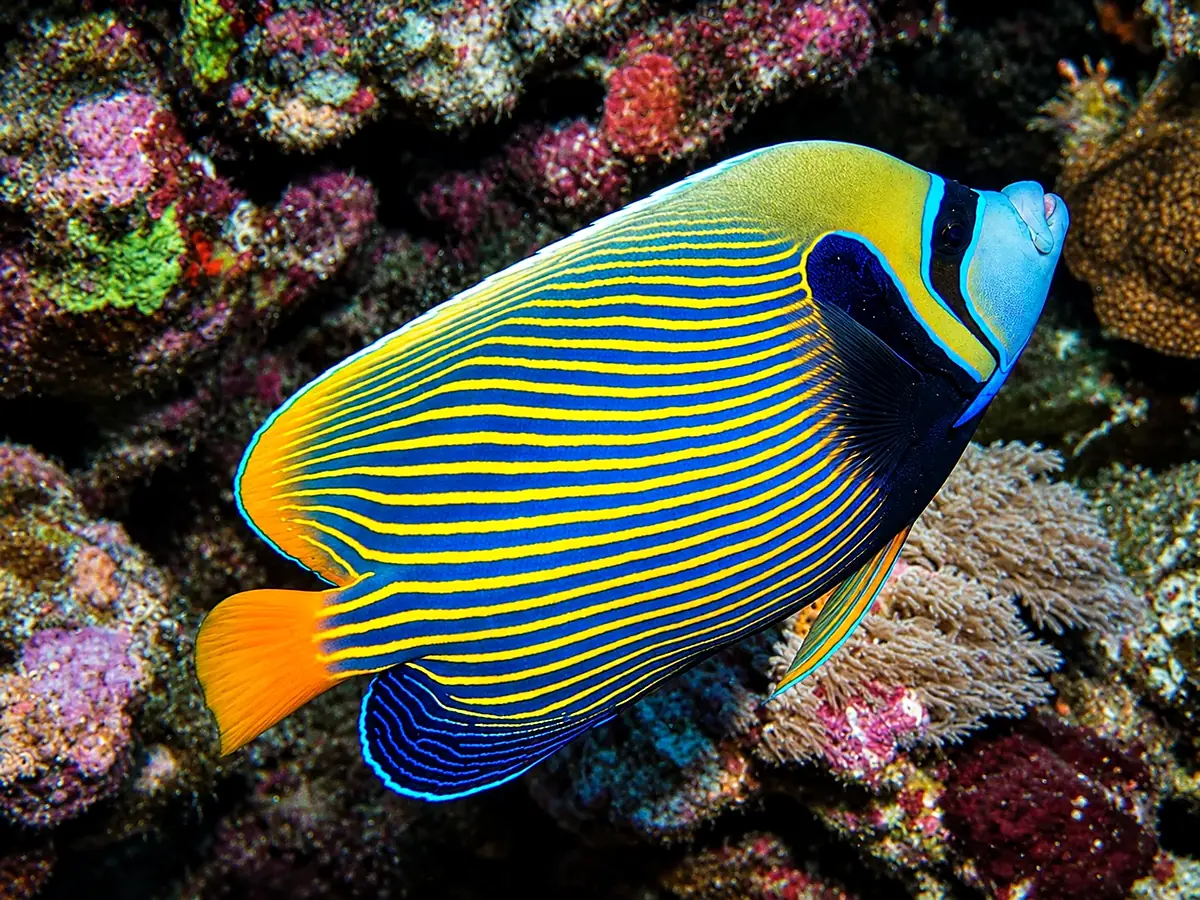
Overall, the current brings rich fish life to the pillars. Soft and hard corals cover the blocks, while anthias, glassfish, angelfish and reef fish swirl around them, and turtles visit, although no sighting is ever certain.
On the pillars
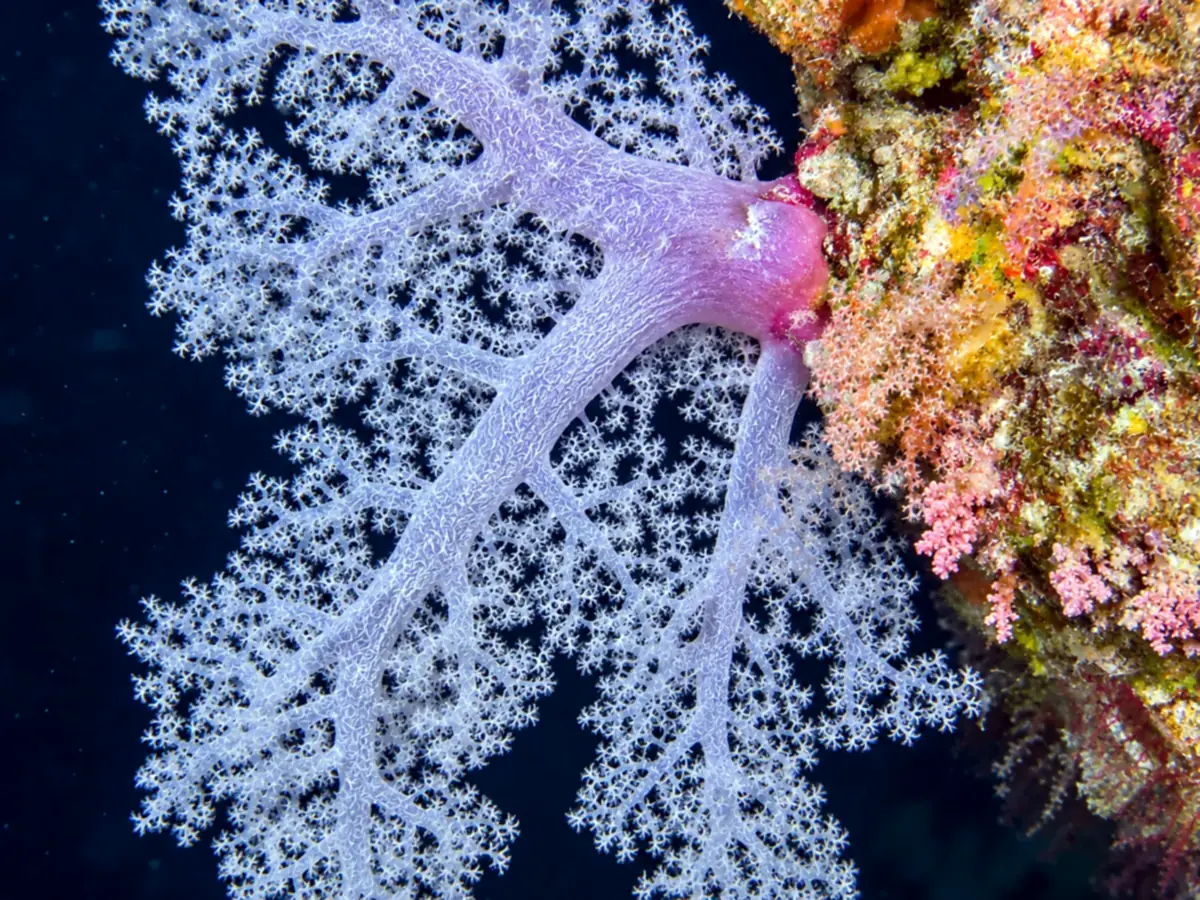
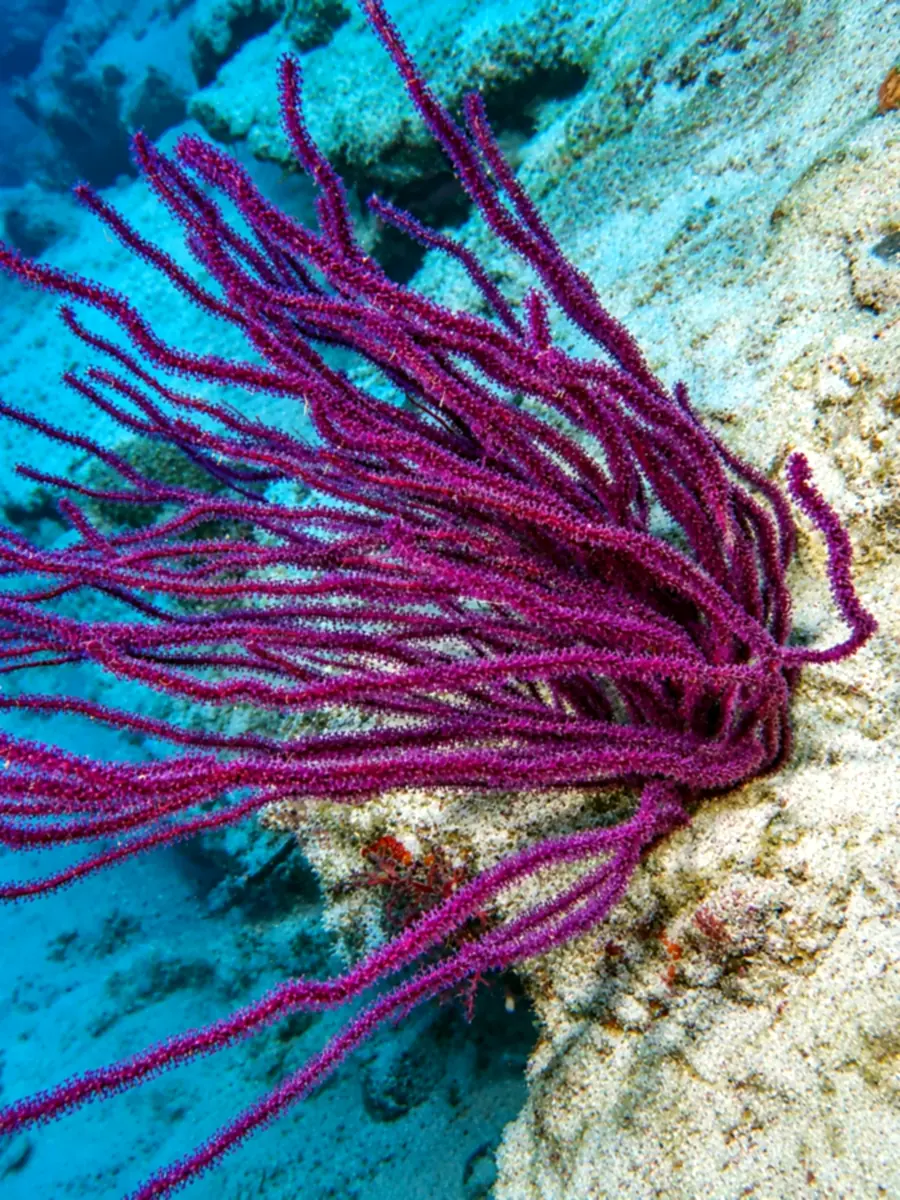
Generally, soft corals and gorgonians cover the free-standing pillars.
Around the blocks
Likewise, clouds of anthias and glassfish swirl around the blocks.
Visitors
Meanwhile, turtles and the fish brought by the current visit the reef.
Is Shaab Hamdallah suitable for beginners?
Only on calm days without current. In that case, Open Water divers can circle the cone with a guide. However, with a current the site is a favourite of experienced divers.
For those, the Advanced Open Water course helps, while the Digital Underwater Photography course suits the colourful pillars.
Before you dive here
Firstly, follow the guide’s plan for the current. Secondly, watch your depth around the deeper blocks. Also, keep off the soft corals.
Above all, follow our diving safety standards and the rules of HEPCA. We strongly recommend dive insurance such as DAN Europe.

How do you get there?
In practice, divers reach the reef by boat in about 80–90 minutes from Safaga. Because there is no sheltering reef to moor behind, boats come only in calm weather.
Generally, you can combine it with the Salem Express wreck on the same day. Consequently, it fits well into a trip to the southern Safaga dive sites.
Plan your dive trip
- Diving in Hurghada — daily diving from Hurghada.
- PADI courses — from first dives to professional levels.
- What divers need on board — the packing checklist for a Red Sea safari.
- redsealiveaboard.net — Red Sea safari schedules and availability.
- Our eight liveaboards: Sea Fox, Simba, Sea Treasure, Star Jet, Bismarck, C Echo II, C U and Ramadan 3.
Photo gallery from the pillars
Other routes from Red Sea Diving
Generally, for a first liveaboard, the North Red Sea liveaboard keeps to the classic wrecks. On the other hand, the BDE liveaboard heads south to the Brothers, while the Deep South St. John’s liveaboard goes further still. Meanwhile, the Red Sea liveaboard guide compares all eight routes.
Shaab Hamdallah: frequently asked questions
Where is Shaab Hamdallah?
In fact, it is the southernmost reef of the Safaga dive area, about 80–90 minutes by boat from Safaga.
Is Shaab Hamdallah for experienced divers?
Yes. When there is a current, it is a favourite site for experienced divers.
Why is Shaab Hamdallah rarely dived?
Because there is no sheltering reef, boats come only in calm weather, so the coral stays pristine.
What can you see at Shaab Hamdallah?
Above all, a cone-shaped block, deeper coral blocks covered in soft corals and fish life brought by the current.
Safaga · Southern reef · Coral pillars
Dive Shaab Hamdallah with us
Simply tell us your dates, the number of divers, your certification level and your number of logged dives. Afterward, our team checks which departure fits your group before you commit to anything.


