The course
2 days · 4 practical sessions · no exam

PADI Sidemount Diver Course in Hurghada · Two days · Ages 15 and up
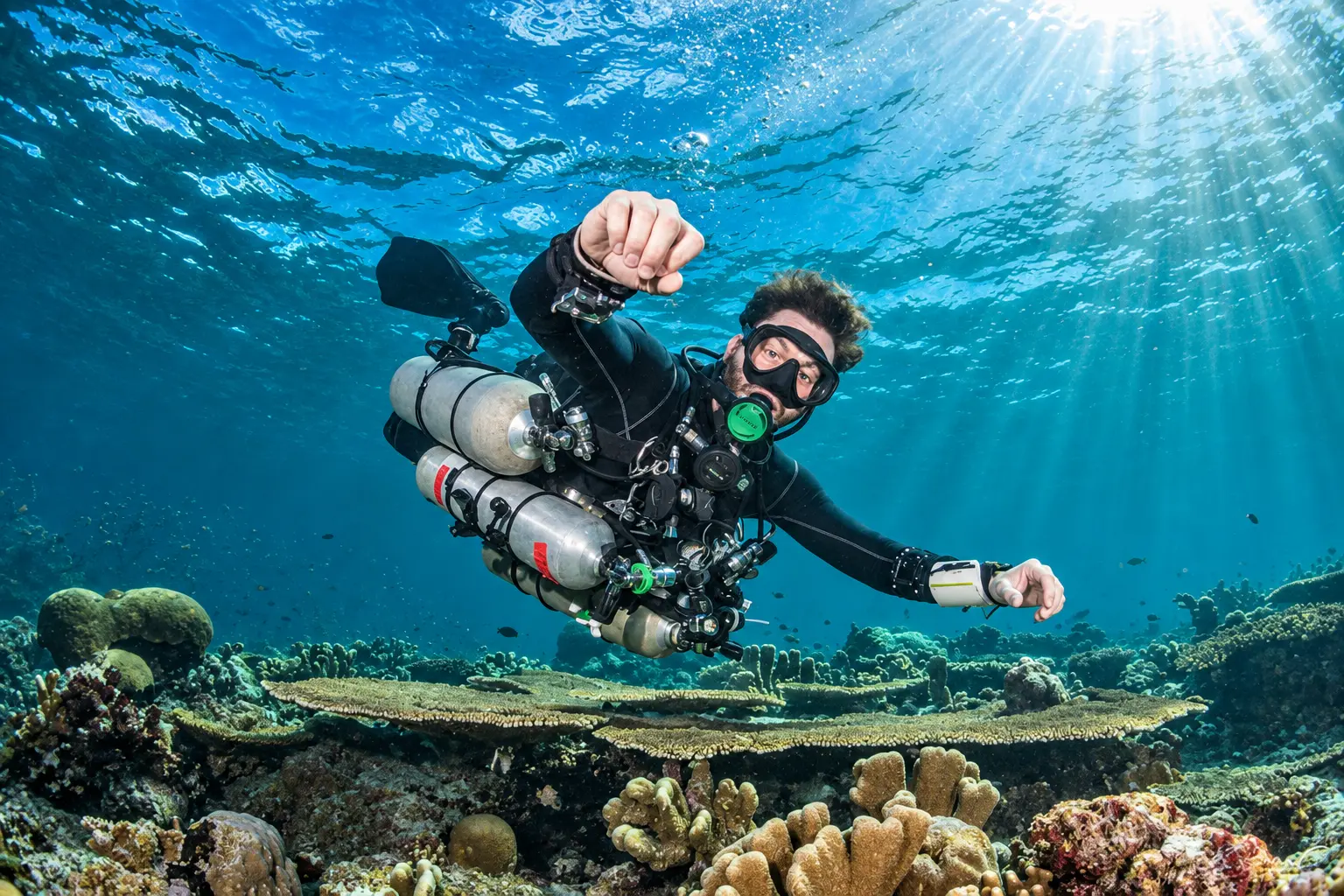
The PADI Sidemount Diver course in Hurghada puts your cylinders along your sides instead of on your back. Consequently you get better balance, flatter trim, valves you can actually reach and two independent gas supplies. Two days, four practical sessions, and all the specialist equipment included.
2 days · 4 practical sessions · no exam
€400 per person · specialist equipment included
Open Water Divers · ages 15 and up
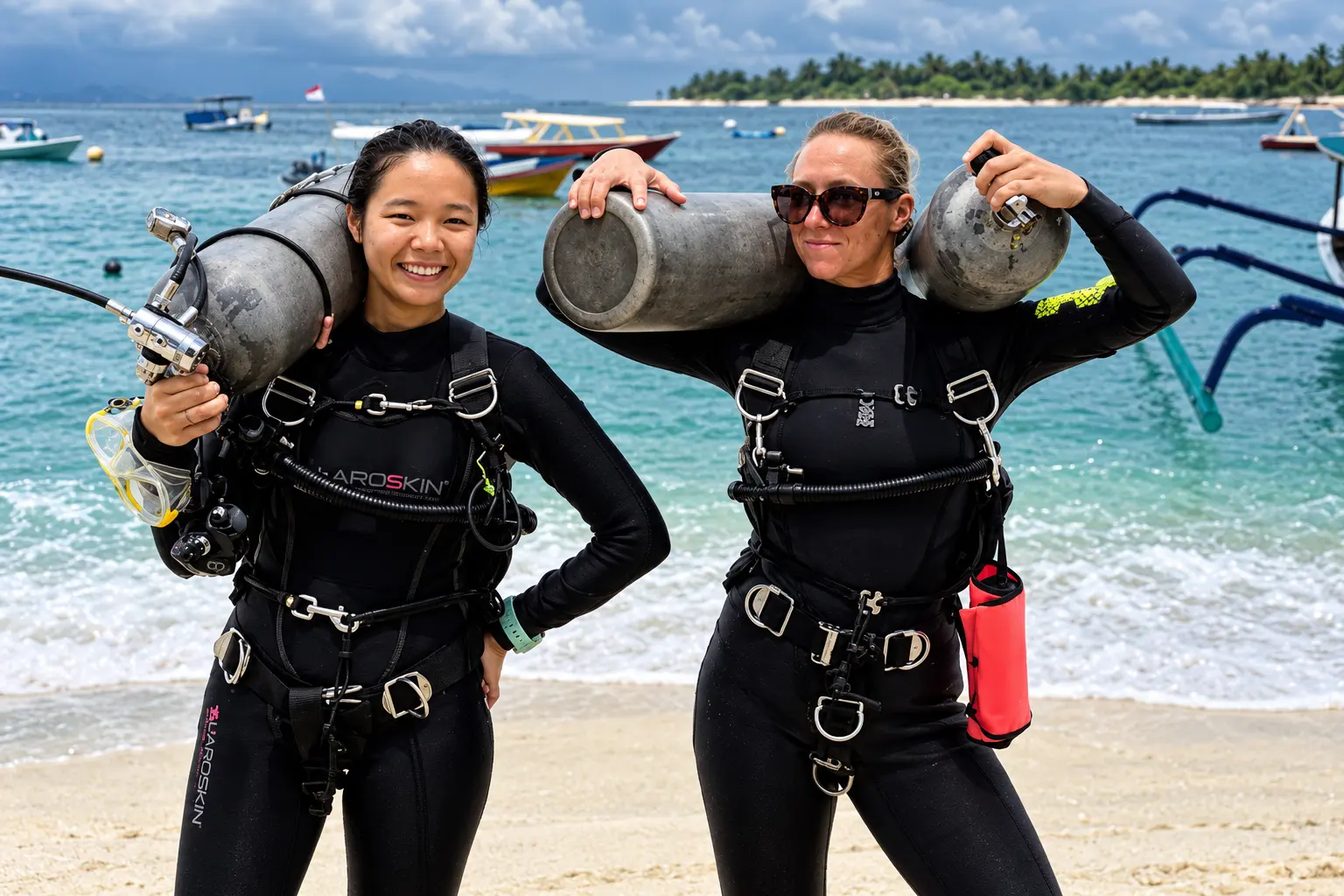
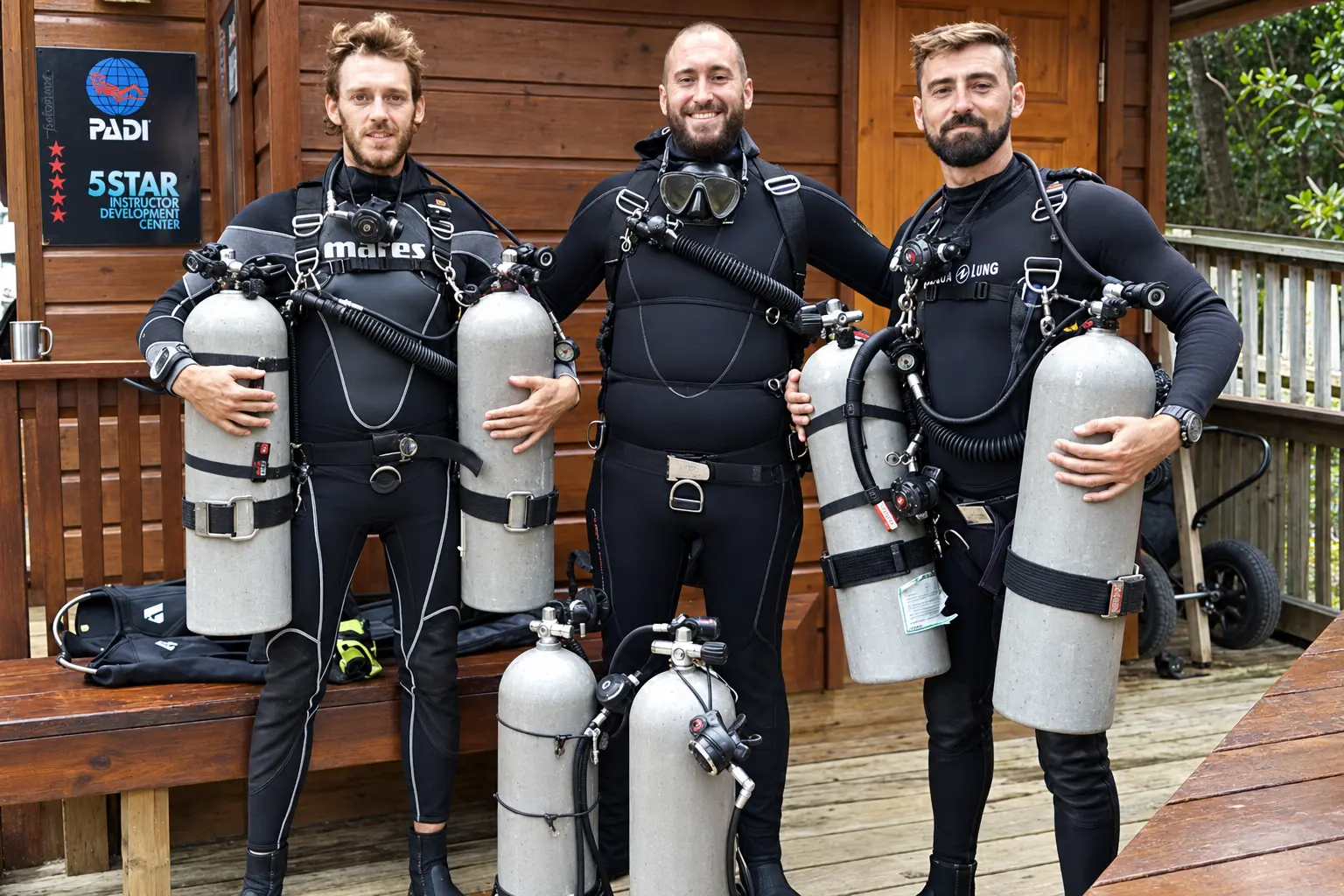
The PADI Sidemount Diver course in Hurghada costs €400 and normally takes two days. Specifically, it includes one confined or shallow water session plus three open water training dives, a sidemount BCD and harness, two regulators, the required cylinders, weights and hardware, PADI materials and certification, boat or training site services, lunch and drinks on boat days, marine park fees and hotel transfer within central Hurghada. You need to be at least fifteen and hold Open Water Diver or an accepted equivalent.
This is the recreational course rather than the technical one. Furthermore, it follows the standards published by PADI. Red Sea Diving is a PADI dive operator based in Hurghada, Egypt, and has run diving and liveaboard trips on the Red Sea since 2000.
| Course | PADI Sidemount Diver, a recreational specialty course |
|---|---|
| Price | €400 per person, with the specialist sidemount equipment included |
| Duration | 2 days |
| Sessions | 1 confined or shallow water session plus 3 open water training dives |
| Configuration | One or two cylinders clipped along the body instead of one on the back |
| Minimum age | 15 years |
| Prerequisite | PADI Open Water Diver or an accepted equivalent, comfortable basic buoyancy and a signed PADI medical form |
| Not covered | Planned decompression diving, depths beyond recreational limits, cave diving, technical wreck penetration, technical breathing gases and restricted overhead environments |
| Location | Confined or shallow water plus boat and approved training sites in Hurghada, Egypt |
| Availability | Year-round, on request, subject to equipment, boat and instructor availability |
| Included | A PADI Sidemount Instructor, sidemount BCD and harness, two regulators, the required cylinders, weights and attachment hardware, PADI materials and certification, boat or training site services, lunch and drinks on scheduled boat days, marine park fees, hotel transfer within central Hurghada |
| Not included | Nitrox cylinders, private instructor, extra training dives, dive computer rental, transfers from El Gouna, Makadi Bay, Sahl Hasheesh, Soma Bay or Safaga, accommodation and flights, buying your own sidemount equipment |
| Operator | Red Sea Diving, a PADI dive operator based in Hurghada, Egypt, since 2000 |
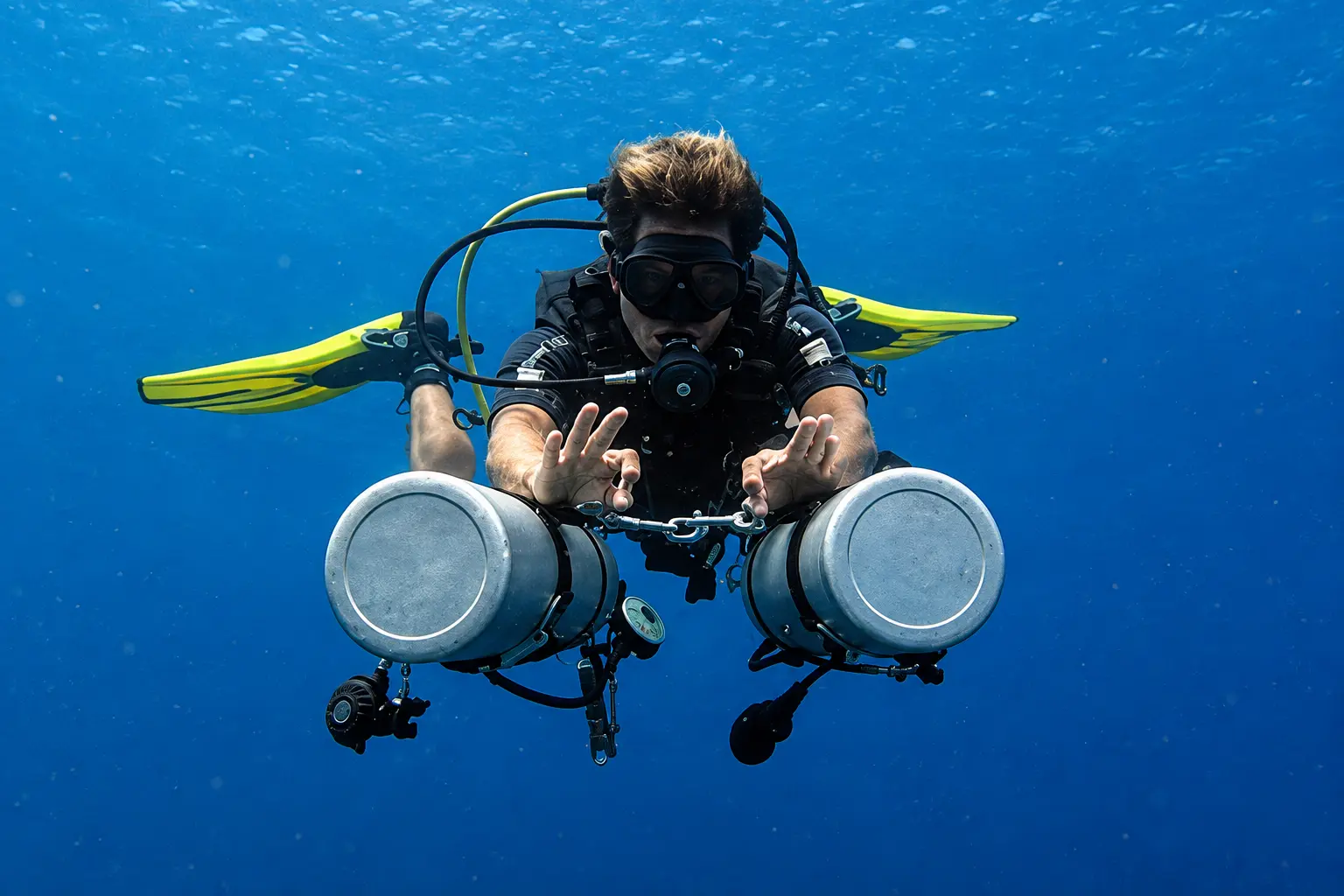
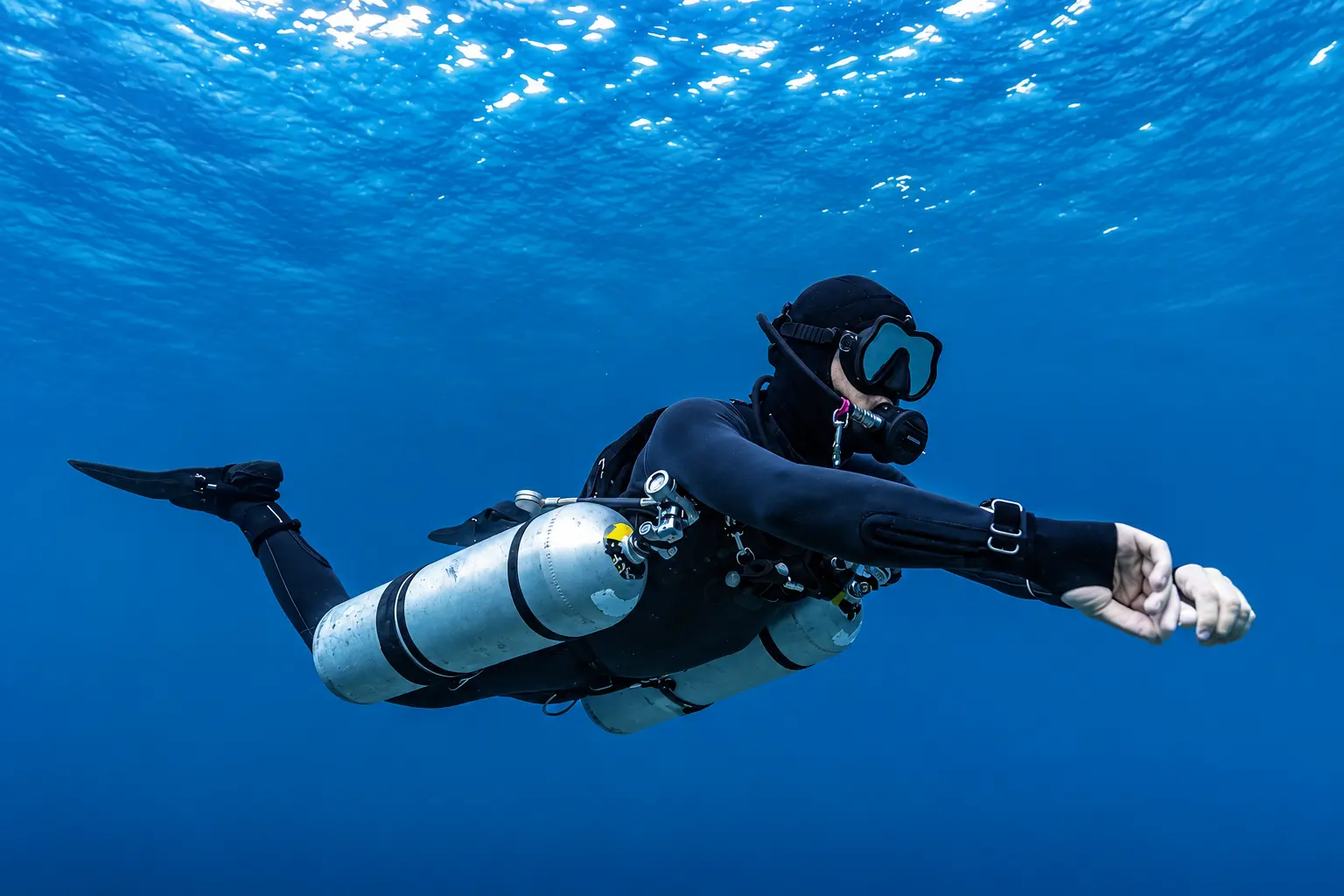
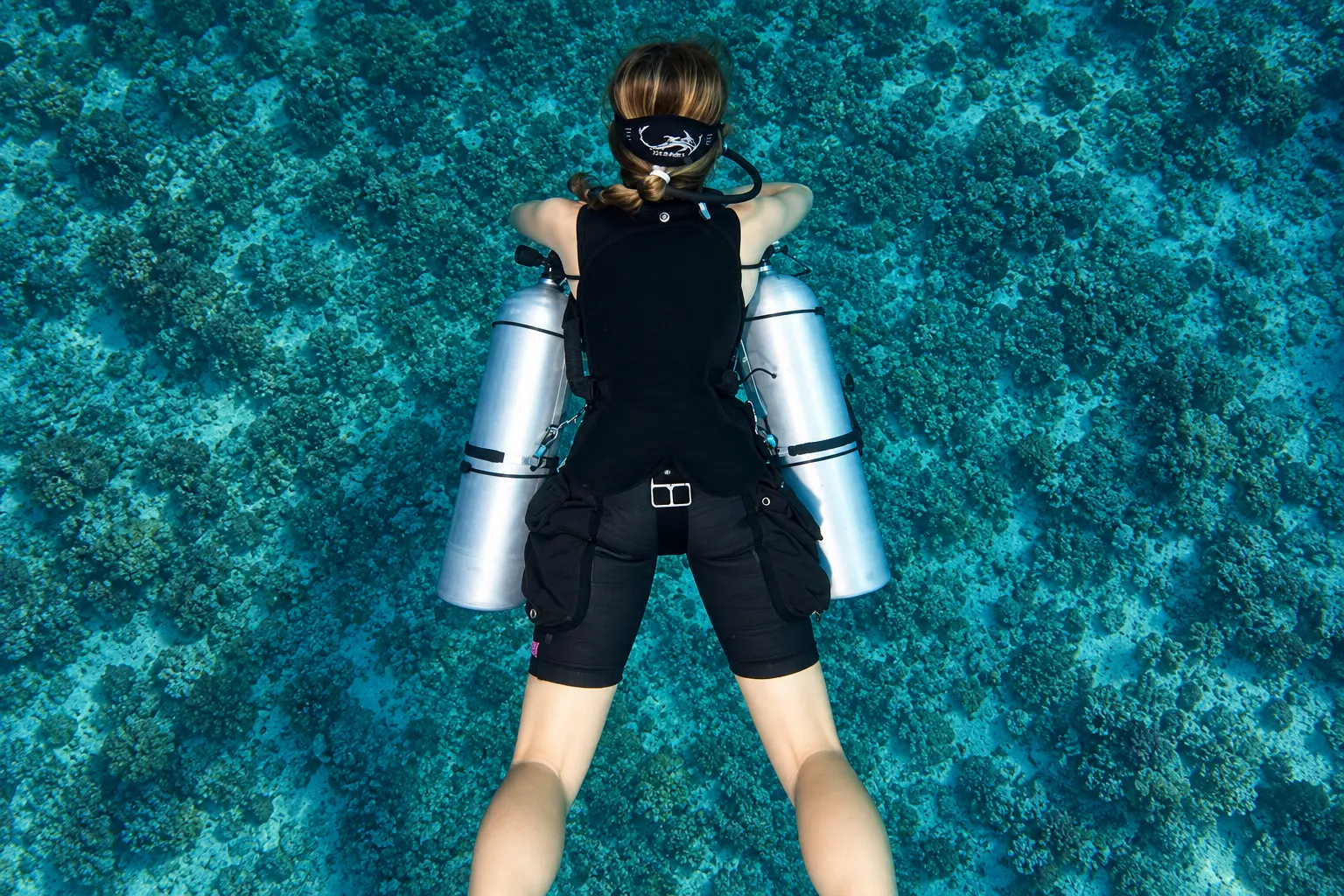
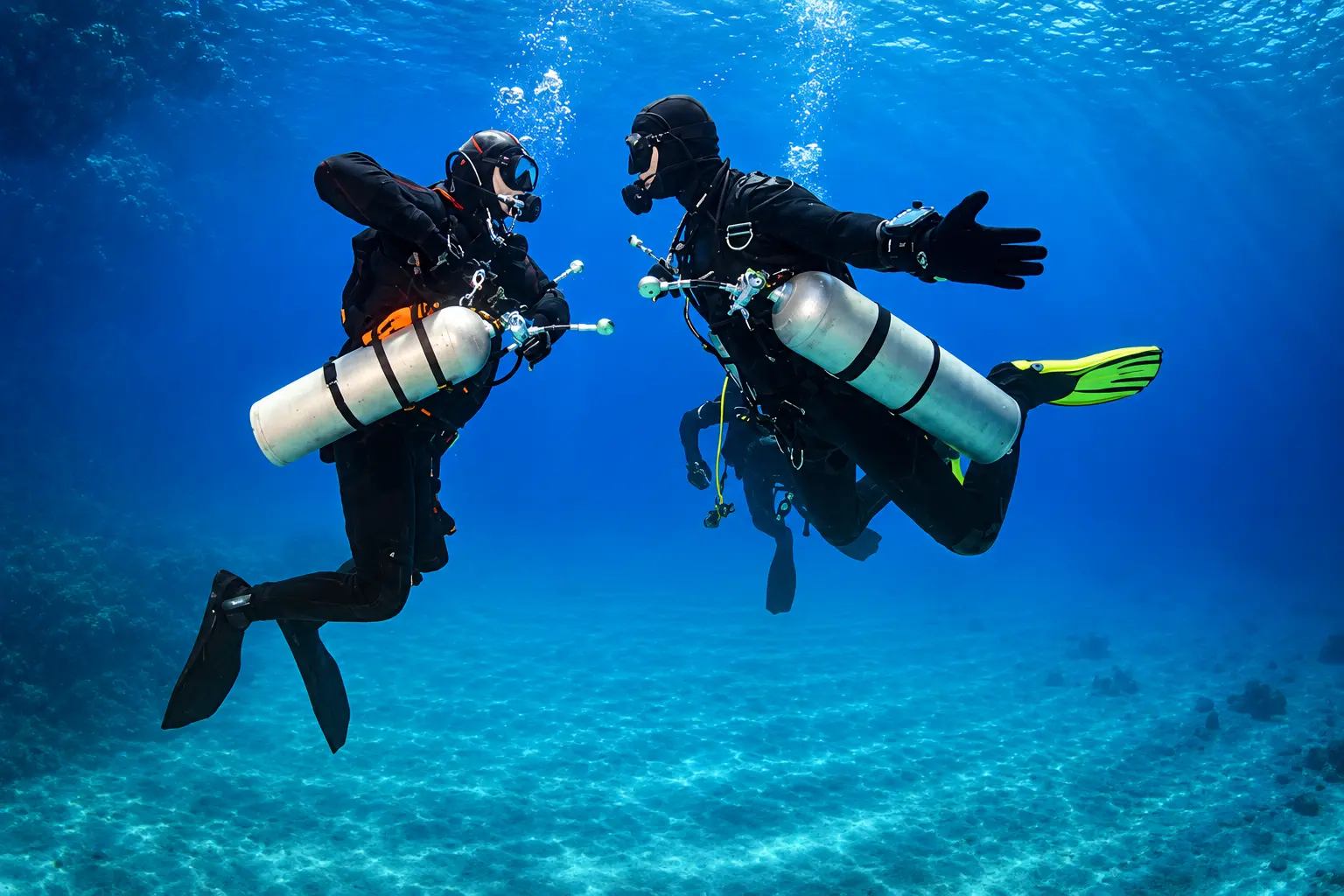
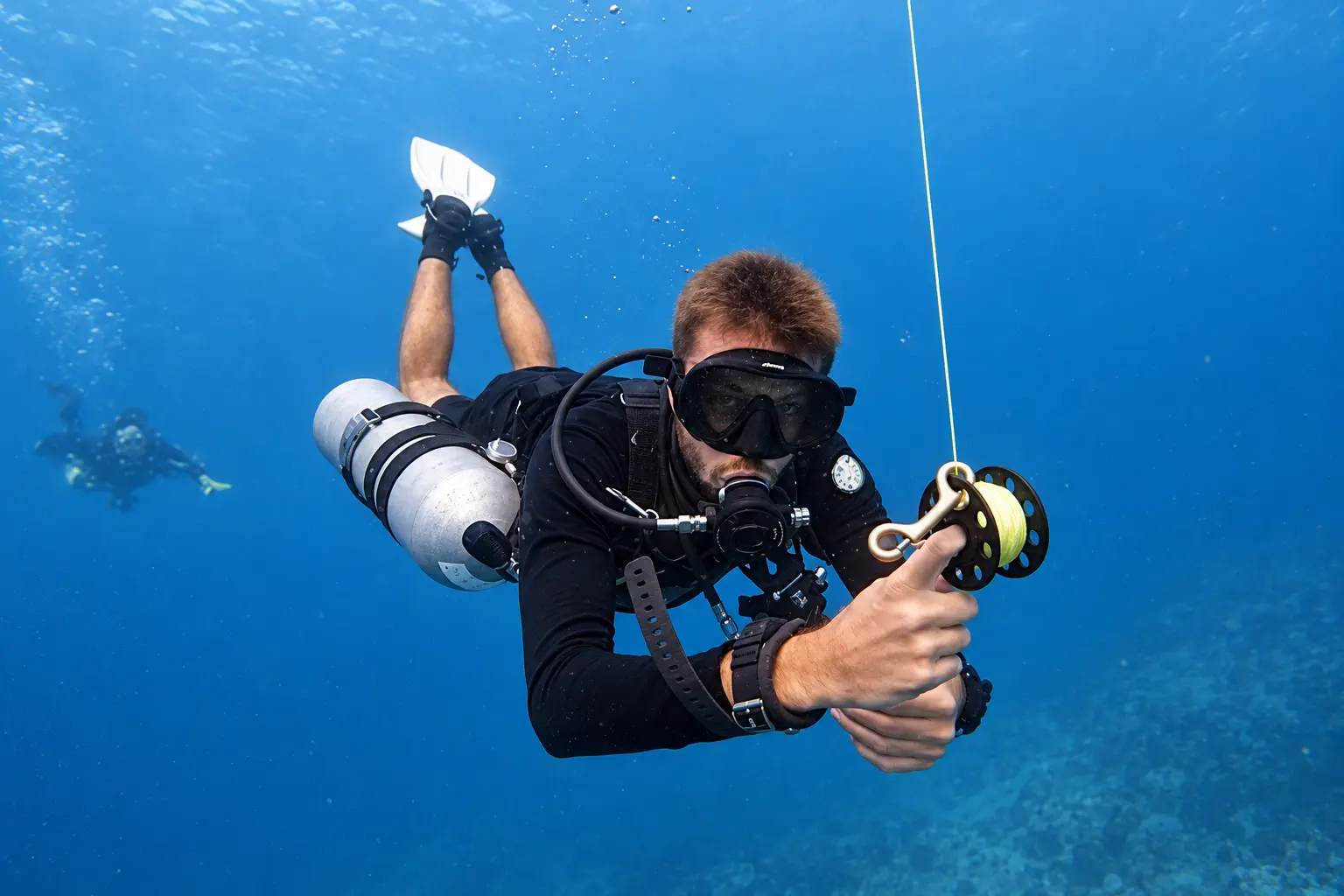
PADI Sidemount Diver is the recreational specialty that teaches a certified diver to configure and dive with cylinders clipped along the body instead of mounted on the back. A normal scuba diver wears one cylinder on the back, whereas a sidemount diver clips one or two along the sides, which changes how the whole dive feels.
Done properly it gives improved balance, a genuinely flat trim, valves within reach of your own hands, more flexibility entering the water, easier cylinder handling before and after the dive, less weight carried on your back, two independent gas supplies when you dive twins, and a streamlined position that costs you less effort.
Nevertheless it needs real training. Indeed, backmount procedures do not simply transfer across, and a sidemount rig that has not been fitted and adjusted for your body is worse than the setup you already have.
In short, the PADI Sidemount Diver course described on this page is the recreational one. Consequently it does not qualify you for planned decompression diving, diving beyond recreational depth limits, cave diving, technical wreck penetration, technical breathing gases or restricted overhead environments.
By contrast, technical sidemount is a separate path with its own training, experience requirements and equipment. Meanwhile plenty of divers take this course purely because it is more comfortable, and never go near an overhead environment at all.
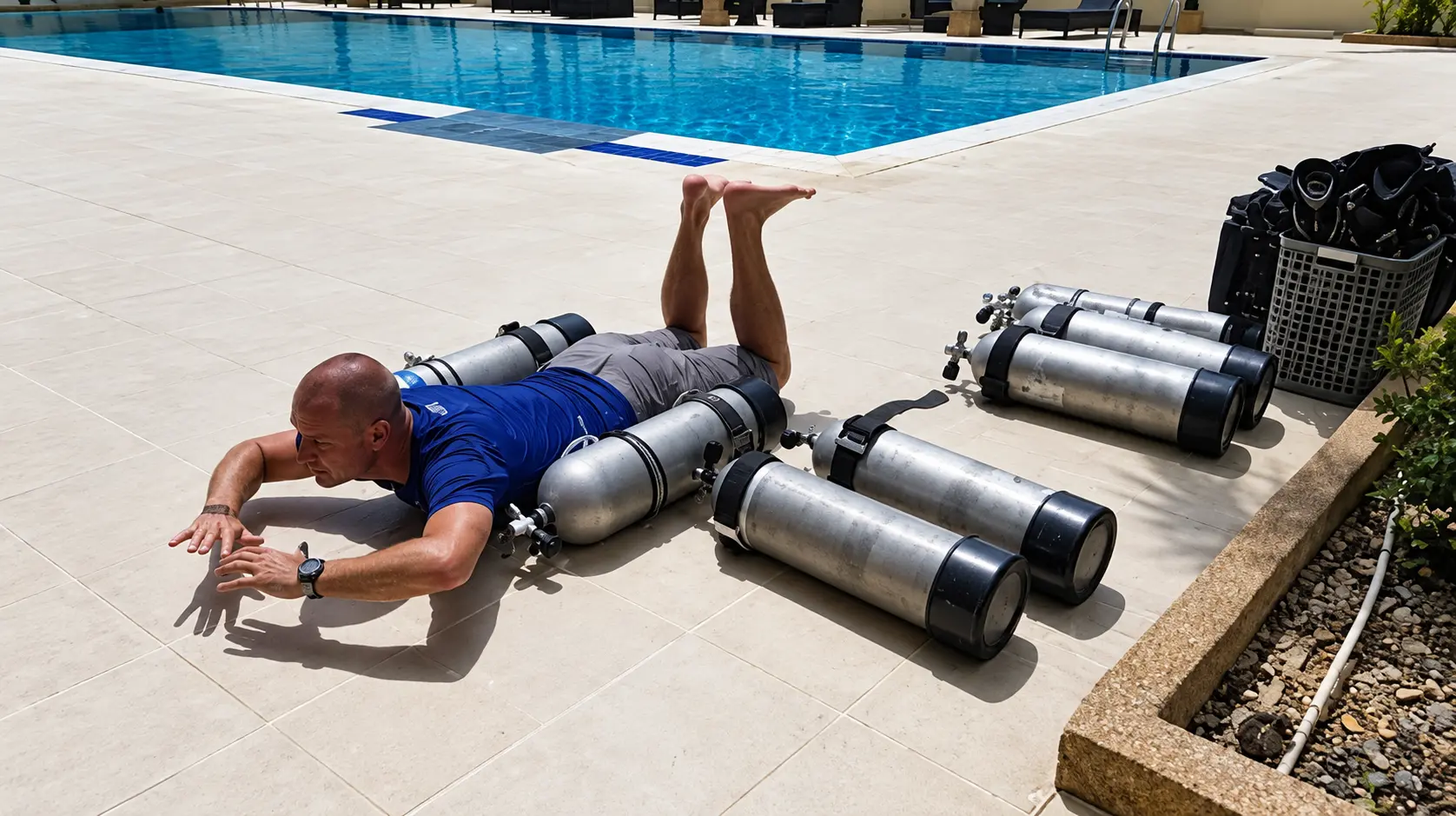
Altogether, the two days of the PADI Sidemount Diver course start with an equipment workshop and finish with three open water dives. Importantly, the rig is fitted around your body before anything else happens.
First, your instructor introduces the system and sets it up around you: sidemount BCD and harness adjustment, cylinder attachment points, regulator configuration, hose routing, gauge positioning, cylinder markings, weight placement, streamlining and the pre-dive checks. Above all, the rig is fitted to your body size and diving position rather than handed over as-is.
Next, in confined or suitable shallow open water: attaching and removing cylinders, a complete pre-dive check, safe entry, establishing neutral buoyancy, adjusting cylinder position, switching regulators, monitoring both pressures, simulated gas sharing, and removing and replacing a cylinder underwater.
Finally: horizontal trim, sidemount propulsion, gas management, regular regulator switching, buoyancy, cylinder handling, valve access, controlled ascents and safety stops, emergency procedures, and safe boat or shore exits. Meanwhile, skills are introduced progressively as you cope with them.
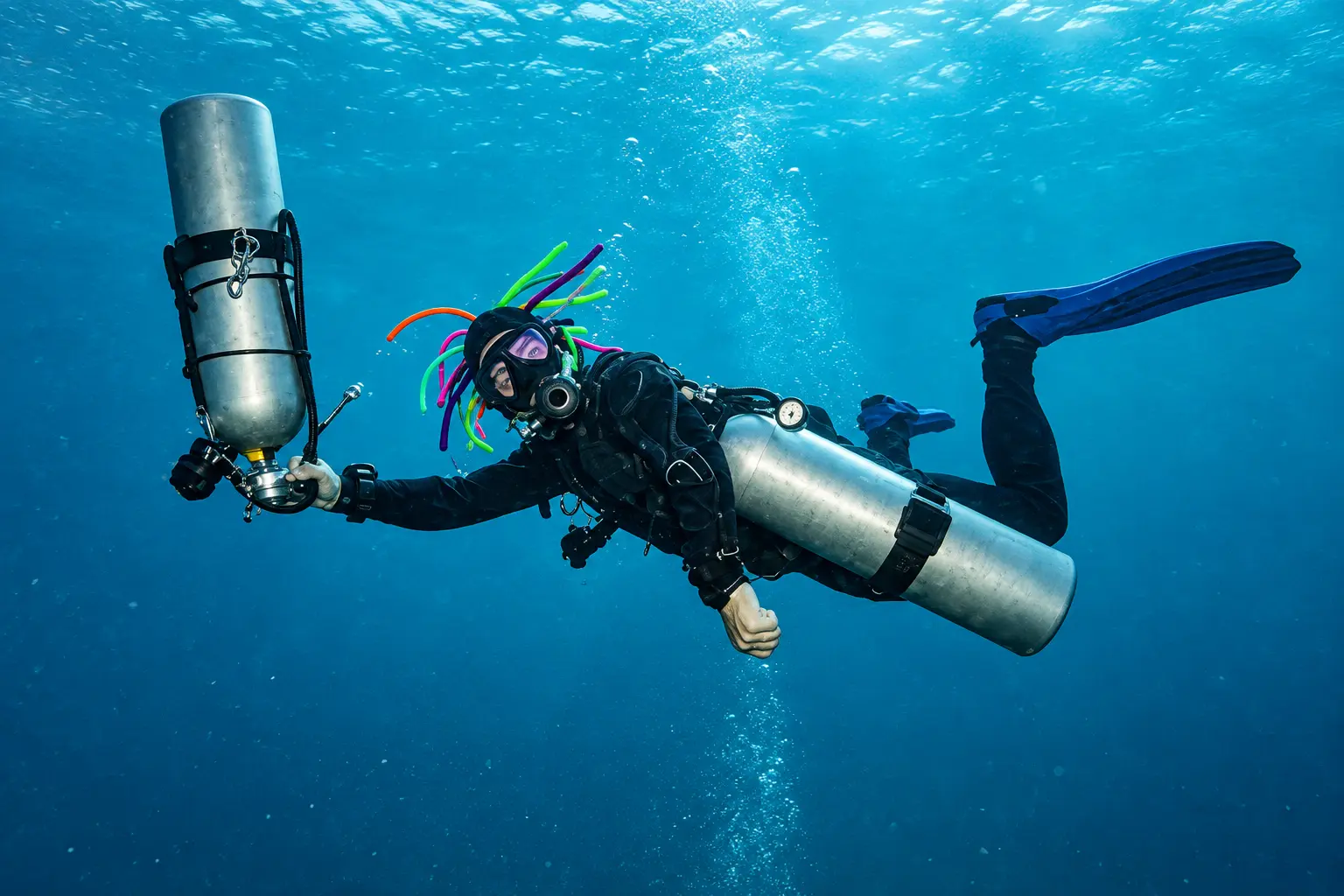
Above all, independent sidemount cylinders mean two gauges to watch and a switching plan to follow. Indeed, that discipline is most of what the course actually teaches.
Therefore, whichever switching procedure you agree on, you follow it for the whole dive. Otherwise you end up with one empty cylinder and one full one, which is exactly the problem sidemount is supposed to solve.
The €400 price of the PADI Sidemount Diver course covers the specialist equipment as well as the training. In other words, you can try the configuration before buying into it.
Equipment requirements and any additional charges are confirmed in writing before booking. Moreover, personal equipment may be used after inspection.
The PADI Sidemount Diver course supplies the complete system, from the harness to the second regulator. Above all, the fitting process is the course rather than a preliminary to it.
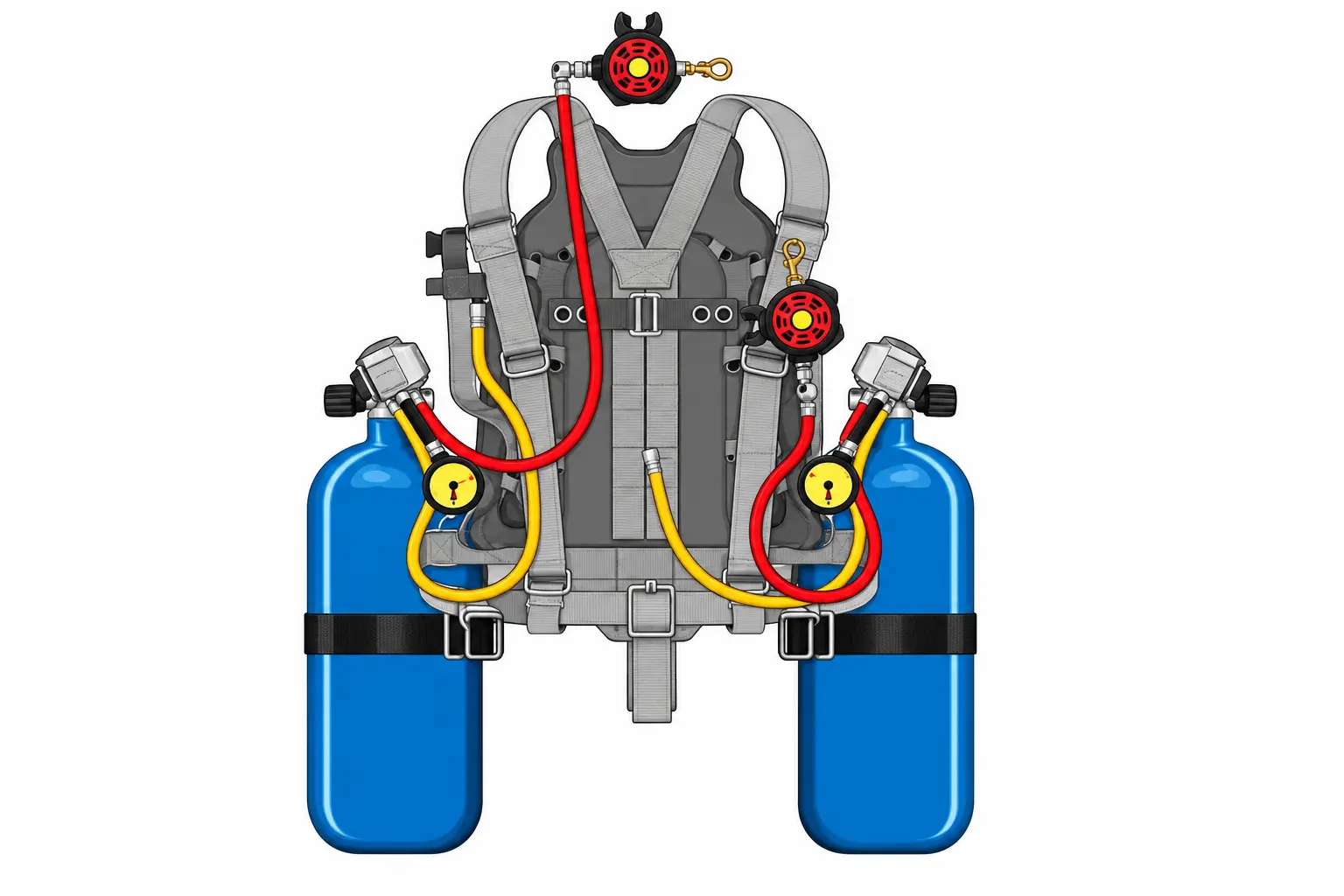
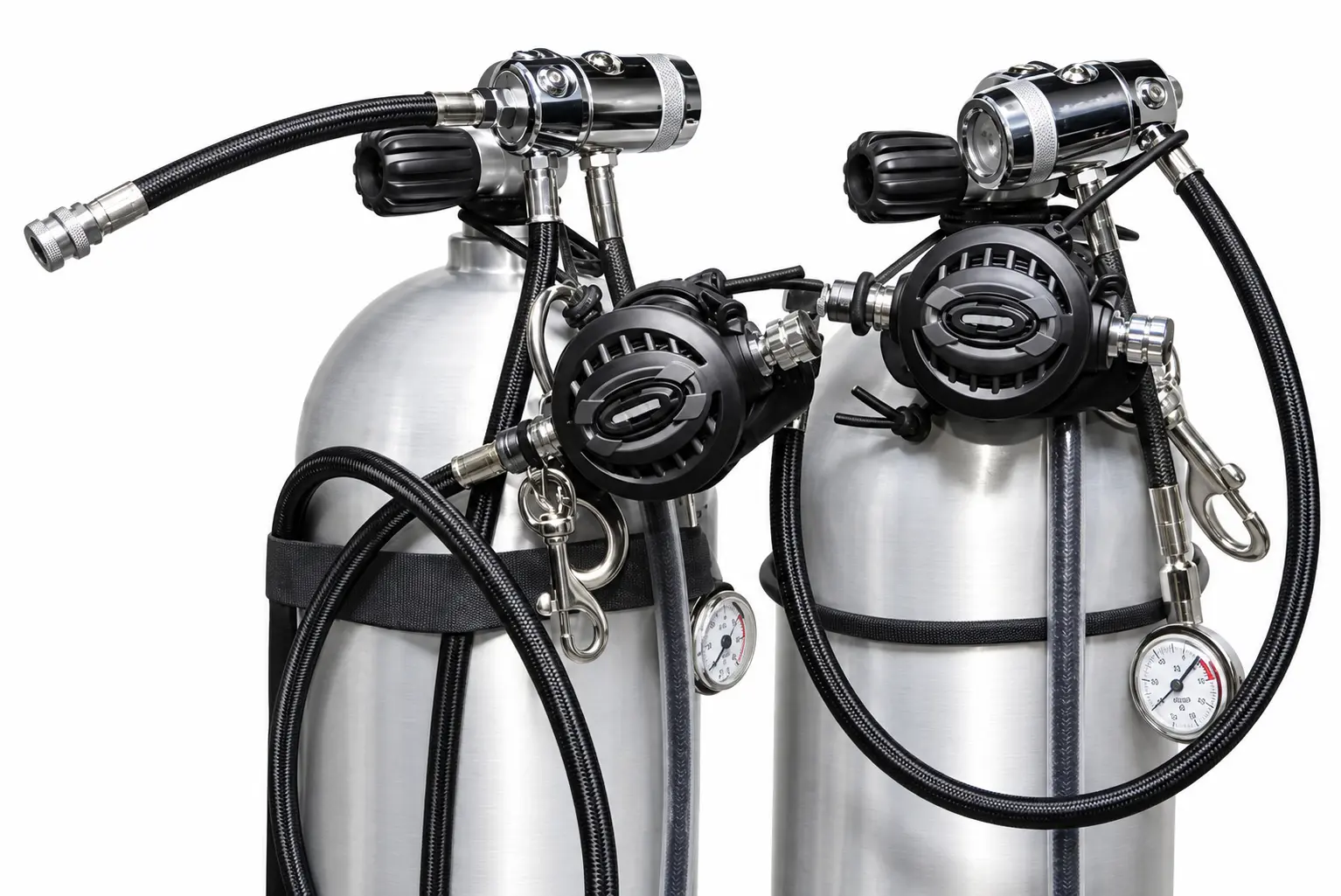
Specifically, a sidemount BCD or wing, an adjustable harness, two suitable cylinders, two independent regulators, two pressure gauges, long and short regulator hoses, a low-pressure inflator hose, cylinder clips and attachment hardware, an appropriate weighting system and a dive computer. Naturally, configuration varies with the instructor, the cylinder type and your size.
Above all, badly placed cylinders create drag, unbalance you and end up hanging below your body. Consequently you adjust harness size, attachment points, bungee position, weight location, cylinder height, body position and hose routing until the whole thing is comfortable, stable and streamlined.
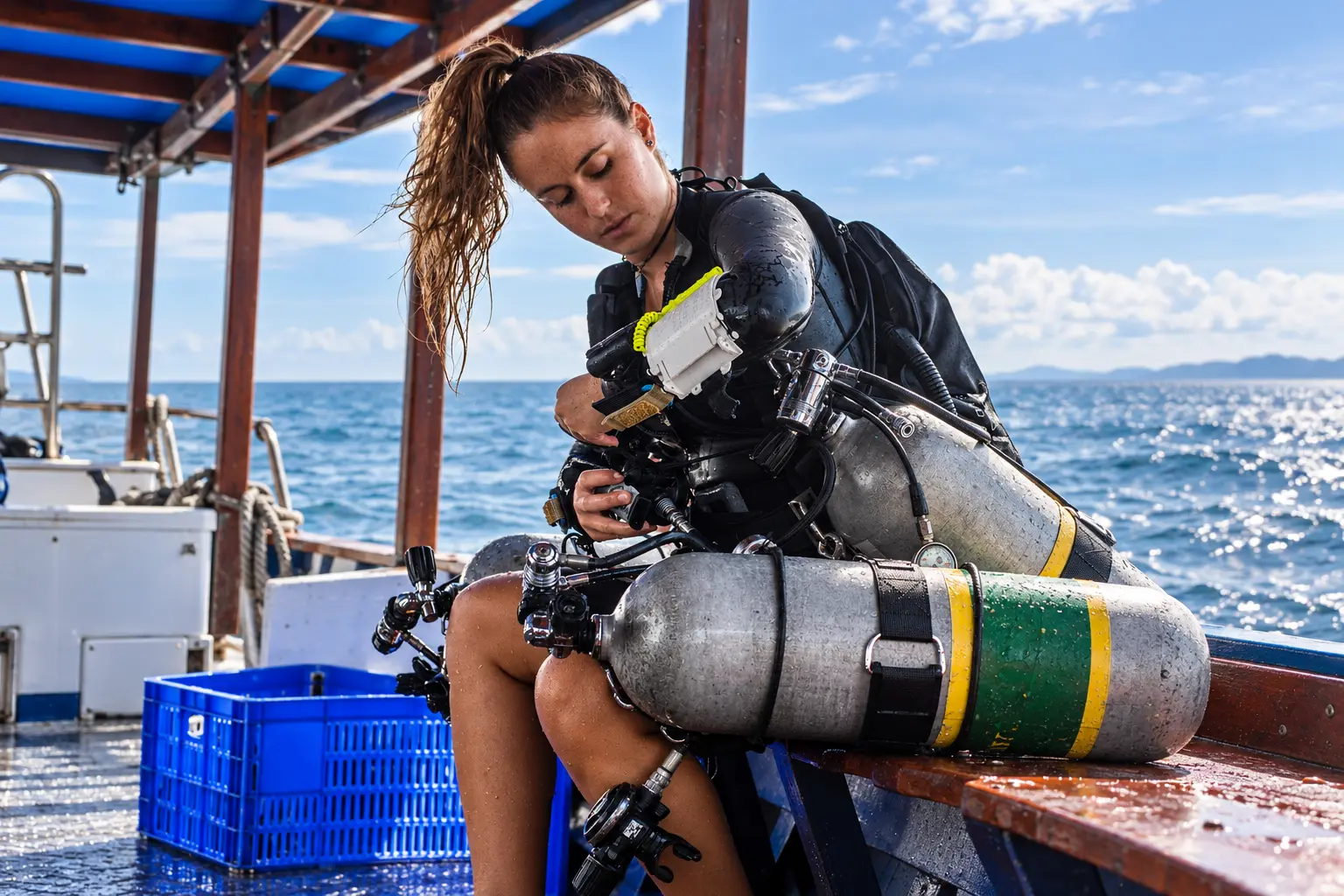
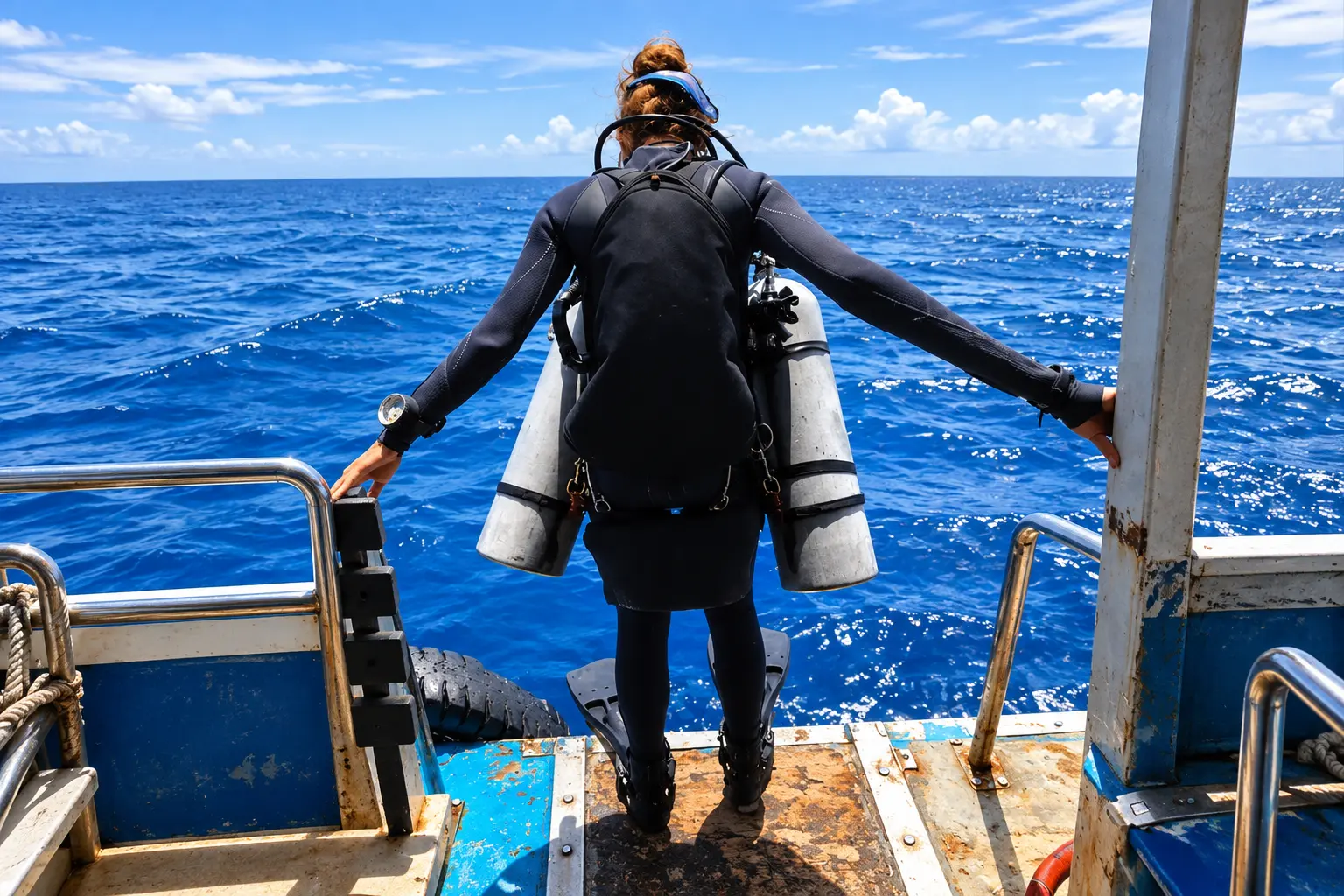
Sidemount works fine from a dive boat in Hurghada once the procedure is agreed in the briefing. Depending on the vessel and the sea, you may attach both cylinders before entering, enter with one and take the second in the water, clip both on while supported at the surface, or pass the cylinders up to the crew before you exit.
Consequently the instructor and the boat crew decide which method is safest on the day, and it can change between morning and afternoon if the swell picks up.
Sidemount can reduce what you carry on your back before the dive, since cylinders are handled separately and clipped on in the water where conditions allow. Indeed, many divers find that alone worth the course.
Even so, sidemount is an equipment configuration and not a medical treatment. Therefore anyone with back, shoulder or mobility problems should get proper medical advice about diving in general rather than assuming a different rig solves it. For independent reading, Divers Alert Network publishes clear material.
The PADI Sidemount Diver course asks for an Open Water certification and a minimum age of fifteen. Naturally, comfortable basic buoyancy matters more here than extra logged dives.
Previous Peak Performance Buoyancy, Nitrox or Advanced Open Water training helps but is not normally required. Our procedures are set out on the diving safety page.
Meanwhile, certified Nitrox divers can use suitable enriched air mixtures where the cylinders, regulators and dive plan meet the standards. Moreover, each cylinder is analyzed and clearly marked, and the correct percentage goes into the computer before you get in.
Sidemount rewards precision, so it pairs naturally with Peak Performance Buoyancy and Underwater Navigator. Similarly, Enriched Air Nitrox, Deep Diver and Wreck Diver all benefit from the configuration.
Meanwhile our daily diving trips are the sensible place to log your first dives in the new rig before taking it anywhere demanding. If technical diving genuinely appeals, Tec training is the separate path, and the full ladder sits on our PADI courses page.
Gallery
Why us
Above all, full emergency equipment, a documented action plan and a briefing before every dive.
Indeed, more than two decades of diving and liveaboard operations out of Hurghada, on every Egyptian route.
Furthermore, the sidemount BCD, two regulators and the required cylinders come with the course, so you can try the configuration before buying into it.
Moreover, your system is configured and adjusted around your body before the open water dives, which is exactly where most bad sidemount experiences begin.
In addition, the €400 covers the specialist equipment, four practical sessions, materials and certification, with extras confirmed in writing.
Naturally, the course draws a firm line between recreational sidemount and technical or overhead diving, rather than blurring it.
Questions
The PADI Sidemount Diver course in Hurghada costs €400 per person. In other words, that covers the specialist sidemount equipment, four practical sessions, PADI materials and certification.
Two days normally. Therefore it fits comfortably inside a normal diving week.
Altogether, one confined or shallow water session plus three open water training dives.
No. This is the recreational sidemount course, whereas technical and overhead environment diving require separate qualifications.
The equipment workshop and the shallow water session run in Hurghada, while the three open water dives are made from a boat or an approved training site. Meanwhile the exact site depends on the sea and the equipment available that day.
Yes. Specifically, the package includes a sidemount BCD, two regulators, cylinders and the attachment hardware.
No. The required regulators are included. Moreover, personal equipment may be used following inspection.
Some recreational dives use a single sidemount cylinder, although the course develops the skills needed to manage two.
Yes, where conditions and boat procedures permit. Meanwhile your instructor teaches the safest entry and exit method for the day.
PADI Open Water Diver, or alternatively an accepted equivalent.
Fifteen years.
Comfortable basic buoyancy is required. Your instructor then helps you adapt your trim and control to the sidemount configuration.
No. Instead, sidemount is an equipment configuration, and it does not change the depth limit of your existing certification.
No. In fact, many recreational divers choose it for comfort, balance, valve access and independent gas supplies.
Yes, provided you hold the appropriate certification and follow correct gas analysis procedures for each cylinder.
It does not normally expire. Nevertheless, a refresher is recommended after a long period without sidemount diving.
First, send us your certification level, your number of logged dives, your height, your approximate weight, your preferred dates and your hotel. Indeed, the sizing details matter, because they let us prepare the right harness and cylinders before you arrive. Subsequently, we reply within twenty-four hours with availability and the pickup time. For liveaboard diving in Egypt see also redsealiveaboard.net.
Rated 4.9 out of 5 from 132 reviews on Google.
Prefer to talk? Message us on WhatsApp or write to info@redsea-diving.com.
This page was last reviewed by the Red Sea Diving instructor team in September 2026.
Premium Red Sea diving in Egypt. Liveaboard trips with experienced crews, comfortable vessels and 20+ years of experience.