
The course
1 day · 2 supervised dives · scooter provided

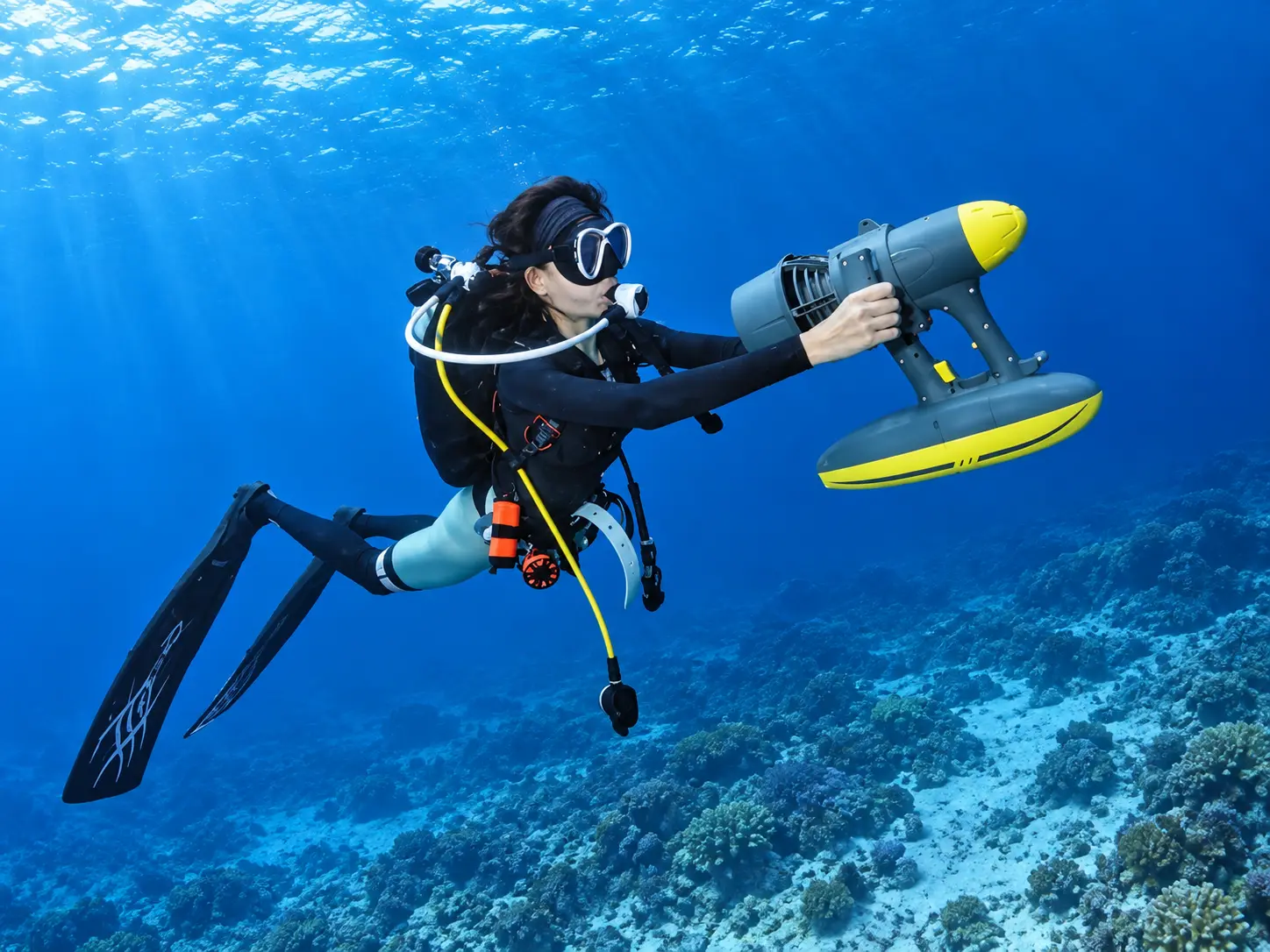
PADI DPV Scooter Diver Specialty in Hurghada · One day · From €350
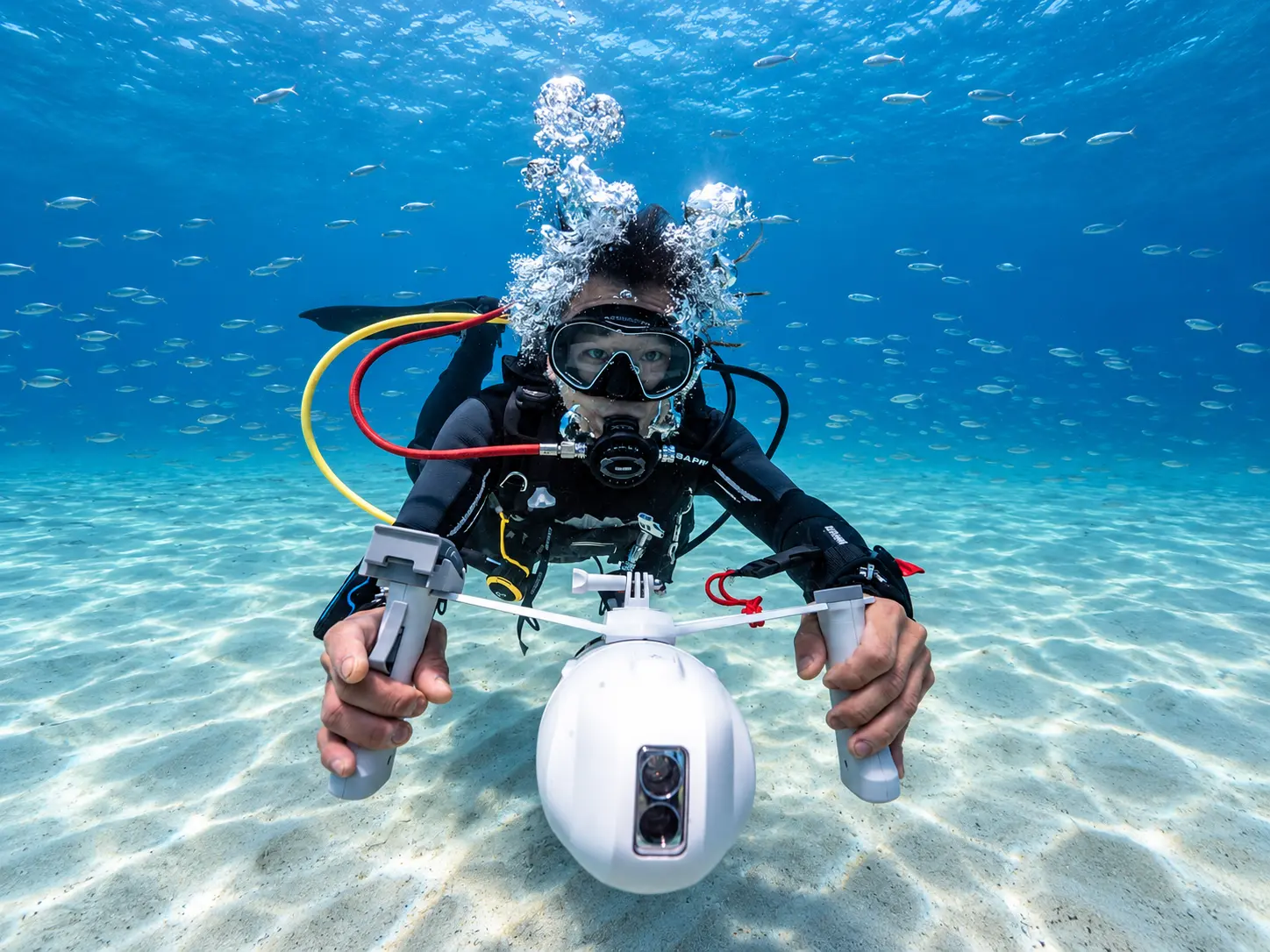
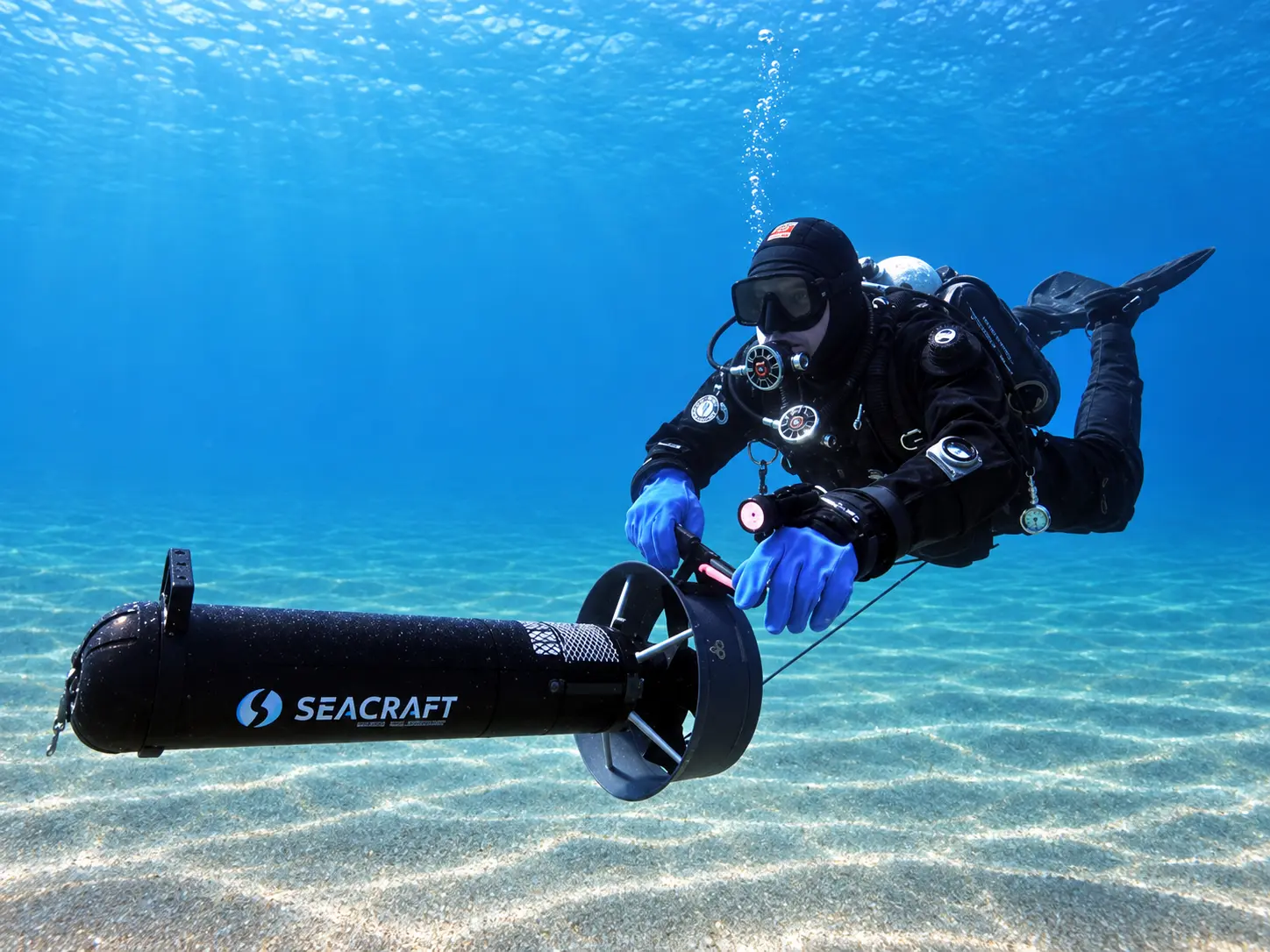
A diver propulsion vehicle covers reef you would never reach on your own fins, and it does so while you breathe less and work less. Consequently the course is one day, two supervised dives, and the handling, planning and failure procedures that make a scooter safe rather than merely fun.
1 day · 2 supervised dives · scooter provided
From €350 per person · scooter and cylinder included
Junior Open Water Divers and up · ages 12 and up
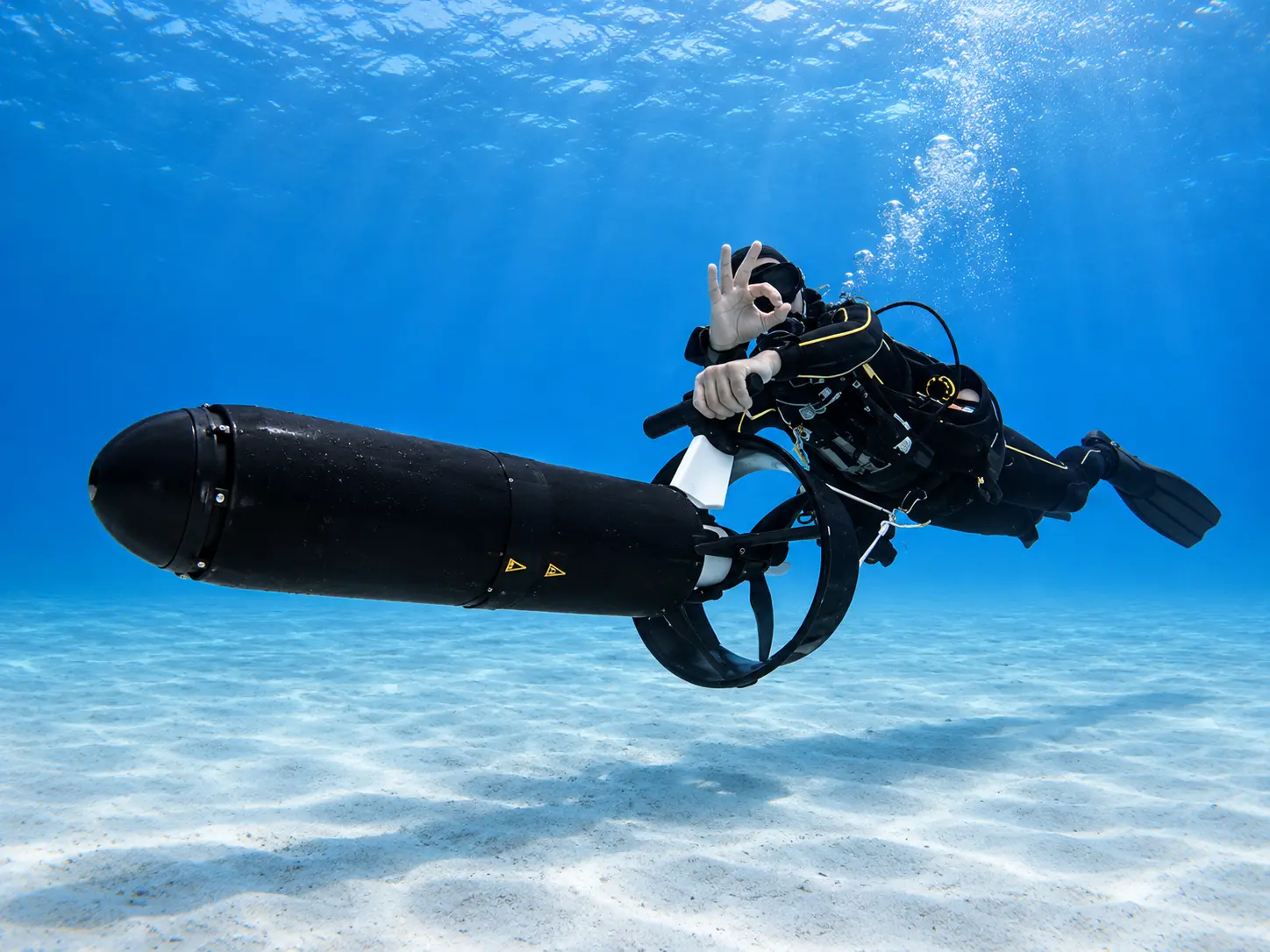
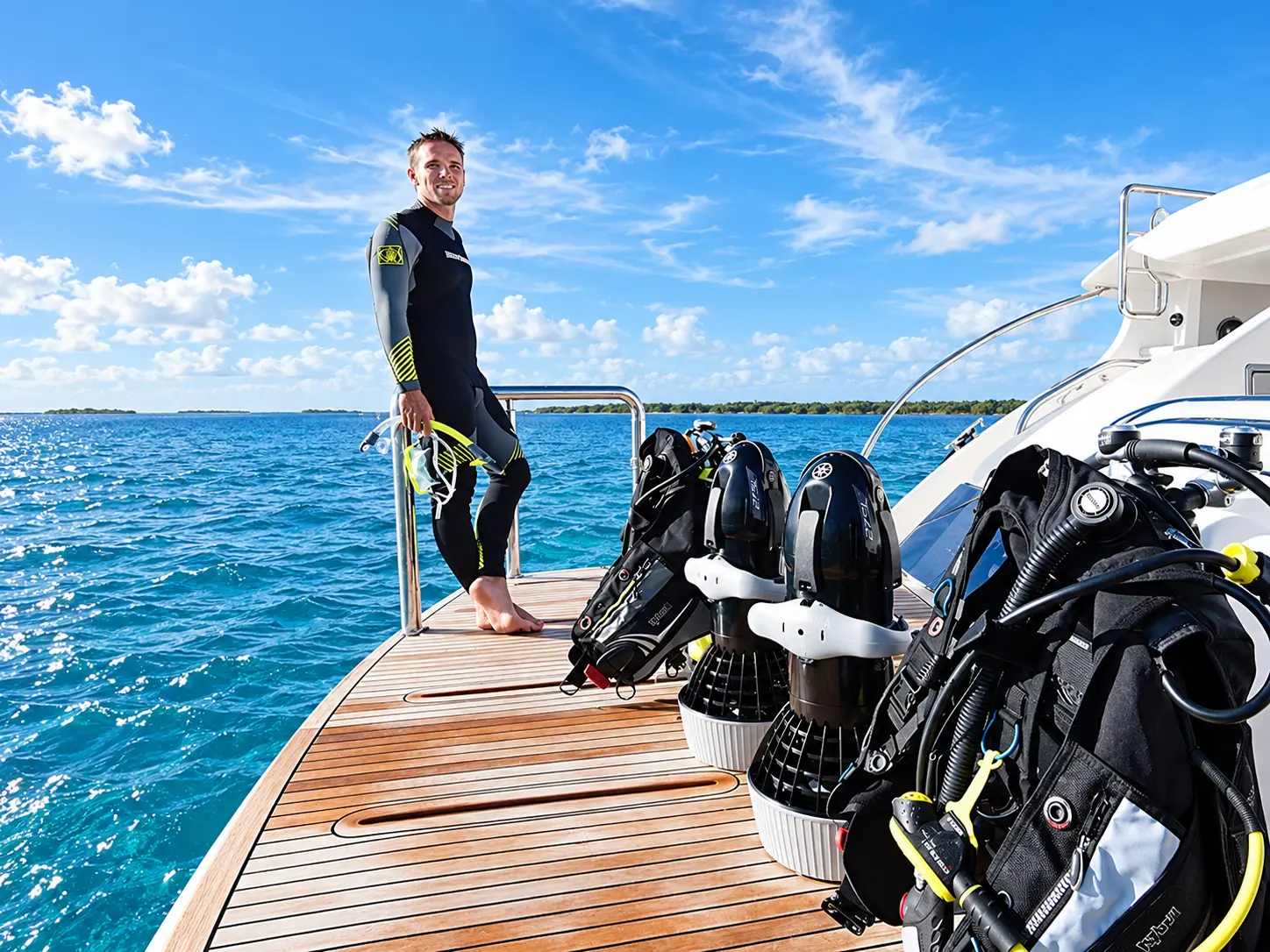
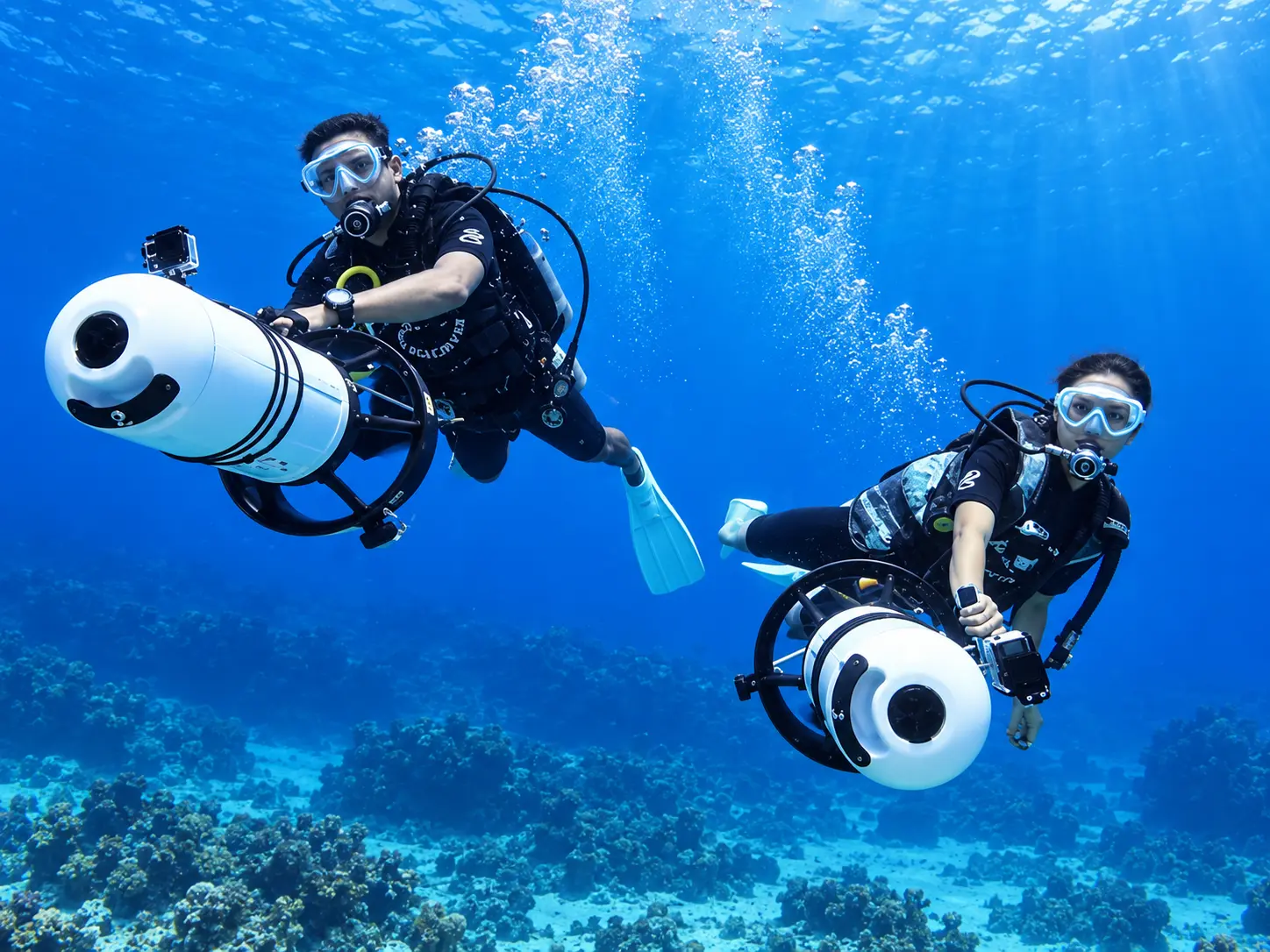
The PADI DPV Scooter Diver course in Hurghada starts from €350 per person, takes one day and includes two supervised dives with a diver propulsion vehicle. Specifically, the price covers the scooter, a PADI instructor, a 12 liter cylinder and weights, PADI materials and certification, transfers within Hurghada, and lunch and drinks on the boat. Furthermore, the minimum age is twelve with Junior Open Water Diver or higher, and you dive within the depth limits of your existing certification. Because scooter numbers are limited, the final price and the date are confirmed against availability.
In other words, a diver propulsion vehicle is a battery powered underwater scooter that pulls a diver through the water, and this PADI specialty certifies a certified diver to plan, handle and dive one safely. Therefore it follows the standards published by PADI for the Diver Propulsion Vehicle Diver rating. Red Sea Diving is a PADI dive operator based in Hurghada, Egypt, and has run diving and liveaboard trips on the Red Sea since 2000.
| Course | PADI Diver Propulsion Vehicle Diver, a recreational specialty course |
|---|---|
| Price | From €350 per person, confirmed against scooter availability |
| Duration | 1 day |
| Dives | 2 supervised open water dives with a scooter |
| Equipment | A suitable diver propulsion vehicle is provided for the training |
| Minimum age | 12 years |
| Prerequisite | PADI Junior Open Water Diver or higher, or an accepted equivalent, plus medical fitness for scuba diving and comfortable basic buoyancy |
| Depth limits | Unchanged, since a scooter is a propulsion device rather than a depth qualification |
| Not covered | Cave and overhead penetration, planned decompression diving, technical breathing gases and depths beyond your existing certification |
| Location | Boat and approved training sites around Hurghada, Egypt |
| Availability | Year-round on request, since scooters are not available every day and must be reserved ahead |
| Included | A PADI instructor, a diver propulsion vehicle for the training, a 12 liter cylinder and weights, PADI materials and specialty certification, boat or training site services, lunch and drinks on scheduled boat days, marine park fees, hotel transfer within central Hurghada |
| Not included | Nitrox cylinders, private instructor, extra dives, dive computer rental, transfers from El Gouna, Makadi Bay, Sahl Hasheesh, Soma Bay or Safaga, accommodation and flights |
| Operator | Red Sea Diving, a PADI dive operator based in Hurghada, Egypt, since 2000 |
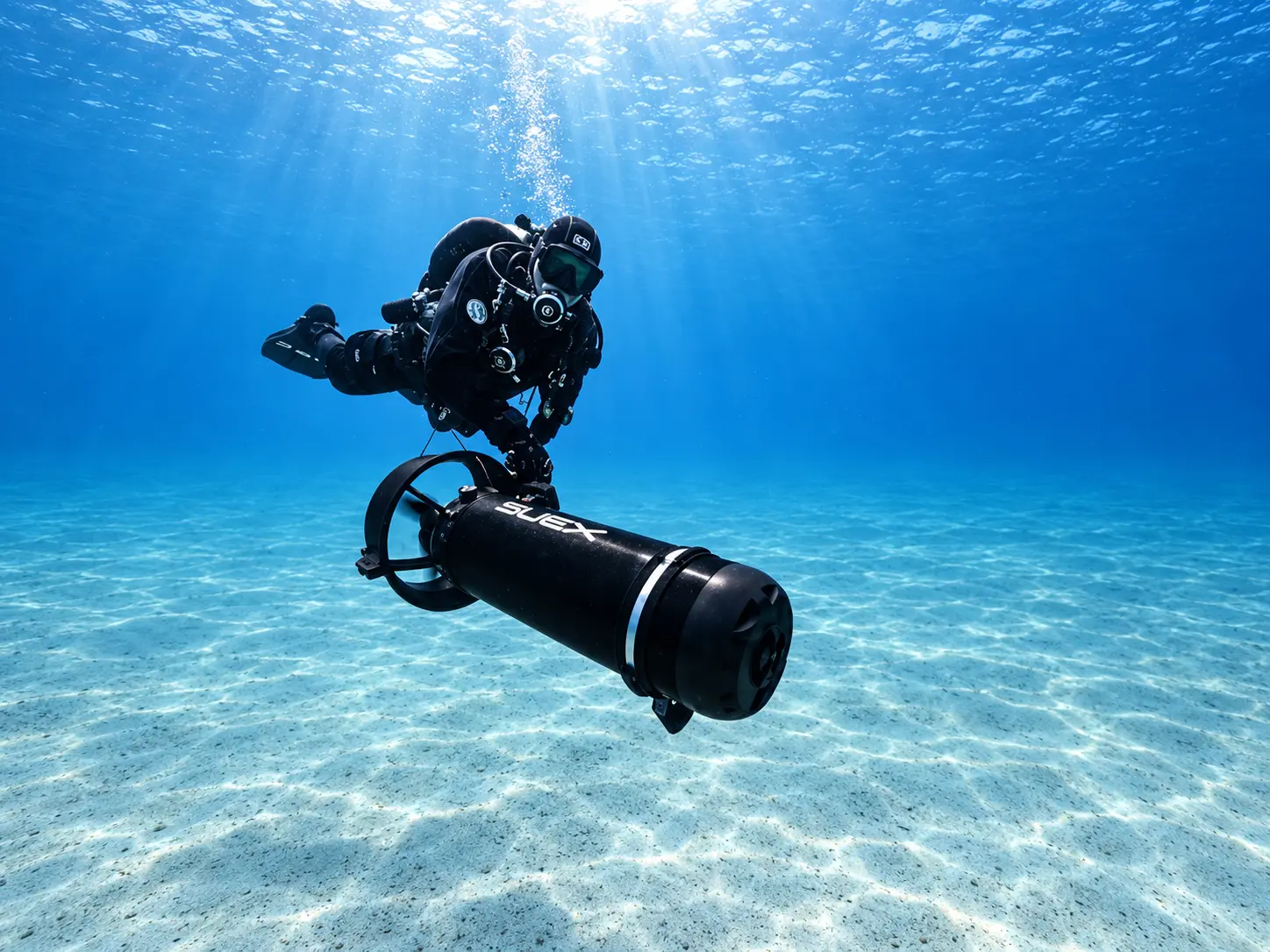
The obvious appeal is speed, although that is not really the point. What a scooter genuinely gives you instead is range: a long reef you can cover end to end rather than turning around halfway, a wall you can follow properly, and the ability to swim against a current that would otherwise decide your dive for you.
Alongside that comes a quieter benefit. Because your legs are doing almost nothing, your breathing settles and your air lasts noticeably longer than it would over the same distance under fin power.
Nevertheless everything happens faster, including mistakes. Indeed, a scooter will take you further from the boat than you planned, deeper than you intended if your trim is off, and into a decompression obligation you did not budget for. Consequently the training exists precisely to keep those three things from happening.
Altogether the PADI DPV Scooter Diver course covers six areas, and equipment discipline comes before throttle in every one of them.
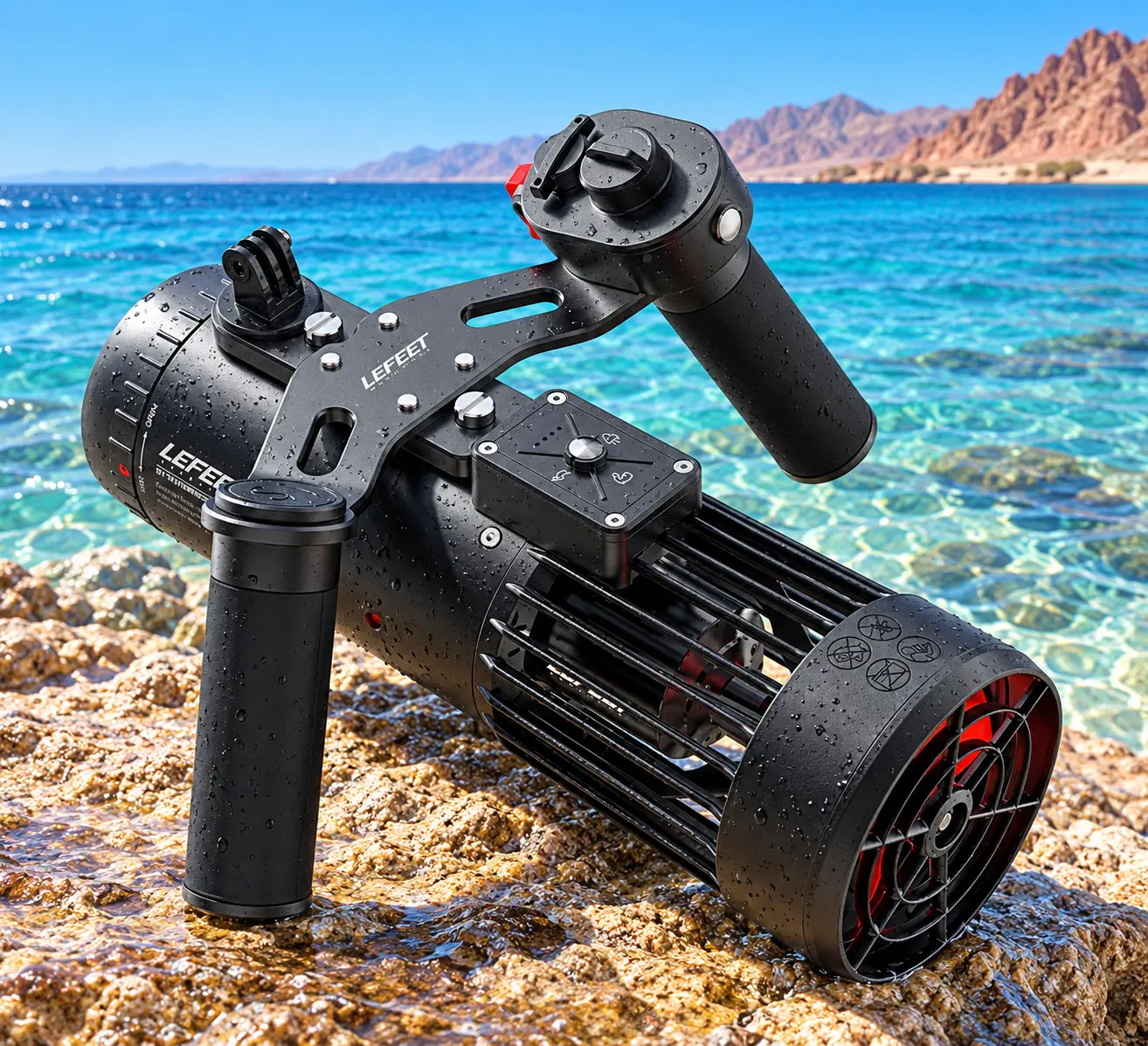
First, how the unit works: battery condition and charge, O-rings and seals, propeller and guard inspection, secure attachment to your harness, and the pre-dive checks that catch problems on deck rather than at depth.
Next, starting and stopping cleanly, holding a straight line, turning without spiraling, controlling depth under power, and keeping your body flat instead of being dragged nose-down.
Furthermore, planning the dive around battery duration and gas together, then applying the rule that matters most: turn on whichever runs out first, and always plan to return without the scooter.
Meanwhile, staying together at speed, agreed signals, spacing that avoids propeller wash and collisions, and what happens when one unit is faster than the other.
Above all, runaway motors, flooded units, dead batteries and entanglement. You practice shutting down, releasing the unit and swimming home, because a scooter that stops working becomes a heavy object you are still responsible for.
Finally, propellers do real damage. Therefore you learn safe distances from coral and sand, throttle discipline in tight areas, and why a scooter never approaches a reef at full speed.
In short, the day starts with knowledge development on land and finishes with two supervised dives. Importantly, the unit is set up with you rather than handed over ready.
To begin with, knowledge development, the equipment briefing and a full walk through the unit: battery, seals, trigger, guard and attachment. Subsequently you set it up and check it alongside your instructor rather than watching them do it.
Then the handling dive: starting and stopping, trim under power, turns, depth control and getting used to how quickly the reef arrives. Naturally the pace stays slow until your depth control is steady.
Afterwards, feedback, a battery check and the plan for the second dive. Meanwhile the instructor adjusts weighting or attachment points if the first dive showed anything worth fixing.
Finally, range planning in practice, buddy work at speed and the failure procedures, including shutting the unit down and swimming back. Ultimately, certification is processed the same day.
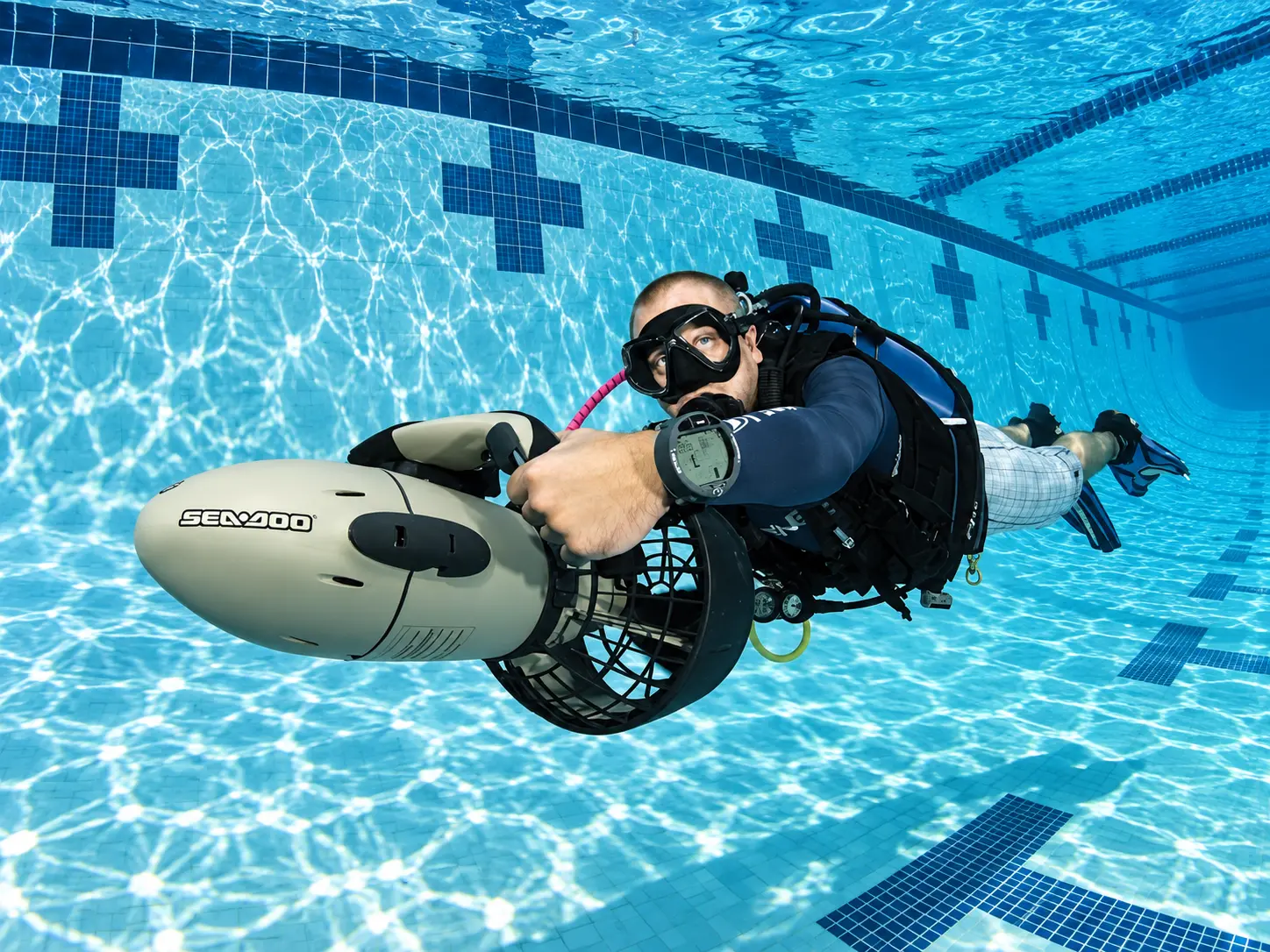
A scooter amplifies whatever your trim already is. For example, fly it slightly nose-down and you will find yourself ten meters deeper than planned without noticing; fly it nose-up and you will pop toward the surface mid-dive. Neither is dramatic on a slow fin kick, whereas both matter a great deal at speed.
Therefore, if your depth control is currently something you fight rather than something you have, Peak Performance Buoyancy before this course makes the difference between a unit that feels effortless and one that feels alarming.
Junior divers keep the depth and supervision limits of their existing certification, and a scooter never extends them. Meanwhile our procedures are set out on the diving safety page.
By contrast, nitrox cylinders, a private instructor, extra dives, computer rental and transfers from outside central Hurghada are quoted separately.
Long reefs and walls are the natural home of a scooter, and the Hurghada area has plenty of both. Similarly, drift sites reward it, since being able to swim against the current turns a one-way dive into a proper exploration.
It suits photographers too, because covering distance cheaply leaves more gas and more attention for the subject once you arrive. Consequently, pair it with Digital Underwater Photography and Enriched Air Nitrox and you can genuinely work a site rather than sample it.
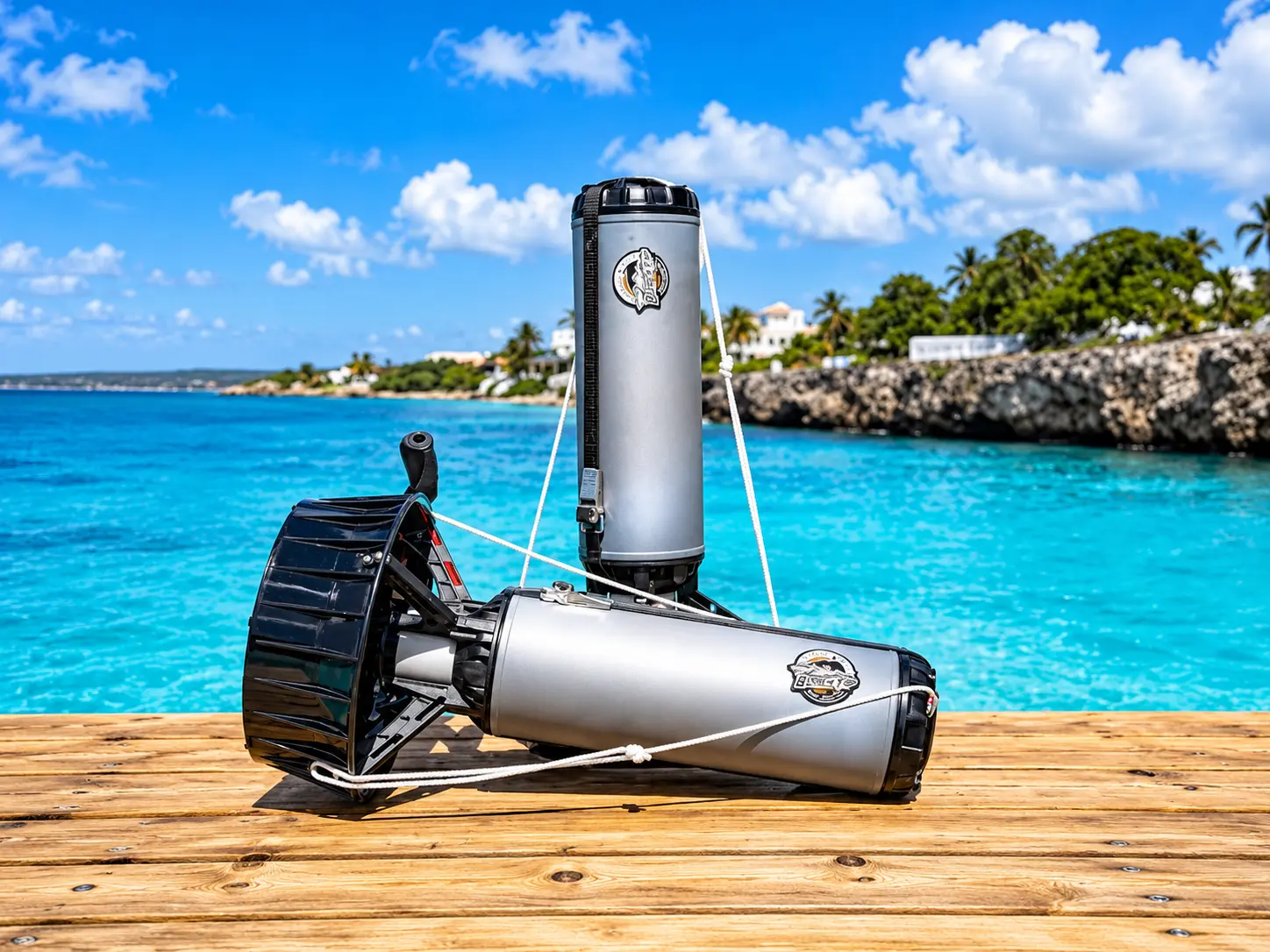
On liveaboard routes a scooter needs planning ahead for charging and storage. Therefore tell us early if you want to bring or use one on a safari week.
Gallery
Why us
Above all, full emergency equipment, a documented action plan and a briefing before every dive, which matters more once divers can travel this fast.
Indeed, more than two decades of diving and liveaboard operations out of Hurghada, on every Egyptian route.
Furthermore, a suitable unit is provided for the training, so you can find out whether you actually like scootering before buying one.
Because we run the boats ourselves, charging, storing and handling a unit on board is straightforward rather than a favor.
Moreover, the price, the inclusions and the equipment are confirmed in writing before you pay anything.
In addition, throttle discipline and safe distances from coral are taught as part of the course rather than mentioned in passing.
Questions
The PADI DPV Scooter Diver course in Hurghada starts from €350 per person. Specifically, that covers the scooter, a PADI instructor, two supervised dives, a 12 liter cylinder and weights, PADI materials and certification, transfers within Hurghada, and lunch and drinks on the boat. Because scooter numbers are limited, the final price is confirmed against availability on your dates.
One day, including the knowledge development, the equipment briefing and two supervised dives.
Two supervised open water dives with a diver propulsion vehicle.
Yes, a suitable unit is included in the price. However, scooters are not available every day, so please book ahead rather than asking on the morning.
PADI Junior Open Water Diver, Open Water Diver or an accepted equivalent.
Twelve years. Junior diver depth and supervision limits continue to apply.
Comfortable buoyancy and trim are important, because a scooter magnifies whatever depth control you already have. Consequently we may recommend buoyancy training first.
No. It is a propulsion device and does not change the depth limits of your certification. If anything it demands more discipline about depth, not less.
Usually, yes. Covering distance under power rather than by fin means less effort and calmer breathing, although consumption still depends on depth, fitness and conditions.
You shut it down, secure or release it and swim back on the plan you made before the dive. Indeed, every scooter dive is planned so that you can return without it.
Yes, subject to inspection and to airline and boat rules on transporting batteries. Therefore tell us the model in advance so we can confirm charging and storage.
It does not normally expire, although a refresher is sensible after a long period without using a scooter.
A scooter rewards the same skills everything else does. Specifically, Peak Performance Buoyancy and Underwater Navigator are the two that make the biggest difference, while Enriched Air Nitrox pairs well with the longer range.
From there, Deep Diver and Wreck Diver open the sites worth traveling to, and our daily diving trips are where you put the hours in.
Send us your certification level, your number of logged dives, your preferred date and your hotel, and tell us whether you will bring your own unit. Subsequently we confirm scooter availability and send a written price within twenty-four hours. For liveaboard diving in Egypt see also redsealiveaboard.net, and read the current guidance from Divers Alert Network.
Prefer to talk? Message us on WhatsApp or write to info@redsea-diving.com.
Rated 4.9 out of 5 from 132 reviews on Google.
This page was last reviewed by the Red Sea Diving instructor team in September 2026.
Premium Red Sea diving in Egypt. Liveaboard trips with experienced crews, comfortable vessels and 20+ years of experience.