

Dive guide to Marsa Assalaya · Kilo 7, north of Marsa Alam
Marsa Assalaya Dive Site Kilo 7: a calm sandy bay with a coral reef on each side
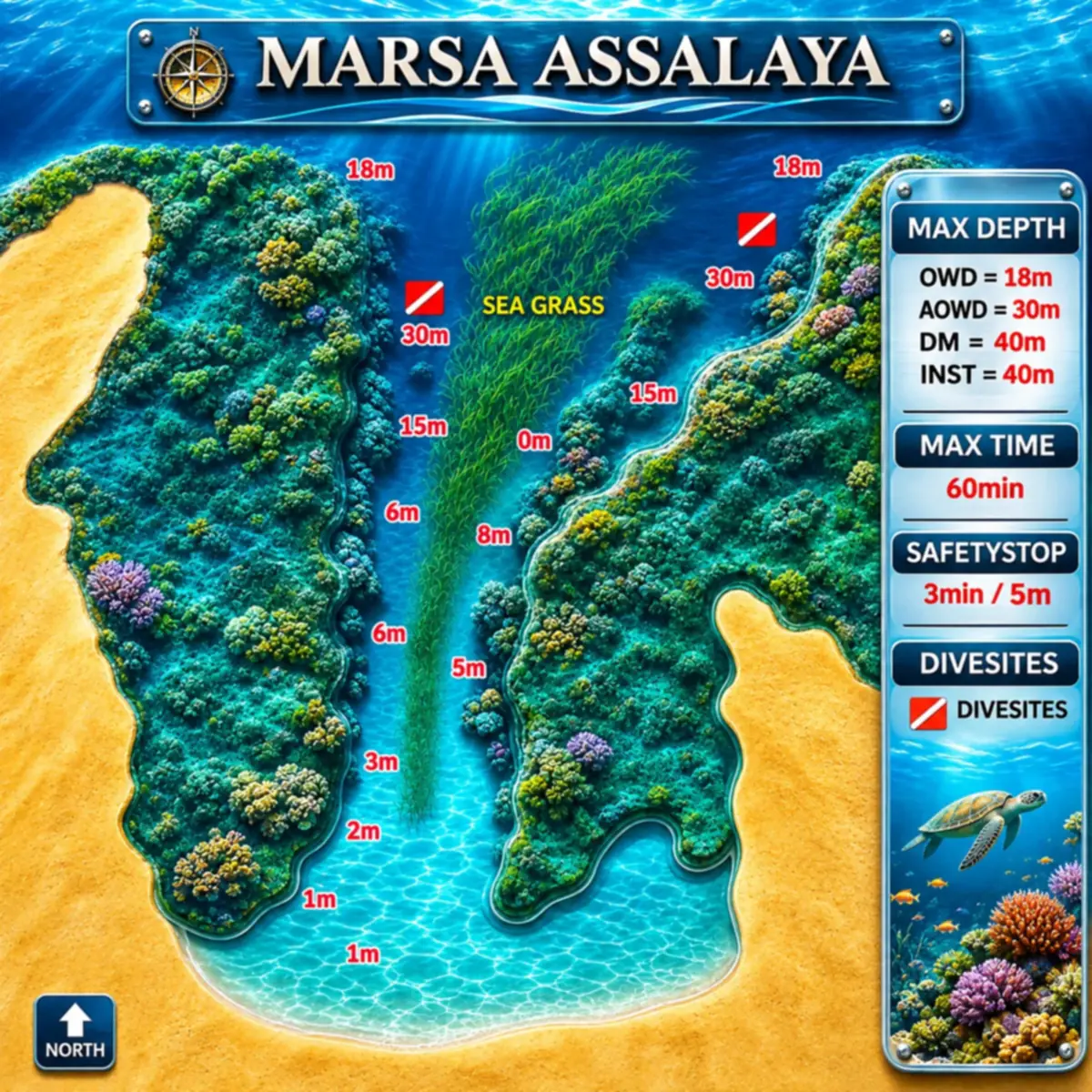
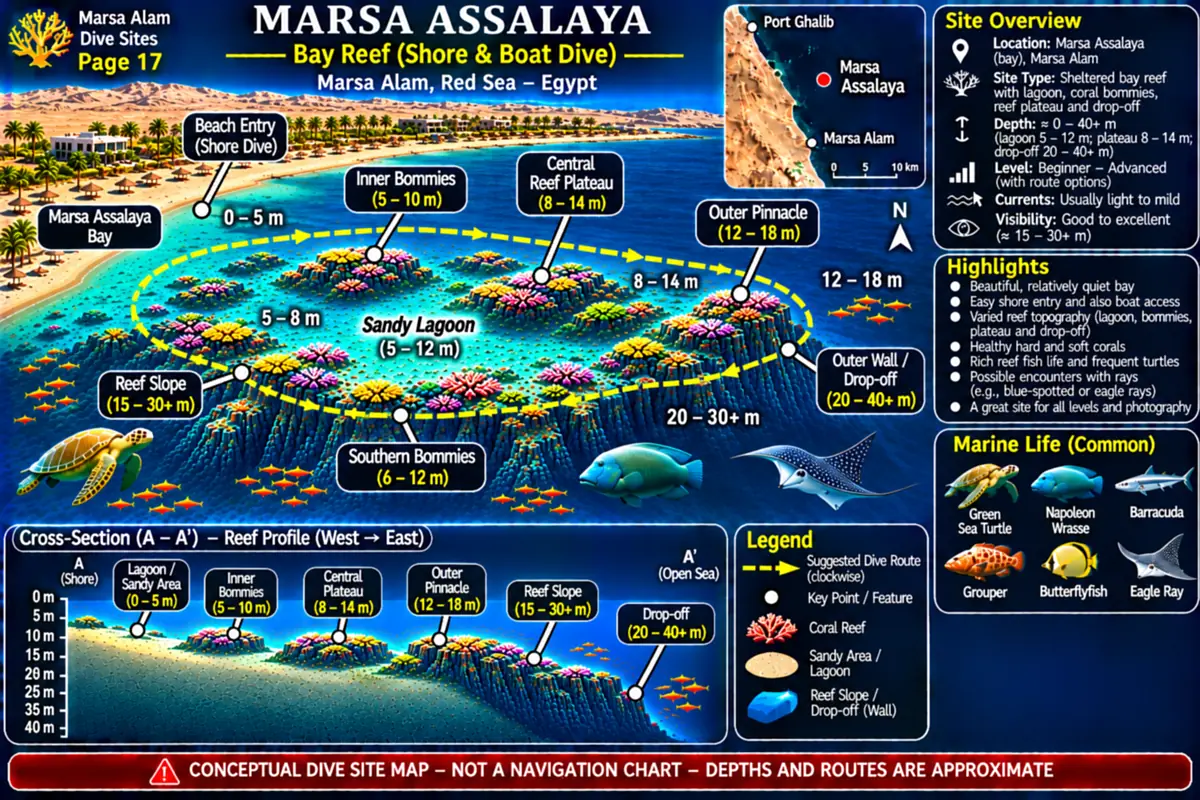
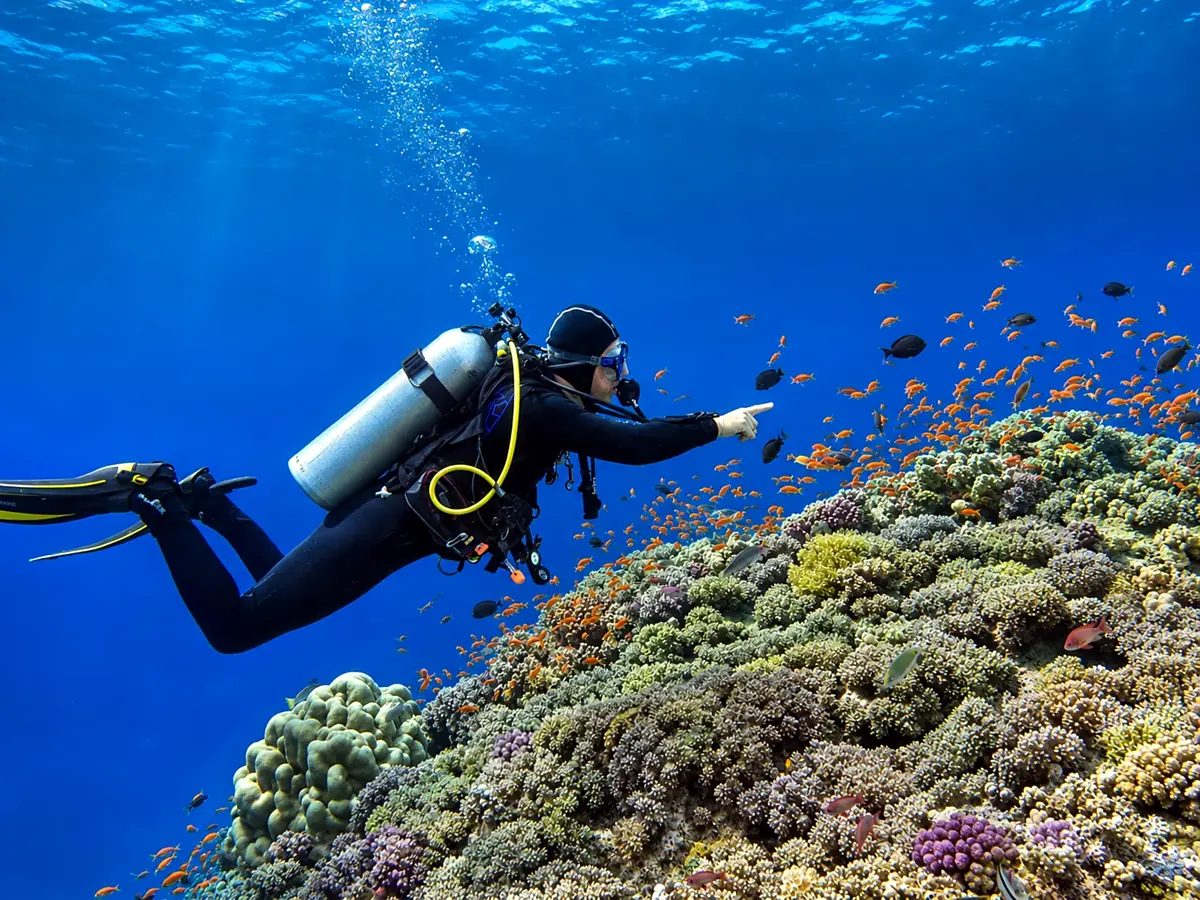
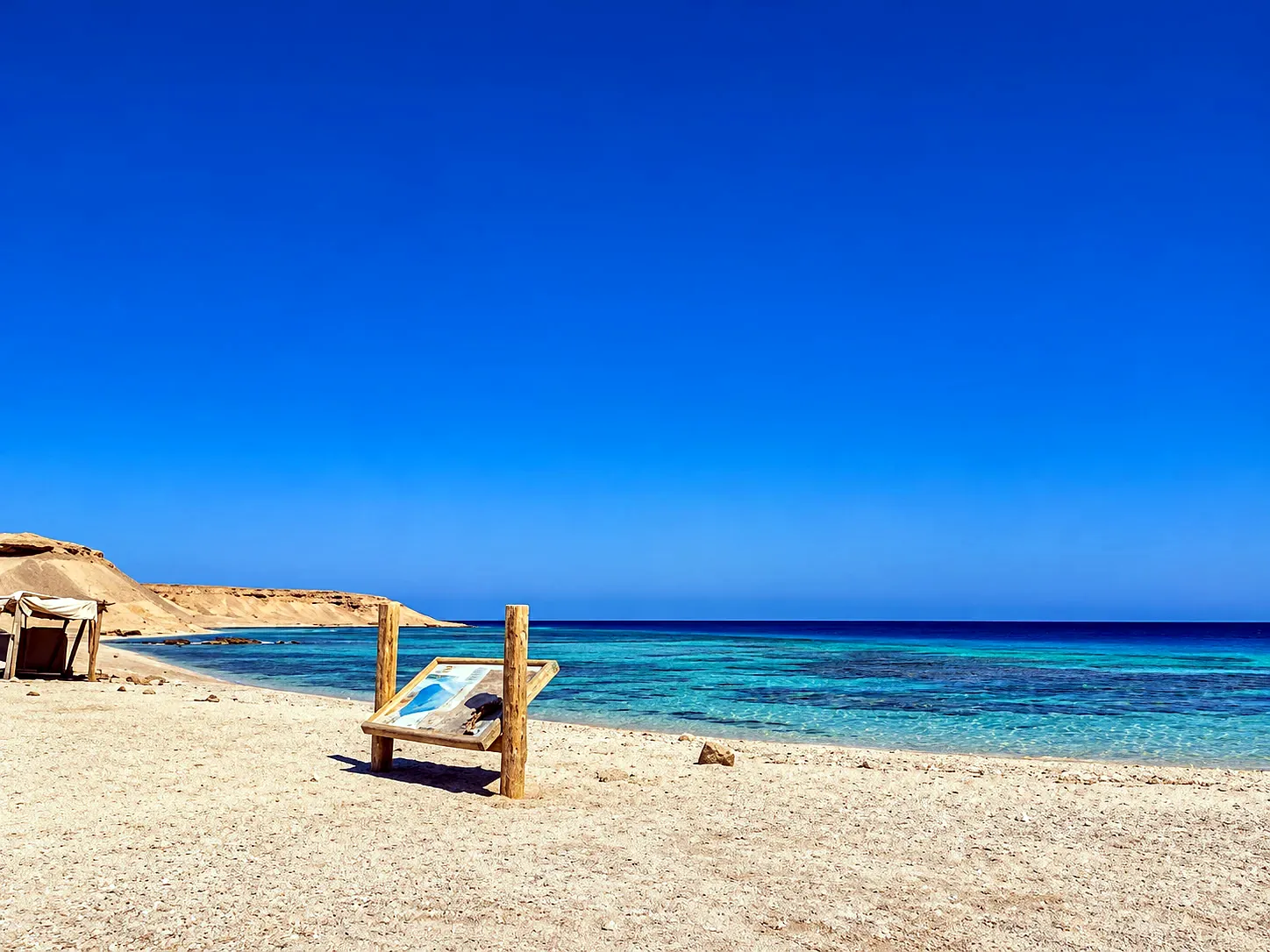
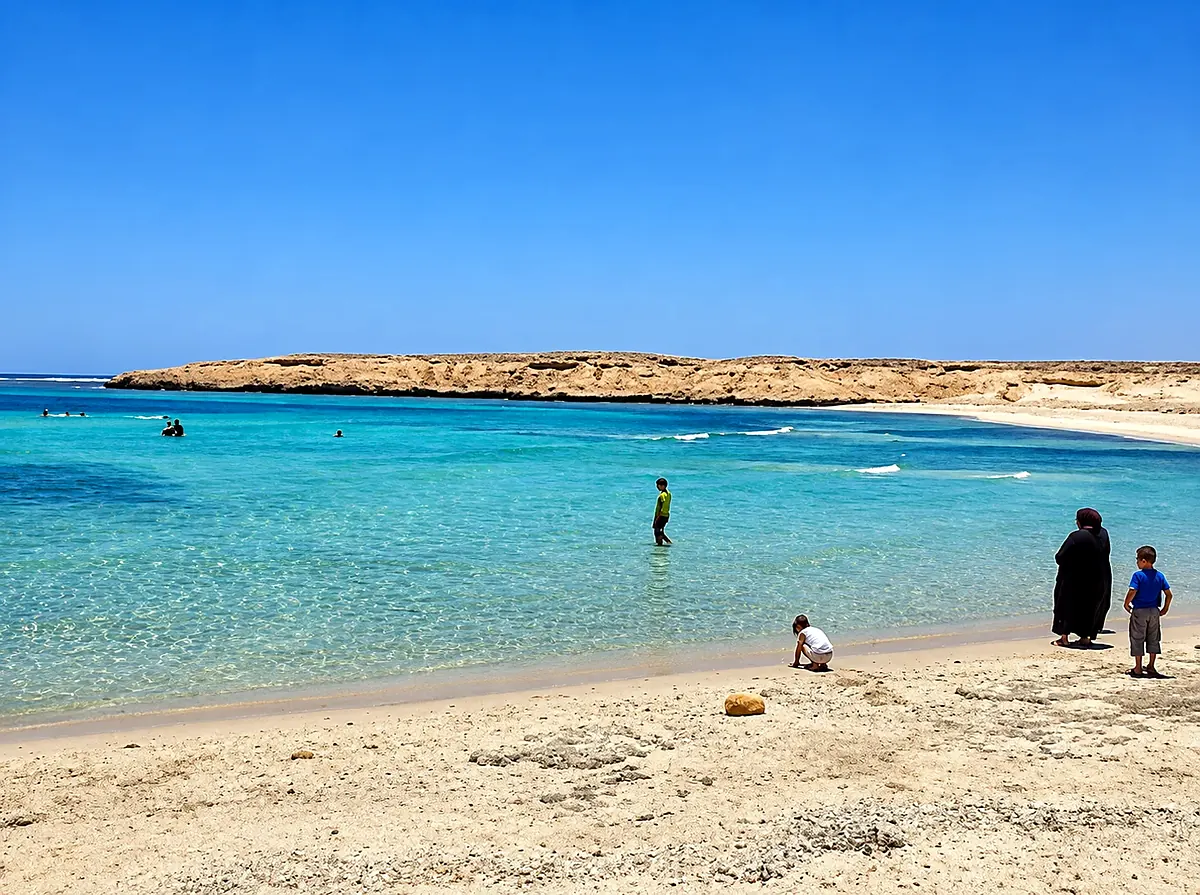
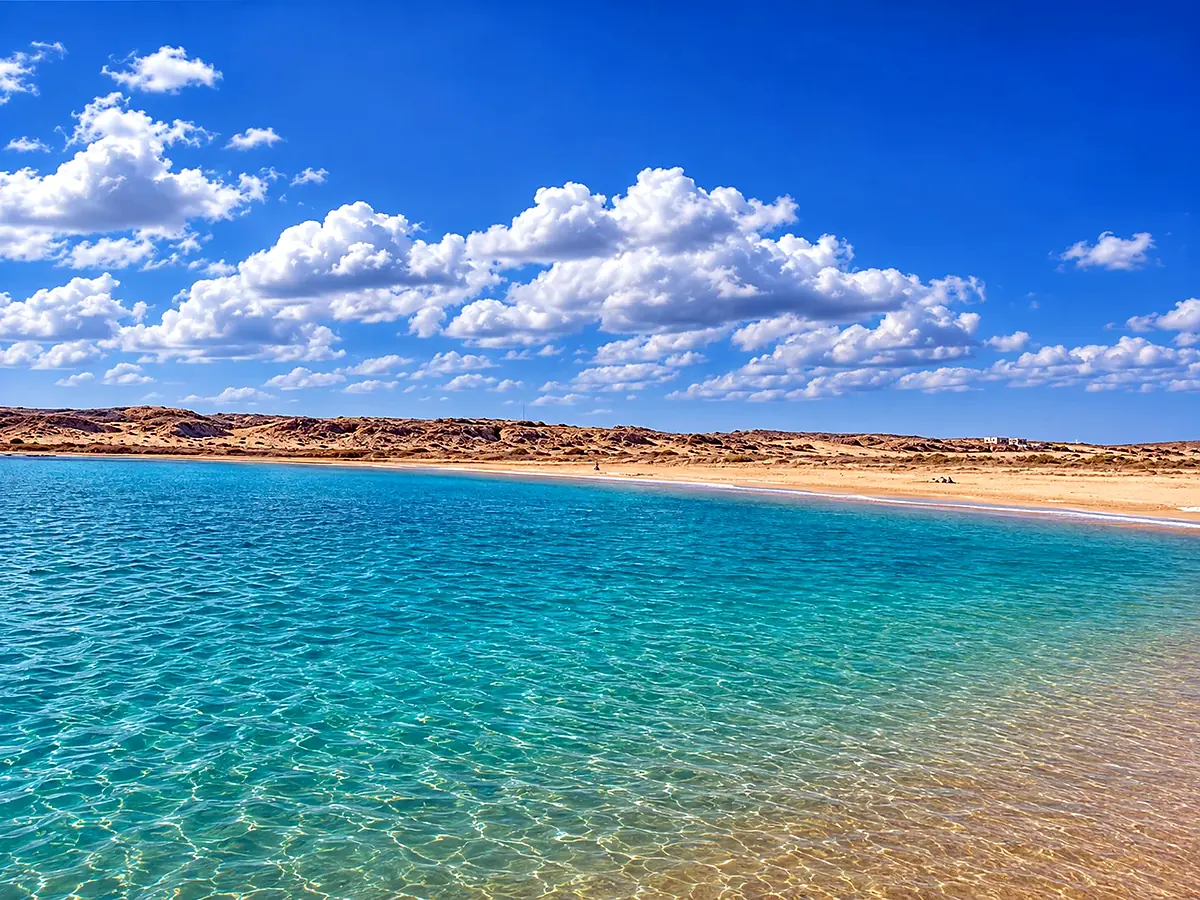
Marsa Assalaya, also known as Kilo 7, is a calm sandy bay about 7–8 km north of Marsa Alam town. From the beach, the bottom runs gently over sand and seagrass down to two coral reefs, one on each side of the bay. Because the water is sheltered and the pace slow, it is ideal for beginners, refresher dives and relaxed photo dives.
Marsa Assalaya in short
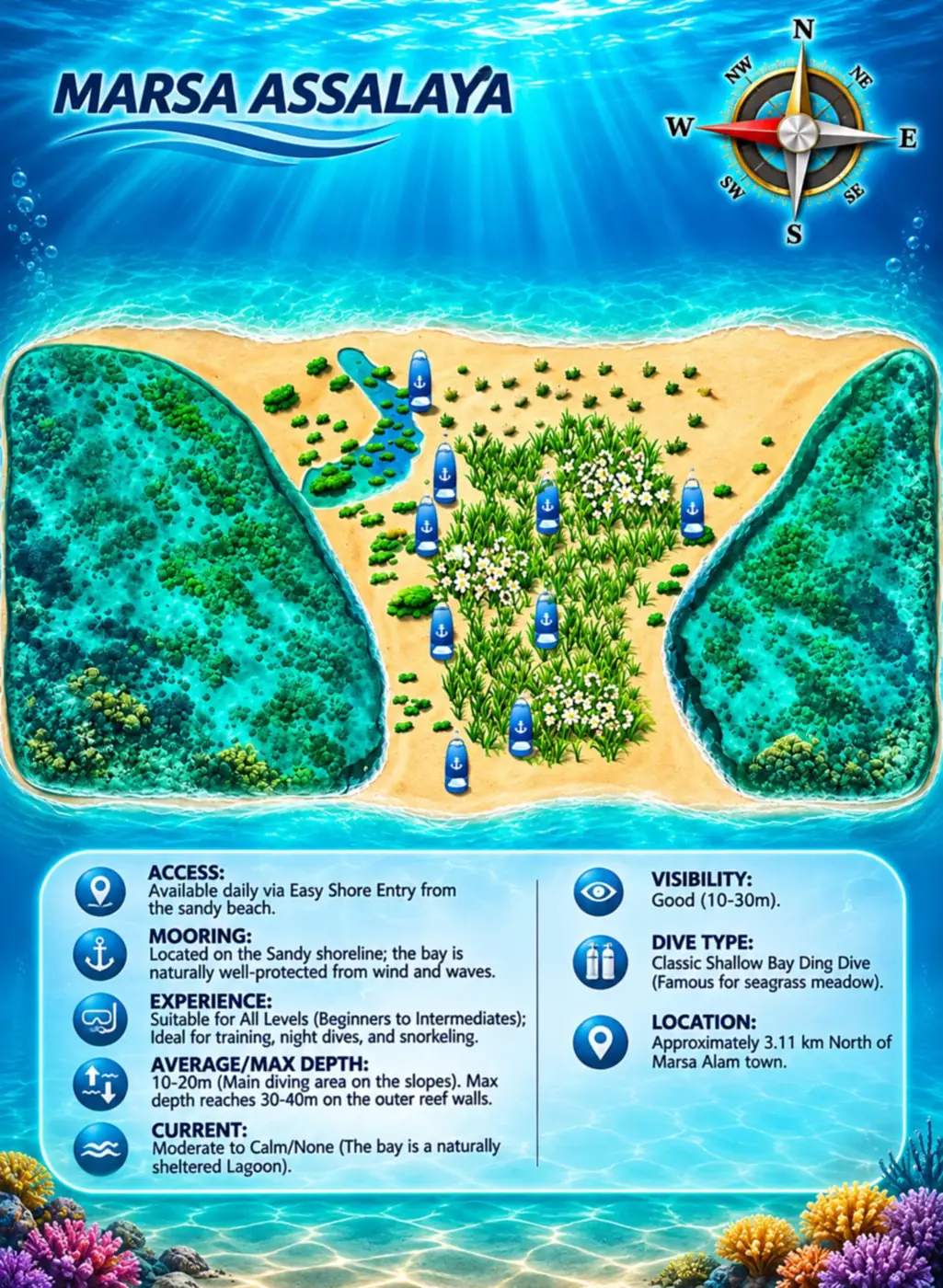
In short, Marsa Assalaya, also called Kilo 7, is a calm sandy bay about 7–8 km north of Marsa Alam town. Above all, divers enter from the beach and cross sand and seagrass to two coral reefs on either side of the bay. In addition, the current is weak or absent, and depths reach about 25 m at the reef edge. Overall, it is one of the easiest shore dives near Marsa Alam and suits beginners and refresher dives.
What is Marsa Assalaya like?
Above all, this is a calm and sheltered bay. A wide sandy area fills its center, and the water inside usually stays quiet.
Meanwhile, the edges are where the corals live. In fact, coral slopes, rocky structures and hard and soft corals line both sides of the bay.
At the reef edge, however, the depth increases quickly. As a result, it pays to watch your gauge as soon as you leave the sand.
The bay at a glance
The sand
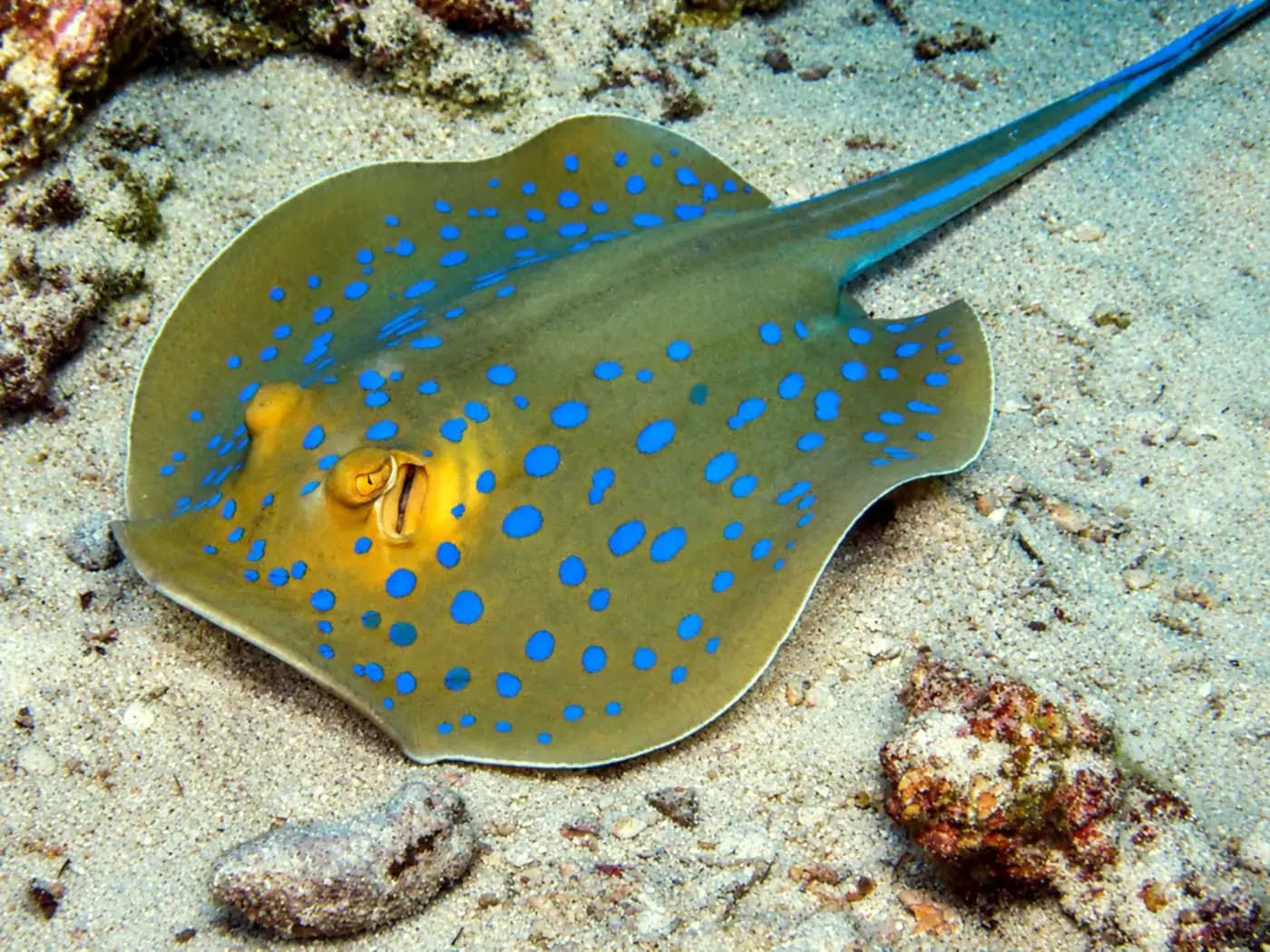
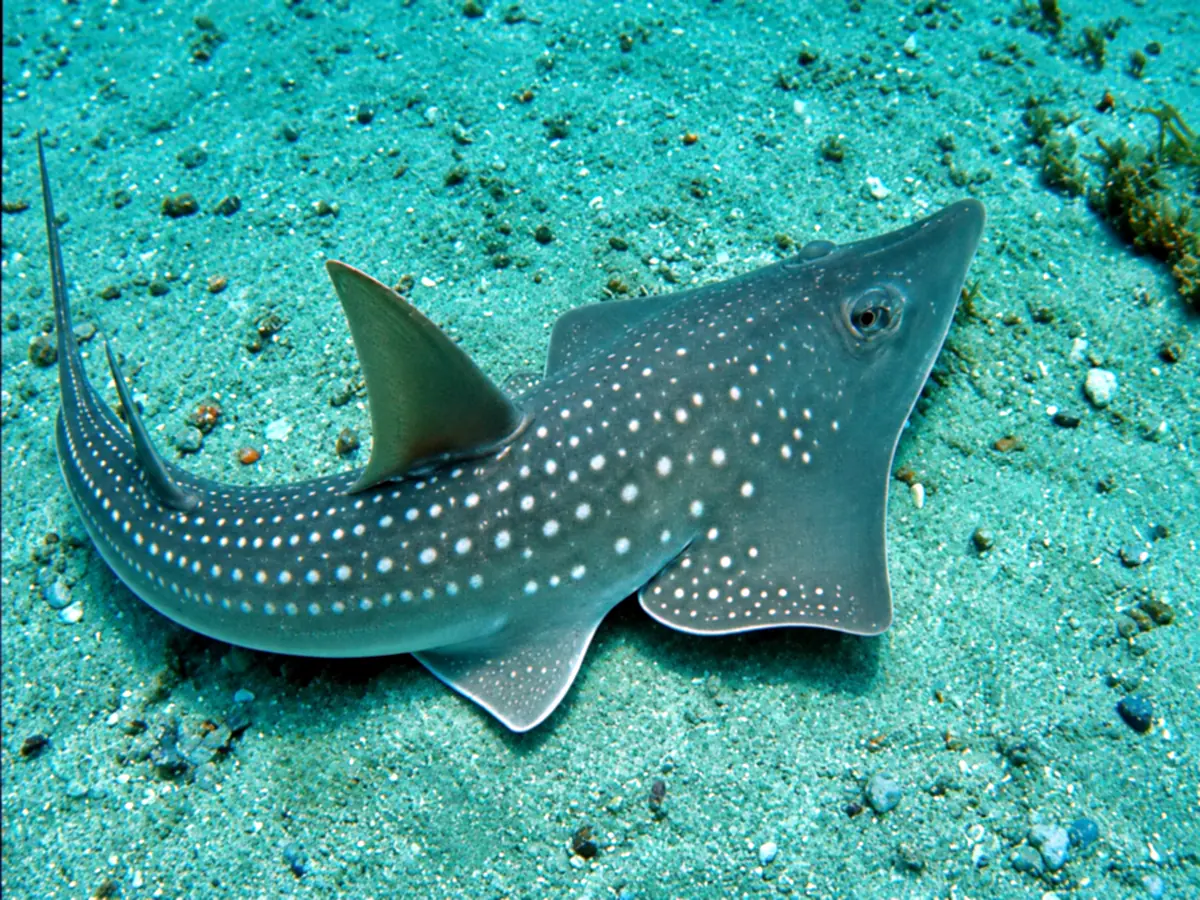
First, a wide sandy area where blue-spotted rays rest.
The seagrass
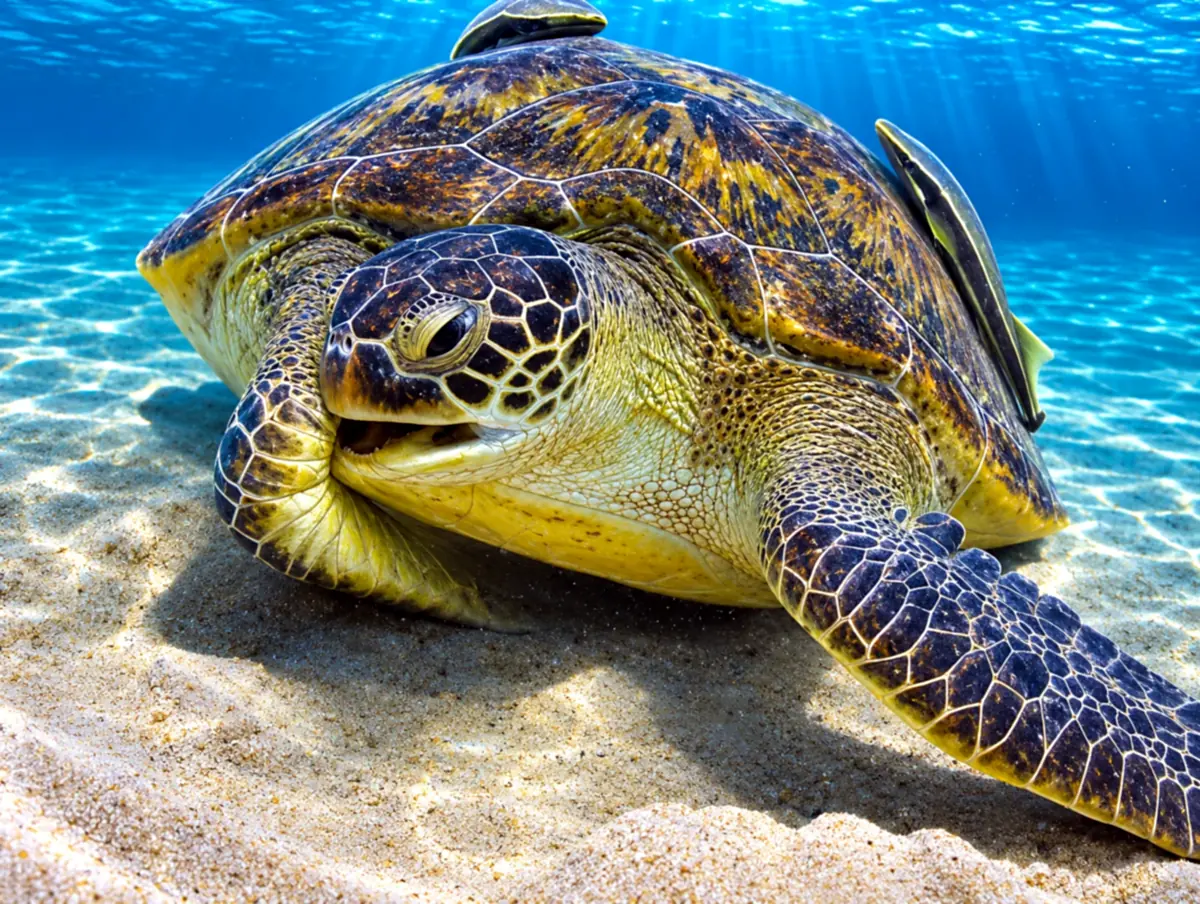
Next, a gentle bed of seagrass that turtles visit.
The two reefs
Finally, coral reefs along each side of the bay.
What is under the water at Marsa Assalaya?
Generally, the bay has three parts. First, a wide sandy area runs from the beach. Then, seagrass slopes gently down toward the reefs. Finally, coral reefs line both sides of the bay.
The sandy center
The sand. Here, for example, blue-spotted rays rest on the sand, and the water stays shallow.
The seagrass slope
The grass. In contrast, the seagrass slopes slowly down and draws grazing turtles.
The twin reefs
The reefs. Meanwhile, the reefs on each side hold coral gardens, rocky structures and a fast drop at the edge.
Where is Marsa Assalaya?
Specifically, the bay lies on the coast about 7–8 km north of Marsa Alam town, between Abu Dabab and Marsa Samadai. However, no verified GPS position for the dive entry has been published, so we do not give one here.
Nearby, Marsa Egla lies only about 2 km away, while Marsa Shagra is to the north and Marsa Samadai to the south. Finally, for the other reefs, see the Marsa Alam dive sites guide.
How do you dive Marsa Assalaya?
Usually, you walk in from the beach, cross the sand and then follow one of the reefs. Since the bay is sheltered, the pace stays slow, although the guide still picks the side by the wind.
Route A: the north reef
The entry
The start. First, you walk in from the beach and swim out across the sand.
The reef
The main dive. Then, you follow the coral slope with the reef on one side.
The return
The finish. Afterward, you cross the seagrass back toward the beach.
Route B: the south reef
The crossing
The start. Instead, you head across the sand toward the south side.
The garden
The main dive. Next, you explore the coral gardens and look for small creatures.
The shallows
The finish. Finally, you return through the shallows, where turtles often rest.
What marine life lives at Marsa Assalaya?
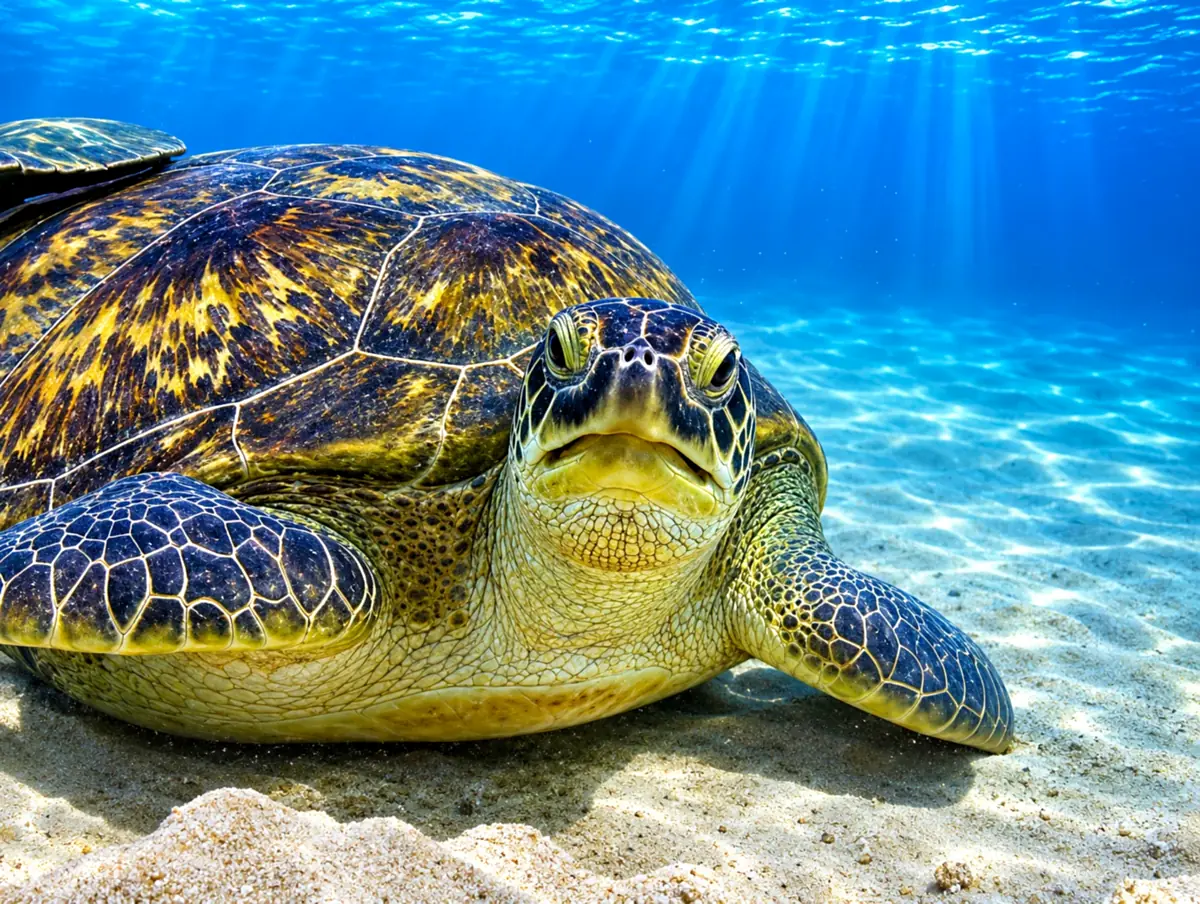
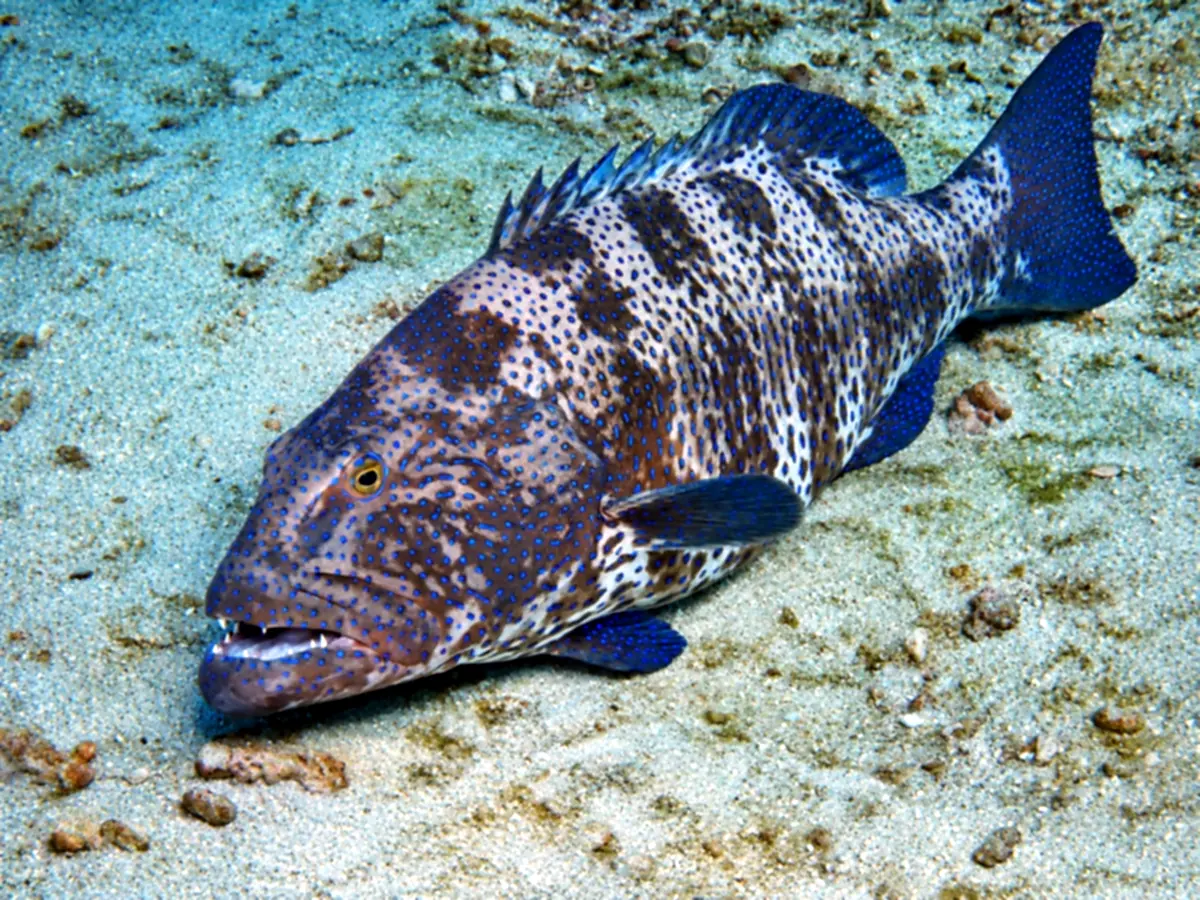
Overall, the bay mixes reef life with sand life. Above all, sea turtles are often seen, and blue-spotted stingrays rest on the sand, although no sighting is ever certain.
On the sand
Typically, turtles rest or graze in the bay, while blue-spotted stingrays lie on the sand.
On the reefs
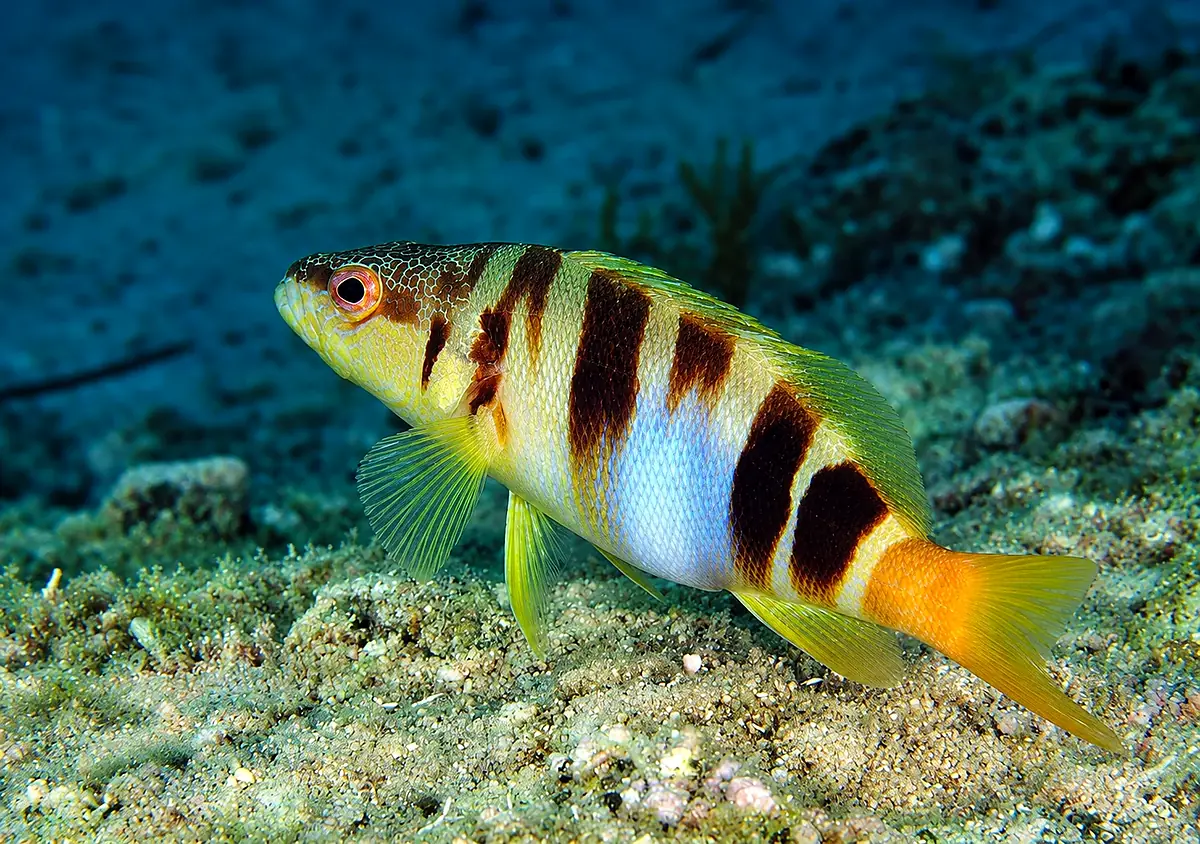
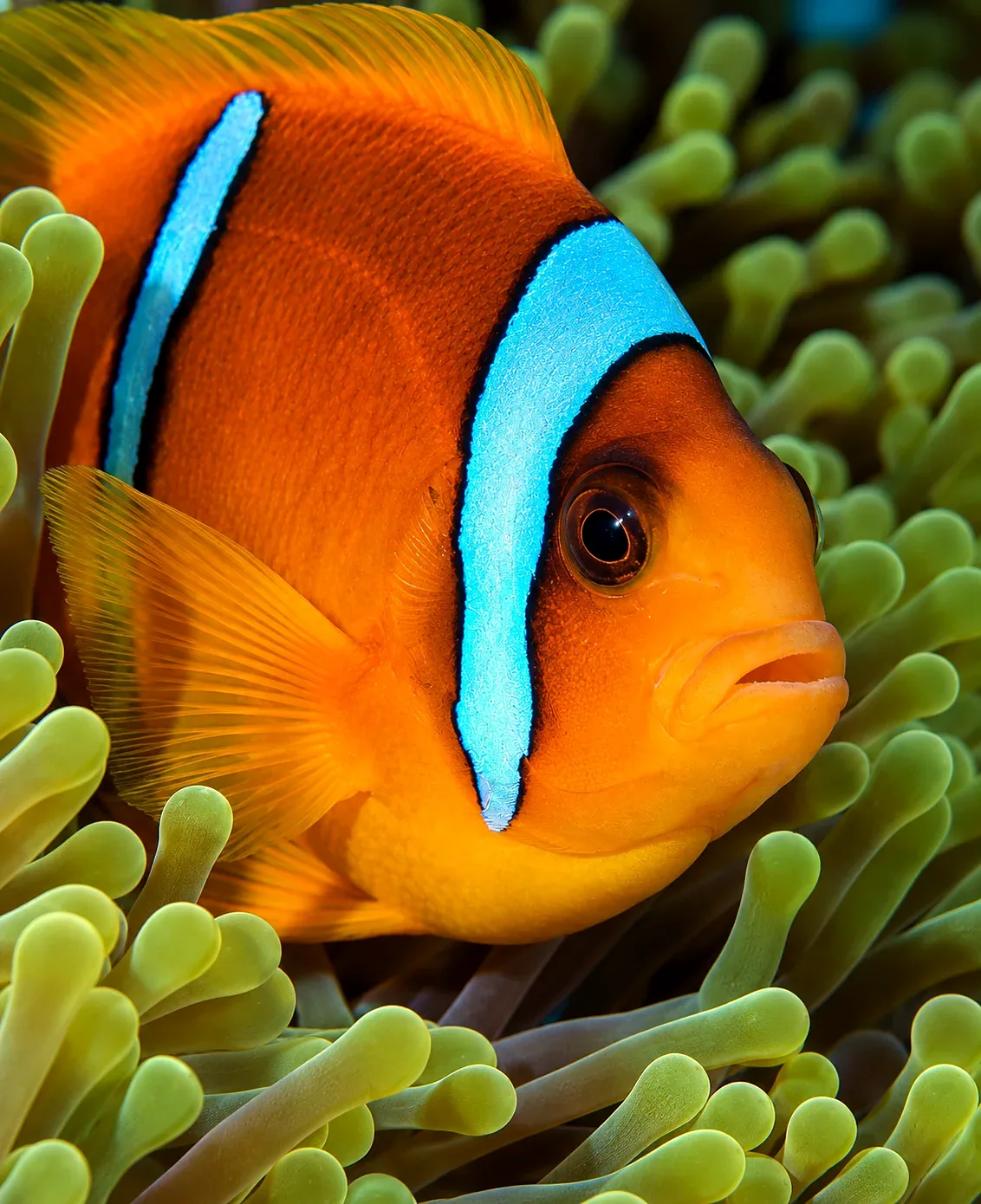
Likewise, butterflyfish, angelfish, parrotfish, sweetlips and clownfish live along the reef edge.
In the corals
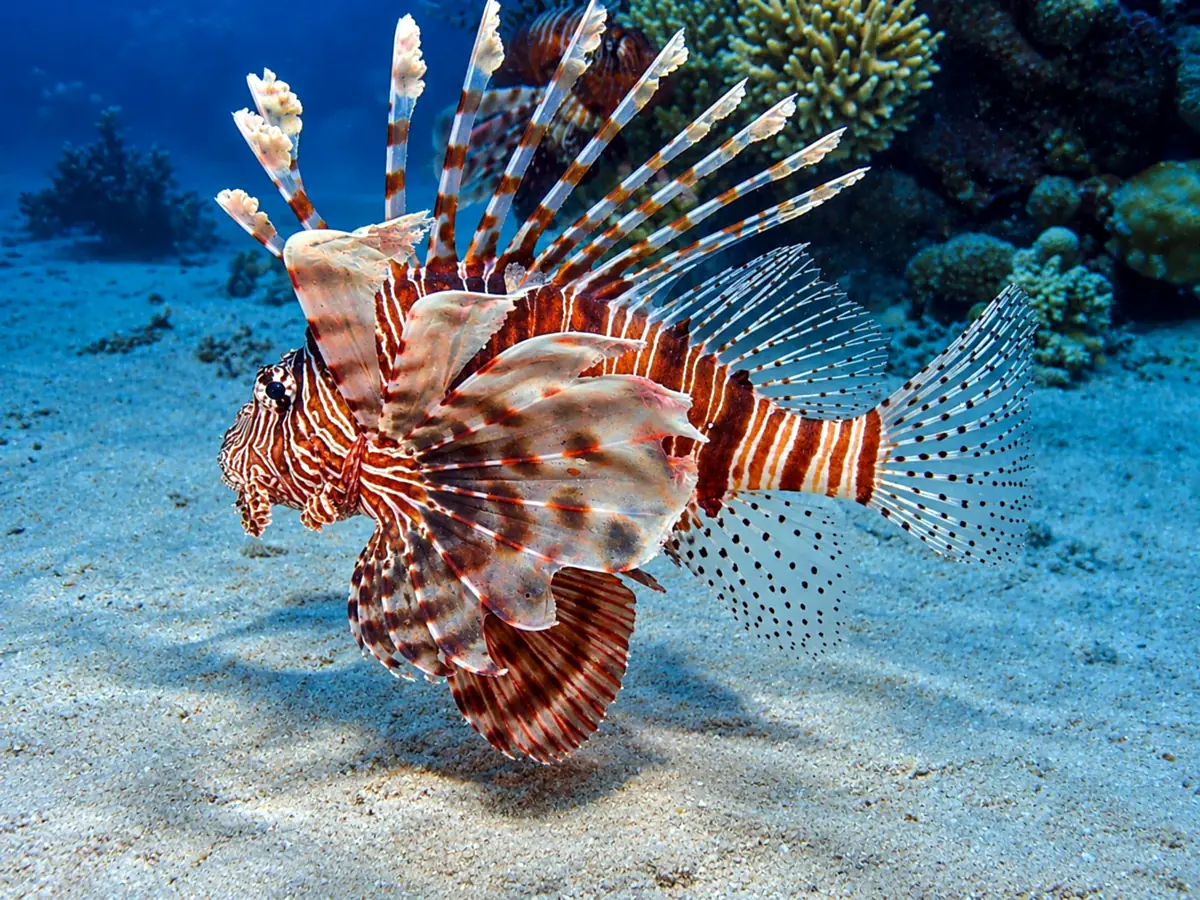
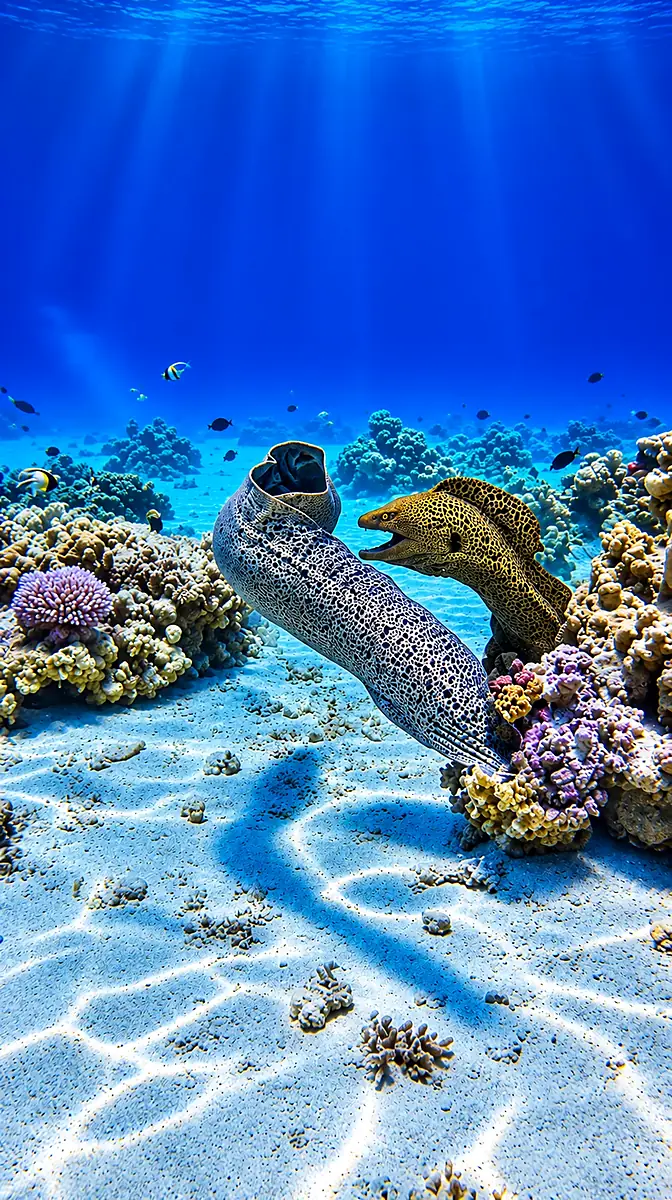
Meanwhile, scorpionfish, lionfish and moray eels hide among the corals.
Is Marsa Assalaya suitable for beginners?
Yes. The entry is easy, the bay is sheltered and the pace is slow, so it suits beginners, refresher dives and Open Water divers.
However, the depth rises fast at the reef edge, so watch your gauge. For better control, the Peak Performance Buoyancy course helps. For example, our liveaboard dive techniques guide also explains buoyancy and entries.
Before you dive here
Firstly, watch your hands and fins, since scorpionfish and lionfish are venomous and well camouflaged. Secondly, stay above the sand to spare resting rays.
Above all, follow our diving safety standards and the rules of HEPCA. We strongly recommend dive insurance such as DAN Europe.
How do you get to Marsa Assalaya?
In practice, divers drive to the beach and walk in, so no boat is needed. Liveaboards on the southern routes can also visit the Marsa Alam reefs, such as our BDE liveaboard and the Daedalus and Fury Shoals route. Guests board on Saturday after 15:00, and check-out is between 09:00 and 10:00 the next Saturday.
Generally, you can combine it with other sites on the same coast. Consequently, you can pair it with Marsa Egla, Elphinstone and the other Marsa Alam reefs.
Plan your dive trip
- BDE liveaboard — Brothers, Daedalus and Elphinstone.
- Daedalus and Fury Shoals liveaboard — Daedalus Reef and the southern reefs.
- What divers need on board — the packing checklist for a Red Sea safari.
- redsealiveaboard.net — Red Sea safari schedules and availability.
- All eight boats in our fleet can sail these routes: Sea Fox, Simba, Sea Treasure, Star Jet, Bismarck, C Echo II, C U and Ramadan 3.
Photo gallery from Marsa Assalaya
Other routes from Red Sea Diving
Generally, for a first liveaboard, the North Red Sea liveaboard keeps to the classic wrecks. On the other hand, the Deep South St. John’s liveaboard reaches the far south, while the Elba Reef liveaboard goes further still. Meanwhile, the Red Sea liveaboard guide compares all eight routes.
Marsa Assalaya: frequently asked questions
Where is Marsa Assalaya?
In fact, it is a sandy bay about 7–8 km north of Marsa Alam town, also known as Kilo 7, about 2 km from Marsa Egla.
How do you enter the water at Marsa Assalaya?
From the beach, across a wide sandy area, so no boat is needed.
How deep is Marsa Assalaya?
Overall, the bay is shallow, but the depth increases quickly at the reef edge, to about 25 m.
Can you see turtles at Marsa Assalaya?
Often. Sea turtles are frequently seen in the bay, and blue-spotted stingrays rest on the sand.
Is Marsa Assalaya good for beginners?
Yes. In general, the bay is sheltered with little current, so it suits beginners, refresher dives and relaxed photo dives.
Marsa Alam · Liveaboard · Coastal reefs
Dive Marsa Assalaya with us
Simply tell us your dates, the number of divers, your certification level and your number of logged dives. Afterward, our team checks which departure fits your group before you commit to anything.


