
Dive guide to Marsa Abu Dabab · North of Marsa Alam
Marsa Abu Dabab Dive Site The famous turtle bay of Marsa Alam, with seagrass and a chance of dugongs
Marsa Abu Dabab, also written Marsa Abu Dabbab and called Turtle Bay, is a large sandy bay north of Marsa Alam town. In its center, seagrass meadows feed big green turtles every day, while guitarfish and rays rest on the sand. Reefs line both sides of the bay, and on some days a dugong comes in to graze, so it is one of the most loved shore dives in Egypt.
Marsa Abu Dabab in short
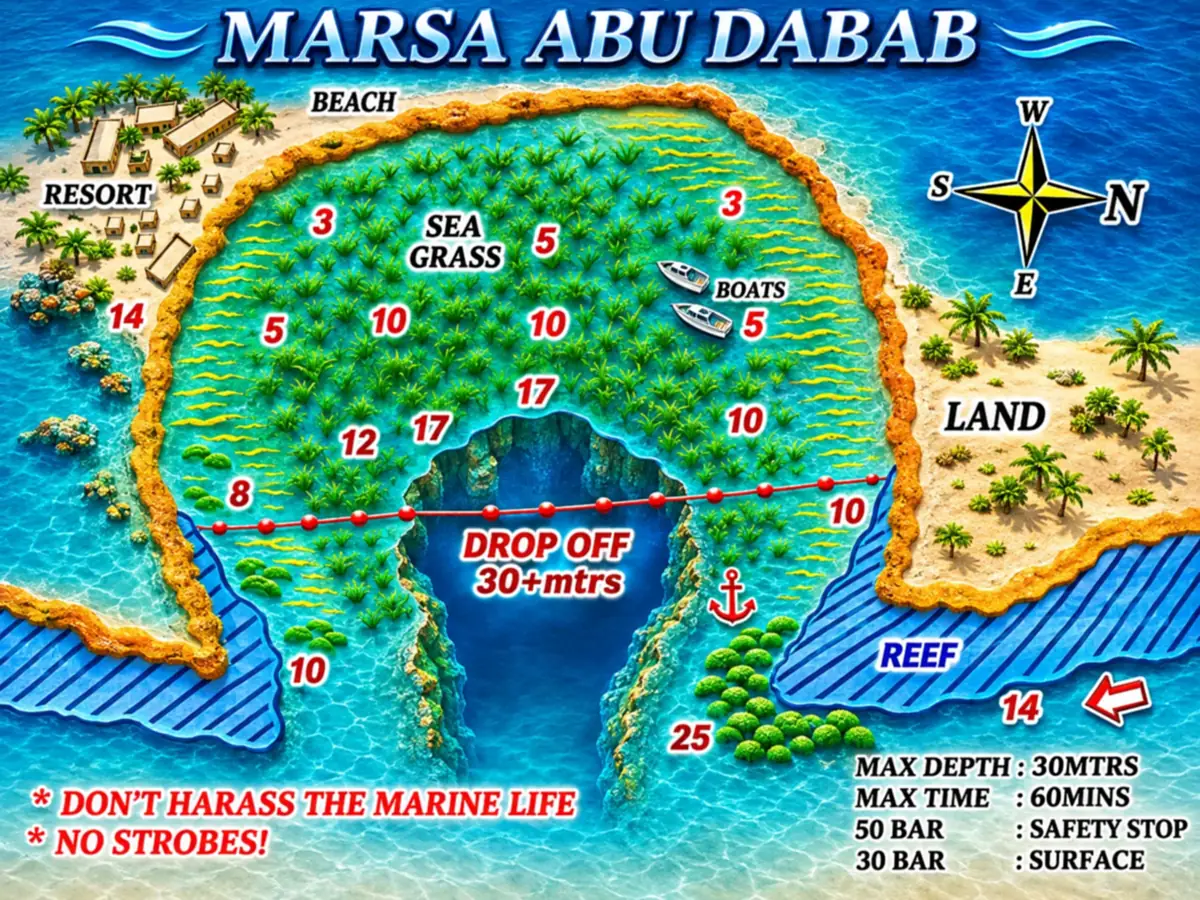
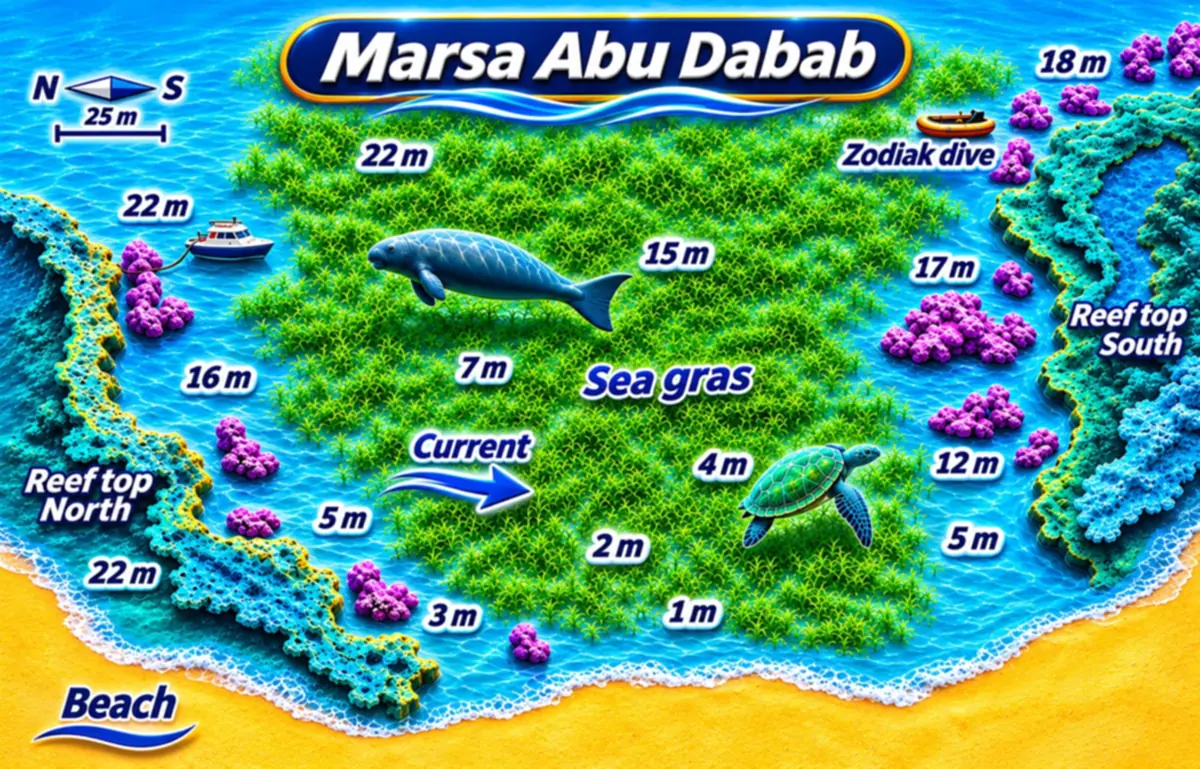
In short, Marsa Abu Dabab is a large sandy bay about 30 km north of Marsa Alam town and about 25 km south of Port Ghalib. Above all, its central seagrass at 2–4 m draws green turtles every day, and a dugong visits on some days. In addition, house reefs line the north and south sides. Overall, the bay is a shore dive to about 18 m with easy conditions, so it suits every level as well as snorkelers.
What is Marsa Abu Dabab like?
Above all, this is a marine-life dive. A long sandy beach leads into a gentle slope, and the seagrass begins only a few metres from the shore.
Meanwhile, the reefs on each side give the dive some shape. In fact, the north reef and the south reef both make an easy wall dive back to the beach.
Out in front of the bay, however, lie the numbered offshore reefs of the same name. These are separate boat dives, so this page covers the bay itself.
Marsa Abu Dabab at a glance
The seagrass
First, the meadows in the center, where turtles graze every day.
The north reef
Next, the reef on the north side, an easy dive along the drop-off.
The south reef
Finally, the south reef, reached across the seagrass.
What is under the water at Marsa Abu Dabab?
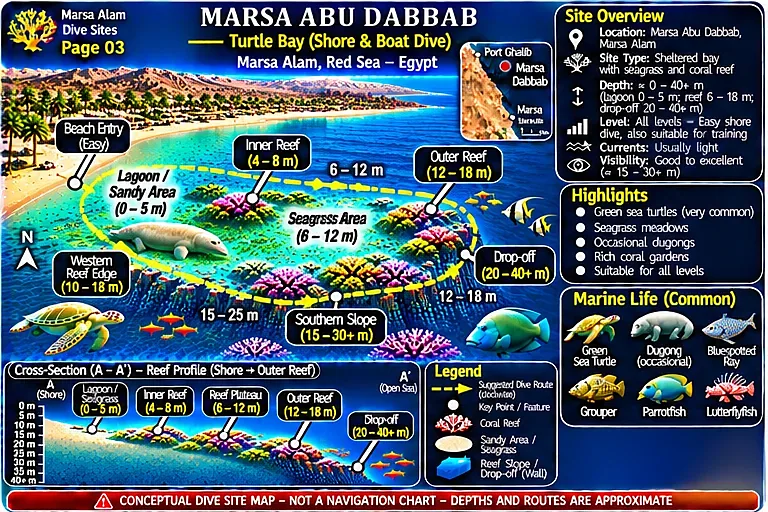
Generally, the bay has three parts. First, the sand slopes gently from the beach. Then, the seagrass covers the center of the bay. Finally, a house reef runs along each side.
The seagrass meadows
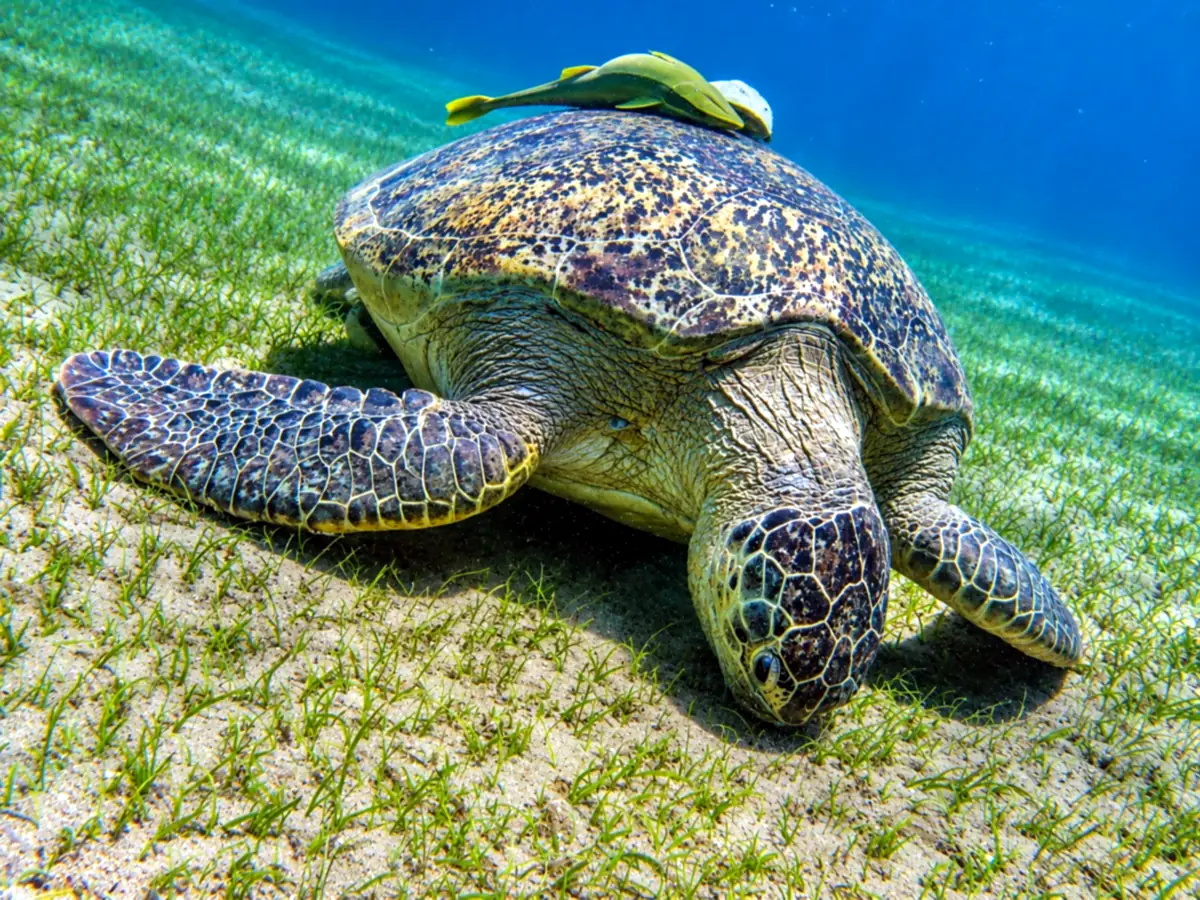
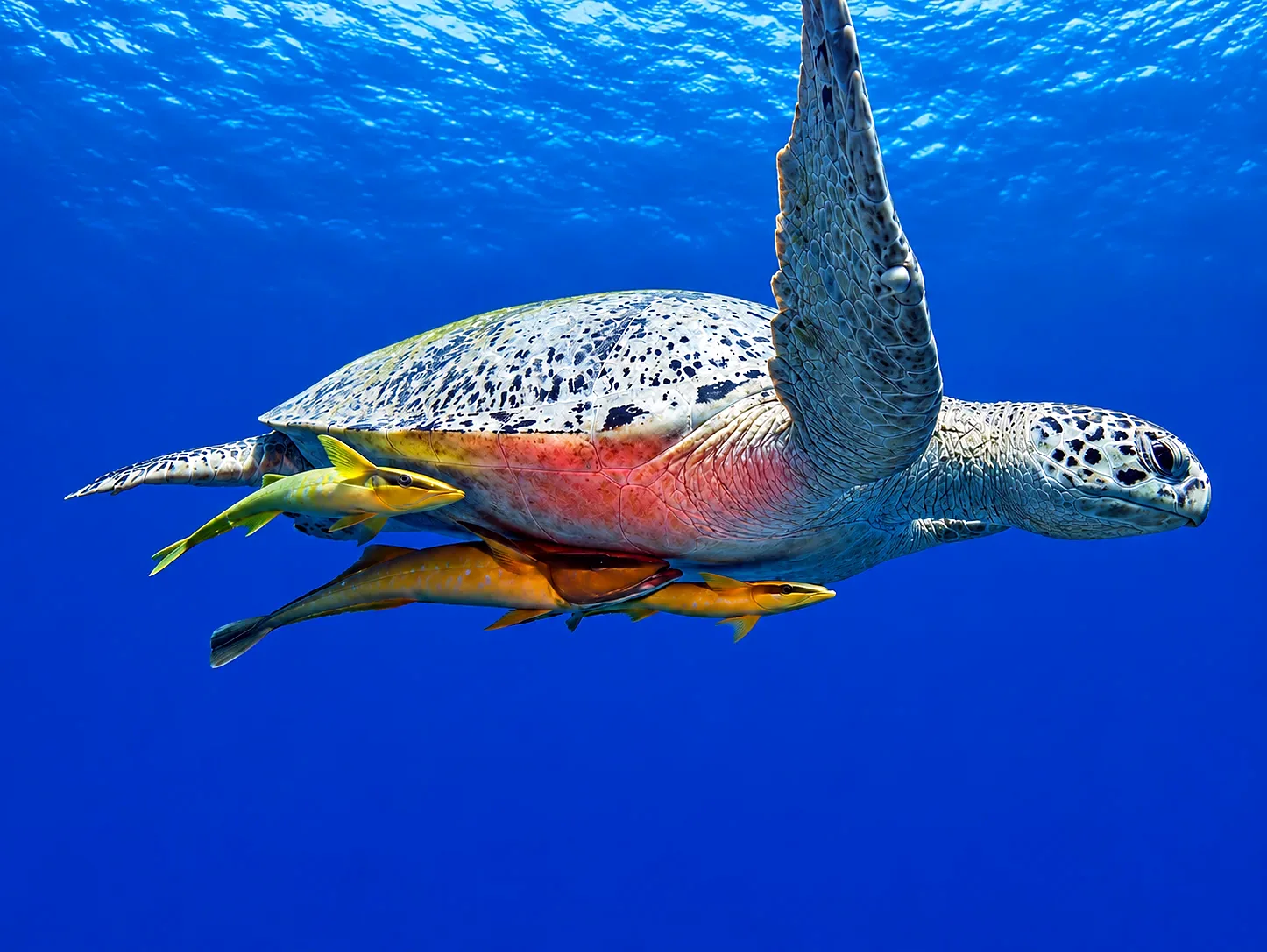
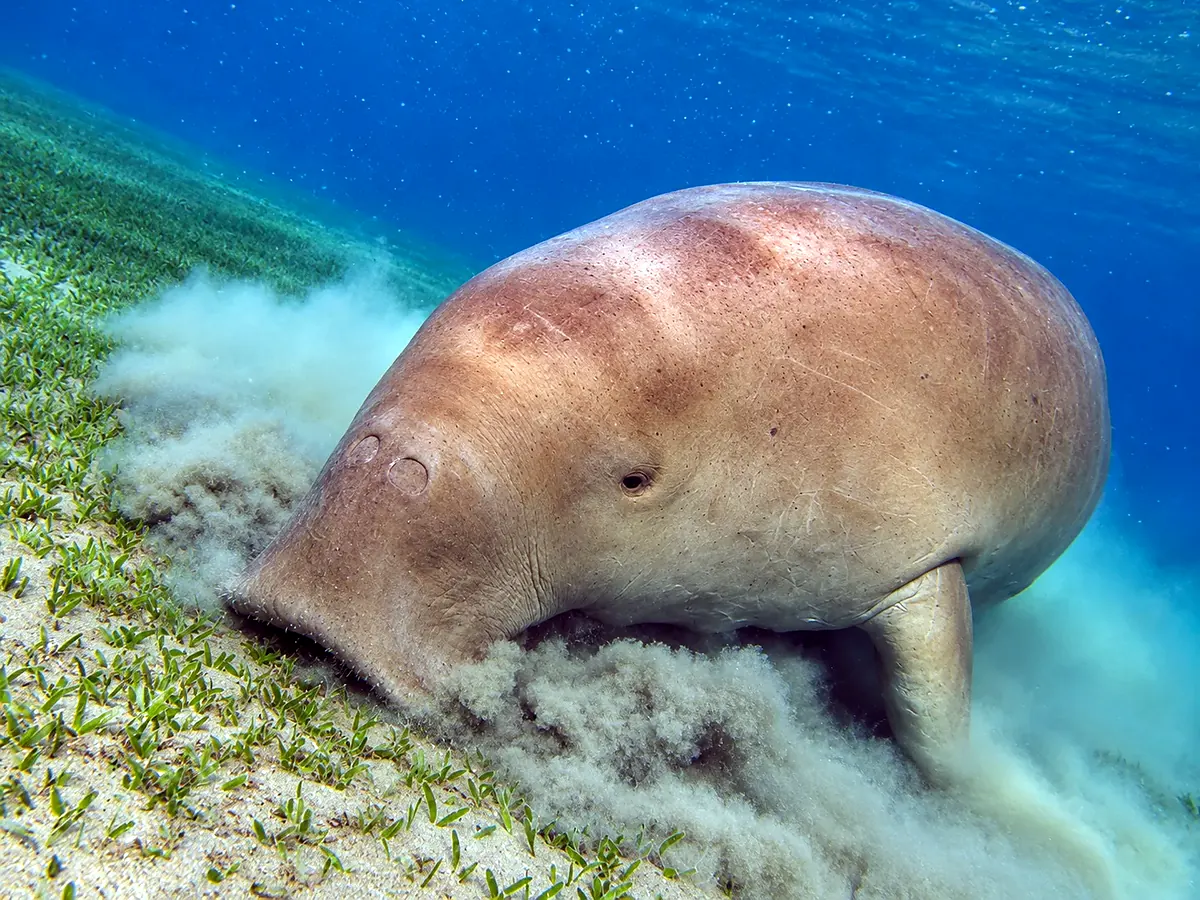
The meadows. Here, the green turtles graze, often with remoras on their shells, and the dugong feeds on some days.
The north reef
The north side. In contrast, the north reef offers a classic wall with hard corals and busy reef fish.
The south reef
The south side. Meanwhile, the south reef has a coral barrier, best reached across the seagrass at 12–15 m.
Where is Marsa Abu Dabab?
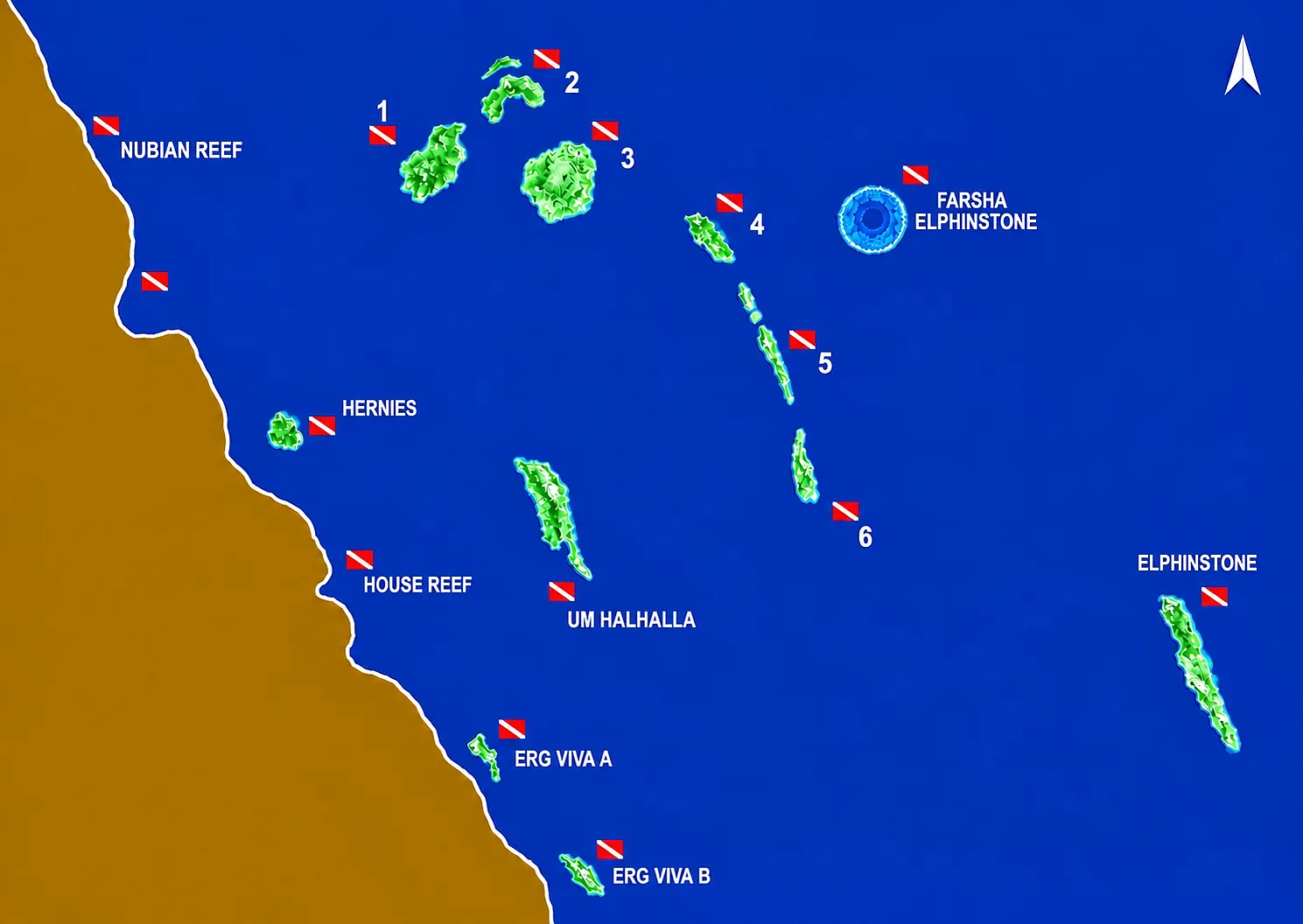
Specifically, the bay lies on the coast about 30 km north of Marsa Alam town and about 25 km south of Port Ghalib. In fact, Marsa Hermez is only a few minutes away by speedboat.
However, no verified GPS position for the dive entry has been published, so we do not give one here. Finally, for the nearby reefs, see the Marsa Alam dive sites guide, together with Marsa Hermez and Marsa Shouna.
How do you dive Marsa Abu Dabab?
Usually, the dive starts from the beach, since boats may only stay outside the bay. In both routes, conditions are easy, so the dives stay slow and relaxed.
Route A: the seagrass and the south reef
The entry
The start. First, you walk in from the beach on the south side of the bay.
The seagrass
The main dive. Then, you swim out over the middle of the bay, where turtles, guitarfish and sometimes the dugong feed.
The south reef
The finish. Afterward, at 12–15 m you turn south to the coral barrier and follow it back to the start.
Route B: the north reef
The entry
The start. Instead, you enter toward the north side of the bay.
The wall
The main dive. Next, you follow the drop-off of the north reef with the coral beside you.
The return
The finish. Finally, you cross back over the seagrass and end near the beach.
What marine life lives at Marsa Abu Dabab?
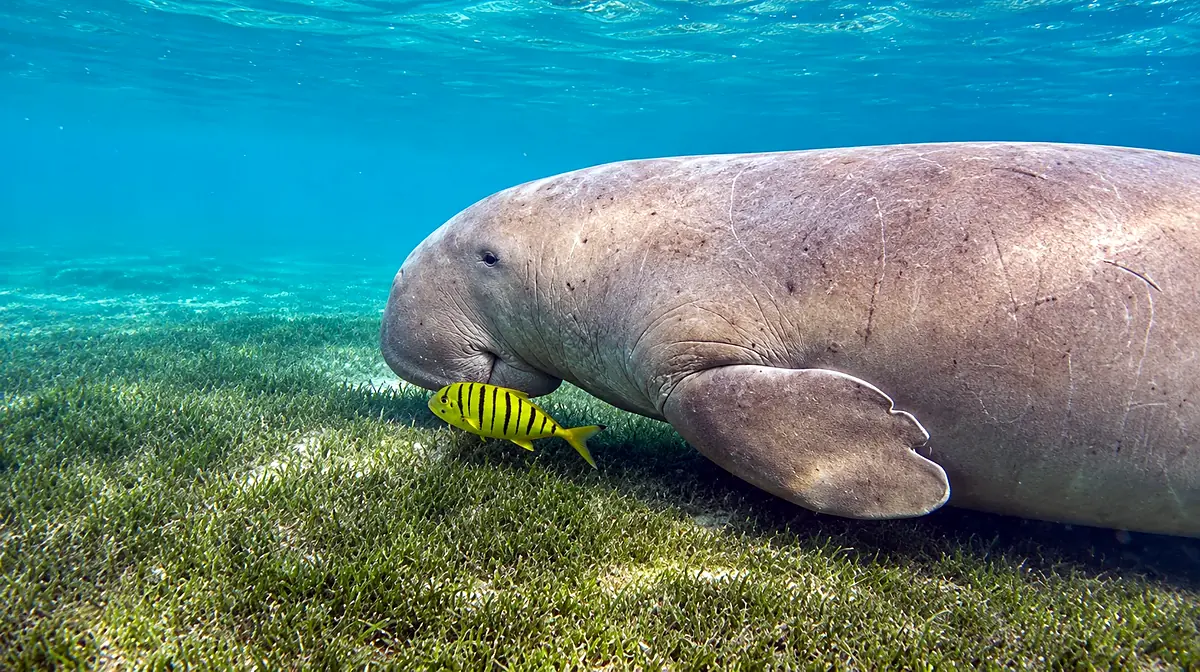
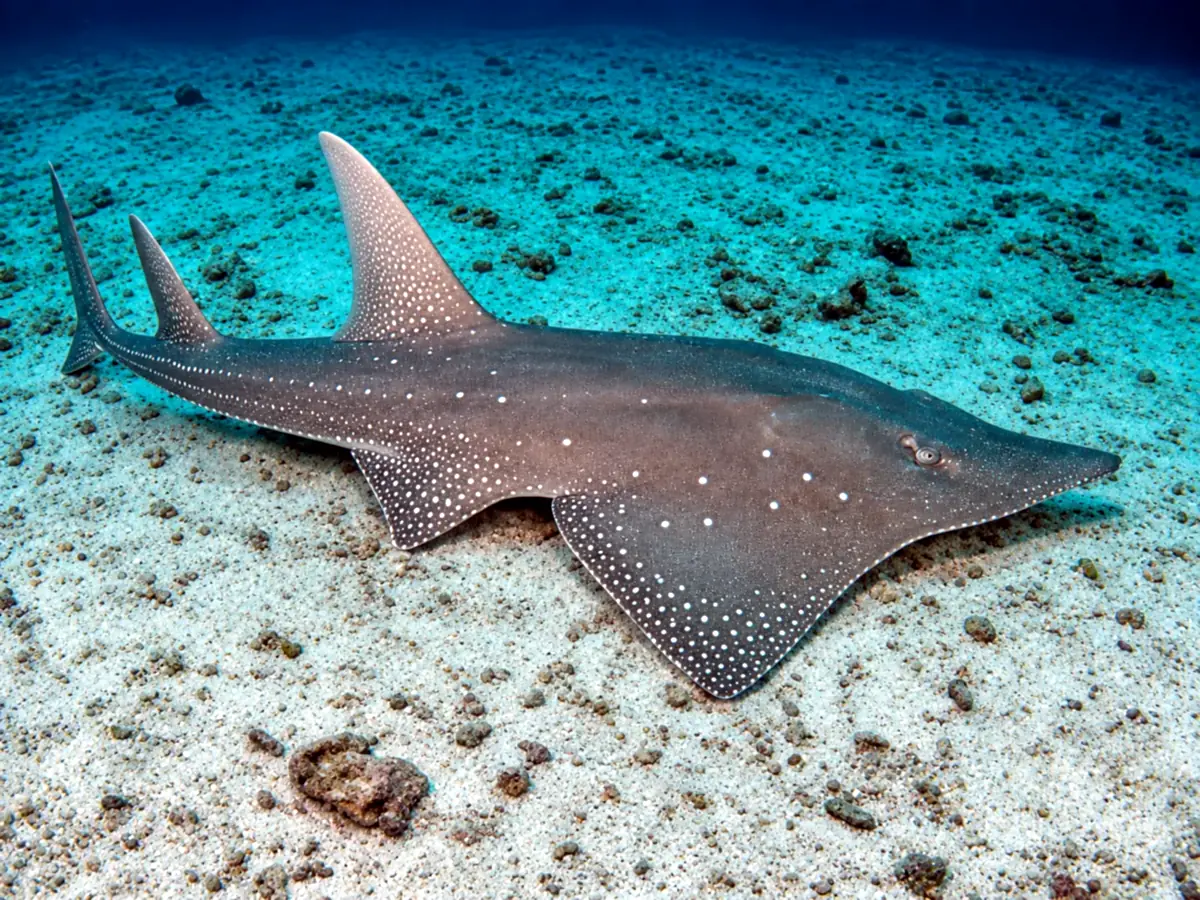
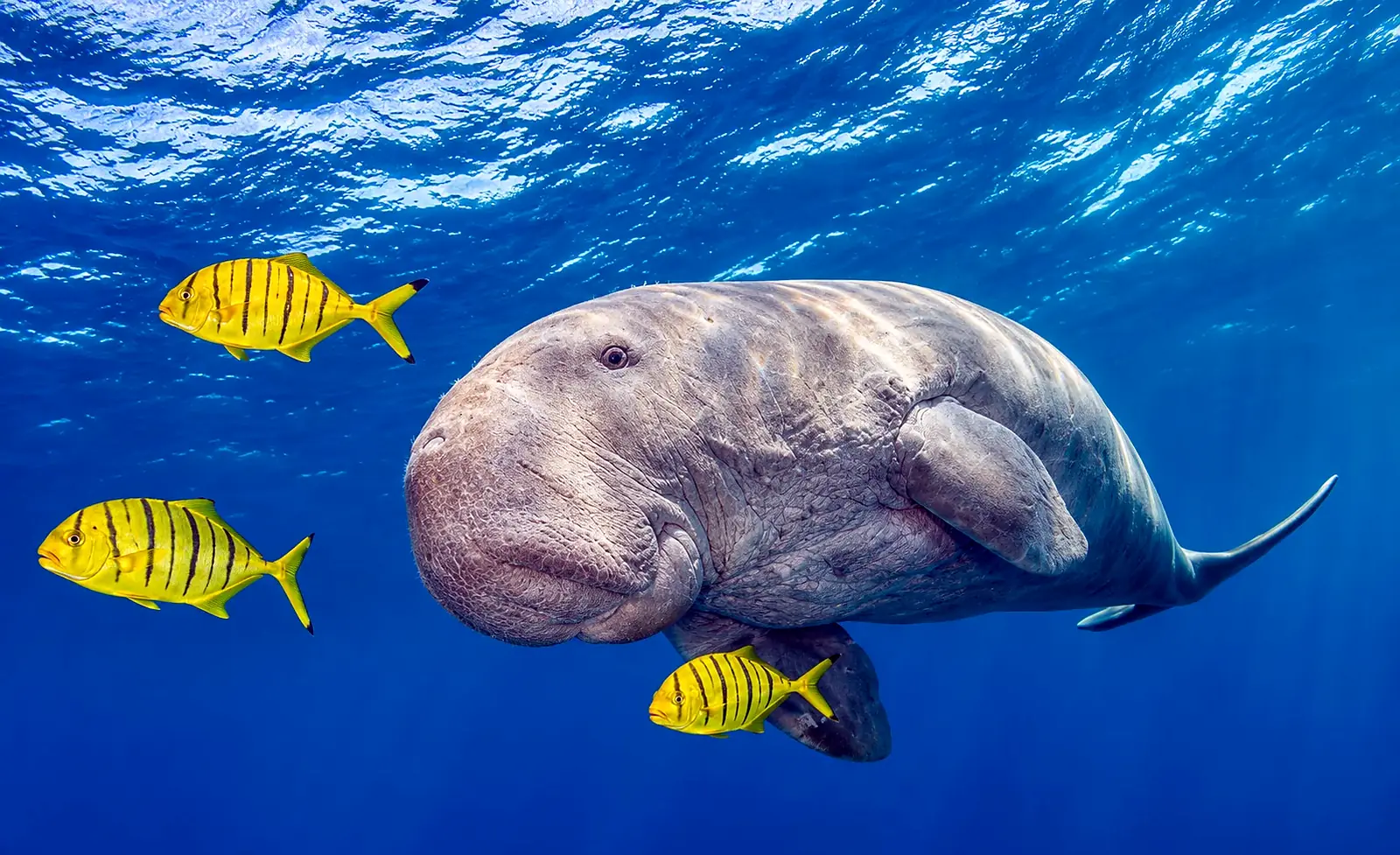
Overall, the seagrass is the reason people come. Above all, large green turtles feed here every day, and guitarfish and whiptail stingrays are common. A dugong still visits the bay, although sightings are rarer than they once were and never certain.
On the seagrass
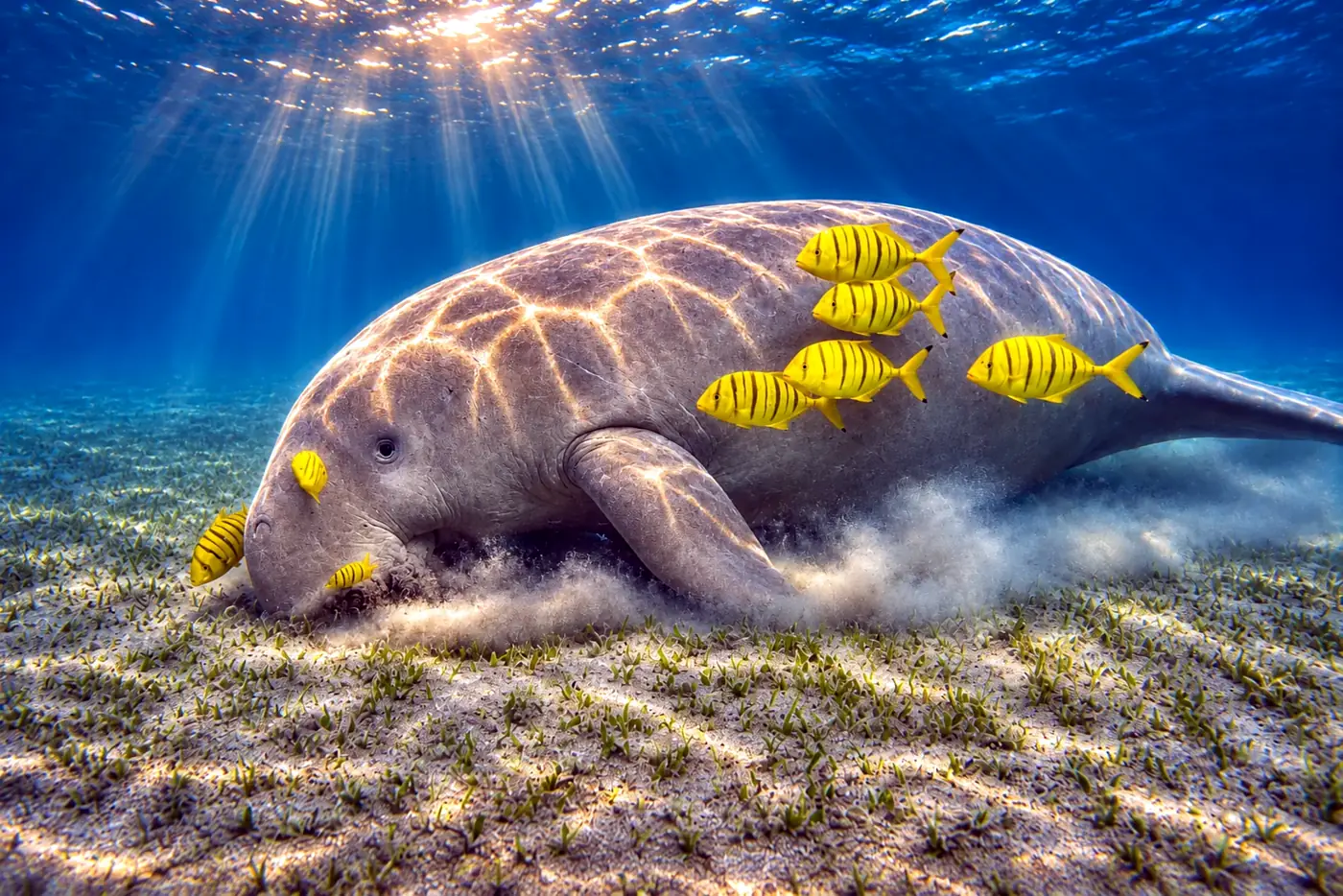
Typically, big green turtles graze on the meadows, and the dugong comes in to feed on some days.
On the sand
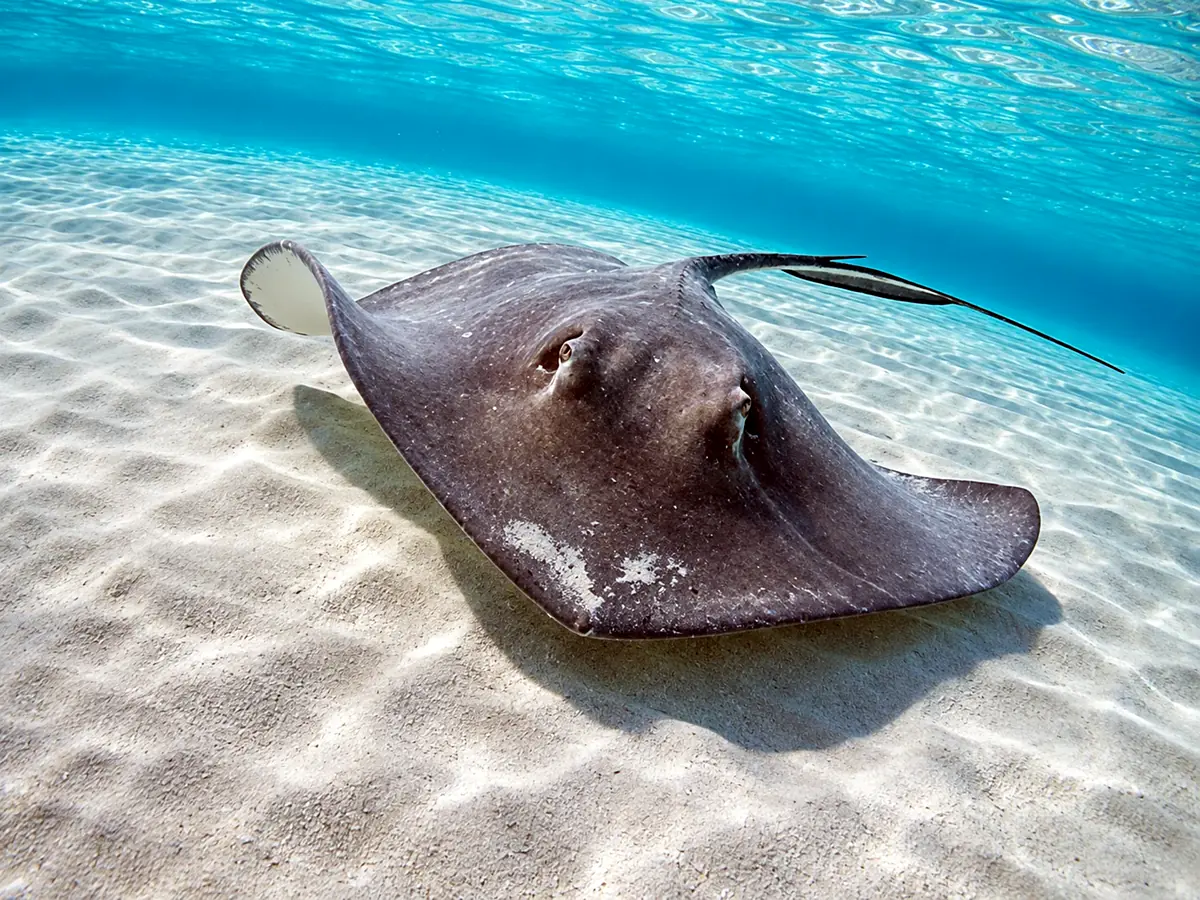
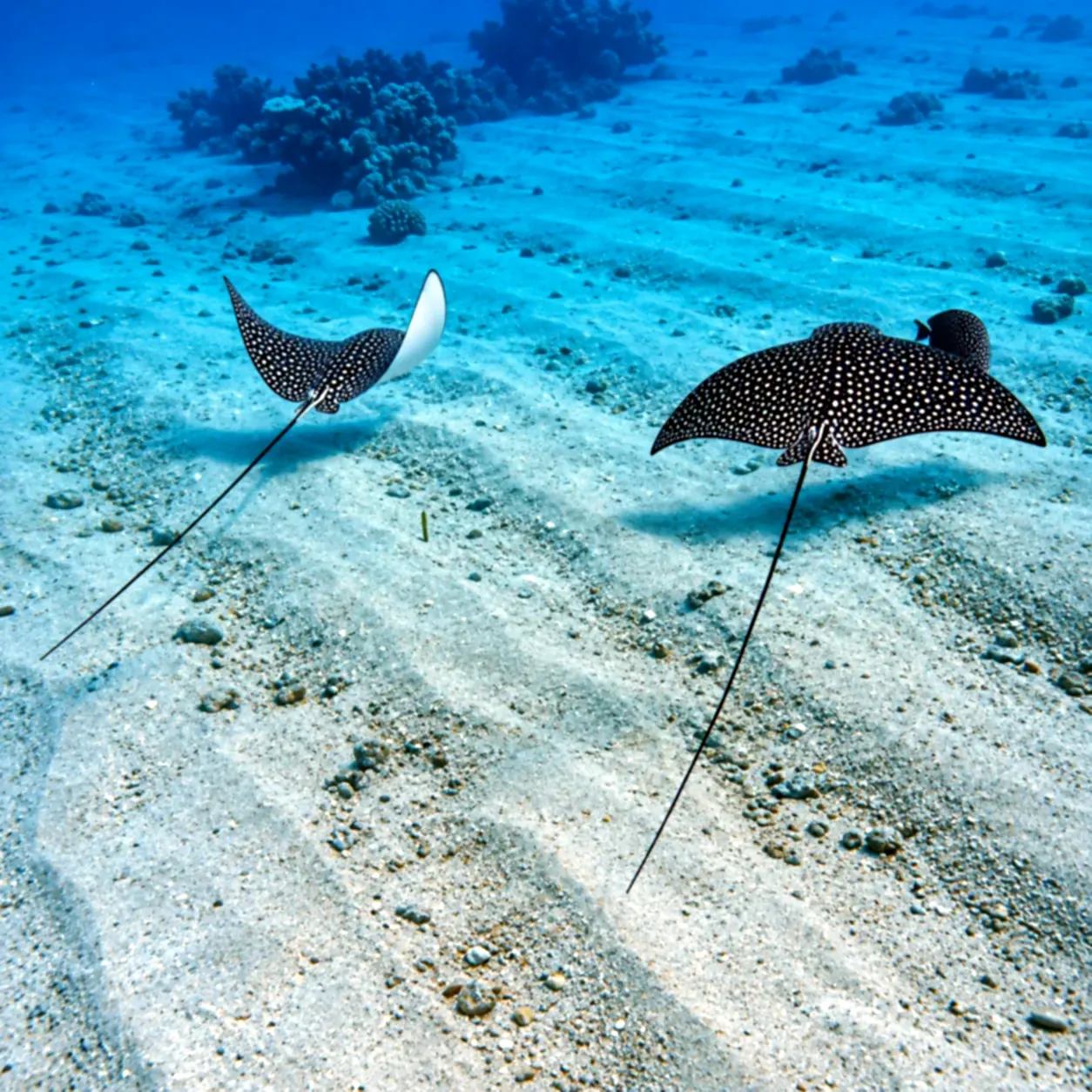
Likewise, guitarfish and large whiptail stingrays rest on the sand, while blue-spotted rays hide nearby.
On the reefs
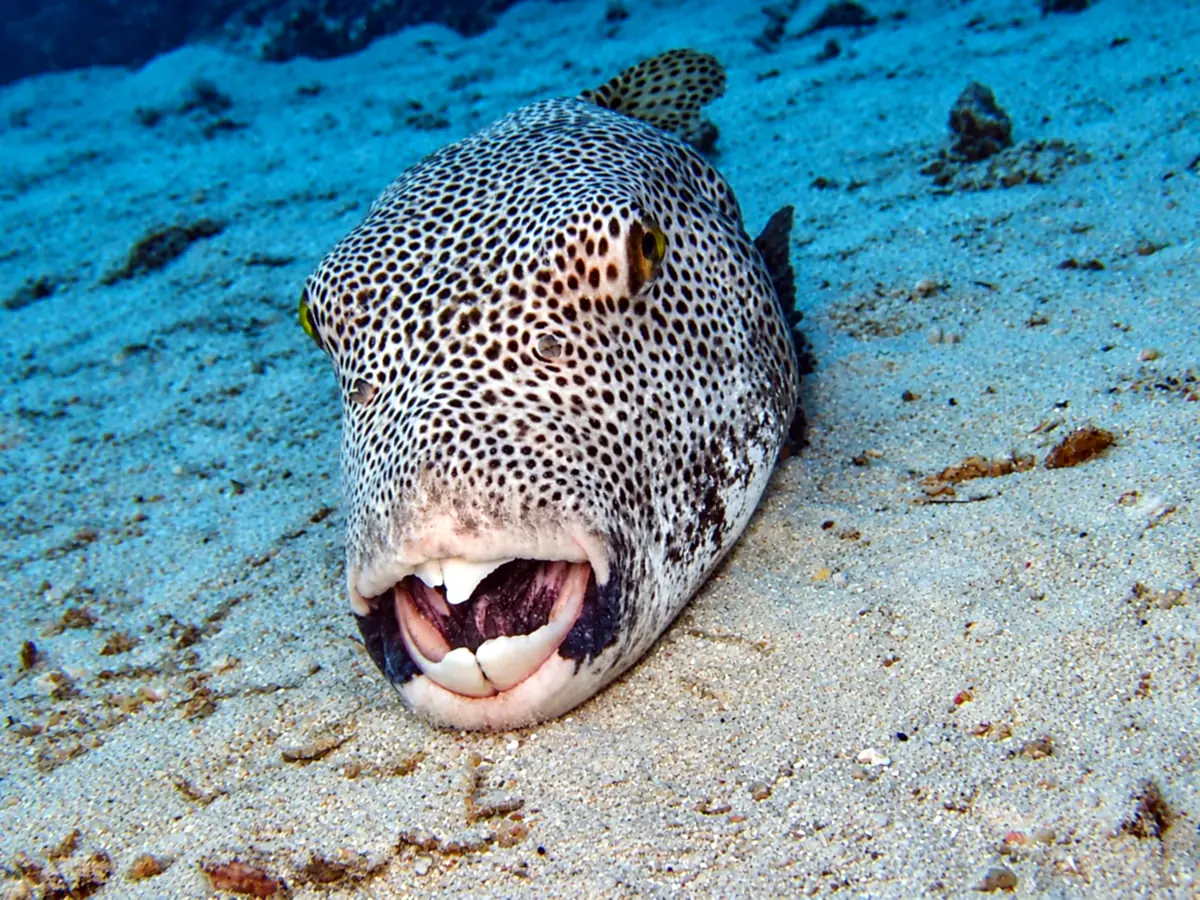
Meanwhile, the two house reefs hold parrotfish, butterflyfish, pufferfish and small creatures in the rubble.
Is Marsa Abu Dabab suitable for beginners?
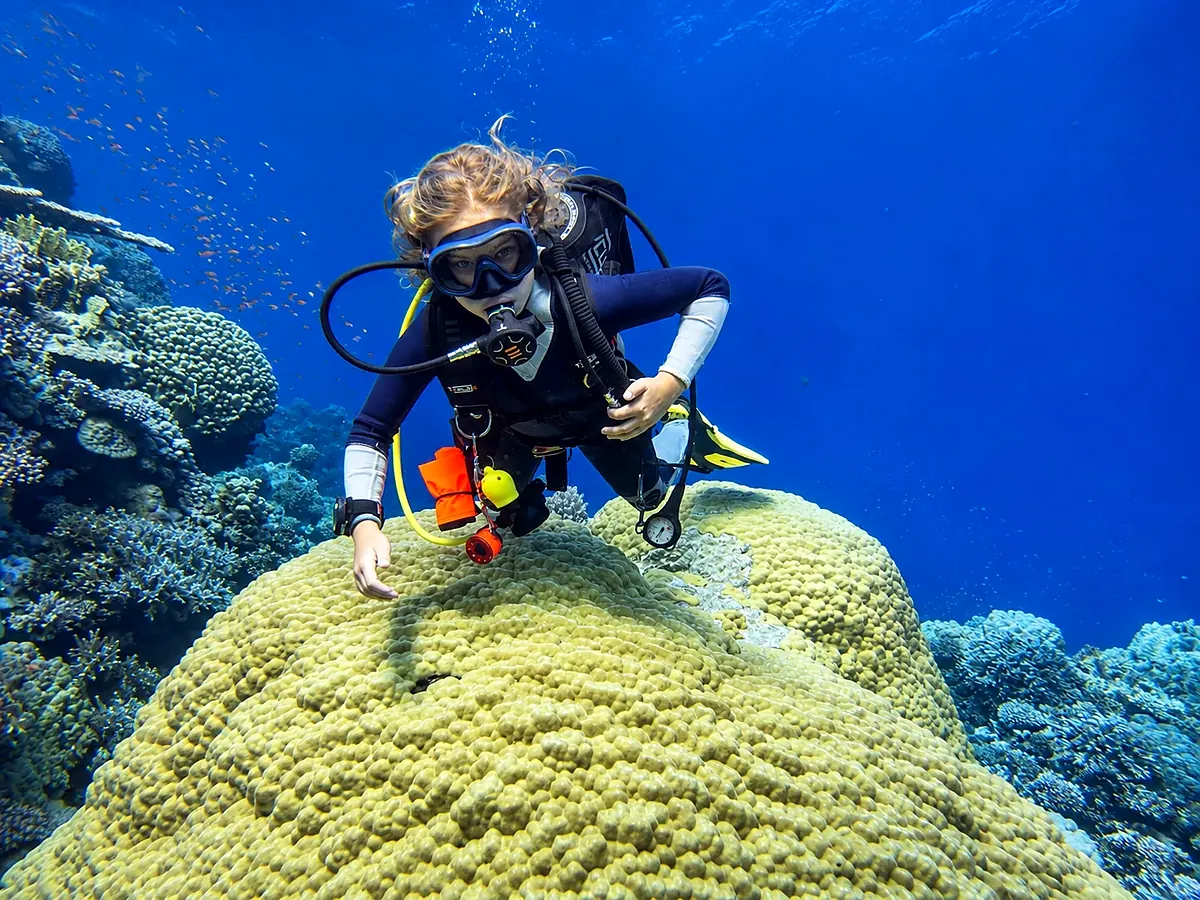
Yes. The entry is from the beach, the slope is gentle and the bay is shallow, so Open Water divers and snorkelers enjoy it with a guide.
However, waves and wind can make the shore entry harder on some days. For deeper reefs elsewhere, take Advanced Open Water. For example, our liveaboard dive techniques guide explains boat entries and buoyancy.
Before you dive here
Firstly, never chase, touch or feed the turtles or the dugong, and give them space when they rise to breathe. Secondly, stay off the seagrass and the coral.
Above all, follow our diving safety standards and the rules of HEPCA. We strongly recommend dive insurance such as DAN Europe.
How do you get to Marsa Abu Dabab?
In practice, divers reach the bay by road and walk in from the beach, since boats may only stay outside the bay. Liveaboards on the southern routes can also visit the Marsa Alam reefs, such as our BDE liveaboard and the Daedalus and Fury Shoals route. Guests board on Saturday after 15:00, and check-out is between 09:00 and 10:00 the next Saturday.
Generally, you can combine it with other reefs in the same area. Consequently, you can pair it with Marsa Hermez, Elphinstone and the other Marsa Alam reefs.
Plan your dive trip
- BDE liveaboard — Brothers, Daedalus and Elphinstone.
- Daedalus and Fury Shoals liveaboard — Daedalus Reef and the southern reefs.
- What divers need on board — the packing checklist for a Red Sea safari.
- redsealiveaboard.net — Red Sea safari schedules and availability.
- All eight boats in our fleet can sail these routes: Sea Fox, Simba, Sea Treasure, Star Jet, Bismarck, C Echo II, C U and Ramadan 3.
Photo gallery from Marsa Abu Dabab
Other routes from Red Sea Diving
Generally, for a first liveaboard, the North Red Sea liveaboard keeps to the classic wrecks. On the other hand, the Deep South St. John’s liveaboard reaches the far south, while the Elba Reef liveaboard goes further still. Meanwhile, the Red Sea liveaboard guide compares all eight routes.
Marsa Abu Dabab: frequently asked questions
Where is Marsa Abu Dabab?
In fact, Marsa Abu Dabab is a sandy bay about 30 km north of Marsa Alam town and about 25 km south of Port Ghalib.
Can you see dugongs at Marsa Abu Dabab?
Sometimes. A dugong still visits the seagrass, although sightings are rarer than they once were and never certain.
How deep is Marsa Abu Dabab?
The seagrass lies at about 2–4 m, and the bay reaches about 18 m along the reefs.
Can you see turtles at Marsa Abu Dabab?
Almost always. Big green turtles feed on the seagrass every day, often with remoras on their shells.
How do you dive Marsa Abu Dabab?
From the beach, since boats stay outside the bay. The numbered offshore reefs of the same name are separate boat dives. Moreover, all eight boats in the Red Sea Diving fleet can run the Marsa Alam routes.
Marsa Alam · Liveaboard · Coastal reefs
Dive Marsa Abu Dabab with us
Simply tell us your dates, the number of divers, your certification level and your number of logged dives. Afterward, our team checks which departure fits your group before you commit to anything.


