

Guide to the Foul Bay dive sites · southern Red Sea · Berenice to St. John’s
Foul Bay Dive Sites An island mooring, a trawler wreck, sunlit caves and a quiet reef
The Foul Bay dive sites lie in the large bay south of Ras Banas, on the way between Berenice and the St. John’s reefs. Although few boats stop here, the bay offers a sheltered island with a deep wreck, the famous caves of Umm Khararim and a calm reef next to them.
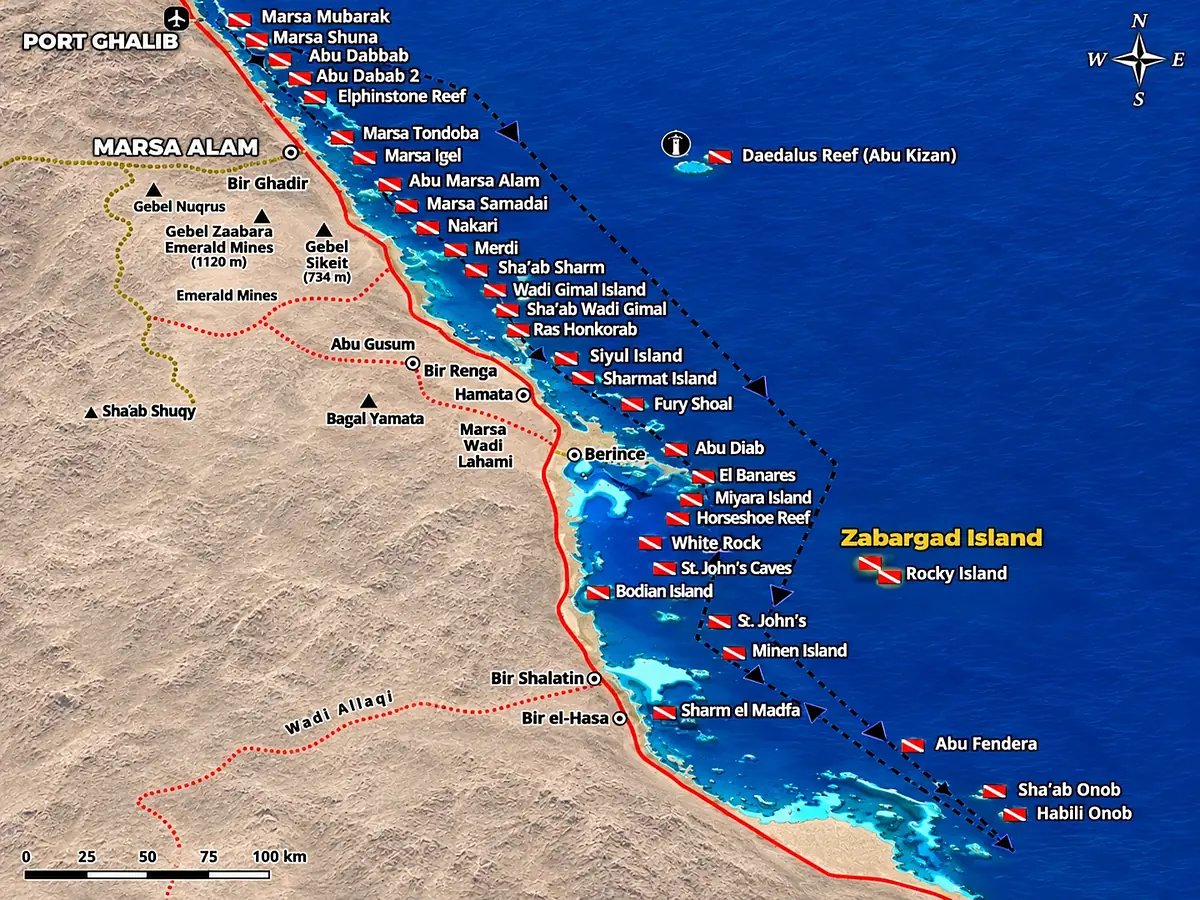
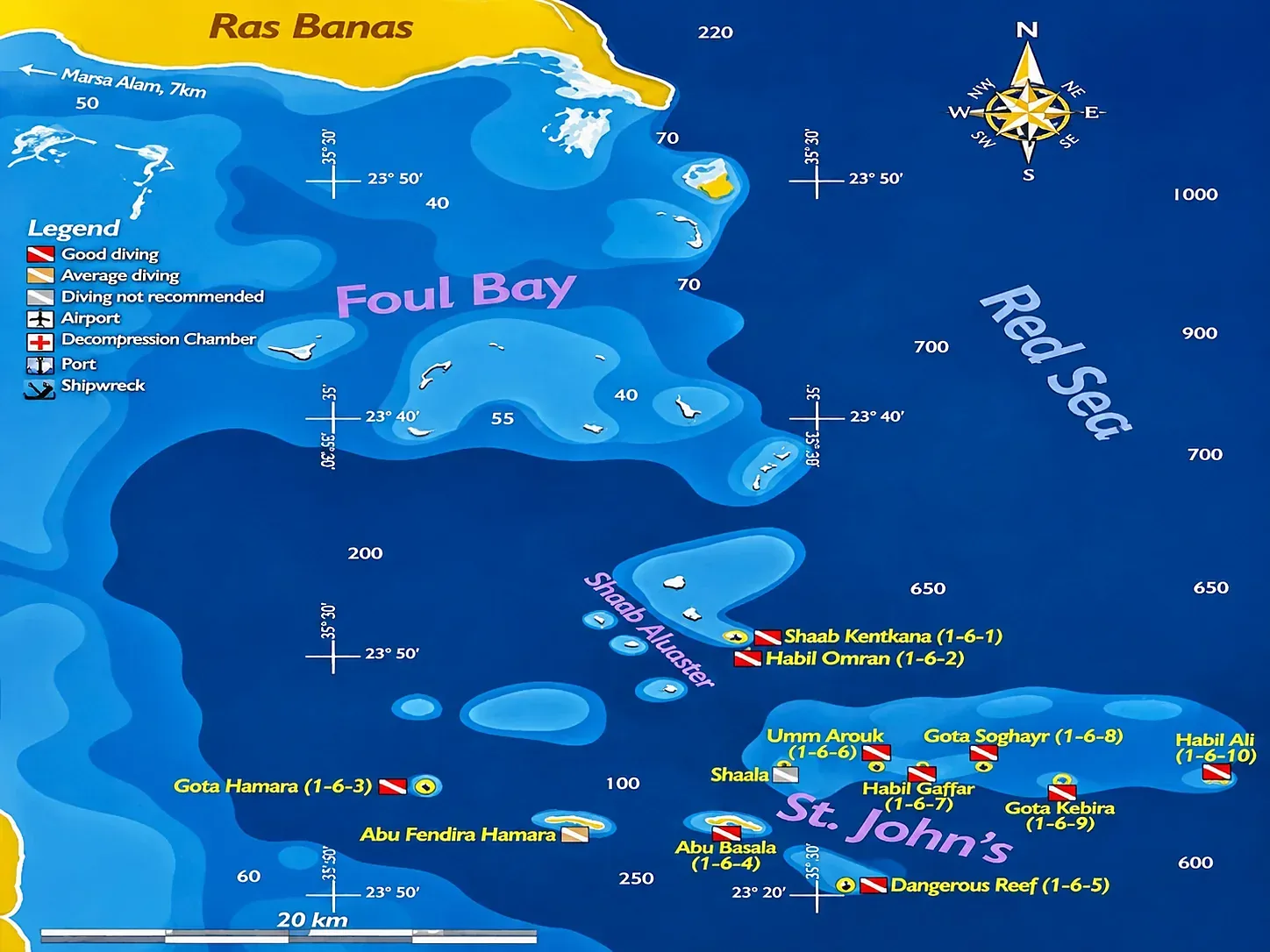
Which Foul Bay dive sites can you dive?
Overall, the sites below are the ones liveaboards actually dive in and around Foul Bay, grouped from north to south. In addition, each card links to a full guide with depth, marine life, level and access.
North Foul Bay: Sernaka Island
First, the island south of Ras Banas is the safest overnight stop in the bay, with a reef wall and a deep trawler wreck on its southern side.
Sernaka Island · 5–40 m, overnight mooring
Also called Mikauwa Island, it offers a reef wall, a shallow plateau and calm night dives, about 6 km south of Ras Banas.
Visit Sernaka Island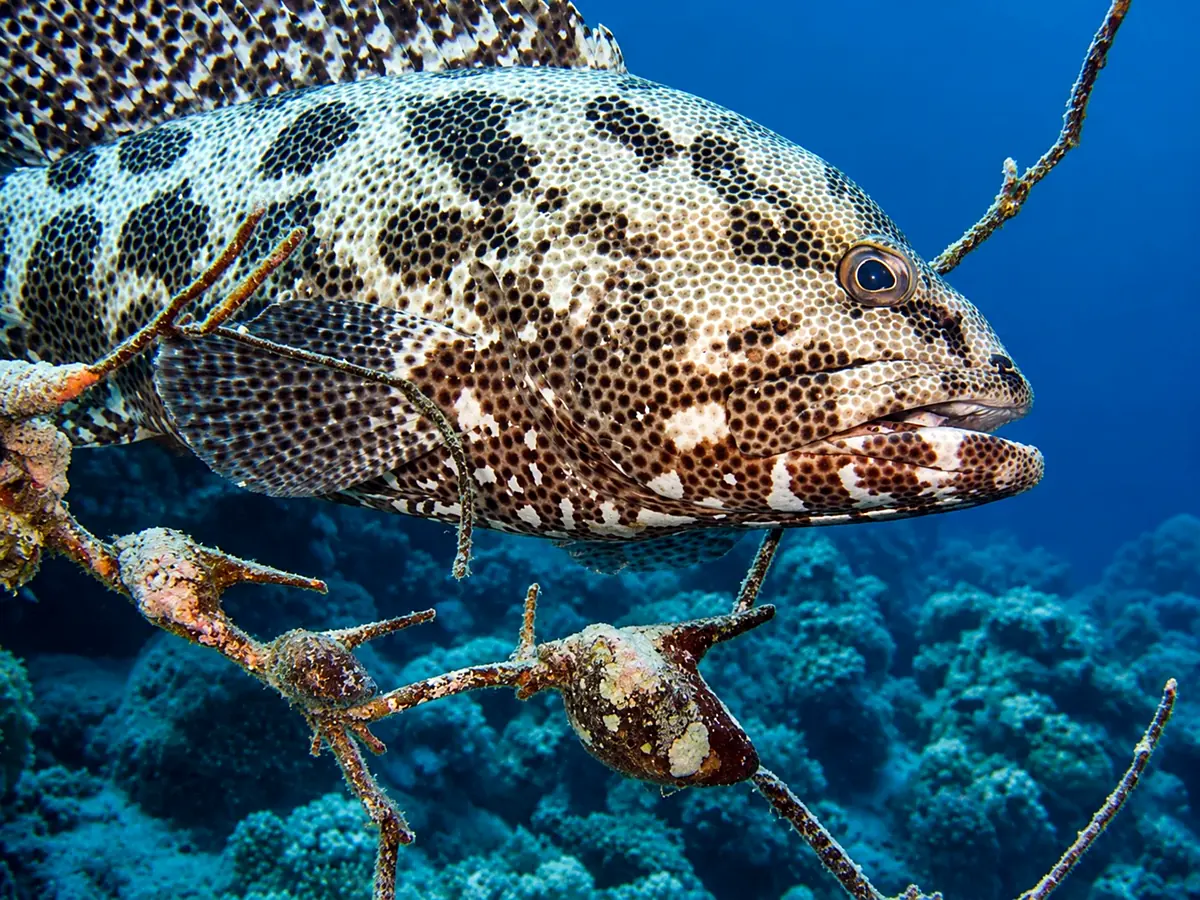
Il Kamash Wreck · 30–50 m trawler
Meanwhile, a 34 m fishing trawler lies on the slope of Sernaka at 30–50 m, for experienced divers only.
Visit Il Kamash WreckSouth: the caves and Paradise
Further south, halfway to St. John’s, two neighbouring reefs offer the most famous shallow dive of the area and a quiet reef next door.
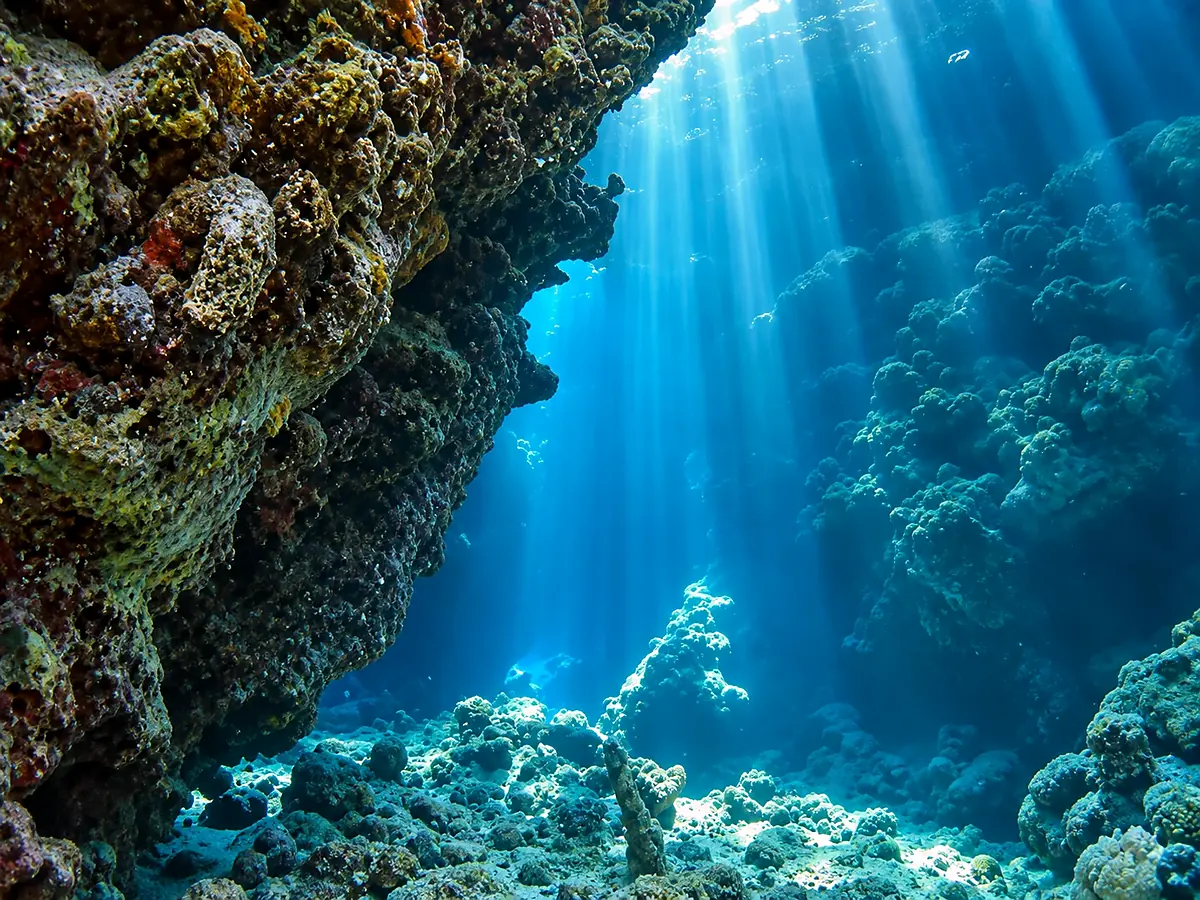
Umm Khararim · Caverns at 6–10 m
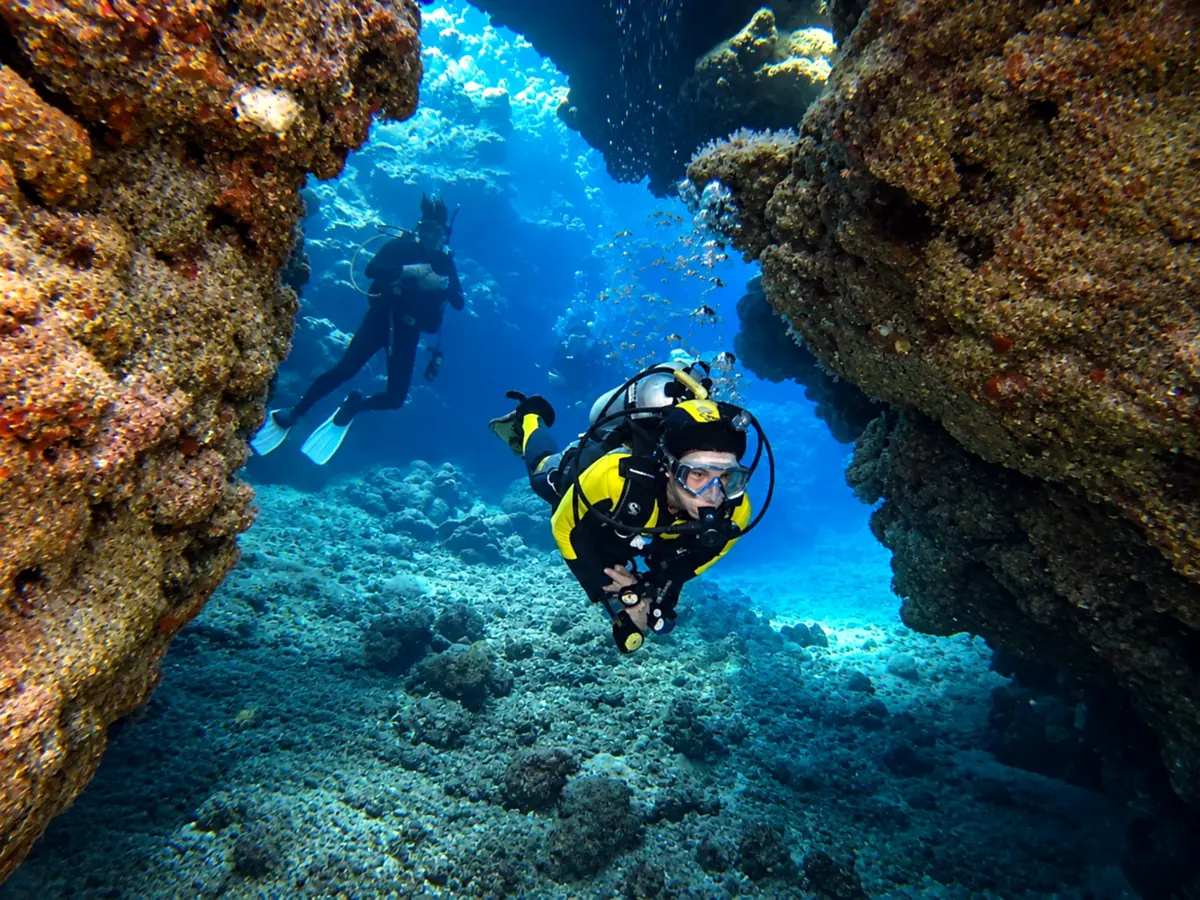
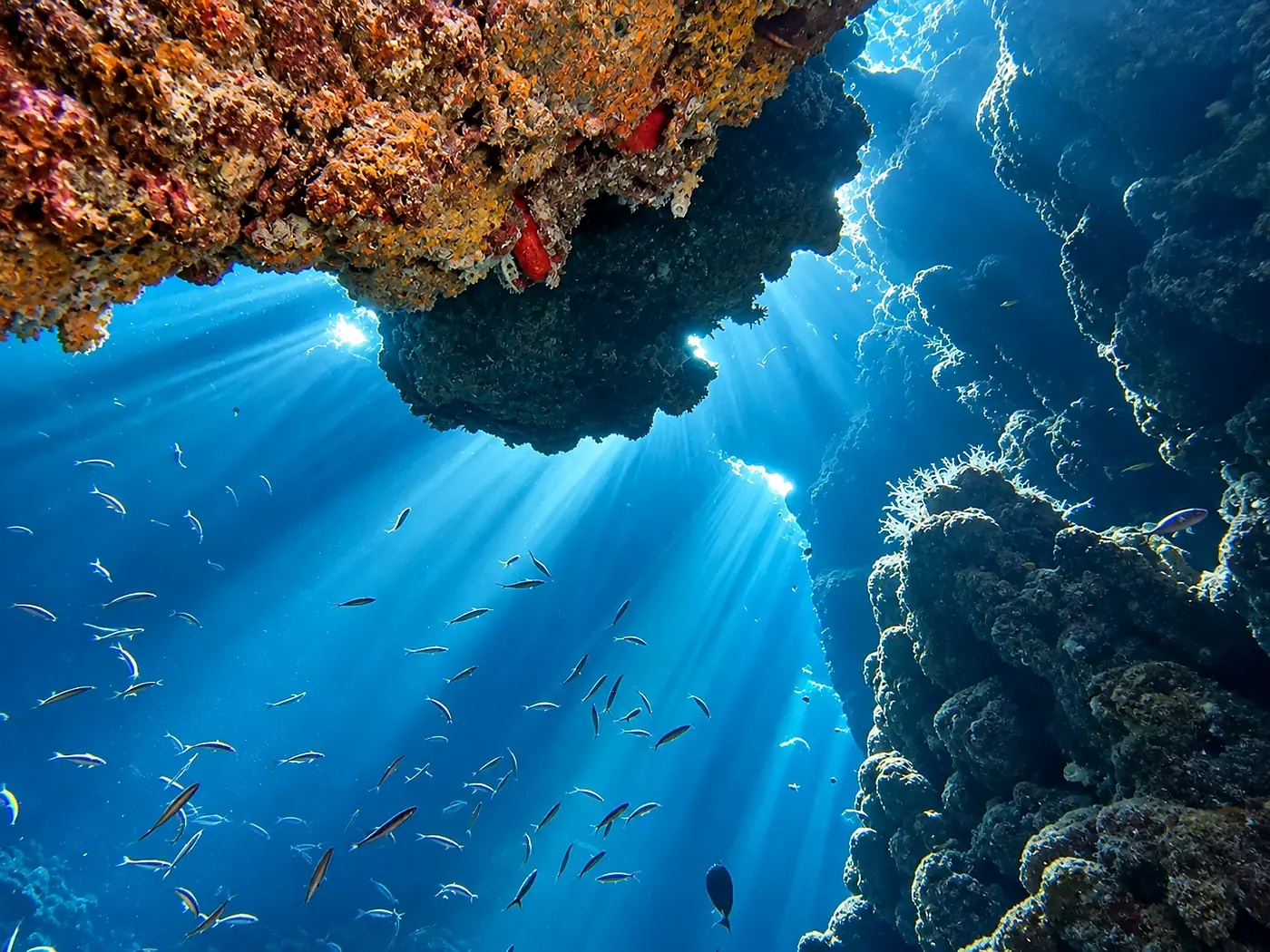
Known as the Caves, it hides sunlit caverns and coral tunnels, with an easy east side and a winding maze to the west.
Visit Umm Khararim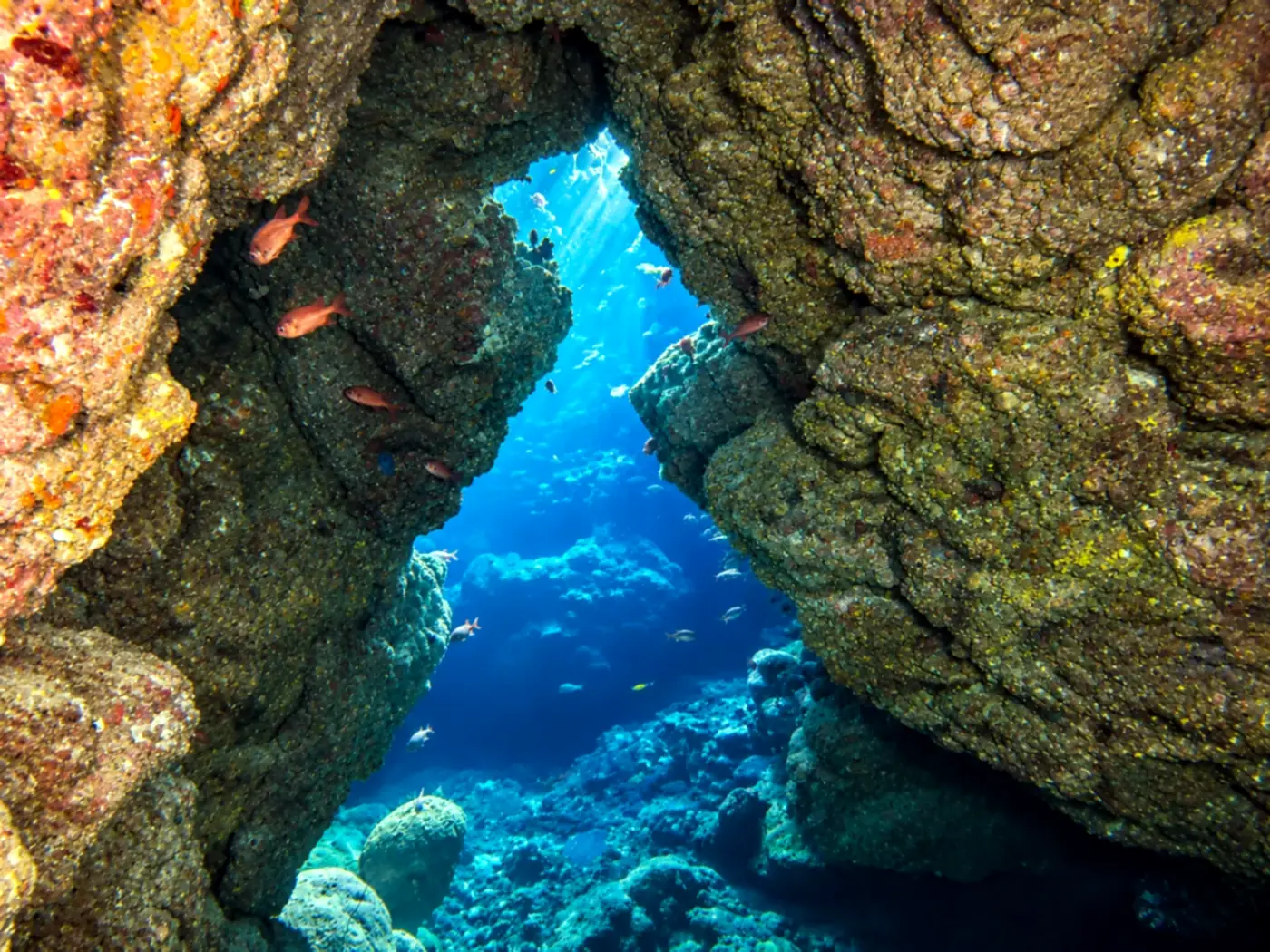
Paradise Reef · 3–17 m, easy
Just 600 m away, Paradise Reef, also called Orabi, offers coral towers, small caverns and a lagoon garden in weak currents.
Visit Paradise ReefThe Foul Bay dive sites in short
In short, the Foul Bay dive sites are a small group of reefs in the southern Egyptian Red Sea, between Ras Banas and the St. John’s reefs. For example, they include Sernaka Island and its Il Kamash trawler wreck in the north, and the caves of Umm Khararim with neighbouring Paradise Reef further south. Most of them are stops on the Deep South St. John’s liveaboard, either for a night mooring or for a dive on the long way north.
What is Foul Bay?
Essentially, Foul Bay begins near the small town of Berenice and runs for more than 90 km south toward the Sudanese border. The St. John’s reefs at its southern end are big enough to have their own guide, so this page covers the reefs closer to Berenice and Ras Banas.
Historically, Berenice is the last sizeable town before the border. The ancient city was named by Ptolemy II and served as a trading port in pre-Christian times, while today most people live from fishing.
However, divers stop at only a few reefs here. On the one hand, the main routes from St. John’s often head straight to Fury Shoals. On the other hand, there are few overnight moorings, and many reefs cannot match St. John’s for coral and fish.
Foul Bay at a glance
Island
Above all, Sernaka Island gives boats a sheltered mooring and an easy night dive.
Wreck
Similarly, the Il Kamash trawler adds a deep wreck dive for experienced divers.
Caves
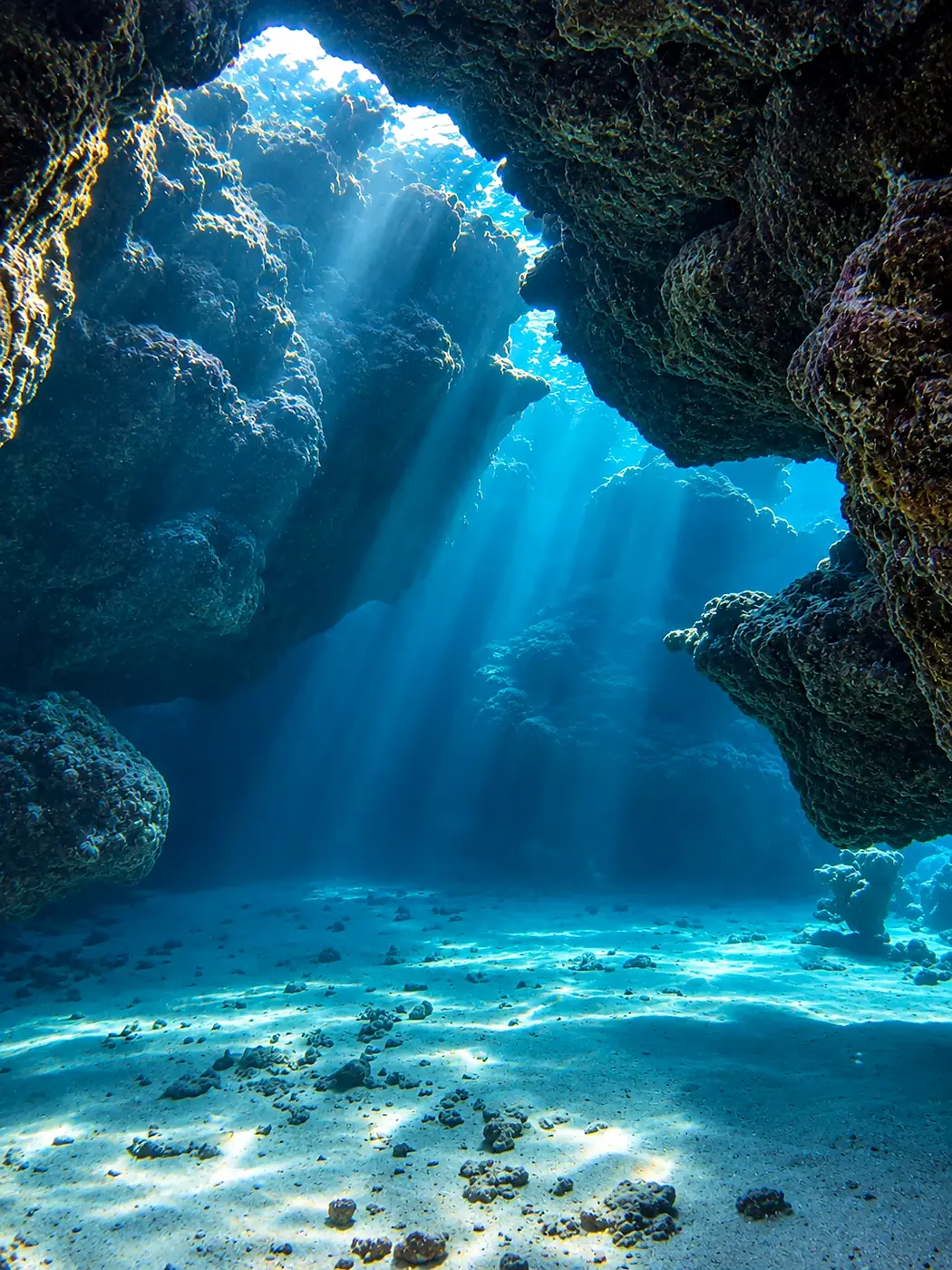
Meanwhile, the caverns of Umm Khararim are the highlight of the whole area.
Where are the Foul Bay dive sites?
Geographically, the bay opens south of the Ras Banas peninsula. Sernaka Island lies about 6 km south of the peninsula, while Umm Khararim and Paradise Reef sit roughly halfway between Sernaka and the St. John’s reefs.
Because of that position, some operators list Umm Khararim and Paradise Reef with St. John’s, and others with Foul Bay. Either way, they are the same reefs. Further south, our St. John’s dive sites guide covers reefs such as Habili Gaffar, and the Elba dive sites lie at the border.
In addition, the bay holds Sataya Reef, the other sheltered mooring, which is famous for its spinner dolphins. Although White Rock and Shaab Aiman are sometimes visited, they are not covered here, as their reefs are of little interest compared with the sites above.
What marine life lives in Foul Bay?
Overall, the sheltered bay has quieter reefs than the offshore sites. Still, wild animals are never guaranteed, so treat the list below as possibilities rather than promises.
Reef life
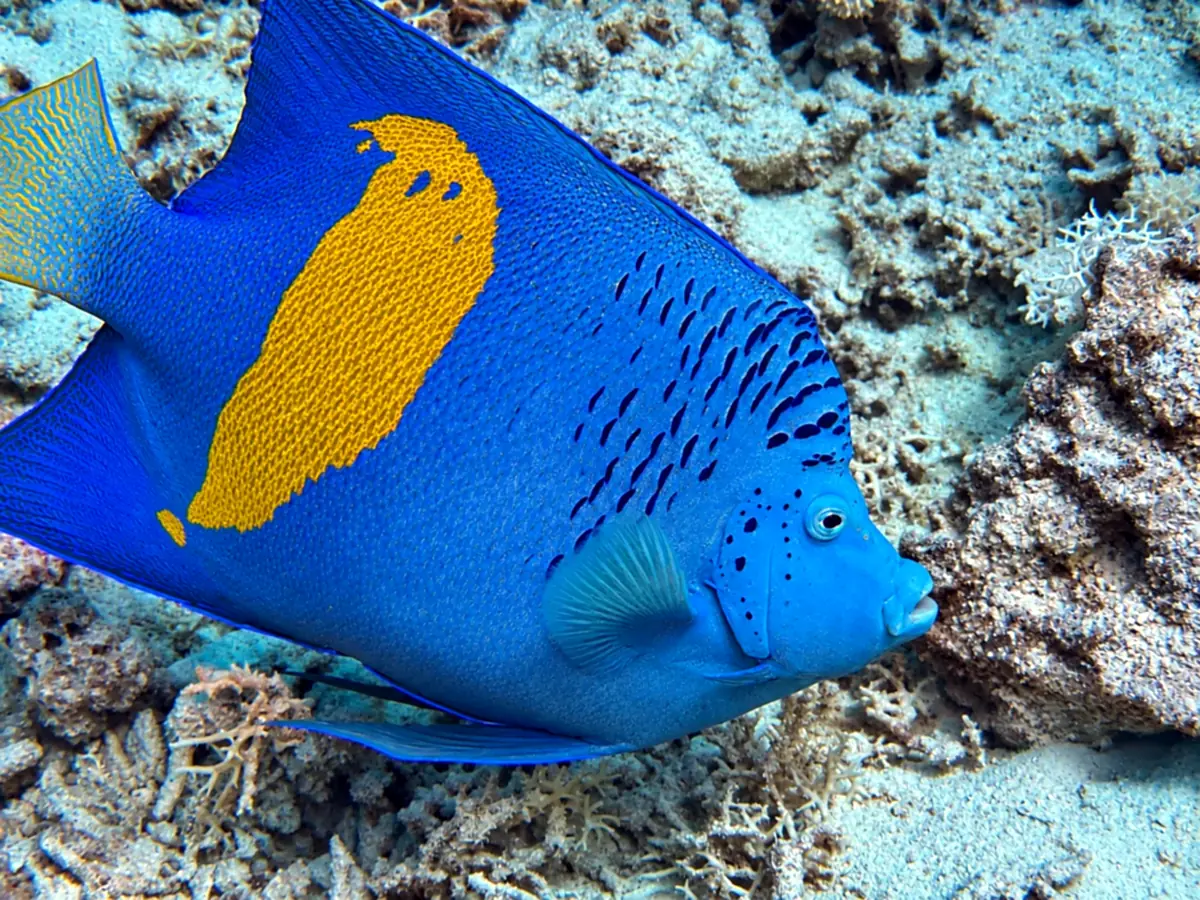
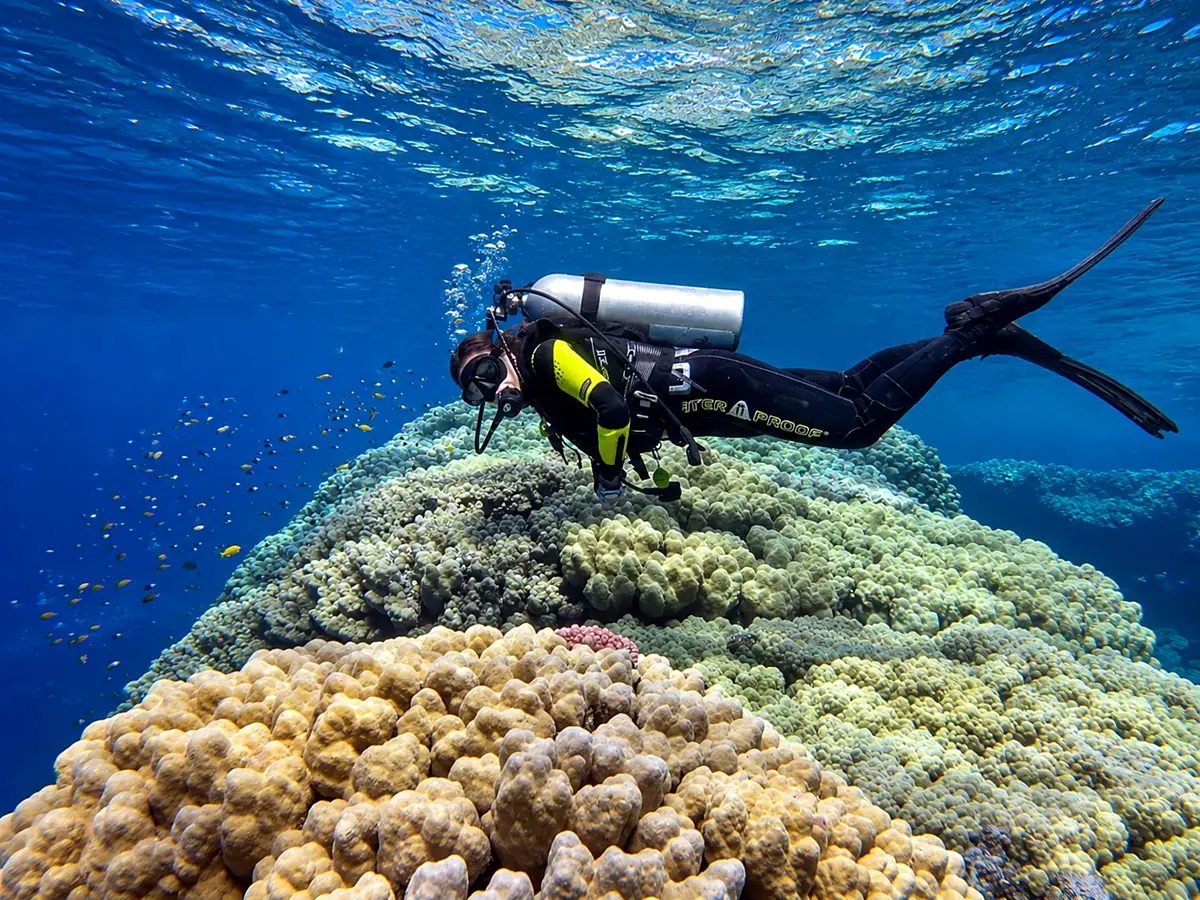
Typically, angelfish, anemonefish, surgeonfish and butterflyfish fill the shallow reefs and coral gardens.
Larger animals
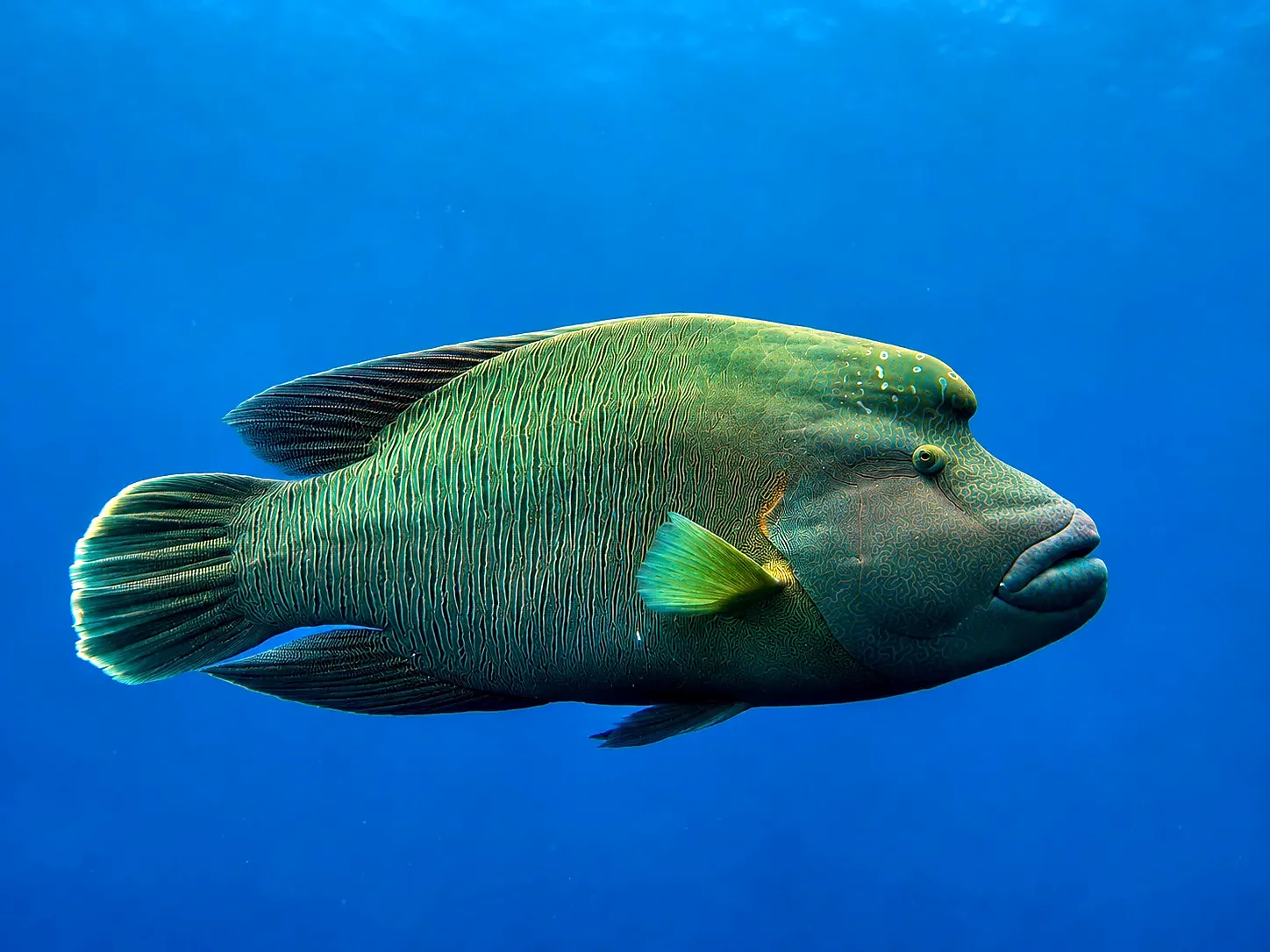
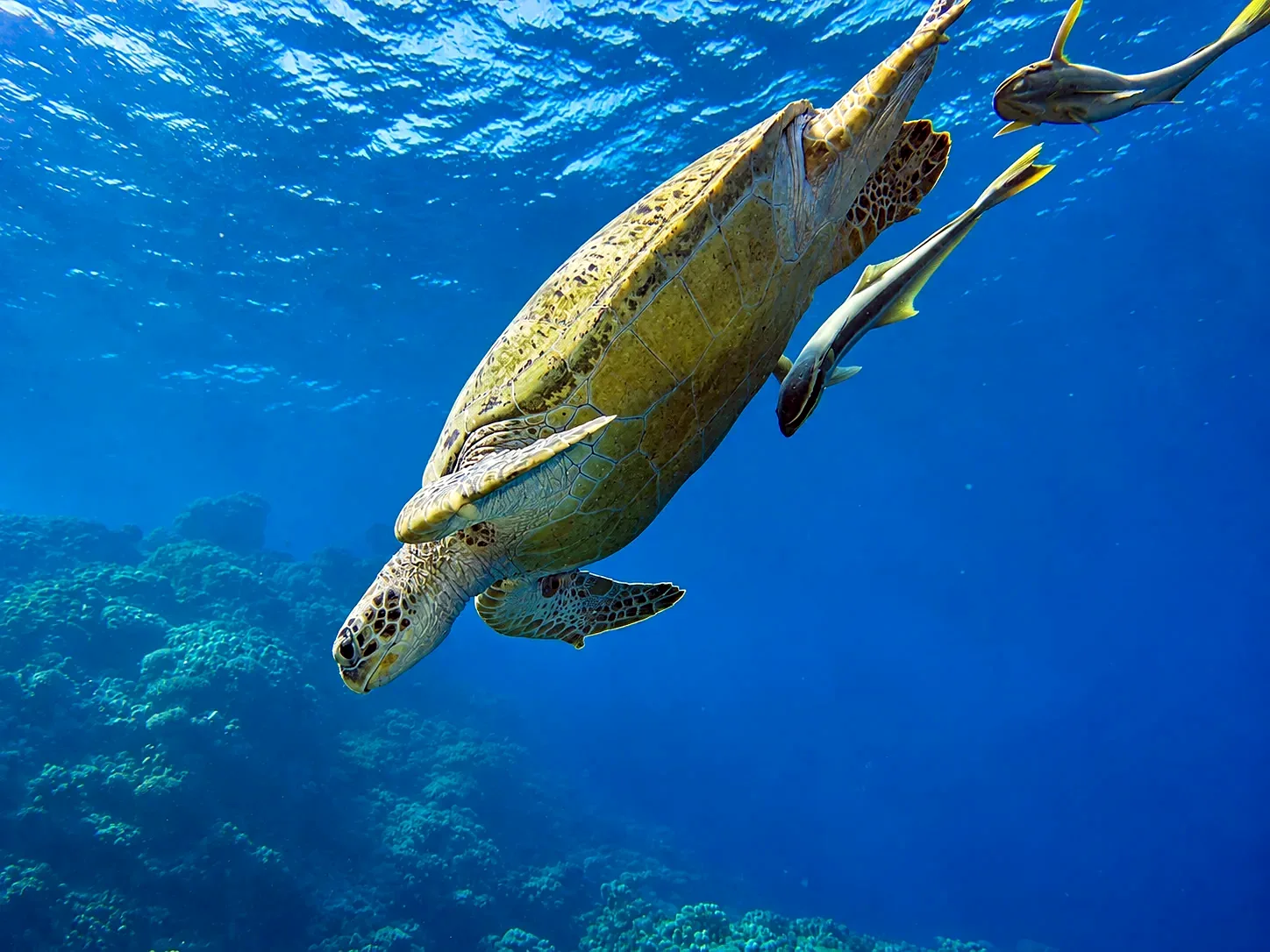
Meanwhile, Napoleon wrasse, turtles and trevally patrol the reefs around Umm Khararim and Paradise Reef.
Hidden life
Finally, soldierfish fill the caves, morays hide in the wreck and nudibranchs reward a slow search.
Are the Foul Bay dive sites suitable for beginners?
Mostly, yes. The shallow reefs of Sernaka, Umm Khararim and Paradise Reef suit Open Water divers in good conditions. However, the Il Kamash wreck at 30–50 m needs Advanced Open Water and the PADI Deep Diver course or similar.
Moreover, the caves are an overhead environment. Therefore, stay in the bright main passages, and leave the narrow tunnels to divers with specialist training. For example, Peak Performance Buoyancy helps in tight spaces.
Before you dive Foul Bay
Firstly, follow the guide’s turn point in the caves and on the wreck. Secondly, check that your insurance covers remote liveaboard diving.
Above all, follow our diving safety standards. The southern reefs are protected by HEPCA, and remote sites make dive insurance such as DAN Europe essential.
St. John’s, daily diving and courses
However, Foul Bay is only one part of the south. In fact, the Deep South St. John’s liveaboard combines these stops with a week at St. John’s, while the Elba Reef liveaboard continues to the border.
Similarly, if you have only a few days, our daily boats leave from Hurghada and Sharm El Sheikh. For instance, daily diving in Hurghada covers the Giftun reefs, whereas daily diving in Sharm El Sheikh reaches Ras Mohammed and Tiran.
In addition, we teach PADI courses, BSAC courses and CMAS courses in Hurghada, so you can upgrade before you sail.
How do you get to the Foul Bay dive sites?
In practice, the Foul Bay dive sites are reached only by liveaboard, mostly on the Deep South St. John’s route. Boats board on Saturday after 15:00, and check-out is between 09:00 and 10:00 the following Saturday, while the captain decides each stop by the weather.
Plan your Foul Bay dive trip
- Deep South St. John’s liveaboard — the route that usually stops in Foul Bay.
- Liveaboard dive techniques — negative entries, SMB deployment and exits in current.
- What divers need on board — the packing checklist for a Red Sea safari.
- redsealiveaboard.net — Red Sea safari schedules and availability.
- All eight boats in our fleet can sail this route: Sea Fox, Simba, Sea Treasure, Star Jet, Bismarck, C Echo II, C U and Ramadan 3.
Other routes from Red Sea Diving
Generally, for a first liveaboard, the North Red Sea liveaboard keeps to the classic wrecks. On the other hand, the BDE liveaboard runs Brothers, Daedalus and Elphinstone, while Daedalus and Fury Shoals also reaches the south. Meanwhile, the Red Sea liveaboard guide compares all eight routes.
Foul Bay dive sites: frequently asked questions
Where are the Foul Bay dive sites?
They lie in the southern Egyptian Red Sea, in the bay south of Ras Banas between Berenice and the St. John’s reefs. In fact, Sernaka Island is the most northerly of them.
Which dive sites are in Foul Bay?
Overall, the main sites are Sernaka Island, the Il Kamash wreck, Umm Khararim, known as the Caves, and Paradise Reef. Sataya Reef, famous for dolphins, also lies in the bay.
Are the Foul Bay dive sites suitable for beginners?
Mostly, yes. The shallow reefs suit Open Water divers in good conditions, while the Il Kamash wreck and the narrow cave passages need advanced or specialist training.
Is Umm Khararim part of Foul Bay or St. John’s?
It lies roughly halfway between Sernaka Island and the St. John’s reefs, so operators list it under either name. Either way, it is the same reef.
How do you get to the Foul Bay dive sites?
Only by liveaboard, mostly on the Deep South St. John’s route. Moreover, all eight boats in the Red Sea Diving fleet can run this route.
Foul Bay · Deep South liveaboard · Reefs, caves and a wreck
Dive Foul Bay with us
Simply tell us your dates, the number of divers and your certification level. Afterward, our team checks which Deep South departure fits your group before you commit to anything.


