

Dive guide to Paradise Reef · Orabi · Foul Bay, southern Red Sea
Paradise Reef Dive Site Coral towers, small caverns and a lagoon garden next to Umm Khararim
Paradise Reef, known to Egyptian crews as Orabi, lies just 600 m from Umm Khararim and forms the southern end of a long chain of reefs. Its rugged southern side offers coral towers, overhangs, small caverns and a lagoon garden in shallow water with generally weak currents, so it suits easy and relaxed dives.
Paradise Reef in short
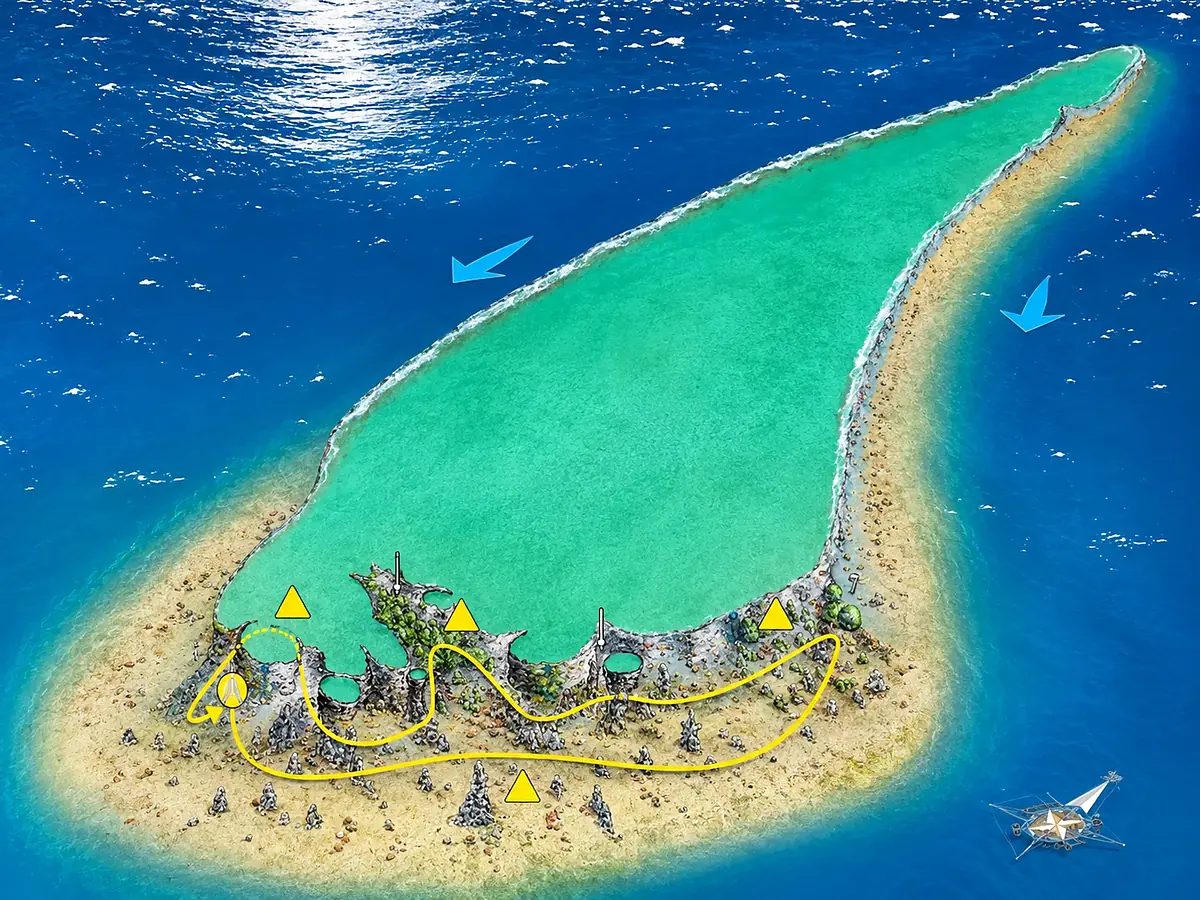
In short, Paradise Reef is a long, narrow reef about 930 m from north to south and 120 m wide, just 600 m from Umm Khararim in the far south of the Egyptian Red Sea. The dive takes place on its southern side, below the moorings, among coral towers, overhangs, small caverns and a lagoon garden. With depths of about 3–17 m and generally weak currents, it suits beginners in good conditions, and it is reached by liveaboard on the Deep South St. John’s route.
What is Paradise Reef like?
Above all, it is a quiet reef. Few boats stop here, since most continue a little further north to the caves of Umm Khararim, so the site is seldom crowded.
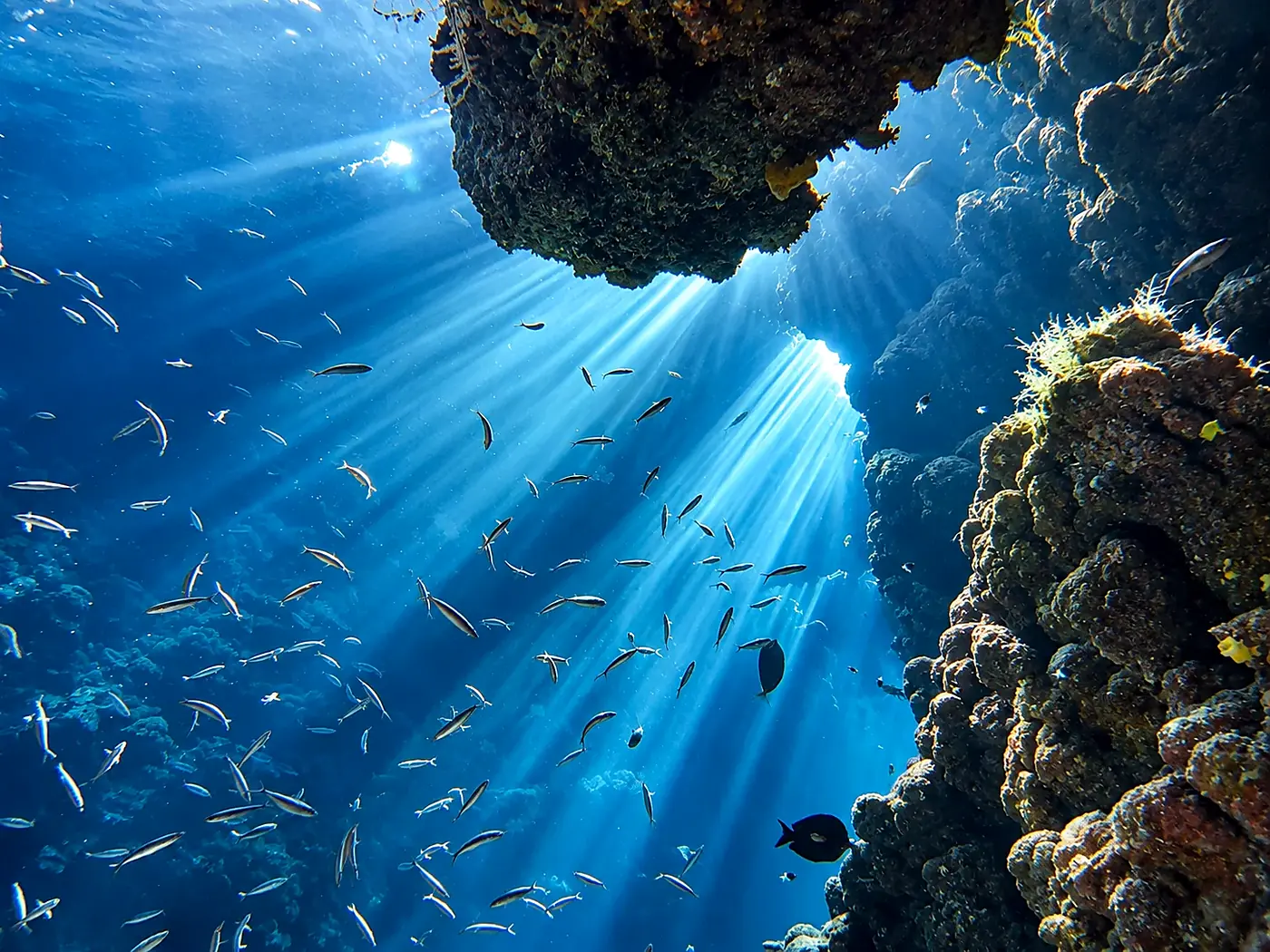
Underwater, the long western and eastern sides have few corals and are rather plain. In contrast, the rugged southern side is full of recesses, overhangs and small coral towers, called erg or arouk, which rise from the seabed toward the surface.
Moreover, the reef offers safe moorings. Although they are suitable for overnight stays and night dives, boats rarely use them, which keeps the reef calm even in high season.
Paradise Reef at a glance
Topography
First, the southern side breaks up into towers, recesses and overhangs over a sandy seabed.
Caverns
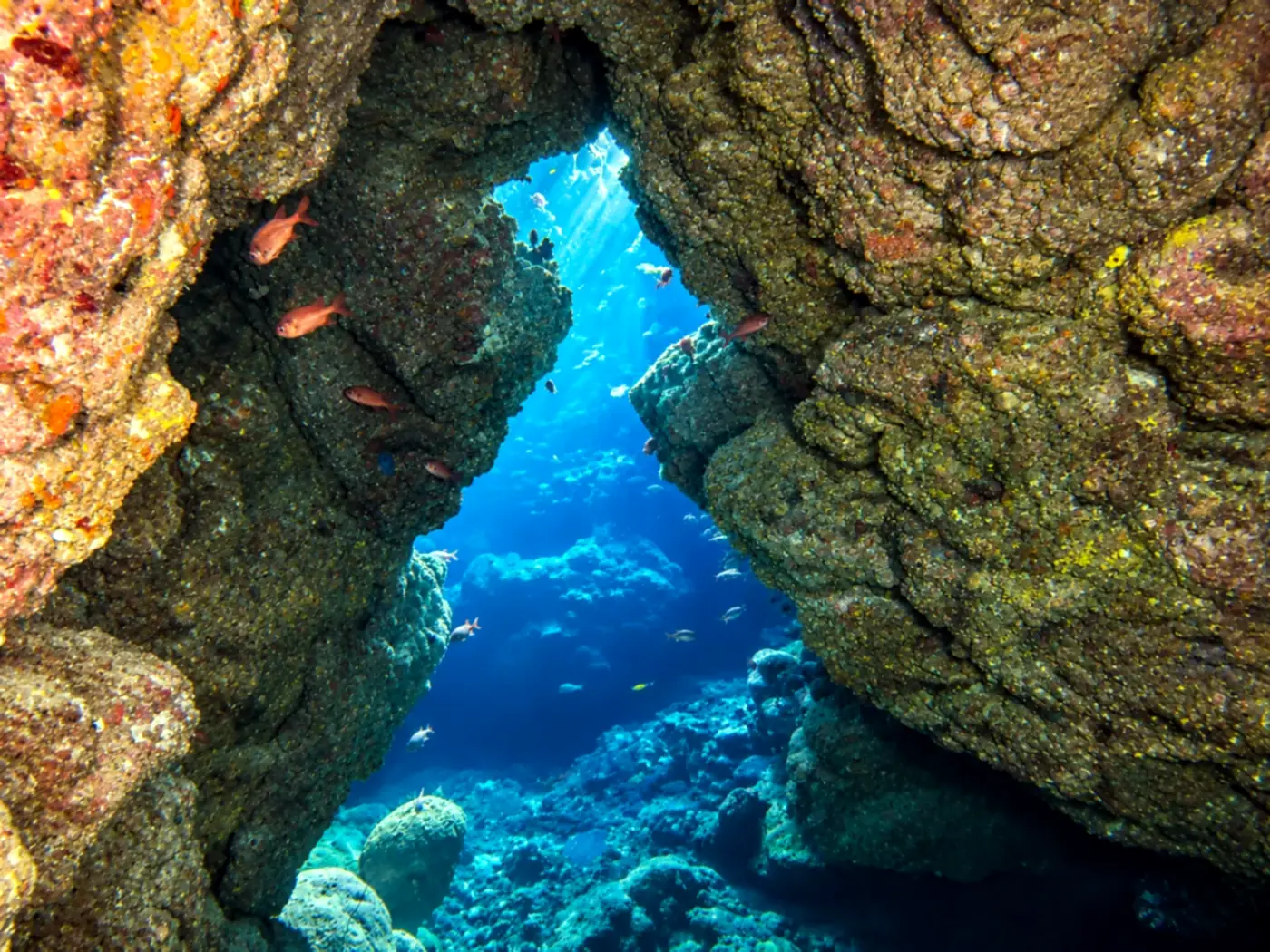
Next, small caverns at the southern tip lead only a short way into the reef.
Conditions
Meanwhile, shallow water and weak currents make it one of the easier dives in the south.
Is this the same Paradise Reef as in Sharm or Hurghada?
No. Several places in the Red Sea carry the name Paradise, so it helps to know which one a trip means. This one lies in the far south and is reached only by liveaboard.
Orabi
The southern reef. Firstly, Egyptian crews call this reef Orabi, a name taken from local fishermen.
Sharm el Sheikh
A namesake. Then, Paradise is also a day-boat site on the Sharm el Sheikh coast, far to the north.
Giftun
A beach. Finally, Paradise near Hurghada is a Giftun beach stop on island trips, not a dive site.
Where is Paradise Reef?
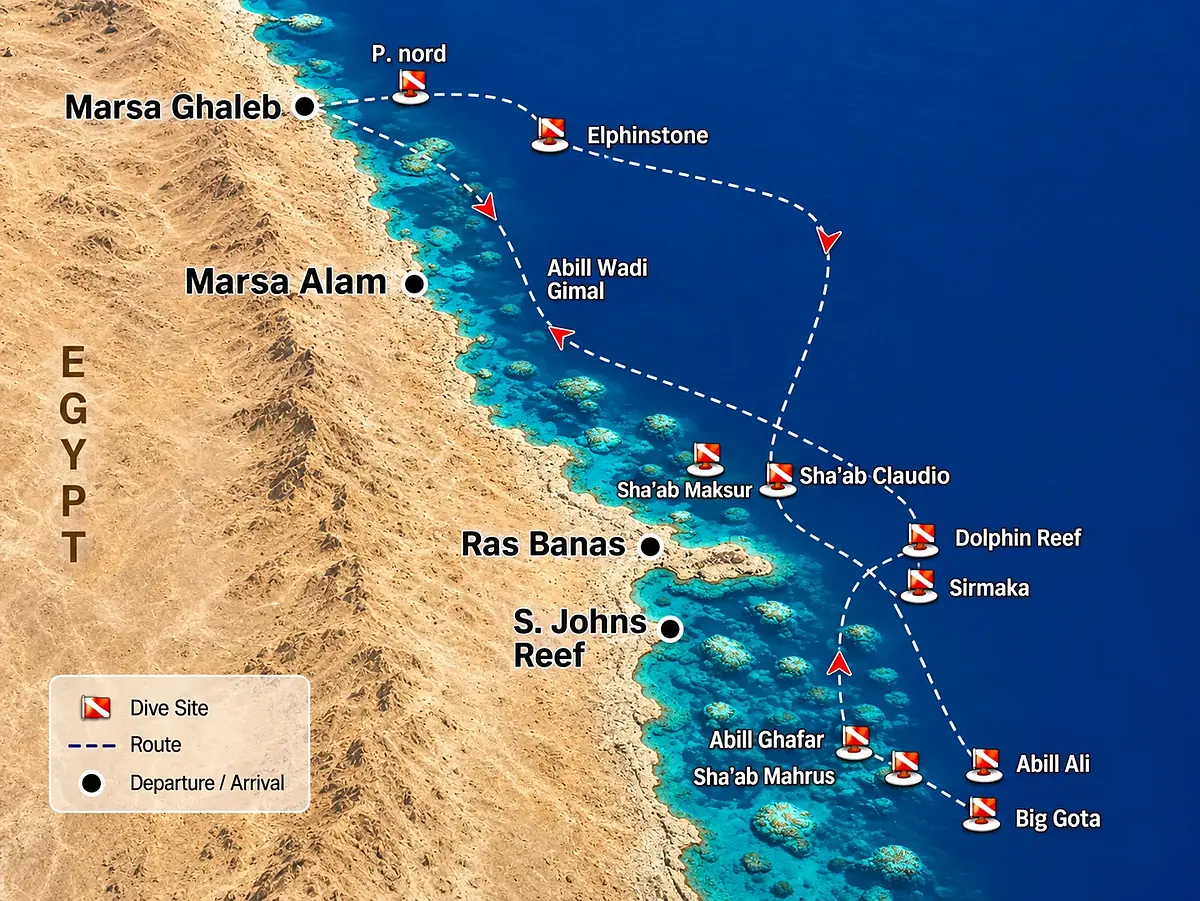
Specifically, the reef lies just 600 m from Umm Khararim, at the southern end of a long chain of reefs between Foul Bay and the St. John’s area. Umm Khararim itself sits about halfway between Sernaka Island and the St. John’s reefs.
However, its GPS position is not verified, so the captain chooses the mooring on the day. For the other sites of the area, see the Foul Bay dive sites guide.
How do you dive Paradise Reef?
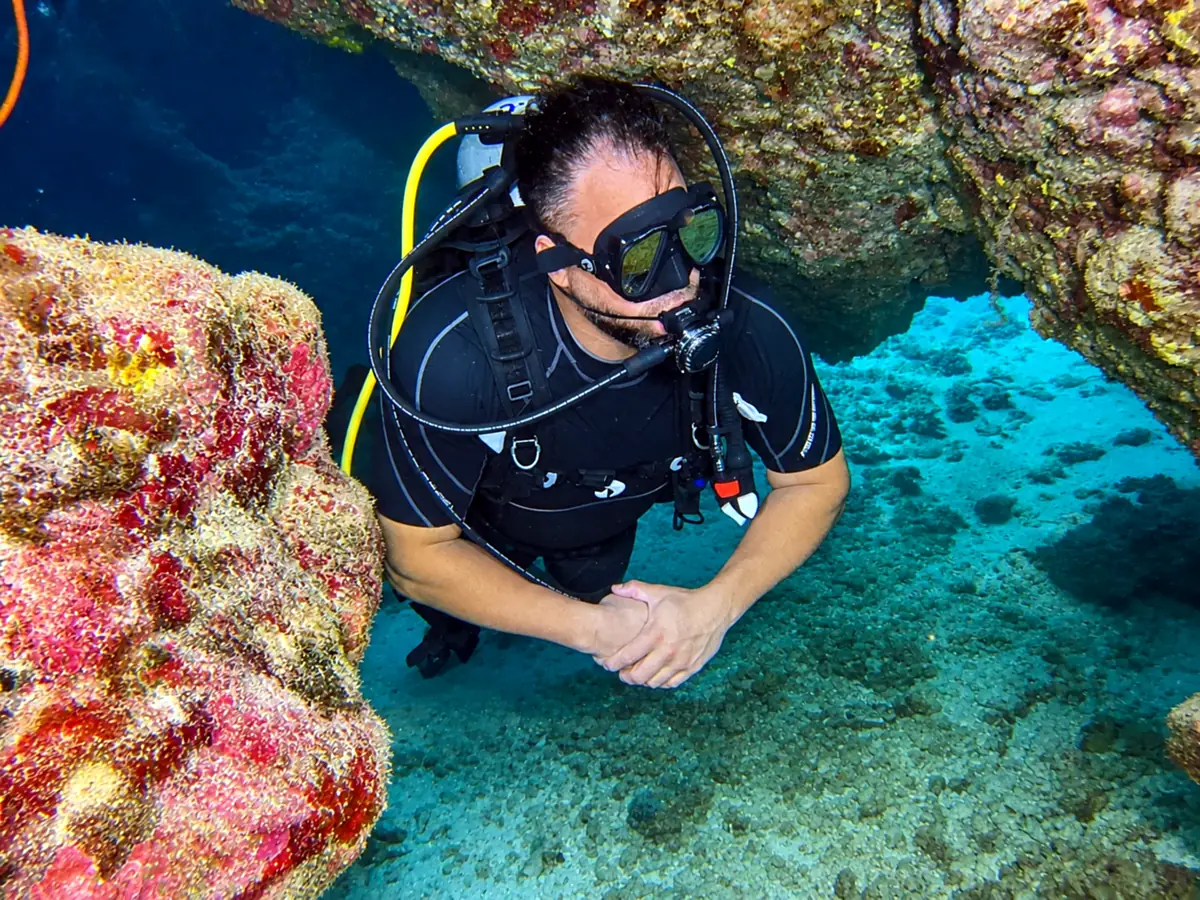
To begin with, the group enters directly below the moorings on the southern side. From there, the dive explores the towers and the lagoon garden, visits the small caverns at the tip and then heads east along the wall.
Towers, caverns and the east wall
Towers and lagoon
The start. Firstly, coral towers, recesses and a lagoon with a splendid coral garden surround the moorings.
The southern tip
The caverns. Then, small caves, visible even from the boats, lead a short way into the reef. Unlike Umm Khararim, they are short and simple.
The east wall
The return. Finally, the wall curves east, the corals thin out to a last cluster, and encrusted rocks dot the seabed at 16–18 m.
What marine life lives at Paradise Reef?
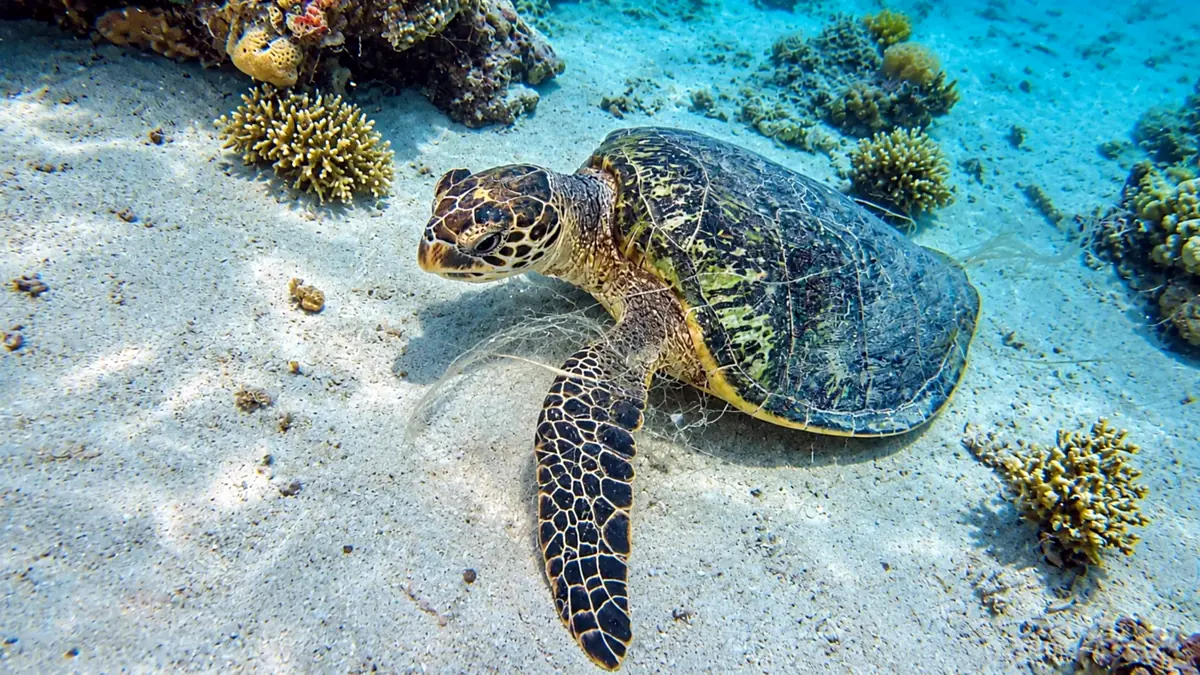
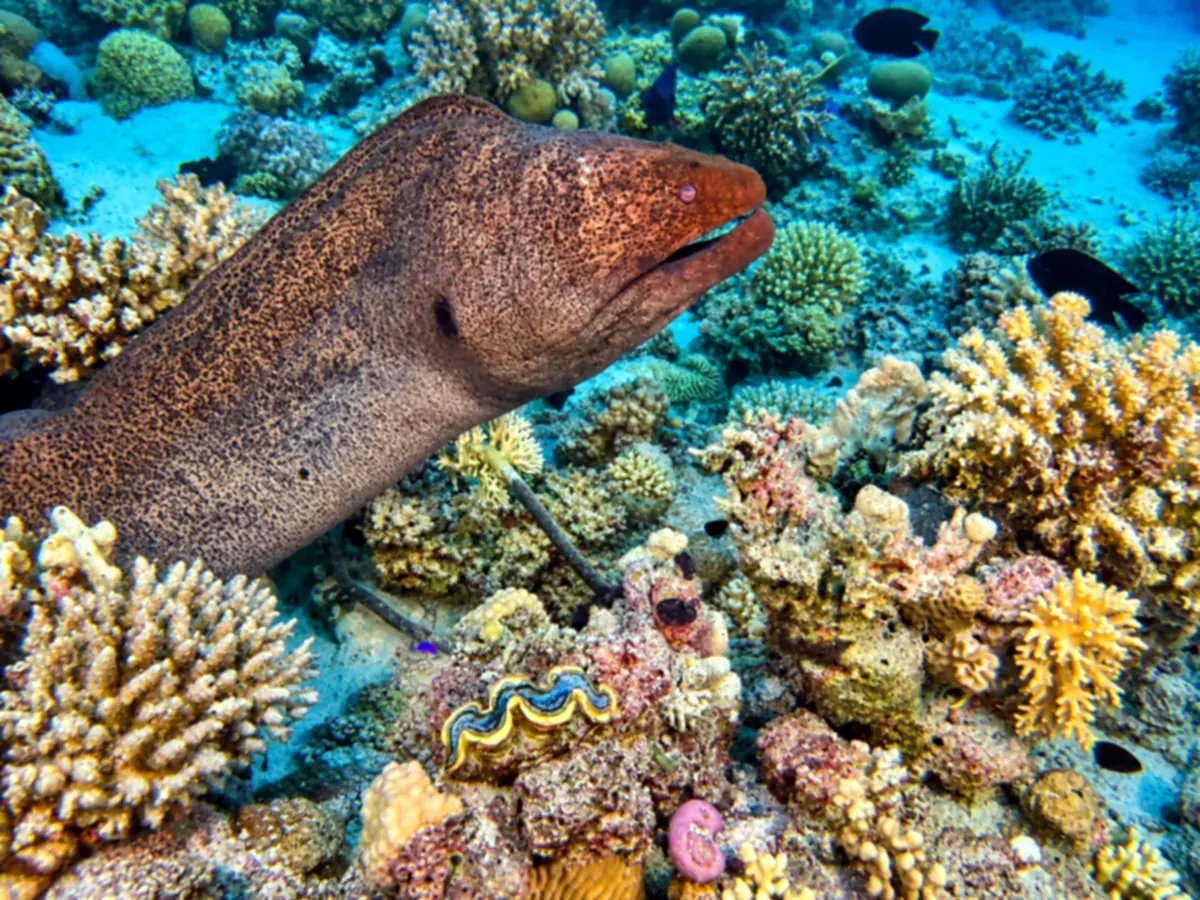
Thanks to its varied structure, the reef holds both big fish and small life. In particular, the towers and recesses shelter residents, while turtles cruise the sandy floor.
Big fish
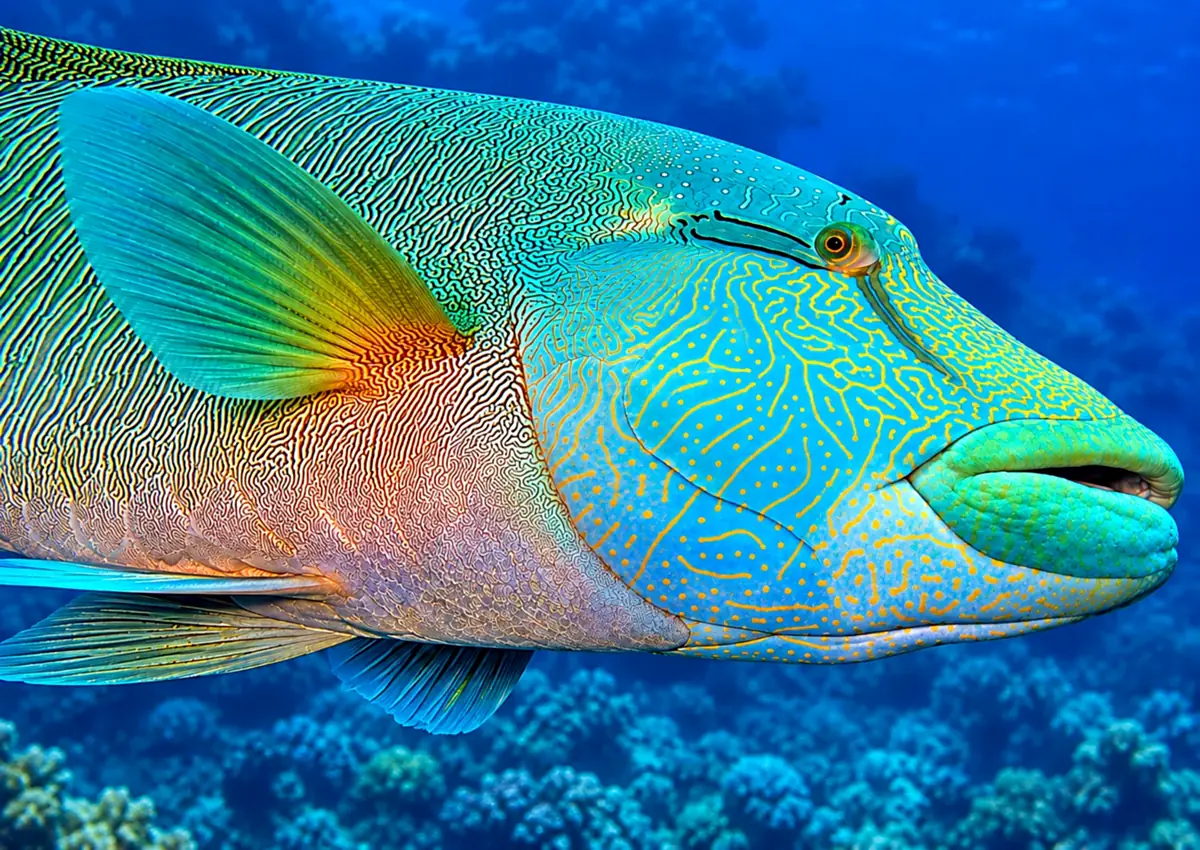
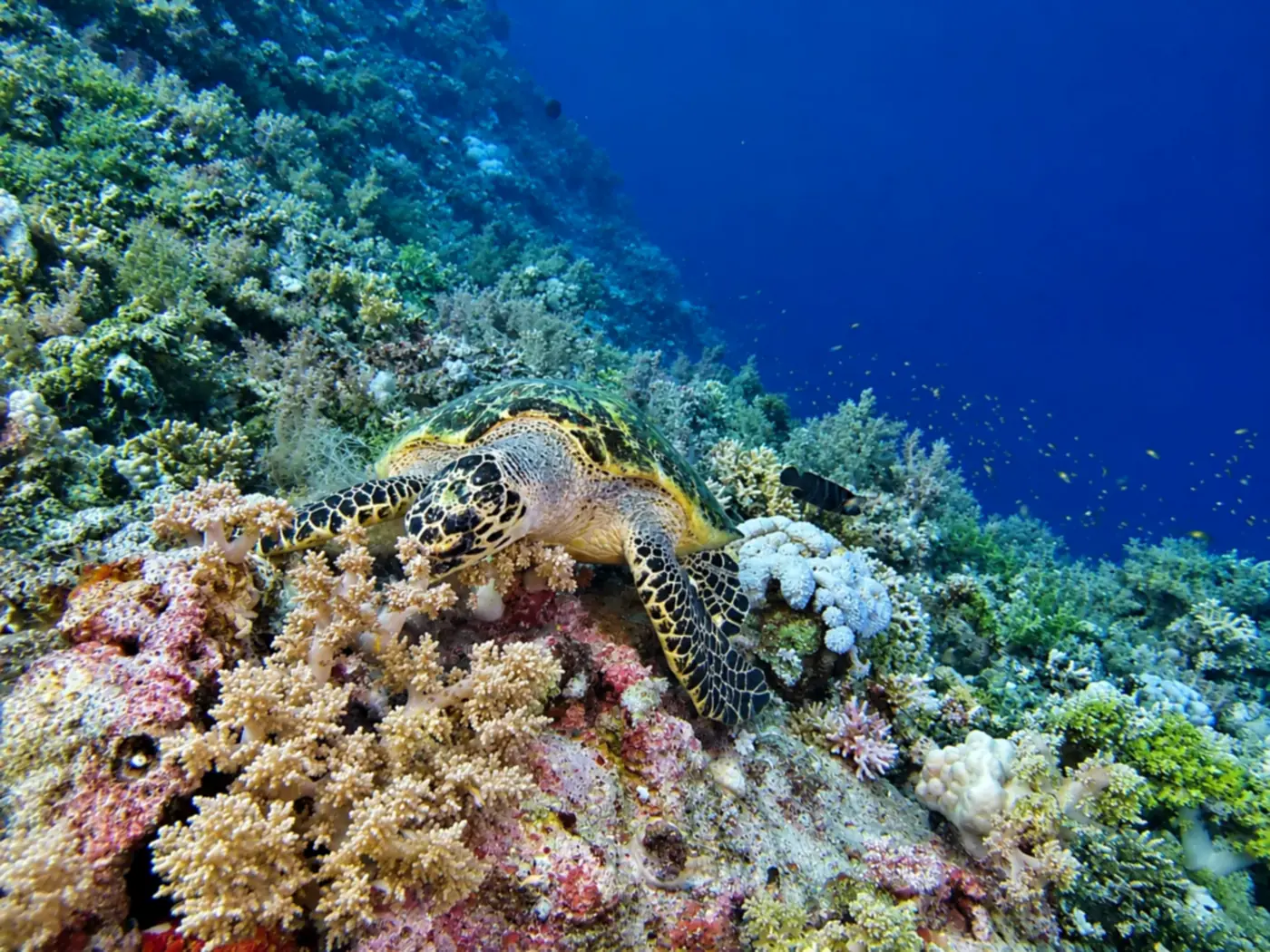
Typically, a Napoleon wrasse patrols the towers, and hawksbill turtles swim around the encrusted rocks.
Reef fish
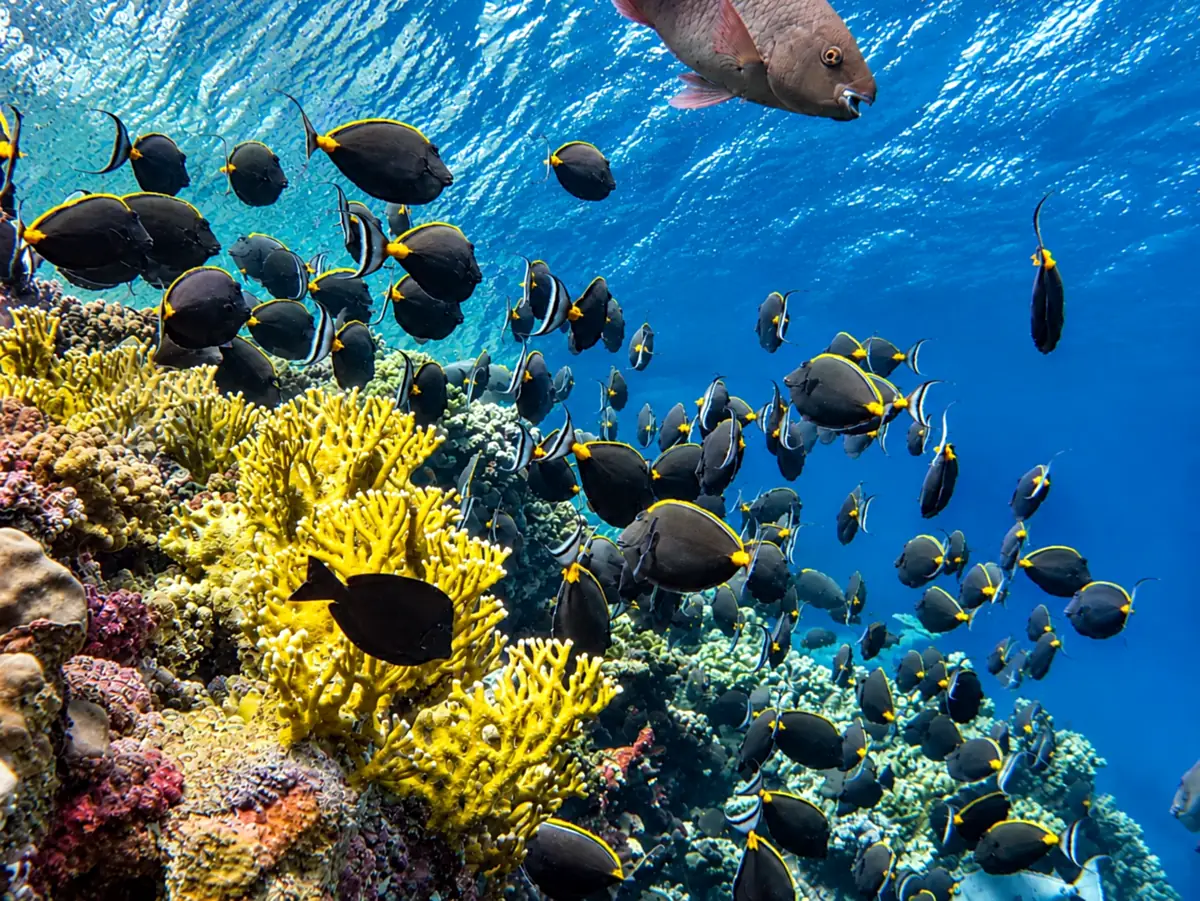
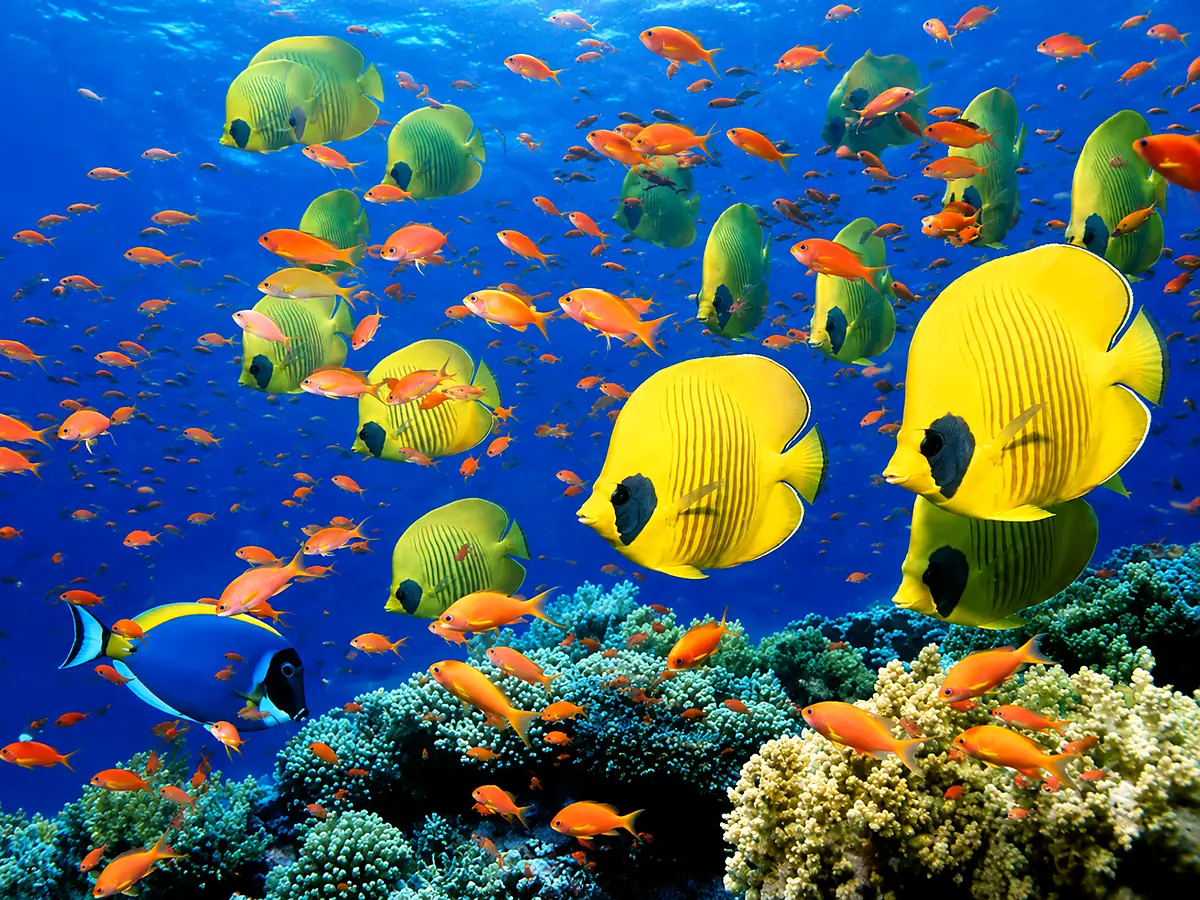
Likewise, surgeonfish, damselfish and butterflyfish bring color to the walls.
Small life
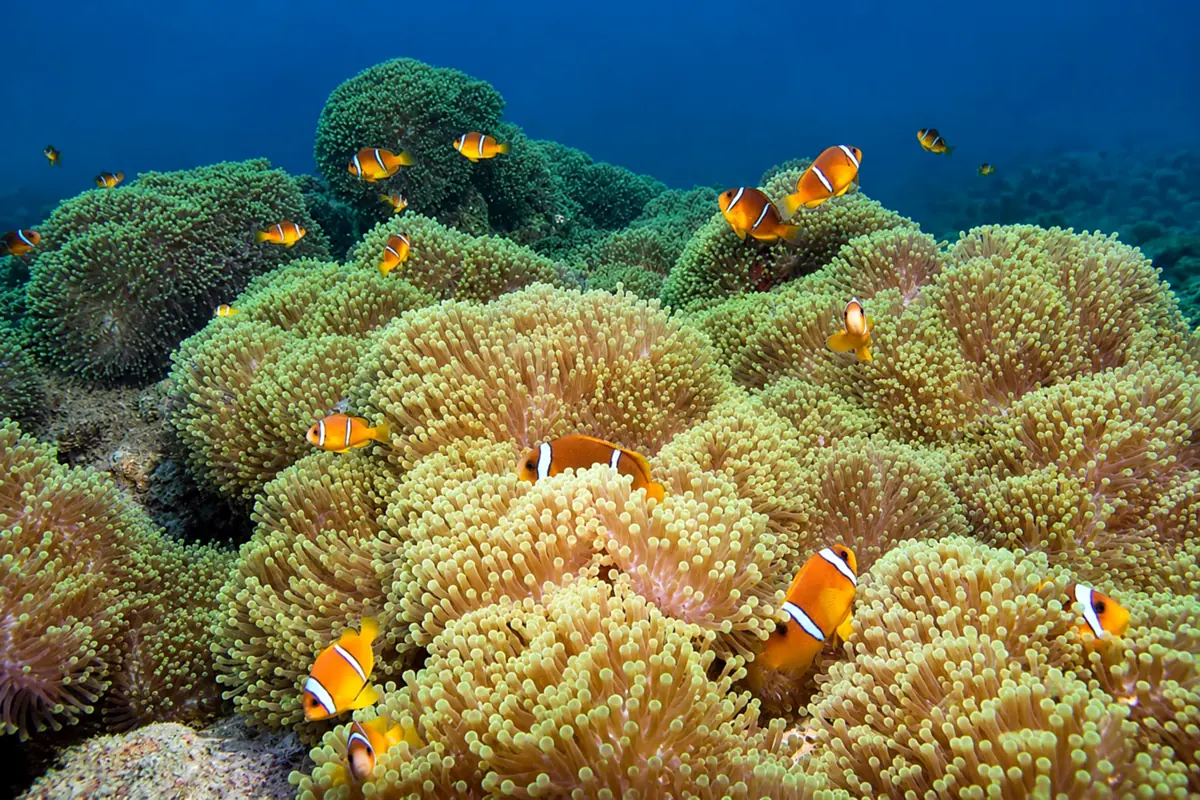
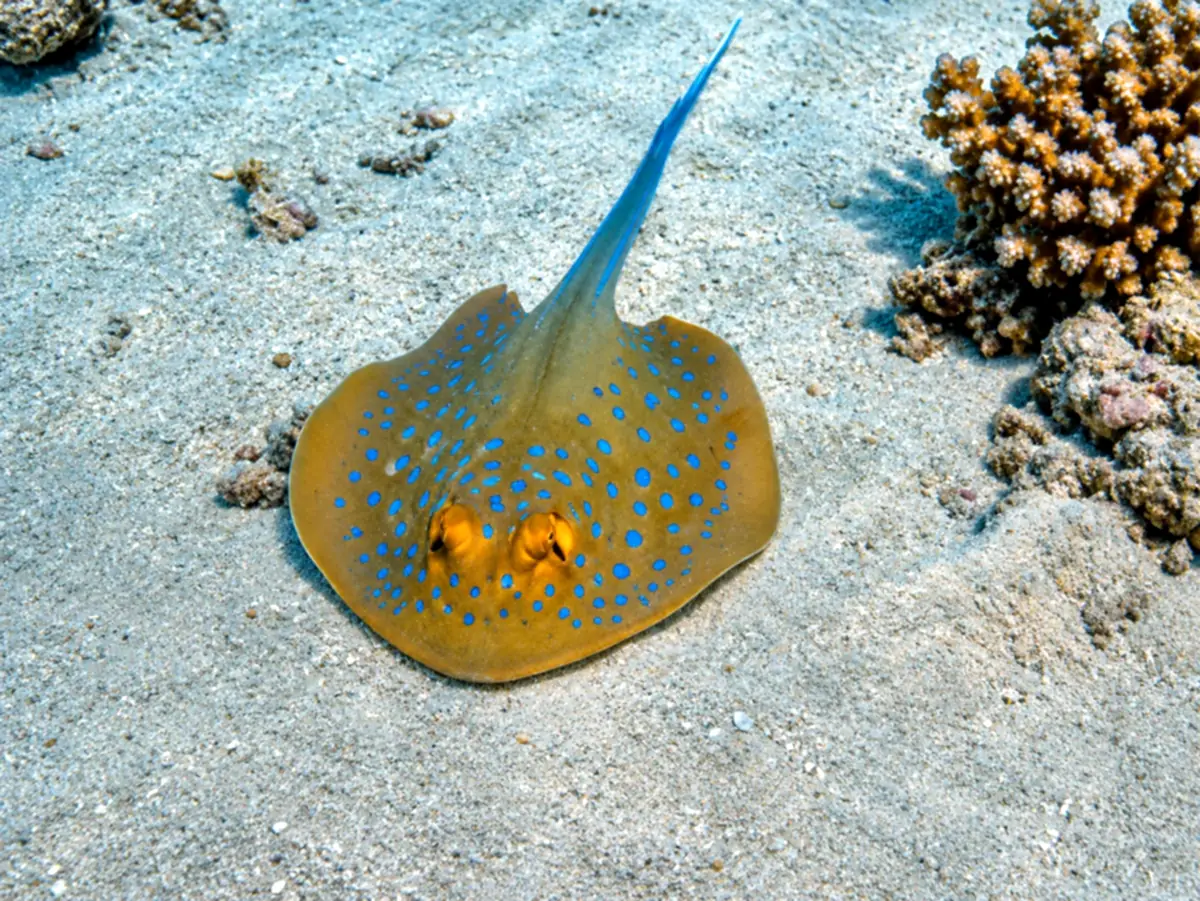
Finally, anemonefish guard the openings, while nudibranchs and the camouflaged Red Sea walkman reward a slow search.
Is Paradise Reef suitable for beginners?
Yes, in good conditions. Because the reef is shallow and the currents are usually weak, Open Water divers can enjoy the towers and the lagoon garden. However, any passage or cavern is an overhead environment and must be judged separately.
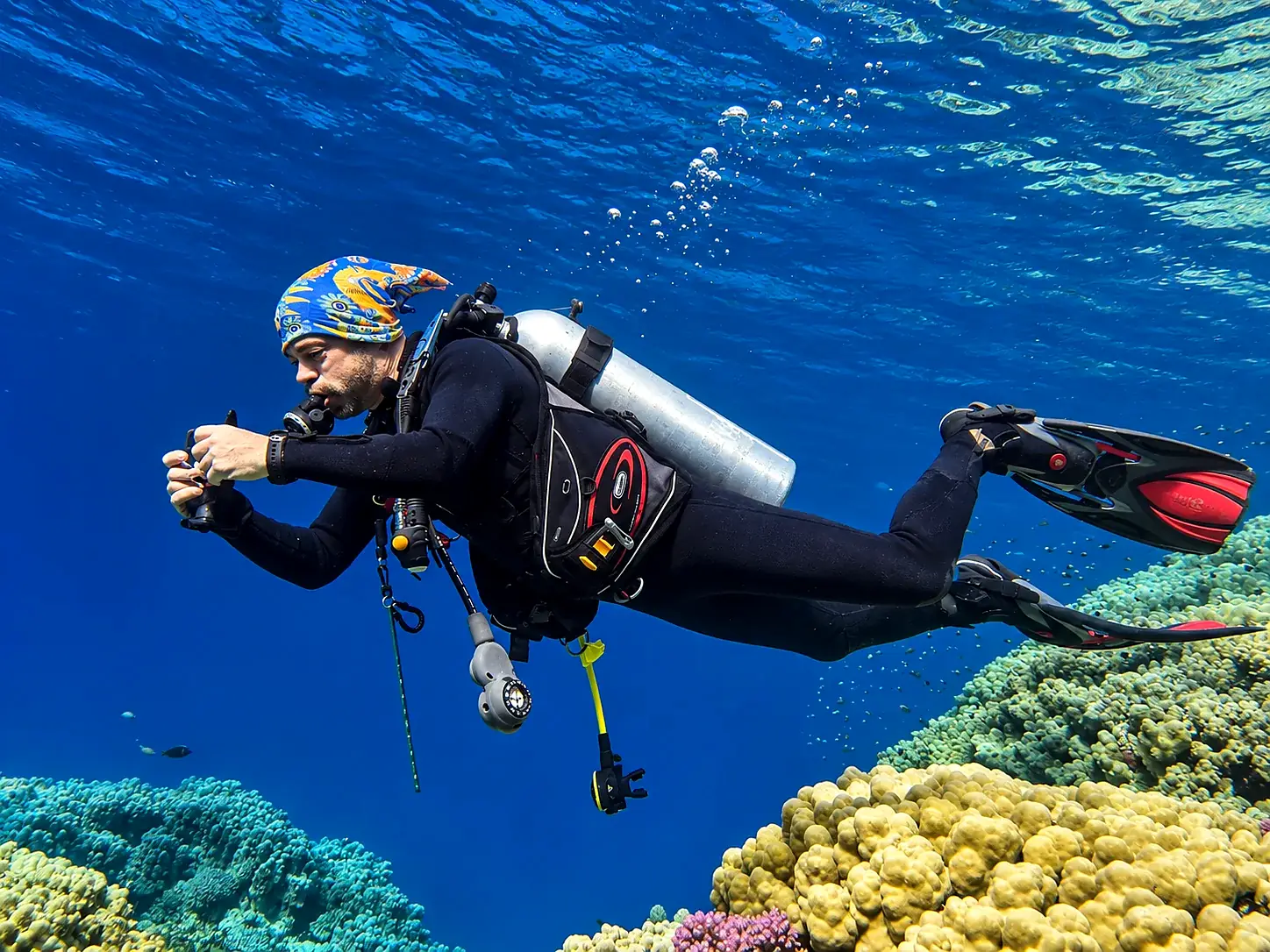
Moreover, the site is ideal for practising skills. For example, Peak Performance Buoyancy helps around the towers, and underwater photography fits the shallow light.
Before you dive Paradise Reef
Firstly, do not enter any cavern without suitable training and a clear exit in sight. Secondly, keep your fins off the coral towers, since many rise close to the surface.
Above all, follow our diving safety standards. The southern reefs are protected by HEPCA, and dive insurance such as DAN Europe is essential this far south.
How do you get there?
In practice, Paradise Reef is reached only by liveaboard, usually on the Deep South St. John’s route, often combined with Umm Khararim on the same day. Guests board on Saturday after 15:00, and check-out is between 09:00 and 10:00 the next Saturday.
Some far-south trips also stop here, including the Elba Reef liveaboard. Consequently, one week can combine it with the St. John’s dive sites, such as Habili Gaffar and Shaab Kentkana.
Plan your Paradise Reef dive
- Deep South St. John’s liveaboard — the route that passes the reef.
- What divers need on board — the packing checklist for a Red Sea safari.
- PADI Open Water — the course that opens shallow reefs like this one.
- redsealiveaboard.net — Red Sea safari schedules and availability.
- All eight boats in our fleet can sail this route: Sea Fox, Simba, Sea Treasure, Star Jet, Bismarck, C Echo II, C U and Ramadan 3.
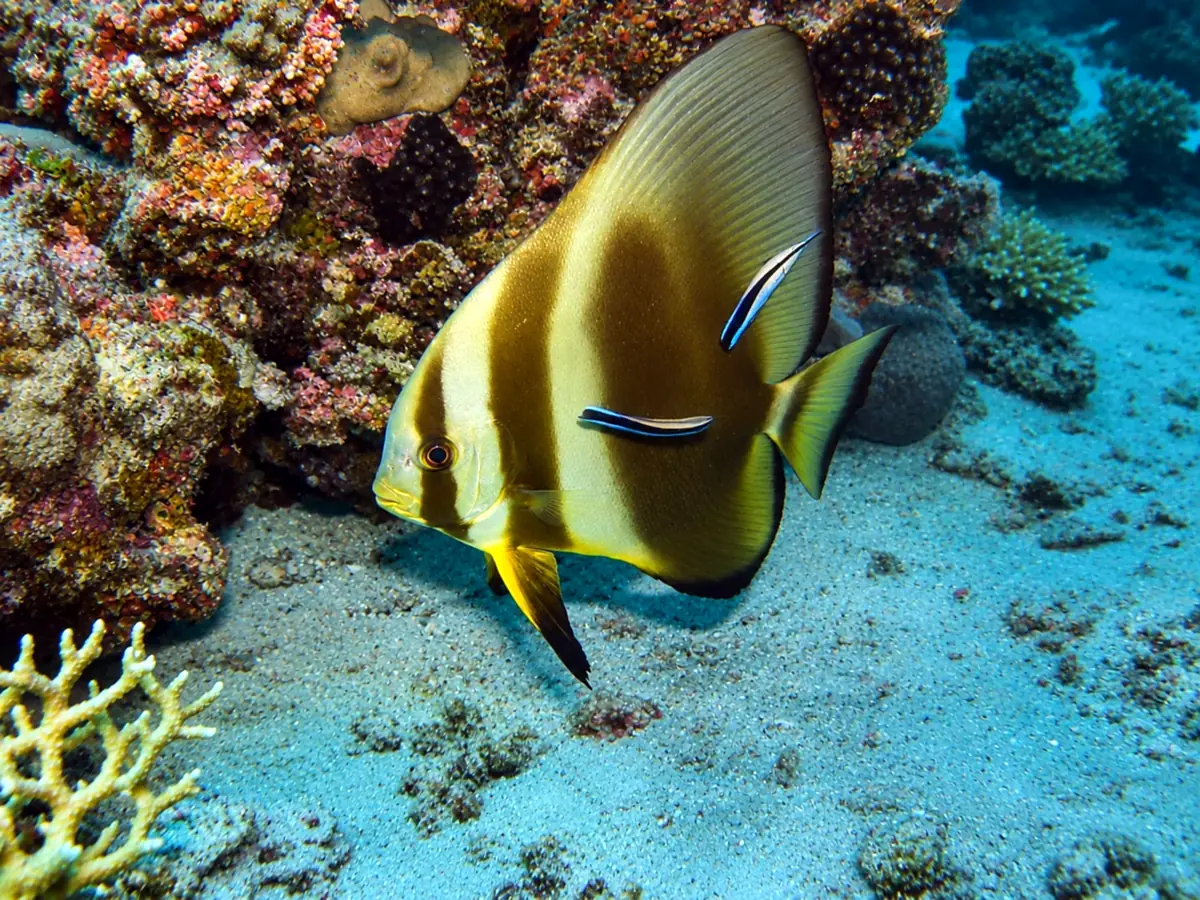
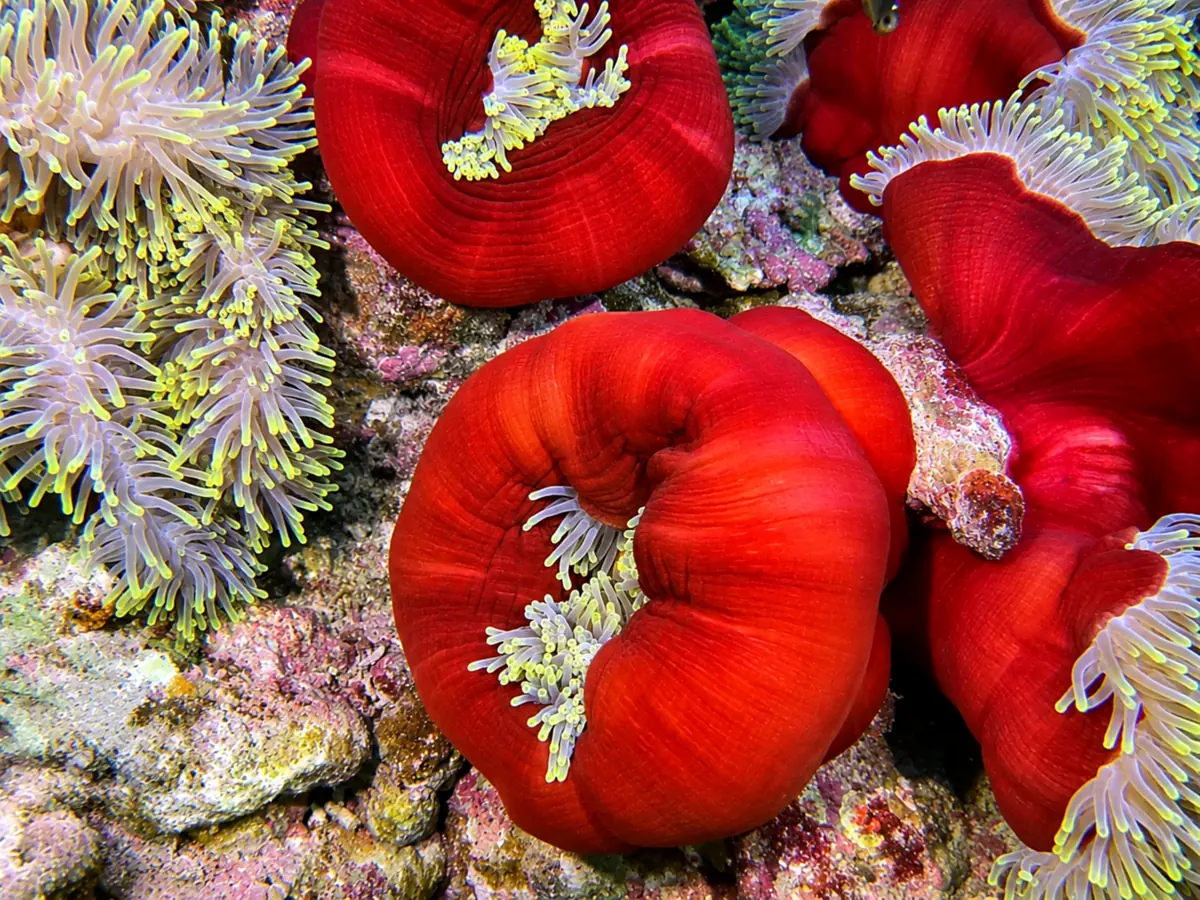
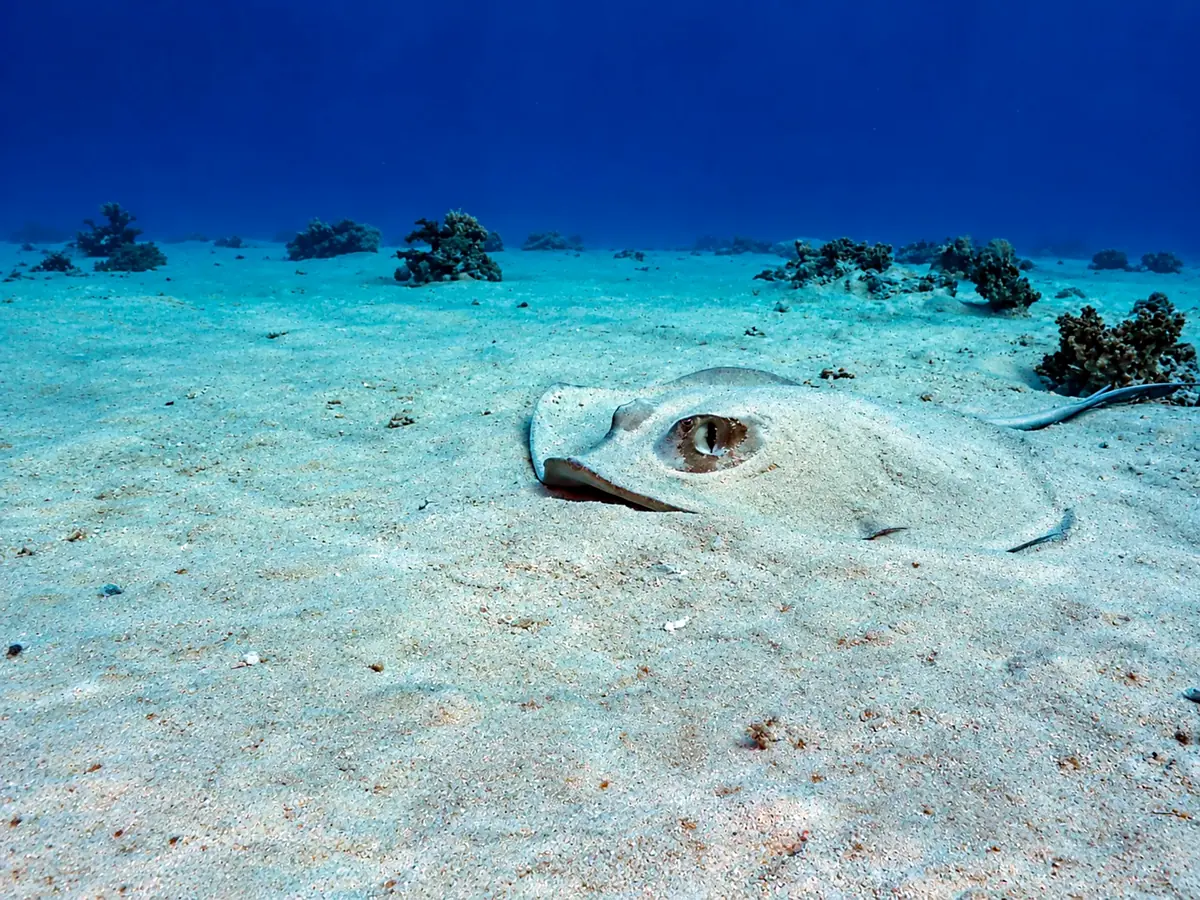
Photo gallery from Foul Bay and the southern reefs
Other routes from Red Sea Diving
Generally, for a first liveaboard, the North Red Sea liveaboard keeps to the classic wrecks. On the other hand, the BDE liveaboard runs Brothers, Daedalus and Elphinstone, while Daedalus and Fury Shoals also reaches the south. Meanwhile, the Red Sea liveaboard guide compares all eight routes.
Paradise Reef: frequently asked questions
Where is Paradise Reef?
In fact, it lies just 600 m from Umm Khararim, at the southern end of a long chain of reefs between Foul Bay and St. John’s. However, its exact GPS position is not independently verified.
How deep is Paradise Reef?
Overall, dives stay between about 3 and 17 m, and the surrounding seabed lies at about 16–18 m.
Why is Paradise Reef also called Orabi?
Egyptian crews call it Orabi, a name that comes from local fishermen. Both names refer to the same reef.
Is Paradise Reef good for beginners?
Yes, in good conditions, thanks to the shallow depth and weak currents. Still, the small caverns are an overhead environment and need suitable training.
How do you get to Paradise Reef?
Only by liveaboard, usually on the Deep South St. John’s route. Moreover, all eight boats in the Red Sea Diving fleet can run this route.
Foul Bay · Deep South liveaboard · Easy reef
Dive the quiet reefs of the south
Simply tell us your dates, the number of divers and your certification level. Afterward, our team checks which Deep South departure fits your group before you commit to anything.


