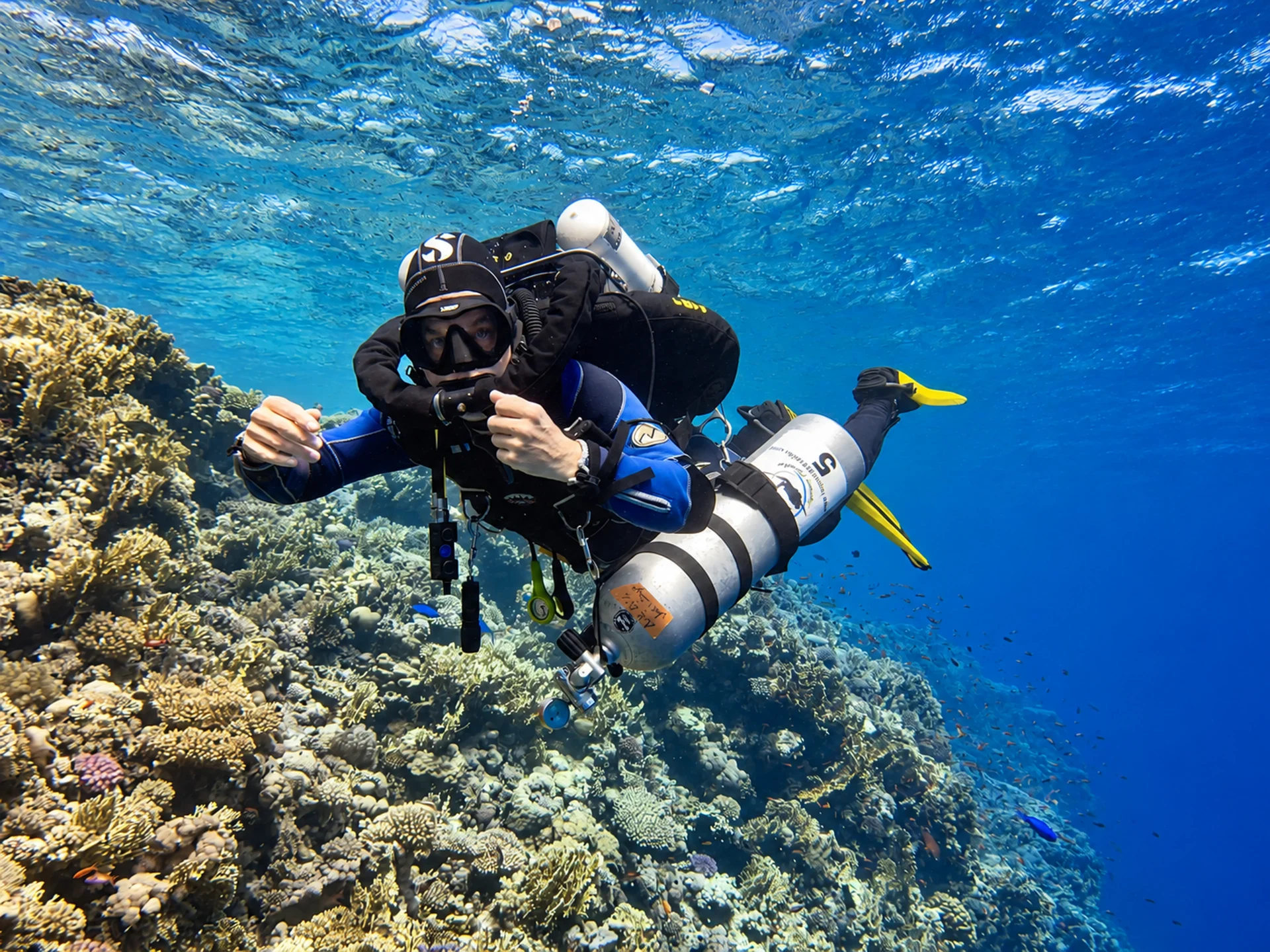
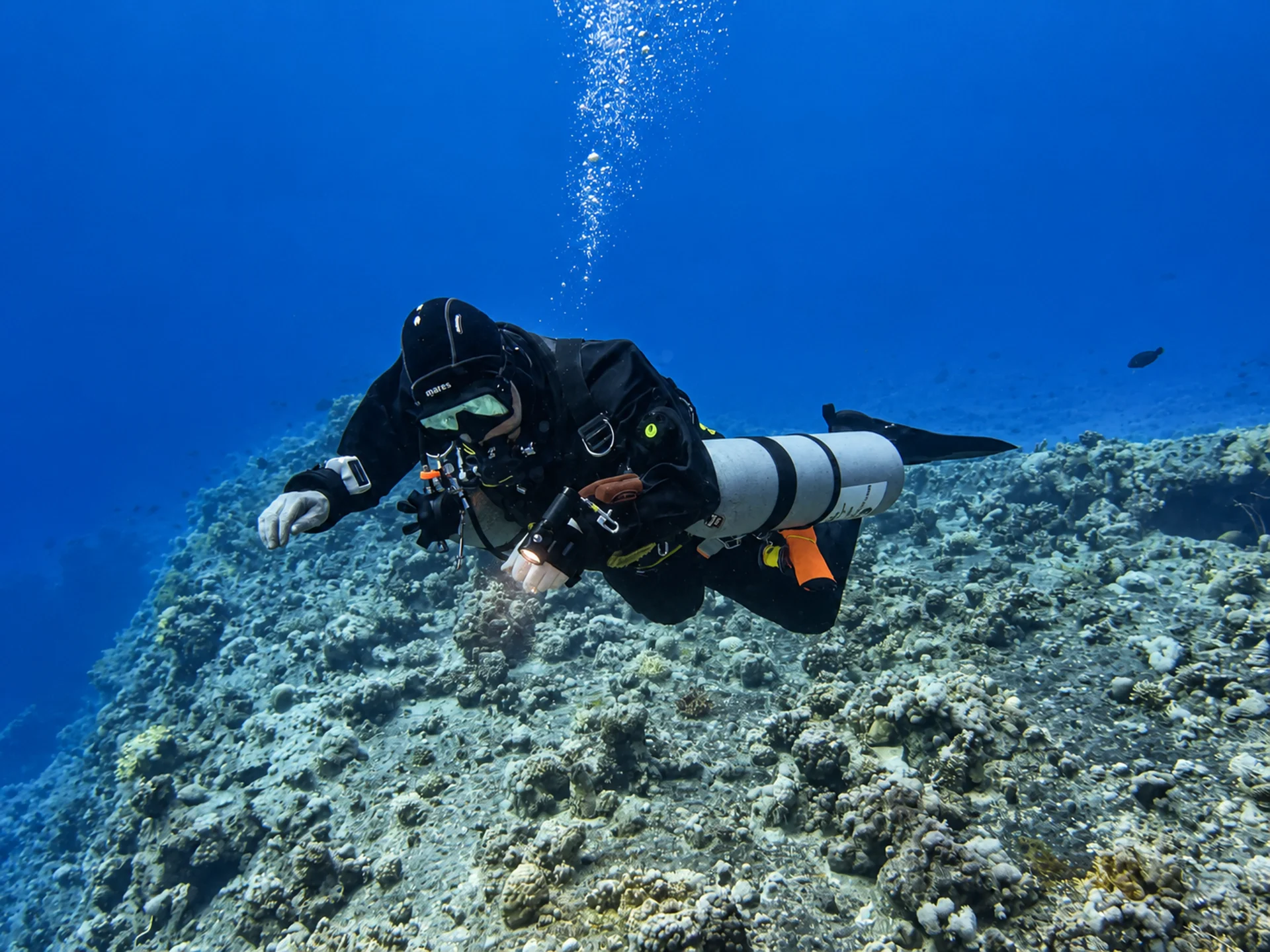
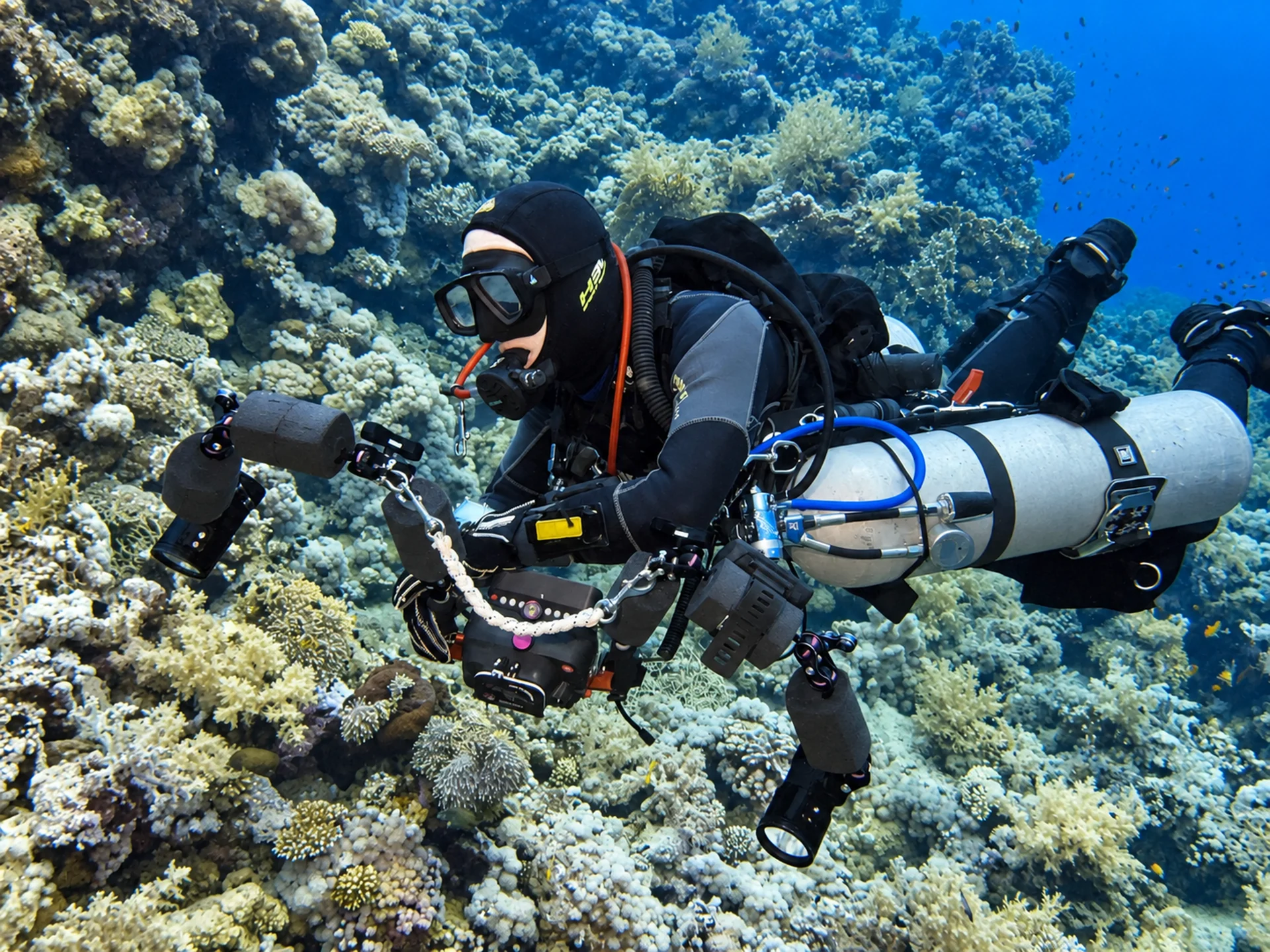
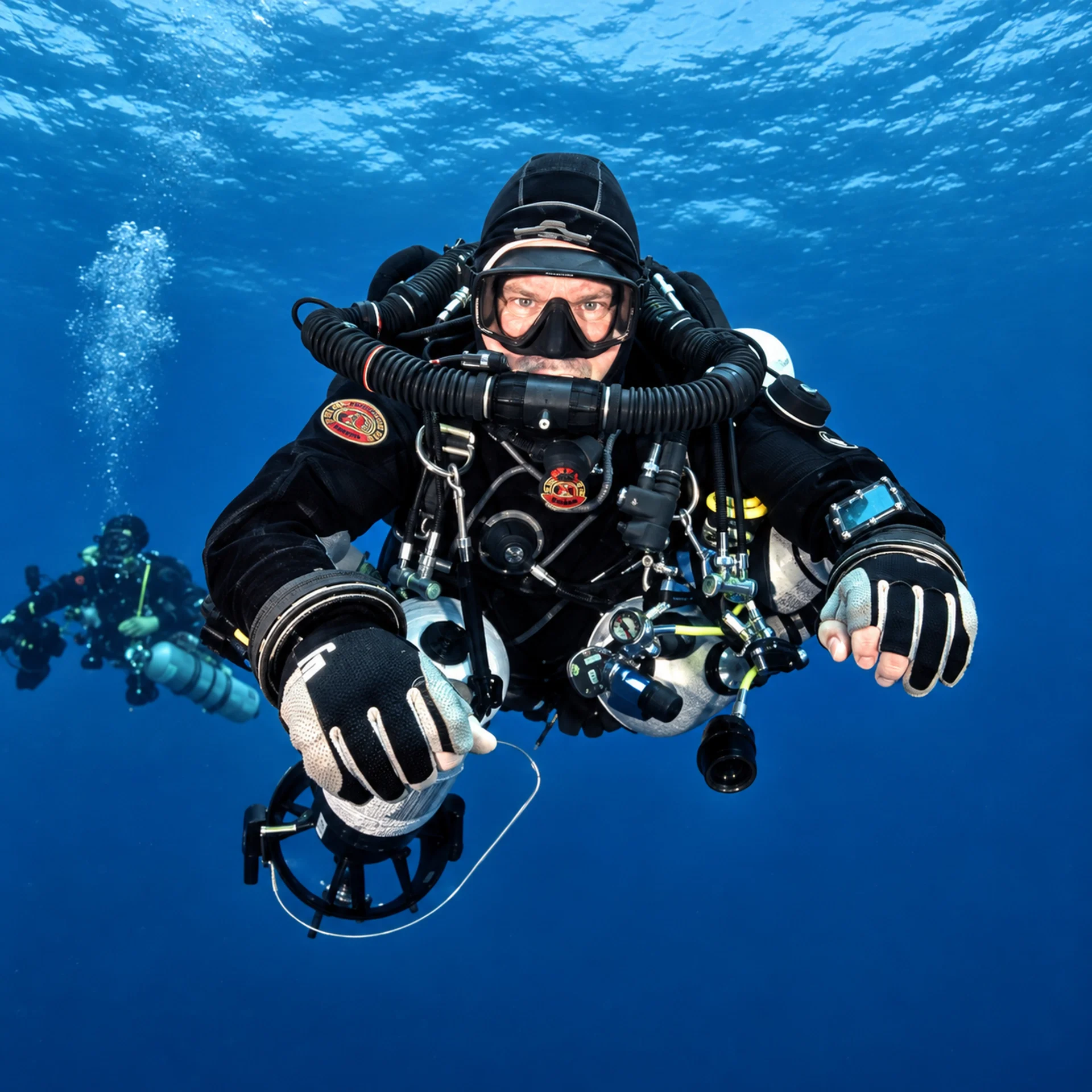
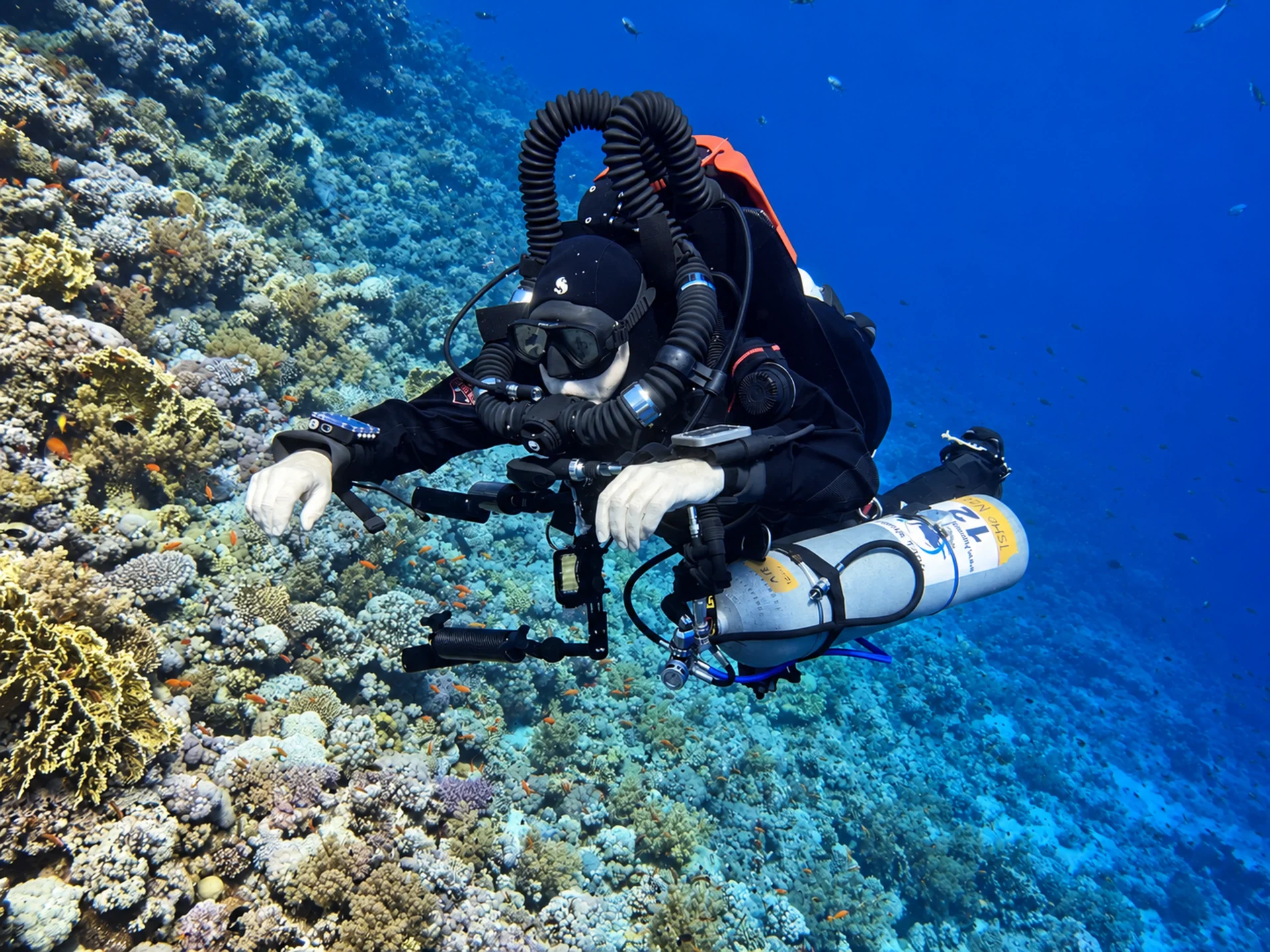
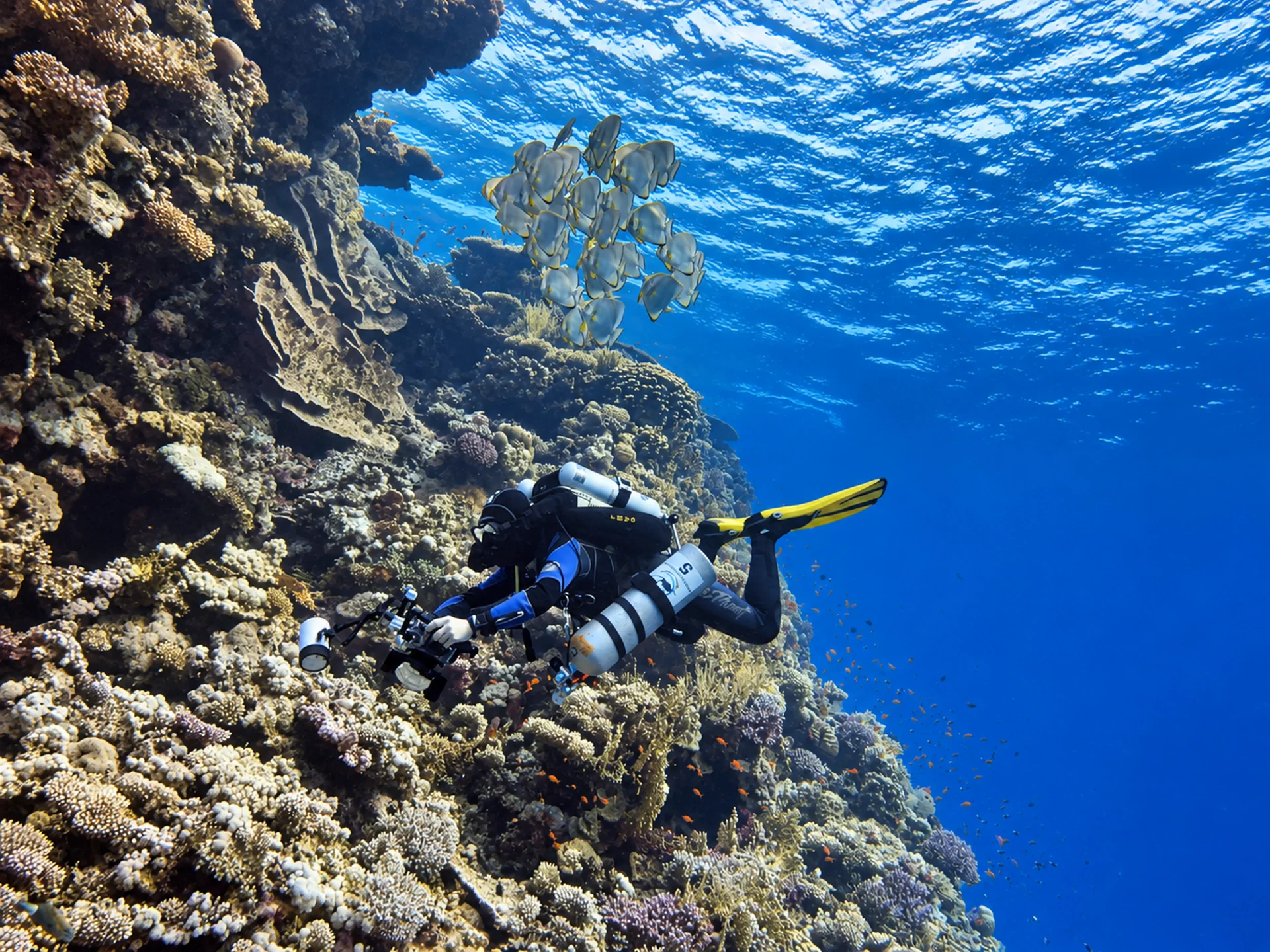
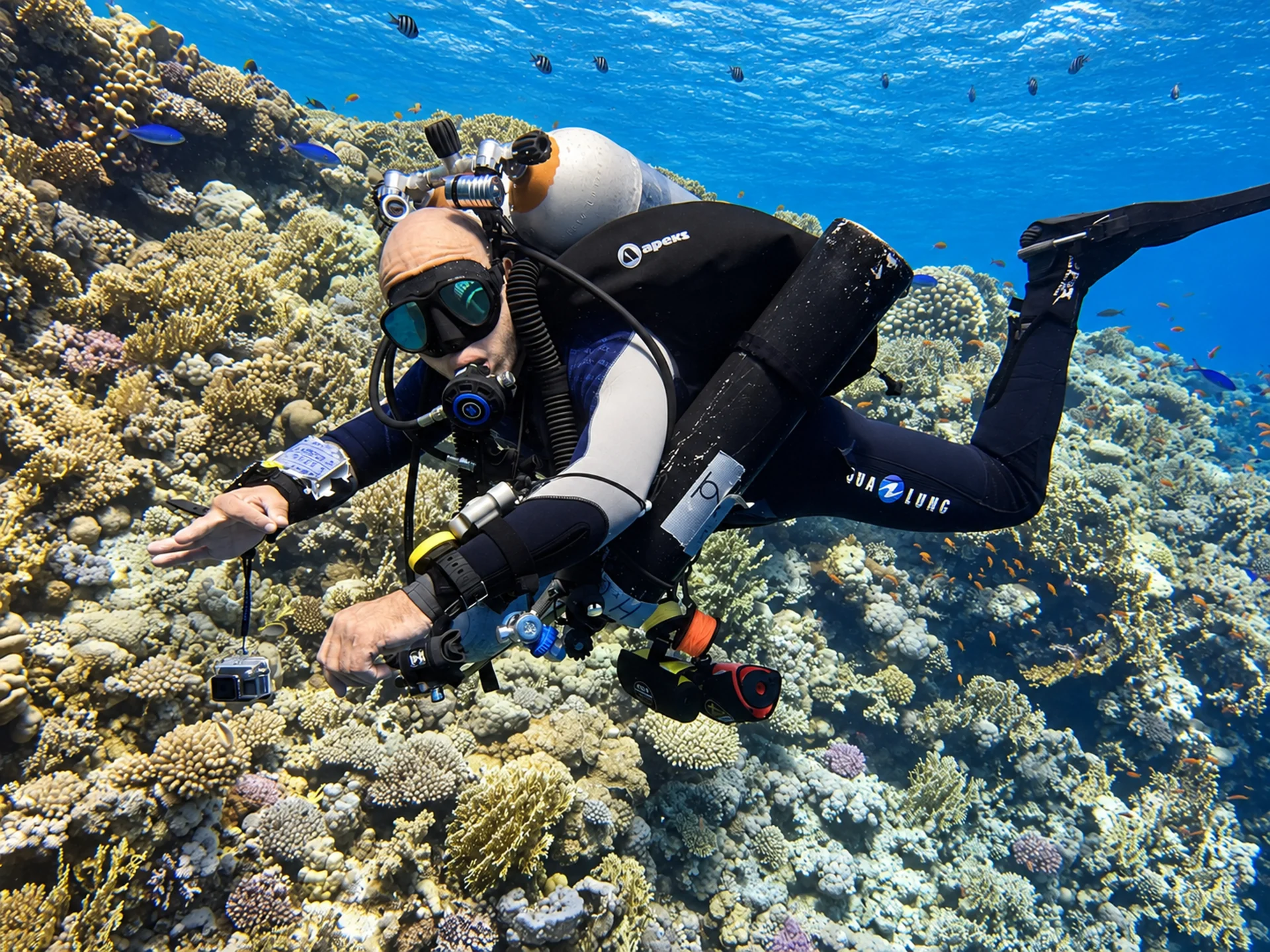
Technical diving in Hurghada with a rebreather diver over a Red Sea coral reef

Technical Diving · PADI TecRec · Hurghada

Technical Diving Courses in Hurghada

Past forty meters the Red Sea keeps going. Deeper wrecks, walls that fall away into blue and reef structure nobody photographs, all of it beyond recreational limits. Technical diving reaches it through planned decompression, redundant equipment and procedures that hold when something fails.

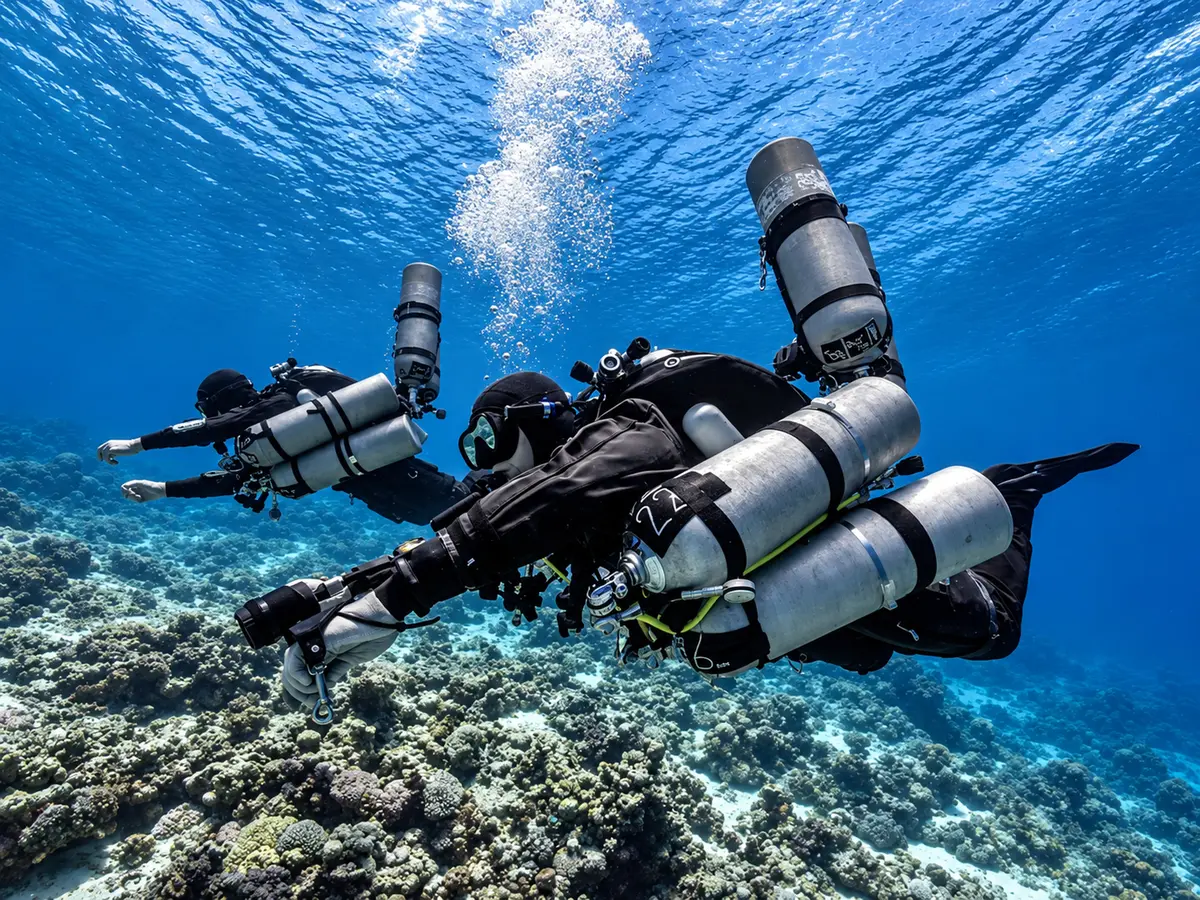
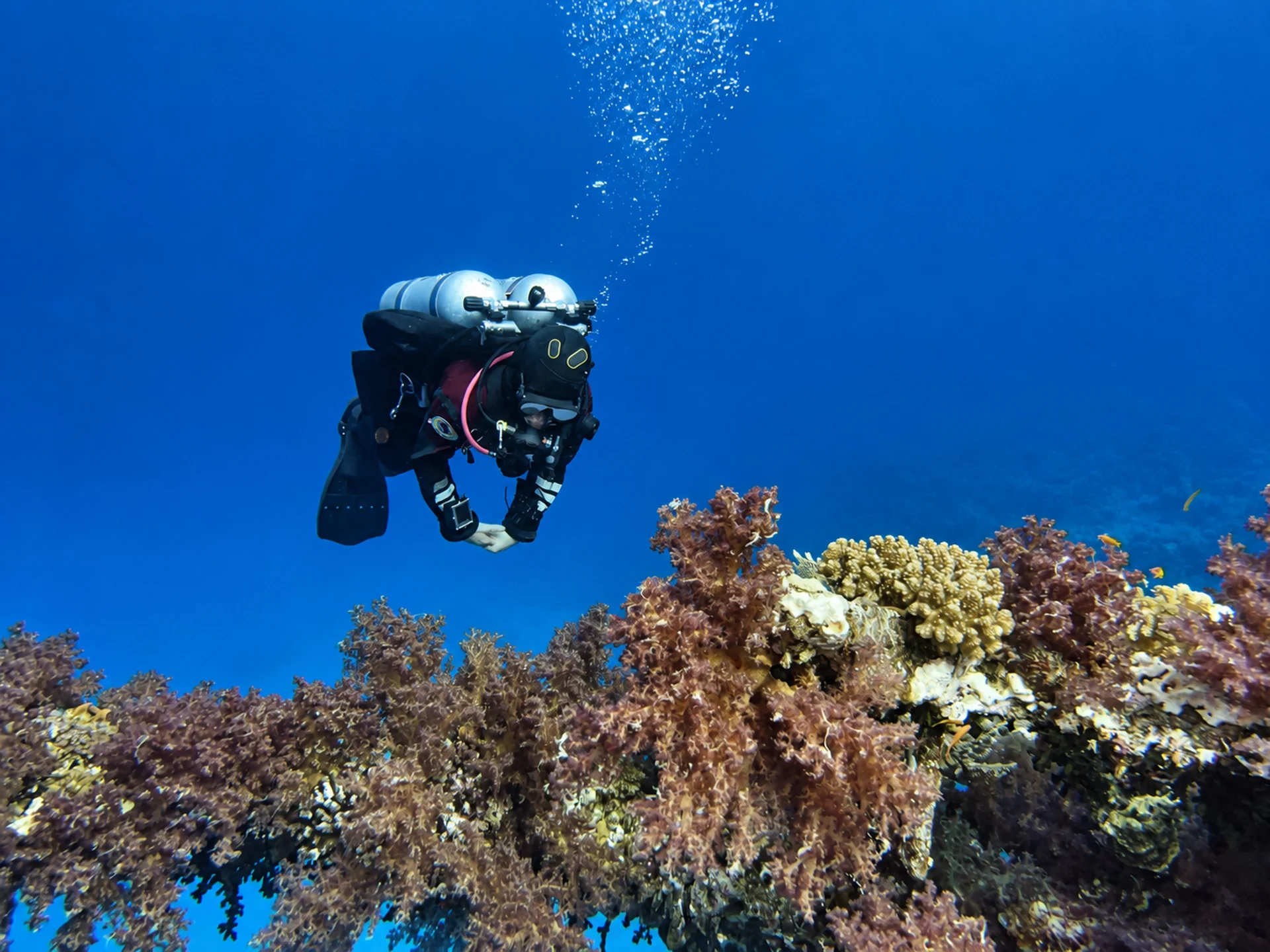
Twinset diver on a technical diving course in open Red Sea water
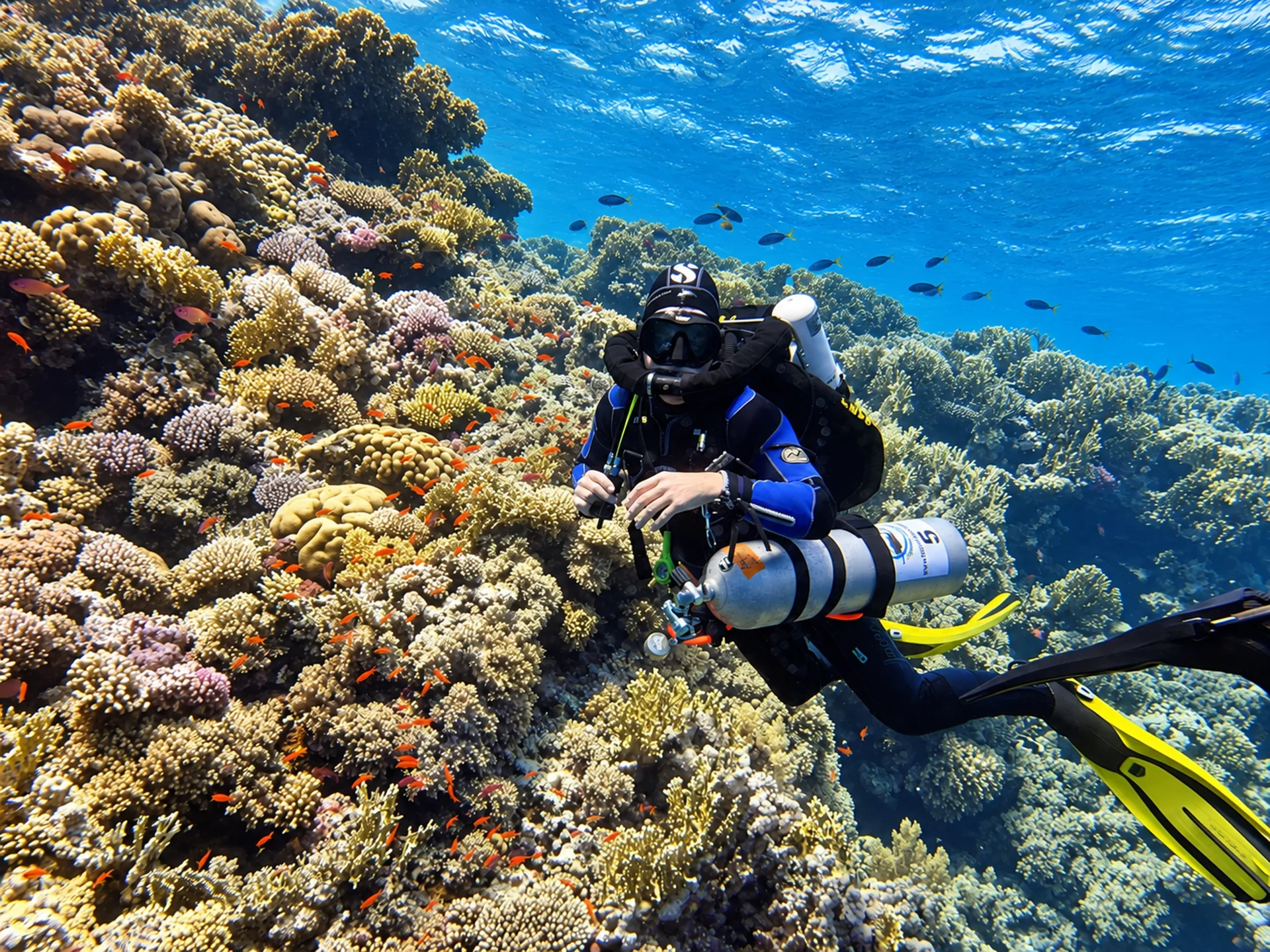
Diver exploring a Red Sea coral reef near Hurghada
Reef structure below recreational limits in the Red Sea
18+Minimum age
40–100 mDepending on level
Tec 40 upProgressive ladder
On requestPrices and dates

What is technical diving?

Technical diving goes beyond recreational limits with planned decompression, multiple gas mixtures, redundant equipment and depths past forty meters. Red Sea Diving runs PADI TecRec training in Hurghada, starting at Tec 40 and continuing through Tec 45, Tec 50 and the Trimix levels. The minimum age is eighteen, each level carries strict certification and logged dive prerequisites, and a physician must sign your medical statement. We quote prices per candidate because equipment, gas and dive numbers change with the level.

Our courses follow the PADI TecRec standards. Send us your certifications and your logbook, and we will tell you honestly which level suits you today rather than which one you would like to hear.

Technical diving in Hurghada at a glance

Course familyPADI TecRec technical diving
LocationHurghada, Red Sea Governorate, Egypt
Entry levelTec 40
Levels offeredTec 40, Tec 45, Tec 50, Tec Trimix 65, Tec Trimix Diver, Tec Sidemount, Tec Gas Blender
Depth range40 to 100 meters, depending on the level
Minimum age18 years
PriceQuoted per candidate on request
PrerequisitesVary by level; Advanced Open Water, Enriched Air Nitrox and Deep Diver for Tec 40
Logged divesAround 30 for Tec 40, rising toward 100 for Tec 50
MedicalStatement signed by a physician
ConfigurationBack-mounted twins or sidemount
GasesAir, enriched air and decompression gases; helium from Trimix 65 upward
SeasonYear round, water 22 to 29 °C
BookingWritten quotation before any payment
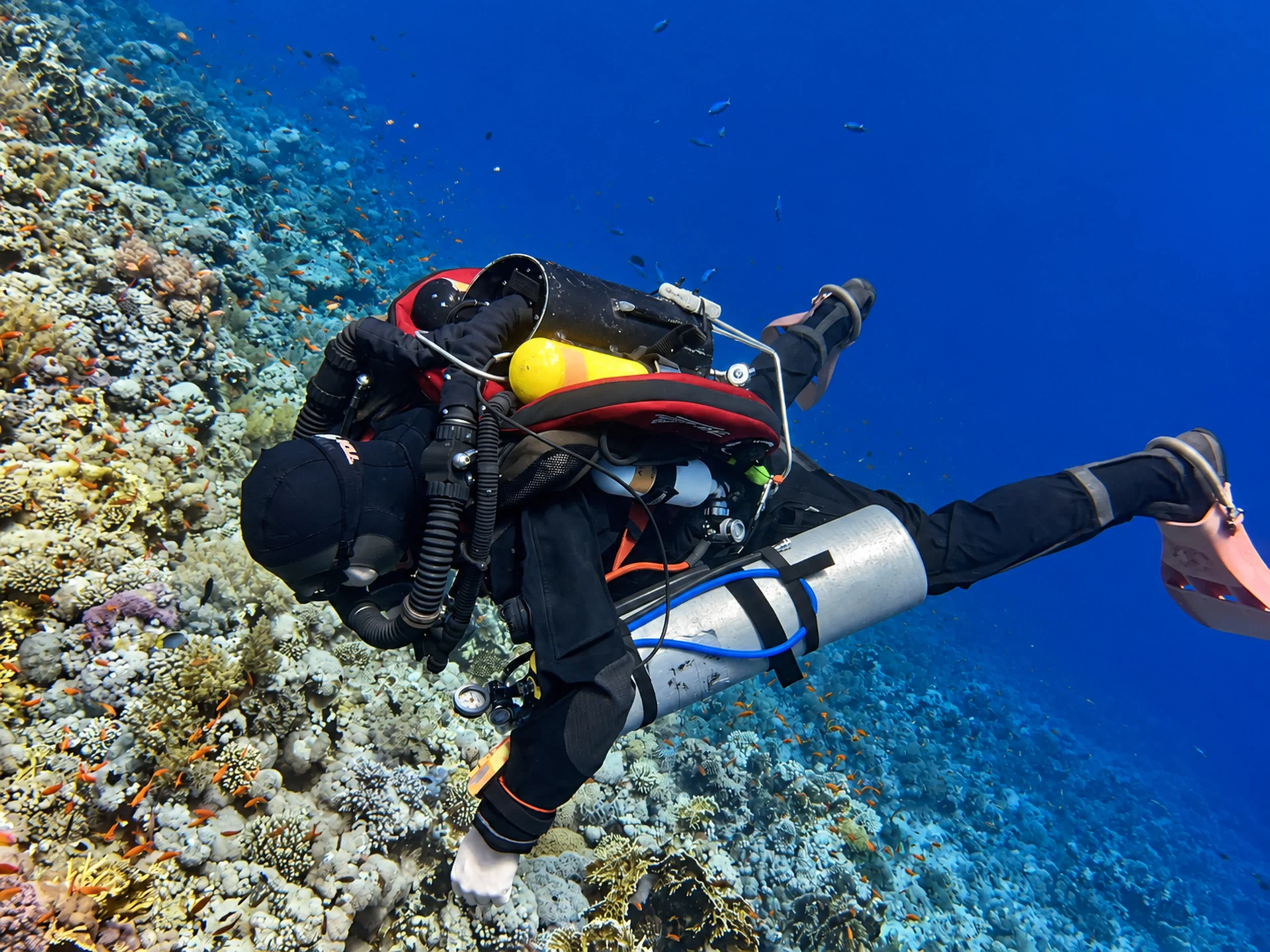
Close up of a rebreather diver during technical diving in open water

How does technical diving differ from recreational diving?

Recreational diving rests on one rule above all others: you can always go straight to the surface. Technical diving deliberately gives that up. Once you carry a decompression obligation, or a ceiling of any kind, the surface stops being an option and everything else must compensate for that.

Consequently the training centers on redundancy and planning rather than depth for its own sake. You carry two independent gas supplies, backup regulators, a second computer and decompression gases that you switch on schedule. Furthermore you plan for gas loss at the worst possible moment, and you turn the dive around when the numbers say so rather than when the dive feels finished.

None of this extends naturally from an Advanced course. Instead it is a different activity that happens to use the same water, and the honest entry requirement is a real wish to dive that way rather than curiosity about another card.

Which technical diving level should I start with?

The PADI TecRec ladder rises in clear steps. Each one adds depth, decompression time and equipment, and each one builds on the level below it.

Tec 40

The bridge from recreational into technical diving. You dive to forty meters with limited decompression, up to ten minutes of total obligation, in twins or sidemount with one decompression gas. Prerequisites include Advanced Open Water, Enriched Air Nitrox, Deep Diver or equivalent deep experience, and roughly thirty logged dives with ten on nitrox and ten below eighteen meters.

Tec 45

Full decompression diving to forty-five meters with a single decompression cylinder, plus gas planning you calculate yourself instead of reading from a table. Requires Tec 40, Rescue Diver and around fifty logged dives including dives beyond thirty meters.

Tec 50

Extended decompression to fifty meters using two decompression gases. Most Red Sea technical divers settle here, since this level covers the deep wrecks and the offshore walls properly. Requires Tec 45 and roughly one hundred logged dives with genuine deep experience.

Trimix levels

Tec Trimix 65 takes you to sixty-five meters on helium-based mixtures, while the full Tec Trimix Diver rating extends to one hundred. These levels demand serious commitment in training time, equipment and gas cost, so we prefer to discuss them in a call rather than an enquiry form.

Tec Sidemount

Technical diving in a sidemount configuration rather than back-mounted twins. Divers who already prefer sidemount choose it often, and it helps where boat logistics make twins awkward. The recreational Sidemount Diver course is the natural first step.

Tec Gas Blender

Meanwhile, this level covers blending enriched air and trimix, handling oxygen safely and understanding the equipment behind every fill you rely on. Useful for anyone serious about tec, and essential for anyone working in it.

Exact prerequisites and logged dive numbers follow current PADI standards, which change from time to time. Therefore we confirm the requirements for your level in writing before you book rather than after you arrive.

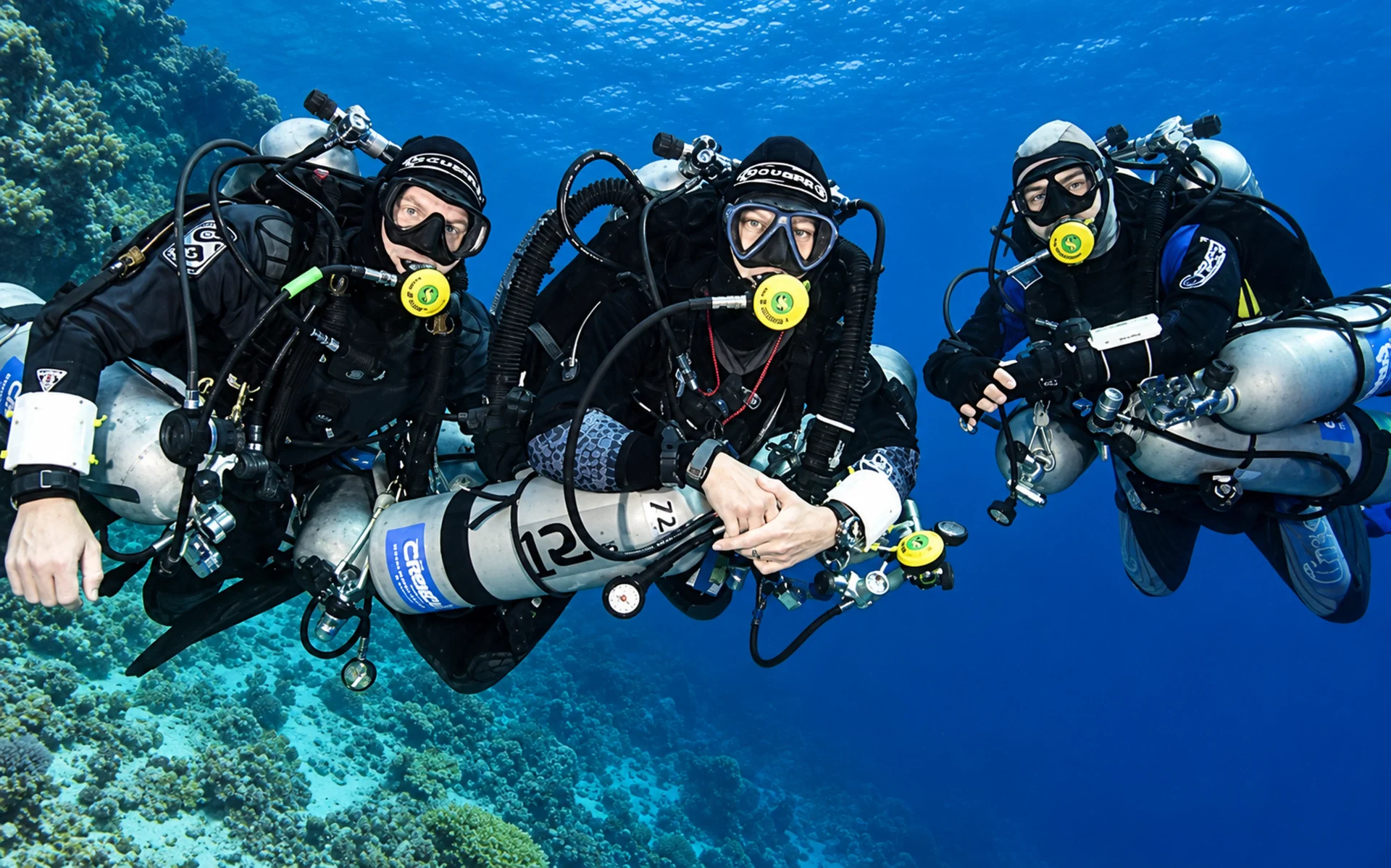
Three divers on a technical diving course exploring a Red Sea reef
Team diving is standard practice on every technical diving course.

What equipment does technical diving need?

Technical configurations punish improvisation, so we discuss kit before anything else. Depending on your level and configuration you will need twin cylinders with an isolation manifold or a sidemount system, two independent regulators, decompression cylinders with their own regulators, redundant buoyancy, a primary and a backup computer, a compass, a lift bag or surface marker with a reel, cutting tools and suitable exposure protection.

We can supply some of this. You should own some of it. The rest depends on which level you train. Tell us what you already have when you enquire, and we will name what is missing plainly instead of selling you a package you do not need.

Technical divers over a Red Sea reef near Hurghada

How does the training run?

  1. Assessment. First, you send your certifications, total logged dives, deep dive count and last dive date. We confirm the level you qualify for and quote in writing.
  2. Theory and planning. Next, you work through decompression theory, gas planning and equipment configuration with your instructor before touching the water.
  3. Confined and skills sessions. Then you build the configuration, drill valve shutdowns, gas switches and failure scenarios until they run without hesitation.
  4. Training dives. Afterward you complete the open water dives for your level, each one planned, briefed and debriefed properly.
  5. Certification. Finally, once you meet every performance requirement, your instructor processes the PADI certification for that level.

Course length varies with the level, your progress and the weather. Consequently we build schedules around candidates rather than fixed dates, and we never rush a performance requirement to fit a flight.

Who can join a technical diving course?

Requirements

  • At least eighteen years old
  • Additionally, the certification prerequisites for your chosen level
  • Likewise, the logged dive experience for that level, genuinely logged
  • A medical statement signed by a physician
  • Comfortable buoyancy and trim before you start, above all
  • Furthermore, suitable equipment, owned or arranged in advance
  • Willingness to plan conservatively and abort when the plan says so

Buoyancy deserves its own note. Poor trim in a technical configuration creates a safety problem rather than an untidy one, so instructors send candidates away to fix it. If that describes you, Peak Performance Buoyancy costs far less than a failed tec course.

Included in a quotation

  • PADI TecRec instruction for your level
  • In addition, training materials and certification processing
  • Boat or shore access for the training dives
  • Moreover, gas fills specified for your dive plans
  • Any equipment we agree to supply
  • A written breakdown before you pay anything

Possible extras include helium, additional cylinders, a private instructor, personal diving insurance, transfers from El Gouna, Makadi Bay, Sahl Hasheesh, Soma Bay or Safaga, and accommodation and flights. Moreover, we confirm every additional cost before you book, so nothing appears at the marina.

Our procedures, emergency equipment and oxygen provision appear on the diving safety page. In addition, Divers Alert Network publishes current fitness-to-dive guidance worth reading before you commit.

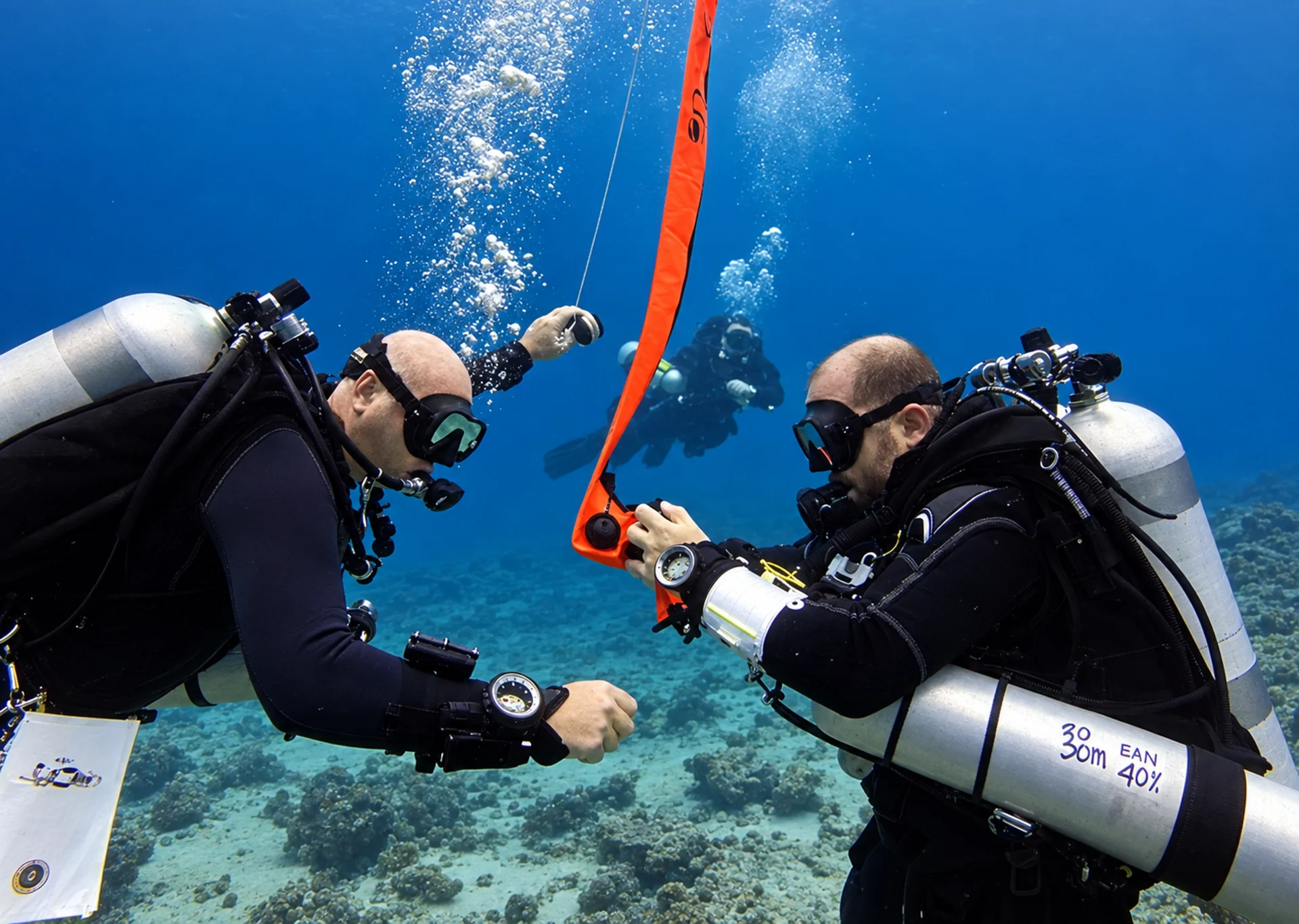
Divers deploying a surface marker buoy during technical diving training

Where can you do technical diving near Hurghada?

The northern Red Sea ranks among the better technical destinations anywhere, largely because of the wrecks. Several famous ones carry structure and depth well below recreational limits, and there are deep walls and drop-offs within reach of Hurghada that simply cannot be dived properly on a single tank of air.

We select sites around your level, the conditions and the logistics technical diving demands, which run heavier than a normal day boat. Offshore and southern routes on a liveaboard open up considerably more, although those trips need planning well ahead for gas and support. Our dive sites page covers the reefs and wrecks we visit regularly.

If you are working toward tec but have not arrived yet, Deep Diver, Wreck Diver and Nitrox matter most, while our daily diving is where the dive count comes from.

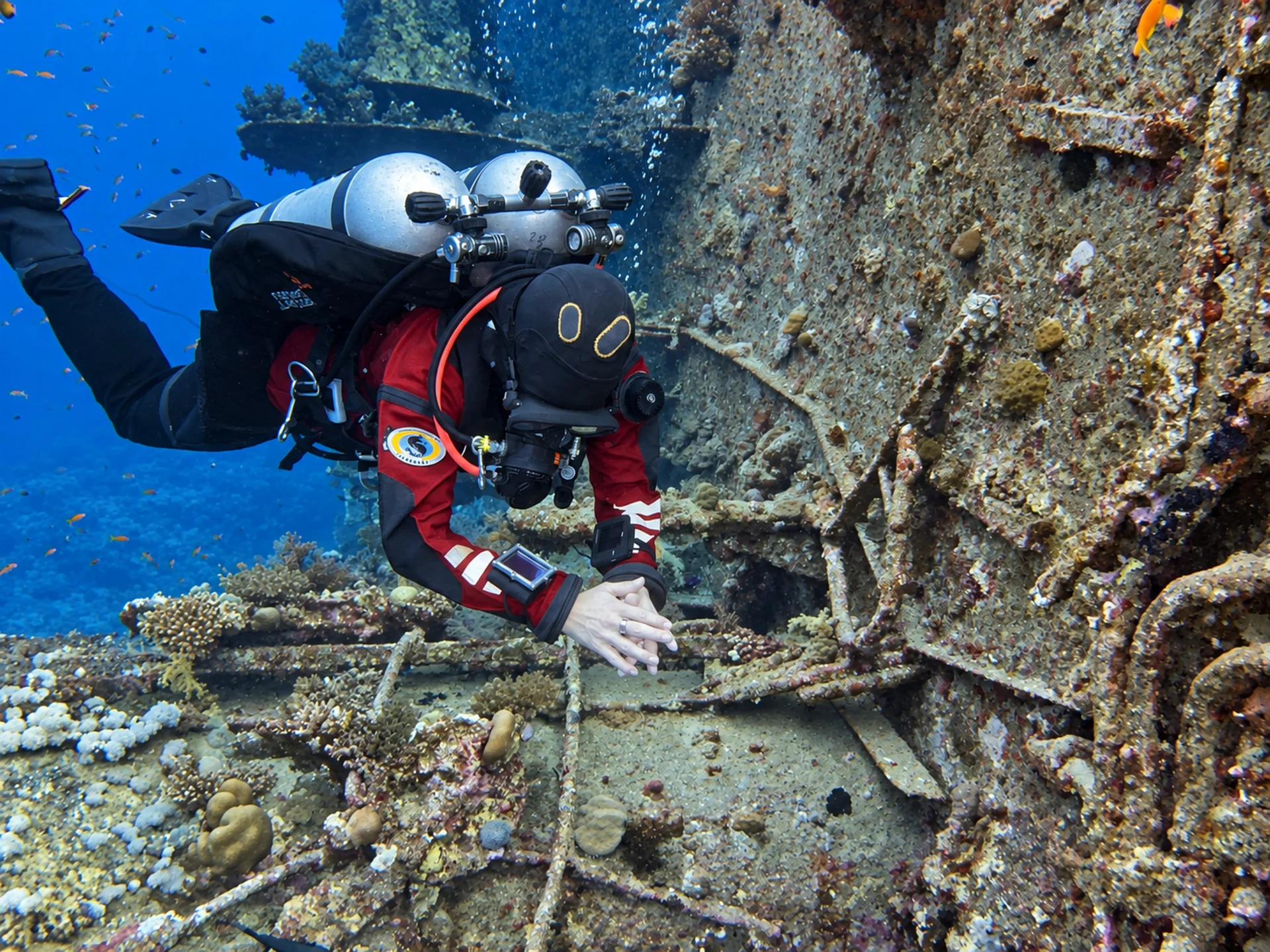
Twinset diver exploring a Red Sea shipwreck below recreational limits
Deeper Red Sea wrecks sit below recreational limits and open up after Tec 45.

Gallery

Technical diving in the Red Sea

Why us

Why book technical diving with Red Sea Diving

Safety first

Above all, we carry full emergency equipment and oxygen, follow a documented action plan and brief every dive. On technical dives that is the baseline rather than the selling point.

Since 2000

Indeed, we have run diving and liveaboard operations out of Hurghada for more than two decades, on every Egyptian route.

Our own fleet

Furthermore, we operate the boats ourselves, which matters when a dive needs longer surface intervals, staged cylinders and a crew who understand why.

Honest assessment

We review your certifications, logbook and skills before confirming a level, and we will tell you to wait whenever waiting is the right answer.

Written offers

Moreover, we confirm training, gas, equipment and any boat costs in writing before you pay anything.

Reef protection

In addition, buoyancy discipline, mooring rules and marine park regulations apply on technical dives exactly as they do on every other one.

Questions

Technical diving questions and answers

Getting started

How much does technical diving cost in Hurghada?

We quote per candidate, because the level, the equipment you own, the gas required and the number of dives all change the total. Send us your certifications and logged dives, and we will send a written quotation.

Which technical diving level should I start with?

Tec 40 suits almost everybody. It bridges recreational and technical diving with limited decompression to forty meters, and it tells you quickly whether you enjoy diving this way.

What certifications do I need before Tec 40?

Advanced Open Water, Enriched Air Nitrox and Deep Diver or equivalent deep experience, along with the logged dive requirements in the current PADI standards. We confirm your exact position before booking.

What is the minimum age for technical diving?

Eighteen years for every technical level, without exception.

How long does a technical diving course take?

Length varies with the level, your progress and the weather, so we build the schedule around you. Tec 40 typically runs across several days, while the higher levels take longer.

Depth and gases

How deep can I dive after each level?

Tec 40 reaches forty meters with limited decompression, Tec 45 reaches forty-five with full decompression, Tec 50 reaches fifty with two decompression gases, Tec Trimix 65 reaches sixty-five and the full Trimix rating reaches one hundred.

Do I need trimix?

Not for Tec 40 through Tec 50, since those levels use air or nitrox with decompression gases. Trimix becomes necessary past around fifty meters, where narcosis and gas density make helium the sensible choice.

Is technical diving the same as deep diving?

No. The Deep Diver specialty stays inside recreational no-decompression limits to forty meters. Technical diving accepts a decompression obligation, which changes the equipment, the planning and the risk entirely.

Can I use enriched air on technical dives?

Yes, and you will. Indeed, enriched air serves as a bottom gas at shallower technical depths and as a decompression gas throughout, which is why Nitrox certification is a prerequisite.

Equipment and requirements

Do I need my own equipment for technical diving?

Naturally, technical configurations reward familiarity, so owning your core kit helps considerably. We can supply some items. Tell us what you have, and we will name what is missing.

Can I train in sidemount?

Yes. Furthermore, Tec Sidemount is available, and the recreational Sidemount Diver course makes a sensible first step if you have not dived the configuration before.

Do I need a medical certificate?

Yes. In every case a physician must sign your medical statement, and technical diving is physically demanding enough that this is not a formality.

How good does my buoyancy need to be?

Good. Above all, poor trim in a technical configuration creates a safety problem rather than an untidy one, so instructors ask candidates to address it before continuing.

Can I do technical diving from a liveaboard?

Yes, although those trips need planning well ahead for gas, staged cylinders and support. Tell us early and we will arrange the logistics around the route.

Talk to us about technical diving training

Send us your certification level, your total logged dives, how many went deeper than thirty meters, the date of your last dive, the equipment you own and the level you are aiming at. We will confirm eligibility, the schedule, the gas and equipment requirements and a written price. For liveaboard diving in Egypt see also redsealiveaboard.net, and browse our full range on the PADI courses page.

Rated 4.9 out of 5 from 132 reviews on Google.

Prefer to talk? Message us on WhatsApp or call +20 105 005 6542. We answer 24 hours a day, seven days a week.

Red Sea Diving, Madares Street, Hurghada 1, Hurghada 84511, Red Sea Governorate, Egypt. Diving and PADI training here since 2000. Last reviewed by the Red Sea Diving instructor team.