
Dive guide to the Hamada Wreck · Abu Ghusun, southern Red Sea
Hamada Wreck Dive Site A shallow 1993 cargo wreck at Abu Ghusun, south of Wadi El Gemal
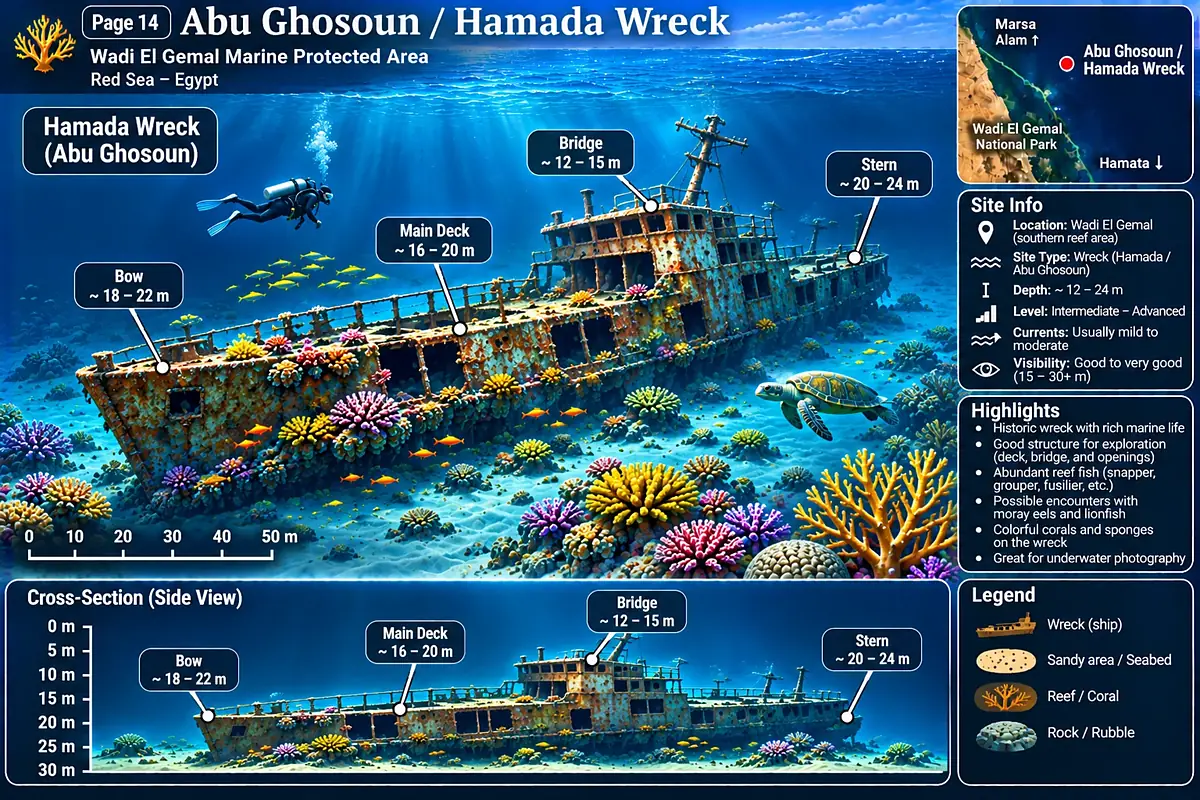
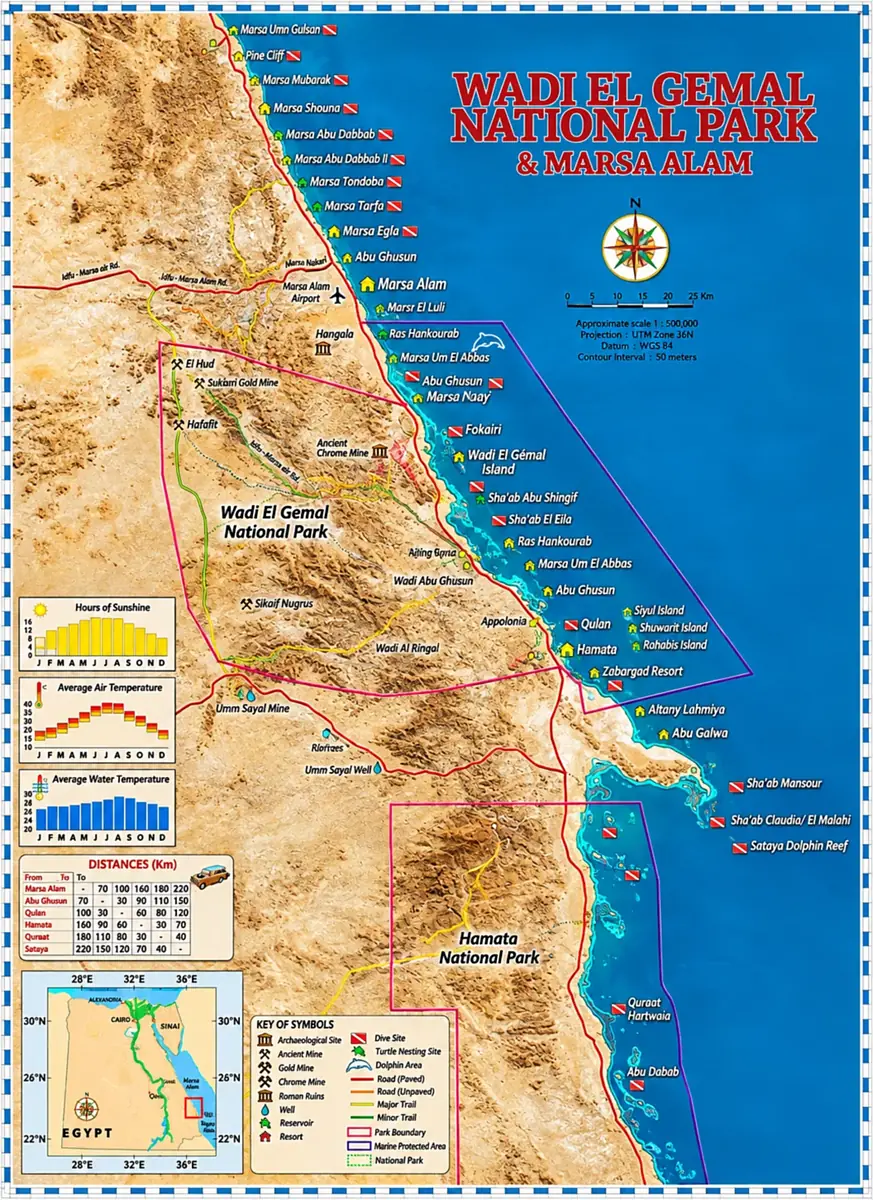
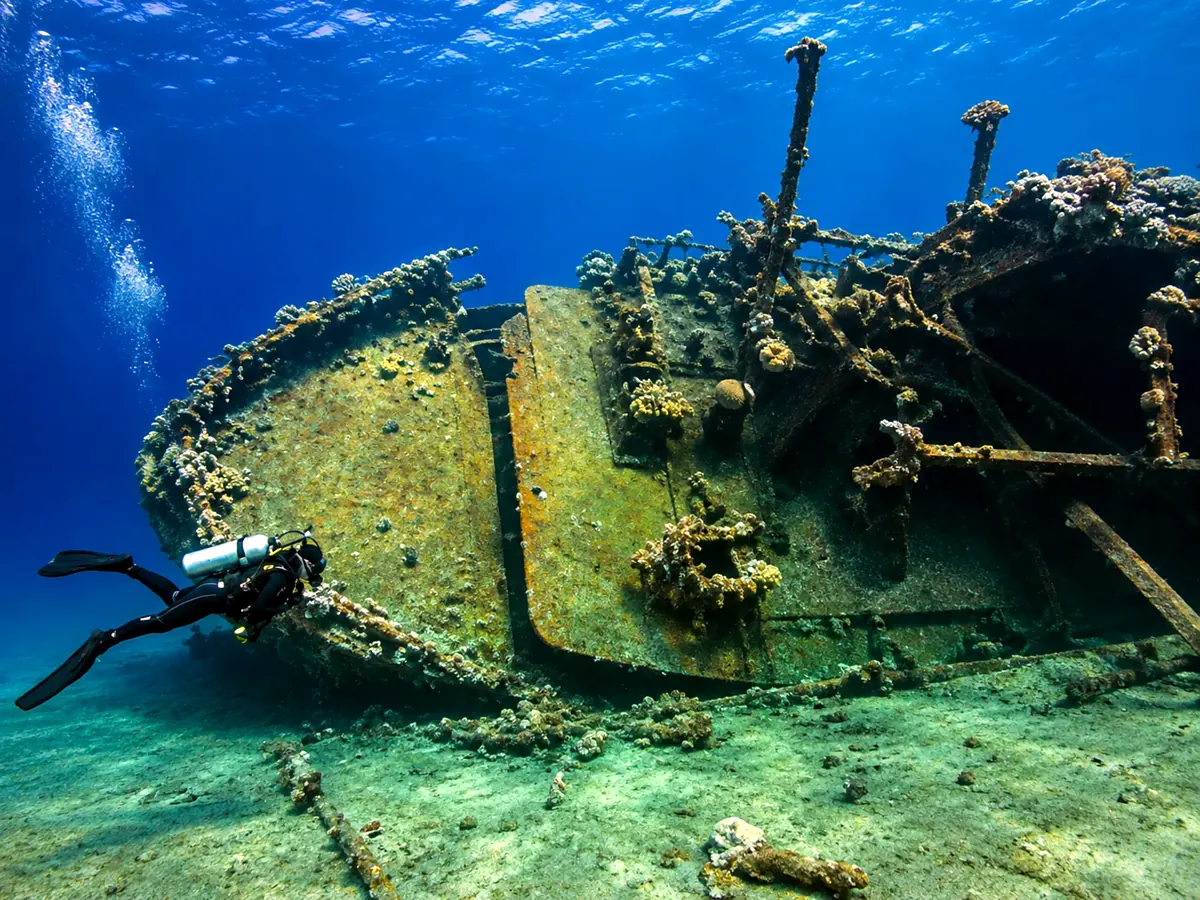
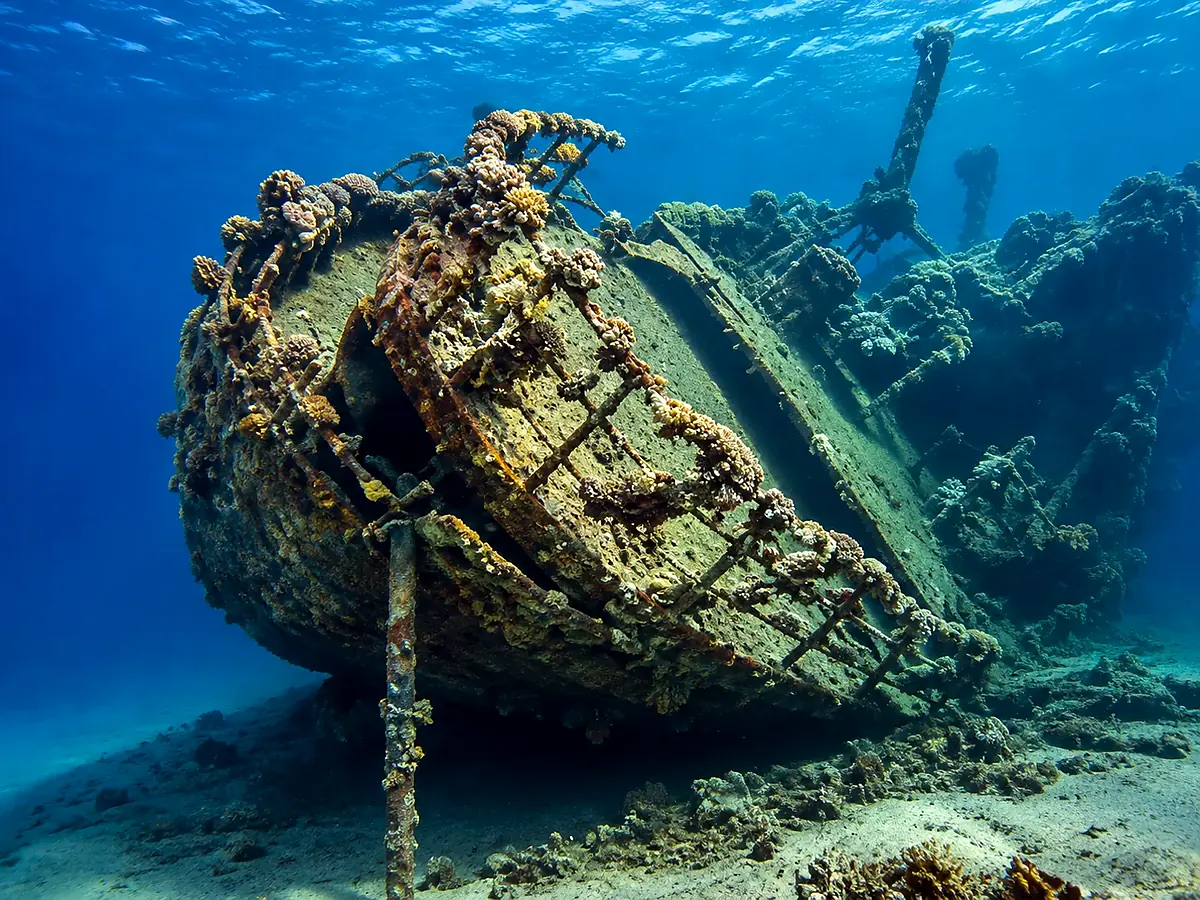
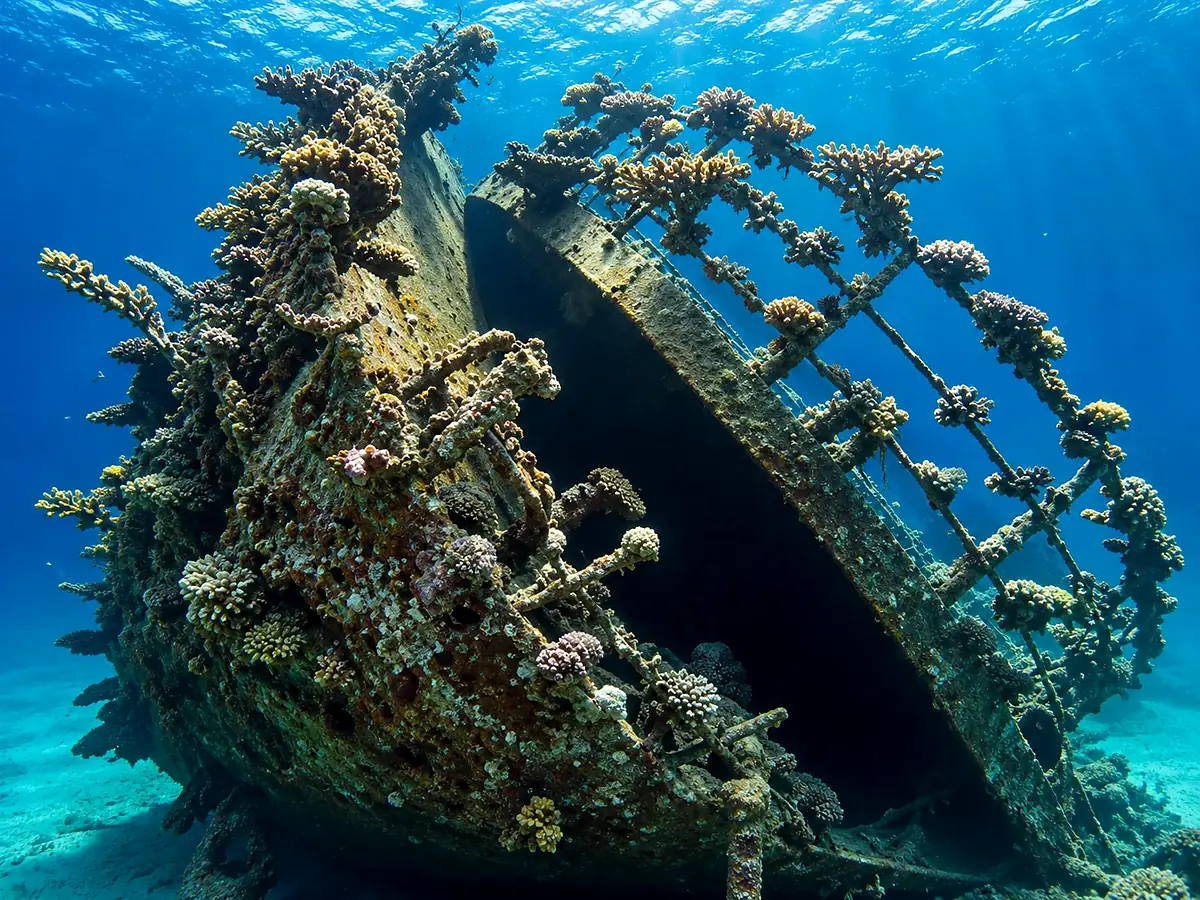
The Hamada Wreck lies off Abu Ghusun, about 68 km south of Marsa Alam at the southern end of the Wadi El Gemal coast. This 65 m cargo ship caught fire and ran aground on the reef in 1993. Today it rests on its starboard side at 5–18 m, so divers can reach it from the shore, and even snorkelers can see parts of it.
The Hamada Wreck in short
In short, the Hamada Wreck is a 65 m cargo ship that sank off Abu Ghusun in 1993, about 68 km south of Marsa Alam, near a CDWS reference point at about 24°27′11″N, 35°12′12″E. Built in 1965, she left Jeddah for Suez on 28 June 1993, caught fire and ran aground on the reef. Now she lies on her starboard side in two parts at about 5–18 m, with the bridge, rudder and propeller still clear. Since the dive starts from the shore and the current is usually low, the outside of the wreck suits all levels. Only trained wreck divers should go inside.
What is the Hamada Wreck like?
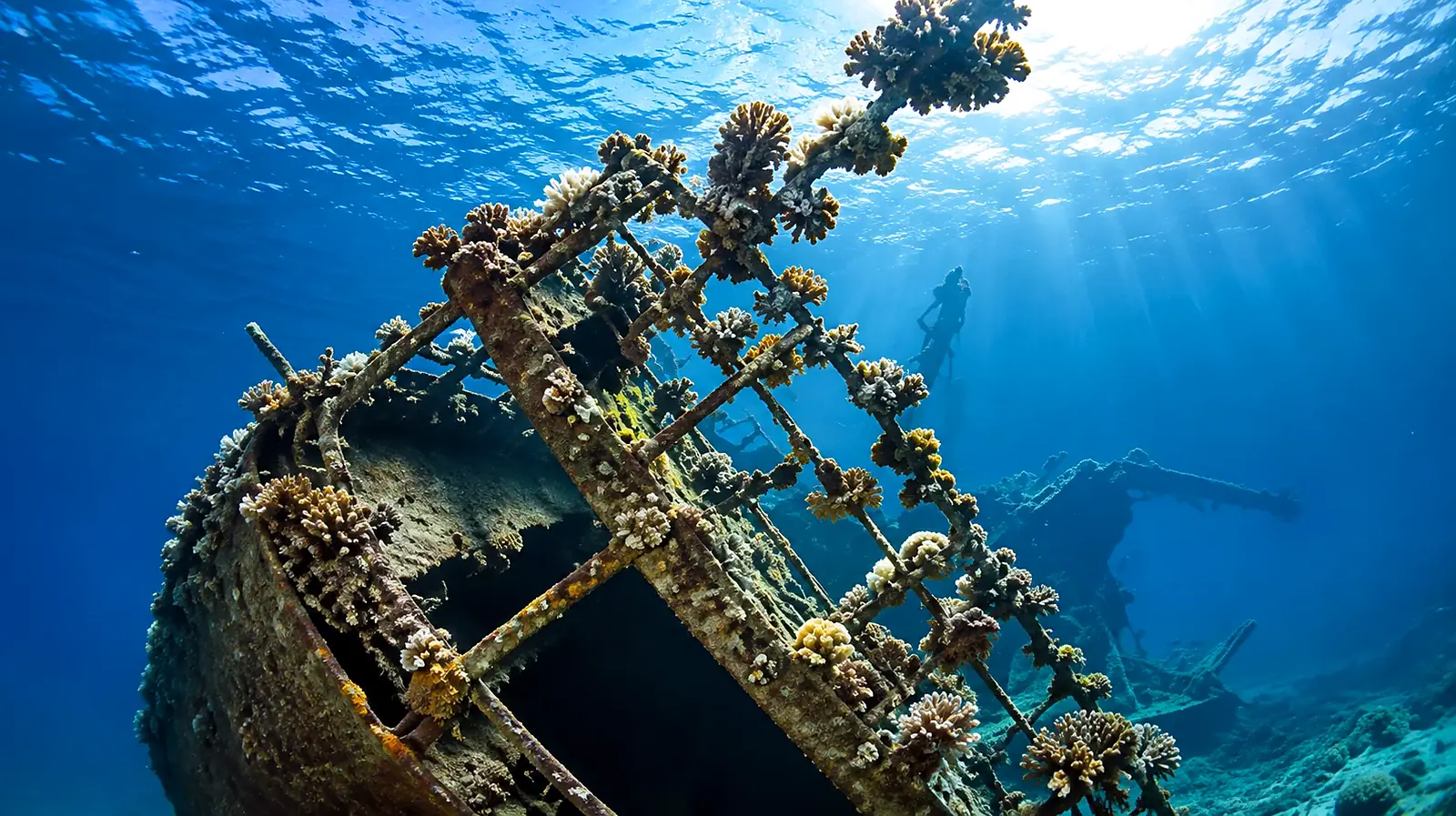
Above all, it is an easy, shallow wreck. In fact, at low tide the port side almost breaks the surface, so you can snorkel over parts of it.
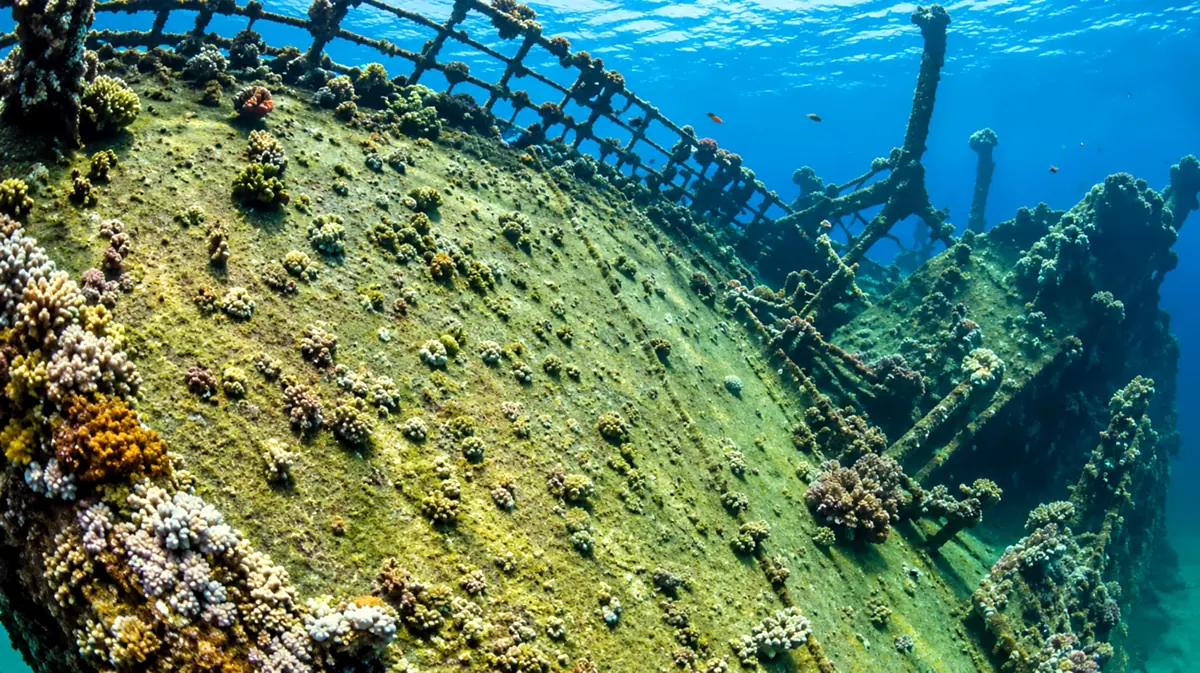
Because the ship lies on her side, the deck faces the open water and the hull faces the reef. As a result, you can see the shape of the whole ship on a single dive.
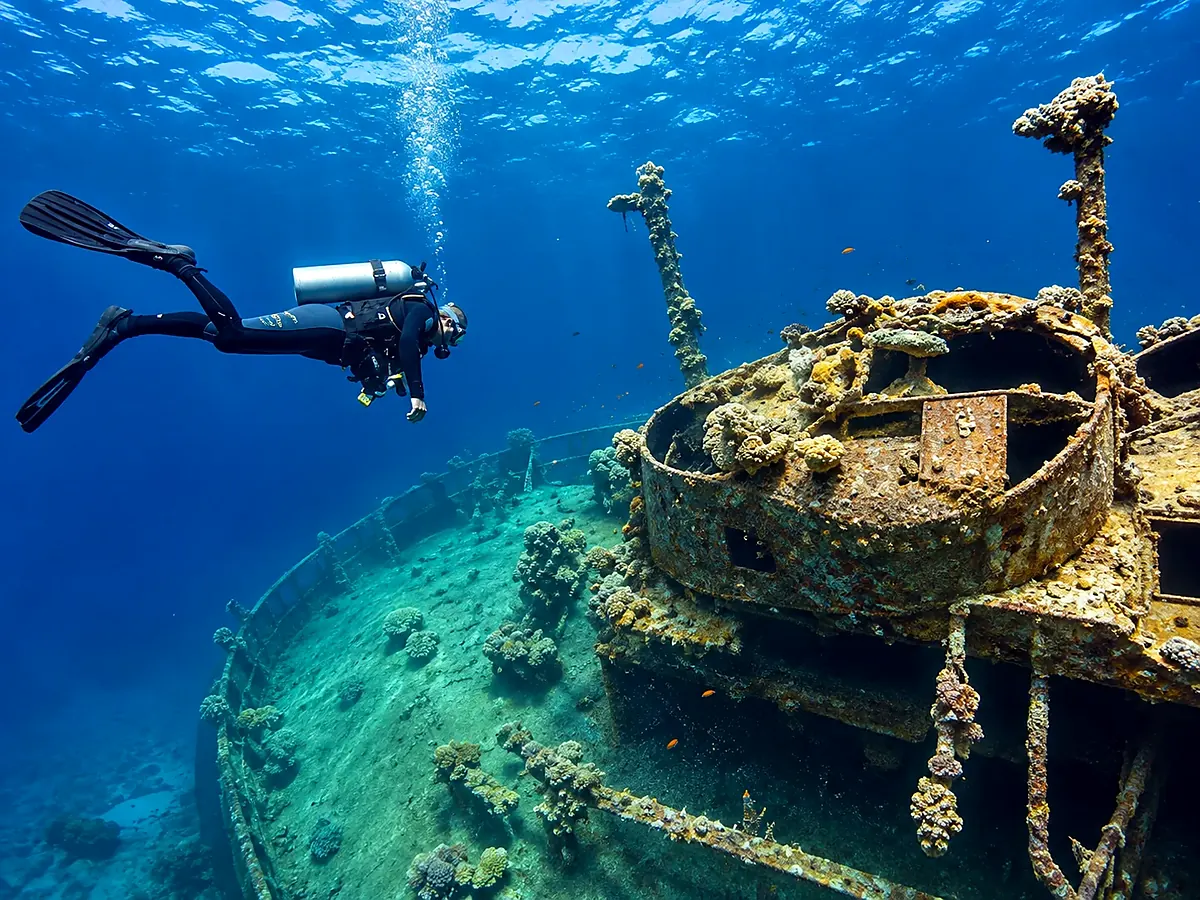
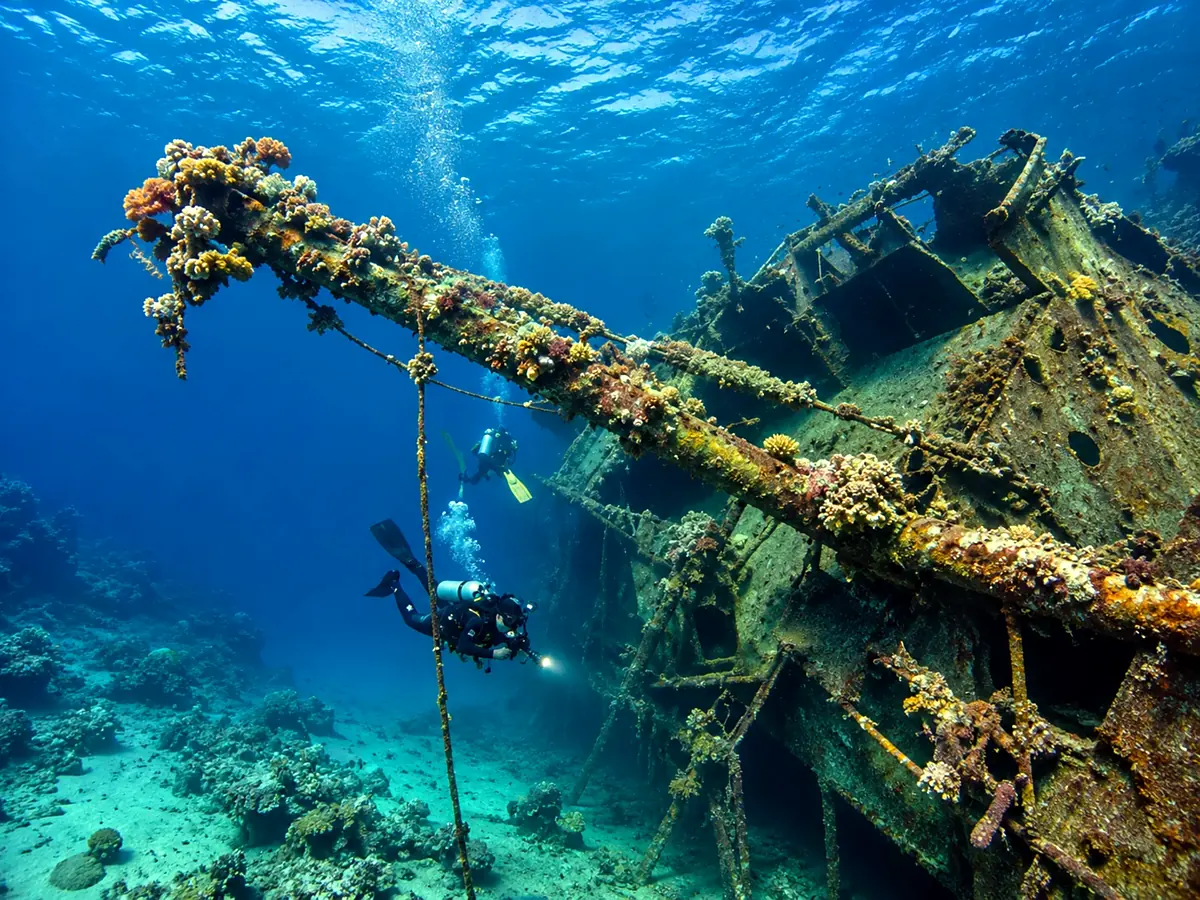
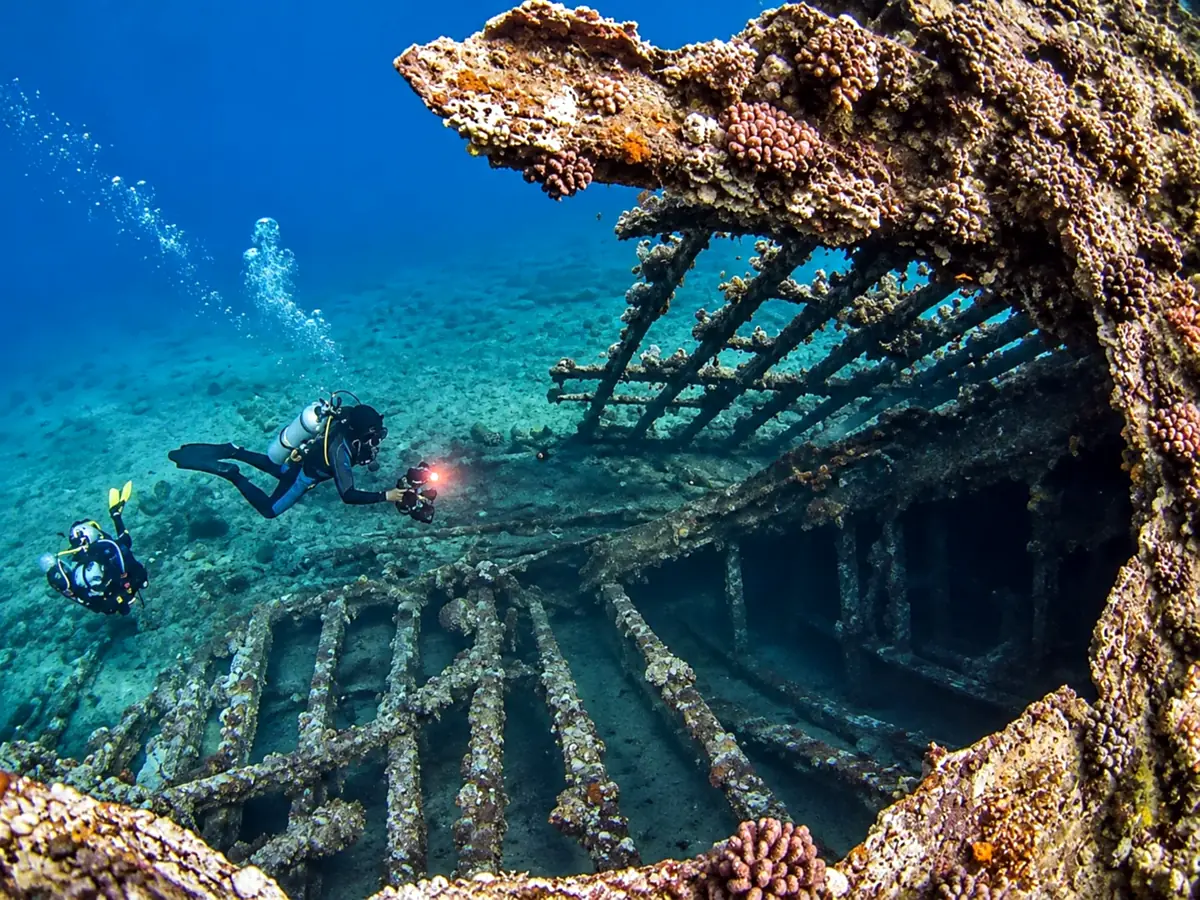
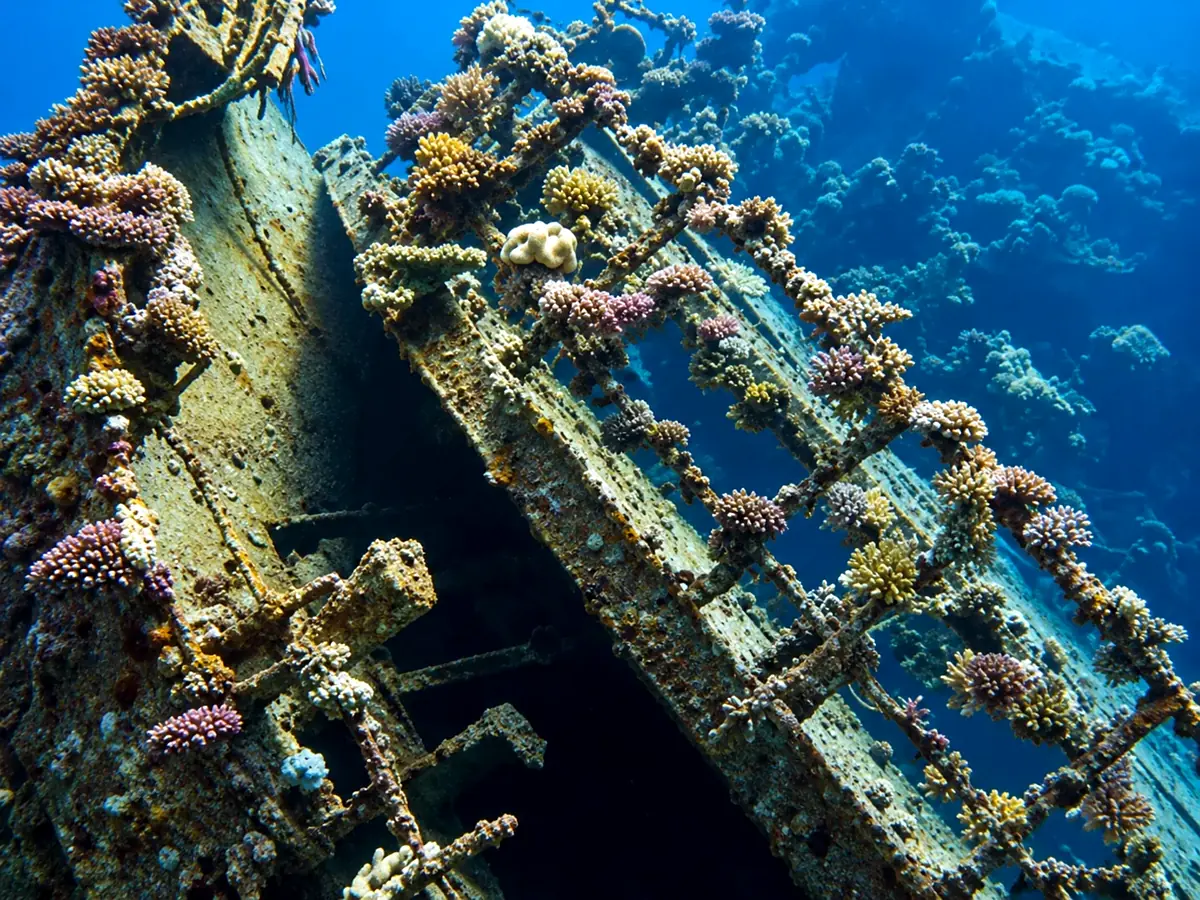
Since 1993, corals have grown over the steel. Consequently, the wreck now works as an artificial reef, full of fish and color.
The Hamada Wreck at a glance
The stern
First, the rudder and propeller remain clear at the stern.
The bridge
Next, the bridge still stands, turned on its side.
The hull
Finally, young corals now cover the broken hull.
What are the main parts of the Hamada Wreck?
Generally, the wreck divides into three parts. Since the whole ship lies in shallow water, you can see all of them on one dive.
The bridge
The highlight. Here, the bridge stands almost intact, though turned on its side.
The hull
The ship. In contrast, the hull broke in two, and corals now cover the steel plates.
The stern
The finish. Meanwhile, the rudder and propeller at the stern make a classic photo.
What is the history of the Hamada Wreck?
In short, the Hamada was a coastal cargo ship, launched in 1965 and later sold to several Cypriot and Maltese owners. On 28 June 1993, she left Jeddah in Saudi Arabia, bound for Suez with a cargo of plastic granules.
On the way north, a fire broke out on board, and the ship ran aground on the reef at Abu Ghusun. To this day, nobody has fully explained the cause.
Good to know
Above all, treat the wreck as a protected site. Take nothing from it, and keep clear of sharp, loose steel.
Where is the Hamada Wreck?
Specifically, the wreck lies off Abu Ghusun, about 68 km south of Marsa Alam, at the southern end of the Wadi El Gemal coast. According to one operator, it sits about half a mile south of the old phosphate jetty. CDWS gives the area as about 24°27′11″N, 35°12′12″E, which is about 24.4531°N, 35.2033°E.
However, this is an area reference, not the exact wreck position. For the nearby reefs, see the Wadi El Gemal dive sites guide, Wadi Gemal Island to the north and the Hamata dive sites to the south.
How do you dive the Hamada Wreck?
Usually, it is a shore dive. In practice, you walk in from a small sandy bay, then swim south along the reef to the wreck.
Route A: shore to the wreck and back
The swim
The approach. First, you enter over the sand and follow the reef south for about 12–15 minutes until the wreck appears.
The wreck
The main dive. Then, you circle the outside of the ship, from the stern and propeller to the bridge and the bow.
The return
The finish. Finally, you swim back along the reef in the shallows and do your safety stop near the entry.
Inside, the hold, the engine room and the wheelhouse are open. Even so, enter only with wreck training, a guide and a light, since steel edges and loose parts can trap or cut you.
What marine life lives on the Hamada Wreck?
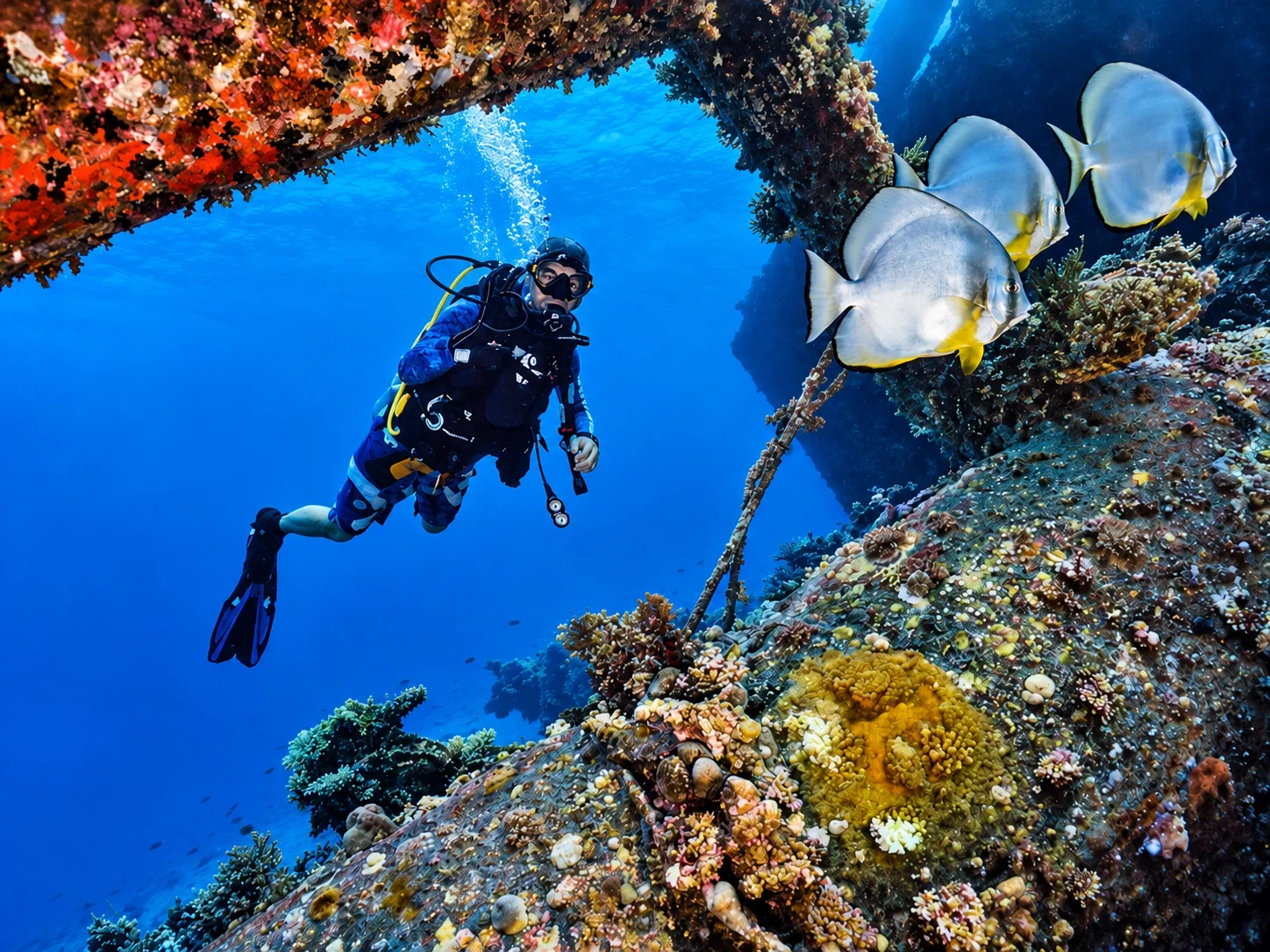
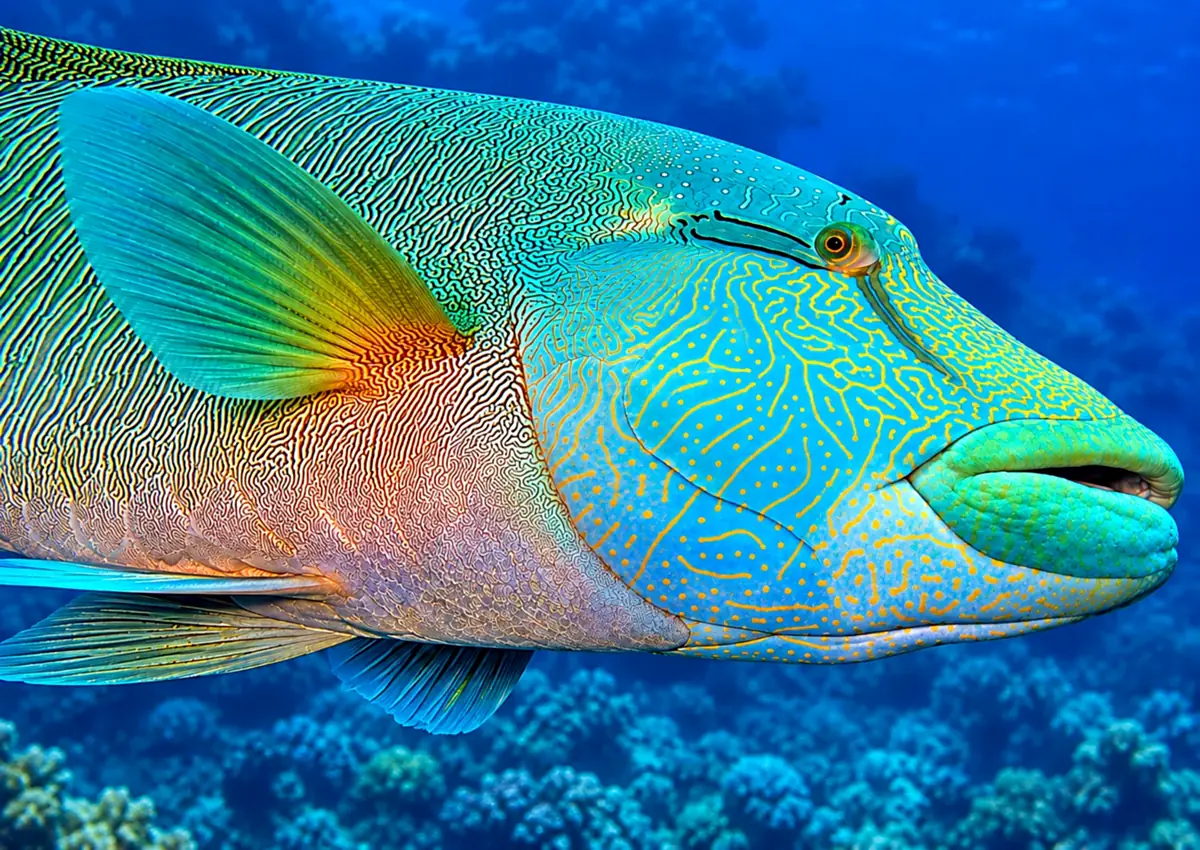
Overall, the wreck has become an artificial reef. Above all, the steel and the coral on it give shelter to many reef fish.
On the steel
Typically, lionfish and moray eels hide in the gaps of the wreck.
Around the hull
Likewise, Napoleon wrasse, parrotfish and surgeonfish cruise along the hull.
On the reef
Meanwhile, butterflyfish and young corals cover the reef beside the ship.
Is the Hamada Wreck suitable for beginners?
Yes, for the outside. The wreck is shallow, the bay is calm and the current is usually low, so Open Water divers and even snorkelers can enjoy it.
However, the inside is a different dive. For that, you need wreck training, for instance after Advanced Open Water. For example, our liveaboard dive techniques guide covers buoyancy and trim for wrecks.
Before you dive the Hamada Wreck
Firstly, check the visibility, since rough seas can cloud the bay. Secondly, keep good buoyancy near the steel and the coral.
Above all, follow our diving safety standards and the rules of HEPCA. We strongly recommend dive insurance such as DAN Europe in the remote south.
How do you get to the Hamada Wreck?
In practice, most divers reach it by road from the Marsa Alam and Wadi El Gemal hotels, then dive from the shore. Liveaboards on the southern routes rarely stop here, since it is a shore site. Instead, our Daedalus and Fury Shoals route and the Deep South St. John’s route cover the offshore reefs nearby.
Generally, it pairs well with the reefs further north. Consequently, you can combine it with Wadi Gemal Island, Shaab Dahara and the Hamata reefs to the south.
Plan your Hamada Wreck dive trip
- Daedalus and Fury Shoals liveaboard — Daedalus Reef and the southern reefs.
- Deep South St. John’s liveaboard — the far south near the Sudanese border.
- What divers need on board — the packing checklist for a Red Sea safari.
- redsealiveaboard.net — Red Sea safari schedules and availability.
- All eight boats in our fleet sail the southern routes: Sea Fox, Simba, Sea Treasure, Star Jet, Bismarck, C Echo II, C U and Ramadan 3.
Photo gallery from the Hamada Wreck
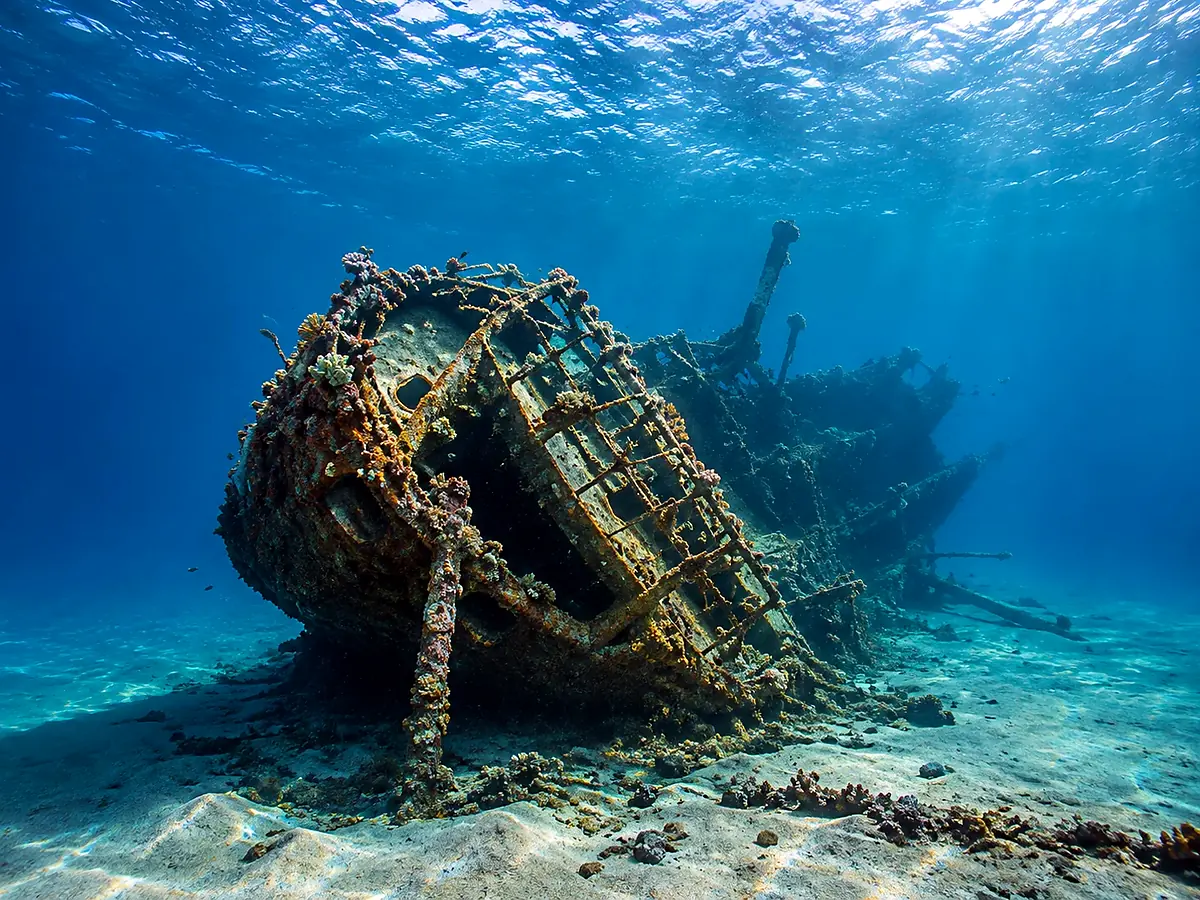
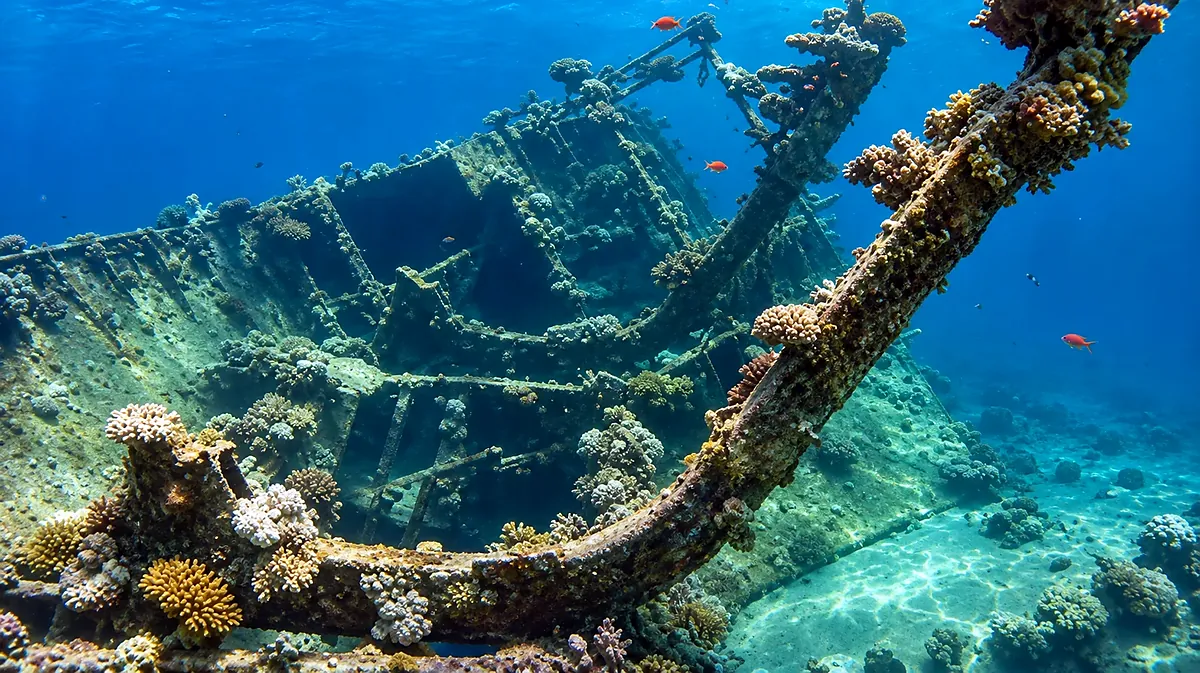
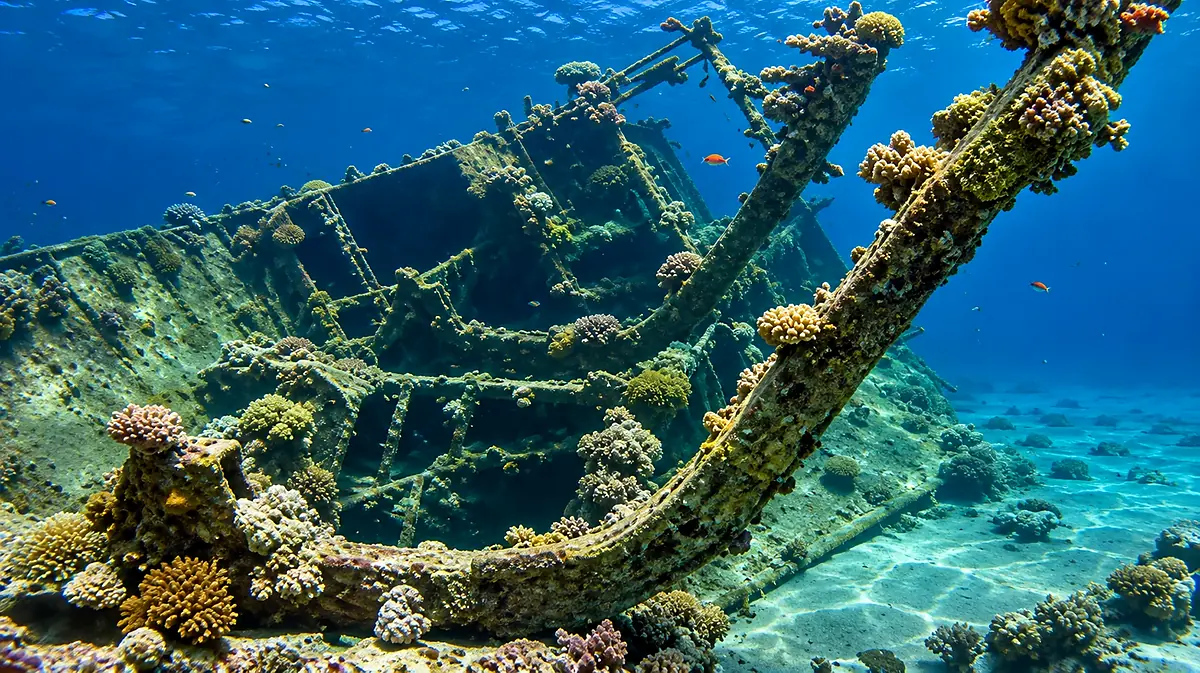
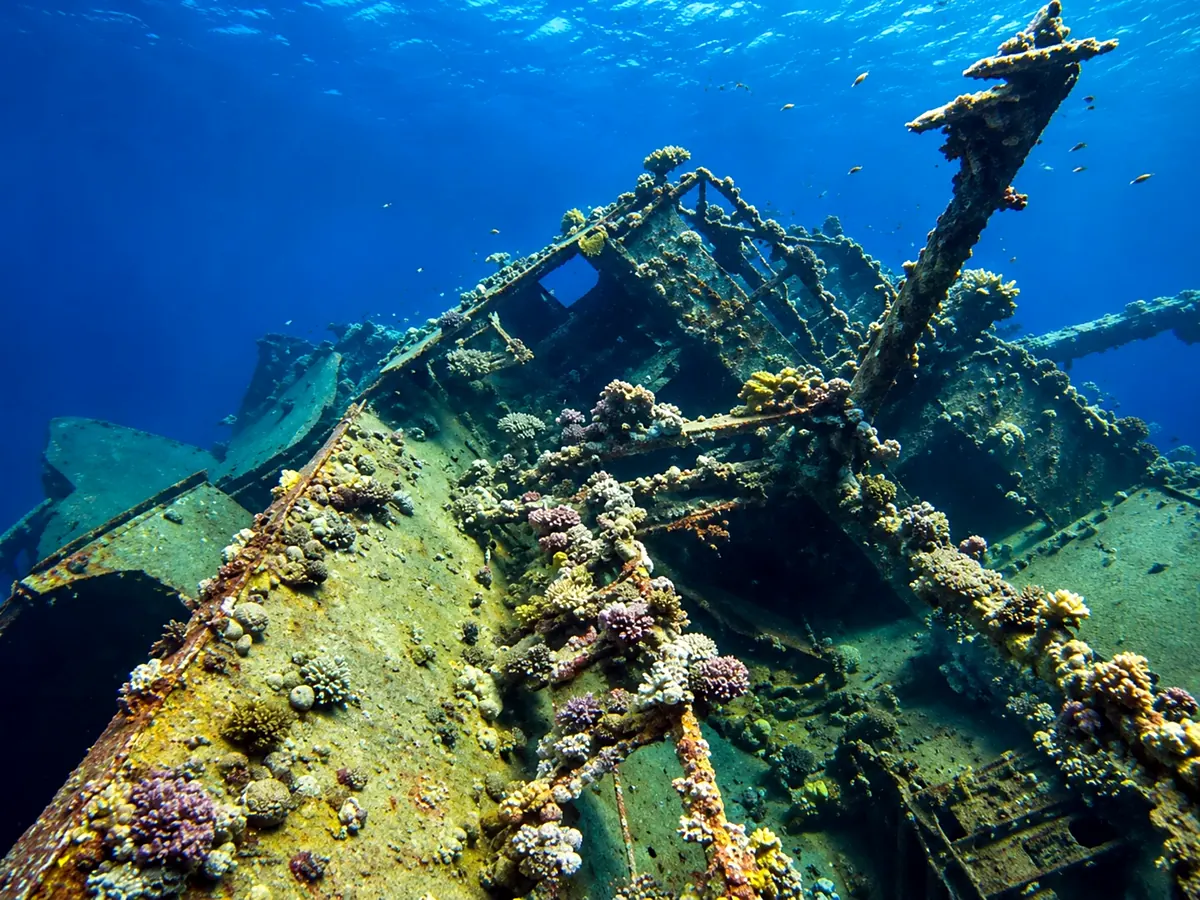
Other routes from Red Sea Diving
Generally, for a first liveaboard, the North Red Sea liveaboard keeps to the classic wrecks. On the other hand, the BDE liveaboard runs Brothers, Daedalus and Elphinstone, while the Elba Reef liveaboard reaches the far south. Meanwhile, the Red Sea liveaboard guide compares all eight routes.
The Hamada Wreck: frequently asked questions
Where is the Hamada Wreck?
In fact, it lies off Abu Ghusun, about 68 km south of Marsa Alam, at the southern end of the Wadi El Gemal coast.
How deep is the Hamada Wreck?
The ship lies at about 5–18 m, and at low tide part of the port side almost reaches the surface.
When did the Hamada Wreck sink?
In June 1993. She caught fire on the way from Jeddah to Suez and ran aground on the reef at Abu Ghusun.
Can beginners dive the Hamada Wreck?
Yes, on the outside. It is a shallow shore dive with low current, while the inside needs wreck training.
How do you get to the Hamada Wreck?
By road to Abu Ghusun, then from the shore. Moreover, all eight boats in the Red Sea Diving fleet cover the offshore reefs of the south.
Wadi El Gemal · Abu Ghusun · Wreck diving
Dive the Hamada Wreck with us
Simply tell us your dates, the number of divers, your certification level and your number of logged dives. Afterward, our team checks which southern trip fits your group before you commit to anything.


