

Dive guide to Habili Abu Diab · Hamata, southern Red Sea
Habili Abu Diab Dive Site A 380 m row of coral towers, 2 km northwest of Abu Diab
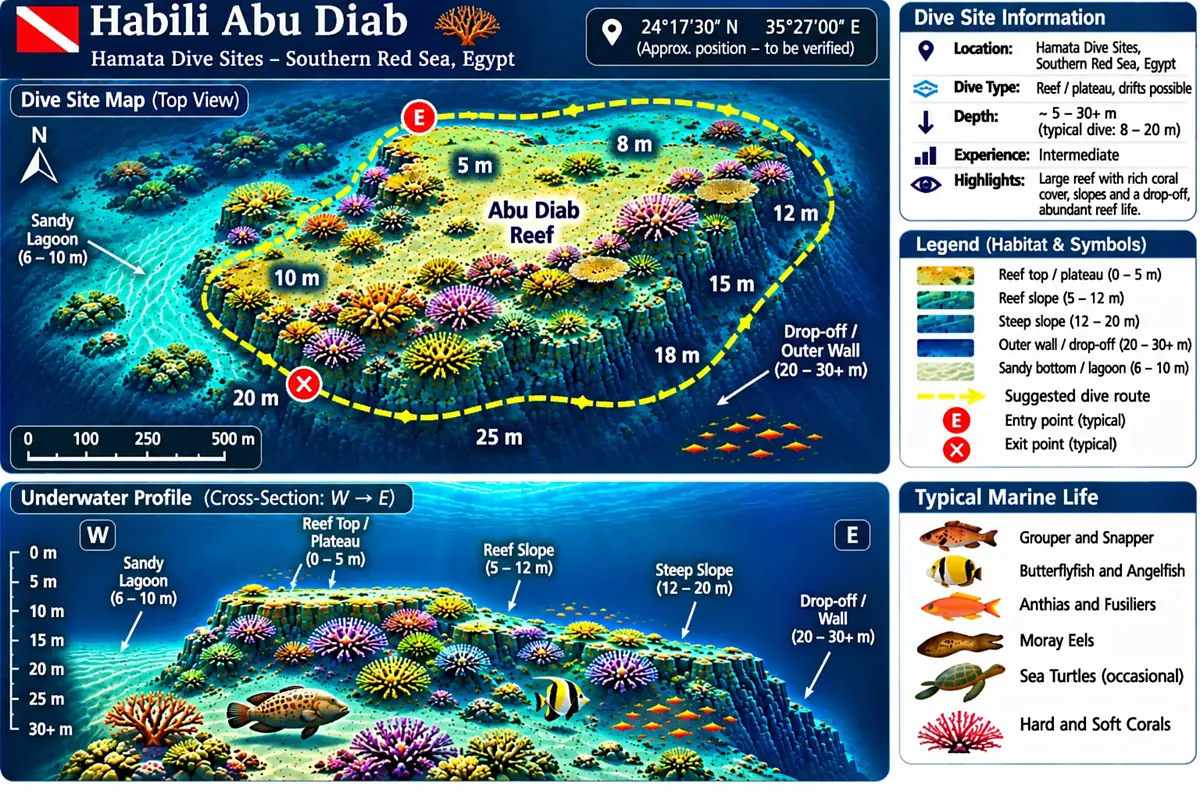
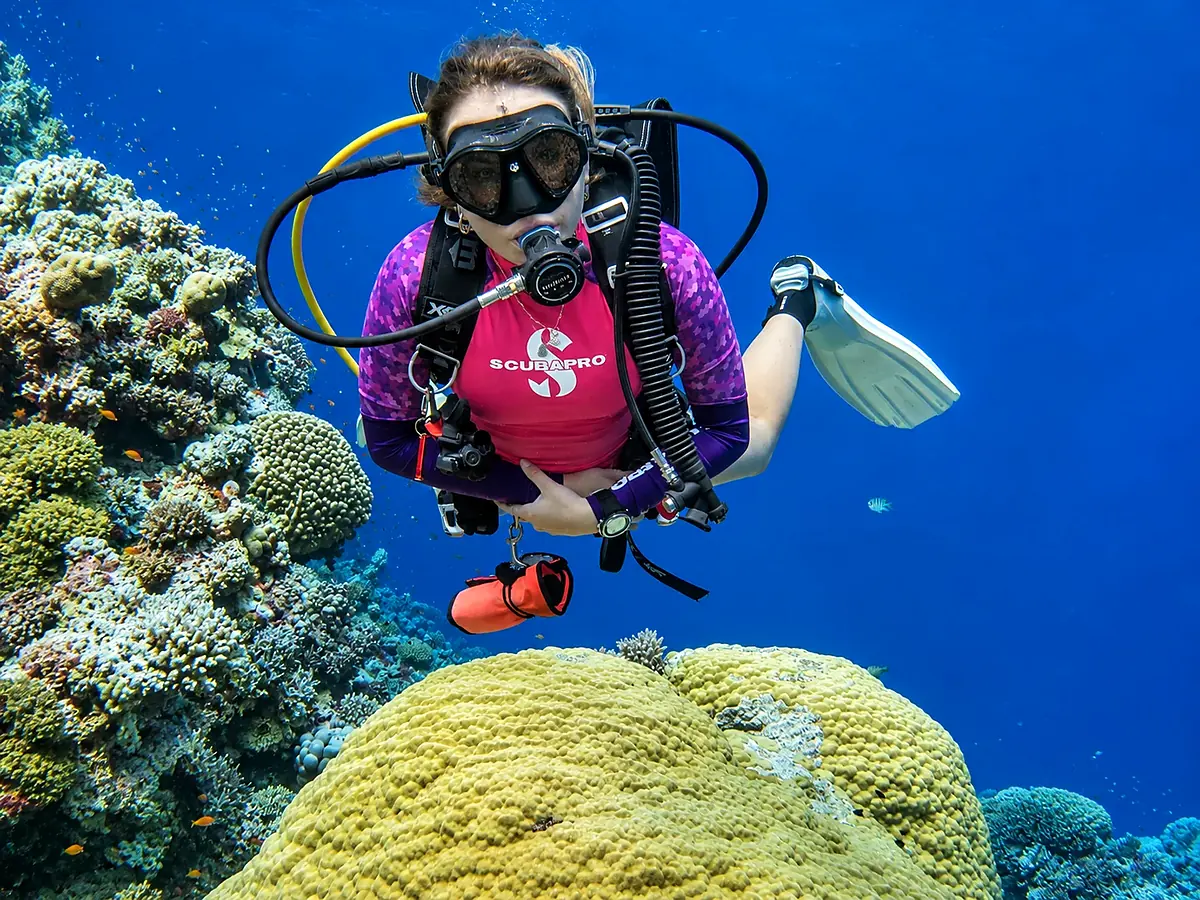
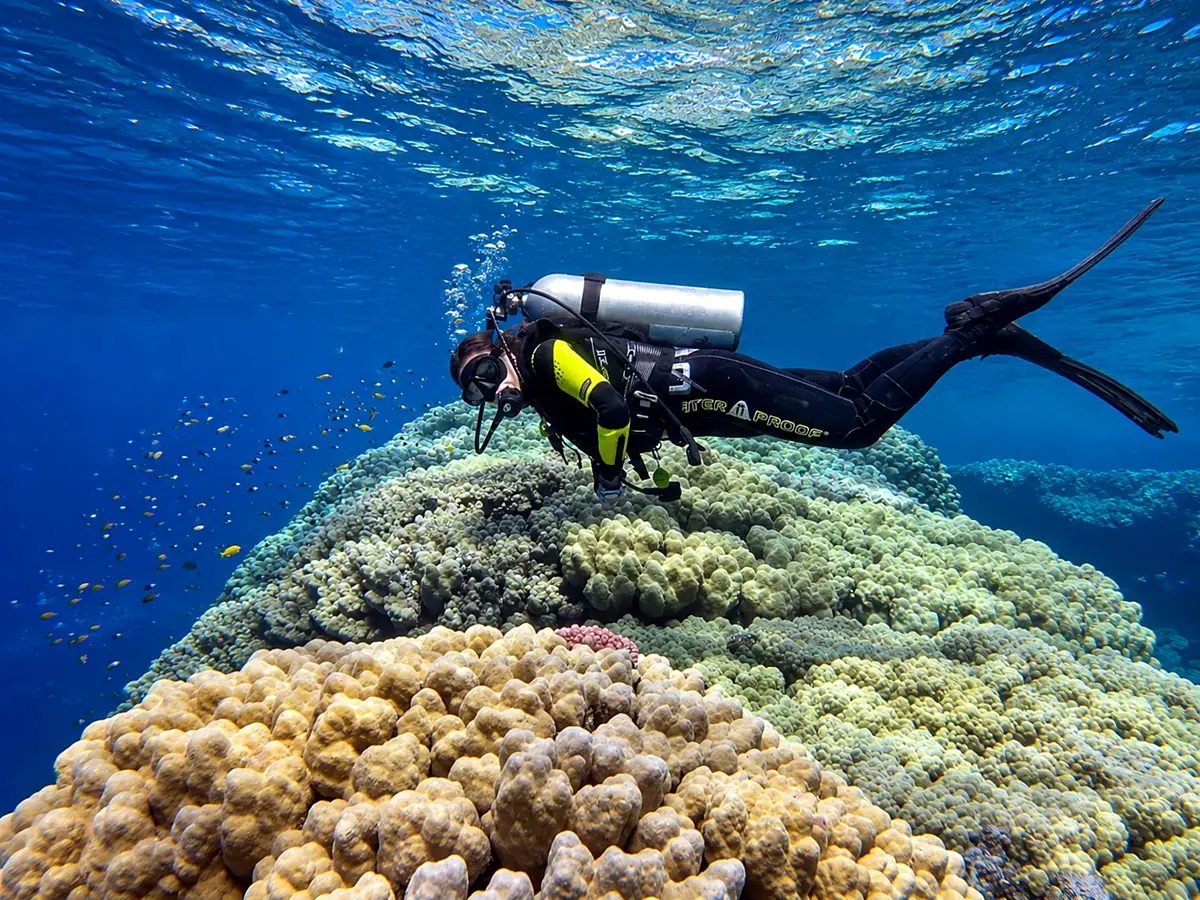
Habili Abu Diab is a row of separate coral towers rising from the seabed to just below the surface, 2 km northwest of Abu Diab near the Ras Banas peninsula. Together they form a formation about 380 m long, with sand at about 20 m, narrow passages between the towers and coral-covered tops in the sunlight. Few boats come here, so your group is often alone on the reef.
Habili Abu Diab in short
In short, Habili Abu Diab is a row of separate coral towers about 380 m long, 2 km northwest of Abu Diab near the Ras Banas peninsula, at about 24°03.450′N, 35°40.667′E. The towers rise from sand at about 20 m to just below the surface, while the seabed drops steeply past 30 m to the north. The formation gives boats little shelter, so mooring and diving are only possible in calm seas, and night dives are not possible. It does not need great skill, but some experience helps. It is a different site from Gota Abu Diab and Erg Abu Diab.
What is Habili Abu Diab like?
Above all, it is a habili, a reef that has not yet grown up to the surface. Here, it is not one block but a row of separate towers that together stretch for about 380 m.
Between the towers lie coral rocks of all sizes, and the rugged walls create an almost mystical atmosphere. The seabed slopes gently to the south and drops steeply past 30 m to the north.
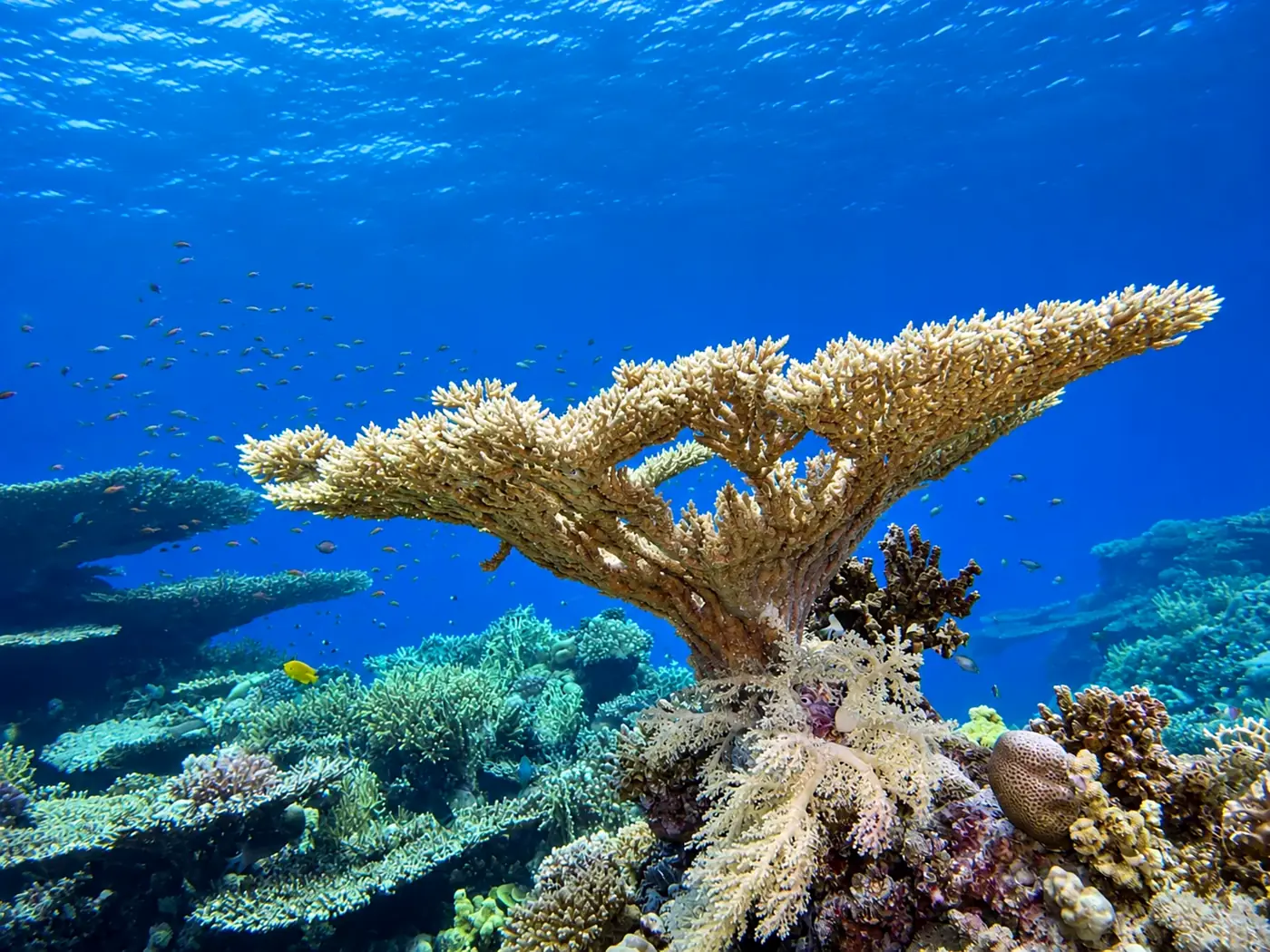
Unfortunately, lost fishing nets caught on the reef show that the area is actively fished, and parts of the southern side are damaged. However, the tops of the towers are lush with corals and fish in the sunlight.
Habili Abu Diab at a glance
Coral towers
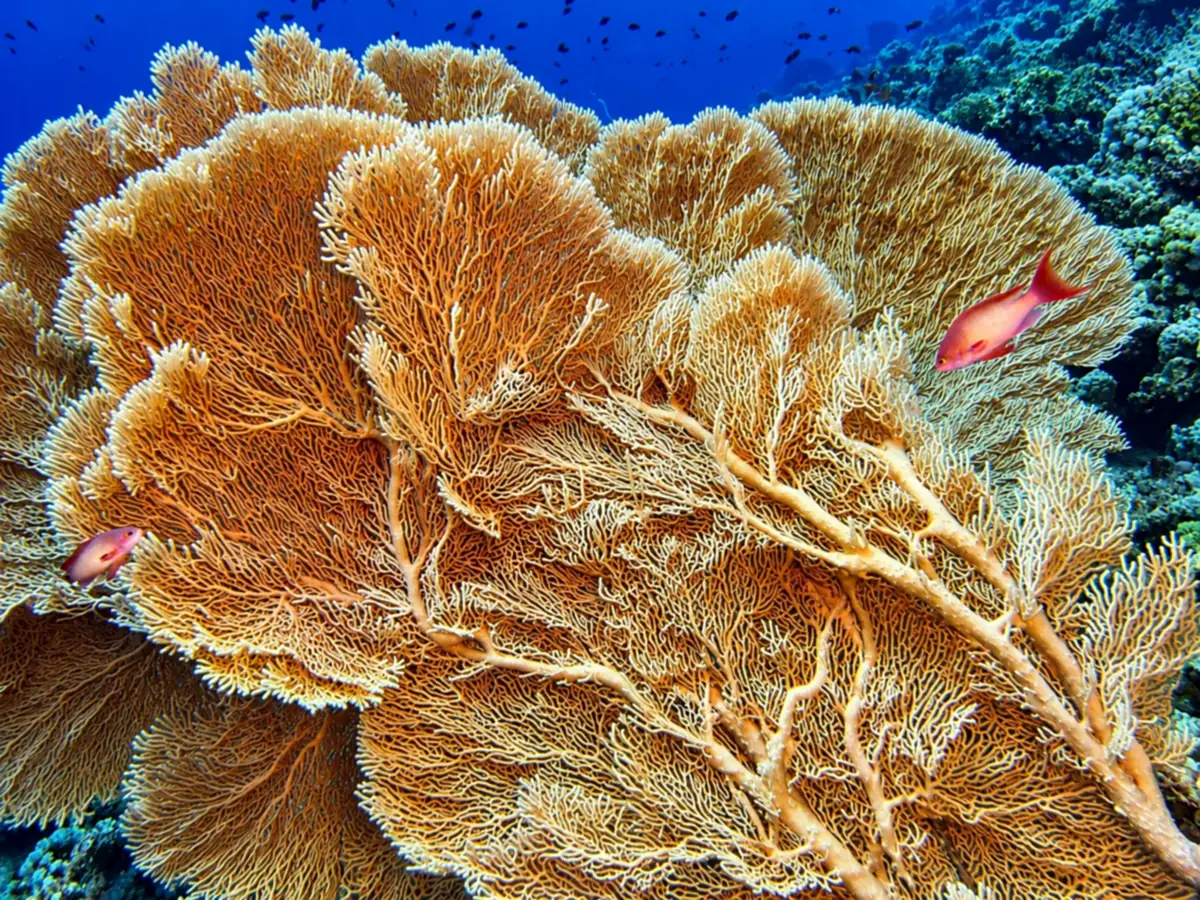
First, separate towers rise in a row, their tops covered in corals and fish.
Passages
Next, narrow passages and coral rocks between the towers make an interesting scene.
Exposed
Finally, the open position brings waves and surge, so the sea must be calm.
What can you expect around Habili Abu Diab?
Generally, currents flow freely around the site. Even so, each tower gives shelter, so you dive on its sheltered side and cross the open gaps quickly.
The north side
The best walls. Here, the walls are well preserved, but they lie in shade all day, and the sand drops past 30 m.
The south side
The sunny side. In contrast, the south side slopes gently, but some of its corals are damaged.
The tops
The highlight. Meanwhile, the sunlit tops are lush with corals and fish, a magnificent sight.
Where is Habili Abu Diab?
Specifically, the towers lie 2 km northwest of Abu Diab, north of the Ras Banas peninsula. For reference, our dive guide gives the position as about 24°03.450′N, 35°40.667′E, which is about 24.0575°N, 35.6778°E.
However, this is a reference position, not a dive entry point. For the nearby reefs, see the Hamata dive sites guide and the Fury Shoals guide.
How do you dive Habili Abu Diab?
To begin with, the crew checks the sea, since the formation offers little shelter from wind and waves. If the current is weak, you can also start the dive straight from the boat.
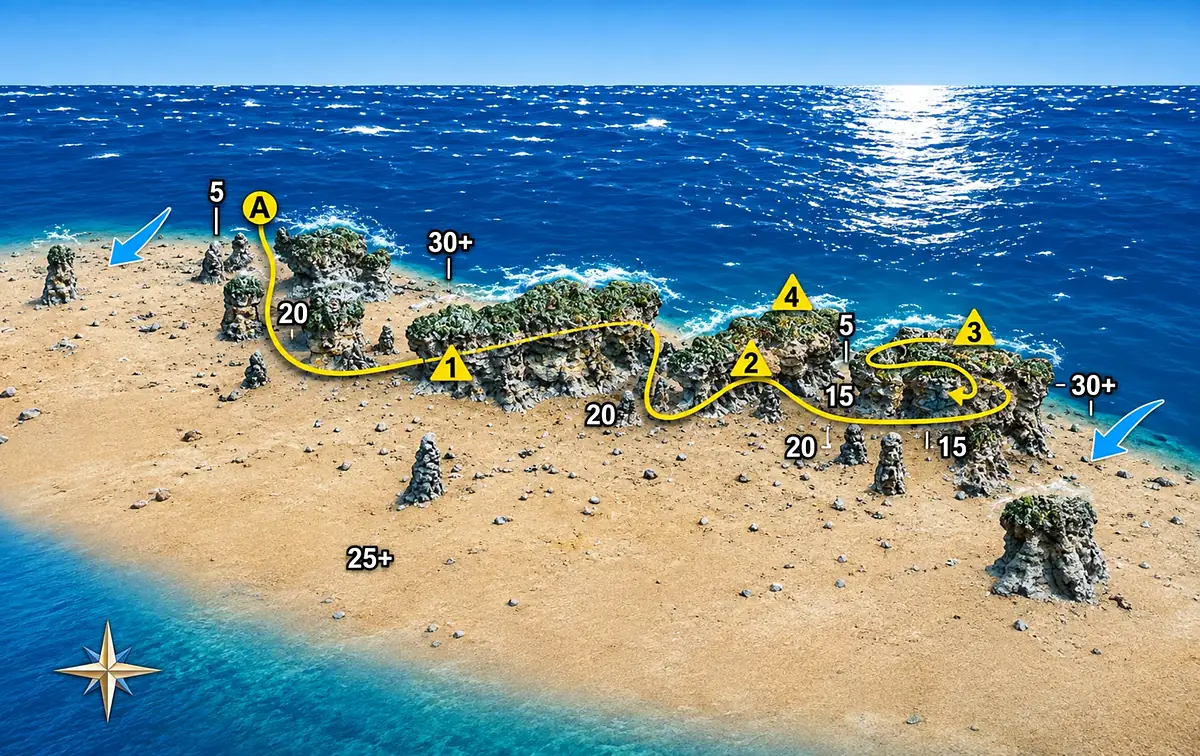
Route A: western tip to mooring
The entry
About 60 min. Firstly, a RIB takes you to the western end, where the waves can be big, so start with negative buoyancy and descend to the sand at about 20 m.
Along the towers
The heart. Then, dive southeast along the line of towers that rise to about 5 m, staying at their feet and exploring north or south at will.
The last tower
The finish. Finally, round the easternmost tower onto the reef flat at 4 m and above, then head back to the mooring.
Above all, take the waves and surge on the reef flat into account. After all, the surge can be strong this close to the surface.
What marine life lives at Habili Abu Diab?
So far, no source gives a species list for this reef alone. Still, the sunlit tops are full of fish, and the following are typical of the area rather than confirmed sightings.
Open-water fish
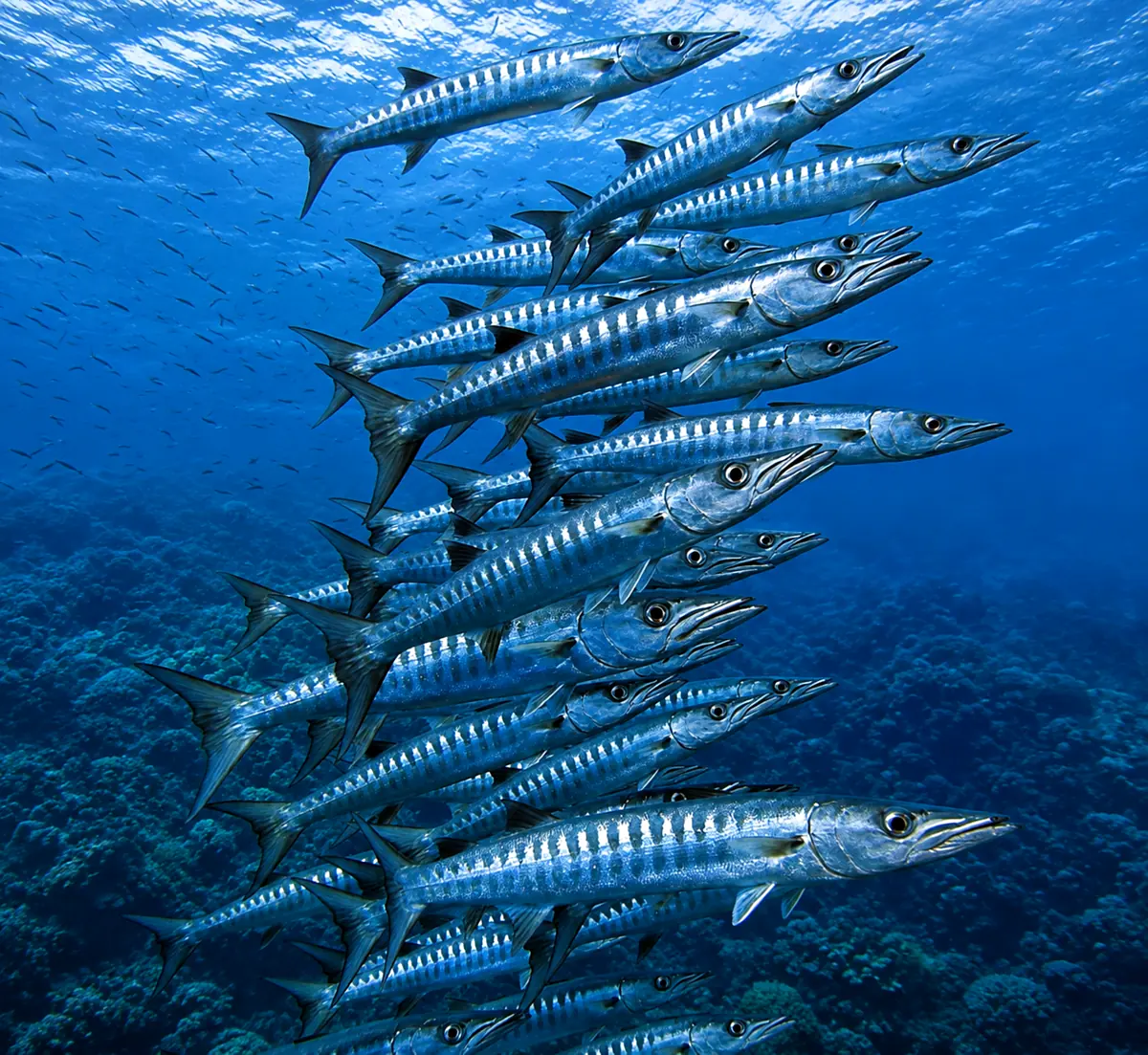
Typically, trevally and barracuda hunt along the pinnacles when the current runs.
Sharks and turtles
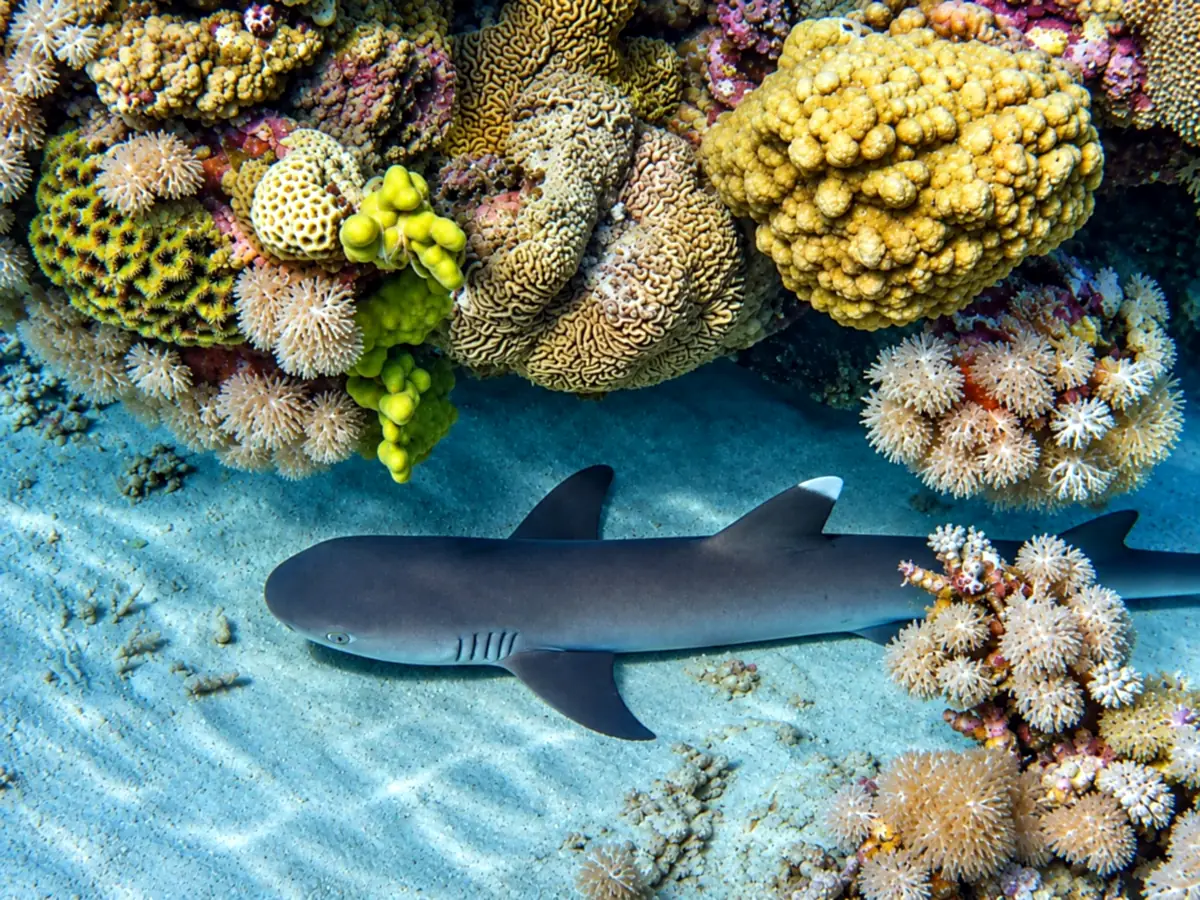
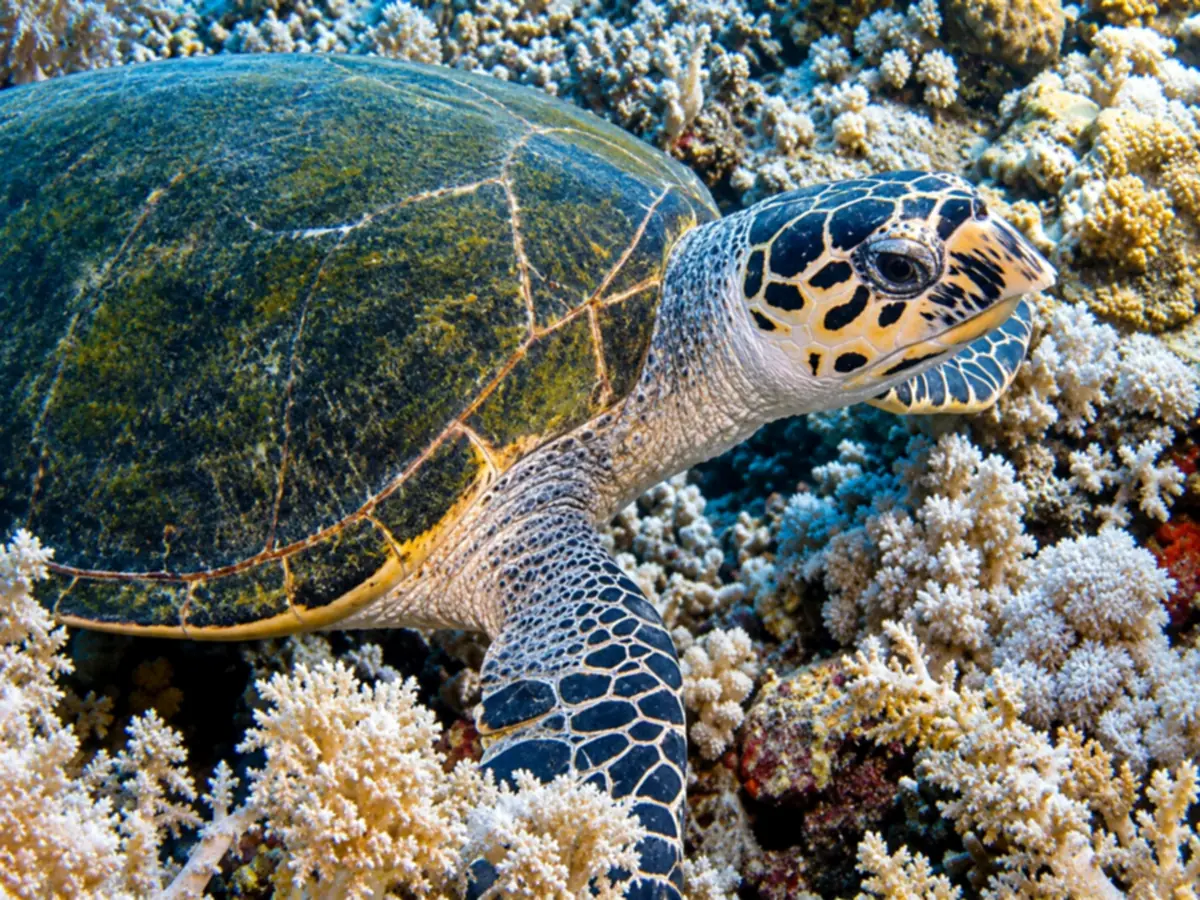
Likewise, whitetip reef sharks rest on the sand and hawksbill turtles feed on the coral.
Reef life
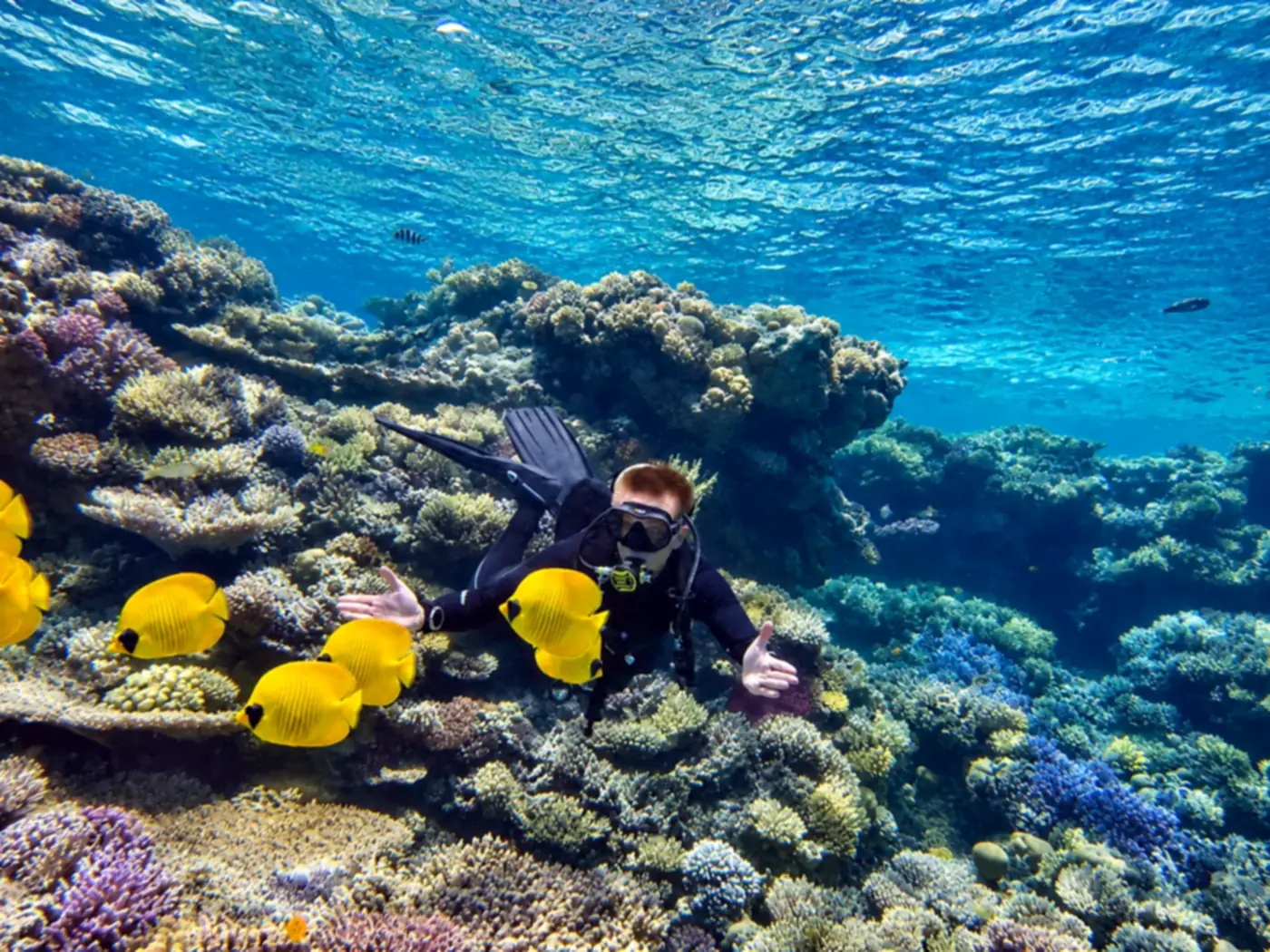
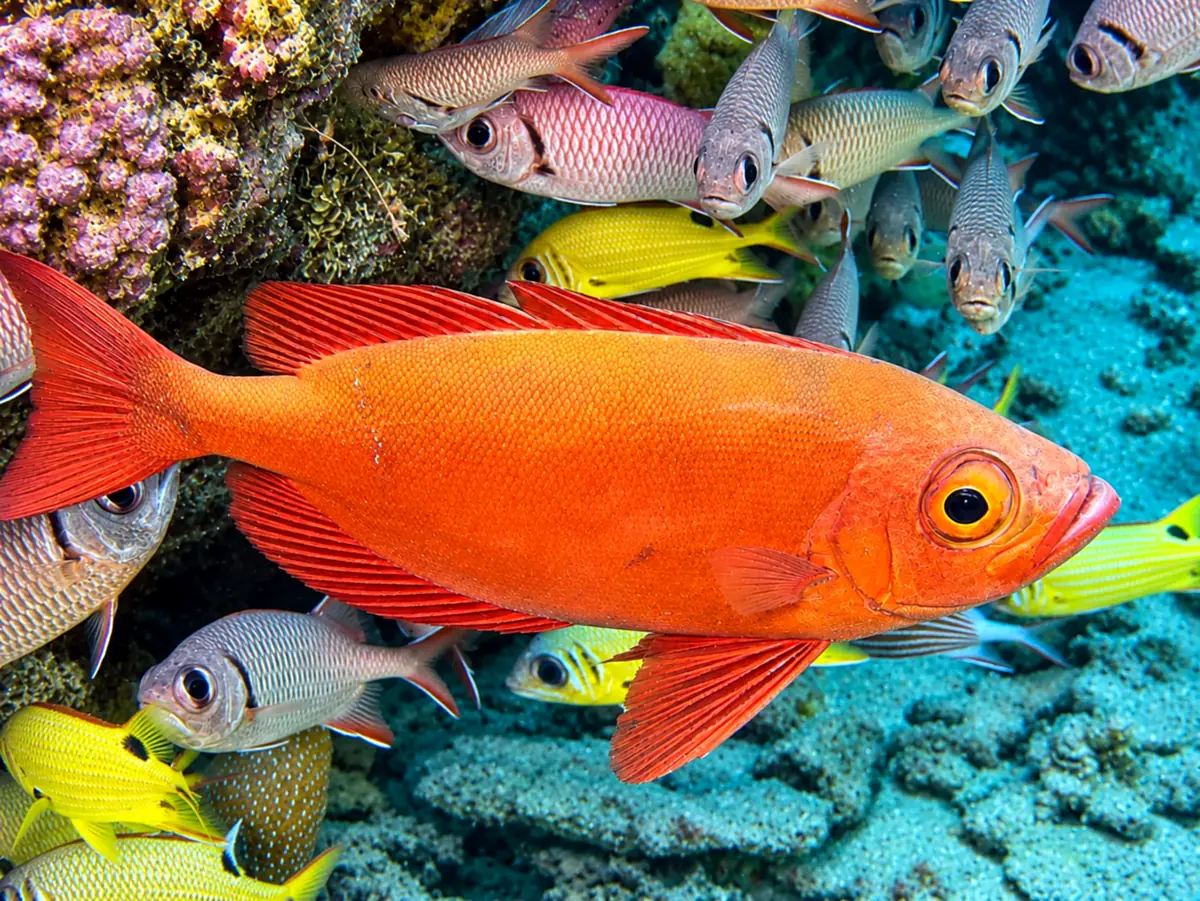
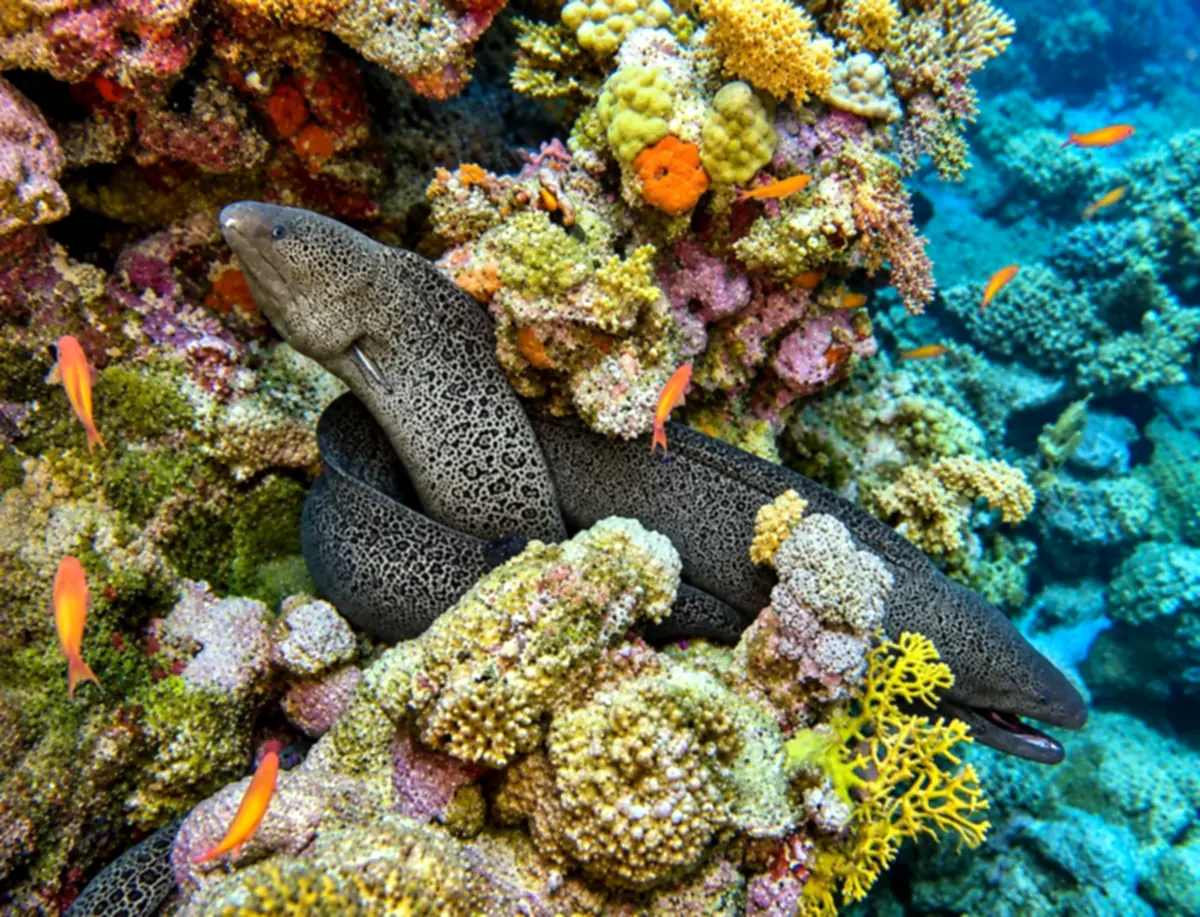
Finally, anthias, fusiliers, groupers, snappers, butterflyfish and morays live on the pinnacles.
Is Habili Abu Diab suitable for beginners?
In fact, the site does not need great diving skills. However, some experience helps, because of the towers, the deep north side, the surge and the possible strong currents.
In general, it suits divers with Advanced Open Water, and Peak Performance Buoyancy helps in the narrow passages. For example, our liveaboard dive techniques guide explains negative entries and RIB pick-ups.
Before you dive Habili Abu Diab
Firstly, listen to the briefing, stay with your guide and carry a surface marker buoy. Secondly, keep clear of any old fishing nets on the reef.
Above all, follow our diving safety standards and the rules of HEPCA. We strongly recommend dive insurance such as DAN Europe in the remote south.
How do you get to Habili Abu Diab?
In practice, few boats come here: liveaboards usually sail on to Fury Shoals or to the south, and daily boats rarely reach this far, so your group is often alone. With us, the Hamata reefs can be a stop on our Daedalus and Fury Shoals route and on the Deep South St. John’s route. Guests board on Saturday after 15:00, and check-out is between 09:00 and 10:00 the next Saturday.
Generally, boats combine several reefs on the same day. Consequently, you can pair it with the Gota reef, Erg Sataya and the reefs of Fury Shoals.
Plan your Habili Abu Diab dive trip
- Daedalus and Fury Shoals liveaboard — Daedalus Reef and the southern reefs.
- Deep South St. John’s liveaboard — the far south near the Sudanese border.
- What divers need on board — the packing checklist for a Red Sea safari.
- redsealiveaboard.net — Red Sea safari schedules and availability.
- All eight boats in our fleet can sail these routes: Sea Fox, Simba, Sea Treasure, Star Jet, Bismarck, C Echo II, C U and Ramadan 3.
Photo gallery from the Hamata reefs
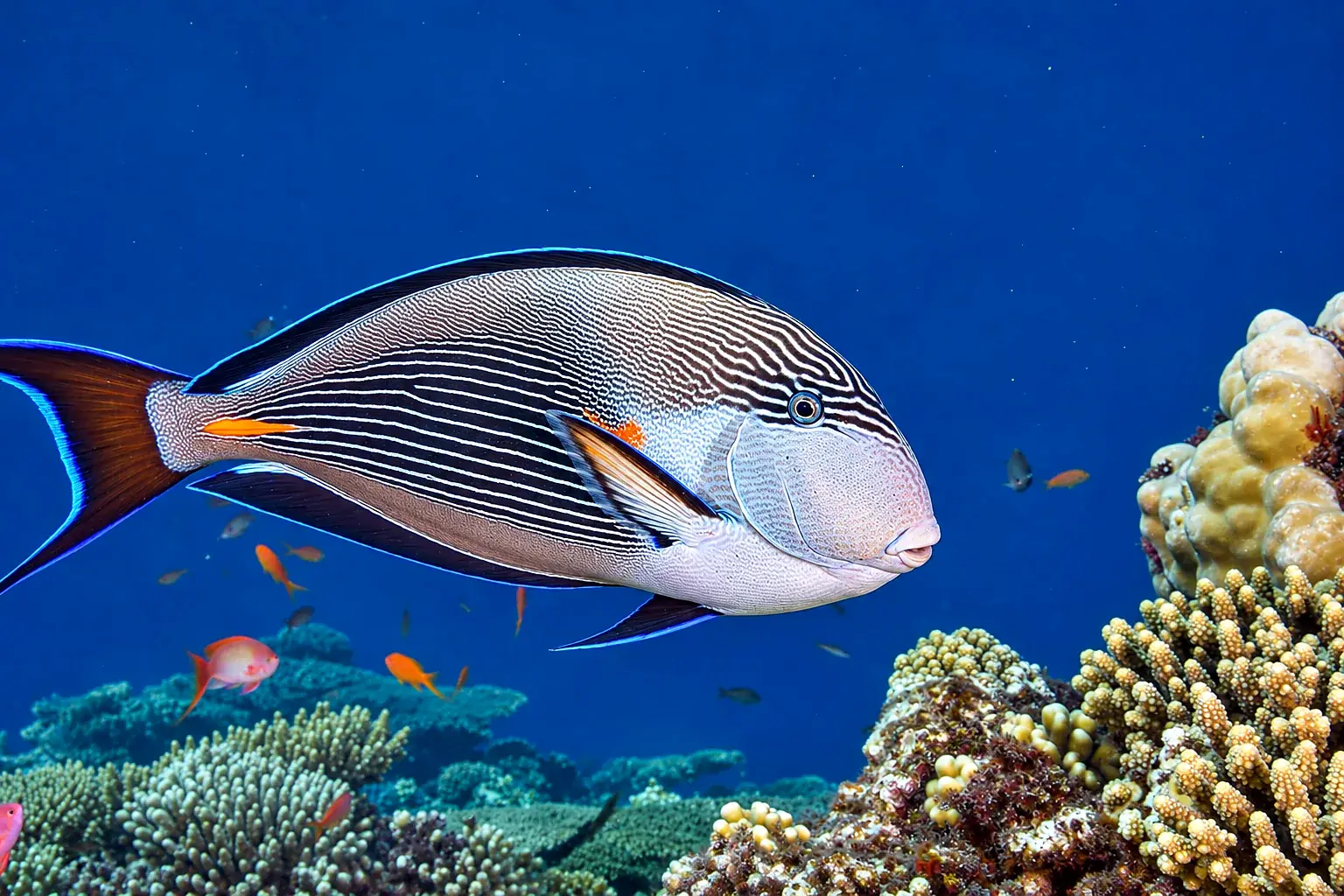
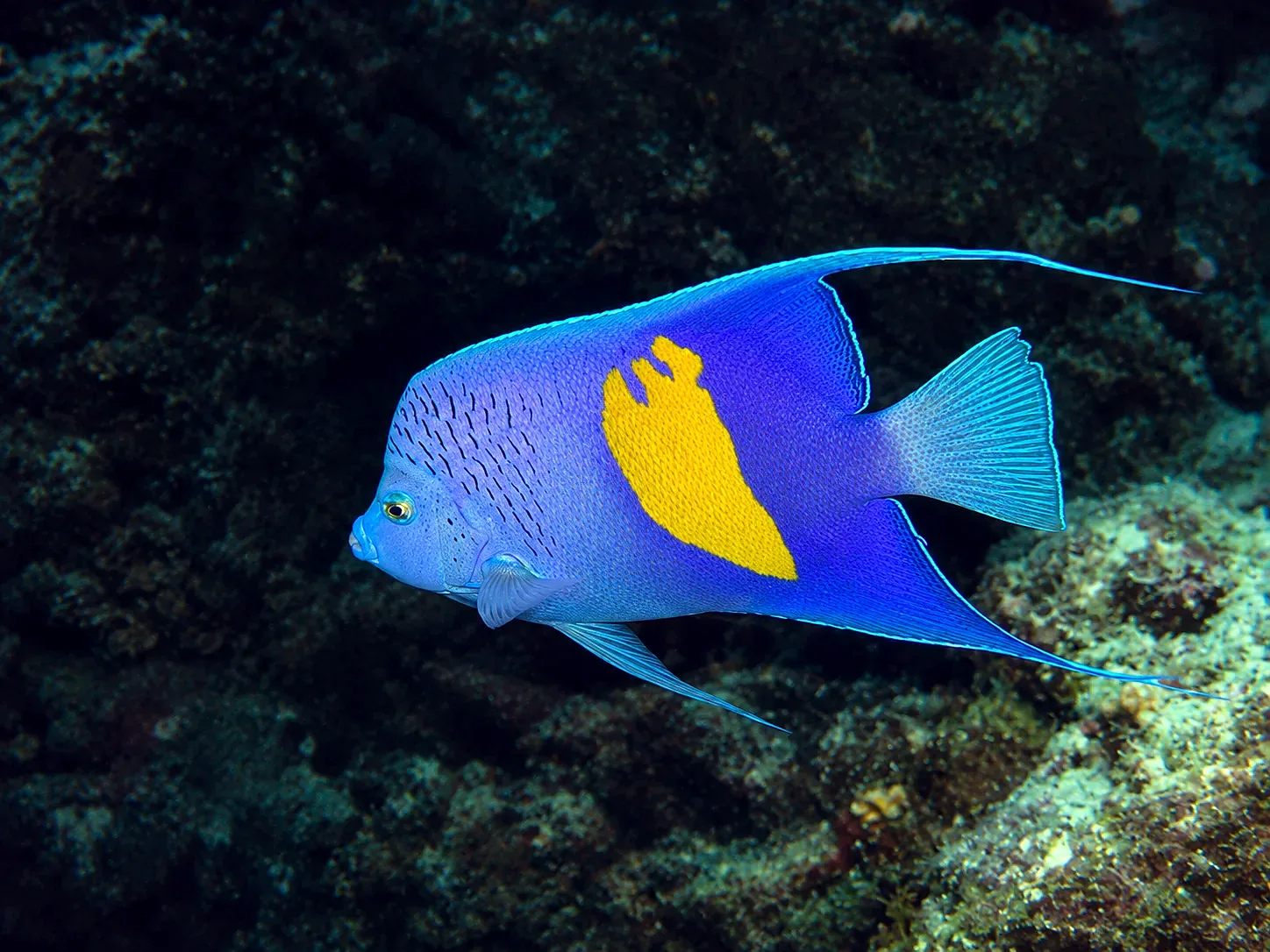
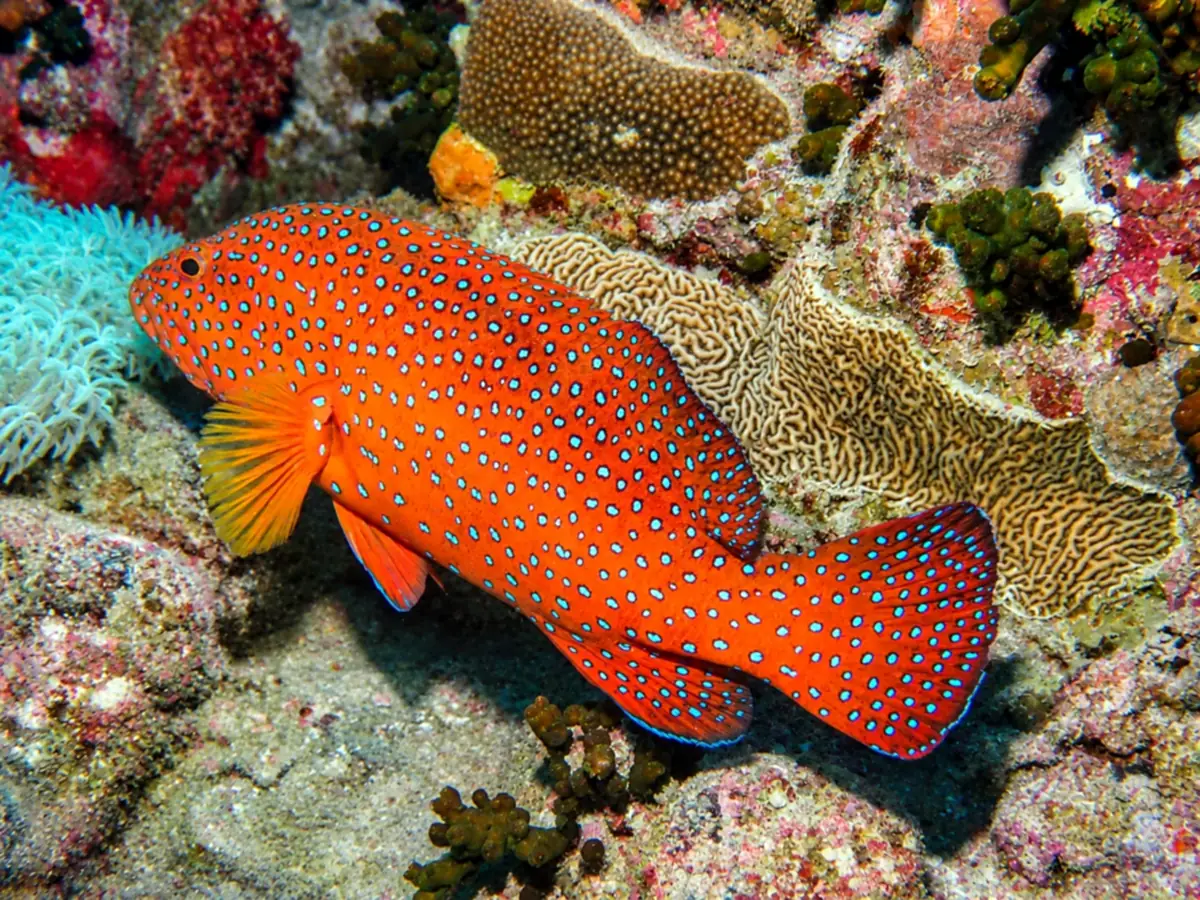
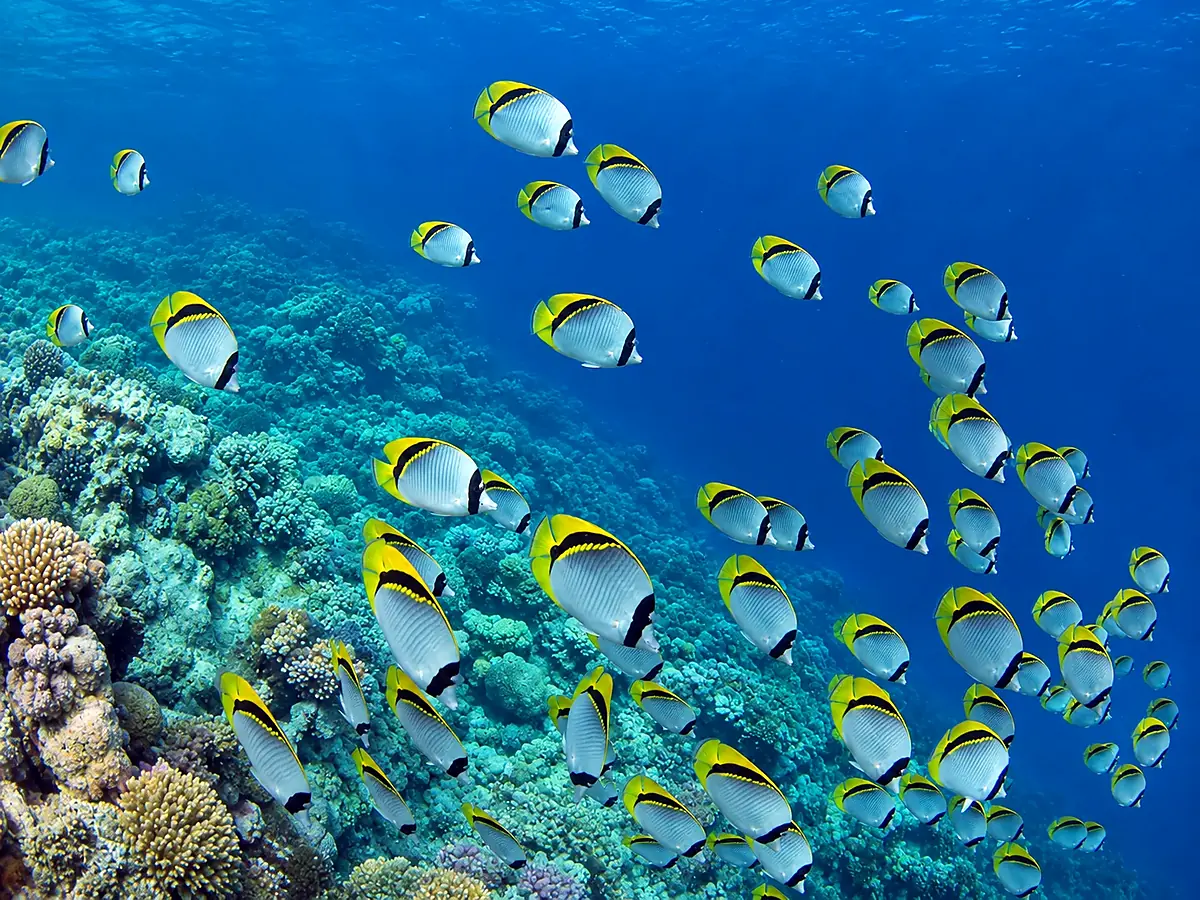
Other routes from Red Sea Diving
Generally, for a first liveaboard, the North Red Sea liveaboard keeps to the classic wrecks. On the other hand, the BDE liveaboard runs Brothers, Daedalus and Elphinstone, while the Elba Reef liveaboard reaches the far south. Meanwhile, the Red Sea liveaboard guide compares all eight routes.
Habili Abu Diab: frequently asked questions
Where is Habili Abu Diab?
In fact, it lies 2 km northwest of Abu Diab, north of the Ras Banas peninsula, at about 24°03.450′N, 35°40.667′E.
Is Habili Abu Diab the same as Erg Abu Diab or Gota Abu Diab?
No. Habili Abu Diab is a 380 m row of coral towers, Gota Abu Diab is a 250 m reef with caverns, and Erg Abu Diab, or Erg Sataya, is a steep 130 m reef further west.
How deep is the diving at Habili Abu Diab?
Most dives follow the sand at about 20 m and finish on the reef flat at 4 m and above, while the north side drops past 30 m.
Can you night dive at Habili Abu Diab?
No. The formation offers little shelter, so night dives are not possible, and day dives need calm seas.
How do you get to Habili Abu Diab?
By boat from the Hamata coast, or on our southern liveaboard routes. Moreover, all eight boats in the Red Sea Diving fleet can run these routes.
Ras Banas · Liveaboard · Coral towers
Dive Habili Abu Diab with us
Simply tell us your dates, the number of divers, your certification level and your number of logged dives. Afterward, our team checks which southern departure fits your group before you commit to anything.


