
Dive guide to Marsa Mubarak · Port Ghalib, Marsa Alam
Marsa Mubarak Dive Site The seagrass bay of dugongs and green turtles south of Port Ghalib
Marsa Mubarak, also called Marsa Mobarak or Umm El Rous, is a sheltered bay just south of Port Ghalib in the northern Marsa Alam area. Its seagrass meadows feed green turtles almost every day, and a dugong sometimes grazes here too. Moreover, around the meadows, sandy patches with coral rocks and a fringing reef make it an easy dive for every level.
Marsa Mubarak in short
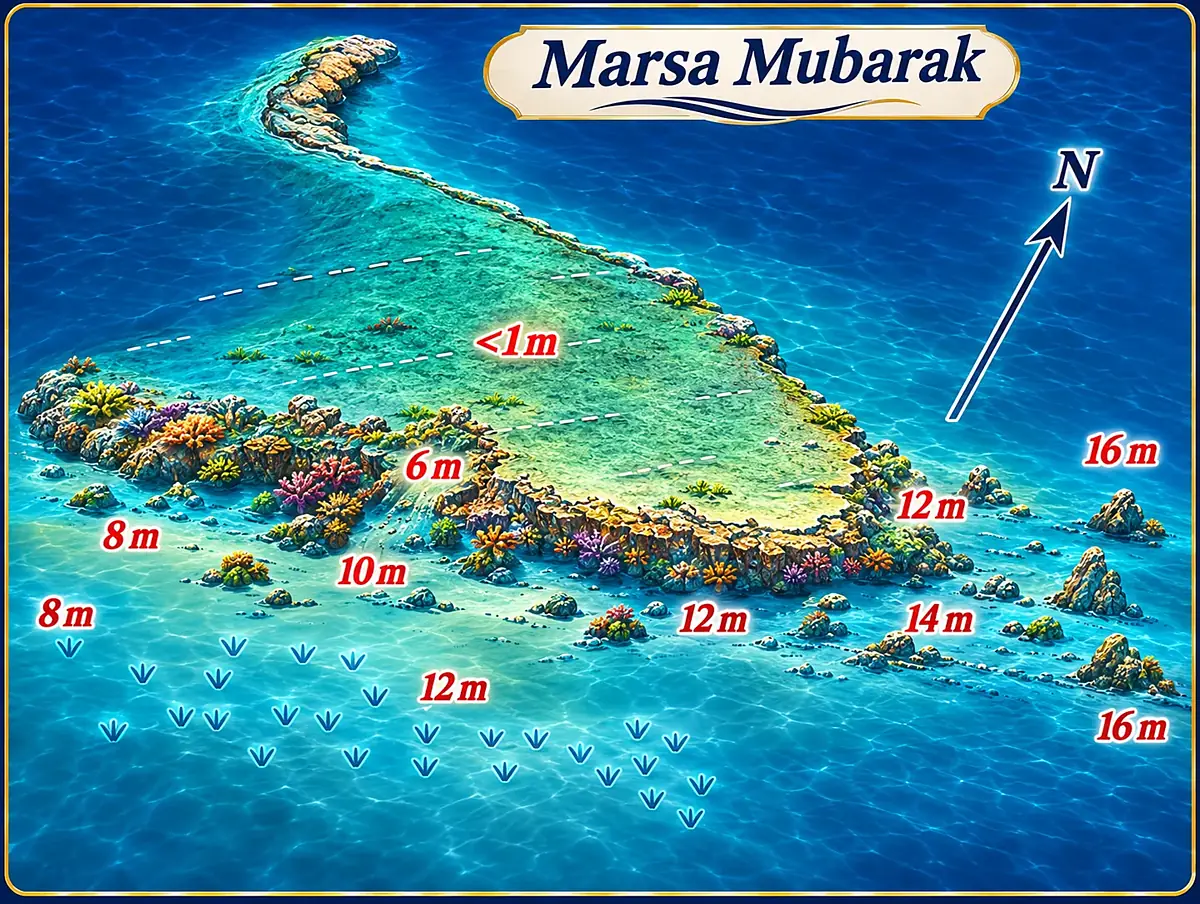
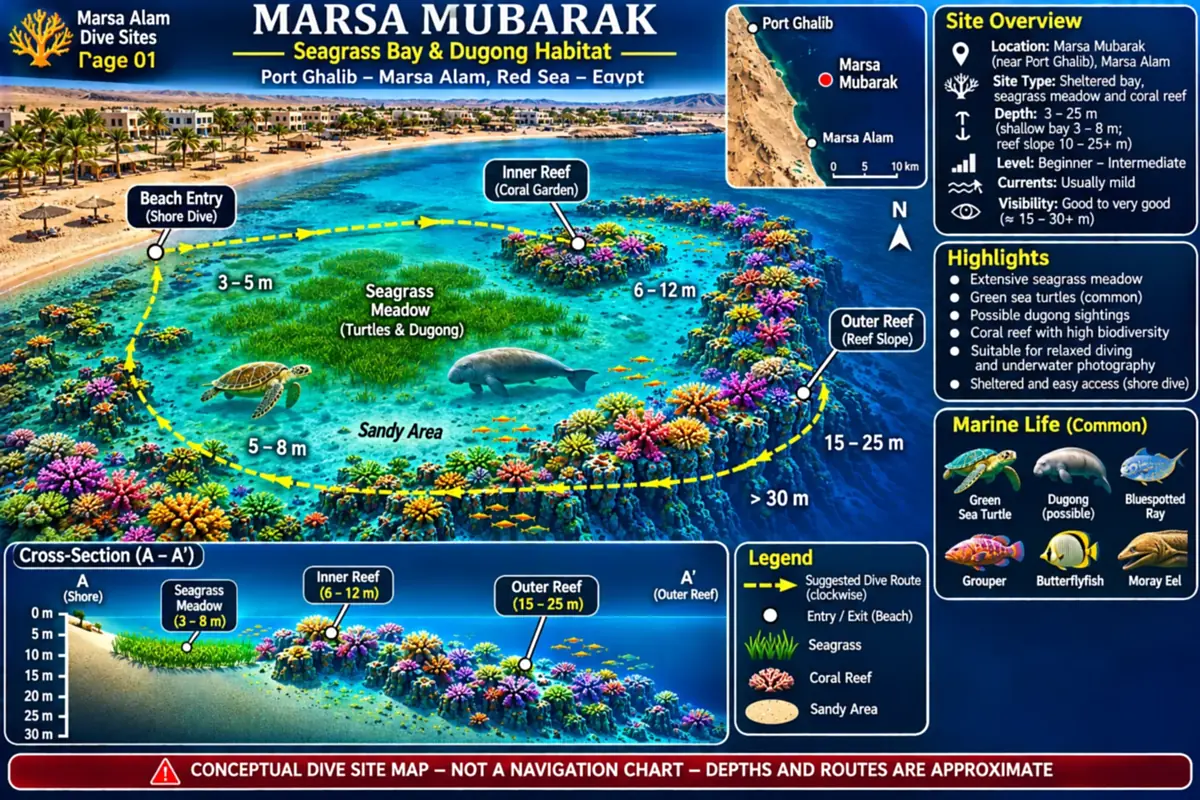
In short, Marsa Mubarak is a sheltered bay about 500 m wide, roughly 3.5 km south of Ras Ghalib in the Marsa Alam area, at the CDWS position of about 25°30′45″N, 34°39′07″E. Above all, its center holds wide seagrass meadows where green turtles feed almost daily and a dugong is sometimes seen. In addition, sandy patches with coral rocks and a fringing reef line the bay. Overall, most dives stay at 10–15 m, the current is weak, and the dive suits every level.
What is Marsa Mubarak like?
Above all, this is a marine-life dive rather than a dramatic reef. The bay is calm, shallow and wide, so groups spread out and it rarely feels crowded underwater.
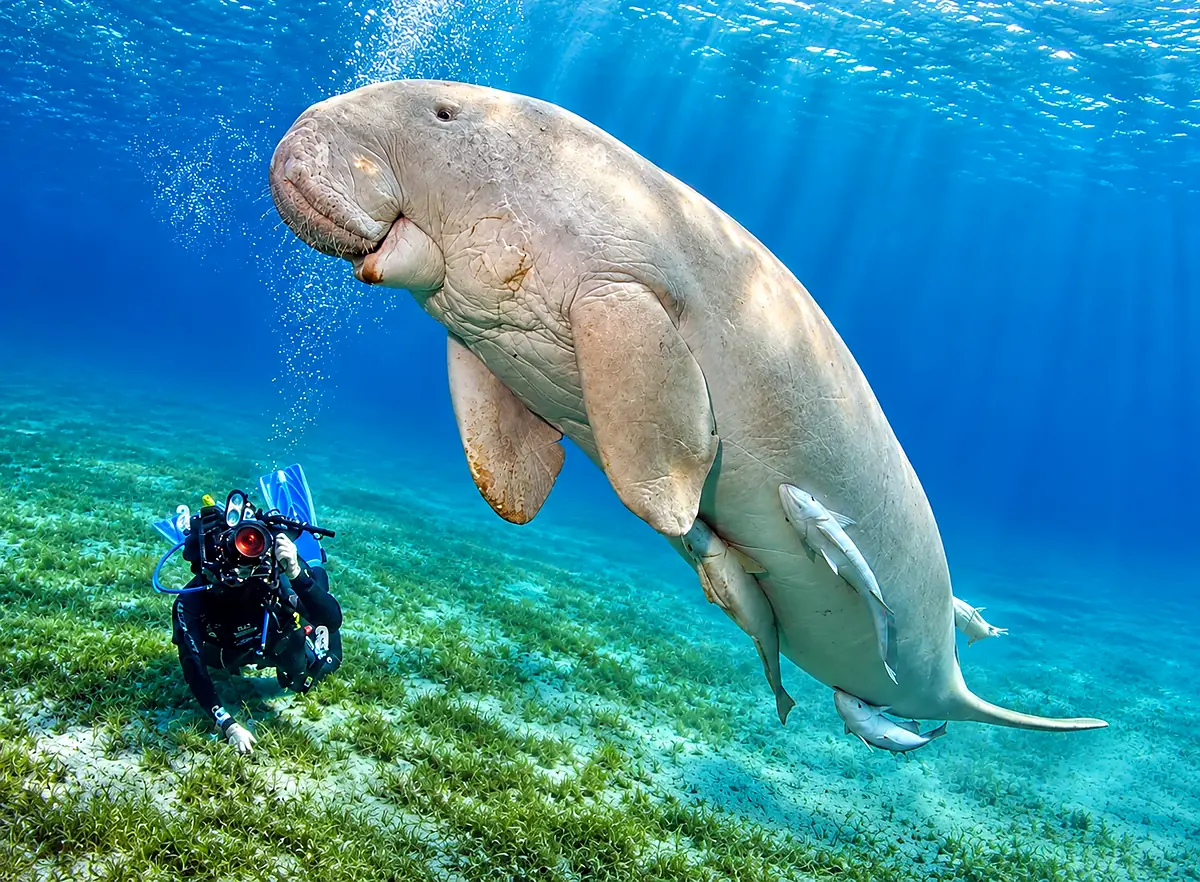
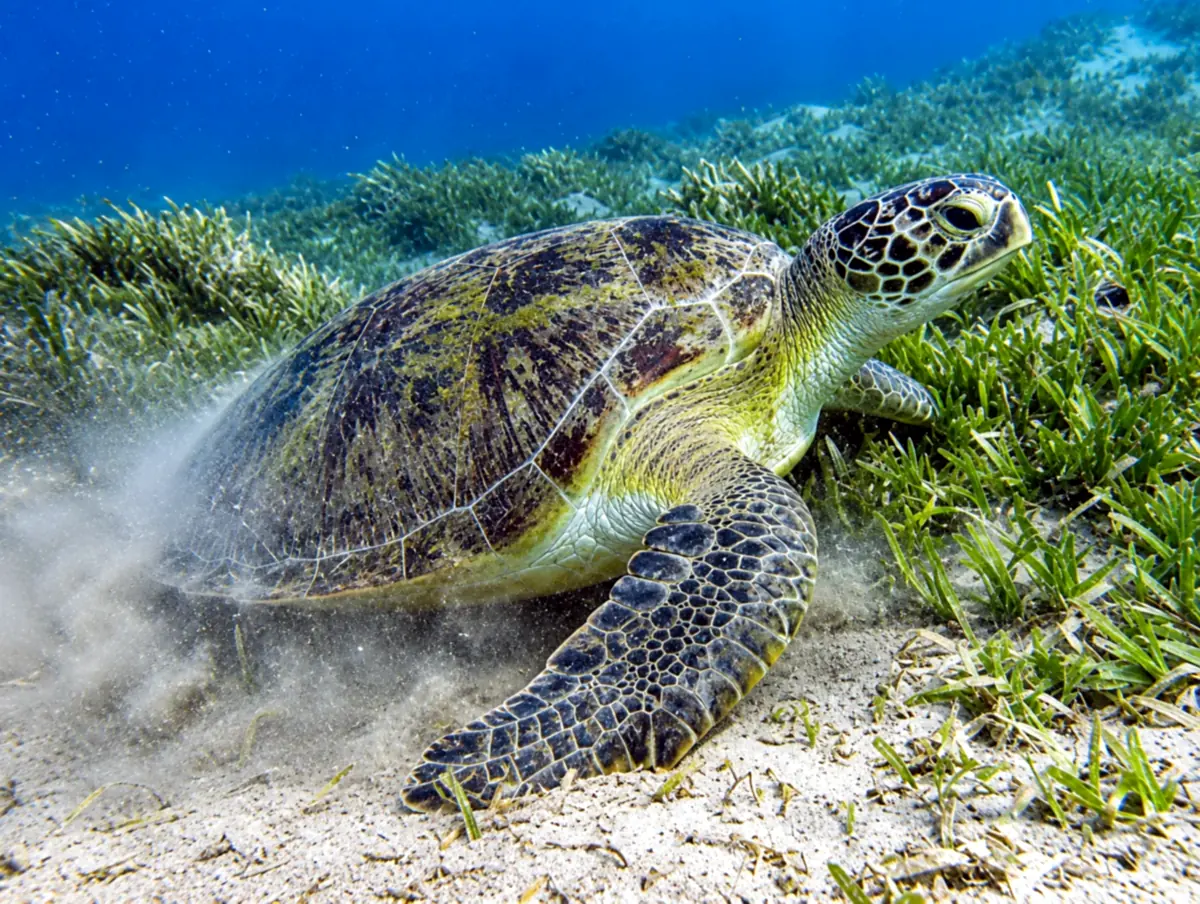
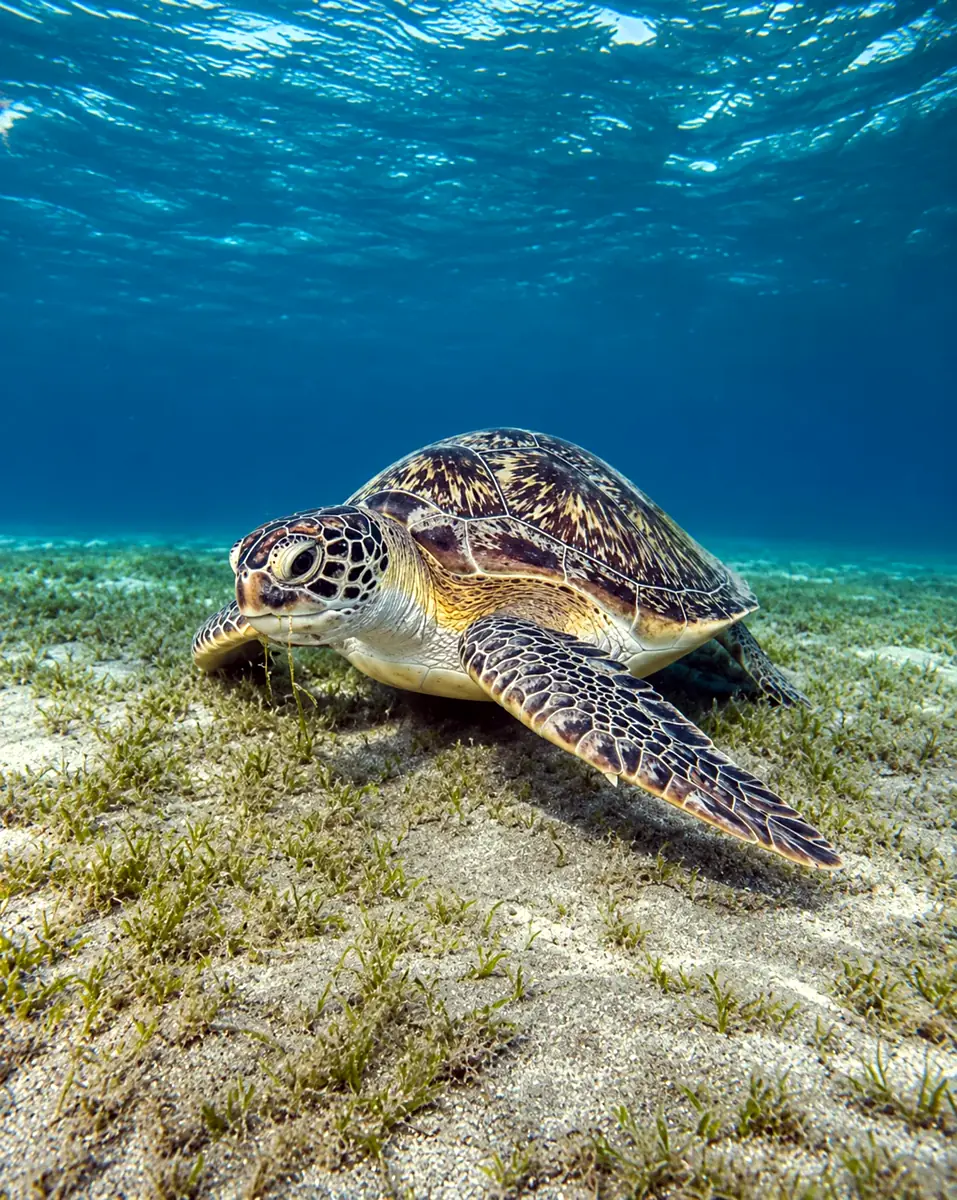
Meanwhile, seagrass covers the sand in the middle of the bay. As a result, green turtles graze here, often with remoras on their shells, and a resident dugong sometimes feeds as well.
Because the bay lies so close to Port Ghalib, many liveaboards stop here. In fact, it is a classic check dive, a relaxed last dive of a safari and a quiet night mooring.
Marsa Mubarak at a glance
The seagrass
First, wide meadows in the middle of the bay, where turtles graze.
The coral rocks
Next, sandy seabed lined with coral rocks full of hidden creatures.
The outer reef
Finally, the reef edge north of the mooring, for a longer drift.
What is under the water at Marsa Mubarak?
Generally, the bay has three zones. First, the seagrass fills the center. Then, sand with coral rocks runs along the edges. Finally, the fringing reef drops on the outside toward a seabed at about 30 m.
The seagrass meadows
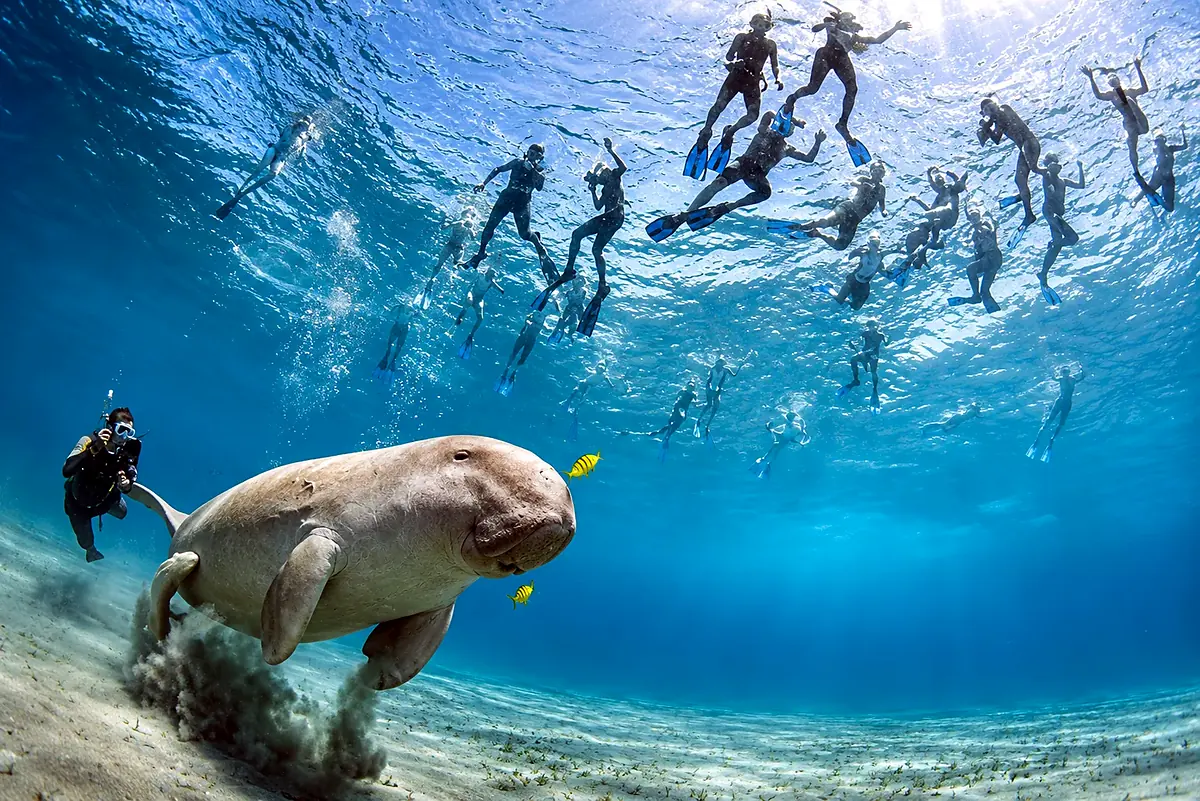
The meadows. Here, for example, green turtles feed almost every day, and the dugong is mostly seen on the left side or in the center of the bay.
Sand and coral rocks
The rocks. In contrast, the sandy seabed is lined with coral rocks, where crocodilefish, stonefish and sea slugs hide.
The fringing reef
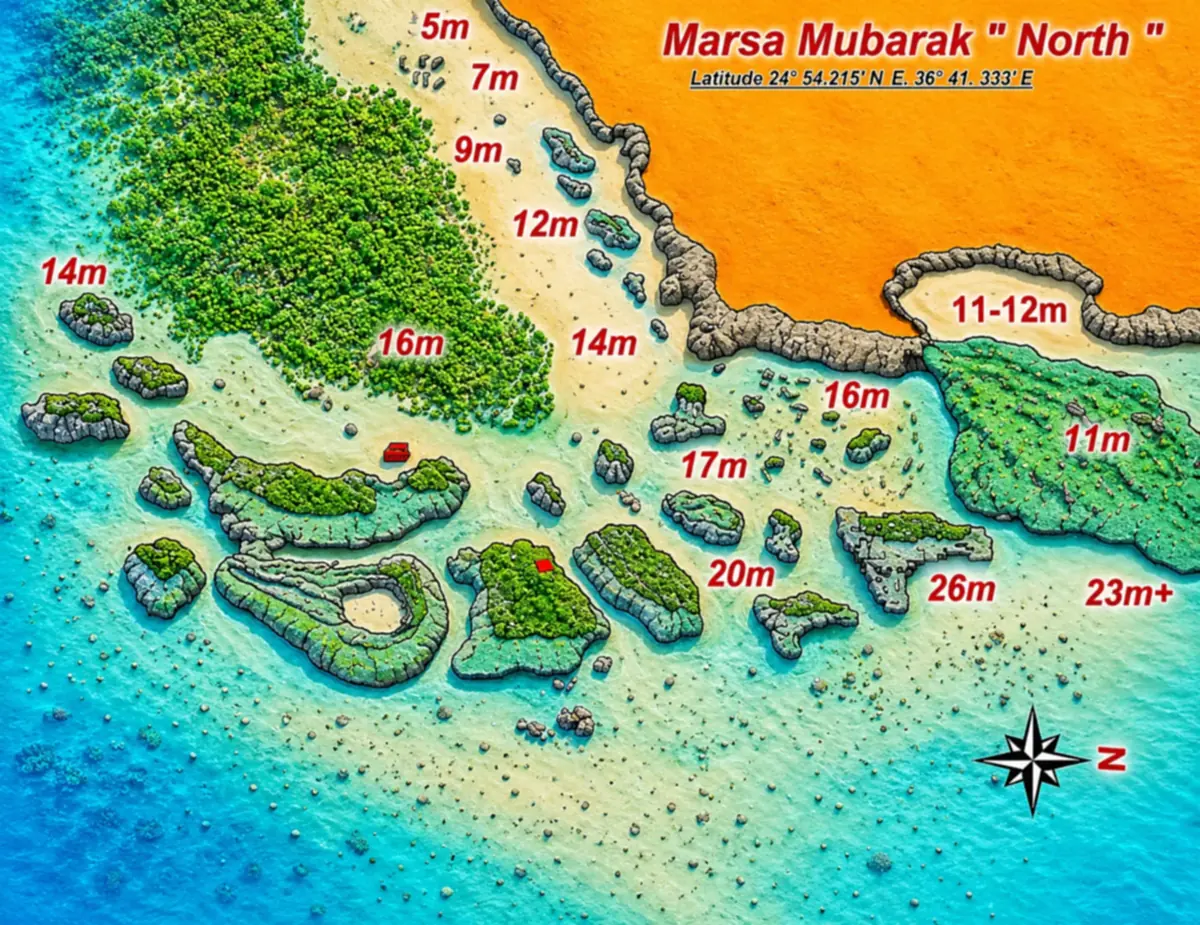
The reef. Meanwhile, the north reef has small patch reefs and a drop-off. Even so, little of interest lies below 20 m.
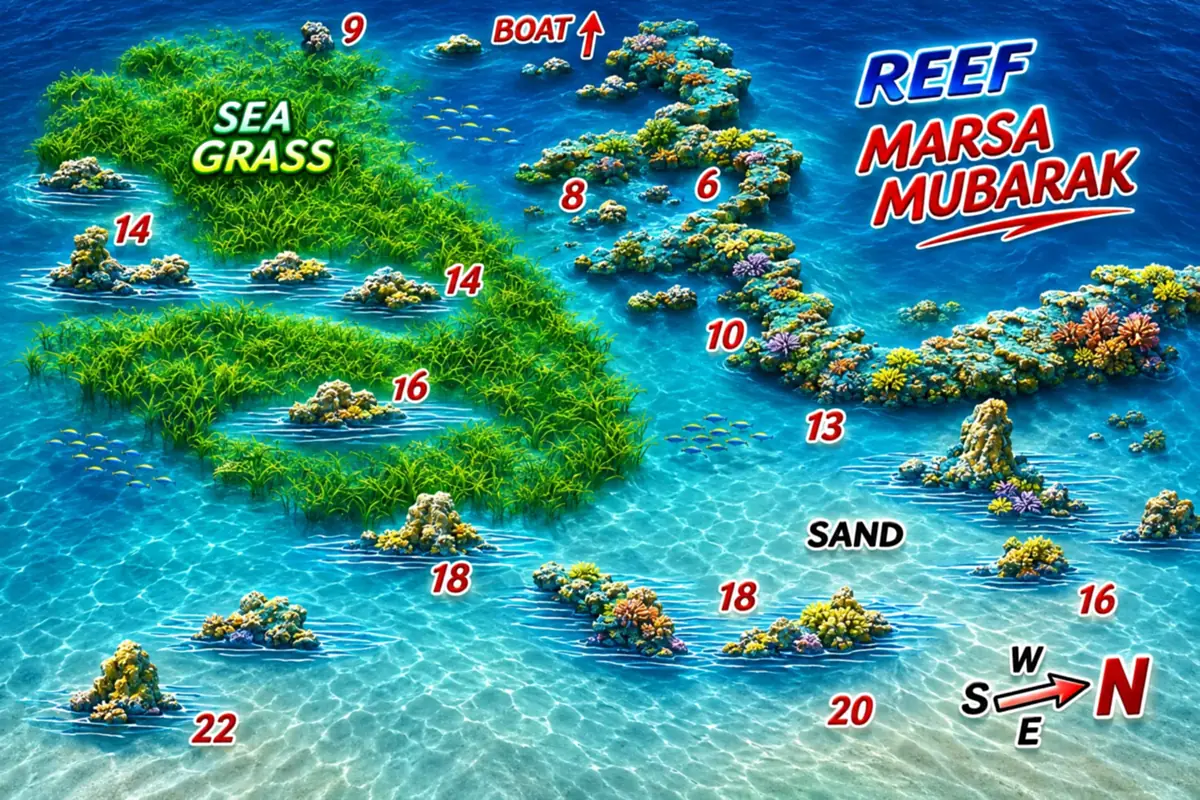
Where is Marsa Mubarak?
Specifically, the bay lies on the coast about 3.5 km south of Ras Ghalib, in the northern part of the Marsa Alam diving area. For reference, CDWS lists it at 25°30′45″N, 34°39′07″E, which is about 25.5125°N, 34.6519°E.
However, this is a reference position, not a dive entry point. Since a road runs right beside the bay, it can also be reached by land, yet crossing the fringing reef from the shore is difficult. Finally, for the nearby reefs, see the Marsa Alam dive sites guide and Torombi to the north.
How do you dive Marsa Mubarak?
Usually, the guide chooses between the outer reef and the bay itself. In both cases, the current is weak, so the dives are calm and slow.
Route A: from the outer reef to the mooring
The drop
The entry. First, a RIB drops you about 200 m north of the boat, along the outer reef.
The reef
The main dive. Then, you dive back to the mooring with the reef on your right shoulder, over sand lined with coral rocks. This looks especially beautiful when the sun is low.
The bend
The finish. Afterward, the shape of the reef leads you around the bend and back into the bay. Still, if visibility is poor, keep going straight rather than turning west too early.
Route B: inside the bay
From the boat
The start. Instead, you simply explore the reef straight from the mooring.
The coral rocks
The search. Here too, coral rocks line the sand, and many small creatures appear when you look closely.
The seagrass
The highlight. Finally, drift over the meadows, where turtles graze and the dugong may appear.
What marine life lives at Marsa Mubarak?
Overall, the seagrass is the reason divers come. Above all, green turtles are seen almost daily, while a dugong grazes here on some days, although no sighting is ever certain.
On the seagrass
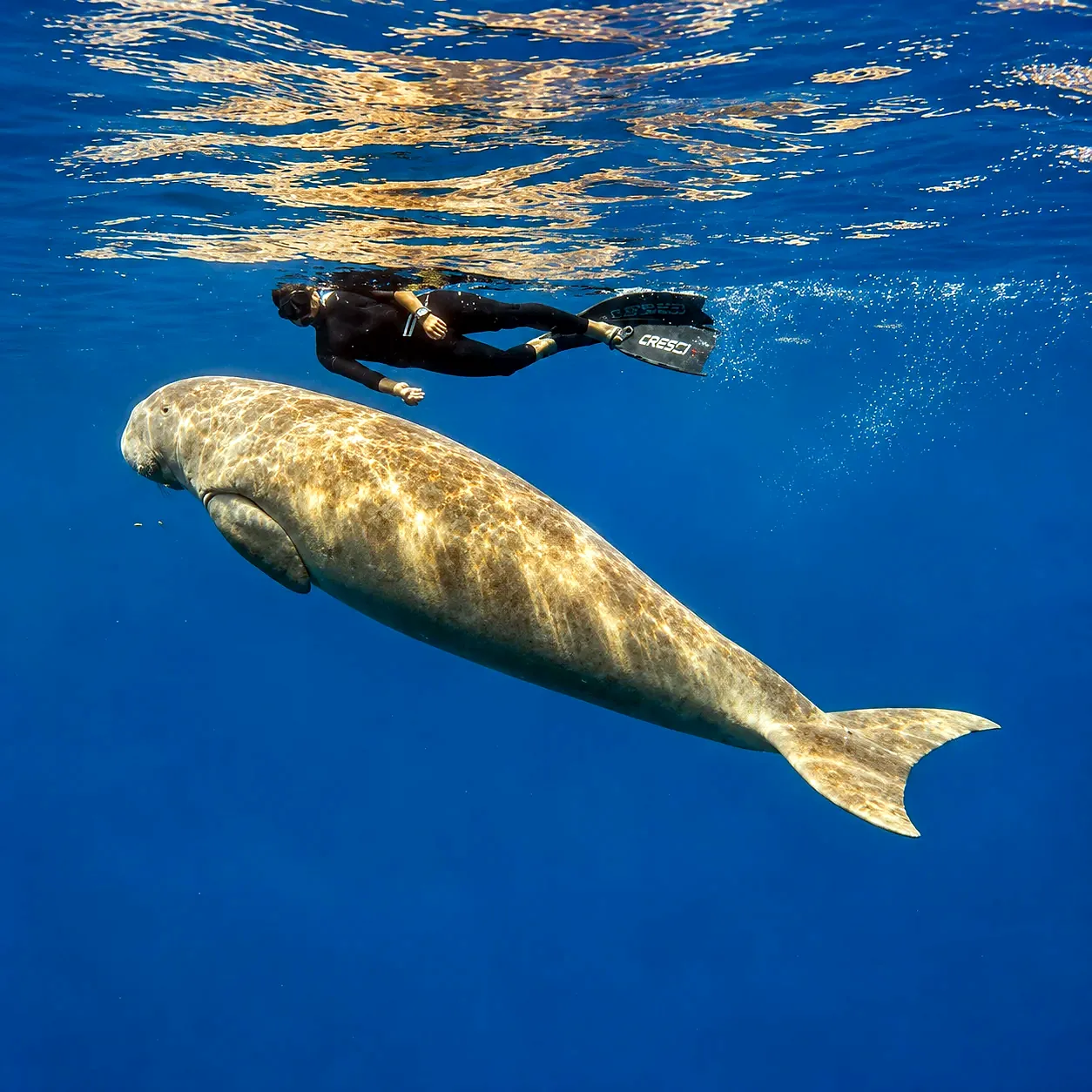
Typically, green turtles feed on the meadows, and the dugong grazes here at times, most often early or late in the day.
On the sand
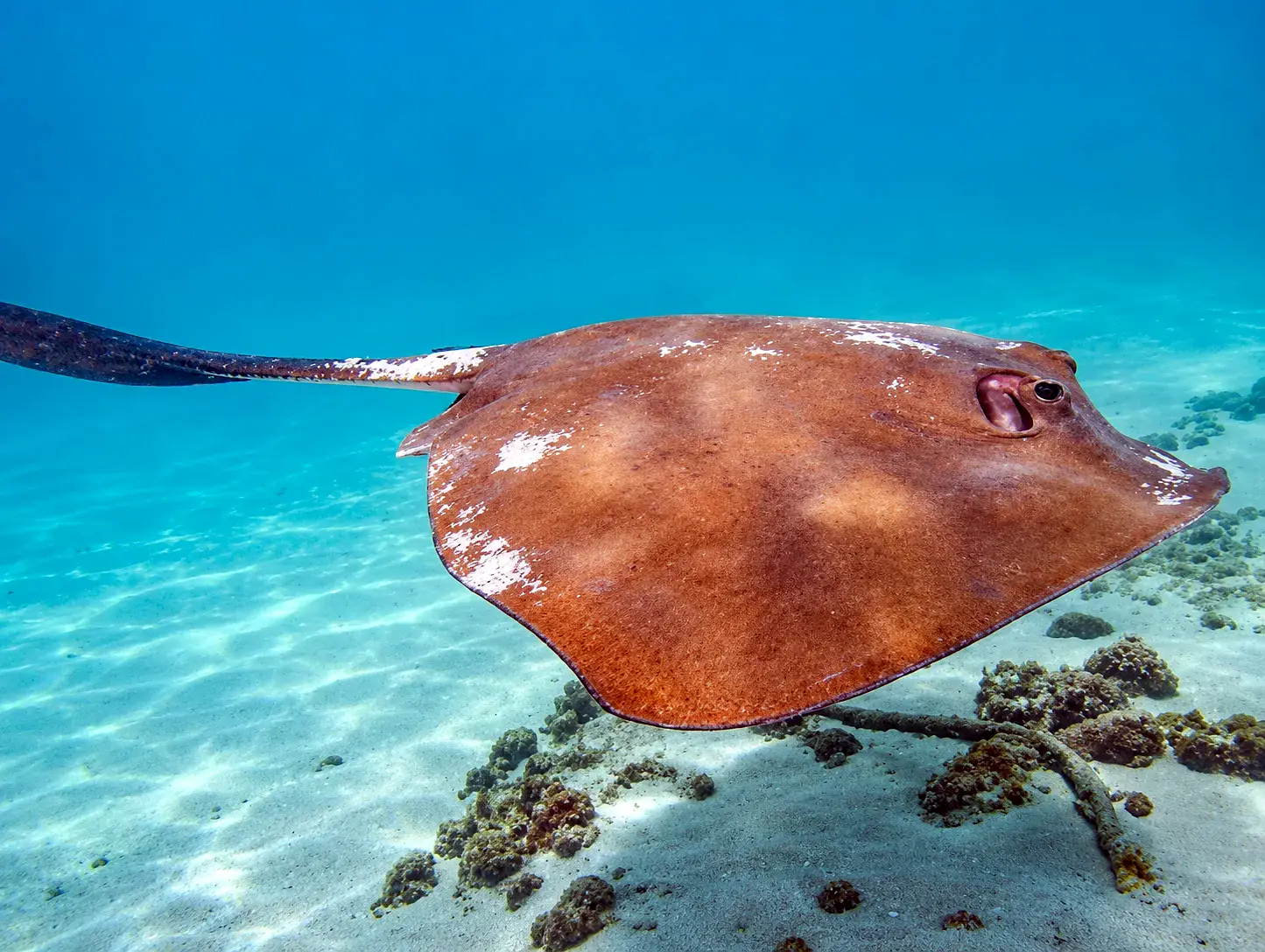
Likewise, bluespotted ribbontail rays and other rays rest on the sand around the meadows.
On the coral rocks
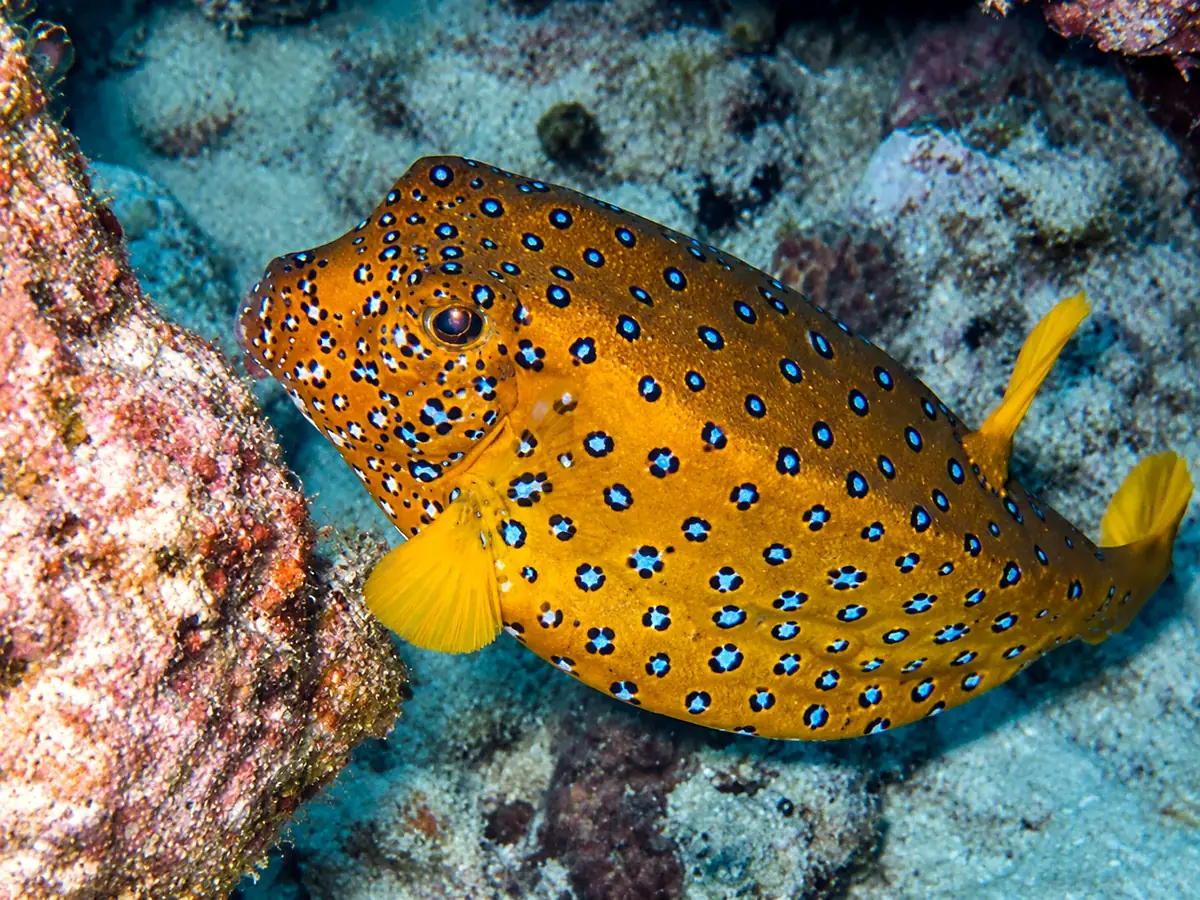
Meanwhile, crocodilefish, stonefish, sea slugs, grouper and pufferfish hide around the rocks and the reef.
Is Marsa Mubarak suitable for beginners?
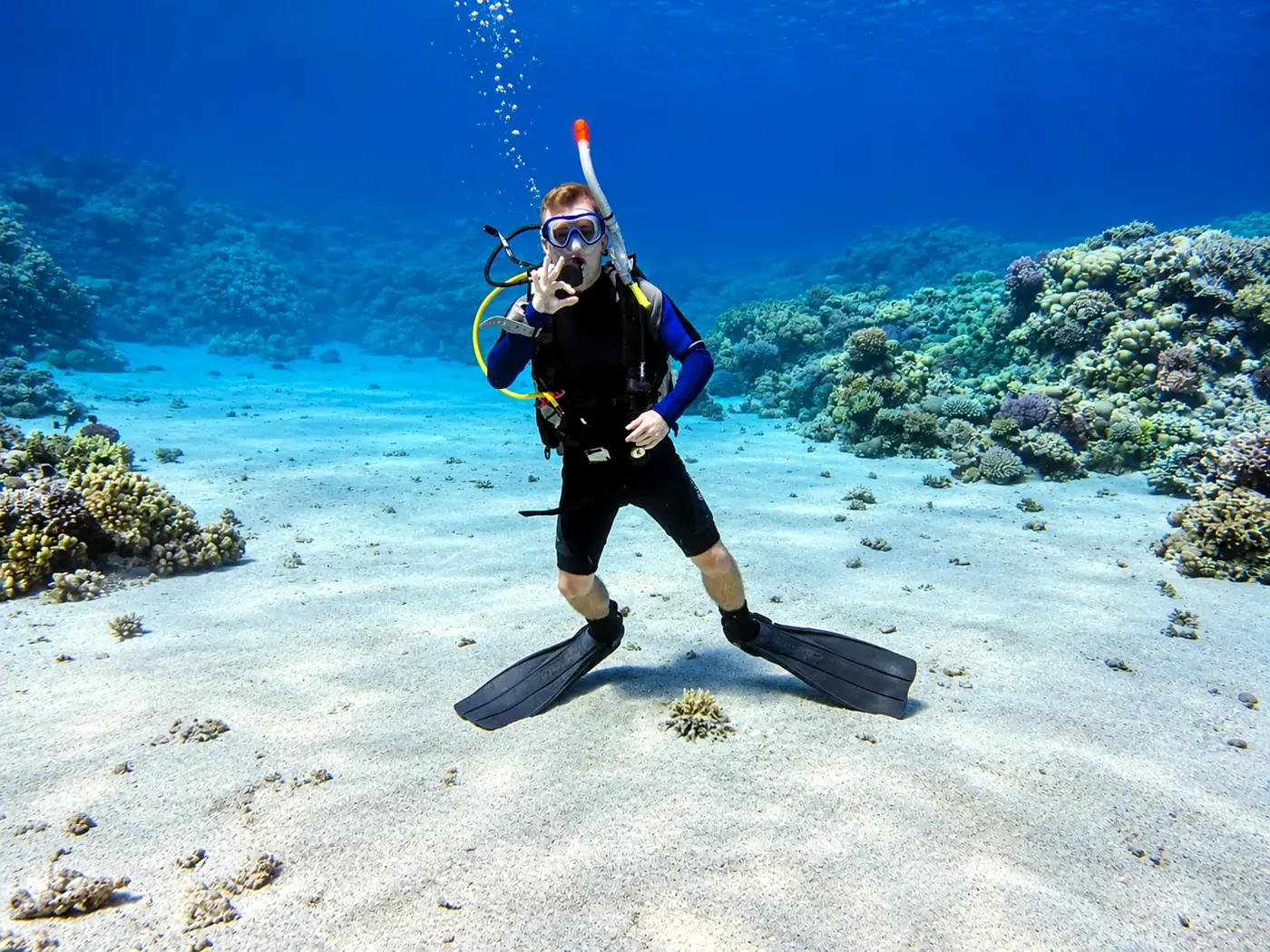
Yes. The water is shallow and calm, so Open Water divers and even snorkelers enjoy it with a guide.
However, the tides sometimes reduce visibility, and finding the right spot can then be tricky. For deeper dives elsewhere, take Advanced Open Water. For example, our liveaboard dive techniques guide explains RIB drops and check dives.
Before you dive Marsa Mubarak
Firstly, never chase, touch or feed turtles or the dugong. Secondly, stay off the seagrass. In fact, part of the bay is now closed to boats, because RIB propellers have hurt the dugongs here before.
Above all, follow our diving safety standards and the rules of HEPCA. We strongly recommend dive insurance such as DAN Europe.
How do you get to Marsa Mubarak?
In practice, day boats from Port Ghalib marina reach the bay in about 15–20 minutes. Many liveaboards from Port Ghalib stop here too, for a check dive, a last dive or a night mooring. With us, the routes from the south can include the Marsa Alam reefs, such as our BDE liveaboard and the Daedalus and Fury Shoals route. Guests board on Saturday after 15:00, and check-out is between 09:00 and 10:00 the next Saturday.
Generally, boats combine several reefs on the same day. Consequently, you can pair it with Torombi, Elphinstone and the other Marsa Alam reefs.
Plan your Marsa Mubarak dive trip
- BDE liveaboard — Brothers, Daedalus and Elphinstone.
- Daedalus and Fury Shoals liveaboard — Daedalus Reef and the southern reefs.
- What divers need on board — the packing checklist for a Red Sea safari.
- redsealiveaboard.net — Red Sea safari schedules and availability.
- All eight boats in our fleet can sail these routes: Sea Fox, Simba, Sea Treasure, Star Jet, Bismarck, C Echo II, C U and Ramadan 3.
Photo gallery from Marsa Mubarak
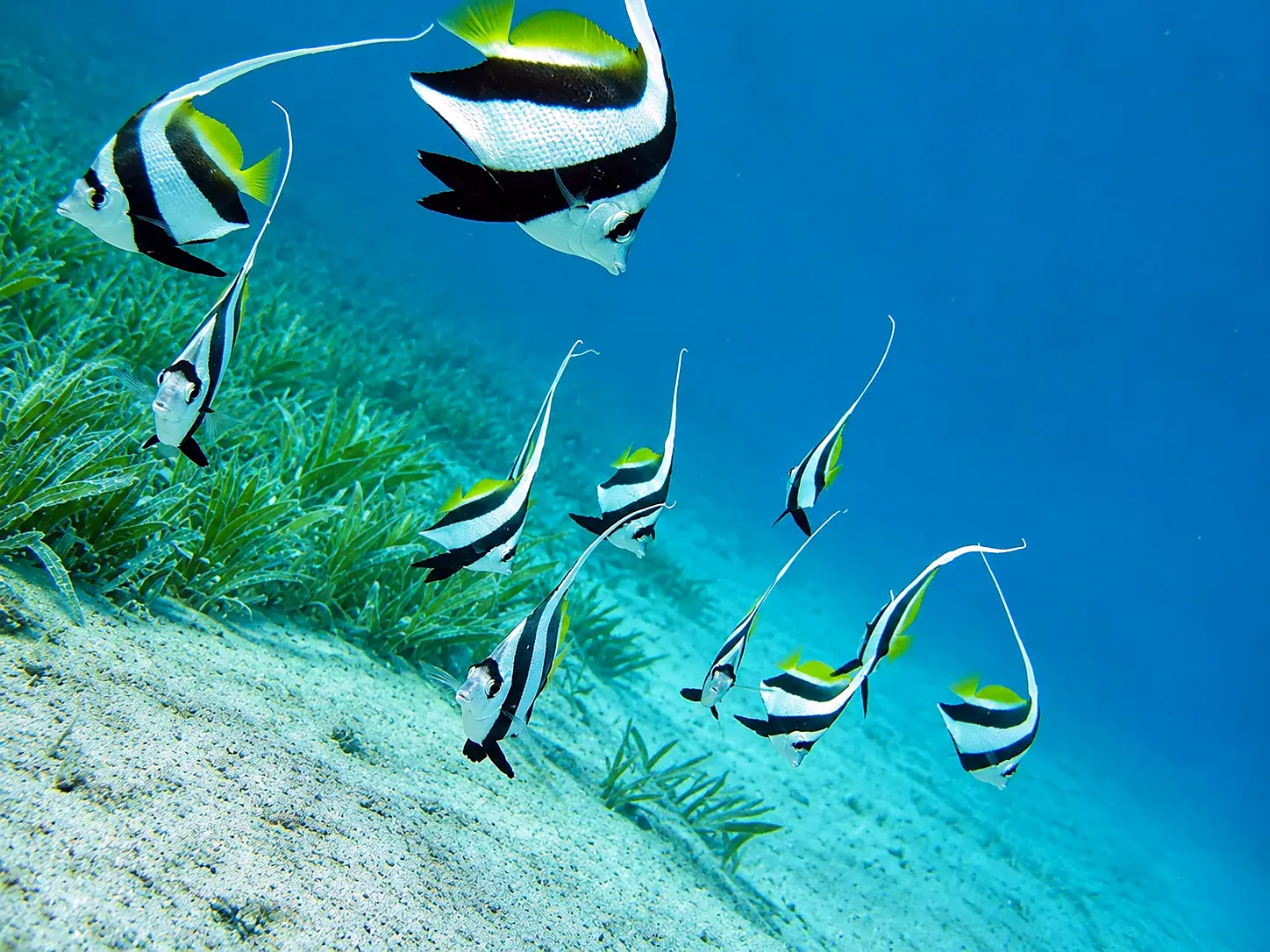
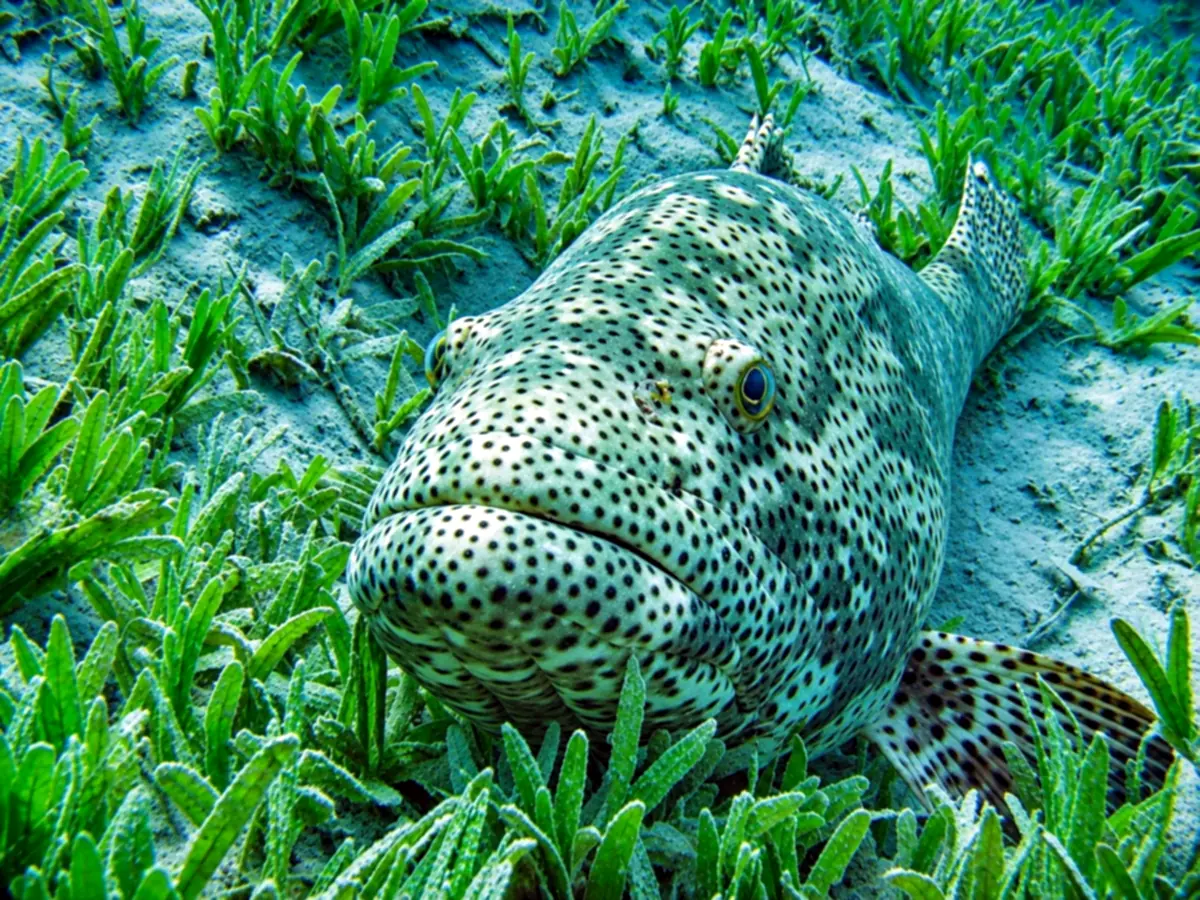
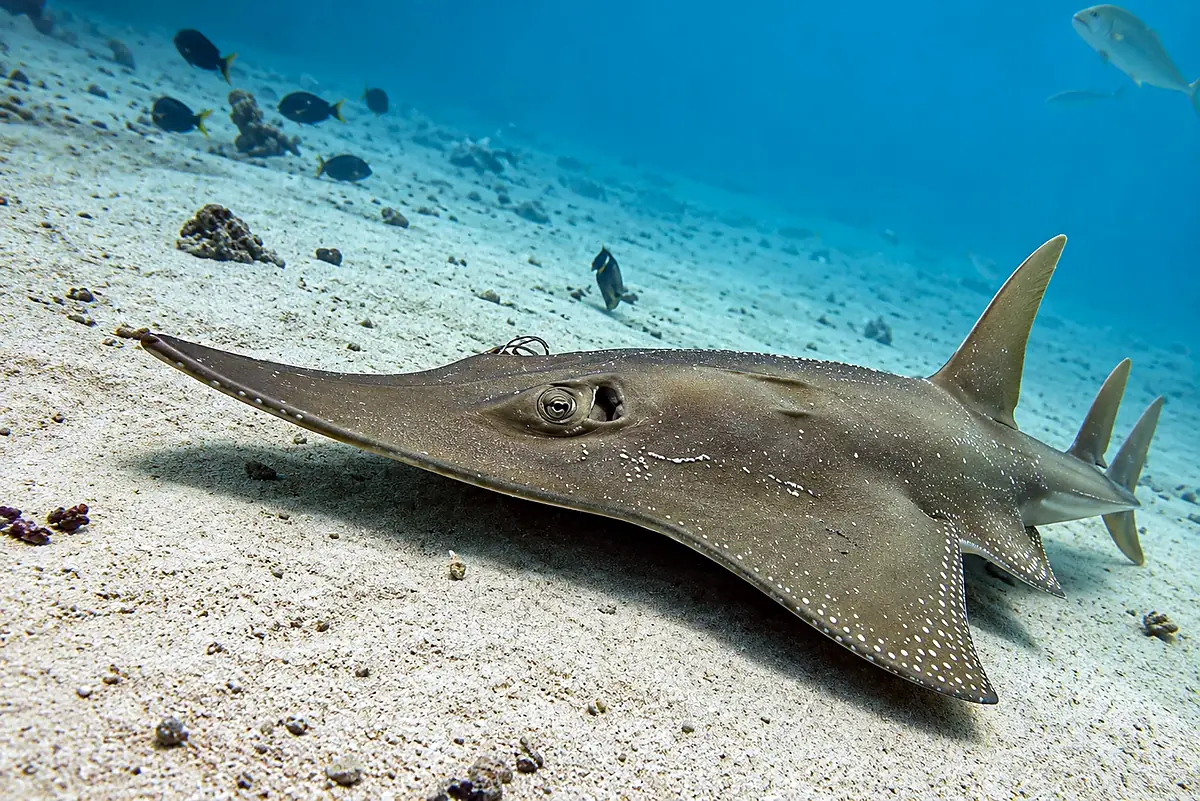
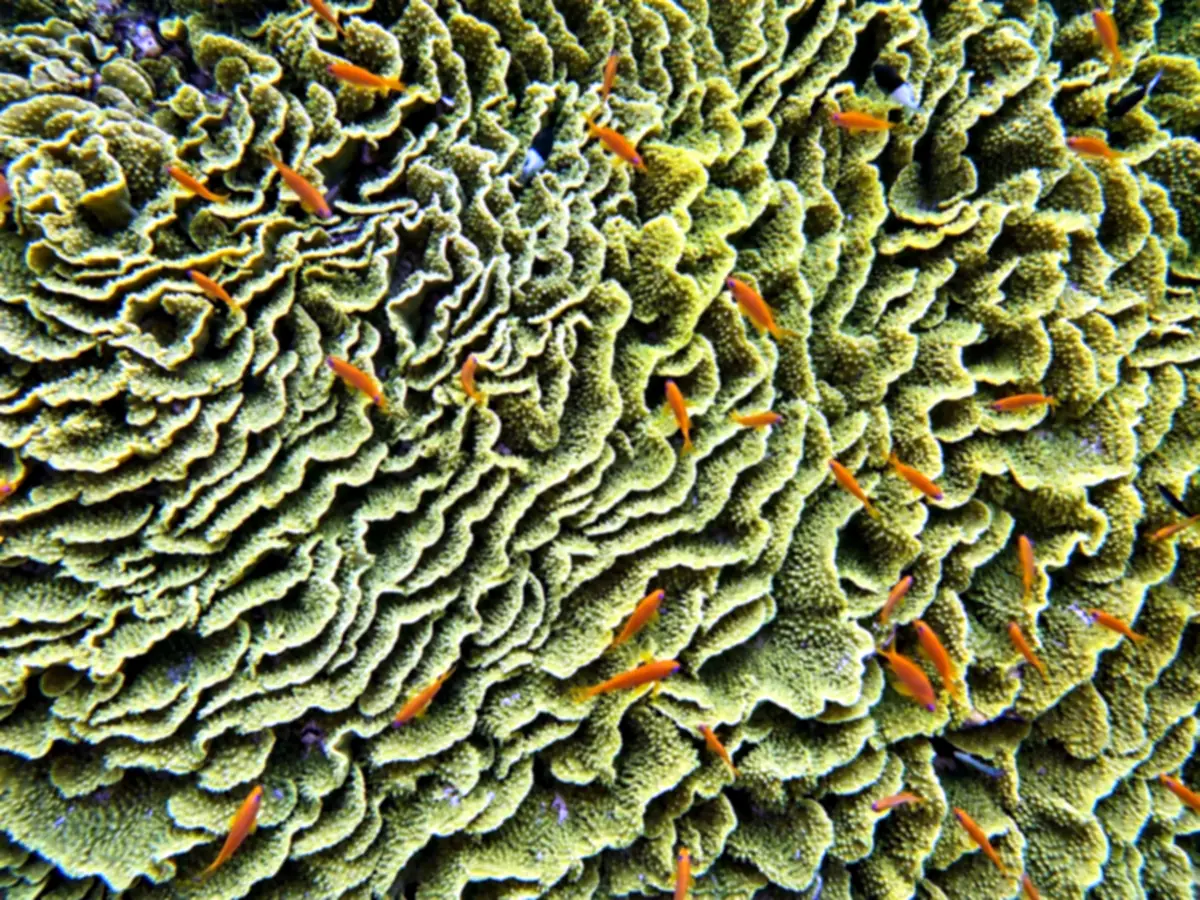
Other routes from Red Sea Diving
Generally, for a first liveaboard, the North Red Sea liveaboard keeps to the classic wrecks. On the other hand, the Deep South St. John’s liveaboard reaches the far south, while the Elba Reef liveaboard goes further still. Meanwhile, the Red Sea liveaboard guide compares all eight routes.
Marsa Mubarak: frequently asked questions
Where is Marsa Mubarak?
In fact, it is a sheltered bay about 3.5 km south of Ras Ghalib, near Port Ghalib in the Marsa Alam area, at about 25°30′45″N, 34°39′07″E.
Can you see dugongs at Marsa Mubarak?
Sometimes. A dugong grazes on the seagrass here at times, mostly on the left side or in the center of the bay, but no sighting is ever certain.
How deep is Marsa Mubarak?
Most dives stay between 10 m and 15 m. The seabed beyond the outer reef reaches about 30 m, but little of interest lies below 20 m.
Can you see turtles at Marsa Mubarak?
Almost always. Green turtles feed on the seagrass nearly every day, often with remoras on their shells.
How do you get to Marsa Mubarak?
By day boat from Port Ghalib marina, or on a liveaboard, which often stops here for a check dive or a night mooring. Moreover, all eight boats in the Red Sea Diving fleet can run these routes.
Marsa Alam · Liveaboard · Coastal reefs
Dive Marsa Mubarak with us
Simply tell us your dates, the number of divers, your certification level and your number of logged dives. Afterward, our team checks which departure fits your group before you commit to anything.


