
Dive guide to Habili Sama · Hamata, southern Red Sea
Habili Sama Dive Site Anemone City: two small reefs and a field of anemones between them
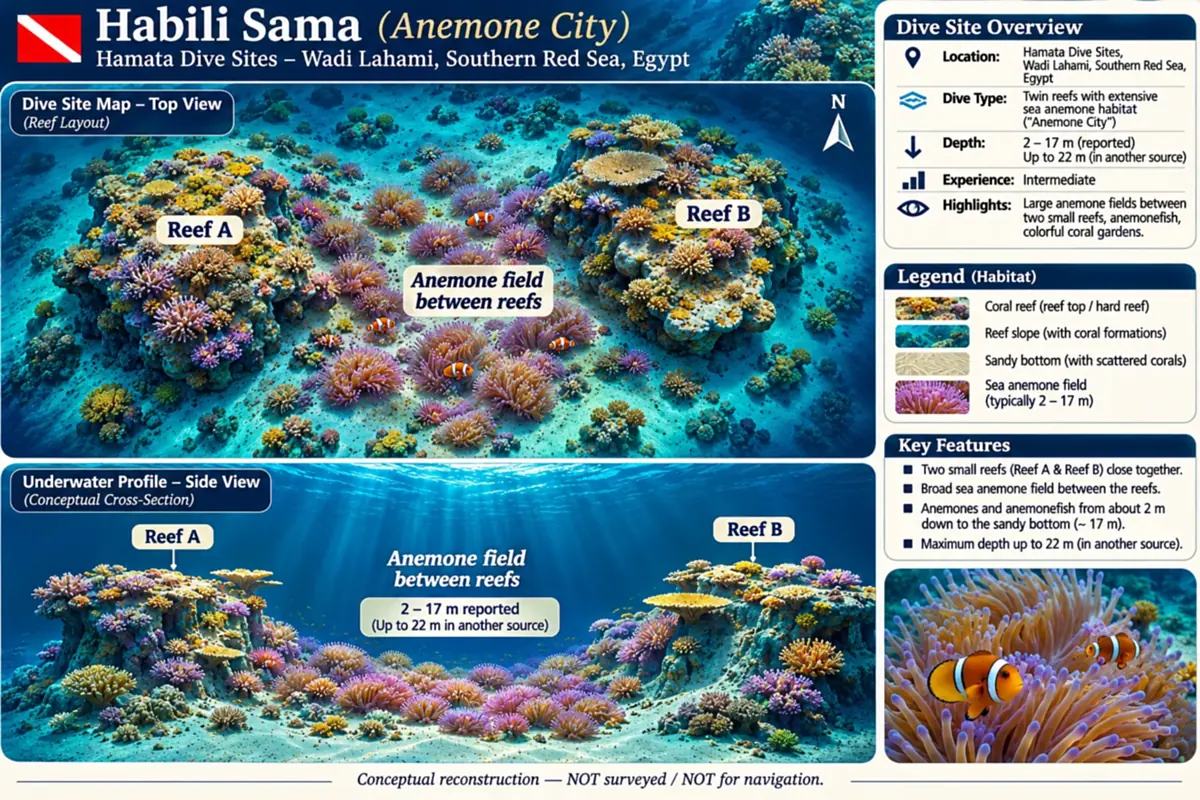
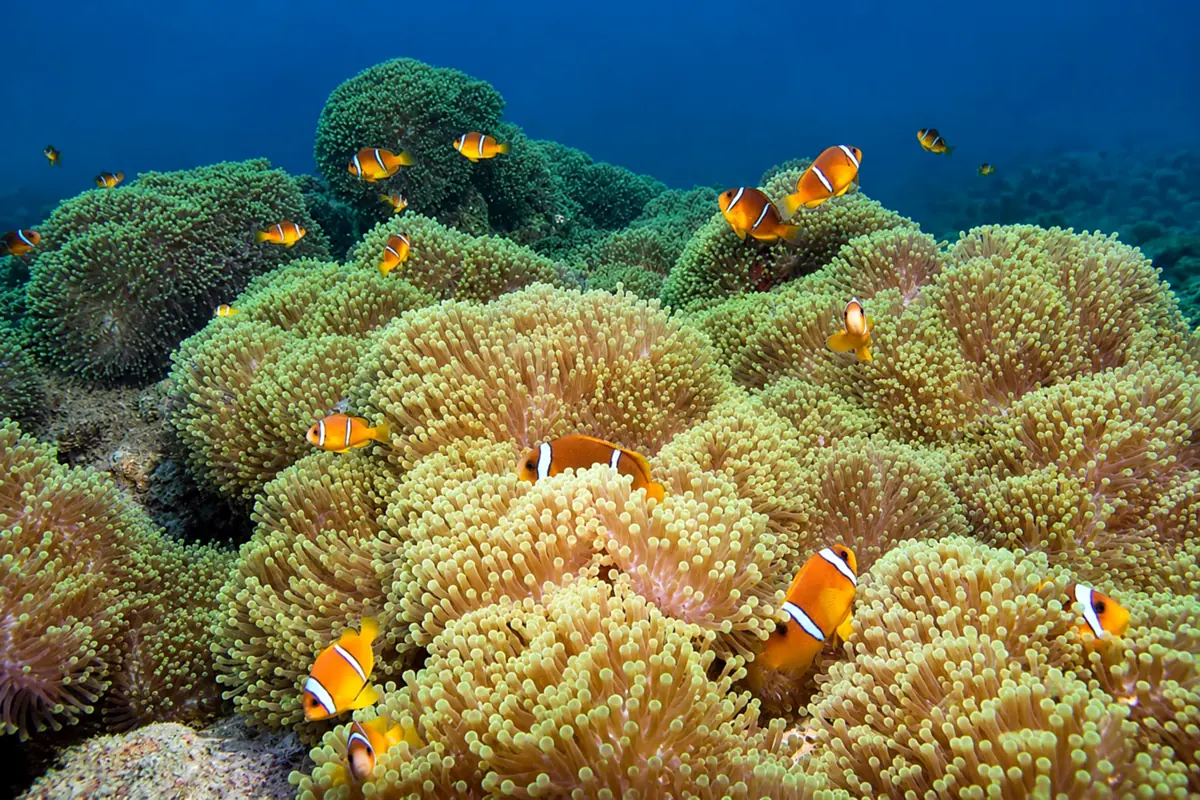
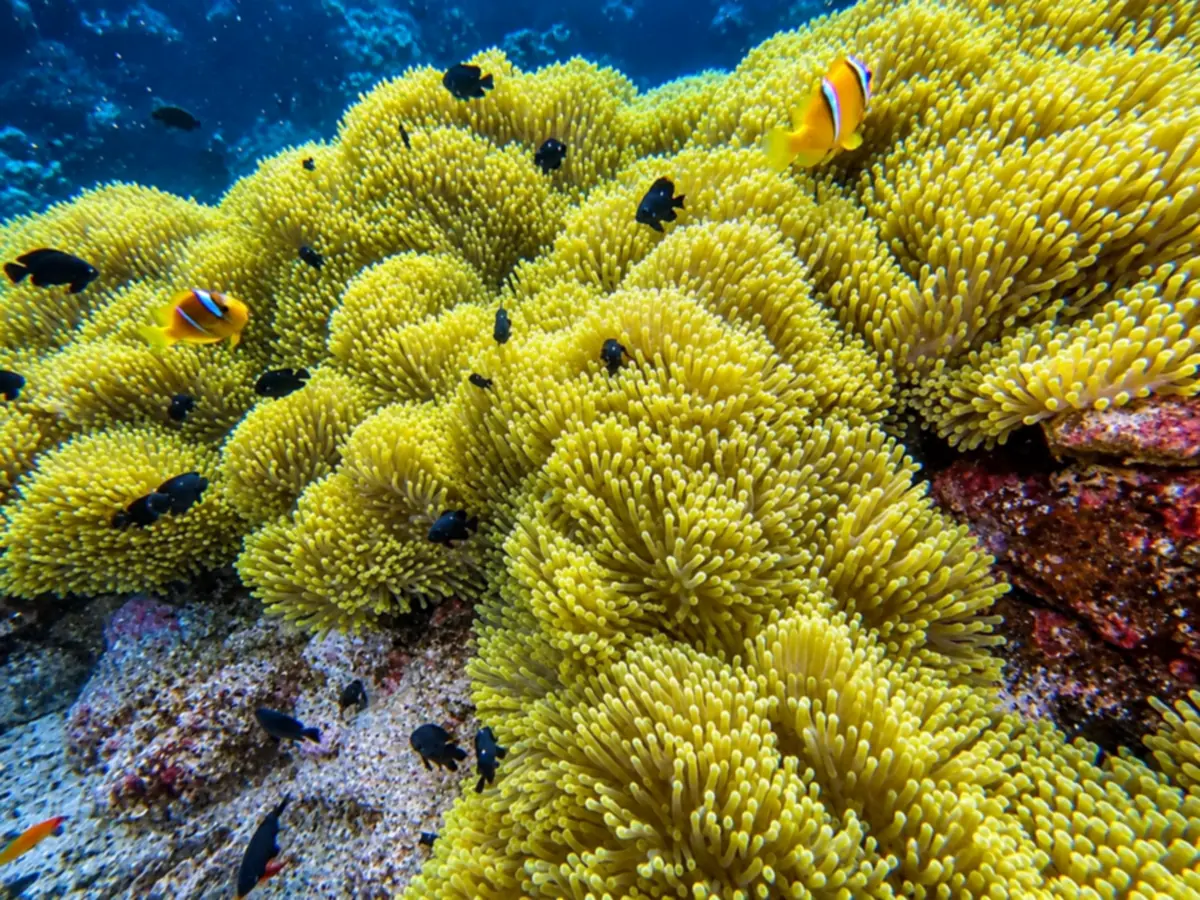
Habili Sama, also called Habili B and Anemone City, is a submerged reef off Hamata in the southern Egyptian Red Sea. It is made of two small reefs, and the channel between them holds what dive guides call the biggest anemone city in Fury Shoals, from about 2 m down to the sand at around 17 m.
Habili Sama in short
In short, Habili Sama (also Habili B or Anemone City) is a submerged reef off Hamata in the southern Egyptian Red Sea. Two small reefs sit close together, and the channel between them is covered in sea anemones from about 2 m to the sandy bottom at around 17–18 m. One dive map puts it at about 24°18′36″N, 35°26′35″E, but other guides give a different position. The reef gives boats little shelter, so you dive it only in calm seas.
What is Habili Sama like?
Above all, it is a habili, a young reef that has not yet grown up to the surface. Its name is said to mean the pregnant one, since the reef is not yet born above the waves.
In fact, it is two reefs, not one. The larger of the two carries coral pinnacles, while the channel between them is carpeted with anemones.
Many guides call it the most beautiful habili in Fury Shoals. Besides the anemones, there are soft corals, table corals and gorgonian sea fans.
Habili Sama at a glance
Anemones
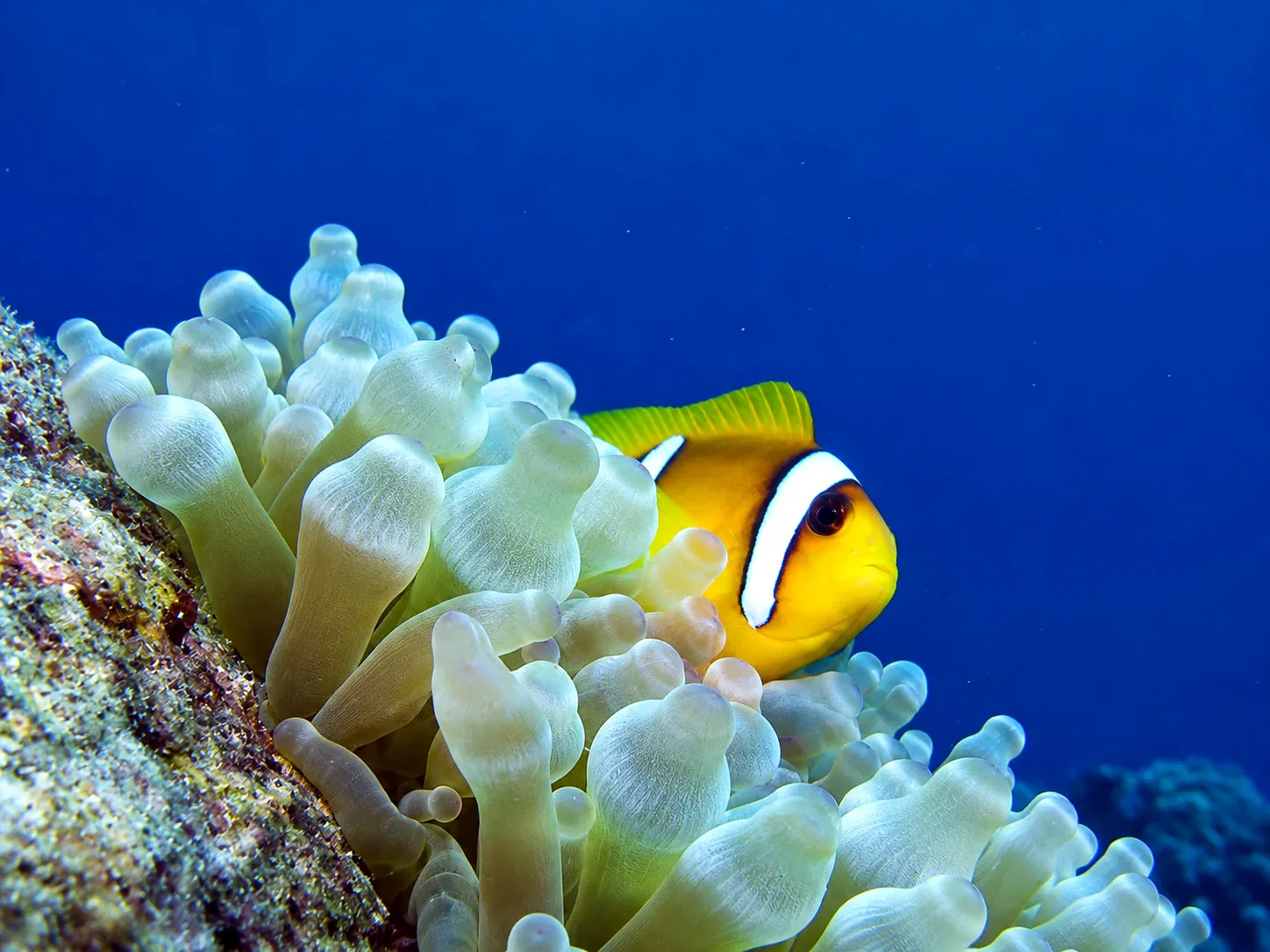
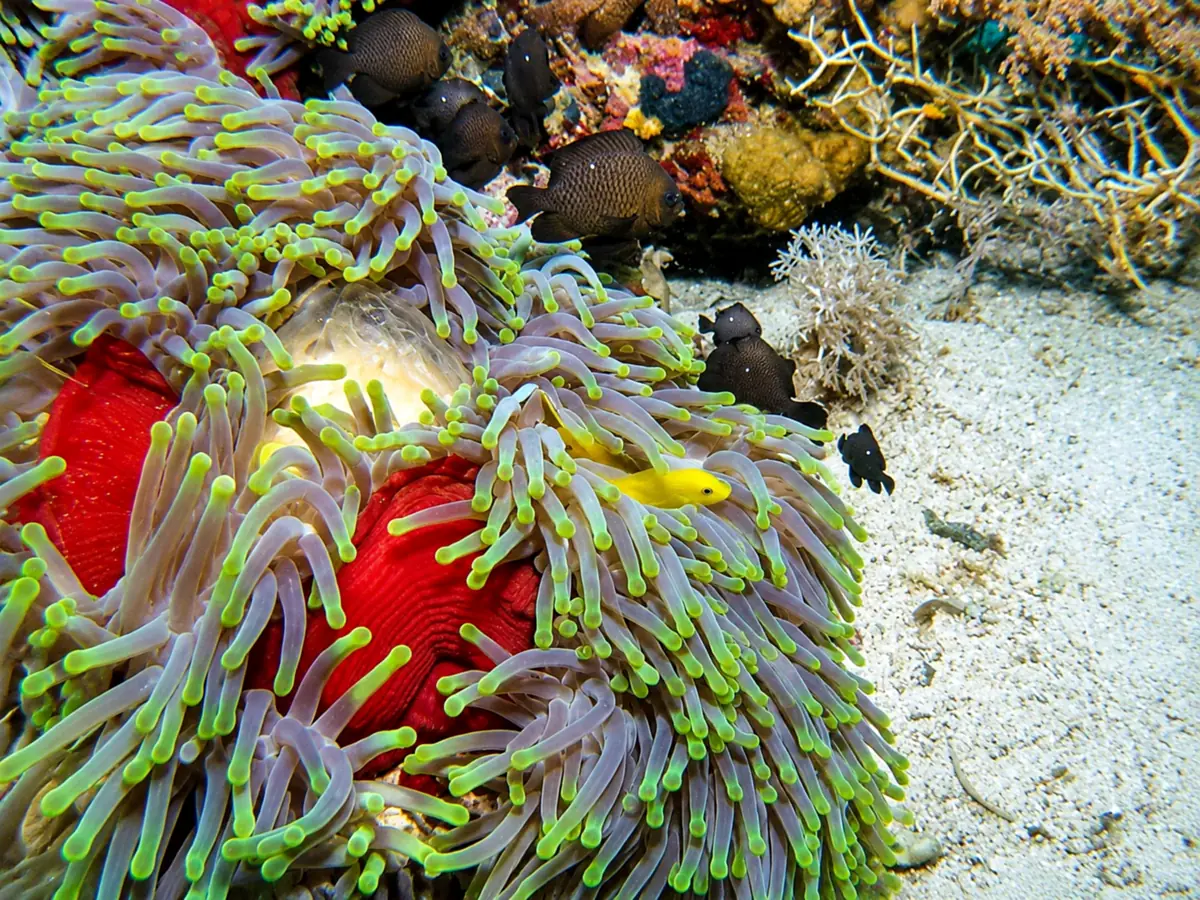
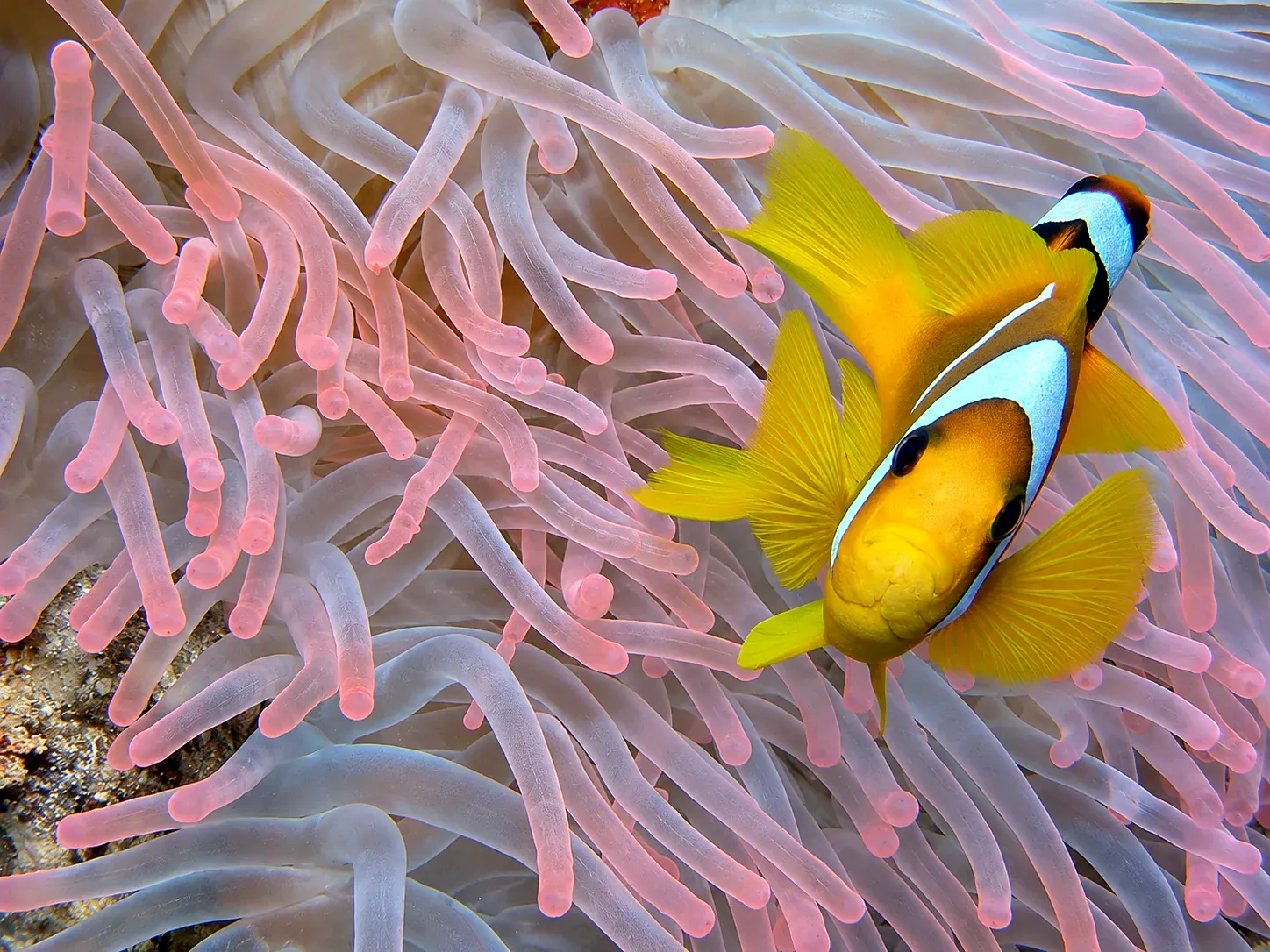
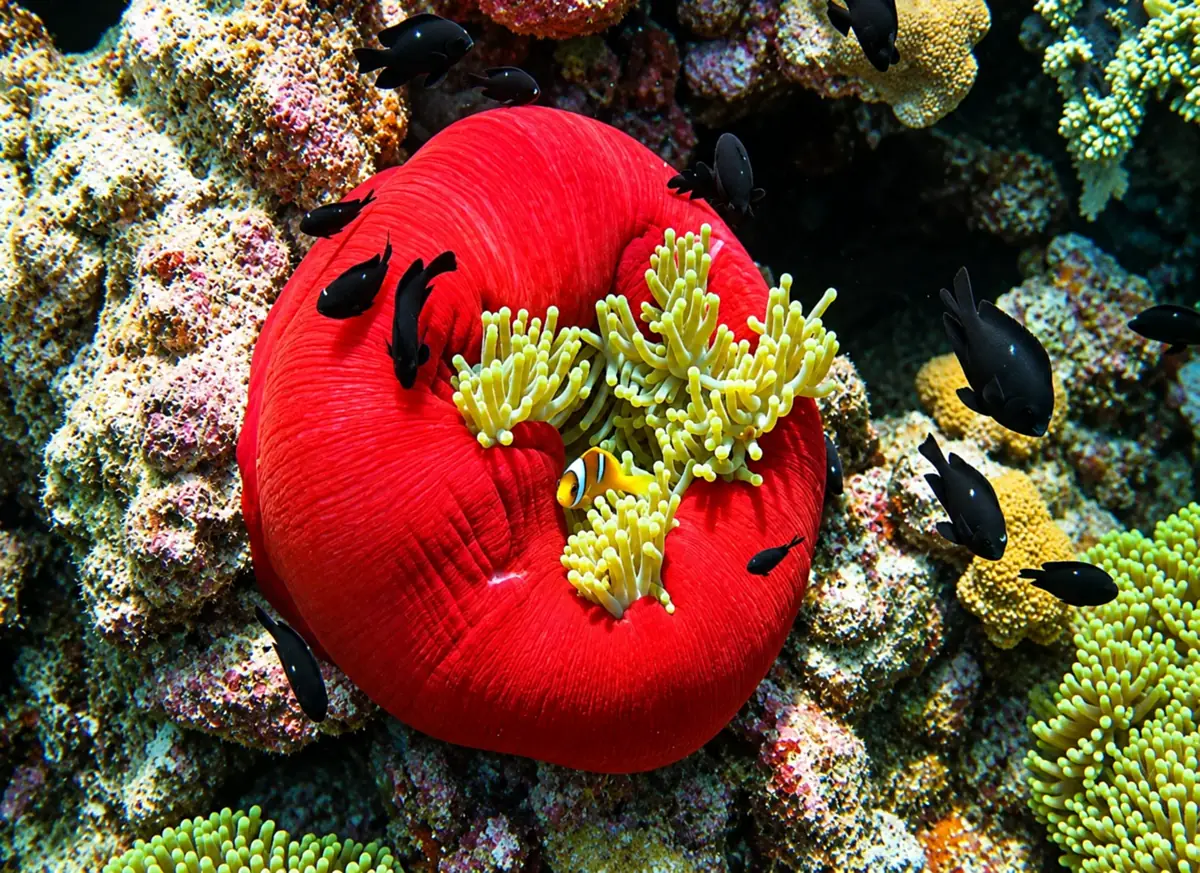
First, a carpet of anemones fills the channel between the two reefs.
Pinnacles
Next, the larger reef rises in coral pinnacles with soft corals and sea fans.
Photography
Finally, the shallow depth and good light make it a favorite for close-up photos.
What makes Habili Sama Anemone City?
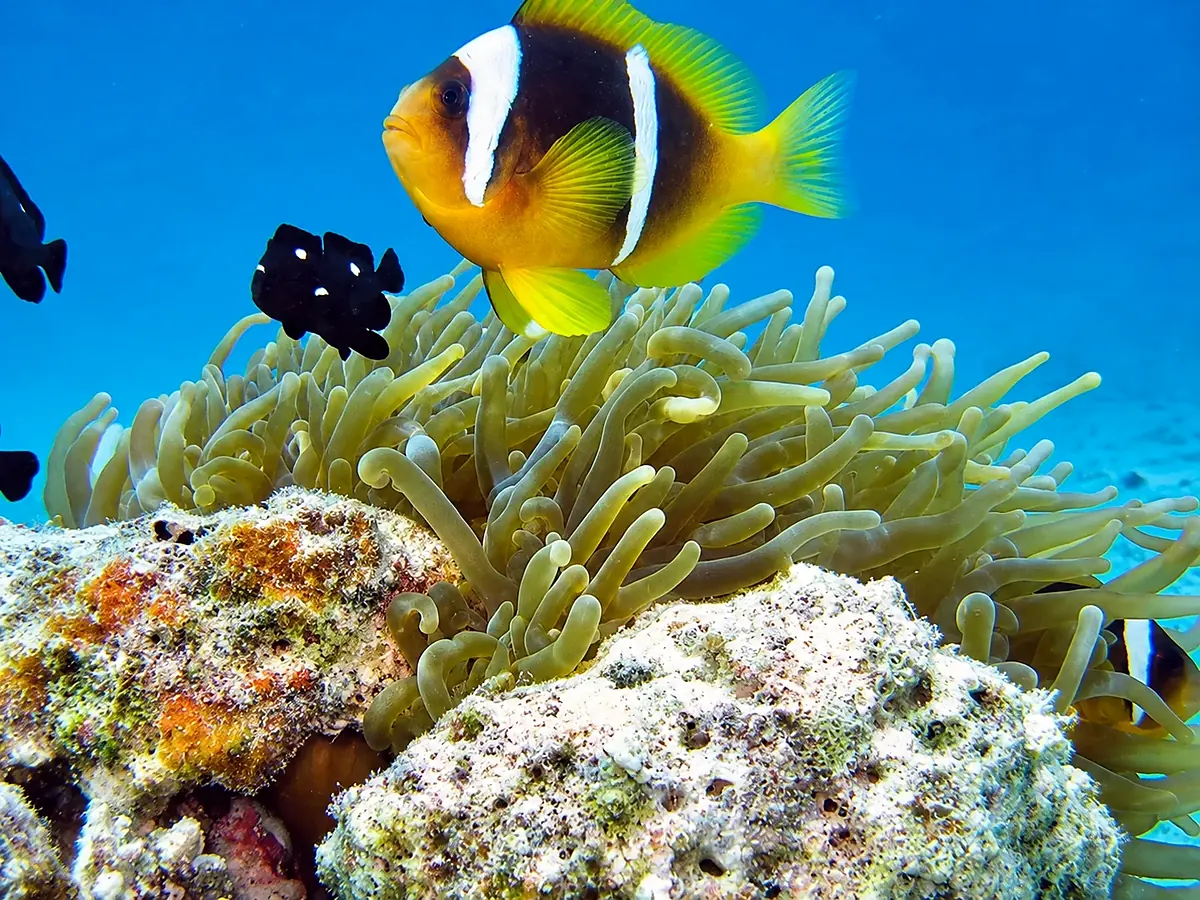
Generally, a dive here centers on the channel between the two reefs. There, anemones cover the bottom from about 2 m down to the sand, each one home to its own anemonefish.
The channel
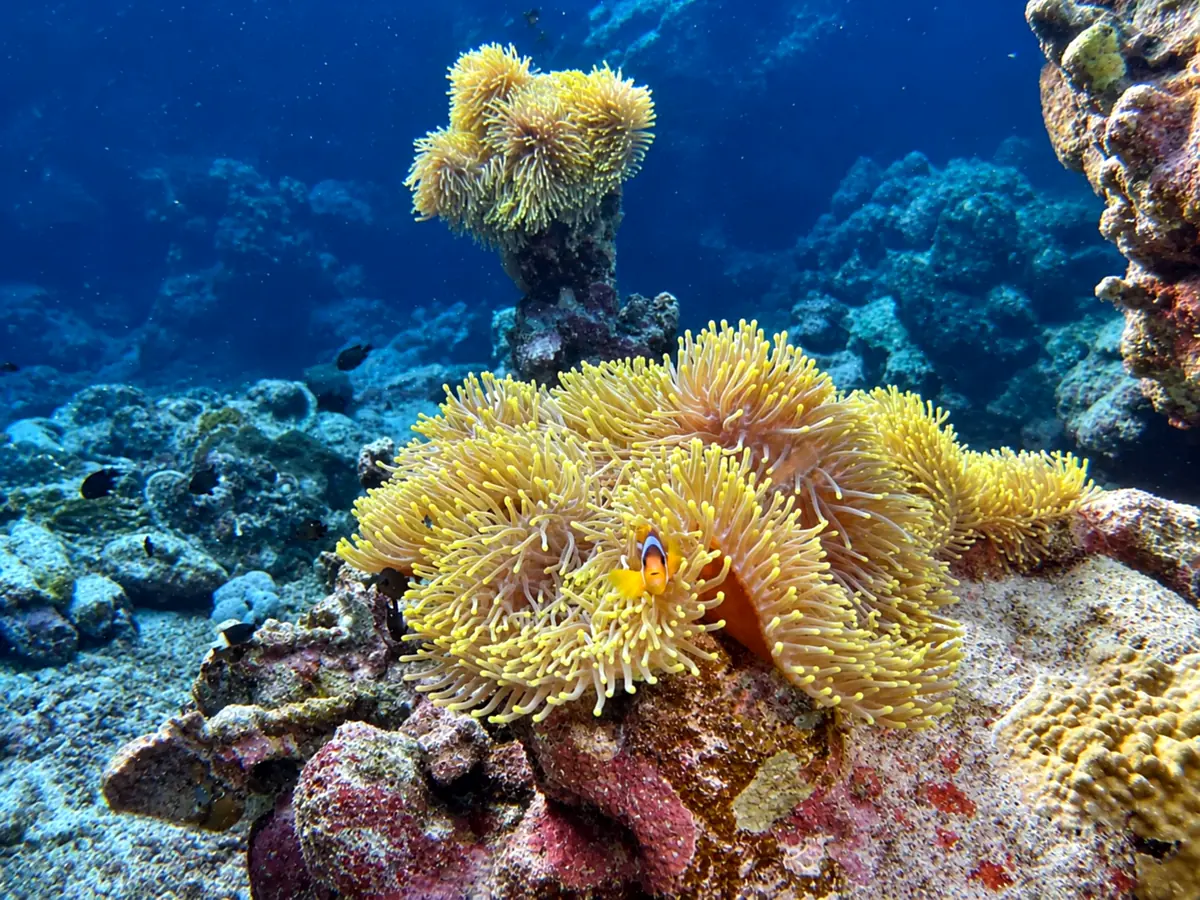
The highlight. Here, the anemones grow side by side, so the whole channel moves with fish.
The larger reef
The structure. In contrast, the bigger reef offers pinnacles, table corals and gorgonians.
The sand
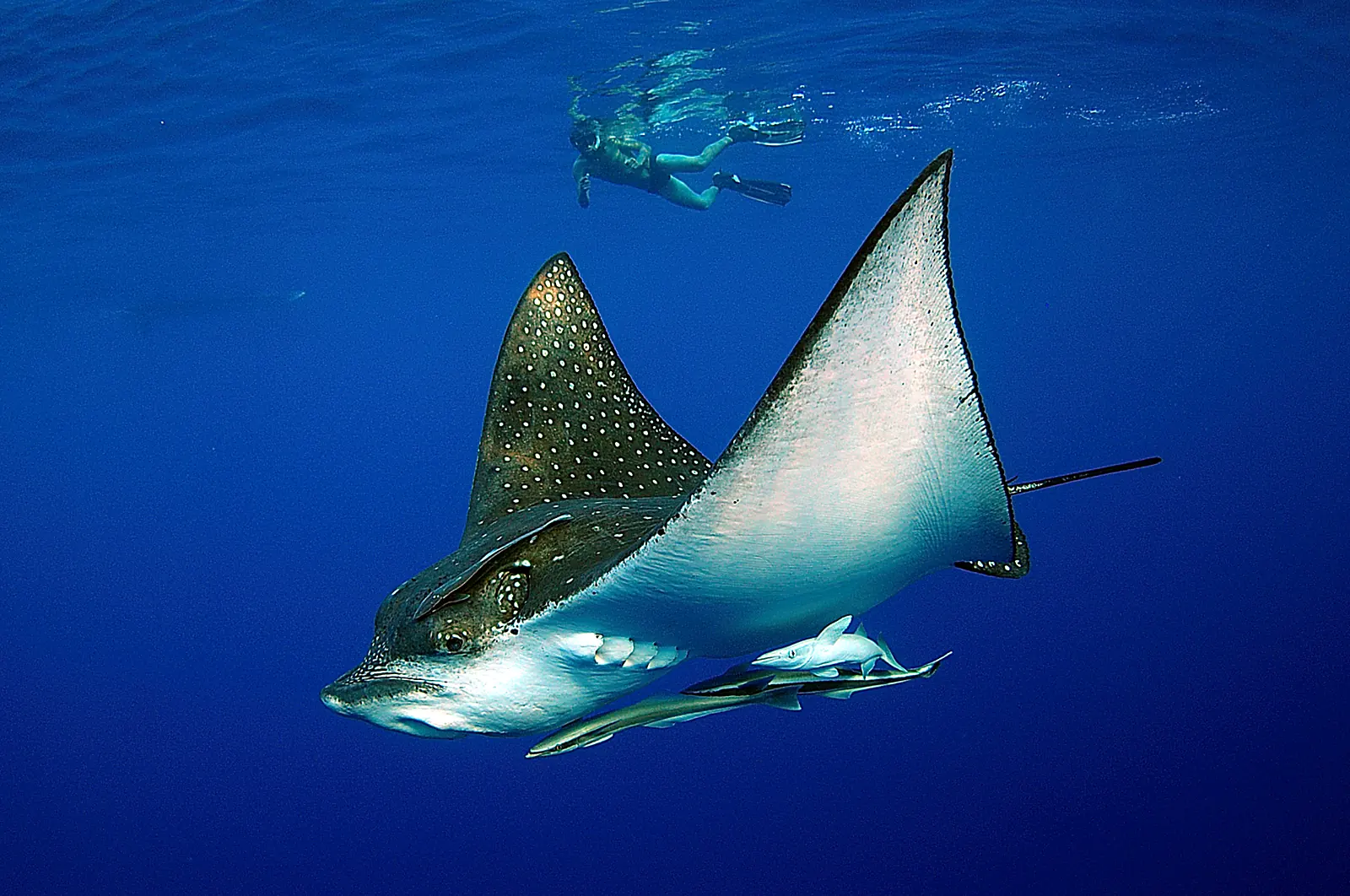
The edge. Meanwhile, the sand and coral bottom around the reefs is where rays may pass.
Where is Habili Sama?
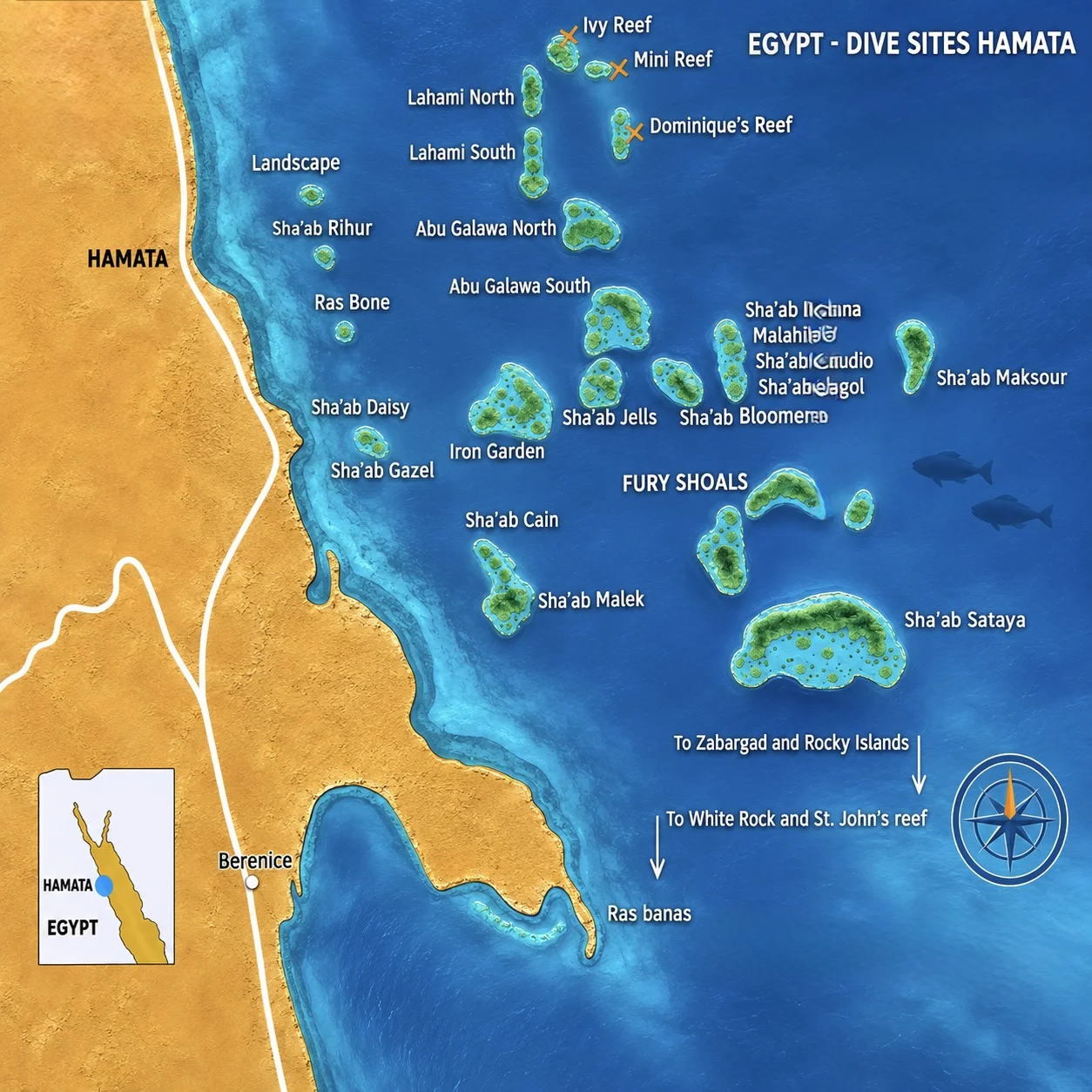
Specifically, the reef lies off the Hamata coast, about 9 km by boat. One published dive map gives about 24°18′36″N, 35°26′35″E, which is about 24.31°N, 35.443°E.
However, another guide lists a different position, so treat this as a reference only. For the nearby reefs, see the Hamata dive sites guide and the Fury Shoals guide.
How do you dive Habili Sama?
To begin with, the crew checks the sea, since the reef gives the boat little shelter. Then, the guide plans a slow dive around the reefs and through the channel.
A typical dive plan
The descent
The start. Firstly, you descend by the larger reef and look along its pinnacles.
The channel
The heart. Then, you drift slowly through Anemone City, taking time for photos.
The shallows
The finish. Finally, the shallow anemones make an easy, colorful safety stop.
Above all, never touch the anemones. After all, fins and hands damage them easily, and the anemonefish defend their homes.
What marine life lives at Habili Sama?
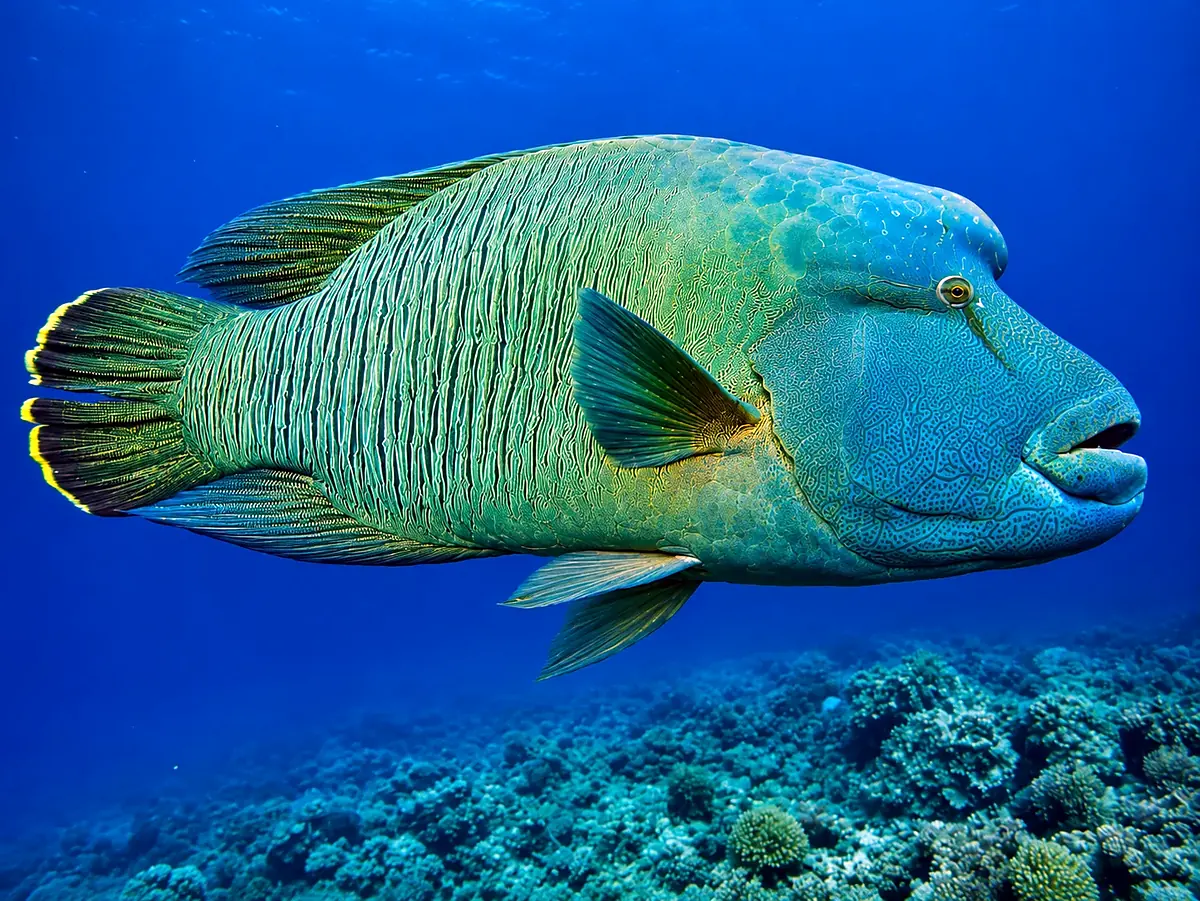
Besides the anemones, dive guides list a lively mix of reef and open-water fish. In particular, they mention turtles, Napoleon wrasse and eagle rays, although sightings are never guaranteed.
Big fish
Typically, tuna, amberjack and bluefin trevally pass by, and eagle rays glide over the sand.
Turtles and sharks
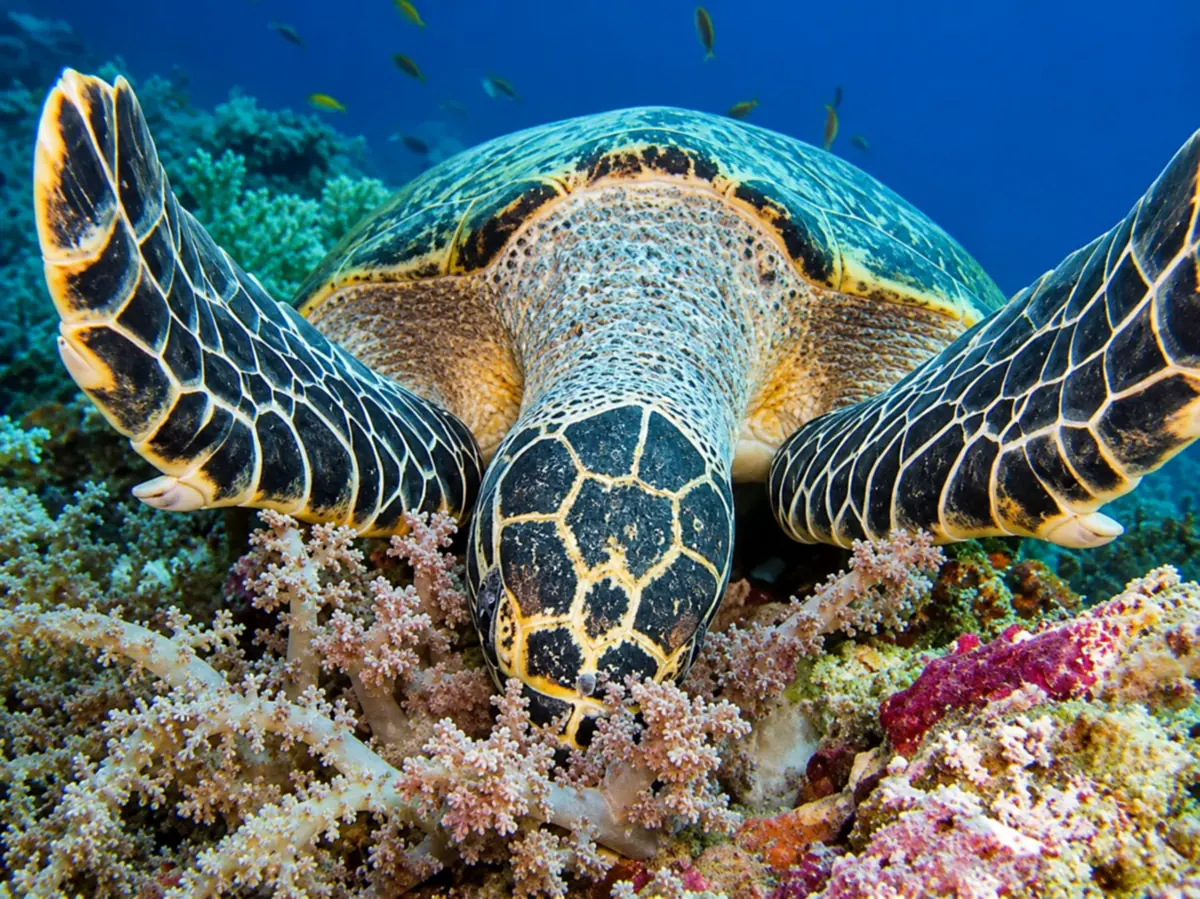
Likewise, hawksbill turtles feed on the reef, and whitetip reef sharks are possible.
Reef life
Finally, anemonefish, coral groupers, butterflyfish, bannerfish, sweetlips and lionfish live around the reefs.
Is Habili Sama suitable for beginners?
Often, yes. One guide rates it an easy dive for all levels, with limited current. However, some directories list it for advanced divers, and the open position means it depends on the sea.
In general, calm days suit Open Water divers with a guide, whereas rougher days suit divers with Advanced Open Water. For better photos, the Peak Performance Buoyancy course helps you hover over the anemones.
Before you dive Habili Sama
Firstly, listen to the briefing, stay with your guide and carry a surface marker buoy. Secondly, keep your fins high above the anemones.
Above all, follow our diving safety standards and the rules of HEPCA. We strongly recommend dive insurance such as DAN Europe in the remote south.
How do you get to Habili Sama?
In practice, boats reach the reef from Hamata in about 9 km, by liveaboard, zodiac or day boat. With us, the Hamata reefs can be a stop on our Daedalus and Fury Shoals route and on the Deep South St. John’s route. Guests board on Saturday after 15:00, and check-out is between 09:00 and 10:00 the next Saturday.
Usually, boats combine several reefs on the same day. Consequently, you can pair it with Shaab Lahami, the Said reef and the reefs of Fury Shoals.
Plan your Habili Sama dive trip
- Daedalus and Fury Shoals liveaboard — Daedalus Reef and the southern reefs.
- Deep South St. John’s liveaboard — the far south near the Sudanese border.
- What divers need on board — the packing checklist for a Red Sea safari.
- redsealiveaboard.net — Red Sea safari schedules and availability.
- All eight boats in our fleet can sail these routes: Sea Fox, Simba, Sea Treasure, Star Jet, Bismarck, C Echo II, C U and Ramadan 3.
Photo gallery from Anemone City
Other routes from Red Sea Diving
Generally, for a first liveaboard, the North Red Sea liveaboard keeps to the classic wrecks. On the other hand, the BDE liveaboard runs Brothers, Daedalus and Elphinstone, while the Elba Reef liveaboard reaches the far south. Meanwhile, the Red Sea liveaboard guide compares all eight routes.
Habili Sama: frequently asked questions
Where is Habili Sama?
In fact, it is a submerged reef off Hamata, about 9 km by boat. One dive map gives about 24°18′36″N, 35°26′35″E, but other guides list a different position.
Why is Habili Sama called Anemone City?
Because the channel between its two small reefs is covered in sea anemones, from about 2 m down to the sand at around 17 m.
How deep is the diving at Habili Sama?
The anemone field runs from about 2 m to about 17 m, and sources give a maximum depth of about 17 to 22 m.
Is Habili Sama good for beginners?
Often, yes, on calm days with a guide, since the current is usually limited. However, the reef is exposed, so the guide decides on the day.
How do you get to Habili Sama?
By boat from Hamata, or on our southern liveaboard routes. Moreover, all eight boats in the Red Sea Diving fleet can run these routes.
Hamata · Liveaboard · Anemone City
Dive Habili Sama with us
Simply tell us your dates, the number of divers, your certification level and your number of logged dives. Afterward, our team checks which southern departure fits your group before you commit to anything.


