
Safaga, Egypt · Abu Kifan
Abu Kifan A small Elphinstone, two plateaus and a wall into the abyss
GPS 26° 39.18′ N · 34° 06.58′ E
Abu Kifan is best described as a small version of Elphinstone: a long, narrow reef with slender plateaus running off the north and south ends. Because those plateaus drop straight into open water, this is one of the most renowned wall dives in the Red Sea.
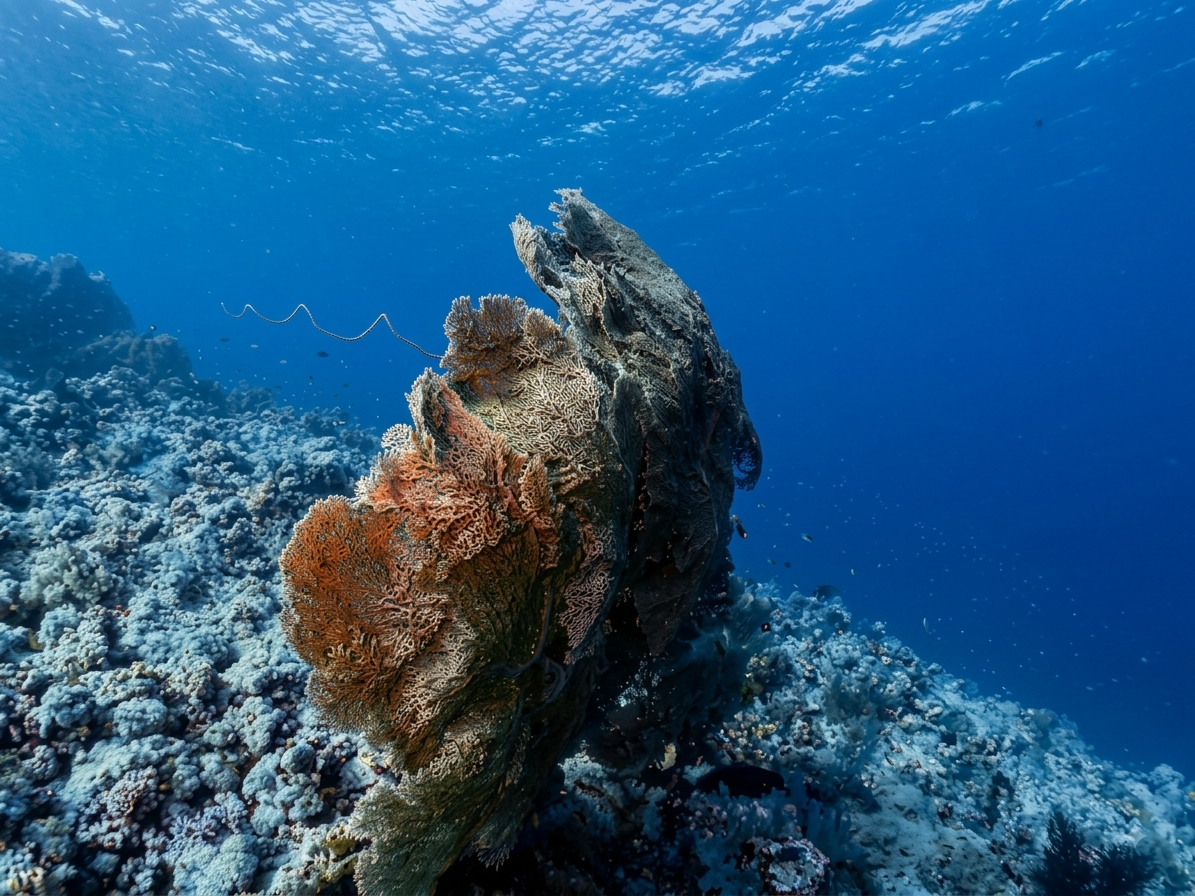
Abu Kifan at a glance
Roughly a hundred minutes out from Safaga harbour, Abu Kifan sits in open sea alongside Middle Reef and Panorama. Consequently it is fully exposed to the weather, and the day it can be dived is decided by the forecast rather than by the schedule.
The reef itself runs long and narrow on a north-south axis. Slender plateaus extend from each end, while the sides fall away into the abyss. Above all, that shape is what makes the site: you are never far from the edge, whichever route the current gives you.
Therefore some experience is genuinely required. The current here can be brutal, and the deep wall sections offer no bottom to settle on if a plan goes wrong.
Conditions in short.
Depth: reef top at 3m, plateaus 10–30m, then a drop into the abyss.
Location: around 100 minutes from Safaga, in the open sea.
Conditions: exposed to the weather, like Middle Reef and Panorama. The current can be brutal, and experience is required for the deep wall dives.
Best for: wall diving, big predators and underwater photography at any hour of the day.
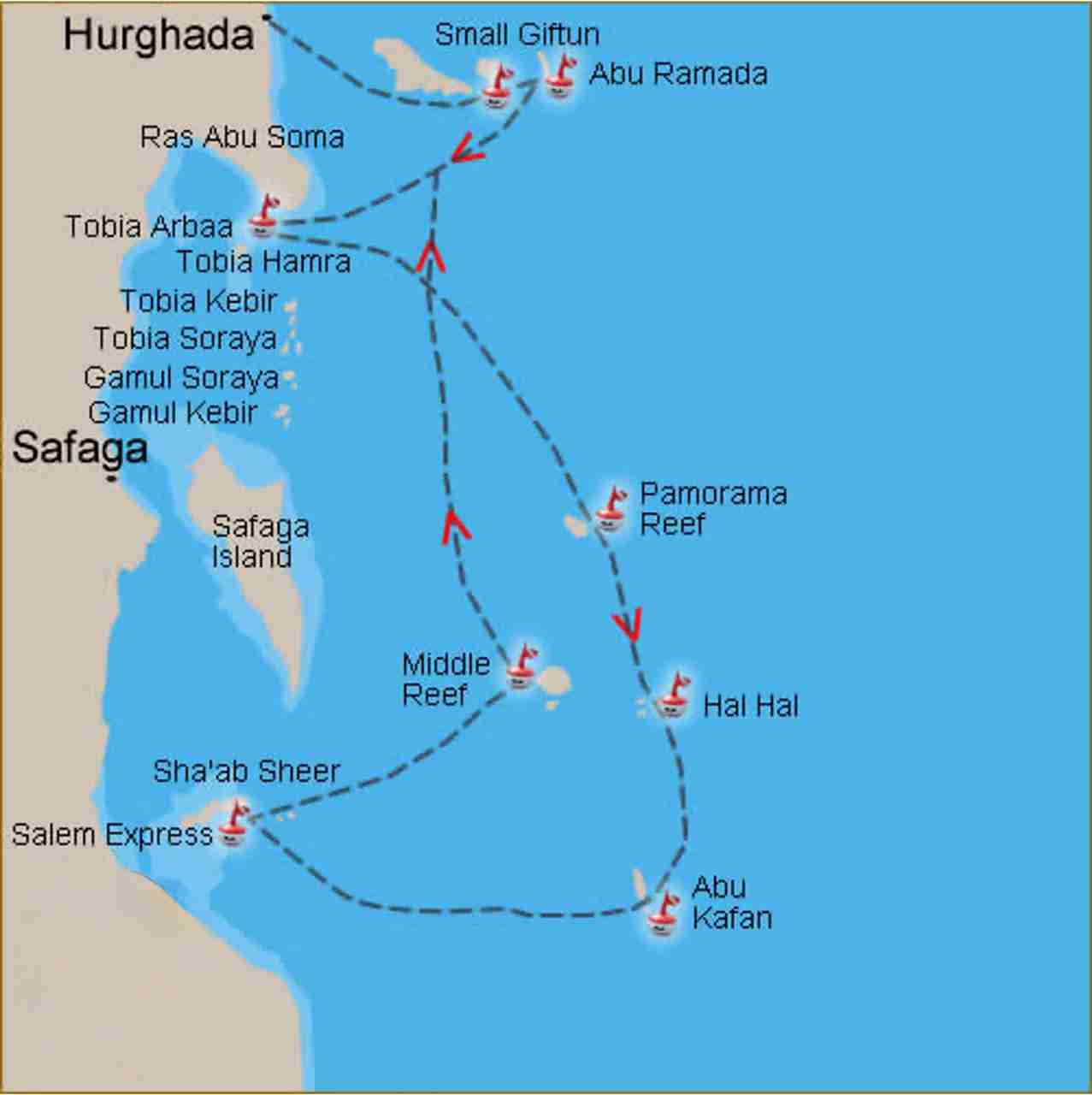
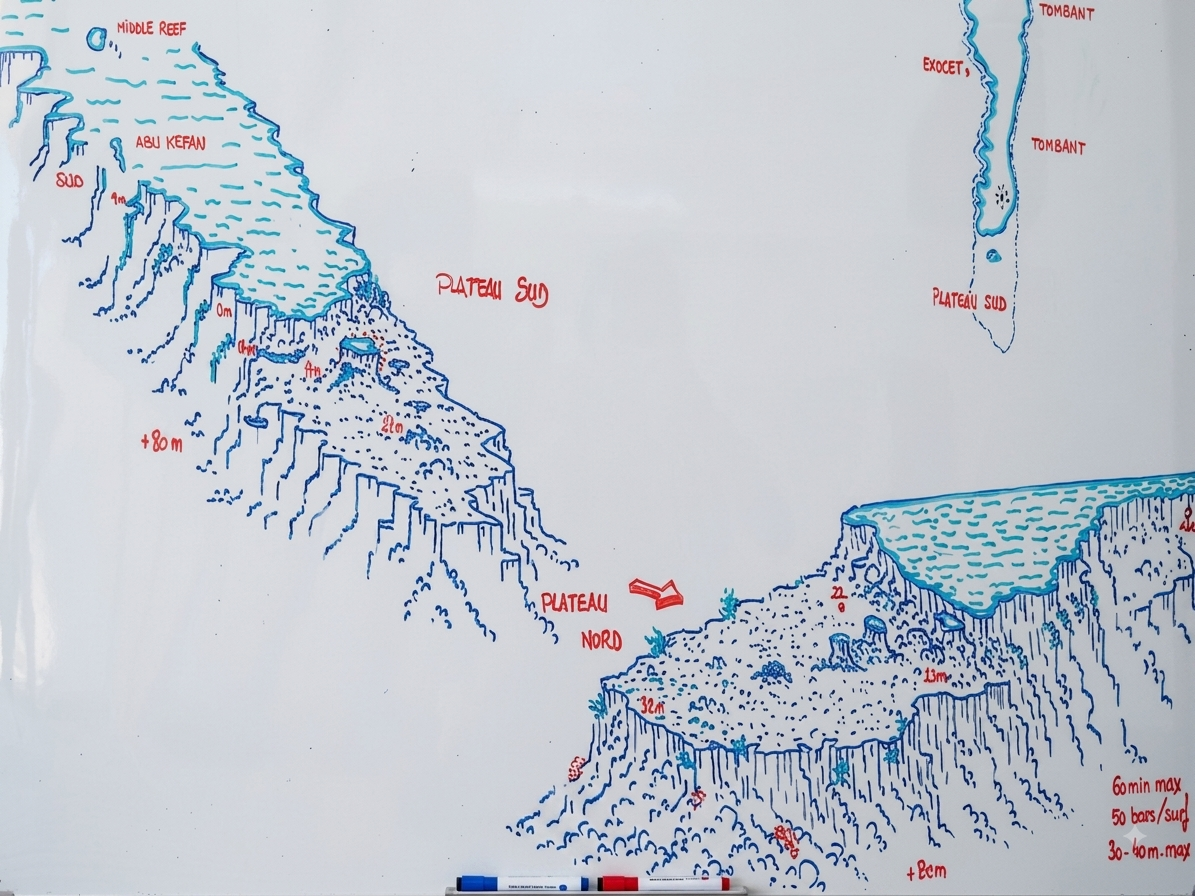
Dive plans for Abu Kifan
Two routes work here, and the current picks which one you get. Therefore the briefing on the boat matters more than the plan you were given the night before.
North plateau drift
In good conditions this is the natural choice. Drop on the north plateau and run along the side of the reef, either east or west, depending on the current and on where the sun is sitting. Consequently the same route photographs completely differently in the morning and in the afternoon.
The plateau is a world-class dive in its own right, with a genuine chance of big predators out in the blue rather than along the coral.
Watch for
- Firstly the current, which decides east or west before anything else
- Then the sun angle, since it changes the whole dive for a camera
- Also the plateau edge, where the reef stops and the abyss starts
- Finally the blue itself, because the predators are out there, not on the wall
South plateau from the mooring
A dive from the mooring over the south plateau is equally rewarding. It gives you a sheer drop-off at the edge between twenty-five and thirty metres, plus a set of beautiful pinnacles along the way.
Current and air consumption permitting, finish with a safety stop along the wall rather than out in open water. Since the shallow reef comes up to three metres, there is plenty to look at while you wait.
Watch for
- Firstly the drop-off edge, which arrives sooner than people expect
- Then the pinnacles, which reward a slow pass rather than a fast one
- Also your gas, because the wall stop only works if you have saved for it
- Finally the shallows at 3m, easily the best place to end the dive
Check the current on the surface, every time. Abu Kifan sits in open sea and the drift only works in one direction. If the check says the current has turned since the briefing, then the plan turns with it.
What to see at Abu Kifan
Schools of bannerfish and sweetlips hold themselves against the current along the reef. Meanwhile big groups of giant barracuda stake out the open water off the edge, and hundreds of bright red common bigeyes aggregate over the flats of the plateau.
Giant barracuda
Namely in big groups, holding station out in the blue rather than along the coral. Keep glancing away from the reef.
Common bigeyes
Also over the plateau flats, in their hundreds and bright red. Probably the single most photographed thing here.
Bannerfish and sweetlips
Meanwhile schooling along the reef itself, working hard against whatever the current is doing that day.
Black corals
Notably down the deeper sections of the wall, which is part of why the site has the reputation it does.
Soft corals and gorgonians
Certainly the decoration on every wall shot taken here, and the reason the plateau edge photographs so well.
Big predators
Above all a real possibility on the north plateau drift, though never a promise. Luck rather than a plan.
Why photographers rate this one so highly. The black corals, the soft corals and the gorgonians would be enough on their own. Add the fact that you can find a good angle at any hour of the day, and Abu Kifan becomes hugely popular with underwater photographers.
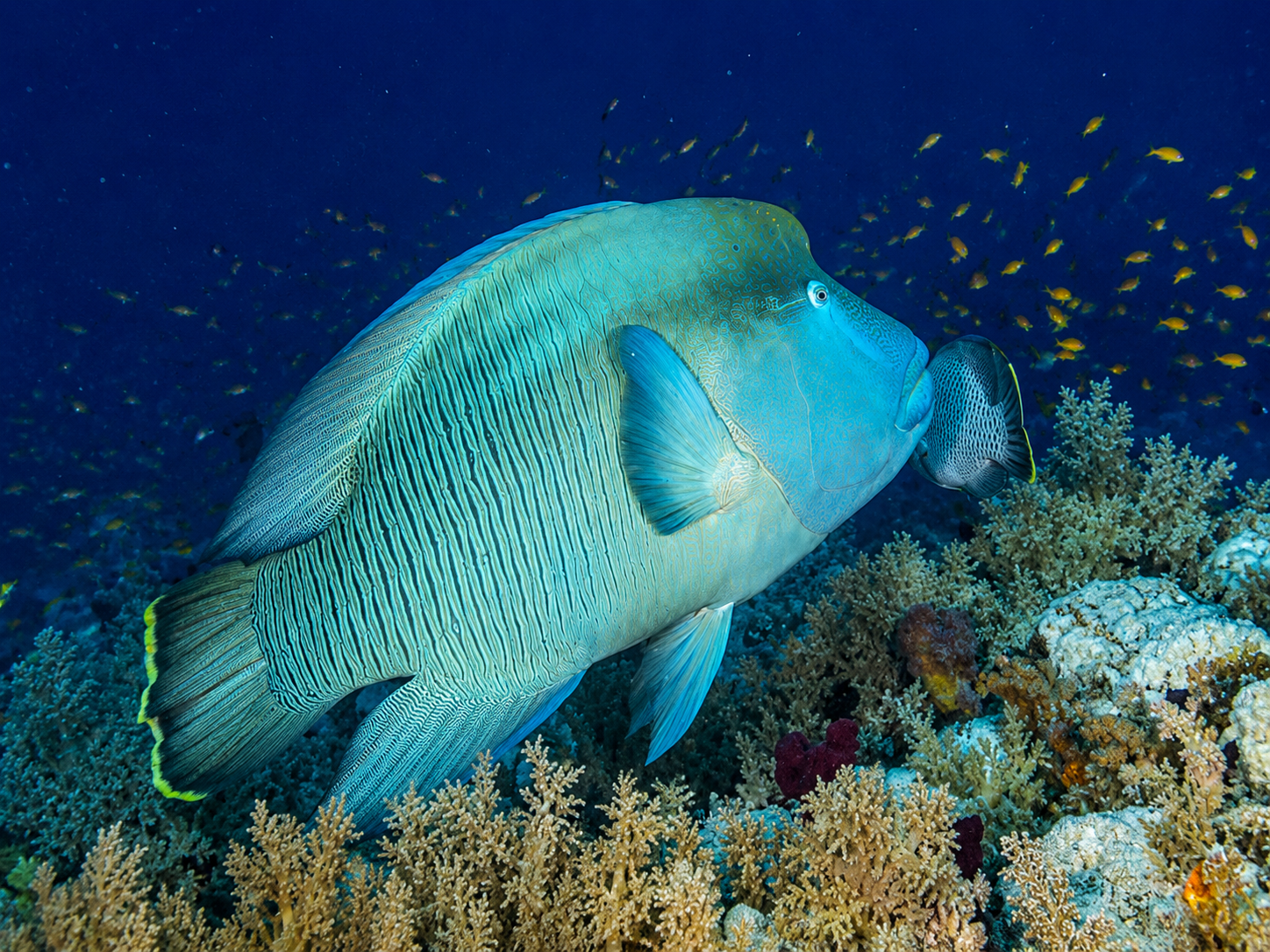
Planning a dive at Abu Kifan
Who this site suits
Divers with some experience behind them, ideally with a few Red Sea walls already logged. Although the shallows are forgiving, the wall is not, because there is no bottom to catch you.
Good buoyancy matters more here than depth qualifications. Since the plateau slopes continuously to its edge, a distracted diver drifts deeper without noticing, so watch the computer as carefully as the blue.
When to go
Diving runs all year, however the sea decides. Calm days open the whole reef, while wind closes it entirely and sends the boats back to the sheltered reefs behind Abu Soma instead.
Depth at a glance
More Safaga diving
- Safaga local dive sites — the fourteen local reefs, from the sheltered Tobia and Gamul gardens out to Middle Reef and Mahal Hala.
- Panorama — the other great offshore wall in the same water, seventy-five minutes out.
- Liveaboard dive techniques — negative entries, SMB deployment and exits in swell, which is what a wall like this asks for.
- What divers need on board — the packing checklist for a Red Sea safari.
- The boats that run these routes: Sea Fox, Sea Treasure, My Simba and Bismarck.
- redsealiveaboard.net — Red Sea safari schedules and availability.
Abu Kifan: frequently asked questions
How deep is Abu Kifan?
The reef top sits at three metres and the plateaus run between ten and thirty. Past the plateau edge the wall drops away into the abyss.
How long does it take to reach Abu Kifan from Safaga?
Around a hundred minutes by boat, although rough weather makes that longer and often cancels the trip entirely.
Is Abu Kifan suitable for a newly qualified diver?
Generally not. Some experience is required, because the current can be brutal and the deep wall gives you no bottom to settle on.
Which route is better, north or south?
Neither, and the current decides anyway. North is the drift with the better chance of big predators, while south gives you the drop-off and the pinnacles.
What is the current like?
Sometimes gentle, sometimes brutal. Therefore a proper check on the surface sets the route, rather than the plan given at the briefing.
Why do photographers rate Abu Kifan so highly?
Because of the black corals, soft corals and gorgonians, and because you can find a good angle at any hour of the day rather than only at noon.
Is Abu Kifan like Elphinstone?
It is often described as a smaller version of it. Both are long, narrow reefs with a plateau at each end and walls falling into open water.
What are you waiting for?
Book your adventure
Simply tell us which experience you want, then leave the rest to us. If you are unsure whether Abu Kifan suits your certification and recent logbook, our team will talk it through with you before you commit to anything.
Inquiry