
Rosalie Moller · Strait of Gubal, from Hurghada
The Rosalie Moller Bombed two nights after the Thistlegorm
27°28′13.5″ N · 33°50′03.6″ E · 17–50 m · Strait of Gubal
The Rosalie Moller was an old collier doing unglamorous work when the war caught up with her, and she went down at anchor in the Gulf of Suez on 8 October 1941. Two separate company histories later recorded her as salvaged and broken up. Consequently nobody looked for her, and she sat upright on the seabed, complete, for fifty-seven years.
The ship
Originally, Barclay Curle & Co of Glasgow launched her in January 1910 as the Francis, and she went straight into service with the Booth Shipping Line. Firstly she was a handsome vessel for her moment, built when sailing ships were barely out of living memory. Specifically, she measured 108.2 metres, displaced 3,960 tons, and her triple-expansion engines gave a respectable ten knots.
Then, in March 1931 the Lancashire firm Moller Line bought her and renamed her. Previously she had worked British and European coastal routes; afterwards her new owners put her on the China run, between Shanghai and Tsingtao.
By the late thirties the shipping lines could all read the situation. War meant losses, and loss or damage from war remains an exclusion on almost every insurance policy. Consequently owners either called their vessels home or gambled on keeping them abroad. Moller Line brought her back, and by 1940 she was in Liverpool under Captain James Byrne.
Her master
Notably, Byrne was a brash Australian who wore a bush hat and kept a large wooden pipe in his teeth while he issued orders. Certainly he was a hard man to sail under; the crew jumped when he barked. Nevertheless, they were unanimous that if things went wrong they wanted nobody else on the bridge.
She was old and getting slower. Her chief engineer nursed the machinery from one crisis to the next, and by 1940 she managed only seven knots. Even so, that was fast enough for a collier, and slow ships were spared the convoys that were being slaughtered elsewhere.
| Type | Cargo steamer, later a collier; British |
| Built | 1910, Barclay Curle & Co, Glasgow, as the Francis |
| Renamed | March 1931, on sale to the Moller Line |
| Dimensions | 108.2 m, 3,960 tons |
| Engines | Triple expansion, 10 knots when new, 7 by 1940 |
| Lost | 0140 hrs, 8 October 1941, at anchor |
| Depth | 17 m at the mast head, 50 m at the seabed |
Why the Rosalie Moller carried Welsh coal
Usually, she spent the war carrying up to 4,500 tons of best Welsh coal to whichever naval port needed it, loading regularly at Cardiff and delivering anywhere from Rosyth to Portsmouth, occasionally as far as Gibraltar. That sounds like drudgery. In fact it was strategically significant.
Namely, the Royal Navy had known for decades that Welsh coal burned brighter and produced markedly less smoke, even if nobody could explain precisely why. For a fleet still partly coal-fired, that meant two things at once: more miles from every ton, and a ship that could see the enemy before the enemy saw her. Consequently a slow old collier was doing work that mattered.
The little ships
- First, Britain lost merchant ships to aircraft, submarines and surface raiders
- Also to mines, to internment, and occasionally to plain accident
- Meanwhile the Atlantic and Murmansk convoys took the heaviest losses of all
- Consequently older, slower vessels were kept for home and colonial routes
- Finally, that is exactly the work that kept British trade moving
The scale is hard to picture. At the National Maritime Museum in London, the roll of merchant seamen lost with their ships in those six years runs to three volumes.
The last voyage of the Rosalie Moller
Firstly, in July 1941 her engines were given a full overhaul, and at the end of that month she loaded 4,680 tons of Welsh coal. Her orders were unusual: sail independently for Alexandria. Because the Mediterranean was closed to a lone merchant ship, the only route left ran the long way round, south of Africa.
Above all, Malta was the reason. The Royal Navy’s Force K was operating from the island under constant siege, and it needed fuel at both ends of the Mediterranean, at Gibraltar and at Alexandria. Warships could generally fight their way through. Merchantmen, by contrast, rarely survived the air and submarine attacks along the northern coast, which the Axis then held almost entirely.
Subsequently, she left Durban on 11 September, worked up the east African coast, called briefly at Aden and finally entered the Red Sea. On reaching the Gulf of Suez she was assigned Safe Anchorage H and told to wait. Byrne let go the starboard anchor with some two hundred metres of chain, the current pushed her gently back onto good holding ground, and the engine was shut down. Afterwards there was nothing to do but wait for a place in the canal.
The queue was long. Two ships had collided in Suez Bay and all but blocked the entrance to the canal. That is why the Thistlegorm, carrying a cargo the army badly needed, sat at Safe Anchorage F for a full fortnight before she was lost.
The night of 8 October 1941
Previously, until that week the safe anchorages had genuinely been safe. No enemy ships came this far south, and enemy aircraft almost never did. Then German intelligence picked up a report that a large troopship, possibly the Queen Mary, was due through the Suez Canal carrying twelve hundred British soldiers for North Africa.
Specifically, Heinkel He 111 crews of II/KG 26, flying from Crete and newly trained in night operations, were sent to find her and sink her. Late on 5 October two of them crossed the northern Egyptian coast heading southeast. Instead of a troopship they found the Thistlegorm, and at 0130 on the 6th they sank her, setting off much of her ammunition. Consequently the sky lit up, and for a moment every other ship at anchor was visible from the air.
Naturally, everyone understood what that meant. Forty-eight hours later, at 2258 on the night of the 7th, two more Heinkels crossed the same stretch of coast on the same heading. Byrne, who slept in a bunk on the bridge, was woken by aircraft engines and stepped outside. His ship had nothing to shoot back with. As the aircraft came in low and released, he is said to have shaken his fist at it.
The War Diary entry
Notably, Byrne’s own report, in the now declassified War Diary, is characteristically short: “Two bombs released, one striking No 3 Hold at 0045 hrs.” She sank at 0140 on 8 October 1941, with two of her crew missing.
Meanwhile, two days afterwards the Admiralty sent a secret signal to Washington about salvage prospects, listing the ships now on the bottom in the Gulf of Suez and the Strait of Gubal. It lists the Thistlegorm at 4,898 tons, badly damaged by bombing, and the Rosalie Moller at 3,963 tons, bombed. Between the two of them, eleven men were lost in forty-eight hours.
How the Rosalie Moller was lost twice
Unfortunately, interest in her faded almost immediately, and for a reason that had nothing to do with the ship. Specifically, after the war raw materials were desperately short, so wrecks throughout the Gulf of Suez were raised for scrap or cleared as hazards to navigation. Understandably, the people doing that work had other priorities than careful identification, and a great many hulls were logged as the wrong ship.
Consequently two independent records, the histories of the Booth Line and of the Moller Line, both state that the Rosalie Moller was raised and broken up after the war. In reality she never was. The ship lay upright on the seabed the whole time, and that single clerical error kept divers away from her for over half a century.
Divers out of Hurghada relocated her in December 1998, working from a position that the skipper, Captain Mohammed Hassan, had been given by his father. The elder Hassan knew this water better than anyone: he had found the Thistlegorm in 1963. Remarkably, the boat left at half past six in the morning, began searching at eight, and had her the same day.
They were not the first. It became obvious on the first dive that somebody had been there before and had kept quiet about it while they stripped the bridge. Whoever they were, the wreck is permanently poorer for it, and so is everyone who dives her now.
Diving the Rosalie Moller
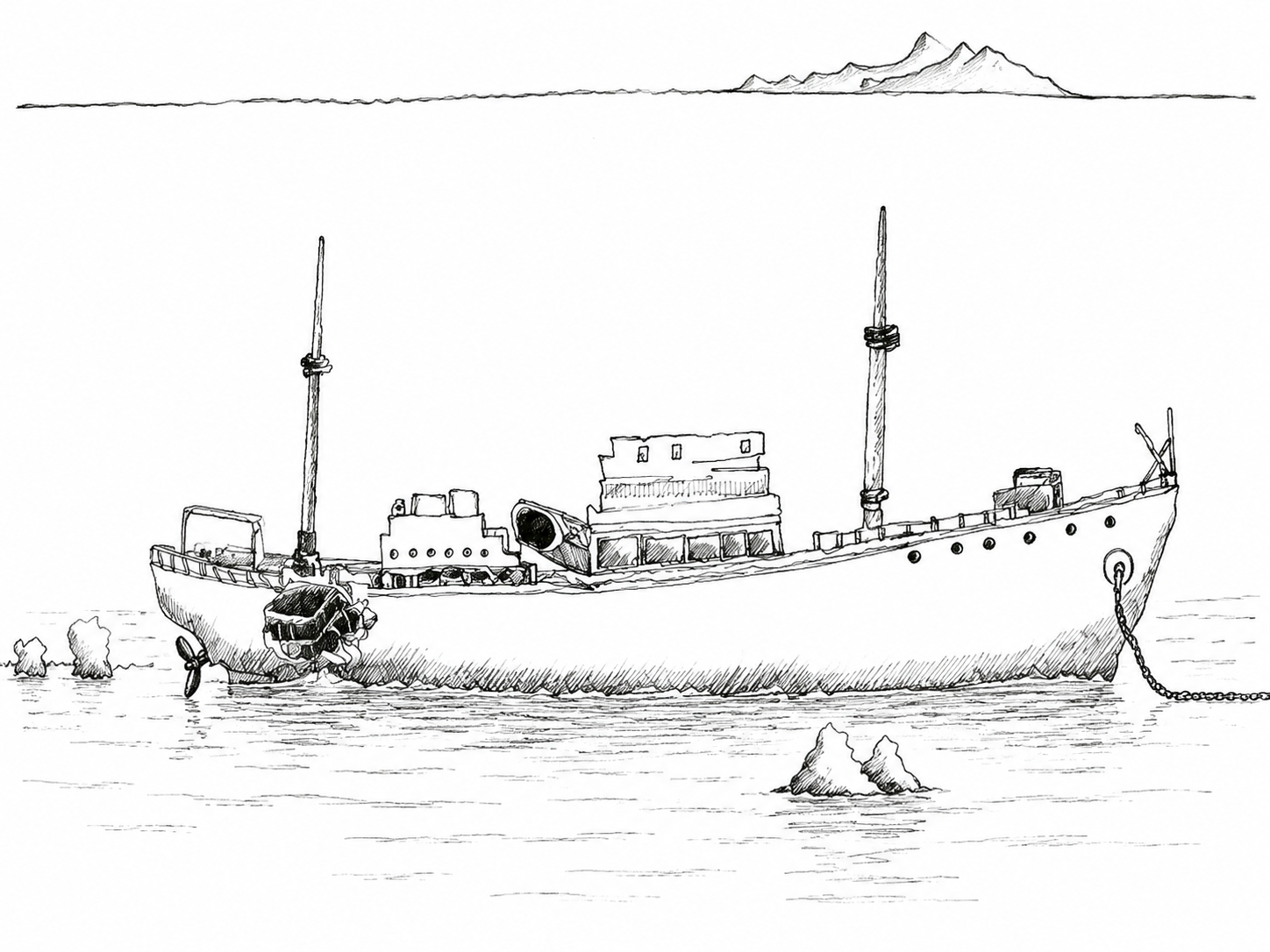
The Rosalie Moller sits upright on an even keel, which is unusual and makes her instantly readable as a ship rather than as wreckage. Above all, though, note the numbers before anything else: her mast head is at seventeen metres and her seabed at fifty. Only the very top of her lies inside ordinary recreational limits.
The bow and the forward mast
First, the first thing that comes out of the gloom is the forward mast, with its mast-head lamp still in place at seventeen metres. Below it the bows sit at thirty-nine. Meanwhile, the starboard anchor is deployed exactly as Byrne left it, its chain running down to the seabed at fifty metres and away out of sight, while the port anchor is still fully retracted.
The decks and the galley
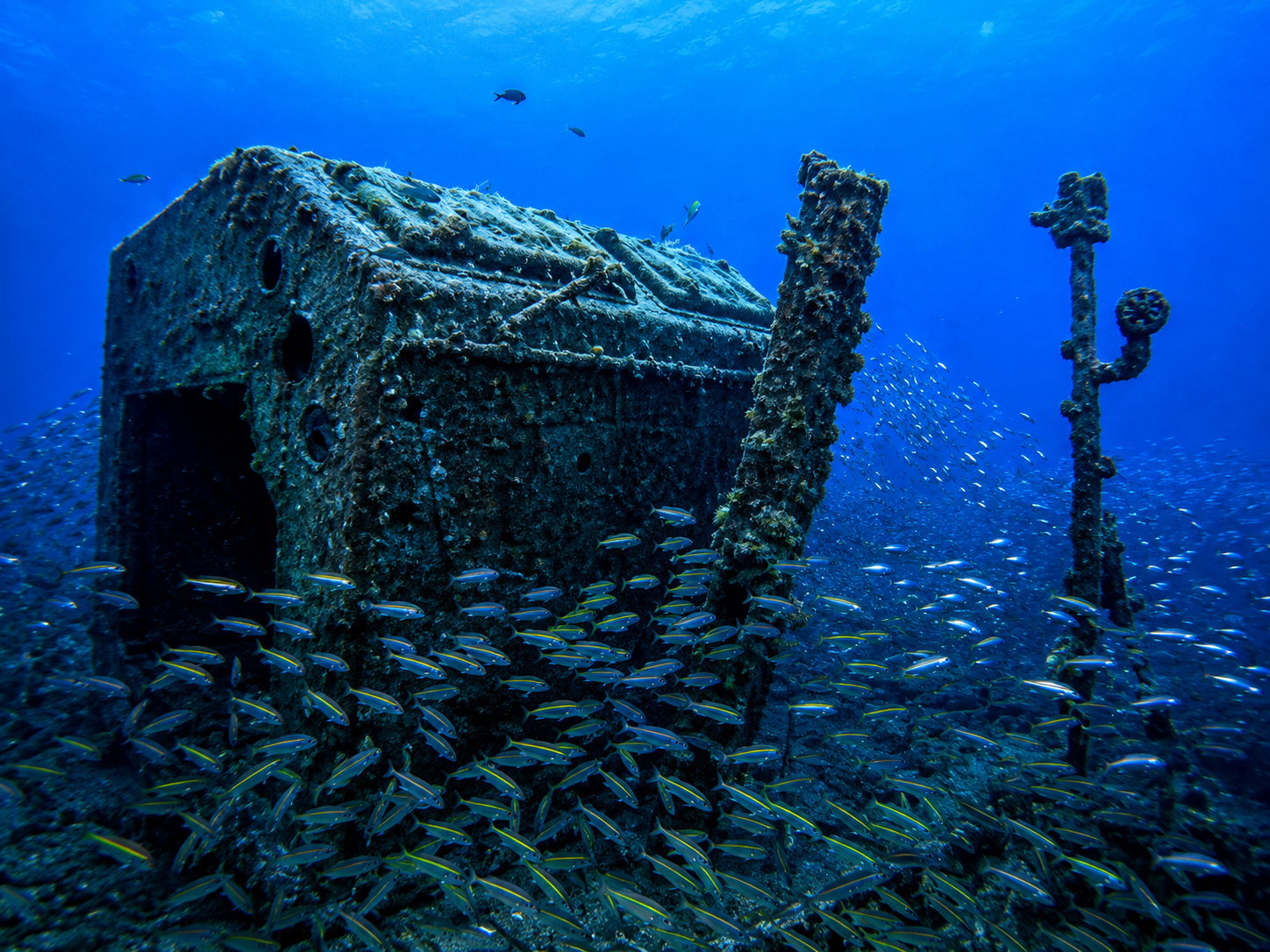
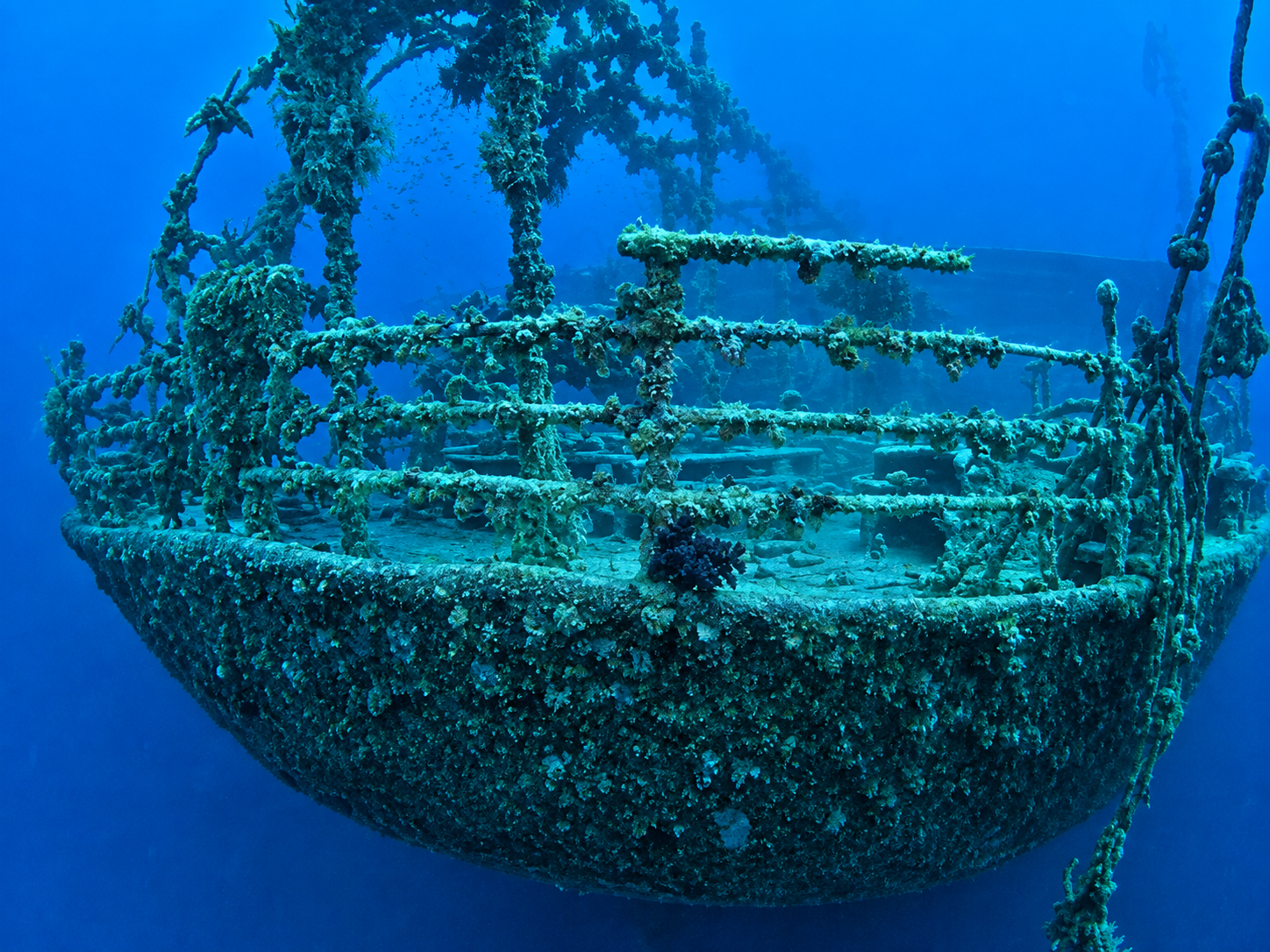
Firstly, railings, accommodation, winch houses, blocks, winches and hawsers are largely where they were. Notably, the whole ship still looks tidy, which says something about the man who ran her. Then, the cargo hatches have gone, so the coal is visible in the holds, untouched. Meanwhile the wooden decking has rotted away entirely, yet every porthole survives, and not one pane of glass is broken.
Besides, in the galley, pots and pans still hang above a large stove, concreted to the bulkhead by decades of marine growth. Frankly it is the detail that stays with most divers longer than the scale of the ship does.
The bridge, and what is missing from it
Sadly, this is where the visit turns disappointing. Gone are the bell, the telegraphs, the compass and the binnacle, while the captain’s safe lies on the floor, forced open. Doubtless somebody removed them for research. Nevertheless, a bell can be read perfectly well where it hangs, and every diver since has lost the chance to see it there.
The funnel and the stern
Next, aft of the bridge the funnel still stands, listing only very slightly to port. A small ladder runs up its leading edge to a magnificent copper steam whistle. Also, beyond it the rear mast is intact and the lifeboat davits are swung out, exactly as they were when the boats went over the side.
Her steering gear sits at thirty-five metres and can be examined in detail. Below it the rudder lies at forty-five, hard over to starboard, and one of the four propeller blades is missing. Both rear quarters show external damage, slightly worse to starboard. Curiously, the damage that actually sank her is barely noticeable, and none of the coal seems to have spilled.


Conditions on the Rosalie Moller
Notably, she is not on the regular safari routes, which is part of her appeal and part of the logistics problem. Unfortunately she also lacks the visibility people expect of the Red Sea: fifteen to twenty metres is normal here rather than exceptional, and on the deeper parts of the ship that matters.
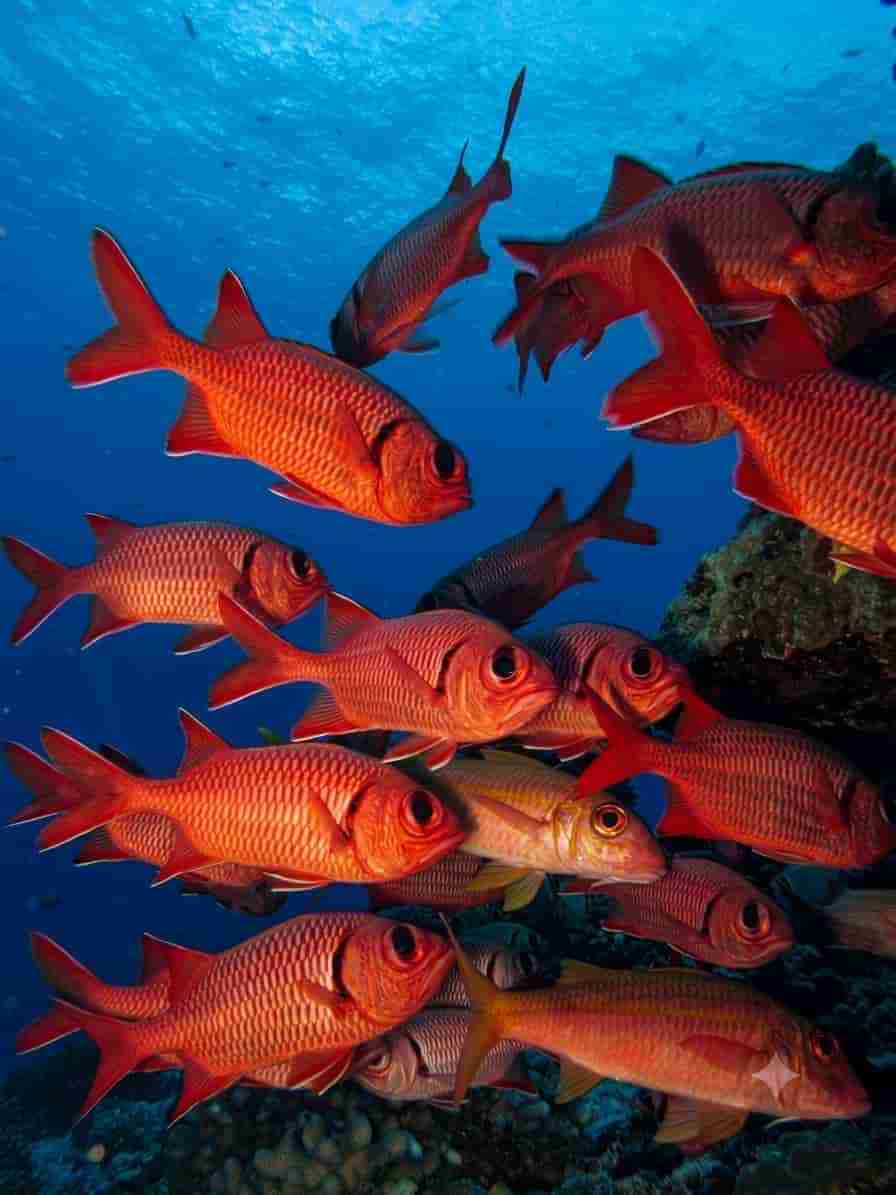
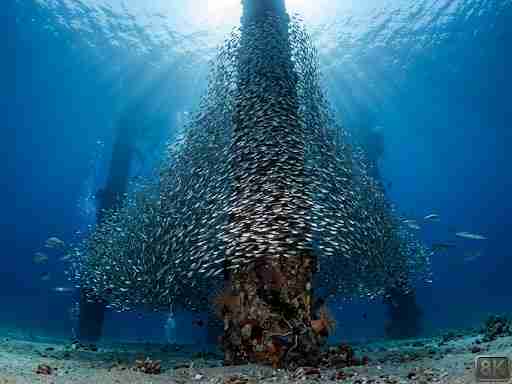
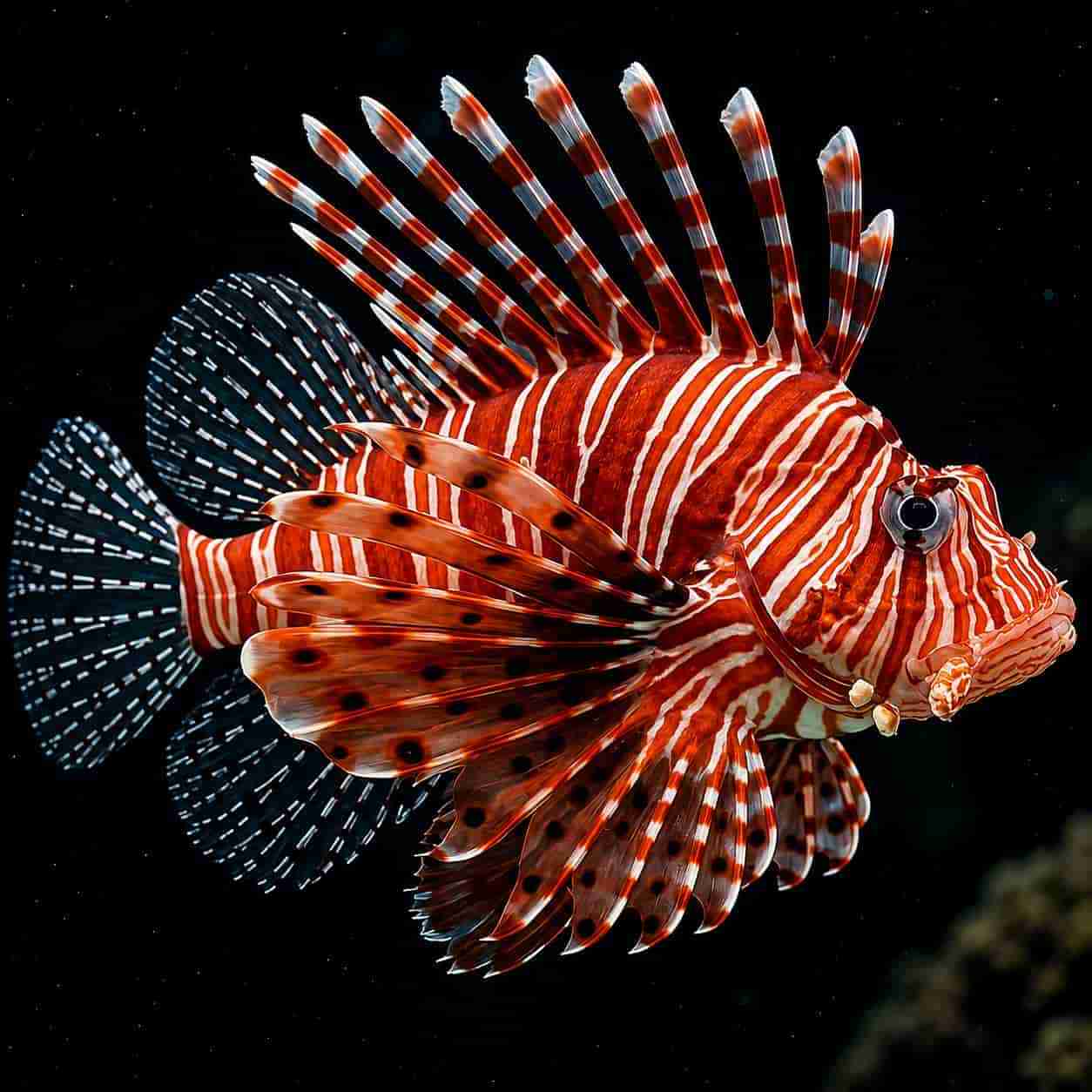
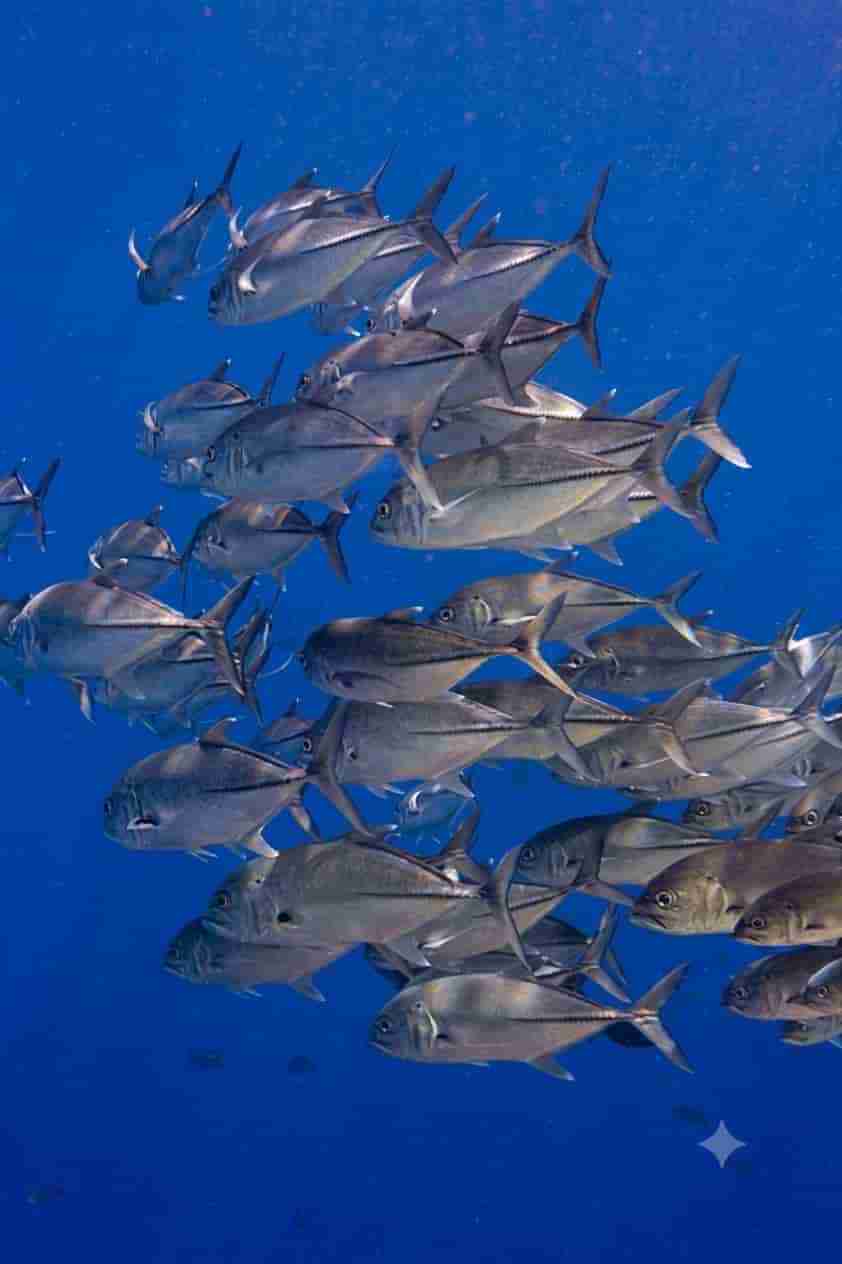
Overall, the life, by contrast, is remarkable. Coral has taken hold across the decks, and the fish are prolific. First thing in the morning, jacks and tuna work the big shoals that gather around the hull. Later, towards evening those shoals thin out and the largest groupers are what remains.
Practical notes
- First, treat this as a deep dive and plan it as one, without exception
- Then remember that only the masts sit inside normal recreational depth
- Also expect 15 to 20 metres of visibility rather than Red Sea postcard water
- Morning gives the best of the fish, and the best of what light there is
- Meanwhile the wreck rewards two or three dives far more than one
- Consequently nitrox, a torch and a conservative plan all earn their place
- Finally, nothing is touched and nothing is taken; she has lost enough already
Be honest with yourself about the depth. The bows at thirty-nine metres and the rudder at forty-five are beyond where most recreational training ends. If those numbers are outside your certification or your recent experience, dive the upper structure and leave the rest. The ship is not going anywhere.
Planning a dive on the Rosalie Moller
Getting there
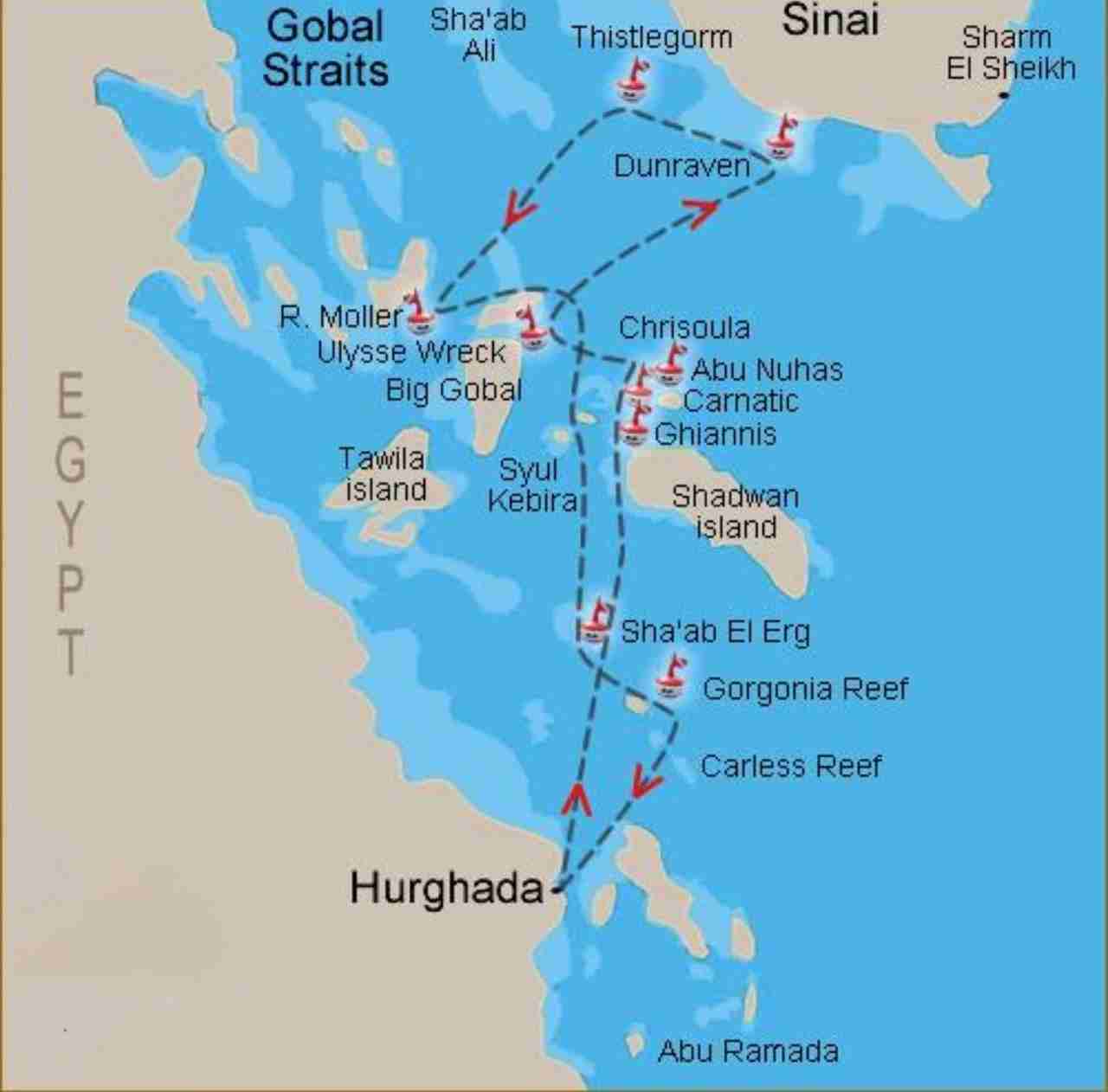
Boats reach the Rosalie Moller from Hurghada. She lies at 27°28′13.5″ N, 33°50′03.6″ E, in the Strait of Gubal off Gubal Island, in the same stretch of water as the Barge and the Ulysses. Because she is off the standard itineraries, getting to her usually means asking for her specifically rather than assuming she is on the route.
Two ships, two nights. Diving her makes far more sense alongside the Thistlegorm than on its own. One squadron sank both of them, forty-eight hours apart, and the contrast between a wreck stripped by salvage attention and one left alone by a clerical error is the whole point.
Useful links
- The Strait of Gubal — Dunraven, Kingston, Ulysses and the Barge.
- Abu Nuhas — four wrecks on one reef, all of them shallow.
- The Thistlegorm — sunk by the same squadron, two nights earlier.
- Safety standards and emergency care — briefings, oxygen and chamber contacts.
- Red Sea Liveaboard — safari routes and boats across the Egyptian Red Sea.
- Divers Alert Network (DAN) — insurance and emergency guidance.
Frequently asked questions
How deep is the Rosalie Moller?
The Rosalie Moller has her mast head at seventeen metres, the stern gear at thirty-five, the bows at thirty-nine, the rudder at forty-five and the seabed at fifty.
Is she suitable for a recreational diver?
Frankly, only in part. The masts and upper structure are workable, whereas the bows, the stern and the rudder sit beyond where most recreational training ends.
Why was she never found until 1998?
Because two separate company histories recorded her as raised and broken up after the war. She never was, so nobody was looking.
What is still on board?
Namely, her full cargo of Welsh coal, the galley pots above the stove, every porthole, the copper steam whistle and the deployed starboard anchor.
What was taken from her?
The bell, the telegraphs, the compass and the binnacle, along with whatever was in the captain’s safe, which was forced open before 1998.
How is the visibility?
Generally, modest by Red Sea standards, usually fifteen to twenty metres. Given the depths involved, that is worth factoring into the plan.
What are you waiting for?
Book your adventure
Tell us which experience you want to enjoy and leave the rest to us. If you have questions, or you are still choosing between routes, our team will talk it through with you before you commit to anything.
Inquiry