Shadwan Channel · Abu Nuhas
Abu Nuhas Four wrecks on the ship trap reef
Altogether, Abu Nuhas has caught more ships than any other reef in the Egyptian Red Sea. It sits barely under the surface in a busy channel, and over a century it has taken steamers, cargo ships and at least one vessel nobody has convincingly identified. Consequently four of them now lie shallow enough to dive comfortably, side by side along one slope.
Where Abu Nuhas lies
Firstly, Sha’ab Abu Nuhas sits north of Hurghada, off the northern coast of Shadwan Island, the largest island in the Red Sea, inside the Shadwan channel. Firstly, that position is the whole problem: the reef lies submerged in water that shipping has used for a century and a half.
Consequently it has brought passing ships more than a fair share of bad luck. Specifically, five cargo wrecks lie along the northern slopes, and by other counts at least seven ships have gone down here altogether. Nevertheless, only four of them suit recreational diving, and those four are what this page covers.
Because everything sits shallow, Abu Nuhas is unusually forgiving for a wreck site. Indeed, even a diver new to wrecks can work the outside of all four hulls without going deep. Meanwhile the reef itself carries excellent hard and soft coral, so the diving does not stop when the metal does.
The four, west to east
- First, the Giannis D on the northwestern corner, lost in 1983
- Then the Carnatic, a Victorian steamer down since 1869
- Next the wreck of the tiles, generally called Chrisoula K
- Finally the wreck of the lentils, the Kimon M, at the eastern point
- Meanwhile the reef between them is worth time in its own right
Each wreck has its own page. The write-ups below cover the dive in full; the individual pages go further into the ships themselves. Namely, links sit at the end of each card.
Jump to a wreck
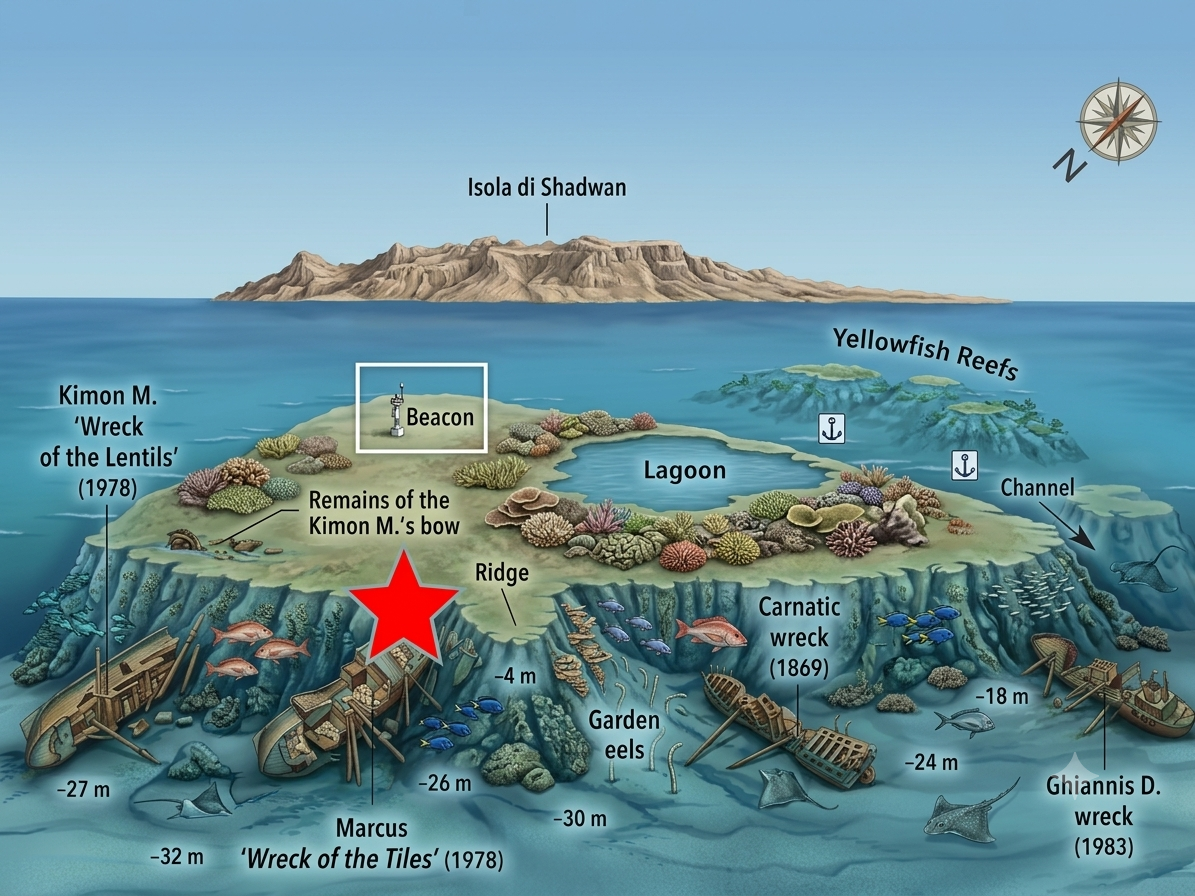
The four wrecks of Abu Nuhas
Overall, altogether they span more than a century of shipping, from a P&O steamer under sail and steam to a Japanese-built cargo ship of the 1960s. Above all, each one is a different kind of dive.
The Giannis D
27°34.630′ N · 33°55.410′ E · to 27 m
Firstly, the Greek cargo ship Giannis D had sailed from Rijeka, in Croatia, bound for Jeddah and Hodeida with a cargo of timber. On 19 April 1983 she struck the northwestern corner of Abu Nuhas, most likely because the captain’s attention wandered for a moment. Fortunately, she did not go down at once, and the Egyptian vessel Santa Fe took off every member of the crew. Saving the hull, however, was beyond anyone.
Originally, she had been launched in Japan in 1969 as the Shoyo Maru, 99.5 metres long and 16 wide, of 2,932 registered tons, with a six-cylinder engine of 3,000 HP giving her twelve knots. Subsequently, sold in 1975 she became the Markos, then in 1980 the Greek firm Dumarc Shipping and Trading Corporation bought her and renamed her again. Notably, the new owner painted a large D on the funnel, which is still there, and that letter is why divers spent years calling this wreck the Dana.
Diving her
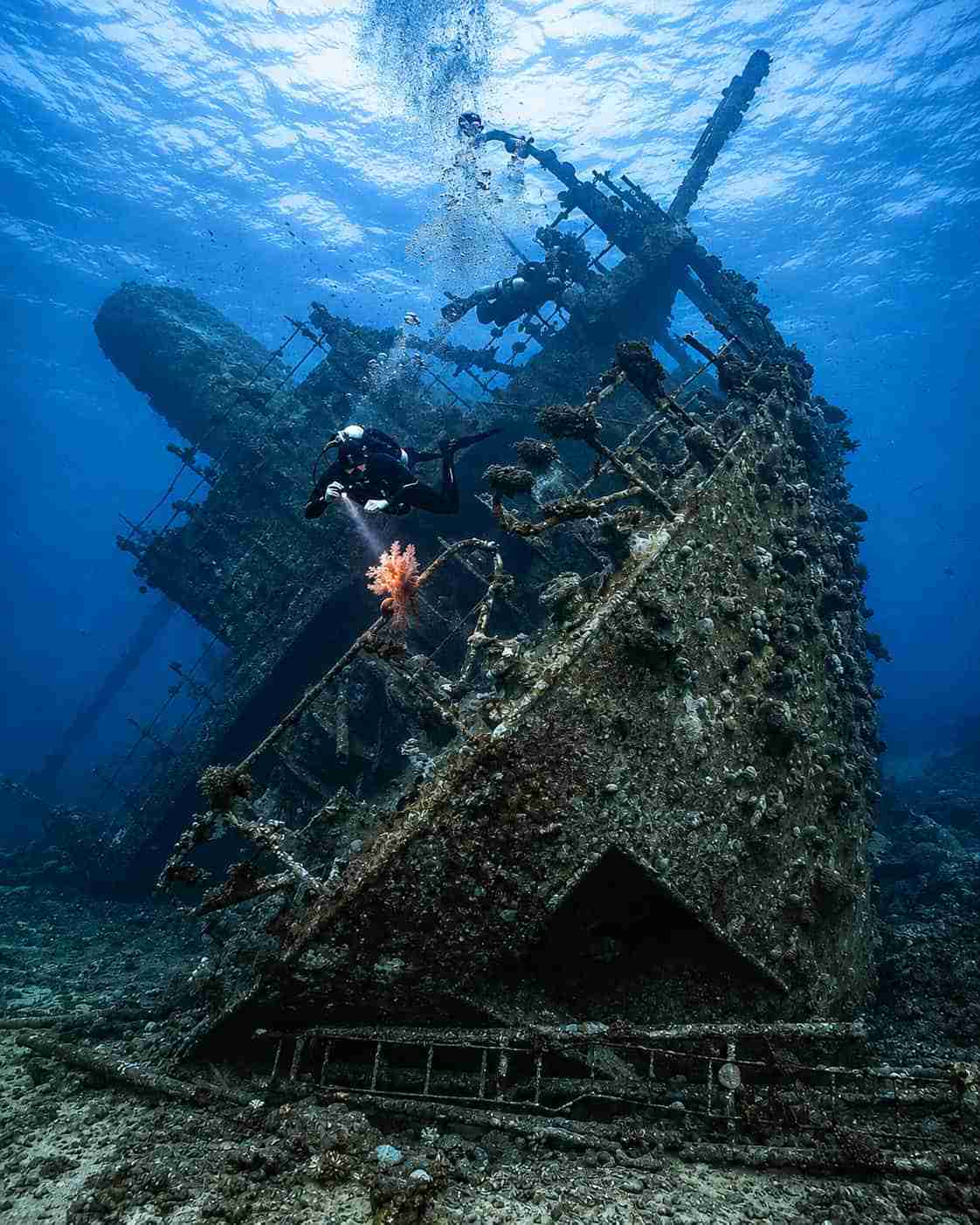
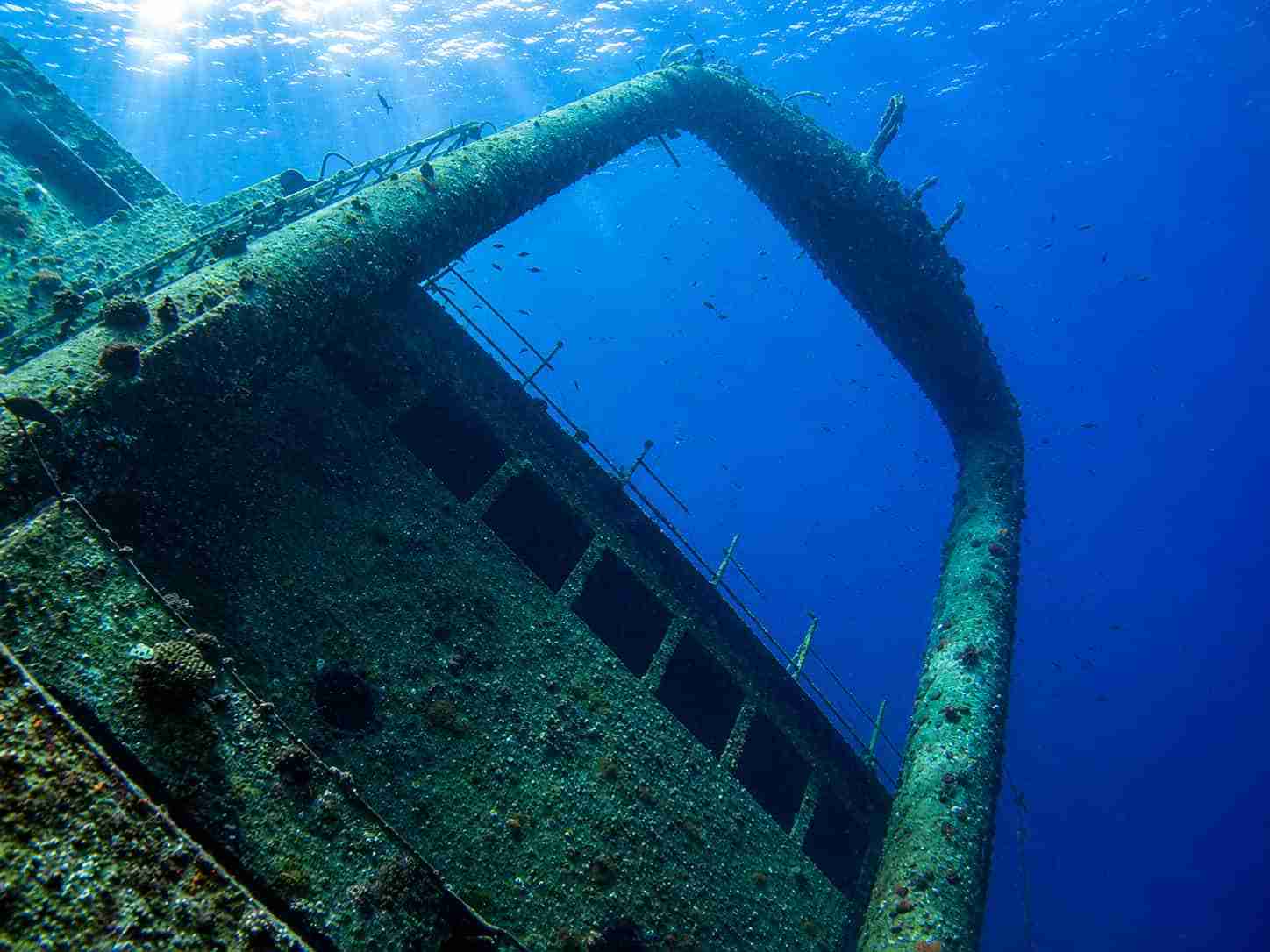
Today, she lies at twenty-seven metres on a northeast to southwest line, with the bow separated from the stern and the middle section collapsed between them. Meanwhile, both ends rest on the port side under a coat of soft coral, and both are essentially intact. Therefore, dive her in calm water, and start at the stern, which is the finest part of the whole wreck.
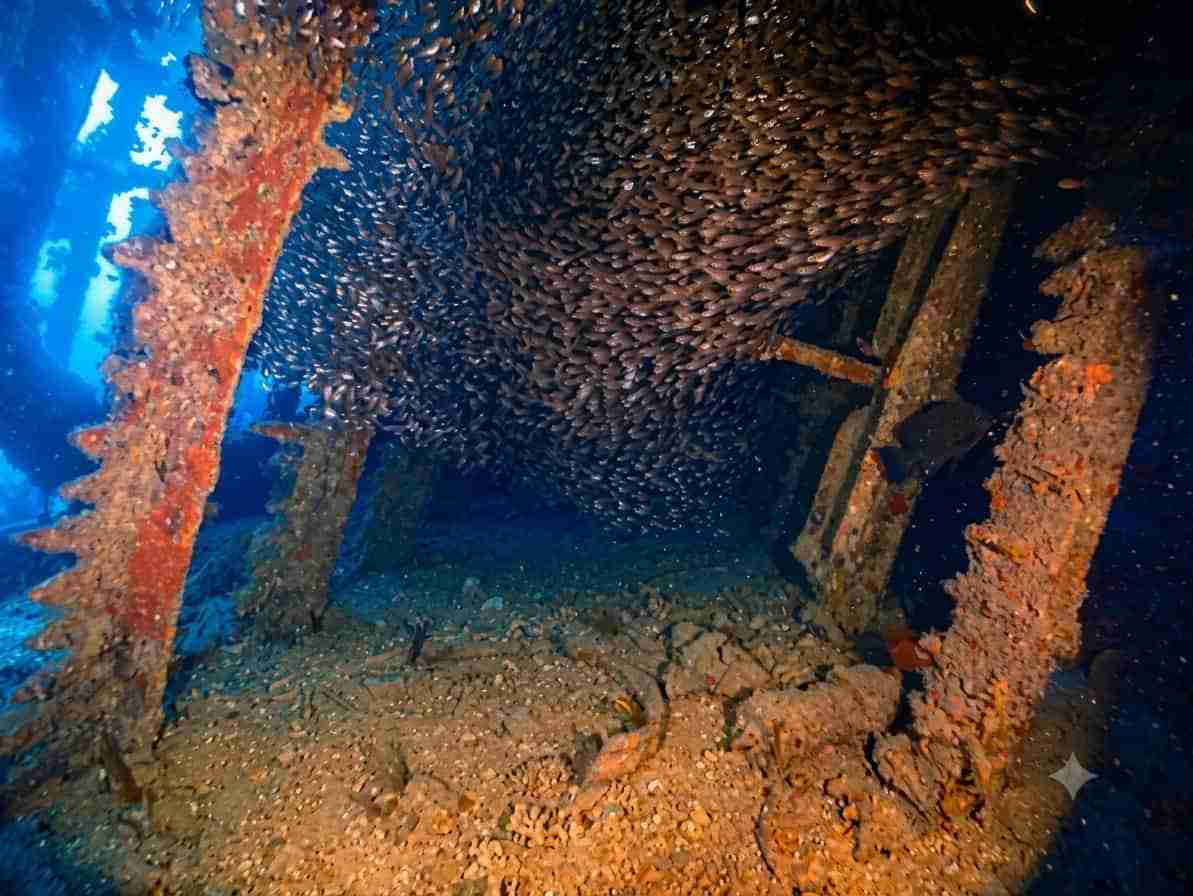
Specifically, a huge winch shaped like an upside-down U rises there to six metres below the surface, close enough that on a flat day you can see it from the boat. Likewise, the bridge opens wide and stays well lit, with the wheelhouse and its binnacle in the centre, although the angle of the hull disorientates most people the first time. Next, enter the engine room through an opening in the funnel, where light falls through from above and a school of glassfish lives permanently. Inside, the machinery, engines, pipes and instruments look as though nothing has happened to them.
Afterwards leave the stern and cross the ruined midships towards the bow, watching for the wooden planks that were her cargo. Nevertheless, the bow itself was cut off and folded to port at eighteen metres, yet it is perfectly intact, with a big mast standing in the centre and the anchor chain running out through one of the two hawse holes.
| Type | Cargo, Greek |
| Built | 1969, Japan, as the Shoyo Maru |
| Dimensions | 99.5 m × 16 m, 2,932 t, draught 6.35 m |
| Engine | Six cylinders, 3,000 HP, 12 knots |
| Lost | 19 April 1983, timber for Jeddah and Hodeida |
| Depth | 27 m |
Watch for
- Notably, lionfish (Pterois miles) over the upper bridge, almost every dive
- Also mid-morning, when sunlight comes through the portholes
- Then a torch, since visibility outside says nothing about inside
- Finally, in rough water the site is only workable from a zodiac
Read the full history of the Giannis D
The Carnatic
27°34.746′ N · 33°55.546′ E · 16–27 m
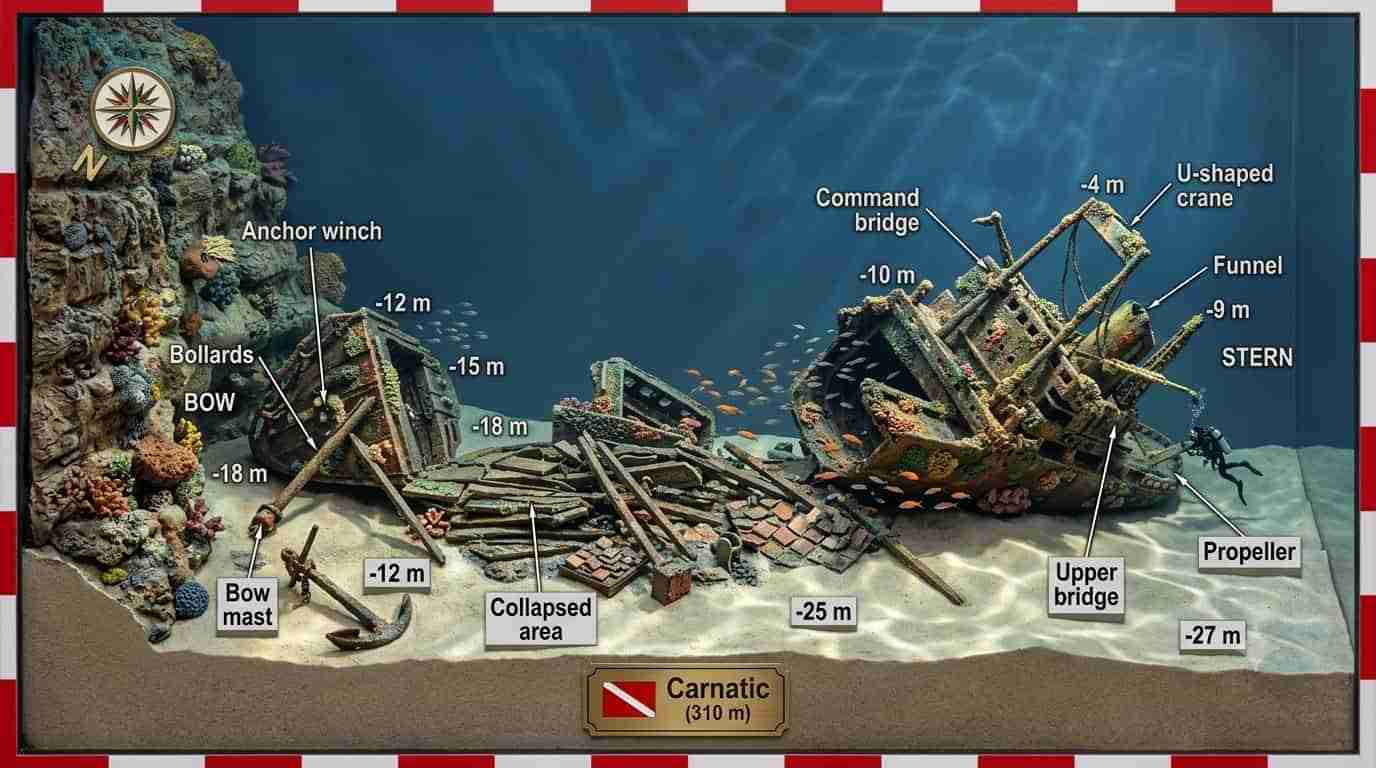
Firstly, immediately east of the Giannis D, lying almost parallel to her, sits the oldest and most historically important wreck in the Red Sea. The Carnatic was an elegant British ship, built in 1862 by Samuda Bros of London, 89.8 metres long and 11.6 wide, of 1,776 tons. Notably, she belonged to the first generation of steamers that carried both sail and engine, hers a four-cylinder of 2,422 HP fed by a boiler amidships. Usually, P&O ran her on the Suez to Bombay route and sometimes as far as China.
Originally, she left Suez on 12 September 1869 for Bombay and struck Abu Nuhas during the night of the 12th and 13th, in good weather. Subsequently, the Board of Trade inquiry in London concluded that a strong current had pushed her off her line. Besides, aboard were thirty-four passengers and a hundred and seventy-six crew, along with cotton bales, the mail for British troops in India, and a cargo of fine wine and soda water whose bottles were still being found until a few years ago. Notably, one hold also held forty thousand pounds in gold.
Unfortunately, Captain Philip Buton Jones judged the situation safe, so everybody stayed on board waiting for the P&O liner Sumatra, which worked the same route. Then, at two in the morning on the 14th the water inside the hull rose suddenly, and over the following hours the wind and sea got worse. Sadly, her captain’s order to abandon ship came too late, and the Carnatic broke in two and took thirty-one lives with her. Eventually, parts of the hull stayed on the reef for a couple of months until a storm slid them down to twenty-seven metres, where she broke a third time.
Diving her
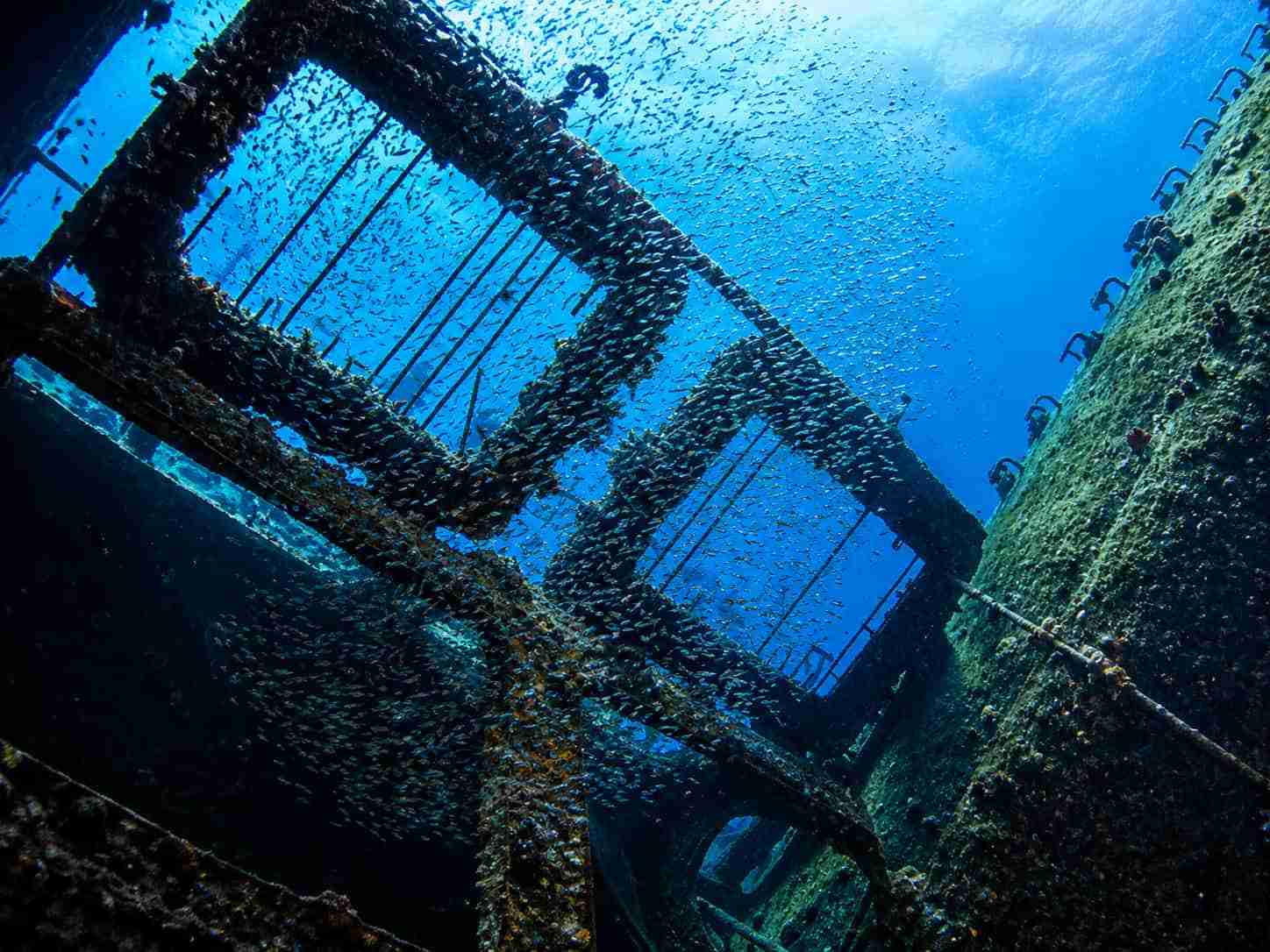
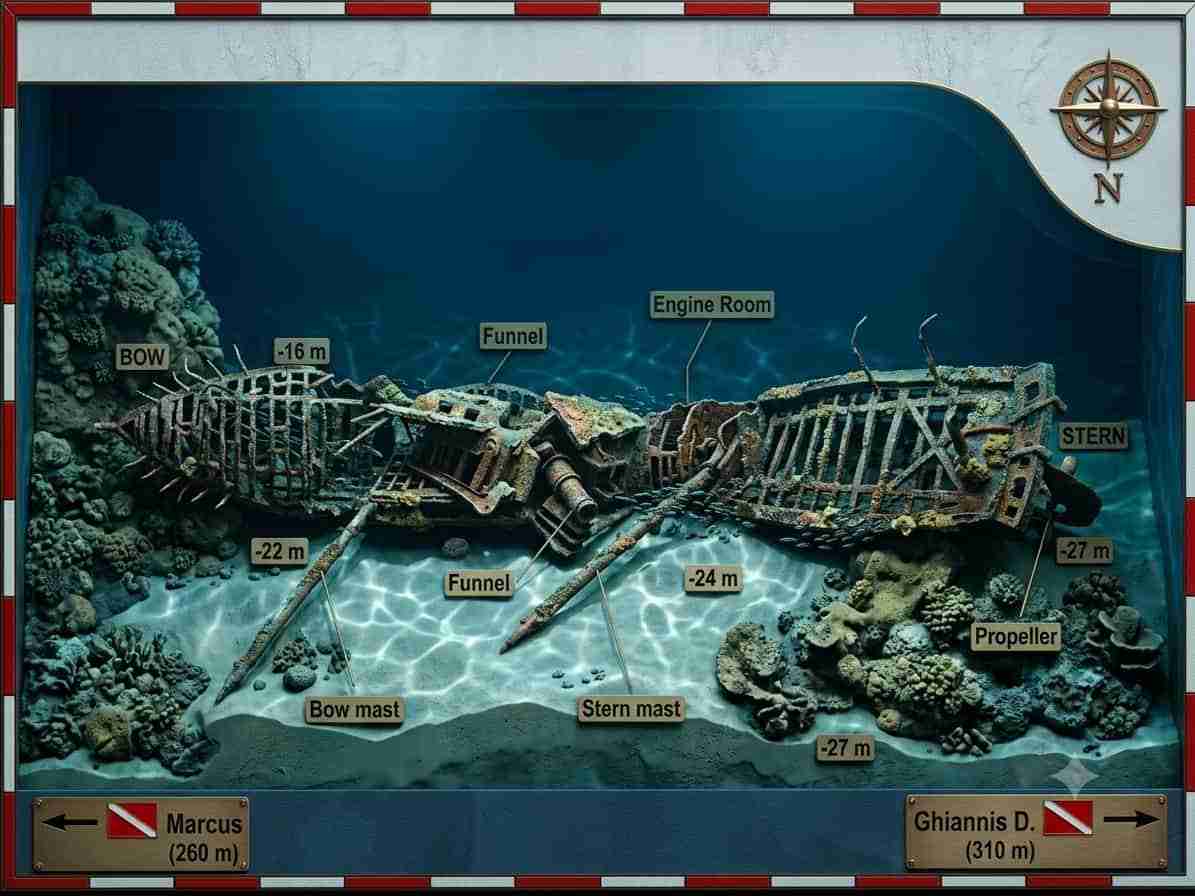
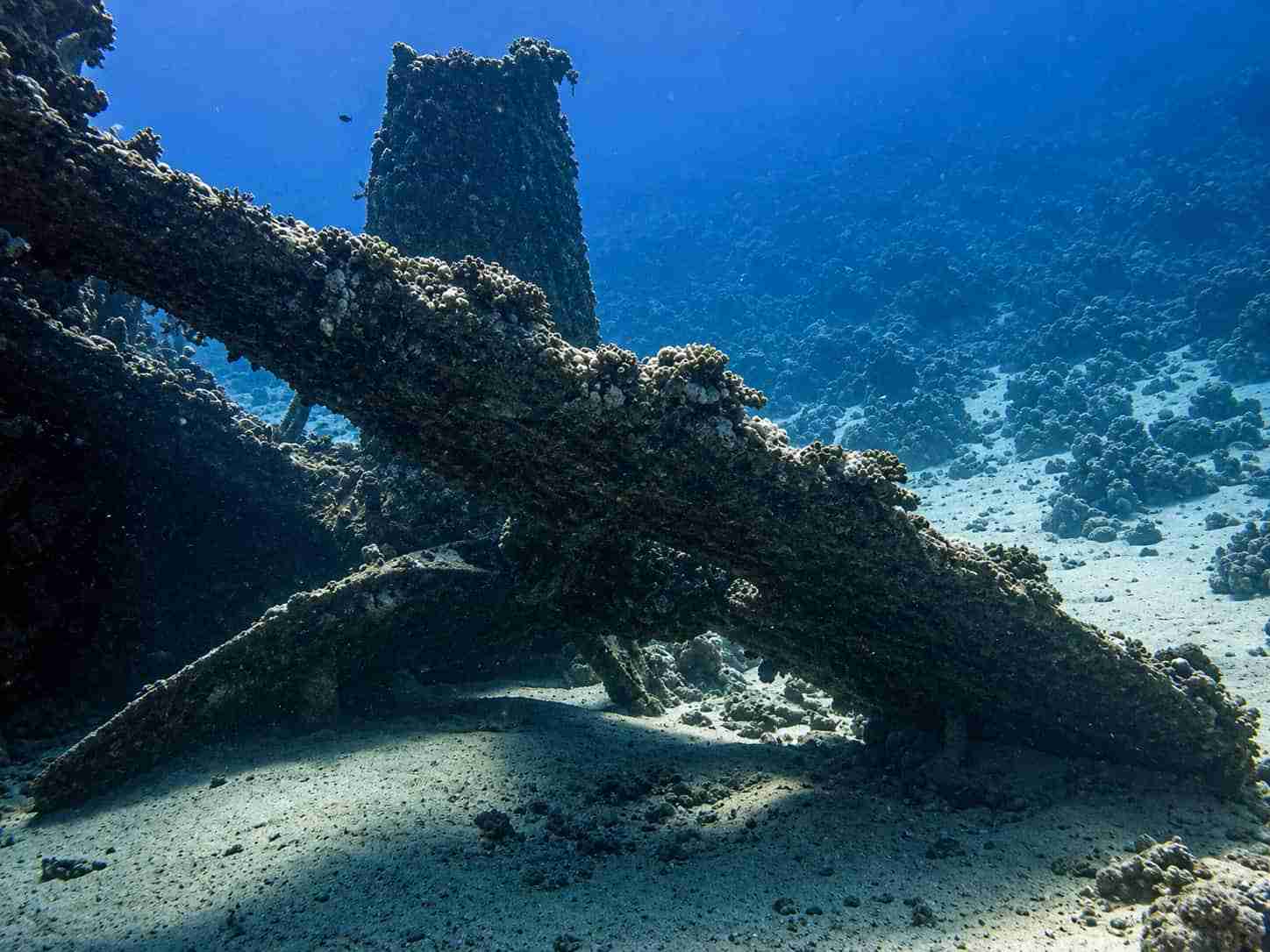
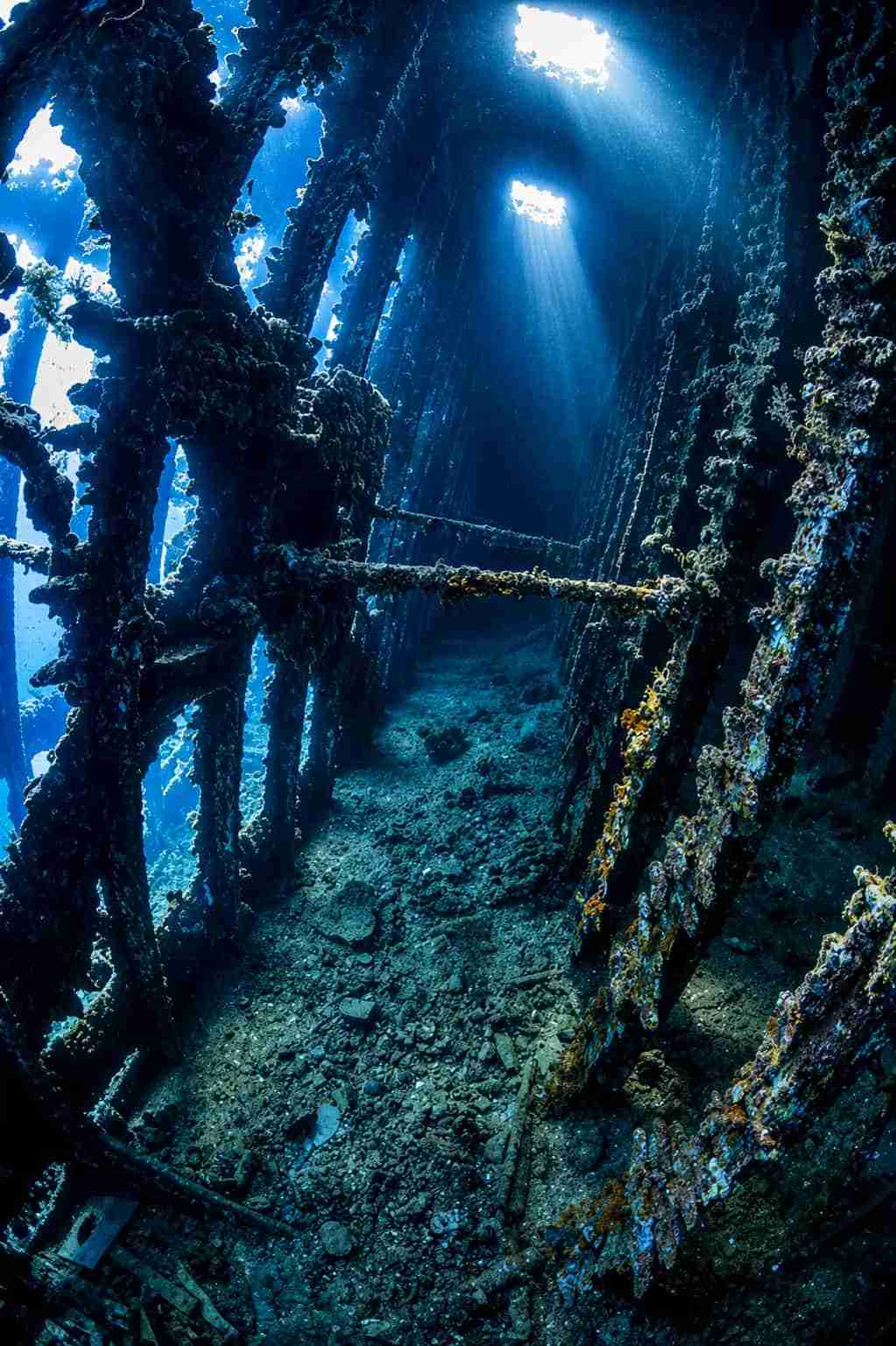
First, start at the stern, at the big three-bladed propeller, then follow the deck forward to the bridge and the engine room at twenty-five metres, where the boiler and the machinery are still readable. Besides, the two masts lie on the seabed alongside. Meanwhile the holds open easily and hold dense schools of glassfish, best seen early, when the sun comes through the distinctive square portholes. Finally, the bow, unmistakably fine and tapered, rests on the reef at sixteen metres.
The gold went home. Certainly, all forty thousand pounds of it was recovered at the start of November 1869. Nevertheless the story that some of the bullion is still down there has outlived everyone who could have settled it.
| Type | Steamer, British, sail and steam |
| Built | 1862, Samuda Bros, London |
| Dimensions | 89.8 m × 11.6 m, 1,776 t |
| Engine | Four cylinders, 2,422 HP |
| Lost | 12–13 September 1869, Suez to Bombay |
| Depth | 16–27 m |
Watch for
- Above all, a gigantic umbrella-shaped Acropora amidships, with a Malabar grouper often resting beneath it
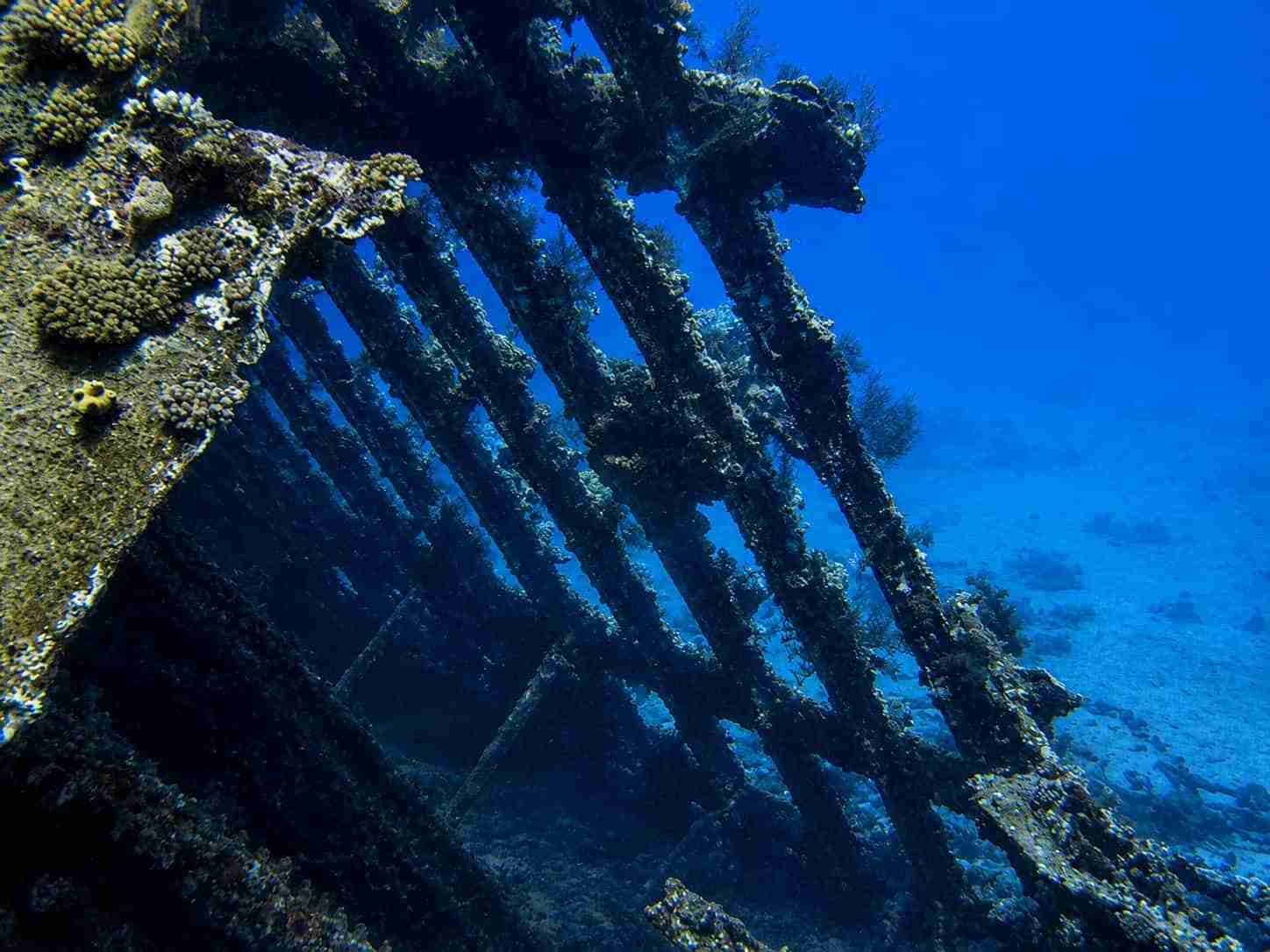
- Also superb soft coral along the metal of the deck
- Then sharp metal, which is everywhere on a hull this old
- Overall, morning is the better half of the day here
Read the full history of the Carnatic
Chrisoula K, the wreck of the tiles
27°34.795′ N · 33°55.693′ E · 4–27 m
Firstly, east of the Carnatic, separated from her by a small ridge of reef, lies the third wreck. Certainly, everyone calls it the wreck of the tiles. However, whether it is actually the Chrisoula K is a different question, and a genuinely open one.
Originally, the Chrisoula K was built at Lubeck in 1954, 98 metres long, 14.8 wide, 3,720 tons, with a nine-cylinder engine of 2,700 HP. Launched as the Dora Oldendorf, she became the Anna B in 1970 and took her final name when the Greek Clarion Marine Company bought her in 1979. Specifically, she was carrying 3,700 tonnes of Italian tiles to Jeddah when she hit the northeastern side of Abu Nuhas on 31 August 1981 at full speed, the captain having handed the watch to an officer and gone to his cabin.
Two details do not fit. Firstly, a photograph taken just after that wreck shows a bow smashed by the impact with its anchor chain on the port side. By contrast, the bow on the seabed is almost intact, and its chain runs out of the starboard hawsehole. Furthermore, the serial number on the engine belongs to the cargo ship Marcus, lost some years earlier. In May 1978 the Marcus came out of Suez for Saudi Arabia, also carrying Italian tiles, had rudder trouble in a storm and ran onto the same reef.
Diving her
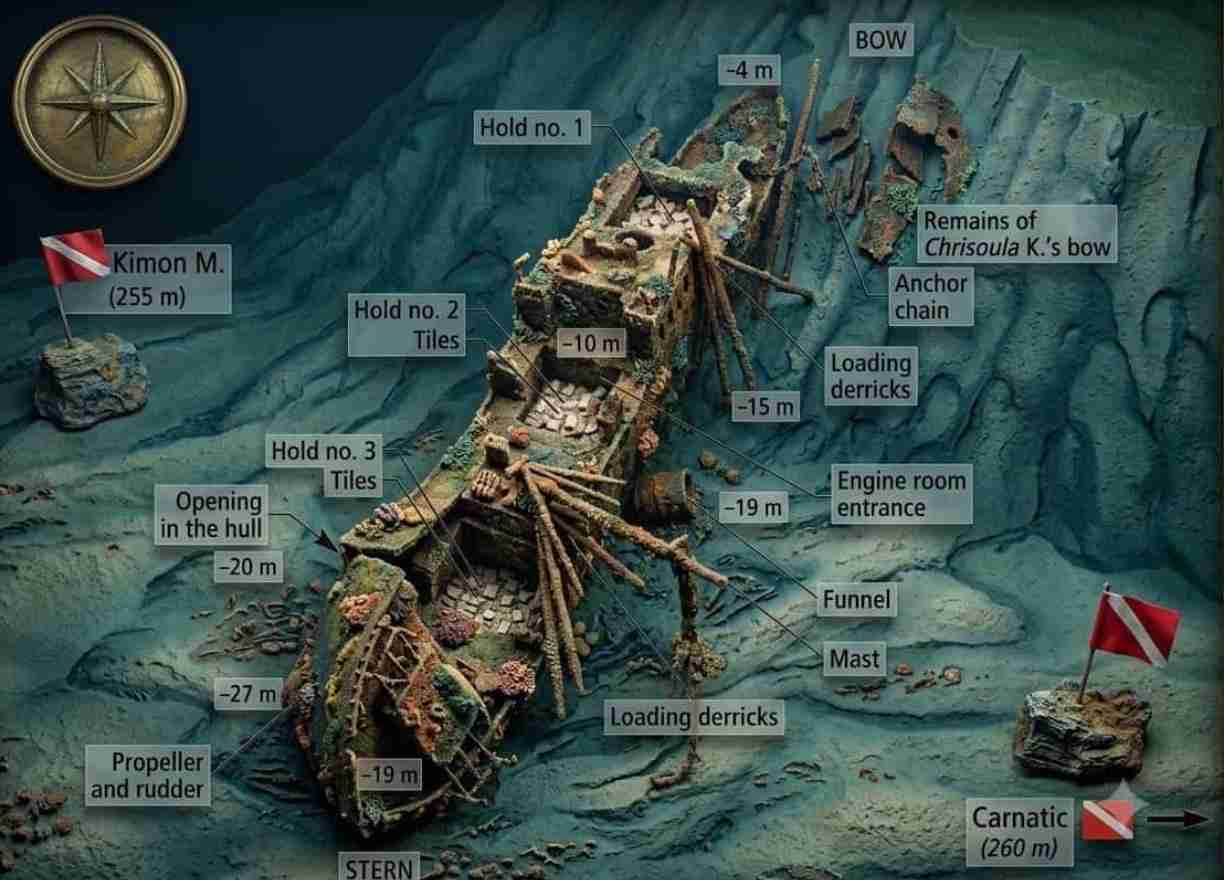
Consequently, the impact twisted the quarterdeck, which now lies on its right side with the propeller at twenty-seven metres, while the rest of the ship sits intact on the sand with the bow just four metres below the surface. First, start at the stern, where the enormous four-bladed propeller and the rudder are both undamaged. Then work along the starboard side, past a large loading derrick lying on the bottom and one of the two masts.
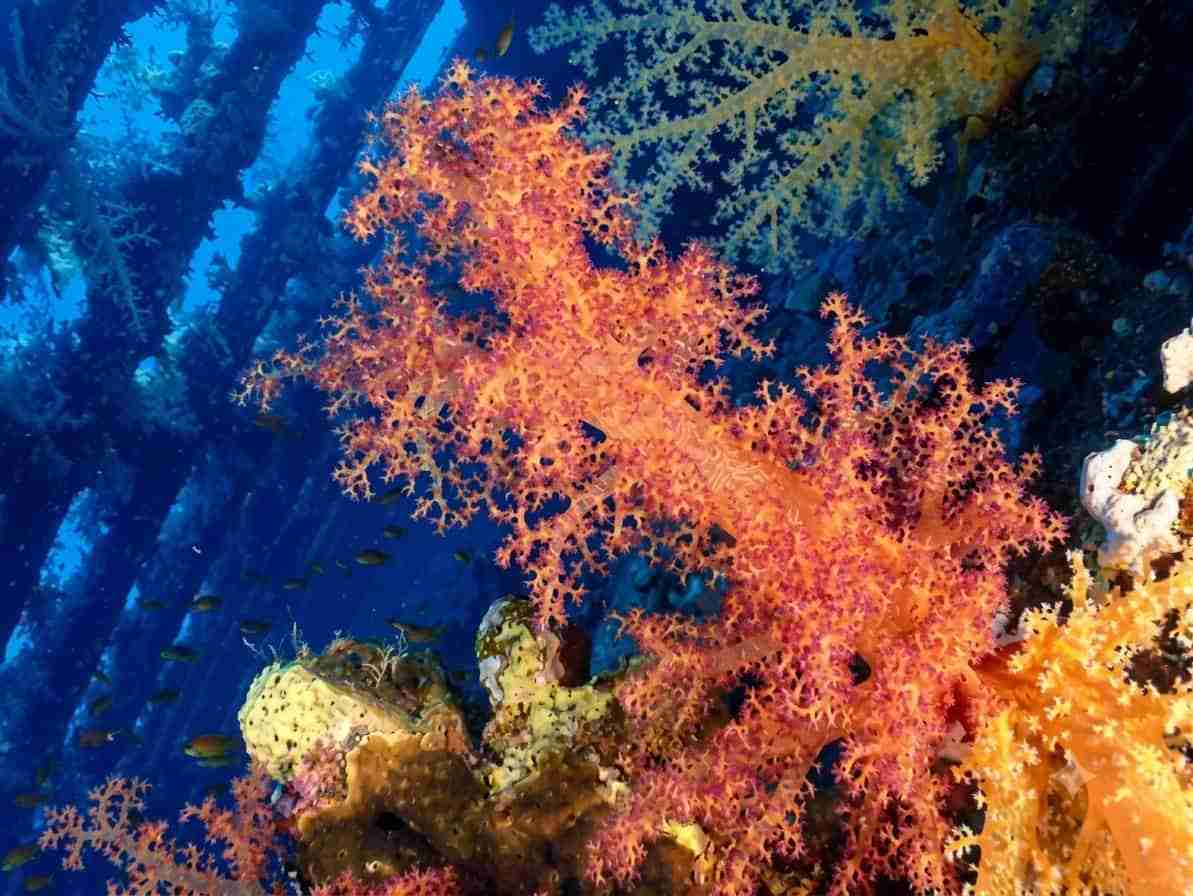
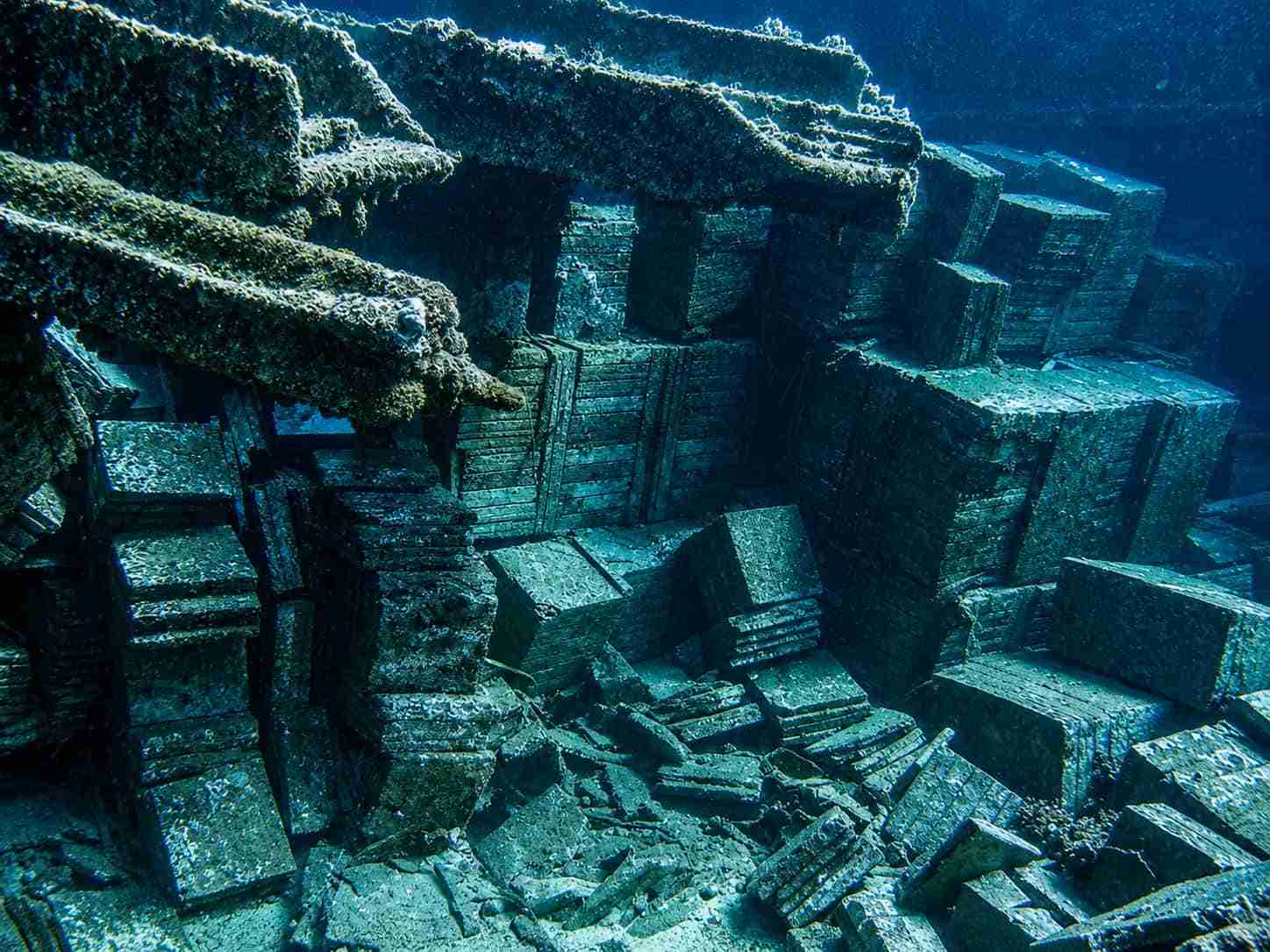
Of the four Abu Nuhas wrecks this one keeps the most cargo. Notably, the engine room repays a visit, although only for experienced wreck divers: the machinery including a huge diesel is in excellent condition under a thin layer of silt. Meanwhile the holds still carry the cargo, banks of tiles thrown into disorder by the impact and now surrounded by glassfish. Meanwhile, outside, encrusting red sponge and table corals cover the plates, anemones hold their anemonefish, and batfish drift past. Besides, the funnel rests on the sand at nineteen metres, another derrick sits at fifteen, and near the bow on the starboard side the anchor chain lies across the reef a few metres down.
| Type | Cargo, German built |
| Built | 1954, Lubeck, as the Dora Oldendorf |
| Dimensions | 98 m × 14.8 m, 3,720 t |
| Engine | Nine cylinders, 2,700 HP |
| Lost | 31 August 1981, tiles for Jeddah |
| Depth | 4–27 m |
Watch for
- Notably, garden eels standing out of the sand near the anchor
- Also glassfish, which fill a surprising number of compartments
- Then the silt inside the holds, which ruins the dive if you stir it
- Carry a good torch, and use a zodiac when the sea is up
So where is the Chrisoula K? Reportedly, her hull is said to lie on the sand at sixty metres, on her starboard side, roughly four hundred metres north of the reef. That is well past recreational depth, and it is not a dive.
Read the full history of the Chrisoula K
Kimon M, the wreck of the lentils
27°34.885′ N · 33°55.810′ E · 4–32 m
Firstly, about two hundred and fifty metres east of the tiles, at the northeastern point of the reef, lies the wreck of the lentils. Namely, the name comes from the cargo: four and a half thousand tonnes of them. For years she was logged as the Seastar or the Olden, but she is the Kimon M, a cargo ship out of Suez.
Originally, she was built in Germany in 1952 and carried three names before her last, starting as the Brunsbuttel, then the Ciudad de Cucuta, then the Angela. Overall, at 106.4 metres, 3,714 tons and an eight-cylinder diesel, she belonged by 1978 to the Greek-Panamanian firm Janissios Shipping. Specifically, she had loaded lentils at Iskenderun in Turkey for Bombay, and on 12 December 1978 she hit the northeastern point at full speed. Fortunately, the vessel Interasia, passing nearby, took off her crew.
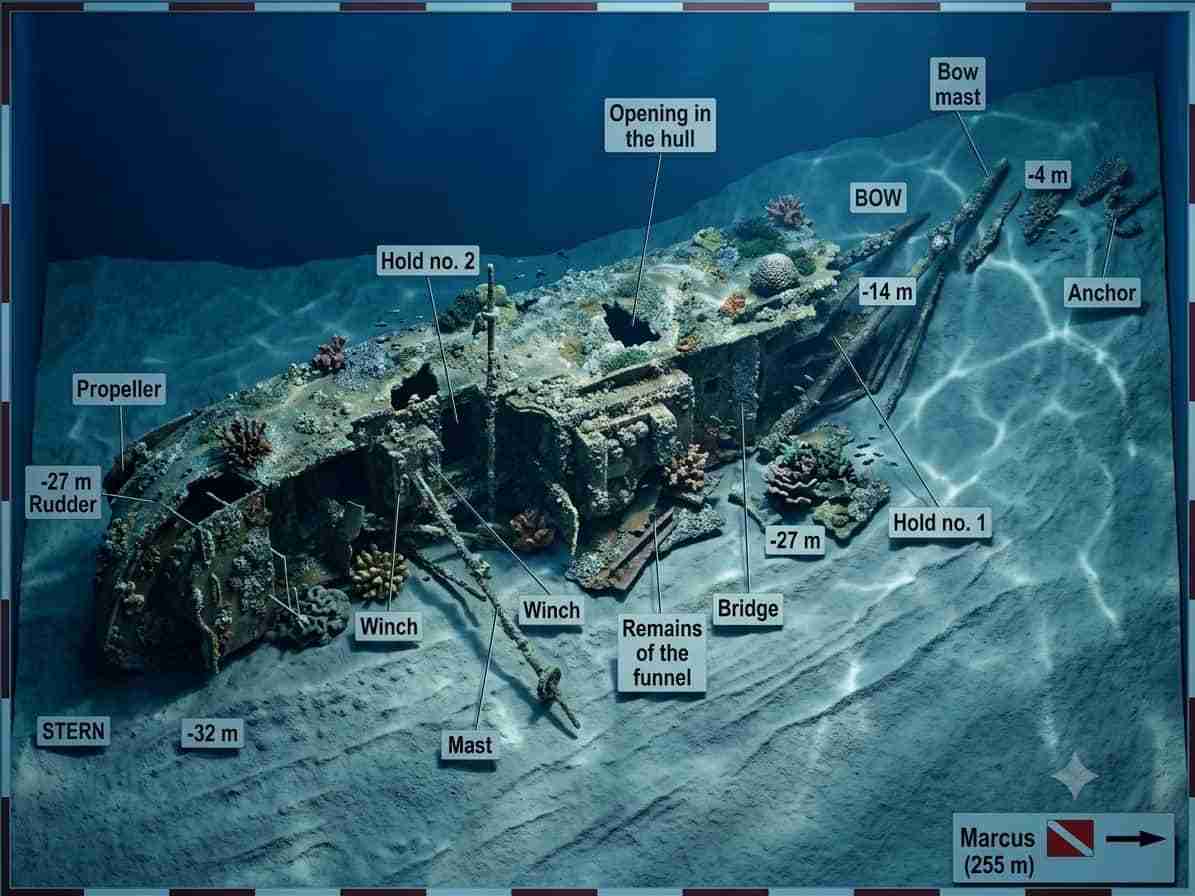
Initially, for a long time afterwards her bow stood on the reef, which made her an unintended navigation mark for everything that came past. Eventually the rest of the hull slid down the plateau. Today she rests on her starboard side with the stern on sand at thirty-two metres, the first hold at sixteen, and the bow mast on the reef at only four, together with the massive anchor and a scatter of debris.
Diving her
First, start at the stern, still intact with its propeller and rudder, then work forward along the port side past the hold entrances and their winches, which usually carry schools of anthias. Meanwhile, the bow area is completely destroyed, although the anchor is plain to see.
Do not go inside. The hull has become unstable, so exploring the holds is genuinely dangerous and should be left alone. The outside is the dive.
| Type | Cargo, German built |
| Built | 1952, as the Brunsbuttel |
| Dimensions | 106.4 m long, 3,714 t; beam to be confirmed |
| Engine | Eight-cylinder diesel |
| Lost | 12 December 1978, lentils for Bombay |
| Depth | 4–32 m |
Watch for
- Above all, the engine room, which is the most impressive on the reef, seen from outside
- Also Alcyonarians growing thickly along the metal cables
- Then current and thin visibility, both common at this end
- Alternatively, you can fin east to her from the tiles, given the conditions
- Finally, in rough water she is effectively undiveable, being the most exposed of the four
Read the full history of the Kimon M
Choosing a wreck at Abu Nuhas
In short, the table below groups the four by level rather than by position. The number in the first column matches the index above, so you can jump back to any write-up.
| # | Wreck | Level | Depth | Why go |
|---|---|---|---|---|
| 2 | The Carnatic | All levels | 16–27 m | An 1869 steamer, and the oldest in the Red Sea |
| 3 | Wreck of the tiles | All levels | 4–27 m | Cargo still in the holds, and a mystery attached |
| 1 | Giannis D | Intermediate | to 27 m | The best preserved, with an engine room to match |
| 4 | Wreck of the lentils | Advanced | 4–32 m | Exposed, deep at the stern, and no penetration |
Marine life on the Abu Nuhas wrecks
Glassfish
Notably, Parapriacanthus ransonneti fills holds and compartments on all four hulls, densest on the Carnatic.
Lionfish
Reliably, Pterois miles gathers over the bridge of the Giannis D near the funnel, almost without fail.
Soft corals
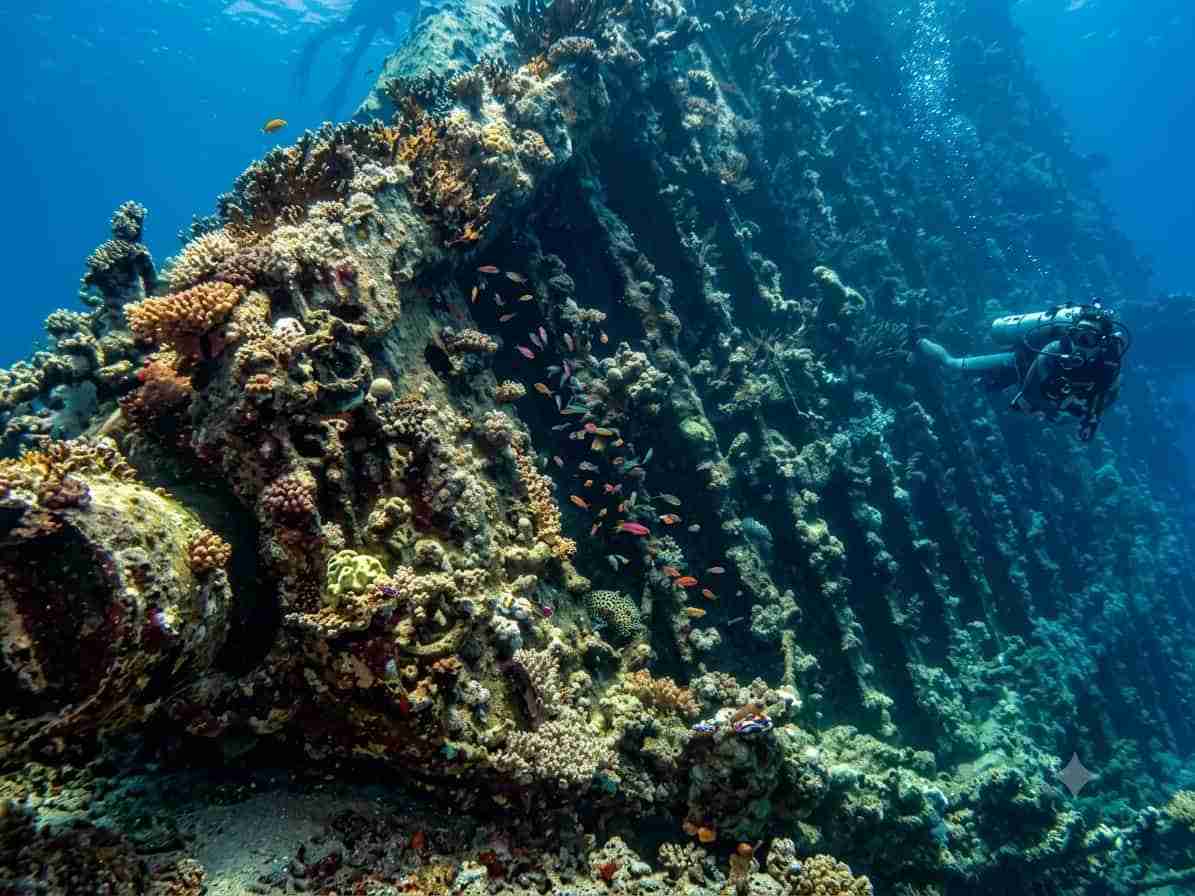
Meanwhile, red Alcyonarians cover the exposed metal everywhere, and they grow especially well along cables and railings.
Anemonefish
Similarly, Amphiprion bicinctus holds anemones on the outer plates of the Giannis D and the tiles wreck alike.
Groupers
Especially, big ones, including a Malabar grouper that often sits under the umbrella Acropora on the Carnatic.
Others
Besides, batfish, parrotfish, trevallies, anthias, and giant morays (Gymnothorax javanicus) in the crevices.
Planning a day at Abu Nuhas
Practical notes for Abu Nuhas
- First, dive it in calm water; three of the four are difficult in swell
- Then keep a zodiac available, since it turns a rough day into a workable one
- Also carry a torch on every wreck, even when the outside water is bright
- Morning suits the Carnatic; mid-morning suits the Giannis D
- Meanwhile the eastern end holds the current and the poorer visibility
- Consequently the Kimon M is the first site to drop when conditions turn
- Finally, treat sharp metal on the older hulls with respect
Penetration is not the same on all four. The Giannis D and the tiles wreck are open and well lit inside. Holds on the Carnatic are accessible too. The Kimon M, by contrast, is structurally unsound and should be dived from the outside only.
Useful links
- The Giannis D — her three names, and the letter on the funnel.
- The Carnatic — P&O, the gold, and the night she broke in two.
- The Chrisoula K — and why the wreck of the tiles may not be her.
- The Kimon M — four names, a cargo of lentils and an unstable hull.
- The Strait of Gubal — Dunraven, Kingston, Ulysses and the Barge.
- Ras Mohammed National Park — walls, chimneys, caves and garden eels.
- Safety standards and emergency care — briefings, oxygen and chamber contacts.
- Red Sea Liveaboard — safari routes and boats across the Egyptian Red Sea.
- Divers Alert Network (DAN) — insurance and emergency guidance.
Frequently asked questions
How many wrecks are there at Abu Nuhas?
Specifically, five cargo ships lie along the northern slopes, and by wider counts at least seven have been lost on the reef. Only four suit recreational diving.
Is it suitable for a first wreck dive?
Certainly, yes, in calm water. Namely, everything sits shallow, and the Carnatic and the tiles wreck can both be worked from the outside without going deep.
Which wreck is the best?
For condition and for the engine room, the Giannis D. The Carnatic wins on history, being the oldest steamer in the Red Sea.
Is the wreck of the tiles really the Chrisoula K?
Frankly, probably not. Specifically, the bow, the anchor chain and the engine serial number all point to the Marcus, lost in 1978 with an identical cargo.
Can the holds be entered?
Generally, on three of them, with a torch and care. The Kimon M is unstable, so its holds should be left alone entirely.
What ruins a day here?
Swell. Because the reef is exposed, the eastern end in particular becomes impossible once the sea gets up.
What are you waiting for?
Book your adventure
Tell us which experience you want to enjoy and leave the rest to us. If you have questions, or you are still choosing between routes, our team will talk it through with you before you commit to anything.
Inquiry