
Ras Mohammed · Shark and Yolanda Reef
Shark and Yolanda Reef Anemone City and the drift at the tip
Shark and Yolanda Reef is the dive every visitor to Sinai eventually asks for, and with reason. Two pinnacles stand off the very tip of the Ras Mohammed peninsula, joined by a shallow saddle, and the water that pours around the headland brings the fish with it. Consequently this is a one-way drift rather than a there-and-back.
Where Shark and Yolanda Reef sits
Firstly, the peninsula pushes southeast into the sea and separates the Gulf of Aqaba from the Gulf of Suez. Then, at its very end, just off the headland, two coral towers rise from deep water. Notably, divers call the eastern one Shark Reef and the western one Yolanda Reef, and a shallow saddle of sand and coral links them.
Because the whole peninsula narrows to this point, the tidal stream accelerates around it. Therefore plankton arrives in quantity, the reef fish arrive behind the plankton, and the predators arrive behind the reef fish. That chain is the entire reason the site has its reputation.
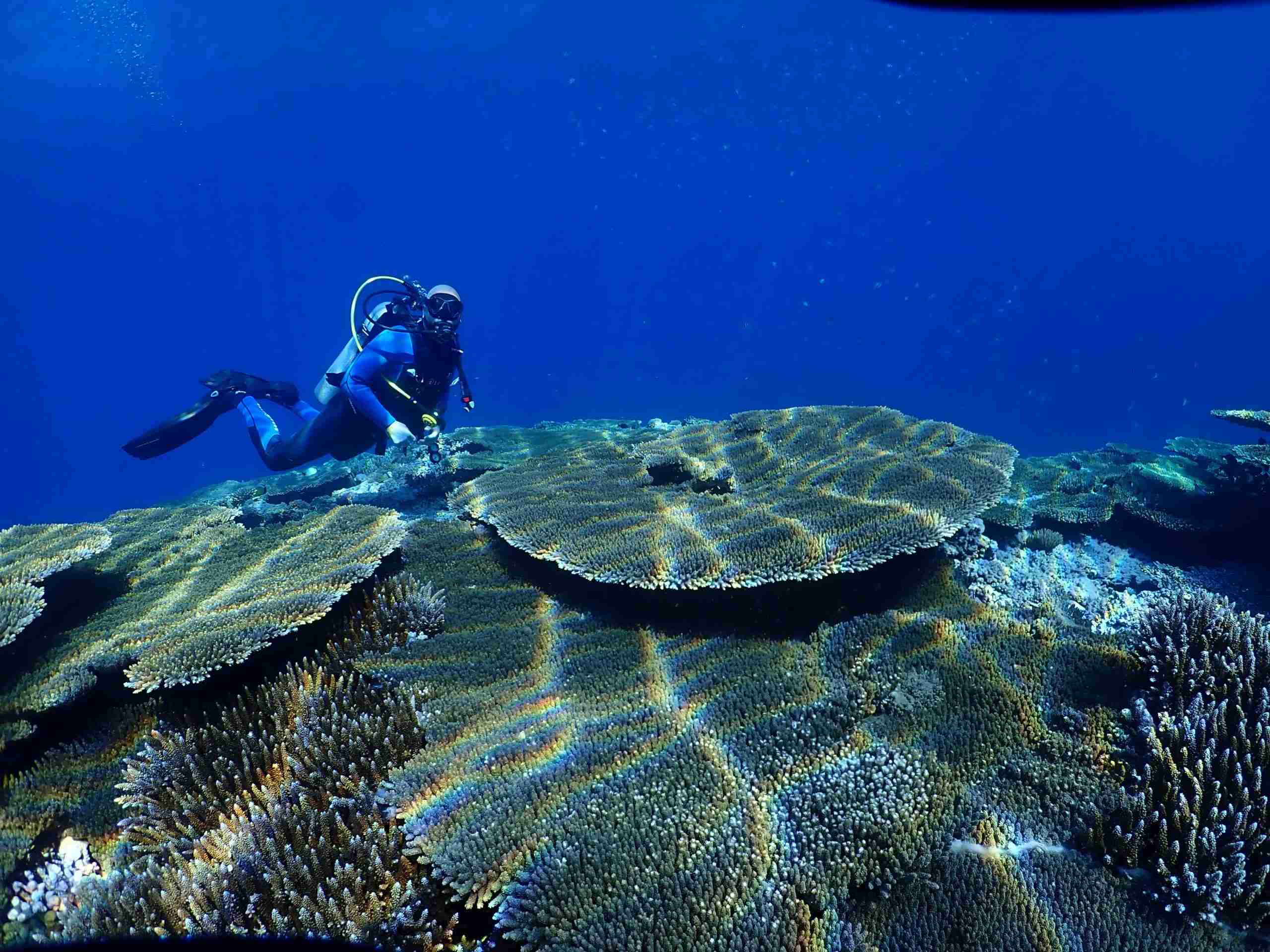
Meanwhile, Anemone City sits on the shoulder above Shark Reef, a plateau carpeted with Heteractis magnifica and their resident clownfish. In practice the three names describe one continuous dive rather than three separate ones, and almost nobody dives them in isolation.
The park applies here. This is inside Ras Mohammed National Park, so expect a fee, a briefing and rules that are actually enforced. Nothing is collected and nothing is touched, least of all the cargo on Yolanda.
The classic order
- First, Anemone City on the plateau above the eastern pinnacle
- Then the Shark Reef wall, with the blue kept on your shoulder
- Next the saddle, which is shallower and busier with reef fish
- Finally Yolanda Reef and the scattered cargo of the old freighter
- Meanwhile the current does the work, so finning against it is pointless
Direction is not a choice. The drift usually runs from Shark towards Yolanda, and reversing it is rarely practical. Consequently the boat drops you at one end and collects you at the other, which has to be agreed before anyone gets in the water.
Jump to a section


How the Shark and Yolanda Reef drift runs
The Shark and Yolanda Reef drift runs as four stages, one straight into the next. Below, each is described as divers actually experience it, in the order the water carries you through them.
Anemone City
Southern tip of Ras Mohammed · 27°43.300′ N · 34°15.000′ E
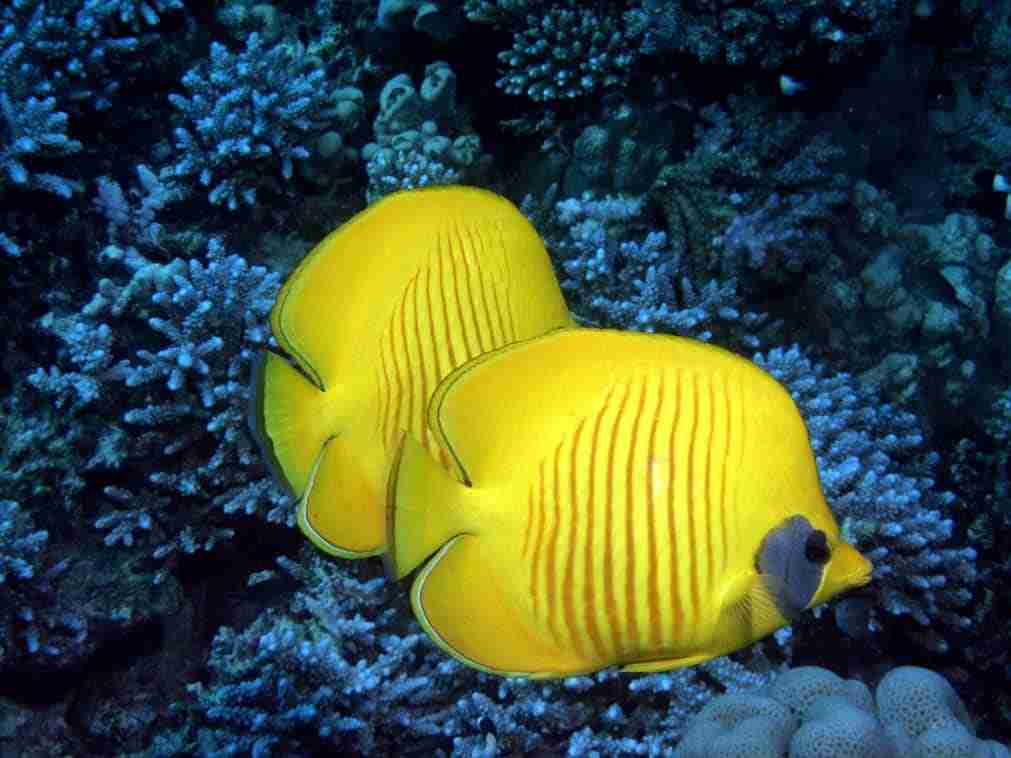
Above all, the name is literal. Indeed, a broad shoulder above the eastern pinnacle carries anemones in numbers that look almost cultivated, most of them Heteractis magnifica, each with its own pair of two-banded clownfish (Amphiprion bicinctus) guarding it. Besides, domino damselfish hover above them in clouds.
Because this is the shallowest part of the whole dive and the light is good, it is where most of the photography happens. Meanwhile the drop-off is already there on your seaward side, so it pays to look outward now and then rather than spending the entire stage looking down.
Watch for
- First, anemones close over if you crowd them, so keep your distance
- Also the current, which is already building at this stage
- Then set your air plan here, since the best of the dive comes later
Shark Reef
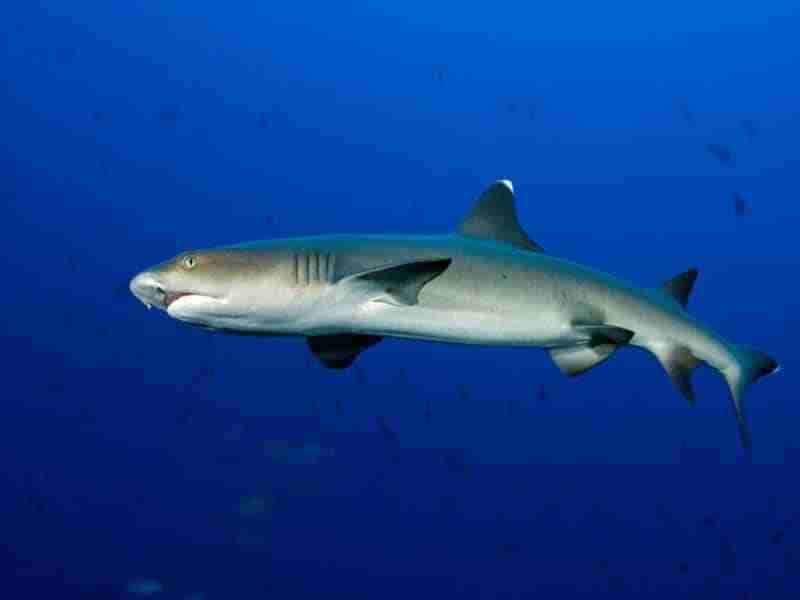
Shark Reef is the eastern of the two pinnacles, and its seaward face falls away steeply into open water. This is the stage where Shark and Yolanda Reef earns its name, although not always in the way visitors expect: the sharks are occasional rather than guaranteed, whereas the schooling fish are close to reliable.
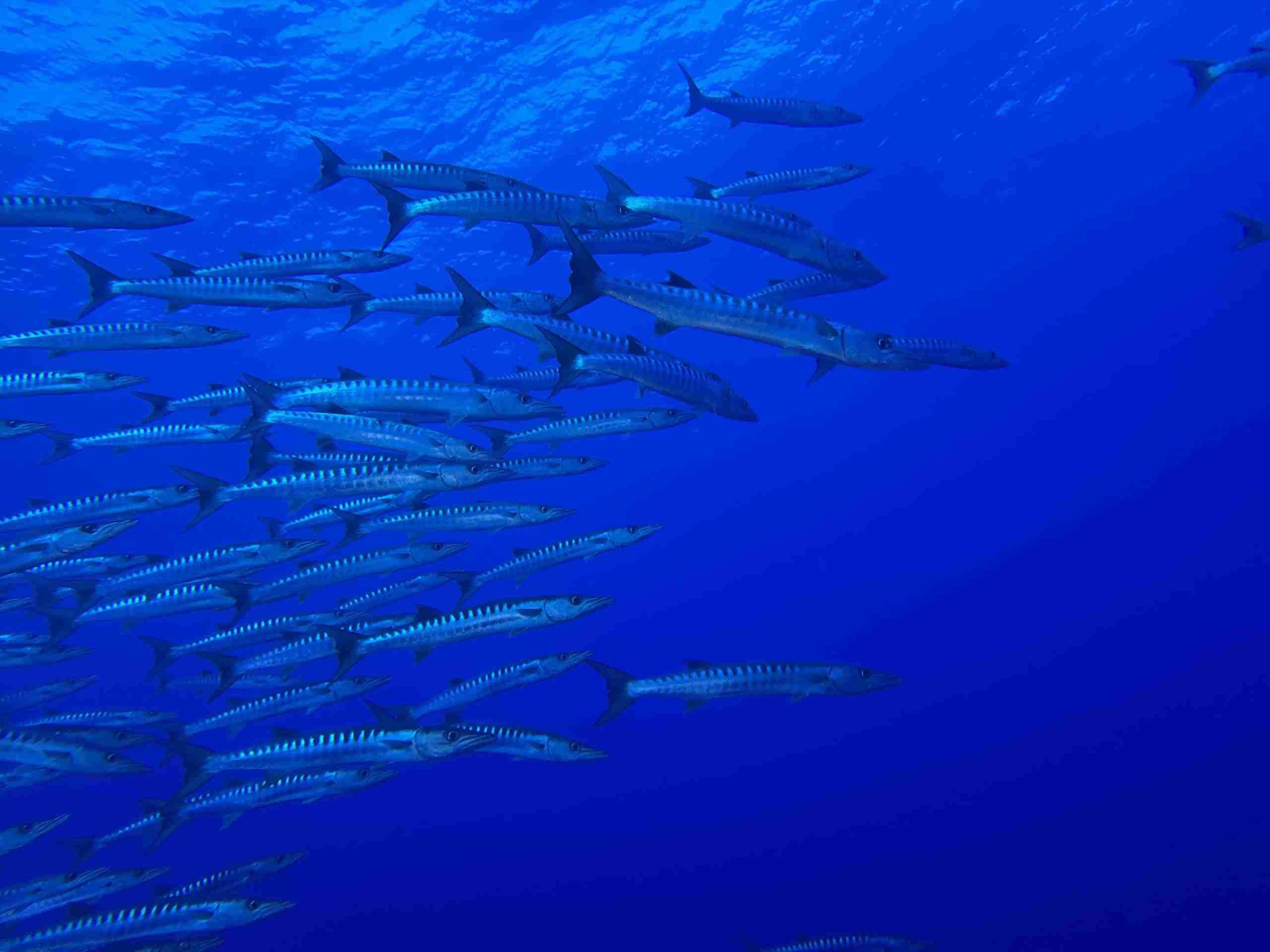
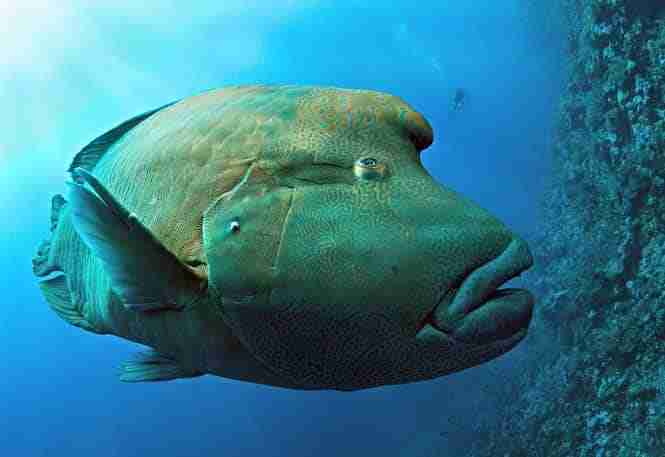
Certainly, look out rather than down. Specifically, barracuda hang in the current in tight formation, bigeye trevally turn in slow columns, and in summer the red snapper (Lutjanus bohar) gather here in numbers that block the light. Likewise, unicornfish drift along the face in loose ranks. Occasionally grey reef sharks cross beneath the schools, and that is the moment everybody remembers.
Watch for
- First, keep the wall on one shoulder and the blue on the other
- Also resist the pull to go deeper, because the fish come to the current line
- Then be ready for the corner, where the flow accelerates noticeably
The saddle between the two reefs
Next, between the two pinnacles the ground rises into a shallow bridge of sand and hard coral. Consequently the character of the dive changes completely: the wall gives way to a busy, brightly lit garden, and the pelagic traffic is replaced by reef life at close range.
Meanwhile, butterflyfish, parrotfish, anthias and surgeonfish work the coral heads here, and the shallower water makes it a natural place to start easing your depth for the final stage. Notably, this is also where groups tend to bunch up, since the current slackens over the high ground.
Yolanda Reef
Yolanda, the western pinnacle, carries the strangest sight in the Red Sea. Specifically, scattered across the coral and sand lies the cargo of a freighter: toilets, washbasins, bathtubs and shower trays, still recognisable, arranged by decades of current into rows and heaps. Besides, a container or two lies among them, and further along, the remains of a car.
Improbably, the whole thing works. Indeed, coral has grown over the porcelain, morays live inside it, and blue-spotted stingrays rest on the sand between the pieces. Meanwhile the shallow depth makes this the natural end of the dive, with plenty of gas left for a slow look around before the safety stop.
Watch for
- Above all, nothing is moved, taken or rearranged; the cargo is part of the park
- Also watch your fins, since the coral growing on it is fragile
- Then finish shallow, because this is where the boat expects to find you
The Jolanda and her cargo
Shark and Yolanda Reef owes half its name to a shipwreck, and the two spellings are both correct: the ship was the Jolanda, the reef became Yolanda. In 1980 the Cypriot freighter ran onto the coral at the southern tip of the peninsula. Notably, she was carrying, among other things, a consignment of bathroom fittings, and when her hull opened the cargo spilled onto the reef where most of it still lies. The captain’s car went with it.
Initially, for five years the ship herself sat on the reef, half out of the water and photographed by everyone who passed. Then, in a storm in 1985, she slid off the shelf and disappeared into deep water. Consequently the wreck itself is long gone from recreational range, and only the cargo remains where divers can reach it.
Ultimately, the hull was eventually located far below, well beyond any recreational limit. Nevertheless, the name stuck: the reef is Yolanda, the shallow ground behind it is the Yolanda lagoon, and the porcelain is what everyone comes to photograph.
Why it still matters
- First, it is the only wreck cargo of its kind anywhere on this coast
- Also the coral has colonised it, so it functions as reef now
- Then there is the light, since everything sits shallow and open
- Finally it gives a long, relaxed finish to a demanding drift
Do not go looking for the hull. It lies far below recreational depth, and nothing about the search is casual. The cargo field is the dive; the ship is a story.
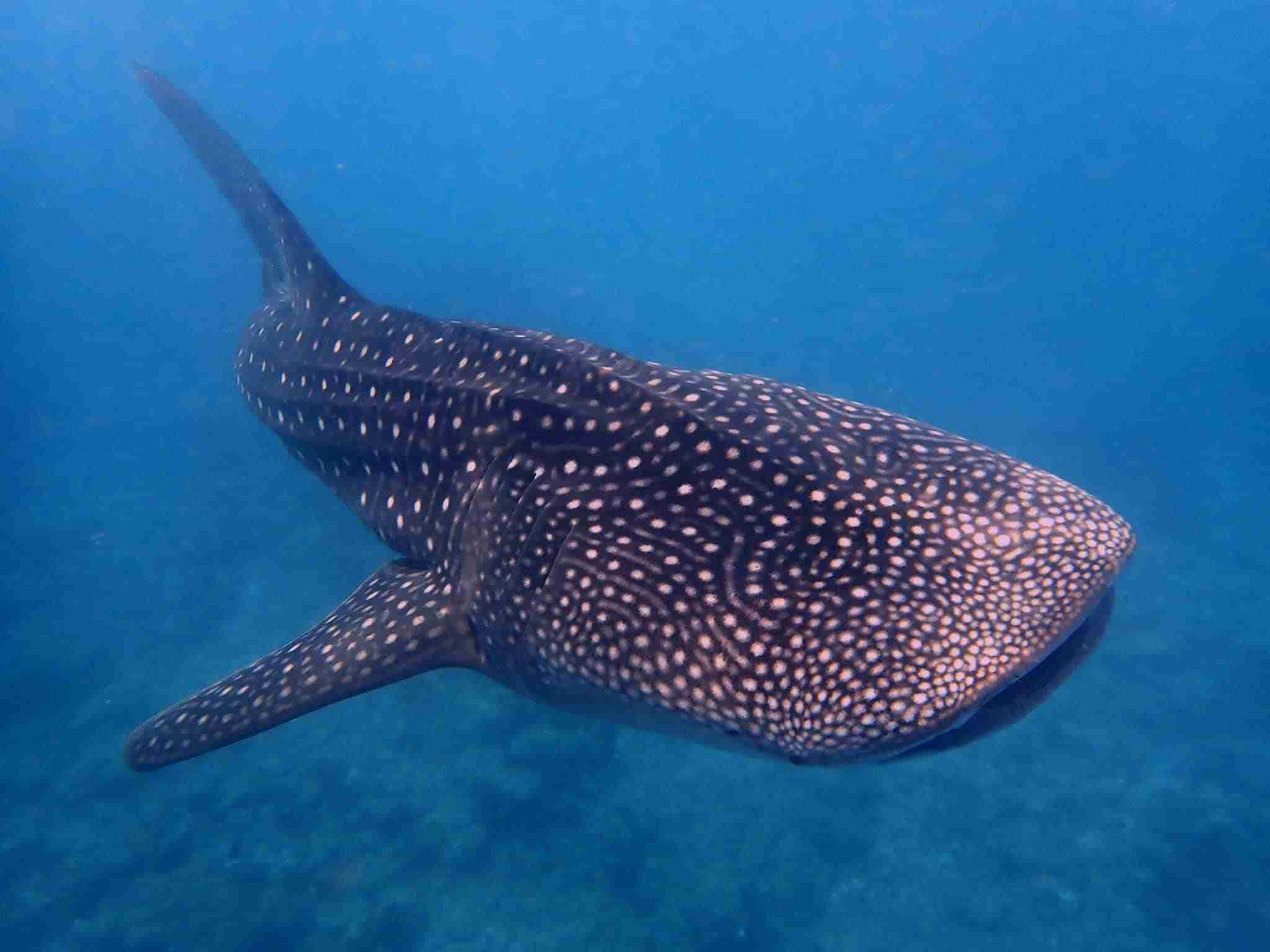
Marine life at Shark and Yolanda Reef
Schooling fish
Barracuda and bigeye trevally hold the current line off the wall, often in formation rather than scattered.
Snapper
Lutjanus bohar gathers here through the summer in aggregations dense enough to darken the water.
Sharks
Grey reef sharks cross below the schools from time to time. Nevertheless, no honest guide will promise them.
Anemones
Heteractis magnifica carpets the plateau, each one holding a pair of two-banded clownfish.
Turtles
Also, hawksbills graze the shallow ground around the saddle and the cargo field, especially early.
Rays and morays
Meanwhile, blue-spotted stingrays rest on the sand between the porcelain, while morays hold the gaps inside it.
Planning a dive at Shark and Yolanda Reef
Practical notes
- First, treat it as a drift from the outset, because that is what it is
- Then agree the drop and the pickup at the briefing, never in the water
- Also carry an SMB, since you will surface away from where you started
- Summer brings the biggest aggregations and the strongest current together
- Meanwhile morning light suits the wall and midday suits the cargo field
- Consequently a single dive rarely does the site justice
- Finally, park rules apply throughout: nothing touched, nothing taken
This is not a beginner’s dive. The current around the corner is real, the wall gives no visual reference for depth, and the group can string out badly. Newer divers should do it guided, in a small group, and stay shallow.
Useful links
- Ras Mohammed, the rest of the park — the walls, chimneys, caves and garden eels to the north.
- Local reefs around Naama Bay — eighteen sites, twenty minutes from the marina.
- The Strait of Tiran — Jackson, Woodhouse, Thomas and Gordon.
- Safety standards and emergency care — briefings, oxygen and chamber contacts.
- Red Sea Liveaboard — safari routes and boats across the Egyptian Red Sea.
- Divers Alert Network (DAN) — insurance and emergency guidance.
Frequently asked questions
Are Shark Reef and Yolanda Reef two dives or one?
One. The current carries you from Anemone City across Shark Reef and the saddle to Yolanda, so they are almost always dived as a single drift.
Will I see sharks?
Sometimes. At Shark and Yolanda Reef the grey reef sharks cross below the schools from time to time, but the reliable spectacle is the schooling fish rather than the sharks.
Can I dive the Jolanda wreck itself?
No. She slid off the reef in a storm in 1985 and now lies far beyond recreational depth. Only her cargo stays where divers can reach it.
Is it suitable for a newer diver?
Only guided, in a small group and kept shallow. The current around the corner is genuine and the wall gives no reference for depth.
When is the best time of year?
Summer, when the snapper aggregate and the schooling fish are at their densest. Equally, that is when the current runs hardest.
Can I take a souvenir from the cargo?
No. The whole area sits inside Ras Mohammed National Park, the cargo is protected like the reef around it, and coral has grown over most of it.
What are you waiting for?
Book your adventure
Tell us which experience you want to enjoy and leave the rest to us. If you have questions, or you are still choosing between routes, our team will talk it through with you before you commit to anything.
Inquiry