
Sinai, Egypt · Canyon Dahab
The Canyon A deep fissure, a cave of glassfish and a shallow coral garden
28°33.290′ N · 34°31.260′ E · 54 m · 10 km north of Dahab
The Canyon Dahab is a narrow fissure that splits the reef slope from north to south and drops to fifty-four metres. Divers enter through its widest point, settle onto a sandy floor at twenty-eight metres, and watch sunlight fall through the crack above them. Because the shallow return is just as good, it works as a full dive rather than a single highlight.
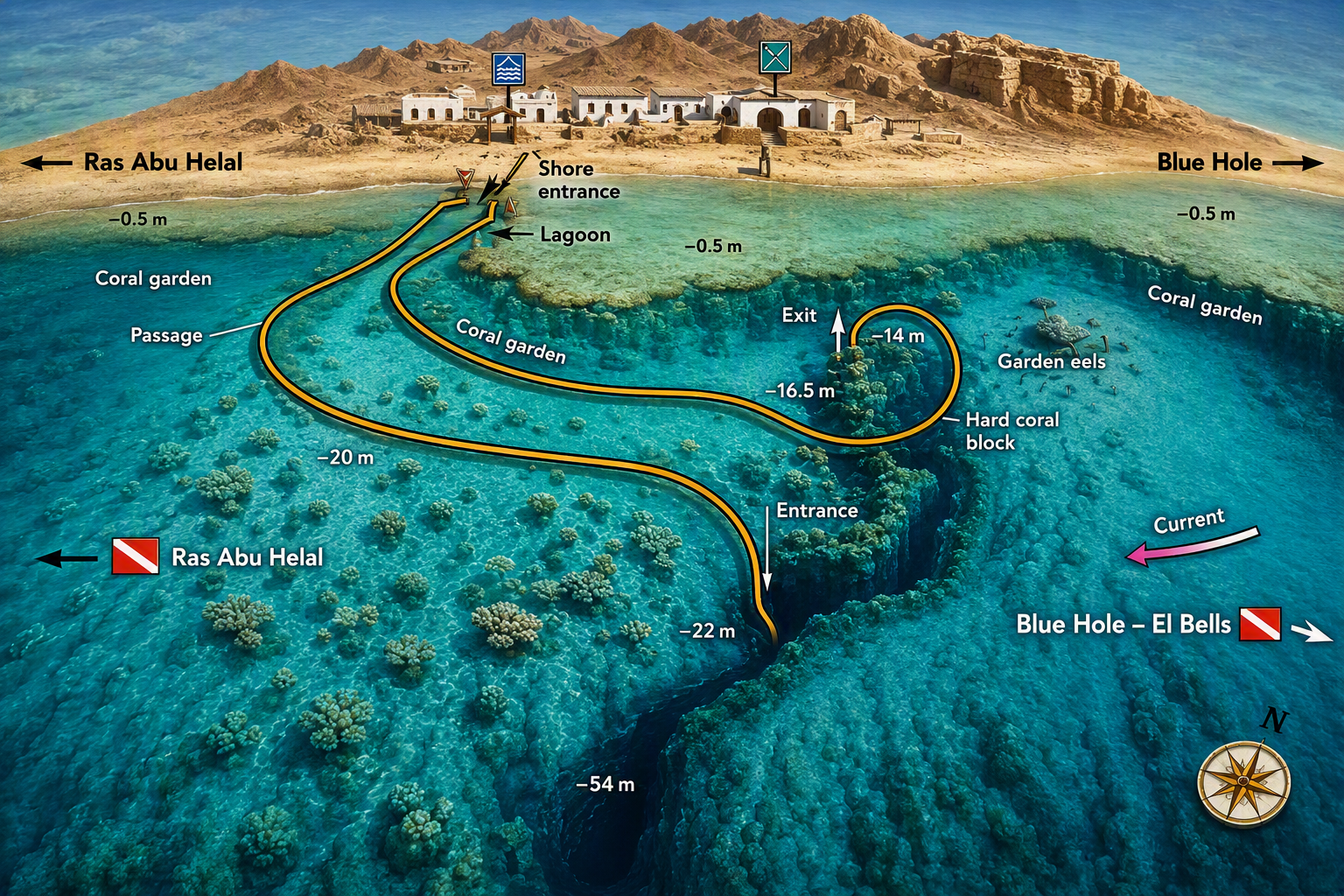
Inside the Canyon Dahab dive site
Three separate dives sit inside one site. Firstly the lagoon and its coral garden, then the fissure itself, and finally the cave halfway up. Consequently divers of different levels can share the same entry point and still get the dive they wanted.
Then there is the shape of it. Namely, the crack runs north to south straight through the reef slope, dropping to fifty-four metres at its far end. Divers work only its northern, shallower half, where the sandy floor sits at twenty-eight metres.
Meanwhile the site lies one and a half kilometres south of the Blue Hole, so the two are almost always dived on the same morning. Frankly the Canyon is the quieter of the pair, and the better one for a camera.
What you are diving
- Firstly the lagoon at 3 m, busier than it looks from the beach
- Then the saddle on the western point, which opens to the sea
- Also the coral garden between 5 and 10 m, saved for the way back
- Meanwhile the fissure itself, entered at its widest point
- Besides those, the cave of glassfish at 17 m, open on two sides
- Finally the madrepore block outside the cave, crusted with coral
Go north, not south. The southern end of the fissure is both too deep and, frankly, not interesting. Everything worth seeing on the Canyon Dahab dive lies on the northern side, which is why every briefing sends you that way.
Time it with the tide. Start at high water. Crossing the reef platform at low tide damages coral and makes the walk awkward for everyone behind you.
Reaching the Dahab Canyon
Firstly the geography: the Canyon Dahab sits one and a half kilometres south of the Blue Hole, and about ten kilometres from Dahab itself. Since the coastal road was surfaced in 2004, the drive is short and easy.
Opposite the entrance there is a restaurant with a small dive centre. You park on the shingle beach, kit up beside the car, and walk in. Afterwards you cross about a dozen metres of reef platform before the lagoon opens ahead of you.
Consequently this is a shore dive in the fullest sense, and the entry is part of the dive rather than a formality. Above all, agree the maximum depth on the beach and not underwater.
Good to know before you drive out
- Firstly the distance to the Canyon Dahab: 10 km from town, 1.5 km from the Blue Hole
- Then the parking, which is shingle beach directly at the entry
- Also the restaurant and small dive centre opposite, for fills and shade
- Meanwhile the walk in, roughly twelve metres of reef platform on foot
- Besides those, Ras Abu Helal lies west along the same stretch of coast
- Finally the tide, which decides whether the walk in is easy or ugly
Kit up at the car, not at the water. Namely there is nowhere to stage gear on the platform itself, and standing on it in fins is how coral gets broken. Walk in ready.
Three ways to dive the Canyon Dahab
One entry point covers everything from a shallow photography loop to a full descent into the fissure. Therefore the briefing matters here, because the shallow route and the deep route start in exactly the same three metres of water.
Lagoon and coral garden
Firstly, the route for newer divers. Enter across the platform, work the lagoon at three metres, then out through the saddle on the western point to the coral garden between five and ten metres. Finish back inside the lagoon.
Watch for
- Firstly goatfish, butterflyfish, domino damsels and pullers in the lagoon
- Then the saddle itself, which is the doorway to everything outside
- Also the coral garden, dense and healthy between five and ten metres
- Finally the platform crossing, which needs high water in both directions
The fissure and the cave
Meanwhile this is the definitive Canyon Dahab profile. From the saddle, follow a heading of eighty degrees with the small reef wall on your left. The fissure appears ahead, and you drop in through its widest point onto sand at twenty-eight metres. Then turn north, ascend to the cave at seventeen metres, and exit onto the plateau.
Watch for
- Firstly the light shafts falling through the crack from above
- Then the turn north, since the southern end only goes deeper
- Also gas reserves, because the coral garden comes at the very end
- Finally the madrepore block outside the cave, which is worth circling
Set a hard maximum before you get wet. The fissure keeps dropping past fifty metres while narcosis arrives quietly, and there is nothing below twenty-eight metres worth the risk. Agree the number on the beach and do not adjust it underwater.
Shallow photography loop
Then there is the Canyon Dahab route almost nobody asks for and everybody enjoys. Since it avoids the fissure entirely, it buys you a long bottom time over the best coral on the site. Work the garden and the outer edge of the saddle, then finish in the lagoon while the rest of the group is still decompressing their nerves.
Watch for
- Firstly the coral between five and ten metres, the best photography here
- Then the trim, because the cover is dense enough to punish sloppy fins
- Also the light, which is at its best in the morning before the wind builds
- Finally the lagoon at three metres, an easy place to end a dive
The full Canyon Dahab profile, in order
The cave and the madrepore block
Because the cave sits at seventeen metres and is open on two sides, it stays the friendliest overhead on the Canyon Dahab dive. Inside, a dense school of pygmy sweepers (Parapriacanthus sansonettii) wraps around divers completely, so visibility within the school drops to nothing.
Afterwards you leave through the main opening at sixteen and a half metres. From outside, the structure reveals itself as an enormous madrepore block, crusted with table and soft corals and busy with life.
Then skirt its perimeter and turn with the reef on your right. That line brings you back towards the coral garden and the passage into the lagoon.
The cave is not an overhead problem. Namely, with two openings and daylight through both, nobody is ever out of sight of the surface here. Consequently it suits divers who would not otherwise go anywhere near a ceiling, provided the group goes through one at a time.
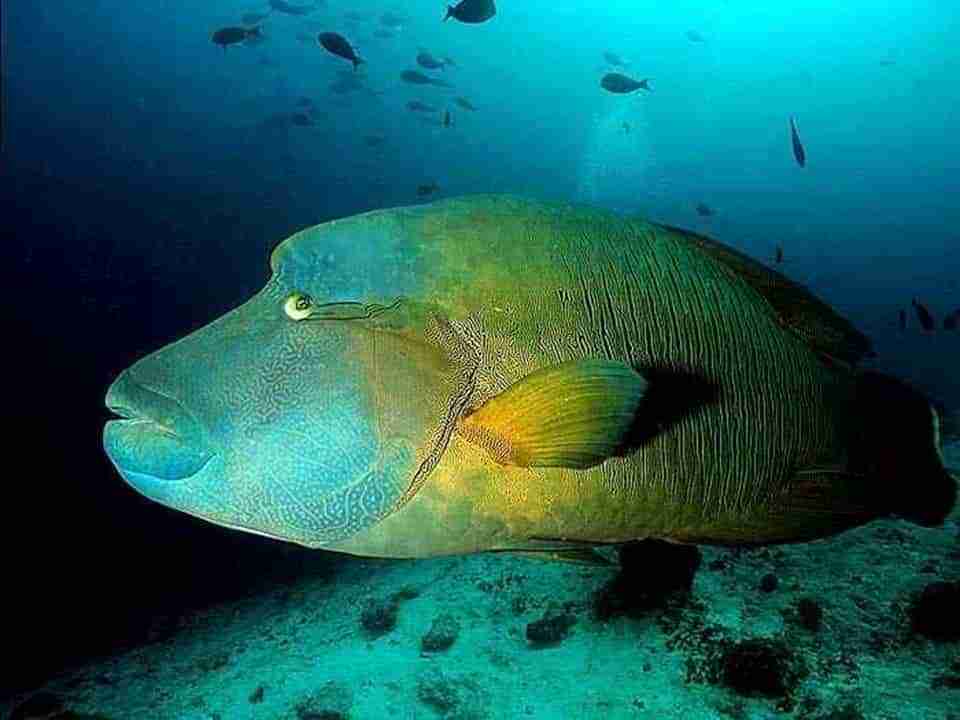
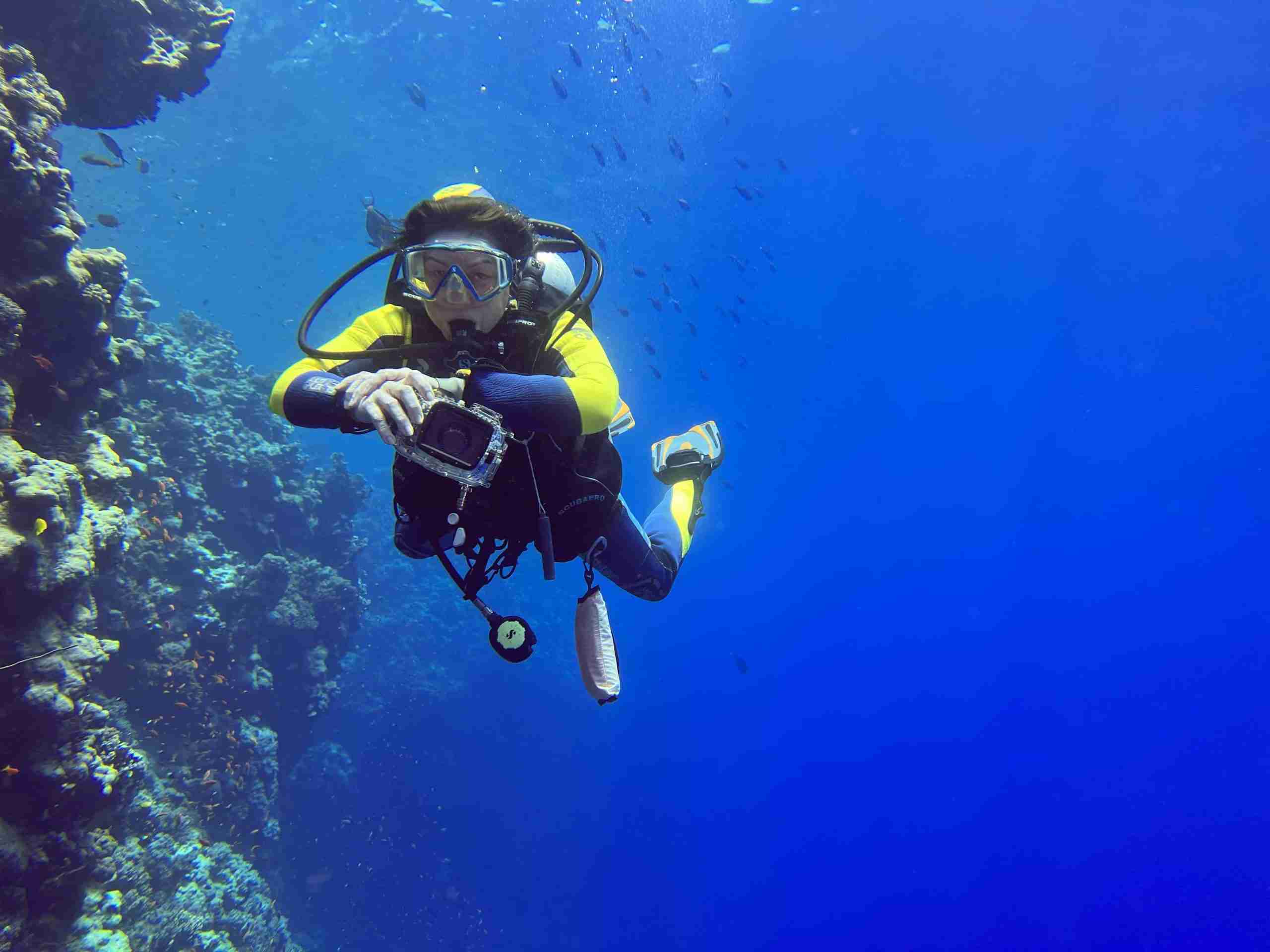

Marine life at the Canyon Dahab
Above all, life at the Canyon Dahab thins out with depth rather than increasing. Inside the fissure there is little but rock and light, whereas the lagoon, the garden and the block outside the cave carry almost everything worth photographing.
In the lagoon
Namely goatfish, butterflyfish, domino damsels and pullers, all in three metres of water. Also an easy place to finish a dive.
In the cave
Pygmy sweepers in their thousands. Because the cave has two openings, the school shifts constantly with the light.
On the block
Table corals and soft corals cover the madrepore outside the cave. Meanwhile reef fish work it from every side.
In the garden
Certainly the best photography of the dive, since the coral between five and ten metres is dense and healthy.
Inside the fissure
Notably little, and that is the point. The light shafts through the crack are the reason people come here at all.
On the sand
Namely garden eels on the open patches outside the block, standing clear of their burrows until you get close. Approach slowly or you see nothing.
Conditions and access at the Canyon Dahab
Water
- Firstly visibility at the Canyon Dahab, generally 20 to 30 m, best early
- Then temperature: 21 to 22°C in winter, 25 to 27°C in summer
- Also current: usually slight, since the site sits close to shore
- Finally exposure: a 5 mm suit works, and a hood helps in winter
Getting in
- Firstly from shore, across a shingle beach and reef platform
- Then about twelve metres of platform on foot before the lagoon
- Also at high water, both for access and for the coral
- Finally by road, ten kilometres from town on a surfaced coastal road
Practical notes
- Firstly dive the Canyon Dahab with a guide the first time
- Then set a hard maximum depth before entering the water
- Also keep the group together inside the fissure
- Meanwhile watch gas closely, since the shallow return deserves reserves
- Consequently nitrox suits the 28 m profile well, though it changes no limit
- Save the coral garden for the end of the dive, not the start
- Also dive early, before the wind builds and the site fills
- Finally, a restaurant and a small dive centre sit opposite the entry
Level. Advanced open water for the fissure, open water with a guide for the lagoon and the coral garden. Newer divers get a genuinely good dive here without ever going below ten metres.
Planning your dive at the Canyon Dahab
Generally the Canyon Dahab pairs with the Blue Hole in a single morning, since the two sit one and a half kilometres apart on the same coastal road. Above all, run the Canyon first while the light is still low in the fissure.
Meanwhile the site rewards a second visit more than most. The fissure is the headline, whereas the coral garden and the cave are what people actually remember, and neither needs depth to enjoy.
Useful links
- Dahab dive sites — the whole coast, north and south, in one guide.
- The Blue Hole — the 120 m sinkhole, the Bells and the Arch, ten minutes north.
- All Dahab local dive sites — every site along the rest of the coast.
- Dahab shore diving — entries, kit and how a shore day actually runs.
- Safety standards and emergency care — briefings, oxygen and chamber contacts.
- Red Sea conditions and planning guide — visibility, weighting and currents.
- Chamber of Diving and Watersports (CDWS) — the Egyptian regulator for dive centres.
- Divers Alert Network (DAN) — insurance and emergency guidance.
Frequently asked questions
How deep is the Canyon in Dahab?
The fissure reaches fifty-four metres. However, recreational divers stay in its northern half, where the sandy floor sits at twenty-eight metres.
Is the Canyon Dahab suitable for beginners?
Not on your own. Newer divers can enjoy the lagoon and the coral garden, whereas the fissure itself needs experience and a guide.
Where exactly is the site?
At 28°33.290′ N, 34°31.260′ E, so one and a half kilometres south of the Blue Hole and roughly ten kilometres from town.
Why start at high tide?
Because you cross about twelve metres of reef platform on foot. High water keeps fins clear of the coral and makes the entry far easier.
What is the cave like?
Small, bright and open on two sides at seventeen metres. Meanwhile the light shifts constantly through both entrances. Thousands of pygmy sweepers live inside, so visibility within the school drops to nothing.
Should I go south inside the fissure?
No. Since that end goes deeper without adding anything worth seeing, every briefing sends you north instead.
Can I dive the Canyon and the Blue Hole in one morning?
Yes, and most centres do. They sit one and a half kilometres apart, so the Canyon Dahab usually runs first and the Blue Hole second.
What are you waiting for?
Book your adventure
Tell us which experience you want to enjoy and leave the rest to us. If you have questions, or you are still choosing between routes, our team will talk it through with you before you commit to anything.
Inquiry