
Red Sea Dive Safari · What Is a Liveaboard
What Is a Liveaboard? Life on board a Red Sea dive safari
Cabins · Daily schedule · Routes · Packing · Safety
A liveaboard is a boat you live on for a week while you dive. You sleep, eat and rest on board, and the boat moves between reefs overnight while you are asleep. That one fact is the whole answer to what is a liveaboard, and it is why these trips reach offshore reefs no day boat can get to and back from in daylight.
What is a liveaboard, exactly?
It is a dive boat with cabins, a galley, a salon and a dive deck built for the purpose. Everything you need for a week stays with you, so the day has no transfers in it. Divers tend to describe the rhythm the same way: sleep, dive, eat, dive, repeat.
You sleep on the boat
Your cabin is your room for the whole trip. You unpack once, on the first evening, and you do not touch the bag again until the last morning.
You dive more
The reef is under the hull, so three or four dives a day is the normal count rather than an ambitious one. Night dives need no extra journey.
You reach remote reefs
The boat travels overnight. That is what puts the offshore marine parks — the Brothers, Daedalus, Elphinstone — within reach at all.
In one sentence: a liveaboard turns diving from a series of day trips into a week of diving, with no daily drive to the marina and no waiting on a jetty.
What is a liveaboard compared with a day boat?
The shortest honest answer to what is a liveaboard comes from comparing it with the alternative. A day boat spends a large part of every morning simply getting to the water. You drive to the marina, you wait, you sail out, and you are back the same afternoon. Two dives is usually the ceiling, and one of them is often shallow because the good site was too far away.
On a liveaboard that travel time disappears, because you never leave. The hours it used to eat go straight back into diving, and the sites stop being chosen by how far the boat can sail before lunch.
What changes on a liveaboard
Your kit stays assembled on the dive deck all week. The crew fills your cylinders between dives, so what you carry to the water is your camera, your fins and yourself.
The briefing, the entry and the exit all happen in the same place, a few metres apart. The day is quieter for it, and a quiet day is a safer one.
What a liveaboard day actually looks like
Every liveaboard runs its own schedule, but the shape of the day is much the same across the Red Sea fleet. Briefing, dive, a proper meal, a surface interval, and again.
Wind, current and the route all move the timings, which is why the cruise director confirms them at each briefing rather than printing a timetable at the start of the week.
How many dives does a liveaboard give you?
Three day dives is standard on a liveaboard, with a night dive when the mooring and conditions allow it. Over seven nights that adds up to roughly twenty dives, which is more than most divers manage in a year at home.
A day on board
What is on board a liveaboard
Living areas
Cabins are compact but private, and most have air conditioning and their own bathroom. Beyond the cabins there is an indoor salon, a shaded deck and a sun deck, which matters more than it sounds when twenty people share a boat for a week.
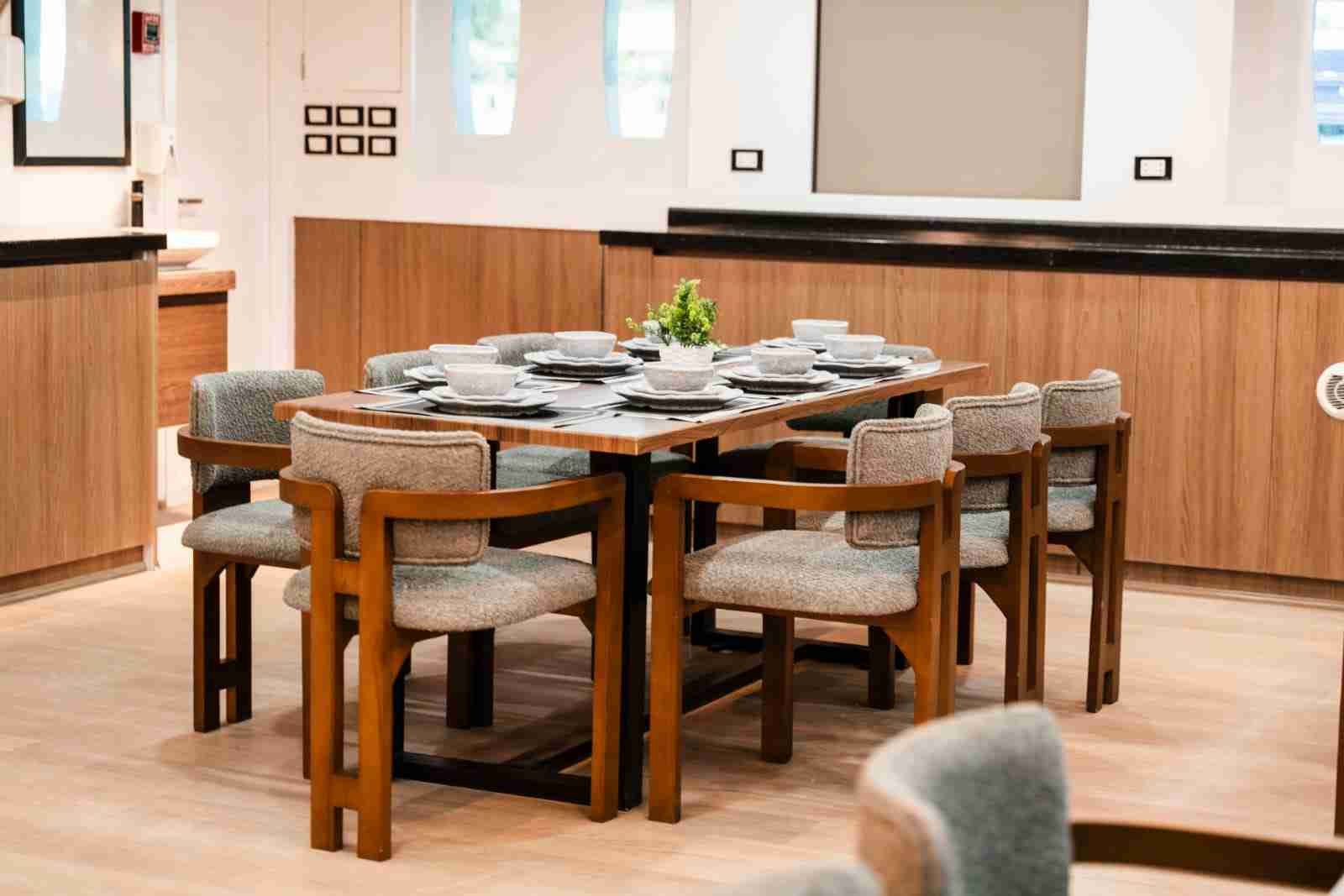
Meals are buffet style. Tea, coffee, fruit and cake sit out between dives, because a surface interval with nothing to eat is a long hour.
Diving areas
The dive deck gives every guest a numbered station: a tank, a crate and space for a suit. Most boats add nitrox, a camera table with charging points, and rinse tanks kept separate so nobody drops a regulator into the camera water.
Two RIBs carry divers to sites the mooring cannot reach. The crew handles cylinders throughout, which is the single biggest physical difference from shore diving.
The liveaboards we run
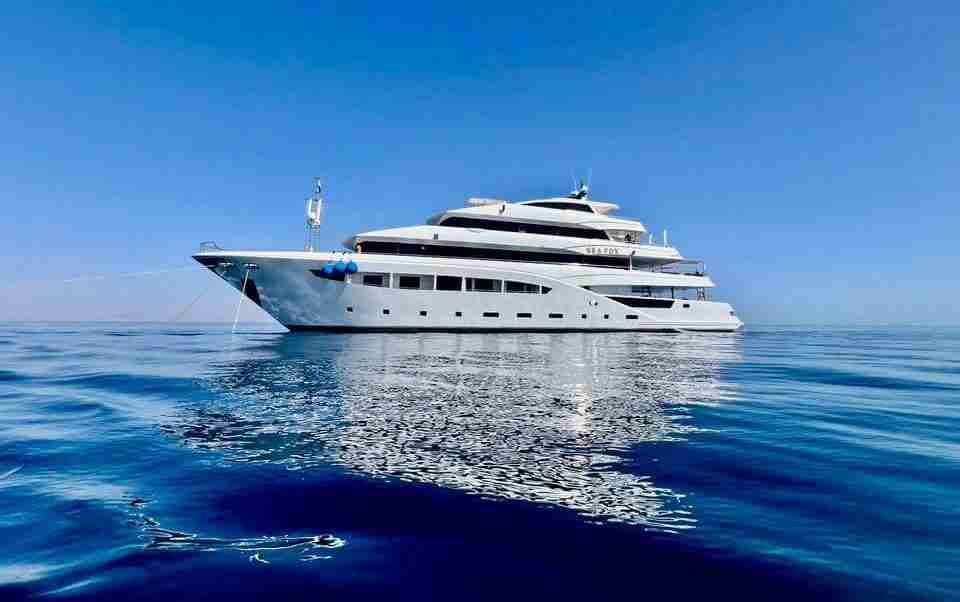
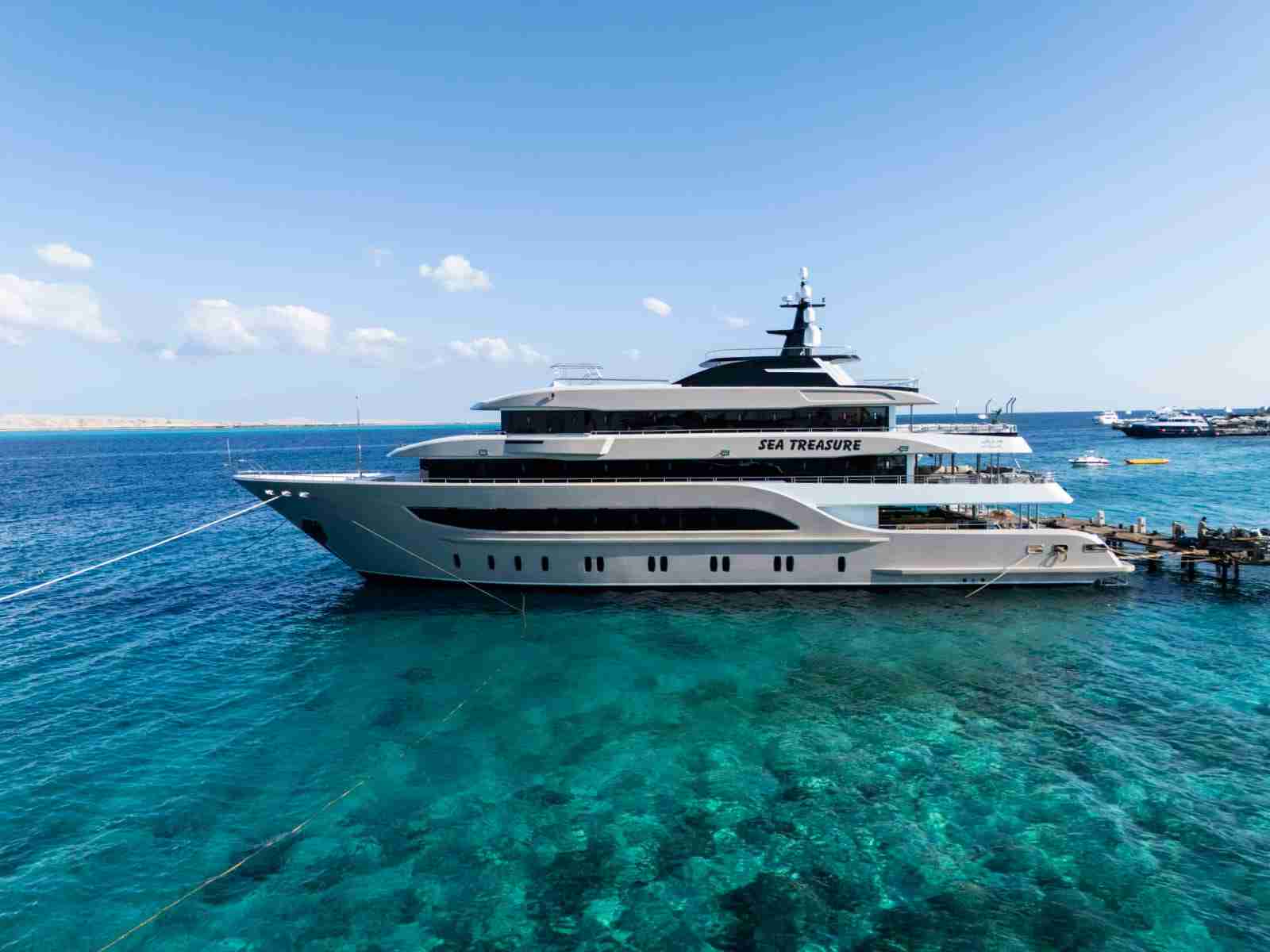
The four vessels differ in size, cabin layout and how many divers they take, which changes the feel of a week more than the itinerary does. A smaller boat is quieter; a larger one has more deck to spread out on.
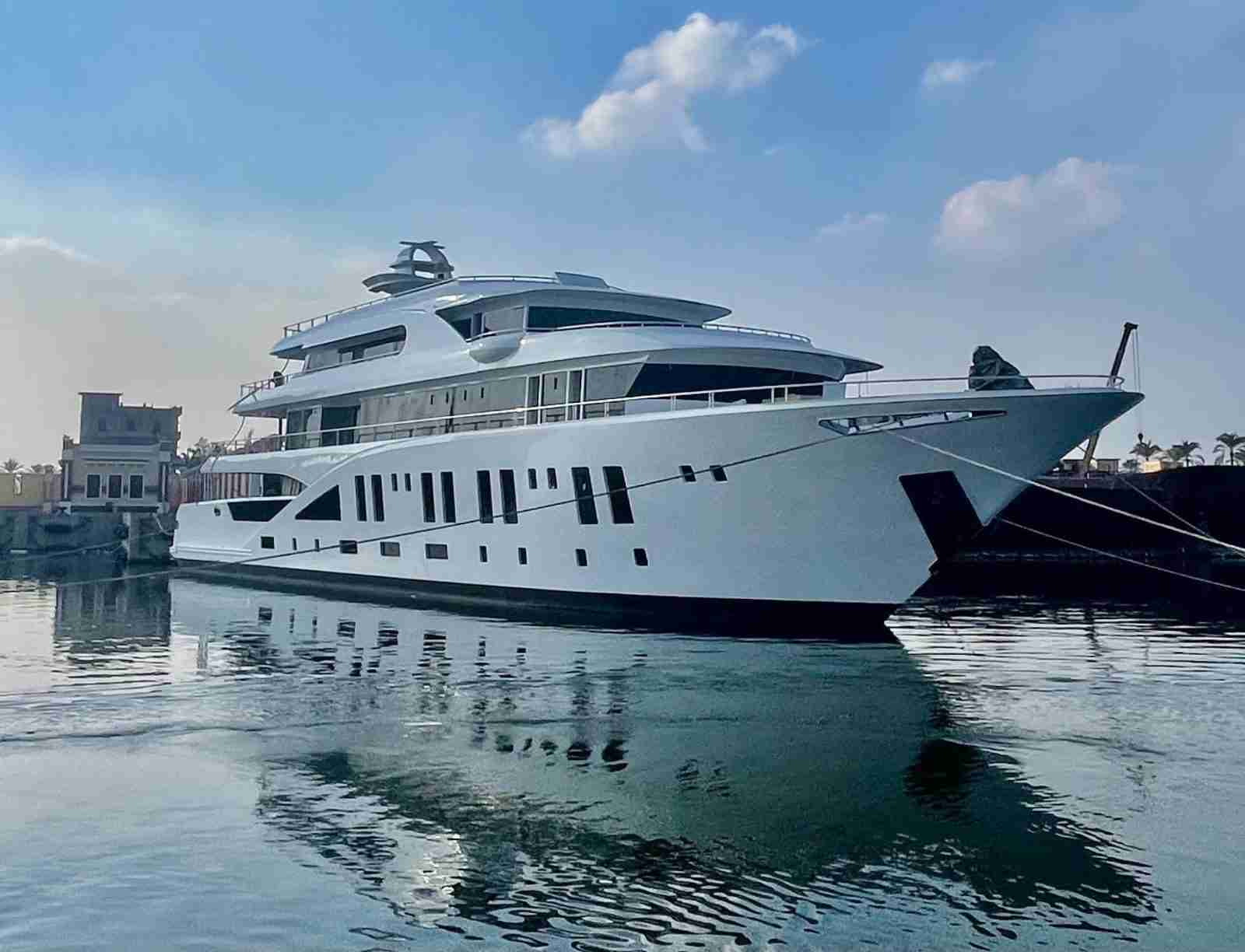
- My Simba — the boat in the photograph above
- Sea Fox
- Sea Treasure
- Bismarck
Check before you book: the cabin type, how many guests the boat takes, whether nitrox is included or charged, and whether marine park fees are in the price. These four vary more between boats than anything else.
Where liveaboard routes go
Once you know what is a liveaboard, the next question is always where it goes. Routes are grouped by area and by season. The north is calmer and wreck-heavy; the offshore and southern routes are wilder, with more current and better odds on big fish. Full itineraries and dates are on our safari routes page.
| Route | Highlights | Best for |
|---|---|---|
| North & Wrecks | Thistlegorm, Abu Nuhas, Ras Mohammed | A first safari, wreck divers, calmer water |
| Brothers, Daedalus & Elphinstone | Steep walls, sharks, offshore marine parks | Experienced divers, real current |
| Deep South & St John’s | Caves, untouched coral gardens, remote reefs | Longer trips and quiet sites |
| Fury Shoals & Marsa Alam | Dolphins, easy reefs, shallow coral | Newer divers and mixed groups |
Wind decides everything offshore, so routes change for safety and no crew can promise otherwise. An itinerary is a plan, not a contract — and a week with no spare day loses its best site to one windy morning. Daedalus Reef is the clearest example: superb when the sea allows it, unreachable when it does not.
Is a liveaboard right for you?
Most northern liveaboard routes suit divers with an open water certificate and a reasonable number of logged dives. Offshore routes such as the Brothers ask for advanced certification, somewhere around fifty dives, and recent experience in current — recent being the word that matters, because a card does not expire but the skill does.
If you have not dived for a while, book a refresher before the trip rather than spending the first day catching up. If you know you get seasick, choose a northern route with sheltered moorings and bring medication with you.
The conditions themselves — salinity, visibility, water temperature, wind — are covered in the conditions guide, and the checks you run before each dive are on the practical page.
What to pack
- Certification card, logbook and dive insurance
- A 5 mm wetsuit, with a hood or vest for winter trips
- Your own computer, SMB, torch and reef-safe sun cream
- Soft luggage rather than a hard case — cabin storage is tight
- A spare mask, spare batteries and any personal medication
Safety on board a liveaboard
A boat at sea is a small community, and the rules exist because everyone shares the consequences. The crew runs a full boat and safety briefing at the start of the week, and every dive gets its own briefing after that.
The one rule people break by accident is the check-in board. It is not paperwork. It is how the crew know whether anyone is still in the water.
- Listen to the whole boat, route and emergency briefing
- Confirm depth, time, route and turn pressure before every dive
- Carry an SMB and know when to deploy it
- Stay with your buddy and keep the group in sight
- Check in and out on the board every single dive
- Never touch or stand on coral
- Keep the last day free of diving before you fly
- Do not dive ill, exhausted or medically unfit
Useful links
- My Simba, Sea Fox, Sea Treasure and Bismarck — the four boats, with cabins, decks and what each one is best suited to.
- The conditions guide — salinity, visibility, water temperature, currents, wind and waves.
- The practical page — the weighting check, reading a current, and the safety checklist.
- Daedalus Reef — depth profile, current and what to expect on the plateau.
- Talk to our team about the route that matches your certification and recent experience.
- Boats, cabins and departure dates — the wider Egyptian fleet.
- Divers Alert Network (DAN) — dive insurance and emergency guidance at sea.
- HEPCA — mooring systems and reef protection in the Egyptian Red Sea.
Frequently asked questions
What is a liveaboard, in plain words?
A dive boat you live on for several days. You sleep, eat and dive from the same boat, and it moves between reefs while you rest.
How long is a typical trip?
Seven nights is the standard for a Red Sea liveaboard. Shorter and longer itineraries exist, and the deep south routes are usually the long ones.
Do I need to be an experienced diver?
Not for every route. Northern trips suit newer divers. Offshore routes normally want advanced certification and recent experience in current.
How many dives will I get?
Around three a day, plus optional night dives, so a seven-night trip usually adds about twenty dives to the logbook.
Will I be seasick?
Most guests settle after the first day. If you know you are sensitive, bring medication and pick a northern route with sheltered moorings.
What does a liveaboard cost compared with a day boat?
Per dive it is often close, because the price includes accommodation, all meals and every dive. The difference is that you get roughly twenty dives in a week instead of ten, without paying for a hotel and daily transfers.
When is the best time to go in Egypt?
Diving runs all year. Summer brings the warmest water, spring and autumn the most comfortable air. Offshore routes depend on wind in every season.
What are you waiting for?
Book your adventure
Tell us which experience you want to enjoy and leave the rest to us. If you are not sure which route suits your certification and recent experience, our team will talk it through with you before you commit to anything.
Inquiry